There is a growing consensus among crypto analysts that the next FOMC meeting—scheduled to take place later this week—could ignite a fresh relief rally across the market.
The basis of their bullish predictions is grounded on the latest estimates of the CME Group’s FedWatch tool—which shows a 99% probability that the Fed will keep the rates steady.
If the Fed eventually keeps the current rates intact without delivering any hawkish surprises, it might possibly trigger a natural market reset—which could translate into much upward momentum for Bitcoin and altcoins. This makes it important for smart money investors to find the best crypto to buy as soon as possible.
In this article, our team of experts have curated a list of the top six crypto projects that are worth considering for outsized returns as the market heads into FOMC day with optimism.
Best Crypto To Buy Now For Excellent Returns
BTC BULL
The current market volatility has done nothing to shake the bullish conviction of Bitcoin investors. According to data from Coinglass, the open interest (OI) in the premier cryptocurrency has been experiencing a noticeable increase over the past few weeks, sitting at approximately $50 billion at press time.
While its sideways movement since February has created short-term concerns, the persistent surge in its OI shows that more people are betting on immense growth for BTC in the future. And with the growing expectation that the next FOMC meeting could mark a bullish turnaround for the market, there’s no better time than now for bulls to consolidate a stronger community around BTC than now.
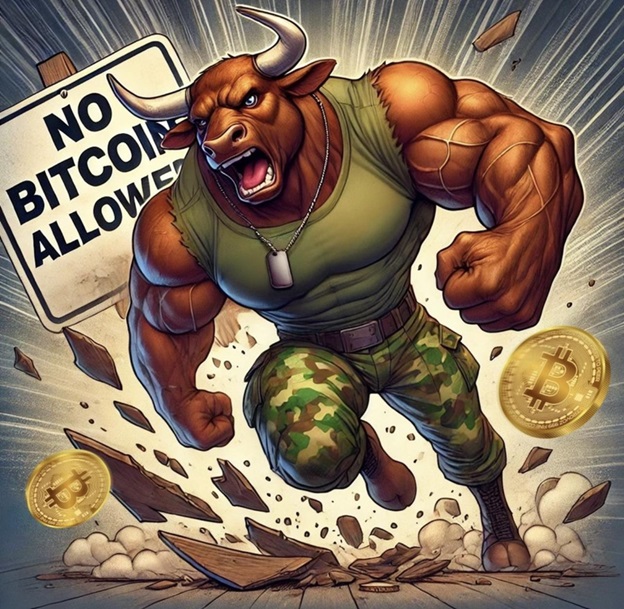
This explains why new projects like BTC Bull are dominating headlines. Marketed as the unstoppable movement pushing Bitcoin to the $1 million mark, the goal of this project is to provide an avenue for bulls to speculate on BTC’s growth potential while earning multiple perks.
Its major selling points? Free BTC airdrops and continuous token burns as Bitcoin achieves each of the milestones spelt out in its roadmap.
Whenever Bitcoin reaches $125k, $150k, $175, $200k, and $250k, BTC Bull holders can expect either Bitcoin airdrops or token burns. The project’s strong connection to Bitcoin’s growth is further complemented by a staking option, which still offers an APY reward of approximately 110%.
This feature, alongside the allure of free BTC airdrops, has been commended by popular crypto analysts like Nass Crypto, who said the project could make early movers millionaires in 2025.
Solaxy
Solaxy has been in high demand since arriving on presale, thanks to its meme-like appeal and meaningful utility. Advertised to the world as the first L2 solution on Solana, this project aims to deal with the congestion issues affecting the Layer-1 mainnet through its rollup architecture.
Near “infinite” scalability is the goal in which Solaxy has set out to achieve, and by functioning as an off-chain scaling solution, it is well-positioned to help Solana perform optimally even during peak cycles.
However, unlike most L2 solutions, Solaxy is not limited to one chain alone—its advanced rollup architecture benefits both Solana and Ethereum users, optimizing transaction speeds and streamlining asset transfers across the two blockchains. This particular feature of Solaxy, according to experts, could make it easier for developers to build multi-network applications within its ecosystem.
In addition to its Layer-2 functionality, Solaxy has also come up with a staking model that rewards early supporters for their contributions to the security of the network. At press time, staking on Solaxy guarantees a three-digit APY reward, making it a valuable source of passive income for those who believe in its long-term potential.
In spite of the increasing downside volatility in the market, Solaxy has managed to raise close to $27 million, indicating strong investor interest. And as the demand for projects that thrive at the intersection of scalability and real-world usability continues to grow, Solaxy could be a key player in the ever-evolving blockchain landscape.
Meme Index
While the cumulative market cap of meme coins has dropped drastically from its recent high, that does not mean that the meme coin narrative has weakened by any means. Most investors still believe strongly in the potential of meme coins to deliver massive returns when the market outlook flips bullish.
However, considering the unpredictable nature of the sector, finding the next big meme coin can be difficult. Meme Index streamlines the process by introducing an index fund-style approach to navigating the market volatility, allowing investors to bet on a basket of top-performing meme tokens instead of a single asset.
What makes Meme Index more special than other existing indices is its versatility. It plans to launch four indices that will cater to every class of investors, offering a structured way to capitalize on the market. Those seeking to invest in high-cap meme coins can pick the Meme Titan Index. Next is the Moonshot Index, which curates assets that have strong communities but yet to reach the $1 billion benchmark.
Riskier assets, particularly the ones within the $250 million to $500 million market cap category, make up the Midcap Index, while meme coins with the highest level of risk will be featured in the Frenzy Index.
The project’s decentralized model means the four indices will be rebalanced through community feedback, which is another reason why experts consider it an intriguing option for those aiming to take the most advantage of the meme coin market.
It is only a matter of days before the presale comes to a close and experts are already projecting a strong start for the meme coin.
Best Wallet Token
The dramatic swings in crypto prices has brought more eyes to projects offering a combination of practical utility and long-term returns in one distinctive package. Best Wallet Token—a multi-utility crypto powering Best Wallet—can be considered one of the few projects in this category.

As an integral component of the rapidly growing wallet solution, this crypto plays a huge role in enhancing all the features embedded in the platform. From facilitating reduced transaction fees and higher staking opportunities to providing early access to many high-potential presales and governance rights, Best Wallet Token ticks all the right boxes to deliver an unparalleled investment experience.
With the trust in CEX fading away, especially after the recent Bybit hack, decentralized platforms—which allows users to take full control of their assets—have gained traction. However, Best Wallet offers something extra by leveraging heavyweight tools such as Fireblocks to make crypto storage more accessible and secure than before.
An additional highlight is its intuitive facility, which makes it possible to buy and sell thousands of crypto assets using fiat currency. Other notable features include cross-chain swaps, iGaming, token launchpad, staking perks, and many more, making it an all-around destination for everything crypto.
The rapid adoption of the wallet is evident in the surging demand for Best Wallet Token. With over $11 million raised in its presale, the project has already demonstrated strong momentum, and once the token launches, its utility-driven demand could further drive its price to the moon, making it a suitable hold for those seeking tangible returns this year.
Mubarak
As the broader market gears up for another bullish phase, Mubarak—a new Binance Smart Chain meme coin—has made experts’ lists of the best crypto to watch closely. Its origin could be traced to last week’s X post by Binance co-founder Changpeng Zhao—where he used the Arabic word “Mubarak,” meaning “blessings.”
This viral post resulted in the creation of the meme coin on Four-Meme—the first-ever meme coin launch platform on the BNB chain. Since its debut, Mubarak has been on fire, jumping from its initial market cap of $6,000 to $150 million.
The FOMO vibe around the BSC meme coin intensified after CZ himself bought about $600 worth of MUBARAK tokens. CZ’s involvement, coupled with the token’s listing on Binance Alpha and other notable CEXs like Gate.io and MEXC, elevated its visibility among degen investors and pushed its market cap to $200 million before a brief reversal.
As the Mubarak price surged, one trader who dived in very early with just $232 made an astonishing 4,860x returns, according to data from Lookonchain. At press time, it is still one of the few cryptos trading in the green, exchanging hands around $0.142.
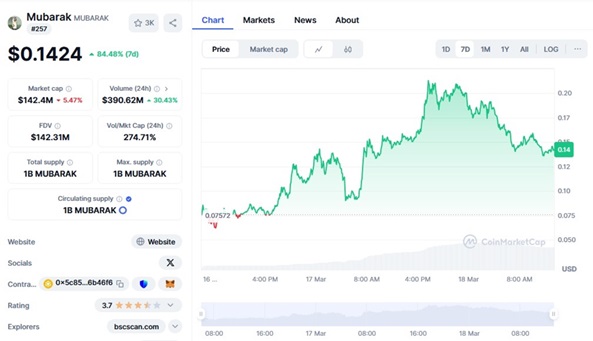
And now that the momentum is showing no signs of going away anytime soon, crypto analysts are predicting even more growth for the meme coin, making it a suitable option for those seeking short-term returns.
MIND of Pepe
Prominent publications including Cryptonomist, Bitcoinist, and NFT Evening have already mentioned MIND of Pepe as one of the best crypto projects that could bring huge returns to early investors. Developed by Elvora Labs, this project is marketed as an autonomous AI agent embodying the personality of Pepe and the utility of an advanced trading bot.

What makes MIND of Pepe particularly interesting right now is its fusion of the cultural relevance of Pepe with the cutting-edge technological innovation of AI, making it a top contender in both niches. The project’s whitepaper has already highlighted many use cases but the one generating the most attention is its “holder exclusive trading alpha.”
This simply means those who hold its native token—MIND—will be able to enjoy premium access to distinct AI-generated signals and insights into some of the best early-moving opportunities on the market.
More so, as a self-evolving agent, MIND of Pepe has been designed in such a way that allows it to track social media trends, analyze market sentiment, interact with people on social media, and even generate its own opinion. It will also act as a launchpad for other new tokens, which is one reason experts believe it could appeal to a larger pool of investors.
An additional highlight is the staking perks currently offered by the project, which serves as an avenue for early investors to amplify their returns.
So far, $7.4 million has been raised in its ongoing presale, making it one of the most sought-after utility-driven crypto presales on the market. With demand surging each day, ClayBro says MIND could be poised for an explosive debut.
Bottom Line
With various indications suggesting that the Fed will keep the interest rates steady when it meets later this week, there is a growing possibility that the crypto market might be heading towards a more stable condition soon. This possibility has created a rush to find the best crypto to buy now.
To help with this, our experts have already provided a list of crypto coins that could capitalize on the current market’s volatility to deliver outsized returns. Investors should pick the ones that suit their requirements, but only after doing due diligence.