DD
MM
YYYY

PAGES

DD
MM
YYYY

spot_img

PAGES

Home Blog Page 27

Brazil Antitrust Watchdog Moves Against WhatsApp Over AI Chatbot Ban, Raising Fresh Pressure on Meta

0

Brazil’s competition authority has ordered WhatsApp to suspend a controversial policy that prevents third-party artificial intelligence companies from offering chatbots on the messaging platform, opening a new front in a growing global regulatory challenge to Meta’s AI strategy.

The order, issued by the Conselho Administrativo de Defesa Econômica (CADE), also launches a formal investigation into whether the policy violates competition rules by shutting out rivals and tilting the market in favor of Meta’s own AI products. At the center of the probe is Meta AI, the company’s in-house chatbot that is integrated directly into WhatsApp.

In a statement, CADE said preliminary findings point to “possible anti-competitive conduct of an exclusive nature” stemming from the new WhatsApp Business Solution Terms imposed by Meta. According to the agency, those terms may restrict access by independent AI providers and unfairly privilege Meta’s own technology within one of the world’s most widely used messaging platforms.

The policy in question was announced in October, when Meta revised the rules governing access to the WhatsApp Business API. Under the new terms, third-party AI companies are barred from using the API to deliver chatbots to users. OpenAI, Perplexity, and Microsoft soon warned developers that their chatbots would no longer function on WhatsApp once the policy takes effect on January 15.

At the same time, Meta carved out an important exception. Businesses are still allowed to deploy their own chatbots, whether AI-powered or rule-based, to communicate with customers on WhatsApp. That distinction has drawn scrutiny from regulators, who are questioning whether Meta is selectively restricting competition at the platform level while preserving room for its own AI ambitions.

CADE said its investigation will examine whether the new rules are exclusionary in practice and whether they amount to preferential treatment for Meta AI. The watchdog’s decision forces WhatsApp to pause enforcement of the policy in Brazil while the review is underway, a move that could have immediate implications for developers and enterprises operating in the country.

The European Union has already opened an antitrust investigation into the same policy, and Italian authorities have taken similar steps. Under EU competition law, a finding against Meta could result in fines of up to 10% of the company’s global revenue, a penalty large enough to reshape how the firm rolls out AI features across its platforms.

Meta has already shown some flexibility under regulatory pressure. According to a notice seen by TechCrunch, the company told AI developers that they may continue offering chatbots on WhatsApp in Italy even after the January 15 deadline. That carve-out suggests Meta is willing to apply its rules unevenly by jurisdiction, depending on the legal risks involved. A comparable adjustment in Brazil is now a realistic possibility following CADE’s order.

For Meta, the dispute sits at the intersection of infrastructure limits, platform control, and competitive strategy. The company has argued that third-party AI chatbots place heavy demands on systems originally built for customer support and transactional messaging, not conversational AI at scale. From Meta’s perspective, restricting API access is a technical and operational necessity rather than a competitive maneuver.

“The purpose of the WhatsApp Business API is to help businesses provide customer support and send relevant updates,” a Meta spokesperson said when the changes were announced in October. “Our focus is on supporting the tens of thousands of businesses who are building these experiences on WhatsApp.”

Meta has also pointed out that users who want access to a variety of AI chatbots can do so outside WhatsApp, a position that aligns with its broader claim that it is not obligated to host every AI service within its ecosystem.

Regulators, however, appear unconvinced that technical strain alone explains the policy. WhatsApp’s scale in markets like Brazil gives it enormous gatekeeping power. With hundreds of millions of users, exclusion from the platform can sharply limit the reach of rival AI services, particularly in countries where WhatsApp functions as a primary digital interface for communication, commerce, and customer service.

The investigation raises broader questions about how dominant platforms integrate AI while maintaining open markets. As messaging apps evolve into hubs for payments, shopping, and automated assistance, control over APIs increasingly determines who can compete and who cannot. CADE’s move signals concern that Meta may be using its control over WhatsApp to shape the AI landscape before clear regulatory rules are in place.

The outcome in Brazil could influence regulatory thinking elsewhere, particularly in emerging markets where WhatsApp plays a central economic role. It also places Meta in a familiar position of defending platform decisions that regulators see as potentially anti-competitive, at a time when governments are paying closer attention to how AI power is concentrated and deployed.

What Is Zero Knowledge Proof (ZKP)? A Full Overview of the $100M Privacy Blockchain Project

0

Zero Knowledge Proof (ZKP) is a privacy-focused Layer 1 blockchain created to address a major barrier slowing artificial intelligence use and enterprise blockchain growth. The challenge is simple but serious: how can systems process sensitive data without revealing that data to anyone at any time? This question has blocked many real use cases, and Zero Knowledge Proof (ZKP) was designed from the ground up to solve it.

Instead of copying older blockchains where transactions and data are open to everyone, Zero Knowledge Proof (ZKP) applies advanced cryptography known as zero knowledge proofs. These methods allow the network to confirm that calculations are correct while keeping all underlying details hidden. Because of this, AI systems can work with encrypted hospital files, banks can run internal risk checks, and companies can cooperate on shared networks without exposing private records. This shift is why many now view it as the best crypto to buy right now for privacy-focused infrastructure.

What truly separates this project is not hype but preparation. The team committed more than $100 million of their own funds to build everything before offering access through a presale auction. The infra is active, the network is running, proof pods are shipping globally, and the testnet is live today. Analysts now discuss why this setup positions it as the best crypto to buy right now for long-term privacy-driven use cases.

The Main Issue Zero Knowledge Proof (ZKP) Solves

At the core, modern AI tools and blockchain systems face a conflict between usefulness and privacy. These systems depend on data, yet much of that data cannot be shared freely.

Examples include hospitals that want AI support but must protect patient files, sports organizations that analyze performance but cannot reveal biometric details, banks that aim to reduce fraud without exposing transaction behavior, and research groups that collaborate while guarding their own datasets. Older methods force a choice between function and secrecy. Zero Knowledge Proof (ZKP) removes that choice, which is why many label it the best crypto to buy right now for data safe computation.

How Zero Knowledge Proofs Function in Simple Terms

Zero knowledge proofs are cryptographic tools that confirm truth without showing details. They allow proof without exposure.

A simple way to understand this is to imagine a sealed box holding a valuable item. You want to prove what is inside without opening the box. A zero knowledge proof lets you confirm the item exists, is real, and meets conditions while the box stays closed the entire time.

On the network, Zero Knowledge Proof (ZKP) confirms that AI training, calculations, and records are correct without showing the data, code, or internal steps. The proof is verified by the blockchain, while the information itself remains encrypted forever. This approach strengthens trust and helps explain why it is often called the best crypto to buy right now for privacy-focused systems.

Zero Knowledge Proof (ZKP) Four Layer Structure

Zero Knowledge Proof (ZKP) operates using a carefully designed four layer structure that supports productivity and privacy.

Layer 1 Consensus Layer uses a hybrid of Proof of Intelligence and Proof of Space. Nodes earn rewards by completing useful compute tasks or by providing verified storage. This keeps the network efficient and purposeful.

Layer 2 Execution Layer enables private smart contracts and AI workloads using EVM and WASM compatibility. This allows current developers to deploy easily while supporting advanced applications.

Layer 3 Proof Generation Layer handles zero knowledge proofs through zk SNARKs for fast checks and zk STARKs for large-scale computation. Each task creates a proof that confirms accuracy without revealing details.

Layer 4 Storage Layer connects with IPFS and Filecoin, so only proofs are stored on the chain. This design improves speed and scale across the network.

Why the $100 Million Pre-Build Matters

Many crypto projects raise funds first and build later, often missing deadlines or failing entirely. Zero Knowledge Proof (ZKP) followed a different route.

Before the presale auction began, the team spent heavily on core infra, proof pod production, logistics planning, and brand assets. The testnet works today with live tools, proof pods are delivering, and real use cases already exist. This preparation removes common execution doubts and reinforces why it is viewed as the best crypto to buy right now among early-stage networks.

Presale Auction Model and Fair Access

Zero Knowledge Proof (ZKP) uses a clear 450-day presale auction structure designed for equal access.

Each day, 200 million coins are set on the chain, and all participants receive the same rate for that day. Entry starts low, daily limits reduce large holder control, and support spans many major cryptocurrencies. No private access exists, and every day that closes sets a permanent price level. This open system supports long term confidence and strengthens claims that it is the best crypto to buy right now.

To Sum Up!

Zero Knowledge Proof (ZKP) is a full blockchain system where privacy and verification work together at a large scale. It provides core infrastructure for AI-based systems where sensitive data must stay protected, while computed results still need to be clear and trusted.

The network is already built, the system is live, and access is being shared right now through a presale auction that follows one of the most balanced and transparent launch models seen in crypto.

Explore Zero Knowledge Proof:

Auction: https://auction.zkp.com/

Website: https://zkp.com/

X: https://x.com/ZKPofficial

Telegram: https://t.me/ZKPofficial

Early Crypto Turned $100 Into Millions Once — Is Zero Knowledge Proof (ZKP) Entering That Phase in 2026?

0

Every crypto cycle has a quiet chapter that only becomes obvious in hindsight. Long before headlines, price charts, or widespread conviction, a small group of participants notices something subtler: structure forming, systems running, and participation increasing without spectacle. Those moments are rare, but they tend to precede the most outsized outcomes the market has ever seen.

That sense of familiarity is beginning to surface again in 2026, this time around Zero Knowledge Proof (ZKP). As its live auction continues day after day, Zero Knowledge Proof (ZKP) is increasingly discussed as a crypto presale to watch, not because of hype, but because of how deliberately it has been built.

A Familiar Pattern From Crypto’s Early Years

When Ethereum first appeared, its defining strength was not price action but usability. Smart contracts worked. Developers could experiment. The network existed as a functional system rather than a promise. Only later did broader adoption and valuation follow. That early phase did not feel dramatic at the time, yet it became foundational for what came next.

Zero Knowledge Proof is not attempting to recreate that outcome, nor is it positioned as a comparison. But the structural lesson remains relevant: networks that function before they are fashionable often age differently than those driven by momentum alone. This is one reason ZKP has started appearing on shortlists for analysts looking for the next crypto presale to watch as 2026 unfolds.

Inside Zero Knowledge Proof’s Live Auction Model

At the center of ZKP’s early activity is its Initial Coin Auction (ICA), a model designed to remove discretion and replace it with transparent math. Rather than fixed pricing or staged rounds, the network releases 200 million ZKP tokens every 24 hours through a fully on-chain auction.

Key characteristics of the ICA include:

  • No private rounds or insider pricing
  • No fixed token price or manual adjustments
  • Each day clears independently and permanently

Once an auction window closes, the clearing price is finalized on-chain. As participation grows, the effective price trends upward organically. This structure rewards timing and conviction, which is why many observers now describe ZKP as a crypto presale to watch based on mechanics rather than marketing.

Built Before Asking for Participation

Another reason Zero Knowledge Proof (ZKP) feels structurally distinct is the amount of work completed before opening public access. The project was self-funded with over $100 million, covering core blockchain infrastructure, cryptographic systems, data layers, and physical compute hardware.

By the time the ICA went live, Zero Knowledge Proof (ZKP) already had:

  • A functioning testnet
  • Integrated zero-knowledge proof systems
  • Support for both EVM and WASM execution
  • Hardware inventory ready for deployment

This build-first approach significantly reduces execution uncertainty. Participants are not funding a concept; they are interacting with an operational network. For many evaluating what qualifies as the best crypto to buy early in a cycle, this distinction matters more than narrative.

AI, Privacy, and Verifiable Computation

One of the most forward-looking aspects of Zero Knowledge Proof (ZKP) is its alignment with artificial intelligence workloads. As AI adoption accelerates, so does the need to verify computation without exposing sensitive data. Zero-knowledge proofs allow exactly that, results can be confirmed while inputs remain private.

This capability is increasingly relevant across:

  • AI model validation
  • Enterprise analytics
  • Regulated data environments
  • Privacy-sensitive financial systems

Rather than layering privacy on later, ZKP treats verifiable computation as a core network function. This makes it particularly relevant in a year where AI and blockchain are converging more visibly, reinforcing its positioning as a best crypto to buy candidates based on long-term utility rather than short-term cycles.

Proof Pods and Productive Participation

Zero Knowledge Proof’s ecosystem extends beyond software through its Proof Pods, compact plug-and-play hardware devices designed to perform verified computational work. These devices generate cryptographic proofs that are validated by the network and rewarded in Zero Knowledge Proof.

Notable features include:

  • Simple setup with no technical complexity
  • Global shipping already underway
  • Upgradeable levels from 1 to 300
  • Each level adds $1 of daily earning potential, measured in Zero Knowledge Proof

Rewards are referenced to the previous day’s auction price, creating a direct link between market participation and real-world contribution. This productivity-based model strengthens the argument for Zero Knowledge Proof as a best crypto to buy among infrastructure-focused projects.

The $5 Million Giveaway and Network Growth

To reinforce early engagement, Zero Knowledge Proof has launched a $5 million USD giveaway tied directly to its live auction. Ten participants will each receive $500,000 worth of ZKP, with eligibility requirements designed to reward active participation rather than passive interest.

The updated referral structure allocates:

  • 20% to the referrer
  • 10% to the referred participant

Rather than diluting value, this system encourages organic network expansion while maintaining fairness. Combined with the ICA model, it has helped position ZKP as a crypto presale to watch without relying on aggressive promotion.

To Sum It Up!

What makes this phase notable is not a sudden surge, but consistency. Auctions continue daily. Proof Pods remain active. Developers interact with the testnet. Participation grows because the system is functioning, not because attention is being forced.

That steady progression is why Zero Knowledge Proof (ZKP) is often described as a crypto presale to watch by those who study early signals rather than late confirmations. History does not repeat perfectly, but it often rhymes. And in crypto, the moments that rhyme the loudest tend to be the quiet ones few recognize at the time.

Explore Zero Knowledge Proof:

Auction: https://auction.zkp.com/

Website: https://zkp.com/

X: https://x.com/ZKPofficial

Telegram: https://t.me/ZKPofficial

Zero Knowledge Proof’s 300x Potential Points to Next Crypto Breakout While BNB and Monero Rely on Limits

0

As Binance Coin (BNB) prepares for another $1.2 billion token burn and Monero (XMR) surges on privacy narratives, traders are once again trying to find the best crypto to buy now.

BNB leans on exchange-led supply control, while Monero sees renewed momentum from its resistance to surveillance. Both seem promising, but their progress depends on external triggers, centralized decisions in BNB’s case, and regulatory tension in Monero’s.

This is where Zero Knowledge Proof (ZKP) steps in. Instead of hype, it’s built on fixed issuance math. No burns, no intervention, and no policy drag. ZKP crypto offers something that the others can’t with structural certainty.

Binance Coin: Controlled Supply, Controlled Narrative

BNB has long attracted attention for its scheduled token burns. With another $1.2 billion removal on the horizon, the price has responded as expected, rising in anticipation. These burn events are intended to reduce supply and stimulate value appreciation, a tactic that’s been repeated multiple times since BNB’s inception. Traders often view these cycles as opportunities, betting on upside just before the burn execution.

But the structure behind BNB remains deeply centralized. The Binance platform controls the pace, size, and announcement of burns. Despite its strong market cap and use within the Binance ecosystem, the long-term growth of BNB is dependent on decisions made by a single platform. This central point of influence affects both supply and investor perception.

Monero: Privacy Premium Meets Regulatory Pressure

Monero’s recent rally reflects something different: a rising demand for privacy in digital transactions. In a year marked by increasing scrutiny of financial activity and renewed interest in confidential transfers, Monero’s value proposition is back in focus. The protocol offers default privacy, shielding senders, receivers, and transaction amounts from public view.

That model has drawn interest from both users and developers, especially as governments debate surveillance mechanisms in crypto. Monero’s price path has shown resilience, bouncing back toward long-term highs. But the strength of its design is also its regulatory weak point. Multiple exchanges have delisted Monero or restricted access due to its anonymity features.

This has created a ceiling for Monero’s growth. While the technology works, its reach is limited. Without major exchange support, liquidity suffers. Price action becomes fragmented. And users face friction accessing or holding the asset. In turn, that affects volume and investor confidence.

Zero Knowledge Proof (ZKP): Where Structure Replaces Speculation

Unlike BNB or XMR, ZKP crypto is not built around cycles of excitement or resistance. Its supply is not subject to burns or controlled platforms. It doesn’t rely on default anonymity to attract traders. Instead, it takes structural simplicity and turns it into a foundational advantage.

ZKP’s issuance is governed by an Initial Coin Auction (ICA) that allocates tokens daily through an open process. Every coin distributed follows fixed math, no discretion, no surprises. The protocol’s $100 million self-funded base ensures runway and resilience without venture backing or token allocation games. There are no special deals, no early unlocks, and no entity with intervention rights.

This gives Zero Knowledge Proof an uncommon property: structural neutrality. Where BNB depends on centralized burn schedules and Monero on surviving regulatory scrutiny, ZKP crypto’s model minimizes dependencies entirely. It does not require platform coordination or legal loopholes to remain functional. Its protocol handles issuance and allocation with no need for governance overrides.

In markets prone to speculation, ZKP crypto offers clarity. In ecosystems crowded with performance claims, it focuses on execution. And in a sector still wrestling with policy uncertainty, Zero Knowledge Proof provides a minimal attack surface. For those seeking the best crypto to buy now, that clarity may become more valuable than scarcity or privacy alone.

Final Thoughts

BNB’s next burn may deliver another temporary lift, and Monero’s privacy rally may attract a dedicated user base, but both depend on fragile conditions. One needs continued support from a private company. The other requires evading increasing global regulation. Neither can guarantee consistent, long-term outcomes without external coordination.

Zero Knowledge Proof breaks this dependency loop. It replaces platform intervention with math, and legal shadow pricing with protocol-level neutrality. Its daily issuance through a public presale auction, backed by a self-sustaining base, makes it less reactive to hype or headlines. When structure compounds and complexity falters, ZKP crypto may not just offer an alternative; it may represent a shift.

For those evaluating the best crypto to buy now, certainty might prove more durable than narrative.

Find Out More about Zero Knowledge Proof:

Auction: https://auction.zkp.com/

Website: https://zkp.com/

X: https://x.com/ZKPofficial

Telegram: https://t.me/ZKPofficial

BlockDAG’s 1,566% ROI Potential Captures Global Interest; Shiba Inu & Ethereum Face Near-Term Hurdles

0

As January 2026 progresses, three specific assets are defining the market conversation. The Shiba Inu coin price is stabilizing near $0.0000085 after a period of volatility, while the Ethereum price today remains close to $3,113 as institutional funds navigate mixed ETF flows. Both tokens are maintaining their positions, yet they currently lack the “ground-floor” entry and massive projected markup that growth-focused buyers typically seek.

This is where BlockDAG (BDAG) stands out. Its funding phase is entering its final days, featuring a structured 1,566% price increase between the current round and its upcoming launch. With over $443 million secured and the $0.003 entry point set to close, participants are moving quickly. For those identifying the next big crypto before it hits major exchanges, the opportunity is reaching its final countdown.

Shiba Inu: Technical Recovery and Privacy Upgrades Underway

The Shiba Inu coin price is currently valued at approximately $0.0000084, following a 30% rally earlier this month. After addressing a $4 million exploit on the Shibarium network from late 2025, the development team is now integrating Zama’s Fully Homomorphic Encryption (FHE). This upgrade, expected by Q2 2026, aims to provide full on-chain privacy to prevent future security vulnerabilities.

On the fundamental side, over 40% of the SHIB supply has been permanently removed from circulation, with the burn rate accelerating by 50% recently. The network has also passed the 1.5 billion transaction milestone and established a partnership with TokenPlay AI to expand its gaming and app ecosystem.

However, the Shiba Inu coin price faces immediate resistance near $0.0000108. Technical data suggests a neutral-to-overbought RSI, indicating that a period of consolidation is likely if SHIB cannot decisively break through this ceiling. Analysts are currently cautious, watching to see if community-driven recovery can overcome shallow exchange liquidity.

Ethereum: Institutional Support Grows Amid Supply Constraints

The Ethereum price today is holding near $3,113 as the network experiences record activity. While spot ETH ETFs saw nearly $100 million in outflows last week, broader institutional interest remains firm. Notably, firms like BitMine Immersion have continued to accumulate, with their total holdings now exceeding 4.14 million ETH, or roughly 3.43% of the circulating supply.

Technically, the Ethereum price today is navigating a resistance zone near $3,200. Reclaiming this level is essential for a move toward the $3,500 target. On the support side, the $2,900 to $3,000 range has proven resilient over the last two weeks.

While the token price has been slow to react, Ethereum’s fundamentals are strengthening. The recent Fusaka upgrade and the introduction of PeerDAS have doubled data availability for Layer-2 networks, significantly lowering transaction costs. For long-term investors, the bet is that this massive network usage will eventually translate into higher pricing power for ETH holders.

BlockDAG: Final Window to Secure Positions Before the 1,566% Launch Adjustment

For those searching for the next big crypto, BlockDAG is presenting a time-sensitive opportunity. The project is in its final presale stretch, with tokens priced at just $0.003 in Batch 34. When the network officially launches on February 16th, the price is set to shift to $0.05. This represents a 16.67x multiplier, or a 1,566% gain, built directly into the project’s launch structure.

This trajectory is based on a defined economic roadmap rather than speculative sentiment. Entering at $0.003 allows participants to position themselves before the market resets to the $0.05 listing price. The presale is scheduled to end on January 26th, after which this specific entry rate will no longer be available. No extensions or additional batches are planned.

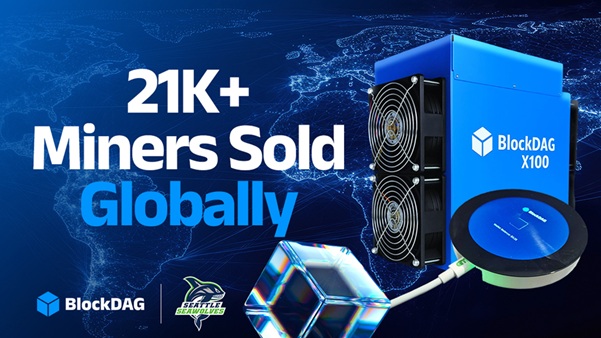
The project’s momentum is supported by over $443 million in funding and a community of 312,000 holders. BlockDAG has also established a functional mining ecosystem, with 21,000 X Series rigs sold and 3.5 million users active on the X1 mobile app. This allows everyone, from smartphone users to professional miners, to earn daily rewards ranging from 20 to 2,000 BDAG.

For anyone identifying the next big crypto for the 2026 cycle, BlockDAG offers a rare mix of a fixed entry price, a guaranteed launch markup, and an active user base. With only days remaining, the window for this entry is closing rapidly.

Identifying the Next Big Crypto for 2026

The Shiba Inu coin price shows potential for growth if it clears key resistance, though current volatility adds a layer of risk. Similarly, the Ethereum price today is backed by strong institutional infrastructure, but gains may be gradual as the network prioritizes long-term scalability over immediate fee revenue.

BlockDAG (BDAG) offers a different dynamic. Unlike established tokens that move with market sentiment, its 1,566% upside to the launch price is a structured part of its roadmap. With the presale ending January 26th and only 3.2 billion coins remaining at $0.003, the rush to secure early-stage pricing is intensifying. For those hunting the next big crypto, BlockDAG is a primary contender, but the opportunity to enter at this level is nearly over.

Presale: https://purchase.blockdag.network

Website: https://blockdag.network

Telegram: https://t.me/blockDAGnetworkOfficial

Discord: https://discord.gg/Q7BxghMVyu