DD
MM
YYYY

PAGES

DD
MM
YYYY

spot_img

PAGES

Home Blog Page 2743

India and Germany’s Green Hydrogen Roadmap in 2024

0

In a landmark move, India and Germany have agreed on a green hydrogen roadmap, marking a significant step towards sustainable energy and climate action. This agreement is a testament to the growing international collaboration in the fight against climate change and the shared commitment to the Paris Agreement goals.

The Indo-German Green Hydrogen Roadmap was officially exchanged during the 7th Inter-Governmental Consultations (IGC) in New Delhi on October 25, 2024, in the presence of Indian Prime Minister Shri Narendra Modi and German Chancellor Shri Olaf Scholz. This roadmap outlines a strategic partnership between the two nations, focusing on the research and development of hydrogen as an alternative energy source.

Hydrogen, particularly green hydrogen, is considered a key element in the transition to a low-carbon economy. It is an energy carrier that can be used in various sectors, including transportation, industry, and power generation, with water being the only emission when it is consumed. The roadmap between India and Germany aims to promote the market ramp-up of green hydrogen, which is produced using renewable energy sources, thereby reducing carbon emissions.

The Indo-German Green Hydrogen Roadmap outlines a collaborative approach to the research and development of hydrogen as an alternative energy source. It emphasizes the importance of green hydrogen in achieving the decarbonization goals set by both countries under the 2015 Paris Agreement. Germany has set ambitious targets for hydrogen to generate between 95 and 130 terawatt-hours of power per year, which would require a significant portion to be imported. India aims to produce an annual 5 million tons of hydrogen by the end of the decade.

Germany’s plan to generate a substantial portion of its power through hydrogen, with a significant percentage expected to be imported, complements India’s goal to ramp up its hydrogen production capacity annually by the end of the decade. This synergy is not only a testament to the countries’ commitment to decarbonizing their economies but also highlights the potential for green hydrogen to become a cornerstone of global energy strategies.

This agreement is not just about government initiatives; it also calls for the active participation of scientists, students, and businesses. The roadmap defines various work areas that are now being attended to, with the expectation that the private sector will play a crucial role in advancing this green technology. The construction of terminals in India for the export of green ammonia is also a part of the plan, which will facilitate the global trade of green hydrogen.

Moreover, the roadmap is part of a broader Indo-German commitment to decarbonization, with Germany pledging 10 billion euros in funding for various green projects in India through 2030. This underscores the shared commitment of both nations to climate action and sustainable development goals. The roadmap also emphasizes the importance of private sector engagement, research cooperation, and legislative coordination. It even includes support for the construction of terminals in India for the export of green ammonia, showcasing the breadth of the partnership’s vision.

The Indo-German Green Hydrogen Roadmap is a declaration of intent that sets the stage for a long-term partnership in energy transition. It is a strategic move that will not only benefit the two countries but also set an example for international cooperation in the fight against climate change. As the world looks for ways to reduce carbon emissions and move towards sustainable energy solutions, the collaboration between India and Germany offers a blueprint for others to follow.
 

Coinbase Announces Partnership with Canadian Football League

0

Coinbase, the renowned global cryptocurrency exchange, has marked a significant milestone by becoming the first crypto partner of the Canadian Football League (CFL). This groundbreaking partnership heralds a new era in sports sponsorships, blending the traditional world of sports with the innovative realm of digital currencies.

The collaboration was officially announced, setting the stage for a unique integration of cryptocurrency into mainstream Canadian sports. Coinbase’s role as the Official Crypto Partner of the CFL and the 111th Grey Cup is a testament to the growing acceptance and integration of cryptocurrency in various sectors. The partnership is not just a sponsorship deal; it’s a strategic move to deepen Canadians’ connection with cryptocurrency, providing them with the tools and opportunities to participate in the burgeoning digital economy.

Coinbase’s initiative includes sponsoring the opening coin toss at the championship game in Vancouver on November 17, symbolizing the fusion of tradition and innovation. The partnership extends beyond the field, with Coinbase offering $25 in Bitcoin to every CFL fan after their first trade on the Coinbase platform. This initiative aims to encourage the adoption of cryptocurrency by making it more accessible to the public.

The CFL, known for its passionate fan base and celebrated sports legacy, is embracing this partnership to enhance fan experiences and interactions with the game. By collaborating with Coinbase, the CFL is positioning itself at the forefront of technological innovation in sports, offering fans new ways to engage with their favorite teams and the league.

Coinbase’s launch in Canada in 2023 and its subsequent growth to become the largest and first international exchange registered as a Restricted Dealer in the country underscores the potential of the Canadian market. With an estimated five million crypto holders, Canada represents a significant opportunity for Coinbase to expand its global footprint.

The partnership also includes exciting fan engagement opportunities, such as the chance to win regular season tickets for the next season or Bitcoin prizes by scanning select QR codes in-stadium and during Grey Cup Playoff broadcasts. One lucky winner will even receive a grand prize of $50,000 in Bitcoin and the Ultimate Grey Cup Experience trip for two to the 112th Grey Cup in Winnipeg.

This alliance between Coinbase and the CFL is more than a sponsorship—it’s a strategic collaboration that aims to increase economic freedom and participation in the digital economy. It’s a bold step forward for both organizations and a clear indication of the evolving landscape of sports sponsorships in the age of cryptocurrency.

The 111th Grey Cup, featuring the internationally acclaimed Jonas Brothers in the Twisted Tea Grey Cup Halftime Show, promises to be an event that will not only showcase the pinnacle of Canadian football but also celebrate the integration of cryptocurrency into a cherished national tradition. Fans across North America and beyond can tune in to witness this historic event, with the championship contest being broadcast live on various networks and streaming platforms.

As the world of sports continues to evolve, partnerships like the one between Coinbase and the CFL are paving the way for a new chapter in sports engagement, where technology and tradition converge to create a more inclusive and dynamic fan experience. The future of sports sponsorships is here, and it’s digital.

Can better regulation improve Nigeria’s electricity sector?

1

Question: can better regulation improve Nigeria’s electricity sector?

My Response: Is the problem really regulatory or a lack of evidential investing opportunities in the broad distribution of electricity in Nigeria. Running a DISCO (distribution company) in Nigeria does not compound any real value if you run the regression analysis. 

Why? The best energy consumers in Nigeria (Dangote Cement, BUA Cement, etc) are not connected to the national grid. Those major industrials take out more than 30% of the revenue. The second tier – top Commercials – have figured out solutions for themselves. You take out another 20%.  So, any DISCO is losing potential revenue of at least 40% in its jurisdiction!

The remaining – low tier commercial and residential customers – hardly have resources to pay, making collection extremely challenging. You can argue on metering but the root cause is more than that. 

So, if you look at the opportunity, more than 90% of the profits in the electricity sector today are captured at the Generation. So, Transcorp Power, Geregu Power, etc, are better businesses because they have one great customer – the Nigerian government via NBET which buys in bulk. Those firms are multi-trillion naira publicly traded companies. You get the idea: if there is clarity on the customers, investors will come to invest.

My point: you can regulate whatever you want, but it is about the economics, and DISCOs will struggle in Nigeria for decades! Nigeria should not expect the DISCOs to find those resources because those who are expected to give them the funds do not see the paying customers, especially considering the fact that the rate is not really reflective. I mean have the rates adjusted for the new USD exchange rate and prices of fuel since those vectors do affect the electricity sector?

That is why more than 80% of DISCOs in Nigeria are either bankrupt or already taken over by banks or just fading. Electricity distribution is catalytic for commerce,  and governments must do it until we have companies with deeper pockets to run it.

Microsoft discloses the “Assessment of Investing in Bitcoin” Policy

0

As Microsoft gears up for its annual shareholder meeting on December 10th, a significant item on the agenda has caught the attention of investors and the tech community alike: the “Assessment of Investing in Bitcoin” policy. This proposal has sparked a debate on the role of cryptocurrencies in corporate investment strategies, reflecting the broader conversation happening across various sectors about the potential and pitfalls of digital assets.

The proposal, set forth by The National Center for Public Policy, suggests that Microsoft should consider diversifying its assets with Bitcoin, citing it as an “excellent, if not the best, hedge against inflation.” The think tank argues that in times of inflation, corporations have a fiduciary duty to protect their balance sheets with assets that appreciate more than bonds, even if they are more volatile in the short term.

However, Microsoft’s board of directors has advised shareholders to vote against this proposal. The board’s stance is that Microsoft’s management already carefully considers potential investments, including Bitcoin, as part of its strategy to diversify assets and protect from inflation. The Global Treasury and Investment Services team at Microsoft is tasked with evaluating a wide array of investments, and according to the board, they have already considered cryptocurrencies in their assessments.

Arguments Against Bitcoin Investment:

Bitcoin’s price is highly volatile, which can lead to substantial losses. The lack of clear regulatory frameworks in many regions creates uncertainty and risk.
The digital nature of Bitcoin makes it susceptible to hacking and theft.
Bitcoin mining consumes a large amount of energy, raising environmental concerns.

The board’s recommendation against the Bitcoin investment proposal is rooted in the belief that Microsoft has strong and appropriate processes in place to manage and diversify its corporate treasury for the long-term benefit of shareholders. They argue that a public assessment of investing in Bitcoin is unwarranted, given the internal evaluations that regularly take place.

This shareholder proposal comes at a time when Bitcoin’s role as an investment asset is being hotly debated. Some companies, like MicroStrategy, have seen significant returns from their strategic pivot toward Bitcoin investment. On the other hand, the volatility of cryptocurrencies remains a concern for many investors, particularly in the context of corporate investment strategies that traditionally prioritize stability and long-term growth.

The upcoming shareholder meeting will be a critical moment for Microsoft, as it will not only reflect the company’s stance on cryptocurrency investment but also signal to the market how one of the world’s largest tech companies views the future of digital assets. Shareholders will have the opportunity to voice their opinions and cast their votes on this pivotal issue.

For those interested in the intricacies of corporate investment strategies and the evolving landscape of digital assets, the Microsoft shareholder meeting will be an event to watch. It represents a microcosm of the larger dialogue taking place in boardrooms around the world, as companies grapple with the question of how, or if, to integrate cryptocurrencies into their investment portfolios.

As December 10th approaches, all eyes will be on Microsoft and its shareholders. The decision made at this meeting could have far-reaching implications, not just for Microsoft, but for the broader corporate approach to Bitcoin and cryptocurrency investments.

Euro Slips as ECB Lowers Rates: Will U.S. Dollar and Global Trade Feel the Impact?

0

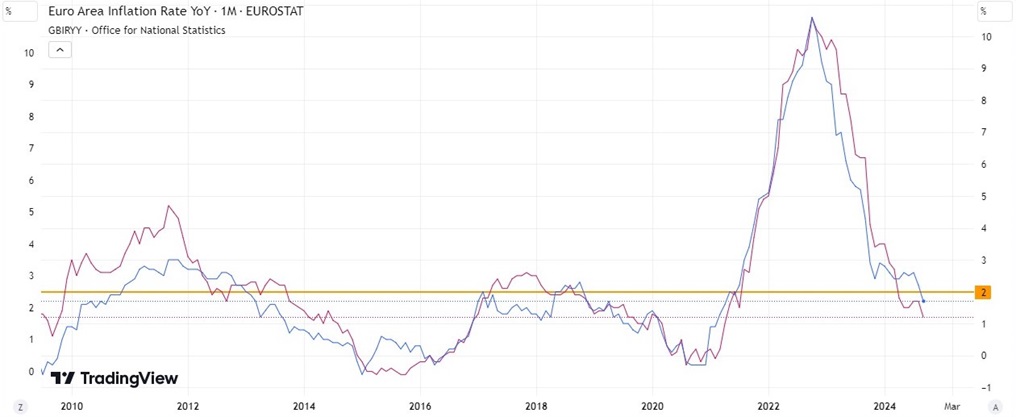
On Thursday, October 17th, the European Central Bank (ECB) cut interest rates by 25 basis points for the third consecutive time, as expected by most analysts. This move followed September data revealing inflation falling surprisingly below the official 2% target in both the Eurozone and the United Kingdom.

Signs of economic weakness continue in the Eurozone, with various economic indicators pointing towards a “stalling” economy, particularly in Germany. During the ECB board meeting in Ljubljana, Slovenia, President Christine Lagarde reiterated that a recession remains unlikely for now, although growth forecasts have been scaled back. She noted, “Lower confidence could prevent consumption and investment from recovering as fast as expected.”

There is a probability of another 25-basis-point rate cut in December, with expectations that rate cuts are likely to continue until late 2025. Despite positive inflation data bringing forward price target expectations, monetary easing is expected to persist, assuming the Middle East situation remains stable and oil prices do not surge.

Expectations for additional Fed rate cuts have eased across the Atlantic. With strong U.S. consumption and labor data, the dollar is anticipated to strengthen — a trend likely to persist as markets have already factored in the ECB’s recent rate cut. However, monitoring the economic calendar remains essential to stay informed about any events that might affect this outlook.

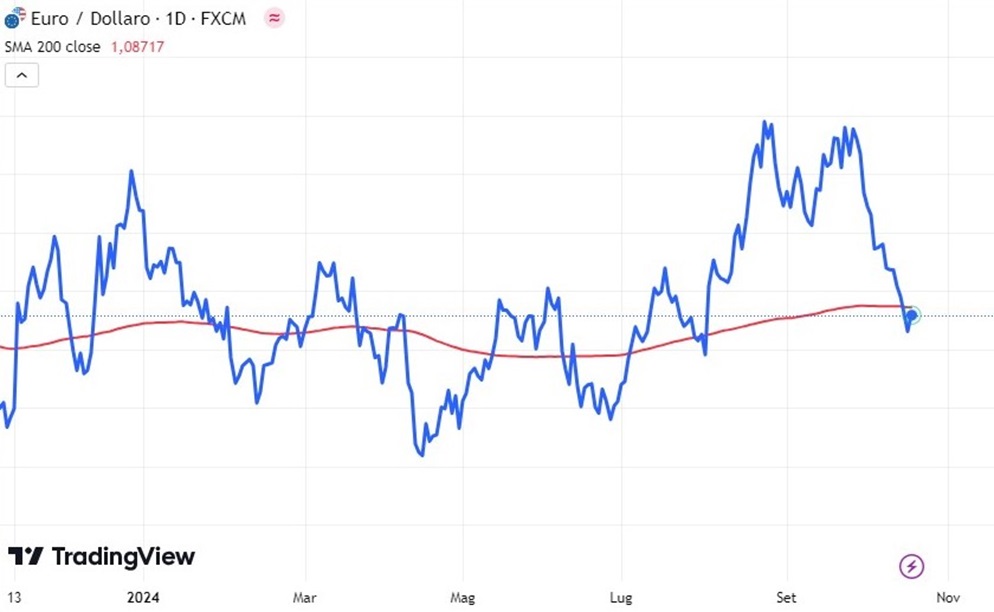
The market reaction was evident in the EUR/USD exchange rate, which dropped below its 200-period moving average on October 17th. The threat of trade tariffs promised by Donald Trump, the U.S. presidential candidate, could dampen global trade, forcing the ECB to extend its monetary easing policies to keep the euro competitive.

A strong dollar could jeopardize the stability of emerging markets and ripple through global trade. China’s central bank has promised economic support, but recent GDP data from China, showing slowing growth, have cast doubt. People’s Bank of China Governor Pan Gongsheng highlighted real estate and stock markets challenges as key factors requiring targeted policy support.

In this scenario, traders and investors have room to operate on both currencies, betting on a stronger dollar and a weaker euro, continuing a trend already underway — at least until parity is reached, which is currently seen as a long-term target.