DD
MM
YYYY

PAGES

DD
MM
YYYY

spot_img

PAGES

Home Blog Page 2765

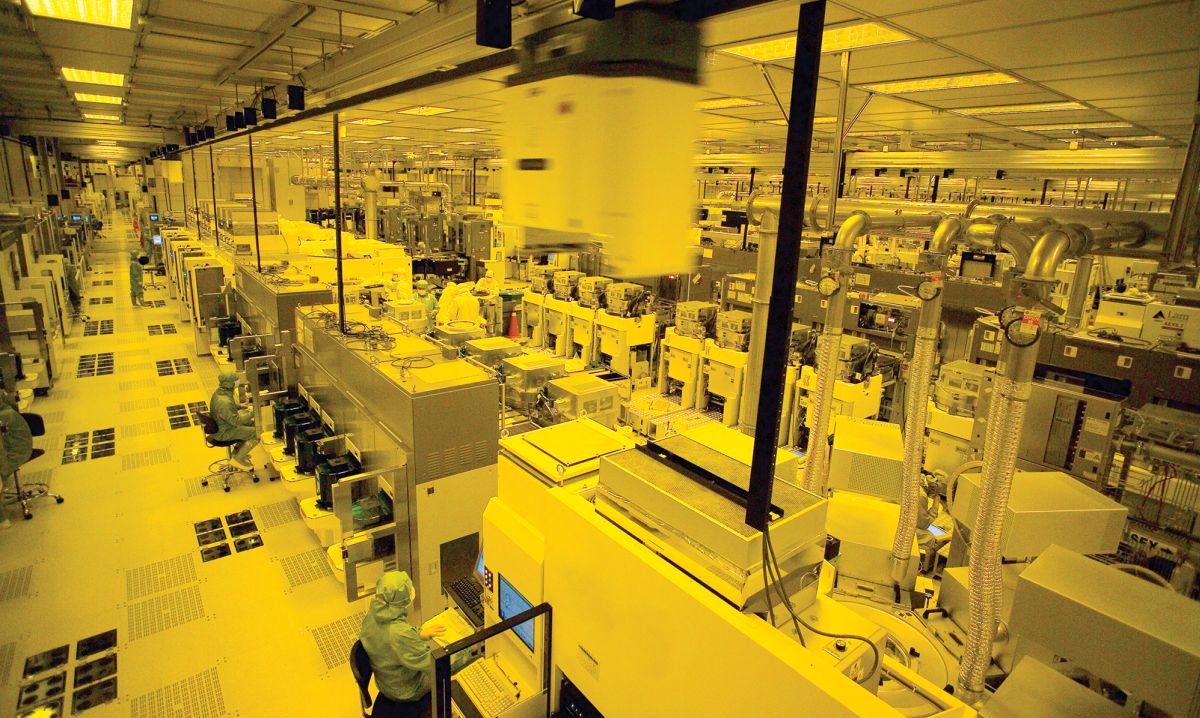
US Announces $325m Investment to Support Hemlock Semiconductor Michigan

0

The Biden administration has announced a significant investment of up to $325 million to support Hemlock Semiconductor in building a new factory in Michigan, a move that could have strategic political implications in the battleground state ahead of the upcoming election.

The funding, which comes from the CHIPS and Science Act signed into law by President Joe Biden in 2022, is intended to bolster U.S. semiconductor production and strengthen the country’s manufacturing base. The project is expected to create 180 permanent manufacturing jobs in Saginaw County, along with numerous construction jobs during the building phase.

Commerce Secretary Gina Raimondo emphasized the administration’s broader strategy of revitalizing American manufacturing and reducing reliance on foreign semiconductor supplies, which are critical for a wide range of technologies, from electronics to solar energy.

“What we’ve been able to do with the CHIPS Act is not just build a few new factories, but fundamentally revitalize the semiconductor ecosystem in our country with American workers,” Raimondo said. “All of this is because of the vision of the Biden-Harris administration.”

The decision to channel federal funds to a project in Michigan could help sway voters in a state that has been hotly contested in recent presidential elections. Both Republicans and Democrats were nearly evenly matched in Saginaw County during the last two races.

In 2016, Donald Trump narrowly carried the county and the state of Michigan, but the tables turned in 2020 when Joe Biden managed to flip both back to the Democrats. With Saginaw County expected to be a key battleground in the 2024 election, the new investment could give Democrats a valuable edge.

Timing, Election Gimmick?

A senior administration official, speaking on condition of anonymity, explained that the announcement’s timing was driven by the completion of negotiations on the grant terms rather than political motivations. However, the economic boost in a swing state during an election year inevitably carries political weight. While the investment is part of a larger strategy to secure U.S. semiconductor supply chains, it provides high-quality jobs, thus positioning the administration to showcase economic achievements.

Hemlock Semiconductor, a key player in the production of hyper-pure polysilicon used in semiconductors and solar panels, plans to begin construction on the new facility in 2026, with production starting by 2028. The investment aims to not only support immediate job creation but also lay the foundation for long-term economic growth in Saginaw County and the broader region.

Hemlock Semiconductor is a significant player in the U.S. semiconductor supply chain, producing hyper-pure polysilicon, a crucial material for semiconductor wafers and solar panels. The expansion into Saginaw County is expected to enhance domestic production capabilities, contributing to the Biden administration’s goal of reshoring critical supply chains and supporting the broader semiconductor ecosystem.

The announcement also highlights contrasting economic strategies between the two major political parties. While the Biden-Harris administration has focused on government-led investment in high-tech industries, using initiatives like the CHIPS Act to spur job creation and industrial growth, former President Donald Trump has advocated for an approach centered on trade policy and tax cuts. Trump, the Republican nominee, has argued that raising tariffs and cutting income taxes would be more effective at revitalizing American manufacturing than the Biden administration’s approach.

The CHIPS and Science Act, signed into law by Biden, has allocated billions to support domestic semiconductor production. It is part of a broader push to reduce dependency on foreign suppliers, especially from countries like China, and to ensure that the U.S. remains a leader in high-tech industries. Vice President Kamala Harris, the Democratic candidate, has fully backed the legislation as part of her campaign, emphasizing the role of such investments in building a sustainable economic future.

As the factory project moves forward, it is expected to serve as a tangible example of the administration’s commitment to industrial revitalization. Raimondo highlighted that the CHIPS Act has gone beyond merely facilitating new factories, with a larger aim of fundamentally reshaping the U.S. semiconductor industry to be more resilient and globally competitive.

However, the CHIPS Act’s goal extends beyond individual factory projects; it aims to establish a comprehensive ecosystem that supports semiconductor design, manufacturing, and supply chain resilience in the United States.

Key Semiconductor Initiatives Under the CHIPS Act

Several initiatives have been launched under the CHIPS Act to meet these ambitious objectives, focusing on key regions and major companies. Some of the significant projects include:

Intel’s $20 Billion Investment in Ohio

One of the most high-profile investments under the CHIPS Act is Intel’s $20 billion plan to construct two new semiconductor manufacturing plants, known as fabs, in Licking County, Ohio. Announced in early 2022, the investment is one of the largest in the history of the state and aims to make the new facilities the cornerstone of what Intel hopes will be a new “Silicon Heartland” in the Midwest.

The project is expected to create 3,000 permanent high-tech jobs and support tens of thousands of indirect jobs in construction and related industries. These fabs will manufacture advanced semiconductor chips and are seen as a critical step toward reducing U.S. reliance on overseas chip production.

Taiwan Semiconductor Manufacturing Company (TSMC) Expansion in Arizona

TSMC, one of the world’s leading chipmakers, is expanding its manufacturing capabilities in Arizona, with support from the CHIPS Act. The company has pledged over $40 billion to build a semiconductor fabrication facility in Phoenix, which will eventually house two fabs.

The first phase of the project is slated for completion by 2024, with plans to manufacture advanced 5-nanometer and 3-nanometer chips that will be used in a variety of applications, from smartphones to military equipment. The investment marks one of the largest foreign direct investments in U.S. history, and the CHIPS Act funding aims to facilitate the transfer of cutting-edge technology to support U.S. chipmaking leadership.

Micron Technology’s Mega-Project in New York

Another major initiative under the CHIPS Act is Micron Technology’s plan to invest up to $100 billion over 20 years to build the largest semiconductor fabrication facility in the U.S., located near Syracuse, New York. Micron’s commitment was made possible through both federal and state incentives, with the CHIPS Act playing a critical role in supporting this massive undertaking.

The facility will focus on producing advanced memory chips and is projected to create 9,000 direct jobs, in addition to thousands of construction and supply chain positions. This initiative aligns with the administration’s focus on scaling up domestic capabilities in critical technology sectors.

Samsung’s $17 Billion Plant in Texas

Samsung is building a $17 billion semiconductor manufacturing facility in Taylor, Texas, which will be its largest investment in the U.S. to date. The new plant will help Samsung expand its production of advanced chips, with a focus on meeting the growing demand for chips used in data centers, artificial intelligence, and 5G technology.

Although the project was announced before the CHIPS Act was signed, the legislation has provided a framework for additional support, including infrastructure improvements and workforce development incentives to ensure the facility’s success.

As Elon Musk Plans To Launch extra 30k Satellite, African Union Must Develop A Plan for Starlink on Taxes

1

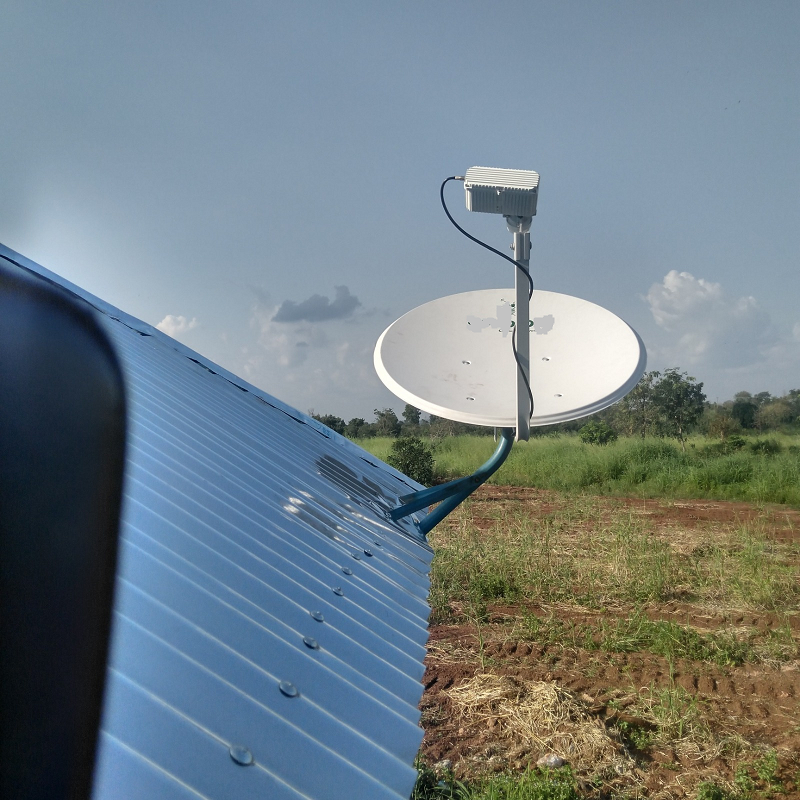
I remain convinced that the best days of terrestrial broadband providers like GSM companies are behind them, as Elon Musk goes all out with an asymmetric competitive playbook: “Elon Musk’s SpaceX has renewed its push for approval to significantly expand the Starlink satellite constellation, seeking permission from the Federal Communications Commission (FCC) to launch nearly 30,000 more satellites into low-Earth orbit.”

If they do approve these satellites, he could crash the cost of his data by up to a factor of 4, and by 2027, his cost model will be cheaper than whatever your local mobile provider is giving you. And because he has the satellite-to-cellphone capabilities already in place, a massive disintermediation is loading.

I understand that our regulators and policymakers are always sleeping, but they cannot afford to do that on this matter. If Africa loses all the core taxes from the telecom sector to satellite providers which are not indigenous, our economies could collapse. So, they need to immediately put a tax regime at the African Union level on how to handle this new vector.

Understand that the solution is not for MTN, Glo or Safaricom going satellite. That is a waste of time. Why? None has the engineering capacity to design, make and launch satellites, and can only rely on external providers. But for Starlink, it is end-to-end in-house, and because of that, the Starlink price model could be superior on multiples. This is why this is an existential threat to many telcos in terrestrial space!

Elon Musk Seeks FCC’s Permission to Launch 30,000 More Satellites, Astronomers Sound Alarm

0

Elon Musk’s SpaceX has renewed its push for approval to significantly expand the Starlink satellite constellation, seeking permission from the Federal Communications Commission (FCC) to launch nearly 30,000 more satellites into low-Earth orbit.

This latest request, which seeks to deploy up to 29,988 satellites, aims to improve global internet connectivity by bringing gigabit speeds and “ubiquitous mobile connectivity to all Americans” and billions of other users worldwide. However, astronomers are raising the alarm over the potential risks such a massive deployment poses to scientific research and the pristine night sky, according to The Independent.

The application, filed on October 11, seeks permission not only for a larger satellite constellation but also to operate at lower orbits for the second-generation system and to utilize more radio frequencies. SpaceX argues that the additional frequencies will not significantly interfere with other spectrum users. If approved, the company plans to launch the satellites using its powerful Starship mega-rocket.

SpaceX’s current request mirrors a similar one made over two years ago when the company also sought permission to deploy up to 30,000 satellites. At that time, the FCC granted approval for the deployment of only 7,500 satellites, citing the need to protect other satellite operators from harmful interference and to maintain a “safe space environment.” The latest 20-page filing, however, does not address how the new proposal would mitigate potential impacts, which is fueling concerns among scientists.

Astronomers Sound the Alarm

The rapidly increasing number of satellites orbiting Earth has raised serious concerns among astronomers, who argue that large satellite constellations threaten both optical and radio astronomy. Piero Benvenuti, director of the International Astronomical Union’s (IAU) Centre for the Protection of the Dark and Quiet Sky from Satellite Constellation Interference, pointed out that the potential impact has been recognized for years.

“Obviously, the impact is what we have already known for several years,” Benvenuti told The Independent on Monday, adding that there is a “severe impact on astronomy, both optical and radio astronomy, and also the visibility of the pristine sky.”

One of the main issues is the satellites’ brightness. The reflected sunlight from these objects can create bright streaks in the sky, disrupting telescopes’ ability to capture clear images of stars, planets, and other celestial objects. The light pollution caused by satellite reflections can compromise long-exposure observations, which are critical for studying faint objects in the cosmos.

Radio Astronomy Under Threat

Concerns extend beyond visual observations to radio astronomy, where the impact could be even more severe. The radio frequencies used by the Starlink satellites for communication can generate electromagnetic interference that affects the ability of radio telescopes to detect faint signals from space.

Last month, astronomers highlighted that radio emissions from Starlink satellites had complicated efforts to observe exoplanets and black holes using the European Low-Frequency Array (LOFAR) network.

“Although the bandwidth they are using is not among the so-called ‘protected’ radio bands for radio astronomy, they are very close to them,” Benvenuti explained. “And so, there is always spillover of noise, and it’s very difficult, in that case, to avoid interference.”

International Efforts to Mitigate Impacts

In response to growing concerns, the IAU has been collaborating with SpaceX to develop mitigation strategies aimed at protecting astronomy. One approach under consideration is to reduce the satellites’ reflectivity to make them “essentially invisible to the naked eye.”

This could involve using advanced materials and coatings that absorb sunlight rather than reflecting it, which would help minimize the light pollution caused by satellite reflections. However, Benvenuti noted that achieving such invisibility for thousands of satellites is a challenging technical hurdle.

“That is very hard to obtain, but at least they try to work on the material science to find the coating of the satellite that would not reflect, like a mirror, the light of the sun,” he explained.

Another strategy being discussed involves improving satellite tracking accuracy. Knowing the exact positions of satellites could allow astronomers to adjust their observations and avoid satellite trails. However, implementing this solution is complex, as satellites are constantly maneuvering to avoid collisions with other objects in space, such as the International Space Station and other debris.

To address radio frequency interference, one suggestion is for satellite operators to adjust the transmission beams away from major radio astronomy facilities when passing overhead. Yet, as the number of satellites in orbit continues to grow, managing such coordination becomes increasingly difficult.

An Exponentially Crowded Sky

The surge in satellite numbers is happening at a staggering pace. Just four years ago, there were approximately 2,200 satellites orbiting the Earth in low-Earth orbit. Today, the figure has ballooned to around 14,000, driven in large part by Starlink’s rapid expansion. With SpaceX’s latest proposal, the trend shows no signs of slowing down.

Moreover, the International Telecommunications Union has received requests to launch an astonishing 1.7 million satellites in total, although only a small fraction of this number is expected to be realized. Even so, launching just a few percent could increase the total number of satellites in orbit to over 150,000.

“The scary news is that the International Telecommunications Union currently has received requests for launching 1.7 million satellites,” Benvenuti remarked. “That will become … quite challenging.” The increased congestion in low-Earth orbit not only heightens the risk of collisions and the creation of space debris but also complicates efforts to maintain the safety of orbital operations.

Starlink’s Expansion Plans

Despite the concerns, Starlink continues to expand its reach. In September, the satellite internet service reached four million subscribers, underscoring the high demand for reliable global internet access. To accommodate this growing user base and meet future connectivity needs, Musk recently outlined plans for deploying third-generation Starlink satellites at an altitude of 350 kilometers.

These new satellites will feature larger antennas capable of multi-gigabit bandwidth, reducing latency to an estimated 5 milliseconds for round-trip communications. This lower orbit placement is designed to improve the network’s speed and responsiveness, making it even more appealing for high-performance applications.

SpaceX intends to deploy the third-generation satellites using its Starship mega-rocket, a next-generation launch vehicle capable of carrying large payloads into orbit. The success of Starship is central to Musk’s vision of creating a vast satellite constellation that not only powers global connectivity but also supports human space exploration and other ambitious space endeavors.

While Starlink-powered internet access can drive economic growth and improve quality of life, particularly in underserved regions, the impact on scientific research and the night sky has become a big issue.

Growing Your Craft Business with the Right Equipment and Funding

0

Turning a craft into a thriving business is an exciting venture but requires more than creativity and passion. As demand grows, so does the need for better equipment, larger workspace, and a consistent supply of materials. For small business owners, finding the proper funding to invest in these essentials is crucial to sustaining growth and meeting customer expectations. Scaling a craft business can quickly become overwhelming without the correct tools and financial planning.

This article will explore how investing in the right equipment and securing the necessary funding can help you take your craft business to the next level.

Invest in Essential Equipment

Every craft business is unique, and the equipment needed varies based on the craft. Whether you’re a potter, a jeweller, or a woodworker, having access to high-quality equipment is essential for maintaining product quality and increasing production efficiency. As your business grows, you might need to upgrade your current tools or invest in more advanced machinery.

Identify the equipment to give you the best return on investment (ROI). This could be upgrading to industrial-grade machines or purchasing additional tools to increase output. Assess your current workflow and consider where bottlenecks occur. Investing in the right equipment can help you reduce production time and improve your business’s capacity to handle more orders.

Explore Funding Options for Equipment

Purchasing new equipment can be costly, especially for small businesses. If your craft business is ready to grow but lacks the capital to invest in equipment, it’s worth considering various funding options. Traditional bank loans can be an option, but they often have strict requirements and lengthy approval processes. Some business owners explore cash advance business loans for faster access to funds, which provide quick cash flow to cover immediate needs, including equipment purchases.

Review the terms carefully when deciding which funding option is right for your business. Understanding the repayment plan and interest rates is essential for making informed financial decisions.

Maintain Equipment for Long-Term Success

Once you’ve invested in the right equipment, maintaining it is as important as the initial purchase. Regular maintenance ensures that your tools and machines operate efficiently, reducing the likelihood of costly repairs or replacements down the line. Create a maintenance schedule and stick to it regularly, whether it’s cleaning, oiling, or sharpening tools.

Additionally, keeping your equipment in top shape can help extend its lifespan, saving you money and keeping production running smoothly. Investing in your tools improves product quality and shows customers that you take pride in your work and care about delivering the best results.

Planning for Future Growth

As your business grows, so will your equipment needs. Expansion requires planning, not just in terms of workspace and inventory but also in the financial resources needed to support that growth. While it’s tempting to reinvest profits directly into your business, securing additional funding or another financing option may allow you to scale faster without straining your current cash flow.

It’s also worth considering the possibility of needing specialized equipment, such as a loan for HVAC systems, especially if your workspace requires climate control for materials like wood, metal, or ceramics. Planning ensures that when the time comes, you’ll be ready to make those more considerable investments without disrupting your operations.

Marketing and Customer Engagement

Growing a craft business isn’t just about having the right equipment or funding. Building solid relationships with customers is equally important. Ensure you engage with your customer base through social media, email marketing, and in-person events like craft fairs or workshops. Showcase how your new equipment has improved your products, whether it’s faster turnaround times or better craftsmanship. Keep your customers in the loop and let them be part of your business’s growth journey.

Investing in the right equipment and exploring funding options can set your craft business on a path to sustainable growth. Making smart financial decisions will help you achieve long-term success.

Nigeria Proposes a 5% Tax on Telcos, Gaming, and Betting Activities

0
FIRS signpost

In a bid to revamp Nigeria’s tax system, the Federal Government has put forward a proposal for a 5% excise duty on telecommunications services, gaming, and betting activities. This move is part of a broader bill aimed at overhauling the country’s tax framework, which could have significant implications for various sectors and consumers.

The proposed legislation, titled “A Bill for an Act to Repeal Certain Acts on Taxation and Consolidate the Legal Frameworks relating to Taxation and Enact the Nigeria Tax Act to Provide for Taxation of Income, Transactions, and Instruments, and Related Matters,” seeks to introduce excise duties on services such as telecoms, gaming, gambling, lotteries, and betting provided in Nigeria.

Under the new bill, telecoms services, including both postpaid and prepaid services regulated by the Nigerian Communications Commission, will attract a five percent duty. The same rate applies to gaming, gambling, betting, and lottery services. Additionally, the bill outlines guidelines on currency transactions, specifying that any difference between the prevailing Central Bank of Nigeria exchange rate and the actual transaction rate will be subject to excise duty.

This proposed tax regime is part of the government’s strategy to boost non-oil revenue amidst fiscal pressures. With the rapid growth in the telecoms and betting sectors, authorities are looking to widen the revenue base. The bill also aims to ensure that currency exchanges align with official CBN rates, with any excess payable as excise duty under a self-assessment model.

The implications of this proposed tax are far-reaching. For consumers, it could mean an increase in the cost of telecommunications services, which are an integral part of daily life and business operations. For service providers, it presents a new financial challenge that may affect pricing strategies and market competitiveness.

For consumers, the introduction of this tax could lead to increased costs for telecommunications services, as service providers may pass on the additional tax burden to customers. This could affect the affordability of these services, potentially reducing access for lower-income individuals.

Service providers might experience a decrease in demand for their services due to the increased costs, which could impact their revenue and profitability. They may also face challenges in implementing the necessary systems to comply with the new tax regulations, leading to additional operational costs.

From the government’s perspective, the tax is expected to generate additional revenue, which could be used to fund public services and infrastructure. However, it is essential to consider the potential economic consequences, such as reduced consumer spending and the possible stifling of growth in the telecoms and gaming sectors, which have been significant contributors to the Nigerian economy.

The proposed tax also aims to ensure that currency exchanges align with official Central Bank of Nigeria rates, potentially reducing the incidence of black-market currency transactions. However, this could also impose a burden on businesses that engage in international trade and rely on currency exchanges.

Overall, while the tax may provide a new revenue stream for the government, it is crucial to balance this against the potential negative effects on the economy and the cost of living for Nigerians. The outcome of this proposal will depend on the government’s ability to implement it effectively and the response from the affected industries and consumers.

The government’s focus on non-oil revenue is a reflection of the need to diversify the economy and reduce reliance on the oil sector, which has been subject to global price fluctuations and local production challenges. By tapping into the burgeoning telecoms and gaming industries, the government hopes to create a more stable and sustainable revenue stream.

As the bill progresses through the legislative process, it will be subject to scrutiny and debate. Stakeholders from the affected industries, as well as consumer advocacy groups, are likely to voice their opinions and concerns. The outcome of this proposal will be a key indicator of Nigeria’s fiscal direction and its impact on the digital economy.