DD
MM
YYYY

PAGES

DD
MM
YYYY

spot_img

PAGES

Home Blog Page 2774

Crypto for Dummies: Top 3 Coins to Start Your Wallet Journey 2024

0

Starting off on a crypto trading adventure can seem overwhelming but it need not be. For beginners, Lunex Network, Cardano, and Litecoin are the top three coin selections to start your wallet journey in 2024. Each of these coins offers unique features and benefits that cater to new investors. Let’s see why experts are particularly backing Lunex Network among the top three.

Litecoin (LTC) Rises By 1% In 7 Days

Litecoin’s price has climbed by 1.84% during the last 7 days to $64.30. Litecoin’s increasing payment dominance sets it apart, since it currently accounts for 37% of all cryptocurrency transactions, exceeding Ethereum and Bitcoin. This rise is due to Litecoin’s fast, low-cost transactions. Litecoin’s liquidity is solid, with a volume-to-market cap ratio of 0.1482. The RSI of 64.80 suggests neutral momentum, indicating sideways trading for now.

Over the past month, Litecoin saw positive performance 57% of the time, with low volatility at just 4%. Despite only outperforming 25% of the top 100 crypto assets, its expanding role in transactions keeps it relevant. For all those searching for an efficient and stable crypto, Litecoin remains a good choice.

Cardano (ADA) Faces Challenges

Cardano was formerly a contender in the Layer-1 blockchain space. A price rally to $0.80 in 2024 made some believe Cardano’s time had arrived. However, the resurgence of the broader market has shifted investors’ focus toward the larger ecosystems. This has hurt smaller Layer-1 blockchains like Cardano, and analysts don’t expect its price to reach $1 soon, as challenges persist.

Meanwhile, Cardano’s native currency, ADA, is currently facing challenges due to market pressure from Bitcoin and concerns surrounding large-scale Ethereum (ETH) sales related to the PlusToken scandal. A significant amount of ETH has been transferred to major exchanges, sparking fears of a possible $1.3 billion sale. This potential sale could have a major impact on Cardano and other altcoins, adding to the ongoing turbulence in the market.

Lunex Network’s (LNEX) Privacy-focused Crypto Trading Set To Change DeFi

Lunex Network focuses on privacy in crypto trading by eliminating KYC requirements. Users can trade anonymously without needing to submit personal documents, which simplifies the process and enhances security for all traders, whether beginners or seasoned.

For advanced traders, Lunex Network Pro offers a portfolio tracker for better asset management, along with an AML-compliant wallet address for enhanced safety. Businesses can make use of the platform’s B2B transaction gateway which allows crypto-to-fiat conversions immediately. This particular feature has attracted institutional investors and large-scale traders to the platform.

Lunex Network also has a revenue-sharing model that appeals to investors. The platform repurchases tokens from the market and distributes them as staking rewards, offering up to 18% APY. This, along with its deflationary tokenomics, helps maintain long-term token value, making $LNEX a solid investment.

Analysts predict huge potential gains, with 100x returns possible. With the token currently priced at $0.0015 in its presale, investors are encouraged to act quickly before the price surges during the anticipated 1800% rally.


You can find more information about Lunex Network (LNEX) here:

Website: https://lunexnetwork.com

Socials: https://linktr.ee/lunexnetwork

Stripe Reintroduces Crypto Payments With Stablecoins, Sees Global Adoption From Over 70 Countries in First 24 Hours

0

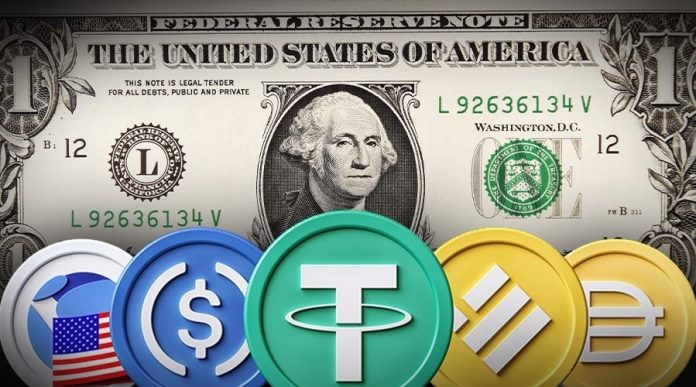
Stripe, the global payment processing giant,  has announced that users from over 70 countries used stablecoins for online transactions in the first 24 hours.

This development comes after the company began allowing merchants on its platform to accept crypto payments again, starting with US-based merchants.

According to an X post from Stripe employee Jen, the new feature gained rapid engagement in a short period after launch.

She wrote,

“In the first 24 hours, customers from 70+ countries have paid with stablecoins through Stripe. Today, we just expanded access, so if you’re a US merchant on Stripe, check your Stripe dashboard and turn on ‘Pay with Crypto!”

Recall that Stripe initially became a leader in the crypto space when it introduced Bitcoin payment support in 2014. However, it discontinued the feature in 2018, citing declining demand, long transaction times, higher fees, and price volatility.

The fintech new stablecoin option will enable merchants accept payments globally, with customers able to pay using USDC or USDP on Ethereum, Solana, and Polygon, while US merchants receive payments in dollars. Users can connect browser-extension wallets like Metamask or Coinbase Wallet to make payments and Stripe offers merchants the convenience of issuing refunds directly to customers’ wallets.

As part of the crypto payment solution, Stripe charges a 1.5% fee per transaction (in USD), lower than the 2.9% plus $0.30 typically charged for card payments. Head of Product Jay Shah, highlighted that Stripe now supports over 100 payment methods and plans to further expand its offerings.

Stripe’s move to reintroduce crypto, starting with stablecoins, aligns with the company’s goal to help businesses reach more customers at a lower cost. With the reintroduction of crypto payments, Stripe merchants can now accept USD payments across multiple blockchains without the complexity of holding or converting crypto to fiat.

This development highlights Stripe’s commitment to staying at the forefront of innovation in the payment industry. The company’s efforts come as demand for alternative payment methods continues to rise, particularly in emerging markets where access to traditional banking services remains limited.

Notably, the relaunch is expected to have far-reaching implications, potentially paving the way for wider acceptance of cryptocurrency payments across various industries and regions. As more businesses and consumers adopt stablecoin payments, Stripe is positioning itself as a leader in the evolving digital economy.

Also, in the company’s efforts to enhance fraud detection on its platform, it recently partnered with Nvidia that will advance AI for Stripe and improve fraud detection for its followers.

Air Peace CEO, Allen Onyema, Faces New Obstruction of Justice Charges Amid Fraud Investigation, Extradition to the US Likely

0

Allen Ifechukwu Athan Onyema, founder, Chairman, and CEO of Air Peace, one of Nigeria’s leading airlines, has been hit with new charges, including obstruction of justice, by the U.S. Department of Justice, following an indictment by U.S. authorities. The superseding indictment accuses Onyema of submitting false documents in an effort to hinder an ongoing investigation into previous charges of bank fraud and money laundering.

Alongside Onyema, Ejiroghene Eghagha, the airline’s Chief of Administration and Finance, has been charged with involvement in both the alleged obstruction and the earlier fraudulent activities.

According to the Department of Justice, Onyema and Eghagha orchestrated a scheme involving the misuse of export letters of credit. The letters, which ostensibly funded the purchase of five Boeing 737 aircraft for Air Peace, allegedly allowed the transfer of over $20 million into U.S. accounts. However, the supporting documents, including purchase agreements, bills of sale, and appraisals, were found to be fraudulent.

Background of The Fraud Allegations and Obstruction Charges

Onyema and Eghagha’s legal troubles began with the November 2019 indictment, which accused them of a wide-ranging scheme involving bank fraud, credit application fraud, identity theft, and money laundering. These allegations span back to financial transactions from 2010 to 2018, with the fraudulent activity peaking between 2016 and 2018. U.S. authorities allege that Onyema used Air Peace as a cover for illegal financial activities, including transferring over $44.9 million into bank accounts in Atlanta, Georgia, from foreign sources.

The superseding indictment filed on October 8, 2024, adds to the charges by accusing Onyema of attempting to obstruct justice by submitting fraudulent documents to U.S. authorities to mislead the investigation.

“After allegedly using his airline company as a cover to commit fraud on the United States’ banking system, Onyema, along with his co-defendant, allegedly committed additional crimes of fraud in a failed attempt to derail the government’s investigation of his conduct,” U.S. Attorney Ryan K. Buchanan said.

This latest indictment, Buchanan added, showcases the diligence of federal investigative partners in uncovering the defendants’ obstruction scheme, thus allowing for greater accountability.

The authorities allege that Springfield Aviation Company LLC, the entity purportedly selling the aircraft to Air Peace, was owned by Onyema himself, and never actually possessed the planes. Additionally, the appraisal company referenced in the documents did not exist.

Eghagha is accused of playing a key role in the execution of the scheme, including directing the manager of Springfield Aviation to sign false documents and even using the manager’s identity to facilitate fraud. After receiving the funds, Onyema allegedly laundered over $16 million by transferring it between various accounts in the United States.

Obstruction of Justice Allegations

The obstruction of justice charges are linked to actions taken by Onyema and Eghagha following the discovery of the investigation in 2019. It is alleged that the two instructed the Springfield Aviation manager to sign a key business contract but deliberately left the document undated. In October 2019, the contract was then falsely dated to May 5, 2016, predating the alleged fraudulent activities, and was presented to the U.S. government in an attempt to unfreeze bank accounts and halt the investigation.

According to the authorities, these actions were a calculated effort to mislead investigators and obstruct the course of justice.

“The charges announced today demonstrate the criticality of diligence and truth in criminal justice proceedings. HSI and our partners are committed to pursuing those who seek to exploit our nation’s financial system and any efforts to cover up illegal activity,” Steven N. Schrank, Acting Special Agent in Charge, of Homeland Security Investigations (HSI) Atlanta, stated.

The investigation into Onyema’s activities is being led by multiple federal agencies, including the Drug Enforcement Administration (DEA), Internal Revenue Service Criminal Investigation (IRS-CI), Homeland Security Investigations (HSI), and others. These agencies have been part of an Organized Crime Drug Enforcement Task Forces (OCDETF) operation, aimed at dismantling high-level criminal organizations.

Potential Extradition to the United States

With the new charges added to the already significant list, Onyema faces the likelihood of extradition to the United States. This development is based on the extradition treaty between Nigeria and the U.S., which allows for the transfer of suspects facing serious criminal charges.

Given the gravity of the accusations, including multiple counts of bank fraud, money laundering, identity theft, and obstruction of justice, U.S. authorities are expected to formally request Onyema’s extradition to stand trial in Georgia.

Implications for Air Peace

The legal battle surrounding Onyema is likely to have a significant impact on Air Peace, the airline he founded in 2013, according to analysts. Over the past decade, Air Peace has risen to become a major player in Nigeria’s aviation sector, offering both domestic and international flights. However, Onyema’s legal troubles could jeopardize the airline’s reputation and operational stability, especially, given its recent faceoff with some international airlines. The company has been engaged in ongoing disputes with foreign airlines as it seeks to expand its international routes, aiming to challenge established carriers in markets such as Dubai, Johannesburg, and London.

Analysts believe that the possibility of extradition could also raise questions about the airline’s corporate governance, particularly concerning the potential impact on leadership stability and strategic planning. The potential legal battle abroad is also expected to result in setbacks for the Nigerian aviation industry, with Air Peace’s growth ambitions stalling. Moreover, the current circumstances may lead to increased scrutiny from regulatory bodies and creditors, potentially affecting the airline’s access to financing and international partnerships.

As it stands, the criminal action number 1:19-CR-464 now encompasses various charges against Onyema and Eghagha, ranging from conspiracy to commit bank fraud and credit application fraud to money laundering and obstruction of justice. Under U.S. law, all defendants are considered innocent until proven guilty, and it remains the responsibility of the prosecution to establish guilt beyond a reasonable doubt.

The Vision of Smart Cities in Africa

0

I have always been fascinated with the idea of a smart city. You know – having a city that uses and integrates technology and data to improve the quality of life for its residents, and enhance sustainability. The picture of a more efficient and connected city is very appealing, especially where it supports a more sustainable and resilient environment.

First is high-speed connectivity and better infrastructure. Smart cities use IoT (Internet of Things) sensors and devices to monitor and manage infrastructure, such as traffic lights, waste management systems, and energy grids. It also has High-speed internet and robust connectivity, which are necessarily the foundation for real-time data exchange and the operation of smart technologies.

Smart cities also use real-time data to optimize traffic flow, reduce congestion, and improve public transportation. If you have lived or worked in a busy commercial location like Lagos state, then this feature may justifiably hold more appeal to you. There is also the integration of Electric vehicles (EVs) and autonomous vehicles (AVs) to reduce emissions and enhance transportation efficiency. This, of course, means that smart cities align with environmental sustainability goals.

Energy management is a core feature of smart cities, too, with the use of advanced energy grids, sensors, and data analytics to optimize energy distribution and integrate renewable energy sources. It will, of course, consist of smart homes and buildings that utilize these energy-efficient technologies and smart meters to reduce consumption and manage energy use effectively. When it comes to waste management, smart cities employ the use of sensors in waste bins to monitor fill levels and optimize collection routes. There are also technologies to promote recycling and waste reduction.

Typically, the ‘smartness’ of the city touches all areas of living. Even in terms of security and public safety, there are cameras and sensors to enhance security and emergency response through real-time data and analytics and even help predict and manage natural disasters, as well as other urban challenges. Access to healthcare is also covered with the provision of remote medical services and consultation, and the use of wearable sensors to track health metrics.

Now, with all of the features detailed, here comes the second part of the conversation. Should we or can we have smart cities in Africa? What I have found out is that the concept is feasible for several reasons.

If we look at the technology leapfrogging that would be required for Africa to adopt this concept, it is not entirely new. In many African countries, mobile technology leapfrogged landline infrastructure, so we can also expect that smart technologies would successfully bypass traditional systems, especially in sectors like financial services and telecommunications. It is possible. Also, many African cities have experienced rapid urbanization already, and many of them are implementing smart city solutions that can help manage growth, improve infrastructure, and provide better services in these rapidly expanding urban areas.

Some African countries are already taking steps in this direction. There is the Nairobi Smart City Project in Kenya, which aims to integrate smart technology to improve urban management, including traffic and waste management. Even the Eko Atlantic project in Lagos state, Nigeria, will be incorporating smart city elements to improve transportation systems, waste management, and energy efficiency.

Having smart cities in Africa will come with unique challenges and opportunities that are worth looking at. For instance, smart cities in Africa will necessarily have to be adapted to suit the local needs and peculiarities of the environment because off-the-shelf solutions will not cut it. Here are some other concerns.

Infrastructure and connectivity

Smart city solutions require robust foundational infrastructure to function effectively, and you will find that there are quite many areas still lacking basic infrastructure such as reliable electricity and internet connectivity. And we also understand that a smart city cannot work properly without widespread and reliable internet access. The internet access needs to be reliable, and there lies the challenge. Even in streaming movies online, or just accessing social media, there are those days of internet downtime or complete outage where no one seems to be able to get anything done online. For a smart city, that won’t do at all.

Funding and Investment

Implementing smart city technologies can be expensive. Funding and investment challenges must be addressed, possibly through public-private partnerships and international aid. While governments may be interested in smart cities, many countries in Africa have pressing needs, and trying to fit the cost of smart city projects into the budget may not exactly be the most important for them.

Capacity building

Another key concern would be the presence of the required skills and expertise to manage smart cities. Building them is just one part, the other part is having the local expertise to manage and maintain the technologies. I think Africa needs to fill the skill gap in this regard, and also strengthen institutional capacity to effectively implement and manage smart city projects.

Inclusivity and Equity

If we do have smart cities in Africa, who would afford to live in them? This is another critical question we must answer to ensure that they do not widen existing socio-economic inequalities. Can the solutions be inclusive and accessible to all residents, including marginalized communities? Or is it going to be for a select few who can afford to pay a certain price?

Data Privacy and Security

Now and then, we still hear of hacks into some corporations or financial institutions. If we want to have smart cities, ensuring data privacy and security is crucial. Developing robust data protection frameworks and infrastructure is necessary to build trust and protect residents.

If these concerns (because I don’t think of them as challenges) are decisively addressed, I don’t see why we can’t have several smart cities in Africa like I think we should have. The benefits of a smart city are tempting enough for us to take more than a cursory look at it.

This Trader Turned $10K into $10M: His 5 Altcoin Picks for 2024

0

Imagine turning $10,000 into a $10 million fortune by picking the right crypto projects. That’s the reality for one successful trader who’s now sharing his top DeFi and PropFi altcoin picks for 2024. With the cryptocurrency market set for another explosive year, these picks could be your ticket to significant gains. Among the standout projects, FXGuys (FXG) takes the top spot for its unique value proposition and immense growth potential.

FXGuys (FXG): The Top DeFi Altcoin Pick for 2024

FXGuys (FXG) leads the charge, a rising star in both the DeFi and PropFi spaces. FXGuys combines the best decentralized finance with traditional finance (TradFi) elements, creating a decentralized brokerage platform for trading a wide range of assets, including crypto, forex, commodities, and indices.

One key feature that sets FXGuys apart is its Trade2Earn model, which rewards users for every trade they execute on the platform. Whether profitable or not, each trade earns FXG tokens, driving demand for the token and creating liquidity within the ecosystem. This unique incentive structure ensures that traders remain engaged and active, which could propel FXGuys into the spotlight in 2024.

Currently, FXGuys is in its Stage 1 presale, with FXG tokens priced at just $0.03. With the presale quickly gaining traction, early investors are eyeing potential gains of up to 100x in the coming year. The project’s combination of PropFi and DeFi elements makes it one of the hottest altcoins to watch, with a clear roadmap toward significant growth.

Solana (SOL): The High-Performance Blockchain Pick

Next up on the trader’s list is Solana (SOL), a blockchain renowned for its speed and scalability. Solana has continued to gain traction in the crypto space thanks to its ability to process thousands of transactions per second with minimal fees. As DeFi activity increases, Solana becomes the go-to blockchain for developers and traders.

With institutional interest rising and major companies adopting Solana’s infrastructure, the platform is expected to see significant gains. Many experts believe SOL could lead the charge as the DeFi market grows in 2024.

Chainlink (LINK): The Oracle Powerhouse

Another top pick from the trader is Chainlink (LINK), a decentralized oracle network that connects smart contracts with real-world data. Chainlink has established itself as a critical infrastructure for the entire DeFi ecosystem, providing reliable data feeds to ensure the integrity of decentralized applications.

As DeFi expands and more platforms rely on external data, Chainlink’s importance will only grow. Analysts predict that LINK will continue to climb in 2024 as more DeFi projects integrate with Chainlink’s oracles.

XRP: Ready for a Breakout Year?

While XRP may not be a new name, it remains a solid contender for 2024. The legal battle between Ripple and the SEC has kept XRP in the spotlight, and a potential resolution could trigger massive price movements. Despite the legal challenges, XRP remains a popular choice for cross-border payments, with major financial institutions backing the project.

If the SEC case is resolved in favor of Ripple, XRP could experience one of its biggest breakouts in years. Investors are closely monitoring developments and positioning themselves for a potential price surge.

Arbitrum (ARB): Layer 2 Scaling Solution

Rounding out the list is Arbitrum (ARB), a Layer 2 scaling solution for Ethereum. As Ethereum gas fees remain high, Layer 2 solutions like Arbitrum are becoming essential for DeFi applications. Arbitrum is attracting a growing number of developers and users by enabling faster and cheaper transactions on Ethereum.

Many traders believe ARB has significant upside potential in 2024, particularly as more DeFi platforms look to integrate with Layer 2 solutions to scale their operations.

Conclusion: FXGuys Leads the DeFi Charge for 2024

While Solana, Chainlink, XRP, and Arbitrum are all strong contenders, FXGuys (FXG) stands out as the top pick for 2024. Its innovative PropFi and DeFi platform, combined with the Trade2Earn model, offers a unique value proposition that could deliver substantial returns for early investors. With its presale already in full swing and predictions of massive growth, now is the time to act. Don’t miss your chance to get in on what could be the next big thing in crypto!

To find out more about FXGuys follow the links below:

Website | Whitepaper | Socials | Audit


Exclusive FXGuys Promo Code:

USE PROP10 FOR 10% BONUS