DD
MM
YYYY

PAGES

DD
MM
YYYY

spot_img

PAGES

Home Blog Page 2799

The Nigeria’s Vicious Circle on Revenue and Spending

0

Nigeria is experiencing a vicious circle on revenue at the moment. Unfortunately, increasing VAT on the people will not fix that paralysis: “The Nigerian National Assembly is weighing a comprehensive bill that proposes a notable shift in Nigeria’s tax structure, specifically aimed at increasing the value-added tax (VAT) from 7.5 percent to 10 percent by 2025. According to The Cable, the bill, which outlines a phased approach, suggests that the VAT rate will continue to rise to 12.5 percent by 2026 and will eventually reach 15 percent by 2030.”

Yet, realistically, there are limited options on how to fix the mess. Nigeria lost more than N1.7 trillion of manufacturing sector revenue as recent policies reshaped the economy, according to the Chairman of the nation’s tax agency. Within that N1.7 trillion is billions of Naira of lost tax revenue!  MTN Nigeria which used to be a rainmaker for Nigeria’s national purse lost N137 billion in 2023, N392.69 in Q1 2024 and N175.6 billion in Q2 2024.

If you understand how business works, more than 80% of major non-banking institutions in Nigeria will not pay taxes for years in Nigeria. But the government has bills to pay. So, jacking up VAT is a reaction to that reality. Unfortunately, I wish we do not choose escalating mass poverty with more taxes on already over-taxed citizens.

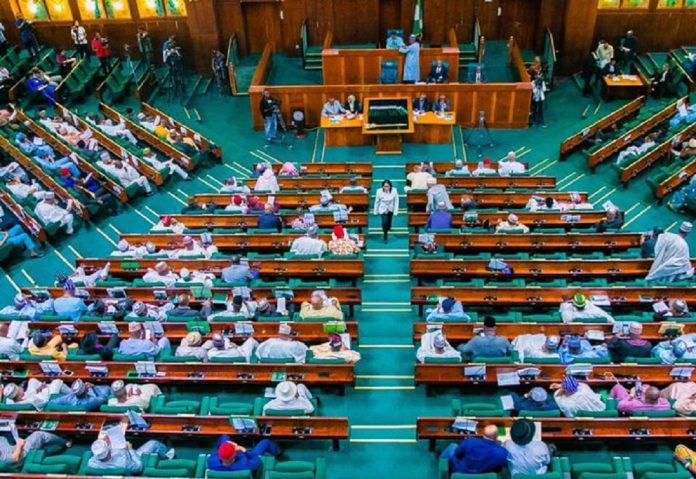
Would anything happen if we close the House of Reps and have only the Senate? Would anything happen if the government consolidates all the federal universities into 12 universities, saving costs? Would anything bad happen if we trim down the federal workforce? Would anything bad happen if the government cuts down its expenses? Of course, how can you say that Nigeria does not have money when we can embark on building a coastal road network of N12 trillion? Contradictions everywhere

Nigerian Lawmakers Consider Bill to Increase VAT to 10% By 2025

Nigerian Lawmakers Consider Bill to Increase VAT to 10% By 2025

0

The Nigerian National Assembly is weighing a comprehensive bill that proposes a notable shift in Nigeria’s tax structure, specifically aimed at increasing the value-added tax (VAT) from 7.5 percent to 10 percent by 2025.

According to The Cable, the bill, which outlines a phased approach, suggests that the VAT rate will continue to rise to 12.5 percent by 2026 and will eventually reach 15 percent by 2030.

The proposed increase has sparked significant debate among economists, government officials, and politicians, with various stakeholders pointing at the potential consequences for Nigeria’s economy and its people.

The executive bill outlines the schedule for raising VAT as follows:

  • 2025: The VAT rate will increase to 10 percent.
  • 2026 to 2029: The VAT rate will rise to 12.5 percent.
  • 2030 and beyond VAT will hit 15 percent, a twofold increase from the current rate of 7.5 percent.

The bill states: “VAT shall be charged on the value of all taxable supplies at the following rates: (a) 2025 year of assessment 10%; (b) 2026, 2027, 2028, and 2029 years of assessment 12.5%; (c) 2030 year of assessment and thereafter 15%.”

This VAT hike is part of a larger fiscal strategy aimed at increasing government revenue to support infrastructural development and other essential services. Proponents argue that Nigeria’s current VAT rate is one of the lowest in Africa, pointing to countries such as South Africa (15 percent), Ghana (15 percent), and Kenya (16 percent) as examples of nations that have adopted higher VAT rates to boost revenue.

In February 2021, the International Monetary Fund (IMF) advised the Nigerian government to increase the VAT rate to at least 10 percent by 2022 as part of measures to address fiscal shortfalls. The IMF argued that increasing VAT would help reduce Nigeria’s reliance on oil revenue and enhance the country’s budgetary resilience.

Taiwo Oyedele, Chairman of the Presidential Committee on Fiscal Policy and Tax Reforms, has been a vocal supporter of increasing the VAT rate. He stated on May 8 that the current VAT rate needs to be raised to align with global standards and enhance the government’s ability to finance its projects.

Oyedele emphasized the importance of generating revenue internally rather than relying on borrowing, especially as Nigeria faces mounting economic challenges. He added that a gradual increase in VAT would help bridge the fiscal gap without overwhelming the economy with sudden and sharp adjustments.

However, despite the fiscal justifications, the proposed VAT hike has not gone without opposition. On September 8, former Vice President Atiku Abubakar expressed his criticism of the bill, describing it as “regressive and punitive.”

The former Vice President noted that raising VAT at this time is a misguided policy and regressive, which will disproportionately affect the poor and vulnerable in our society. He said the government should focus on policies that lift people out of poverty, not those that push them further into hardship.

Atiku’s concerns are centered around the potential impact on the average Nigerian citizen, particularly those already struggling with rising costs of living. It echoes the sentiments of many Nigerians who fear that the proposed VAT increase will worsen inflationary pressures, particularly in the cost of goods and services.

VAT is considered a regressive tax because it applies equally to all consumers, regardless of income, meaning that lower-income households spend a larger proportion of their income on VAT than wealthier households.

However, in defense of the proposal, Minister of Finance Wale Edun responded to Atiku’s critique on September 9, clarifying that the VAT rate had remained low for years and that the government’s fiscal reforms are designed to be gradual to avoid any sudden shock to the economy.

Corporate Income Tax (CIT) Reduction

As a counterbalance to the VAT increase, the bill also proposes a reduction in the corporate income tax (CIT) rate, which is expected to encourage business activity and attract foreign investors. The CIT rate is currently set at 30 percent, but under the new bill, it would be reduced to 27.5 percent by 2025 and further to 25 percent by 2026.

The bill stipulates: “Tax shall be levied, for each year of assessment in respect of total profits of every company, in the case of; (a) a small company, at zero percent; and (b) any other company, at the rate of-(i) 27.5% in 2025 year of assessment, and(ii) 25% from 2026 year of assessment.”

Companies with a turnover of less than N20 million are exempt from CIT under the bill, a move intended to support small businesses and promote entrepreneurship.

However, the bill introduces a clause for large companies, requiring those with an effective tax rate of less than 15 percent to pay an additional tax to bring their effective tax rate to that threshold. This clause targets multinational enterprises (MNEs) and companies with a turnover of N20 billion or more annually, ensuring that larger firms contribute their fair share to the tax base.

Oyedele, who also supported the CIT reduction, explained in June that the move would help businesses grow by reducing their tax liabilities. He further noted that reducing the CIT rate could foster a more competitive business environment, which is crucial in a country striving to diversify its economy away from oil dependency.

VAT and CIT in Nigeria

VAT was first introduced in Nigeria in 1993 at a rate of 5 percent, marking a shift towards consumption-based taxation. In 2020, the VAT rate was increased to 7.5 percent under the Finance Act, which aimed to expand the tax base and reduce Nigeria’s reliance on oil revenue.

The CIT rate has undergone several changes over the years. In the 1980s, Nigeria’s CIT was as high as 45 percent, but it was gradually reduced to its current rate of 30 percent to encourage investment and economic growth. The Finance Act of 2019 introduced a graduated CIT system, exempting small businesses with a turnover below N25 million from paying CIT.

While the VAT increase could provide much-needed revenue to fund infrastructure, education, healthcare, and other public services, critics worry that it would exacerbate the economic strain on everyday Nigerians, particularly low-income households.

However, with other tax reforms, including newly gazetted withholding tax regulations, set to take effect from January 1, 2025, Nigeria is entering a period of significant fiscal change. Only time will tell whether these changes lead to economic growth and improved public services or worsen existing challenges.

$0.03 FXGuys ($FXG) Token Promises Huge Trading Rewards, Drawing Ethereum And Solana Whales

0

After starting October on a bearish note, the crypto market has started recovering gradually. Specifically, top altcoins like Ethereum (ETH) and Solana(SOL) have turned green in their weekly charts.

Despite this trend reversal, FXGuys ($FXG), an emerging PropFi token, has stolen the limelight from these top coins after surging 100% during its presale and promising more growth.

So, why exactly are Ethereum and Solana investors shifting to FXGuys ($FXG)? Let’s find out!

Ethereum Surges More Than 3% in a Week: What’s Next For This Token?

Ethereum has made decent gains over the past seven days, registering a growth of more than 3%. On October 3, 2024, Ethereum was trading at around $2,321.63.

ETH then picked momentum and went on a bull run. Specifically, Ethereum touched $2,516.36 on October 7. This price was motivated by Bitcoin’s rise on October 7, when it spiked to $64,443.71.

However, this trajectory changed, and Ethereum started correcting downwards on October 7, still mimicking Bitcoin’s reversing trajectory. As of October 10, Ethereum is going for around $2,390.00, indicating a growth of more than 3%.

Also, Ethereum’s 24-hour trading volume has increased by more than 12%. Despite this positive growth, investors are decamping to FXGuys, which promises much bigger trading rewards.

Solana Flatlines in Seven Days: What’s in Store For This Coin?

Solana has showcased nominal growth over the past week. On October 3, 2024, Solana’s SOL was changing hands at around $135.84 before it picked pace and started on an upward trajectory. Just like other altcoins, Solana copied Bitcoin’s price movement.

As a result, SOL pumped to trade around $151.46 on October 7 after Bitcoin hit $64,443.71. After that, Solana started dipping and has since sustained a downward trend. As of October 10, SOL is trading at around $137.00. This indicates a meager 0.8% growth over the past week.

Solana’s 24-hour trading volume has grown by around 14%. However, irrespective of these gains, experienced traders are rotating funds to FXGuys as it promises more returns.

FXGuys: A Multi-Asset Trading Platform With Amazing Trading Rewards!

As the crypto market continues recovering, investors are worried about the direction the market is taking.

As such, Ethereum and Solana traders are seeking a trading platform that understands and works on their needs by addressing the challenges they face. That’s why FXGuys is quickly gaining popularity among investors.

FXGuys is a decentralized trading platform that offers you a wide range of impressive features to assist you in making wise decisions while trading. These features help traders like you maximize profits and reduce risk exposure.

The first feature that stands out is the Forex Funding Program, which provides real trading capital to talented traders. Specifically, the program initially offers traders up to $200,000 when they pass the challenge phase, which tests trading skills.

Once you prove your profitmaking skills, FXGuys can scale this amount up to $500,000. As such, FXGuys makes sure talented traders don’t miss out on potential profit-making opportunities.

Another fantastic feature is the Trade2Earn program, which grants traders $FXG tokens for every transaction they make on the platform. The $FXG tokens are awarded irrespective of whether the transaction is profitable or not.

Traders can then redeem the tokens for benefits like lower profit expectations, among other trading tools. This gives FXGuys you an edge over traders on conventional DeFi platforms.

FXGuys also offers you the opportunity to trade in multiple markets and assets, thereby increasing your chances of making profits. Besides that, FXGuys provides you with simulated trading challenges to improve your trading skills!

Join the $FXG Presale And Secure a Chance to Make Huge Returns!

FXGuys has seen a massive inflow of new Ethereum and Solana investors. This popular PropFi platform attributes this growing interest to the top-tier performance of its native $FXG token, which is in its presale phase.

$FXG has received overwhelming investor confidence since it’s a safe token to buy. This stems from the fact that the token’s smart contract was audited by two top-of-the-line blockchain security firms, SolidProof and Soken. So, you can rest assured that your investment in $FXG will always be safe.

As of October 2024, $FXG is going for $0.030 during Stage 1 of its public presale. It is worth noting that this price represents a 100% jump from the Private Sale Round price of $0.015.

Moving on, Private Sale Round investors will get a whopping 566% ROI once $FXG reaches its listing price of $0.100. Meanwhile, you can secure a 233% ROI by joining Stage 1 of the public presale now.

To find out more about FXGuys follow the links below:

Website | Whitepaper | Socials | Audit


Exclusive FXGuys Promo Code:

USE PROP10 FOR 10% BONUS

Tron News: TRX Price Leads ETH Q4 Performance Followed Closely By New Ethereum Presale Token

0

As Q4 unfolds, the Ethereum crypto landscape is bullish. Price gains for Tron (TRX), a steady position for Ethereum (ETH) in DeFi and the rising interest in Lunex Network (LNEX) fuel optimism. For investors seeking the next big opportunity, Lunex Network is emerging as the standout option in crypto market news with substantial growth potential and a unique approach to utility and value.

Lunex Network’s hybrid approach unlocks DeFi potential

Lunex Network (LNEX) brings a fresh perspective to the Ethereum crypto space with its hybrid on-chain and off-chain infrastructure. Unlike traditional DeFi protocols, Lunex Network provides zero-slippage trades and lightning-fast transactions across over 50,000 currency pairs. 

Designed as a non-custodial, Ethereum-compatible platform, Lunex Network prioritizes user control, ensuring that holders retain full ownership over their assets—an attractive feature for those wary of centralized platforms.

Currently in presale at a low entry price of $0.0015, Lunex Network is positioned as a high-potential Ethereum crypto token. This accessible price point, combined with the platform’s deflationary model, which incorporates routine buybacks, fosters scarcity and stability in LNEX’s value. 

Lunex Network also rewards stakers with up to 18% APY, adding an extra layer of appeal to investors seeking reliable income streams in the DeFi market. 

The combination of low entry price, deflationary mechanics, and substantial staking returns makes Lunex a compelling choice for both new investors and seasoned DeFi participants.

Tron’s Q4 surge: Bullish momentum with key resistance levels

Tron (TRX) has recently experienced a resurgence, reaching the 10th position by market cap, surpassing Cardano and hinting at a broader upward trend. Founder Justin Sun has forecasted that TRX will enter the top three digital assets in the coming years, thanks to Tron’s focus on stablecoin functionality and its $59.8 billion USDT reserve. Sun has highlighted Tron‘s rapid development and its integration of DeFi applications as the primary drivers behind TRX‘s success.

Tron faces significant resistance near the $0.152 price level, a barrier it has struggled to surpass. The Relative Strength Index (RSI), currently hovering near 69, indicates overbought conditions, which could lead to short-term price consolidation or even a pullback.

Ethereum holds ground amid fluctuating market activity

Ethereum maintains a stronghold within the DeFi ecosystem, trading above $2,400. Recently, it saw a notable increase of 12.02% in transaction volume, a positive signal that underscores its role as the leading Ethereum crypto asset. 

While Ethereum is no stranger to market fluctuations, it recently saw a 15% decline in active addresses, a trend indicating reduced engagement. Despite steady trading levels, the impact of ETF outflows—$8.1 million last month—introduces the possibility of short-term bearish pressure as Ethereum faces resistance at the $2,490 level.

Ethereum’s 365-day Market Value to Realized Value (MVRV) ratio, at -13.7%, suggests that long-term holders may be positioned for future gains, though short-term volatility could persist.

Lunex Network is the top contender for high-growth DeFi investment

In conclusion, as the crypto market news unfolds, Lunex Network emerges as a top choice for DeFi investors. With a versatile utility model, attractive presale pricing, and strategic growth mechanisms, Lunex Network stands out as the ideal option in Ethereum crypto investment. For those tracking the latest developments, Lunex’s potential for high returns and robust DeFi compatibility make it a standout token poised to capture long-term growth in the evolving digital asset landscape.

You can find more information about Lunex Network (LNEX) here:

Website: https://lunexnetwork.com

Socials: https://linktr.ee/lunexnetwork

Nigerian House of Reps Advances Legislation to Establish Bola Tinubu University, Sparks Backlash

0

The House of Representatives has advanced a legislative proposal aimed at establishing a new federal university in Nigeria, in the name of President Bola Tinubu.

On Thursday, the bill for the creation of the Bola Ahmed Tinubu Federal University of Nigerian Languages passed its first reading. The proposed institution is dedicated to the promotion, study, and preservation of Nigerian languages and cultures.

The bill, co-sponsored by the Deputy Speaker, Benjamin Kalu, and eight other legislators, is said to be in recognition of the need to protect and nurture Nigeria’s linguistic heritage. With over 500 indigenous languages spoken in Nigeria, the university aims to bolster the teaching, research, and development of these languages, many of which are under threat of extinction.

The bill outlines a vision for the university, which, once established, will serve as a center of excellence for language education and cultural studies.

According to a document containing the bill, the university will aim to achieve the following:

Advance Learning and Inclusivity

The proposed institution will “encourage the advancement of learning and hold out to all persons without distinction of race, creed, sex, or political conviction, the opportunity of acquiring a higher education in Nigerian languages and cultures.”

Academic and Professional Programs

The university will offer a variety of academic and professional programs, ranging from diplomas to postgraduate research degrees. These programs will emphasize the development of practical skills necessary for planning, development, and productive activities related to Nigerian languages and cultures.

Research and Development

In addition to teaching, the university will “act as agents and catalysts, through postgraduate training, research, and innovation, for the effective and economic utilization, exploitation, and conservation of Nigeria’s natural, economic, and human resources.”

Collaboration with Other Institutions

The bill mandates that the university establish relationships with other national institutions engaged in the training, research, and development of Nigerian languages. Such collaborations are expected to enhance the quality of academic programs and research initiatives, fostering a network of experts dedicated to language preservation.

Community Outreach and In-Service Training

The institution’s responsibilities extend beyond traditional academic functions. It will also engage in outreach programs, provide in-service training, and promote adaptive research.

Producing Language Professionals and Consultancy Services

The university is tasked with training “high calibre Nigerian languages professionals” and providing language-related services and consultancy. It will also conduct research, participate in community services, and facilitate the acquisition of skills in various Nigerian languages.

Governance and Visitation Powers

The proposed governance structure grants significant oversight powers to the President of Nigeria, who will act as the university’s “Visitor.” According to Section 14(2) of the bill, the President is required to conduct a visitation to the university at least once every five years. During such visitations, the university is obligated to provide the necessary facilities and assistance to support the process.

The President also has the authority to remove members of the university’s council, excluding the pro-chancellor and vice-chancellor. Section 15(1) specifies that if the council determines a member should be removed due to misconduct or inability to perform their duties, the council may recommend the removal to the President through the Minister. Upon the President’s approval, the council member can be dismissed.

Lawmakers Accused of Insensitivity and Nonchalance

However, the introduction of the bill has sparked a wave of backlash, with many Nigerians criticizing the timing as insensitive, considering the dire economic circumstances facing the nation. Many believe that addressing more urgent economic issues should take precedence over establishing a new institution.

The economic situation in Nigeria remains fraught with challenges that have left a significant portion of the population struggling to make ends meet. The country has been grappling with persistently high inflation, which has driven up the cost of living and eroded the purchasing power of ordinary citizens. Recent data from the National Bureau of Statistics (NBS) indicated that inflation stood at 32.15% as of August, with food prices continuing to soar.

The situation has been compounded by fuel price hikes following the removal of subsidies, leading to a dramatic increase in transportation costs and further worsening the hardships faced by Nigerians.

The unemployment rate remains troublingly high, with many young people unable to find gainful employment. According to a recent NBS report, more than a third of the youth population is unemployed, leading to heightened frustration and despair among the country’s most economically active demographic.

Additionally, a weakened naira has resulted in rising import costs, making basic goods and services increasingly unaffordable for the average citizen. The economic pain has left many struggling to afford essentials such as food, healthcare, and education, forcing households to make difficult choices about their daily survival.

Amid this economic distress, the decision to push forward a bill for a new university has been viewed by many as emblematic of the disconnect between the political class and the daily realities of the people. Many argue that the focus on establishing a new educational institution does not address the immediate needs of the populace, such as measures to alleviate poverty, stimulate economic growth, or provide relief from high living costs.

Critics feel that lawmakers are out of touch with the struggles of ordinary Nigerians, prioritizing projects that appear to serve political or symbolic interests rather than practical, urgent solutions.

This criticism has been part of a broader sentiment that Nigerian lawmakers are often preoccupied with issues that do not directly impact the economic wellbeing of citizens. Accusations of insensitivity have surfaced frequently, with lawmakers seen as prioritizing personal and political gains over public welfare. An example often cited is the recent proposal to change Nigeria’s national anthem, a move that was also met with widespread backlash.

There is also concern over the financial implications of establishing a new university. With limited budgetary resources and ongoing funding challenges faced by existing tertiary institutions, some argue that the focus should be on improving the infrastructure and quality of existing educational facilities rather than spreading thin resources over new projects.

Many public universities in Nigeria are plagued by inadequate funding, poor facilities, and frequent strikes due to unmet demands of staff unions. The establishment of a new institution, in this context, is viewed by some as a misallocation of funds that could otherwise be used to revitalize the existing educational system.

The controversy has once again highlighted the growing disconnect between government priorities and public expectations. Many Nigerians are calling for a more people-centered legislative agenda that addresses pressing economic issues and delivers tangible benefits to the populace.