DD
MM
YYYY

PAGES

DD
MM
YYYY

spot_img

PAGES

Home Blog Page 28

Crypto and Blockchain Gained Significant Attention at Davos 2026

1

The phrase “Crypto lobbying at Davos, not a completely united front” captures key dynamics at the World Economic Forum Annual Meeting 2026 in Davos, where cryptocurrency and blockchain topics gained significant attention amid discussions on tokenization, stablecoins, regulation, and global finance.

Crypto advocates were highly visible, with leaders pitching blockchain as integral to the future of finance. However, divisions emerged both within the crypto industry and in clashes with traditional finance (TradFi) interests.

Coinbase CEO Brian Armstrong was particularly outspoken. He sparred publicly with the Bank of France Governor François Villeroy de Galhau on a panel about tokenization and yield-bearing stablecoins. Armstrong pushed for a “Bitcoin standard” approach and criticized banking lobbying for trying to restrict crypto firms from offering competitive yields which he framed as anti-competitive efforts to protect legacy bank margins.

He alleged D.C. lobbying groups were “putting their thumb on the scale” to ban competition, especially around U.S. crypto market structure legislation like the Clarity Act. This ties into broader U.S. regulatory tensions: Armstrong and Coinbase reportedly withdrew support for a draft Senate bill, arguing it favored TradFi incumbents by limiting stablecoin rewards, blocking tokenized equities, and preserving structural advantages for banks.

Despite this, he noted ongoing talks with the White House and senators, suggesting negotiations continue rather than collapse. Other voices in crypto showed nuance or disagreement. For instance, some references including X posts highlight that not all crypto leaders aligned—e.g., one noted Ripple’s Brad Garlinghouse effectively pushing back against a full “Bitcoin Standard” push, illustrating internal fractures.

On the TradFi side, central bankers and institutions expressed caution. The Bank of France governor warned that yield-paying stablecoins could destabilize banks and opposed interest on a potential digital euro. Broader panels discussed convergence between banks and blockchains, but with warnings about risks and the need for regulated frameworks.

Crypto presence included sponsorships and events alongside major players like BlackRock and JPMorgan. Topics like asset tokenization accelerated, with optimism from some about institutional adoption, but lobbying battles highlighted competing interests—crypto pushing for innovation and fair rules, while bank groups sought protections.

While crypto made strides in visibility and influence at Davos shifting from fringe to a “consequential theme”, the front isn’t monolithic. Internal differences among crypto firms, aggressive pushback against perceived TradFi capture, and direct confrontations with regulators underscore that lobbying efforts reflect fragmented priorities rather than a single, cohesive strategy.

This mirrors ongoing U.S. debates over bills that could shape crypto’s role in global finance, with politics and money colliding amid geopolitical backdrops.

Crypto’s prominent role at Davos marked a shift from fringe discussions to mainstream finance debates, with topics like tokenization, stablecoins, and even a “Bitcoin standard” dominating panels.

Leaders like Coinbase’s Brian Armstrong aggressively positioned blockchain as a superior, transparent alternative to fractional-reserve banking. This elevated profile attracts institutional interest and signals potential for faster global adoption.

However, heated confrontations—such as Armstrong’s sparring with Bank of France Governor François Villeroy de Galhau over yield-bearing stablecoins—underscore regulatory wariness. Central bankers warned of risks like bank disintermediation, “full dollarisation” via stablecoins, and systemic instability if private issuers dominate.

The result: greater policy attention, but also tougher safeguards, potentially delaying or shaping innovation in restrictive ways.

The crypto sector’s lack of cohesion was evident in several ways: Differing priorities — Armstrong pushed hard for unrestricted stablecoin yields and tokenized assets including equities, framing restrictions as anti-competitive TradFi lobbying.

Other voices appeared more measured or opposed a full “Bitcoin Standard” pivot, suggesting fractures over strategy. Coinbase’s withdrawal of support for a key U.S. Senate draft bill tied to the Clarity Act/market structure legislation alienated some allies including parts of the venture community like Andreessen Horowitz.

This stemmed from concerns the bill favored banks by limiting rewards, blocking tokenized equities, and preserving incumbents’ advantages. Despite President Trump’s Davos comments signaling imminent signing of crypto-friendly legislation, the delay and ongoing negotiations highlight how disunity risks stalling progress in Washington.

These splits dilute the industry’s bargaining power. A fragmented front makes it harder to present a coherent ask to regulators and politicians, potentially leading to compromises that favor TradFi or slower, piecemeal reforms rather than sweeping pro-crypto changes.

Davos 2026 reinforced tokenization as “the name of the game,” especially in wholesale markets, with optimism around on-chain tradability reshaping liquidity and capital flows. Yet the TradFi-crypto tension—banks protecting margins vs. crypto pushing unbrokered access—suggests convergence will be bumpy.

Yield debates exemplify this: crypto sees interest-bearing stablecoins as a competitive edge, while regulators fear deposit flight and instability. This could lead to hybrid models rather than pure disruption, benefiting incumbents in the short term while forcing crypto firms to adapt.

Amid Davos’s bigger themes (AI, geopolitics, Trump-era policies), crypto’s role as a “consequential theme” ties into global finance shifts. Divisions could slow U.S. leadership in crypto regulation, giving other jurisdictions an edge in attracting innovation.

For investors and users, this means uncertainty in the near term—volatility from regulatory delays—but potential long-term upside if tokenization delivers promised efficiencies. Trump’s pro-crypto signals offer hope, but industry fractures risk turning optimism into prolonged gridlock.

The disunity at Davos isn’t fatal but acts as a reality check: crypto has arrived at the table, yet proving unified value amid TradFi resistance and internal disagreements will determine whether 2026 becomes an inflection point for widespread adoption or a period of contested, incremental progress.

Trump Threatens 100% Tariff Against Canada Over Trade Deals With China

0
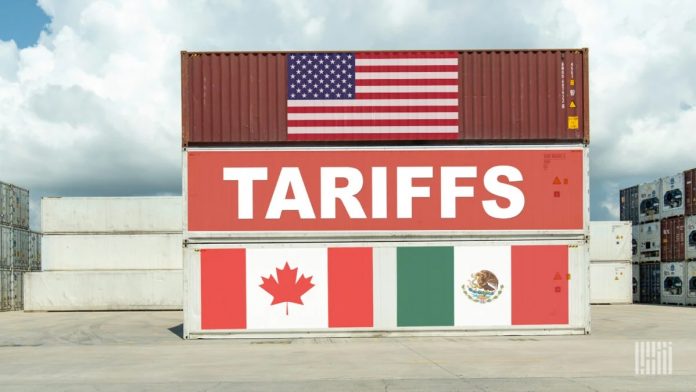
USC experts talk about the importance of U.S.-China trade and how it affects the economy. (Illustration/iStock)

President Donald Trump on Saturday warned that the United States would impose a 100% tariff on Canadian goods if Ottawa proceeds with a trade deal with China, escalating pressure on one of Washington’s closest trading partners.

The warning marks the latest turn in an increasingly coercive trade strategy that is unsettling long-standing U.S. allies.

In a post on Truth Social on Saturday, Trump said any deal between Canada and China would trigger sweeping retaliation.

“If Canada makes a deal with China, it will immediately be hit with a 100% Tariff against all Canadian goods and products coming into the U.S.A.,” he wrote.

He also accused Beijing of seeking to use Canada as a conduit to evade U.S. trade barriers, adding that Prime Minister Mark Carney would be “sorely mistaken” if he allowed Canada to become what Trump described as a “Drop Off Port” for Chinese exports into the American market.

The threat represents a sharp shift from Trump’s own comments just days earlier. On January 16, he publicly welcomed Carney’s outreach to China, telling reporters at the White House: “That’s what he should be doing. It’s a good thing for him to sign a trade deal. If you can get a deal with China, you should do that.”

The reversal has raised questions in Ottawa and other allied capitals about the consistency and predictability of U.S. trade policy under Trump’s leadership.

The immediate trigger for the dispute was Carney’s announcement earlier this month that Canada and China had reached a preliminary agreement aimed at easing trade barriers. Under the tentative arrangement, Beijing agreed to lower tariffs on selected Canadian agricultural products. At the same time, Ottawa increased import quotas for Chinese electric vehicles, applying a most-favored-nation tariff rate of 6.1%. Canadian officials framed the move as a pragmatic effort to diversify trade ties at a time of heightened global protectionism.

Trump’s response fits a broader pattern that has increasingly put Washington at odds with allies. Since returning to office, he has leaned heavily on tariffs as both an economic and political weapon, arguing that they protect American industry and force trading partners to make concessions. In practice, the approach has often blurred the line between strategic rivals and close partners.

Canada offers a clear example. In August 2025, Trump raised tariffs on Canadian goods to 35%, even as the two countries remained bound by the Canada–U.S.–Mexico Agreement. While most Canadian exports are exempt under CUSMA, key sectors such as steel, copper, and parts of the auto industry have been caught in the crossfire. For Canada, the measures have revived memories of earlier tariff battles during Trump’s first term, when steel and aluminum duties strained diplomatic ties and triggered retaliatory measures.

Similar tensions have surfaced with other U.S. allies. European governments have repeatedly voiced unease over Washington’s readiness to impose tariffs tied to national security or industrial policy goals, while Asian partners have grown wary of being forced to choose between access to the U.S. market and economic engagement with China. The result has been a gradual push among middle powers to hedge their bets by broadening trade relationships and strengthening regional blocs.

Carney’s recent remarks at the World Economic Forum in Davos captured that mood. Speaking to a global audience, he warned against economic coercion by the world’s largest powers and argued that middle powers must band together to defend their interests. A day later, Trump withdrew Canada’s invitation to join his proposed “Board of Peace,” an initiative he has pitched as a forum for global stability but which requires a $1 billion fee for countries seeking a permanent seat.

The episode has reinforced perceptions that access to U.S. political and economic initiatives is increasingly transactional. Carney had said last week that Canada intended to join the board, though details were still under discussion. Trump’s abrupt reversal underscored how quickly diplomatic goodwill can evaporate when trade disagreements enter the picture.

The broader concern is strategic for Washington’s allies as tariffs aimed at China are widely understood as part of a larger effort to curb Beijing’s economic influence. Yet when those same tools are wielded against partners like Canada, they risk weakening the alliances that have traditionally underpinned U.S. global influence. Trade officials in several capitals now see diversification not as a choice, but as a necessity.

Neither the White House nor the Canadian prime minister’s office immediately responded to requests for comment on Trump’s latest remarks. However, it is clear that the threat of a 100% tariff has moved the dispute beyond routine trade friction. It has become a test case for how far the United States is willing to go in pressuring allies — and how prepared those allies are to look elsewhere when the cost of alignment keeps rising.

U.S. Judge Blocks Trump Admin from Suspending EV Charging Funds, Dealing a Setback to Rollback of Clean Transport Policy

0

A federal judge has ruled that President Donald Trump’s administration acted unlawfully when it suspended billions of dollars in funding meant to expand electric vehicle charging infrastructure, delivering a significant legal victory to Democratic-led states and a broader rebuke of the White House’s efforts to unwind key elements of the Biden-era climate agenda.

U.S. District Judge Tana Lin, sitting in Seattle, ruled on Friday in favor of 20 states and the District of Columbia, which sued after the U.S. Department of Transportation halted the National Electric Vehicle Infrastructure Formula Program, known as NEVI. The programme was created under the Infrastructure Investment and Jobs Act, signed into law in 2021, and was designed to support the build-out of a nationwide EV charging network.

In her ruling, Lin said the Transportation Department and the Federal Highway Administration overstepped their authority by freezing funds that Congress had already appropriated and directed to the states.

“They yanked the NEVI Formula Program’s cord out of the outlet,” Lin wrote, saying the agencies acted outside the boundaries of established administrative law.

The judge permanently barred the Transportation Department from cancelling the states’ previously approved implementation plans or clawing back funds already awarded, effectively allowing states to resume EV charger projects that had been thrown into uncertainty earlier this year.

The dispute traces back to February, shortly after Transportation Secretary Sean Duffy took office, when the department announced a suspension of the $5 billion NEVI programme. The administration argued at the time that the pause was temporary and necessary to review the programme and issue new guidance. States countered that the move amounted to an unlawful attempt to dismantle a congressionally mandated programme without legislative approval.

Lin sided with the states, rejecting the administration’s argument that a temporary pause was permissible. She said the 2021 law did not contemplate any suspension of funding once states’ plans had been approved.

“In short, Defendants defied the will of Congress by withholding funds in a manner not contemplated by the IIJA,” she wrote.

The lawsuit was led by states including California, Colorado, and Washington, which argued that the funding freeze threatened to derail years of planning and delay private investment tied to the rollout of charging infrastructure. State officials said the uncertainty had already slowed projects and undermined confidence among contractors and utilities.

Environmental groups welcomed the ruling as a check on executive overreach and a safeguard for long-term infrastructure planning. The Sierra Club said the decision ensures states can move ahead with building out EV charging networks funded by law.

“Judge Lin’s order is a resounding win for the rule of law and for smart investment in our clean energy future,” said Mike Faulk, a spokesperson for Washington State Attorney General Nick Brown.

The Transportation Department did not immediately respond to a request for comment.

The case sits at the intersection of law, climate policy, and industrial strategy. Since returning to office, Trump has pursued policies aimed at boosting sales of gas-powered vehicles while scaling back incentives for electric vehicles, both for automakers and consumers. Those moves have included efforts to weaken emissions rules and reassess federal spending tied to EV adoption.

The NEVI programme has been a particular target because it represents one of the most tangible federal efforts to accelerate the transition to electric transport. By guaranteeing federal funding to states, the programme was intended to address a core barrier to EV adoption: the lack of reliable, widely available charging infrastructure, especially along highways and in rural areas.

The ruling comes as Congress weighs further changes. The U.S. Senate is expected next week to consider legislation, already passed by the House of Representatives, that would redirect $879 million in EV charging funds approved under Biden to other infrastructure priorities. If enacted, that bill would reshape the scope of the federal charging network, even as the court decision restores near-term funding certainty for states.

SEC Drops Gemini Case After Full Investor Recovery, Signaling a Softer U.S. Stance on Crypto Enforcement

0

The U.S. Securities and Exchange Commission has agreed to dismiss its enforcement action against Gemini, the cryptocurrency exchange founded by billionaire twins Tyler and Cameron Winklevoss, after investors in the platform’s troubled lending program were made whole.

Court filings on Friday showed that the SEC and Gemini Space Station jointly moved to dismiss the case in federal court in Manhattan, pointing to the complete return of crypto assets to Gemini Earn investors through the Genesis Global Capital bankruptcy process between May and June 2024. The regulator said it had decided last year to resolve the lawsuit following the recovery of funds, bringing a formal end to one of the more closely watched enforcement actions to emerge from the 2022 crypto market crash.

The case stemmed from the Gemini Earn program, under which customers loaned their crypto assets to Genesis Global Capital in exchange for interest payments. When Genesis froze withdrawals in November 2022, amid turmoil triggered by the collapse of FTX and sharp declines in digital asset prices, roughly $940 million worth of customer assets were locked up, according to Gemini’s earlier disclosures. The freeze sparked outrage among retail investors and drew scrutiny from U.S. regulators, who accused both Genesis and Gemini Trust Company in early 2023 of illegally selling unregistered securities to hundreds of thousands of investors.

What ultimately set the Genesis bankruptcy apart from many other crypto failures of that era was its ability to return customer assets in kind rather than liquidating holdings and repaying investors in cash at depressed market prices. Through a combination of asset recoveries and settlements, Genesis was able to distribute 100% of Gemini Earn customers’ crypto back to them, a factor the SEC cited explicitly in its decision to drop the claims.

“After the 100 percent in-kind return of Gemini Earn investors’ crypto assets through the Genesis Bankruptcy and the settlements, the Commission believes the dismissal of the claims against Defendant is appropriate,” the SEC said in the filing.

At the same time, the regulator stressed that the dismissal should not be interpreted as a precedent or as signaling any broader conclusions about other pending or future cases.

The move comes amid a broader shift in Washington’s posture toward digital assets under President Donald Trump, who has repeatedly described himself as the “crypto president” and pledged to usher in clearer, more accommodating rules for the industry.

Since Trump returned to office, the SEC has faced pressure to recalibrate its aggressive enforcement-first strategy, which had defined much of the agency’s approach under the previous administration. Senior officials have indicated that the focus is increasingly on rulemaking and compliance frameworks rather than high-profile courtroom battles, particularly in cases where investor harm has already been remedied.

The dismissal removes a major overhang for Gemini as it continues to position itself as a regulated, institution-friendly crypto exchange. The company did not immediately respond to a request for comment outside regular business hours, but the resolution reinforces its argument that customers were ultimately protected despite the turmoil that followed Genesis’ collapse.

Gemini made a strong debut on Nasdaq last year, a milestone that underscored the growing acceptance of crypto firms in public markets. According to LSEG data, the exchange is currently valued at about $1.14 billion.

The outcome also highlights a subtle but important distinction emerging in the post-crash crypto landscape. While many firms that failed in 2022 left customers nursing steep losses, cases where investors have been fully repaid appear more likely to be met with regulatory leniency. Still, the SEC’s insistence that the Gemini dismissal does not reflect its position on other matters suggests the agency intends to preserve flexibility as it navigates a fast-evolving sector.

Taken together, the end of the Gemini case reflects a moment of transition for U.S. crypto regulation: a closing chapter on the fallout from the 2022 meltdown, and an early signal of how enforcement priorities may shift as digital assets move further into the financial mainstream.

U.S. Hints at Tariff Rollback for India After Sharp Drop in Russian Oil Imports

0

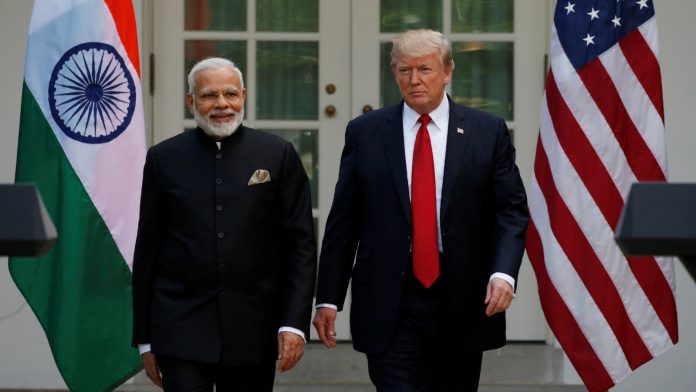
U.S. Treasury Secretary Scott Bessent on Friday indicated that Washington could roll back an additional 25% tariff imposed on Indian goods, pointing to a sharp fall in India’s purchases of Russian crude oil as evidence that U.S. pressure is having the intended effect.

Speaking in an interview with Politico at the World Economic Forum in Davos, Bessent said the collapse in Indian refinery purchases of Russian oil had validated the Trump administration’s strategy of using tariffs as leverage.

“Indian purchases by their refineries of Russian oil have collapsed. So that is a success,” he said.

While stressing that the additional 25% tariffs linked to Russian oil imports remain in place, Bessent added that he could “imagine there is a path to take them off,” a comment that markets and policymakers quickly read as an opening for tariff relief.

How trade tensions escalated

The dispute traces its roots to the geopolitical fallout from Russia’s invasion of Ukraine and the West’s subsequent effort to restrict Moscow’s energy revenues. While the U.S. and Europe moved to impose sweeping sanctions on Russian oil, India adopted a more pragmatic stance, sharply increasing its purchases of discounted Russian crude from 2022 onward. That strategy helped cushion India against global energy price shocks and inflation, but it also placed New Delhi at odds with Washington’s broader sanctions regime.

Tensions reached a new peak in August, when President Donald Trump doubled tariffs on Indian goods to 50%. The increase included a specific 25% levy explicitly tied to India’s continued imports of Russian oil. The White House framed the move as both an economic and strategic response, arguing that India’s purchases were indirectly helping to finance Russia’s war effort.

Trump warned at the time that tariffs could rise further if India failed to change course, underscoring his administration’s willingness to weaponize trade policy in pursuit of geopolitical goals. The tariffs hit a wide range of India’s exports and raised concerns about longer-term access to the U.S. market, one of its most important trading partners.

But recent data suggest India has begun recalibrating. Reuters reported on Friday that India’s imports of Russian oil in December fell to their lowest level in two years. As Russian volumes declined, supplies from OPEC producers rose, pushing OPEC’s share of India’s crude imports to an 11-month high.

That shift has been closely watched in Washington, where officials have argued that sustained pressure could eventually alter even large, price-sensitive energy markets. Bessent’s comments indicate the administration sees the December data as confirmation that tariffs and political pressure are influencing Indian refinery behavior.

Still, the reduction does not mean India has abandoned Russian oil entirely. Analysts note that refiners remain sensitive to price differentials and supply reliability, and future import patterns will depend on global oil prices, freight costs, and the availability of alternative supplies.

What tariff relief would mean

Any rollback of the additional 25% tariff would be significant for India’s exporters, who have faced higher costs and uncertainty since the August escalation. It would also mark a rare instance of the Trump administration signaling a willingness to ease tariffs in response to policy changes by a trading partner, reinforcing the idea that tariffs are being used as negotiating tools rather than permanent barriers.

Easing tariffs could help the U.S. stabilize relations with India at a time when Washington is seeking to deepen strategic and economic ties in the Indo-Pacific. India is a key partner in efforts to counterbalance China’s influence, and prolonged trade friction risks complicating that broader agenda.

But despite Bessent’s conciliatory tone, there is no immediate timeline for lifting the tariffs, and the final decision rests with President Trump. U.S. officials have repeatedly emphasized that trade measures tied to national security and foreign policy will be reviewed cautiously and incrementally.

However, Bessent’s statement indicates that Washington believes its pressure campaign has delivered results, and India’s recent oil import data have strengthened the case for at least partial relief. Analysts note that what will follow will depend on whether the administration is satisfied that India’s shift away from Russian crude is durable—and politically defensible at home.