


DD
MM
YYYY

PAGES

DD
MM
YYYY

spot_img

PAGES

Home Blog Page 2806

Tron Founder Justin Sun Elected Prime Minister of Liberland

0

In a remarkable development in the world of micronations and cryptocurrency, Justin Sun, the founder of the blockchain platform Tron, has been elected as the Prime Minister of Liberland. This self-proclaimed micronation, nestled between Croatia and Serbia, has been a topic of intrigue since its establishment in 2015 by Czech politician Vít Jedli?ka.

Liberland has positioned itself as a sovereign state with a focus on individual liberty and free-market principles. It’s a nation that prides itself on minimal government interference and has adopted bitcoin as its official currency, reflecting its commitment to the decentralized ethos of cryptocurrency.

As of April 2024, the population of Liberland is reported to be 20 individuals. This micronation, which has captured the imagination of many, remains small in terms of permanent residents. Despite its limited population, Liberland has garnered significant global interest, with a substantial number of individuals expressing their desire to become citizens, attracted by its libertarian principles and the prospect of a society that embraces cryptocurrency.

Justin Sun’s election is a significant event, not just for Liberland, but for the broader crypto community. Sun, a prominent figure in the blockchain industry, brings with him a wealth of experience from his time as the Permanent Representative of Grenada to the World Trade Organization. His vision for Liberland aligns with the libertarian values upon which the nation was founded. He has expressed his ambition to make Liberland a central authority for libertarians worldwide, akin to how Vatican City serves as a spiritual center for Catholics.

The election process in Liberland is notably innovative, utilizing a blockchain-based system that ensures transparency and security. This method of voting could potentially serve as a model for other nations grappling with electoral integrity issues. The algorithmic nature of the system provides a clear set of rules and eliminates doubts about the legitimacy of election outcomes.

To be eligible for citizenship, applicants must demonstrate a respect for all people, regardless of color, gender, orientation, or religion, and uphold the values of private property. A clean legal record is essential, as Liberland does not accept individuals with a criminal history or those with a past associated with oppressive ideologies such as communism or Nazism.

Prospective citizens are also required to possess a certain number of Liberland Merits, which can be earned through participation in the community or donations. These Merits reflect the applicant’s commitment to the nation’s development and willingness to contribute to its growth.

In addition to these prerequisites, applicants must successfully complete a Know Your Customer (KYC) process and become an E-Resident of Liberland. This E-Residency serves as the first step towards full citizenship and allows individuals to remotely incorporate their companies in Liberland and access various e-services.

For those interested in actively participating in the settlement of Liberland, there are additional requirements. Settlers must be in good physical and mental health, capable of thriving in a camping-like environment, and must not have untreated mental health issues or a history of substance abuse.

Despite its ambitions and the support, it has garnered from notable libertarians, Liberland’s status remains unrecognized by any United Nations member state. Its legitimacy has been challenged by neighboring countries, yet it continues to attract attention and support from those who are passionate about the concept of a nation built on libertarian principles.

Under Justin Sun’s leadership, the government of Liberland hopes to elevate the micronation’s profile and secure recognition from countries that share its values, such as Argentina and El Salvador. With a government operating on a decentralized online platform and a currency that can be traded on decentralized exchanges, Liberland is an experiment in governance that is closely watched by observers around the world.

As the new Prime Minister, Justin Sun’s role will be pivotal in shaping the future of Liberland. His expertise in the crypto space and his experience in international governance could prove to be invaluable assets in navigating the challenges that lie ahead for this unique micronation.
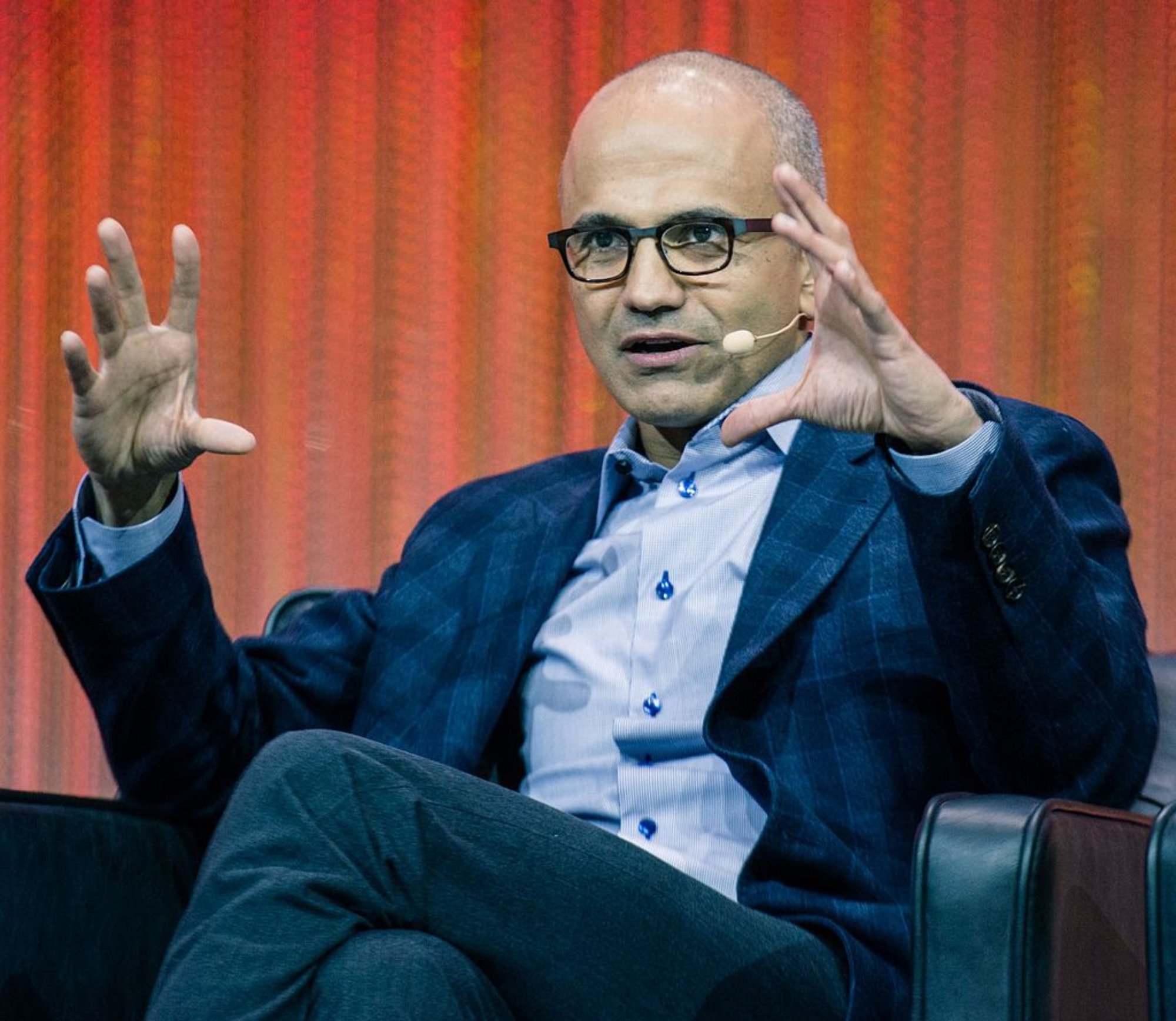

Microsoft Unveils New AI And Data Tools to Transform Health Care Operations

0

Microsoft has introduced a suite of new AI-driven healthcare tools aimed at streamlining administration tasks and advancing healthcare operations.

These tools include a collection of medical imaging models, a healthcare agent service, and an automated documentation solution designed to reduce the administrative burden on health workers. According to a report from the office of the Surgeon General, Nurses spend as much as 41% of their time on documentation, which contributes to a major cause of industry burnout.

Through new healthcare AI models in Azure AI Studio, capabilities for healthcare data solutions in Microsoft Fabric, the healthcare agent service in Copilot Studio, and an AI-driven nursing workflow solution, Microsoft Cloud for Healthcare is supporting healthcare organizations on every step of their journey toward shaping a healthier future.

“By integrating Al into health care, our goal is to reduce the strain on medical staff, foster collective health team collaboration, and enhance the overall efficiency of healthcare systems across the country,” said Mary Varghese Presti, vice president of portfolio evolution and incubation at Microsoft Health and Life Sciences.

Also speaking on the rollout of Microsoft healthcare tool, Joe Petro, corporate vice president, Healthcare and Life Sciences Solutions and Platforms at Microsoft said,

“We are at an inflection point where AI breakthroughs are fundamentally changing the way we work and live. Across the broader healthcare and life sciences industry, these advancements are dramatically enhancing patient care and also rekindling the joy of practicing medicine for clinicians. Microsoft’s AI-powered solutions are helping lead these efforts by streamlining workflows, improving data integration, and utilizing AI to deliver better outcomes for healthcare professionals, researchers and scientists, payors, providers, medtech developers, and ultimately the patients they all serve.”

Healthcare organizations face numerous challenges, including workforce shortages, rising costs and increasing patient care demands. Generative AI offers a potential solution to these challenges by automating administrative tasks, analyzing vast amounts of data for actionable insights and assisting healthcare professionals in decision-making.

Microsoft’s AI tools, currently in early development are designed to help healthcare organizations develop Al applications more efficiently. The collection of open-source multimodal Al models can process various types of medical data, such as images, clinical records, and genomic data. This capability allows health-care organizations to build and fine-tune their own applications. For example, a new whole-slide Al model developed in collaboration with Providence Health & Services enhances mutation prediction and cancer subtyping-a breakthrough in digital pathology.

Additionally, Microsoft introduced Al agents through its Copilot Studio, which can automate processes, answer health-related questions, and provide clinical insights, complete with references to supporting evidence. These tools are already being tested by health-care organizations and are expected to improve both patient care and clinician efficiency.

These AI innovations aimed at transforming healthcare operations are positioning Microsoft as a leader in the healthcare industry. These innovations are setting the stage for future advancements in healthcare technology. By partnering with prominent healthcare systems like Providence Health & Services, the tech giant is demonstrating the real-world impact of its Al tools. These collaborations not only enhance the capabilities of healthcare providers but also validate Microsoft’s solutions as practical, scalable innovations.

By making these tools available for preview and testing, and by integrating safeguards such as Al-generated response tracking and evidence sourcing, Microsoft ensures that its solutions are adaptable and future-proof. Notably, in the company’s provision of solutions for real problems such as clinician burnout and improving diagnostics, it is not only gaining leadership but also shaping the future of healthcare technology.

Tesla Unveils Latest Driverless Cybercab, Marks Musk’s Bold Vision For The Future of Autonomous Transport

1

American multinational automotive and clean energy company Tesla, on Thursday, unveiled its latest Robotaxi driverless vehicle, “Cybercab”, at the “We Robot” event in California.

The Cybercab, a futuristic two-seater with no steering wheels or pedals, reflects Musk’s bold vision for the future of autonomous transport.

Musk emphasized how autonomous vehicles like the Cybercab could significantly reduce transportation costs and improve convenience. “With autonomy, you get your time back,” he stated, predicting that robotaxis would eventually be 10 times safer than current modes of transportation and cost as little as 20 cents per mile to operate, potentially rivaling the cost of mass transit.

He also noted that the Cybercab would employ inductive charging, meaning that the autonomous vehicle could roll up to a station to recharge, with no plugging in required. In terms of pricing, Musk hinted that the vehicle could be placed at a price point below $30,000 and an expected production timeline to begin before 2027. While specific production details were sparse, he promised that unsupervised Full Self-Driving (FSD) capabilities would be operational in Tesla’s Model 3 and Model Y vehicles in Texas and California by next year.

In addition to the Cybercab, Musk revealed plans for an autonomous Robovan, designed to carry up to 20 people or transport goods, targeting high-density transportation needs.

Tesla’s recent unveiling of its driverless Cybercab comes after the company’s CEO Elon Musk has long touted about a self-driving vehicle.

For years, Elon Musk has been touting Tesla’s advancements in autonomous vehicles, repeatedly promising that they would soon be available to the public. However, these ambitious timelines have consistently fallen short. In 2015, Musk assured shareholders that Tesla cars would achieve “full autonomy” within three years. Unfortunately, that milestone was missed.

In 2016, he claimed a Tesla would complete a coast-to-coast drive with no human intervention by the end of 2017, but it never materialized. Then fast forward to 2019, during a call with institutional investors that helped raise over $2 billion, Musk predicted Tesla would have 1 million robotaxi-ready vehicles on the road by 2020, generating income for their owners through 100 hours of weekly driving. That too, did not come to pass.

Despite the missed deadlines, Musk, known for his ambitious nature, has continued to project confidence in achieving an autonomous vehicle. In an April call this year, he reiterated that autonomy remains Tesla’s future, telling investors, “If somebody doesn’t believe Tesla’s going to solve autonomy, I think they should not be an investor in the company. We will, and we are.” 

While the timeline is ambitious, Musk remains optimistic about the future of autonomous transport, envisioning a world where individuals could manage fleets of robotaxis for profit through a ridesharing network.

Elon Musk’s Customer Perception on Cybercab, Robotaxi, and Robovan

0

Elon Musk ran a great show in California: “At a much-anticipated event in Los Angeles, Tesla CEO Elon Musk stepped onto the Warner Bros. stage to introduce a future many have dreamt of but few thought achievable any time soon: a world where cars drive themselves, where steering wheels are relics of the past, and where the hustle of daily commuting is replaced by peaceful, autonomous journeys.”

But investors did not believe the show and Tesla stock is down about 8% as I write. When your vision is so gigantic that you lose your followers, do not be troubled. Average companies focus on the needs of customers. Decent companies serve them at the level of expectations. But category-defining companies serve the perceptions of customers. But most times, those customers do not even believe until the full products have been cooked and baked for them.

Yes, when the product becomes a reality, those customers evolve from being just customers to FANS. Verizon, a US telecom company, rejected the Apple iPhone, but Steve Jobs went ahead and changed history.

What Musk presented may not be evident until customers start experiencing these products.  As I wrote in Harvard Business Review on a piece titled “Mastering the Apple Game of Customer Perception” (here ), Elon Musk is leading the world into a new tech-tribal age, and he is likely going to succeed.

Elon Musk Unveils Tesla’s New Robotaxi, Cybercab, And Robovan, Operated by AI

Nigeria Allows Petroleum Marketers to Directly Purchase from Dangote Refinery

0

The federal government of Nigeria has announced that petroleum marketers can now directly purchase products from the Dangote Refinery, following weeks of pricing controversy.

This decision, reached during a technical committee meeting headed by the Minister of Finance and Coordinating Minister of the Economy, Mr. Wale Edun, marks a major shift in the nation’s downstream petroleum market, which has long been dominated by the Nigerian National Petroleum Company Limited (NNPCL).

This new arrangement brings an end to the exclusive monopoly the NNPCL held as the sole off-taker of petroleum products from the Dangote Refinery. The government is optimistic that this move will foster competition, stabilize fuel supply, and potentially lower prices at the pump.

In his statement, Mr. Wale Edun stated that this shift is part of a broader strategy to deregulate the petroleum market.

“This direct purchasing mechanism allows marketers to negotiate commercial terms directly with the refineries, fostering a more competitive market environment and enabling a smoother supply chain for petroleum products,” Edun said.

The minister added that with local production now coming online, the market is better equipped to support these direct transactions, enhancing efficiency and stabilizing prices.

Furthermore, the transition to a Naira-based sales mechanism was highlighted as a key component of the government’s broader economic strategy. The policy is aimed at insulating the market from foreign exchange fluctuations and reducing the country’s reliance on foreign currency for fuel imports.

Background of The Pricing Controversy

The decision comes after months of controversy and tension between the Dangote Refinery, independent marketers, and the NNPCL over fuel pricing. Since the commencement of operations at the Dangote Refinery, independent marketers had been effectively shut out of the supply chain, as the NNPCL maintained a monopoly over the purchase and distribution of petroleum products. This situation was exacerbated by the opaque pricing structure employed by the NNPCL, which left marketers frustrated and the general public facing high and fluctuating fuel prices.

At the heart of the issue was the price at which Dangote’s products would be sold. While the NNPCL and the refinery were locked in negotiations over pricing, independent marketers were left with no access to the refinery’s output. There were concerns that the NNPCL was inflating prices to cover costs, as it controlled both the supply and distribution networks. As a result, independent marketers found themselves sidelined, relying on imports for supply.

The lack of clarity regarding pricing from the Dangote Refinery also fueled speculations, with some suggesting that the refinery might sell petrol at up to N1,000 per liter. This speculation, though unconfirmed, created anxiety across the market. Marketers expressed concerns that NNPCL’s control over the distribution could artificially raise prices, further squeezing their already thin margins.

New Government Directive: A Path to Full Deregulation

For years, Nigeria’s downstream sector has been mired in inefficiency, with a heavy reliance on imported fuel despite the country being one of the world’s largest crude oil producers. The Dangote Refinery has been heralded as a potential game-changer, with the capacity to meet a significant portion of the country’s fuel needs.

Now, with this new government directive, the hope is that local production can not only meet domestic demand but also do so in a way that promotes competition and transparency in pricing.

The move is expected to lead to a more competitive pricing structure. With independent marketers gaining access to the refinery’s output, competition is likely to drive prices down. There are already signs of this trend emerging: reports have surfaced that some petrol stations, especially those operated by independent marketers, are offering lower prices than NNPCL-controlled outlets.

This competition is expected to intensify as more marketers enter the supply chain directly from the Dangote Refinery, which could ultimately benefit the end consumer.

However, while this development has been welcomed by many in the industry, there is also skepticism about how well the transition will be managed. The Nigerian fuel market has a long history of regulatory inconsistencies, infrastructural challenges, and corruption. There are concerns that while the government is pushing for full deregulation, issues such as insufficient fuel supply from the refinery, distribution logistics, and regulatory bottlenecks could hamper the expected benefits.

Moreover, Nigeria’s fuel market remains susceptible to global trends, and while domestic production at the Dangote Refinery offers a buffer, it does not completely shield the market from external shocks. This means that prices could go higher or lower than they are. Many believe that this trend will be determined if fuel subsidies are totally removed and the downstream sector fully deregulated.

However, Edun reassured stakeholders that the government would continue to provide clarity and support throughout the process, engaging with industry players to iron out any issues that arise.

“We are committed to providing clarity on this development and will continue to engage with stakeholders to ensure a seamless transition process,” Edun said.