DD
MM
YYYY

PAGES

DD
MM
YYYY

spot_img

PAGES

Home Blog Page 284

Nokia CEO Sees AI Boom Mirroring 1990s Internet Surge, Dismisses Bubble Fears

0

Nokia’s Chief Executive Officer, Justin Hotard, says artificial intelligence is propelling a long-term growth cycle reminiscent of the internet explosion of the 1990s, describing it as an “AI supercycle” that will redefine global technology infrastructure for years to come.

“I fundamentally think we’re at the front end of an AI supercycle, much like the 1990s with the internet,” Hotard said in an interview with Reuters. “Even if there’s a bubble, a trough, we’ll look to the longer-term trends. And right now, all those trends are very favorable.”

Hotard’s optimism comes at a time when investors are sharply divided over whether the AI boom is sustainable. A recent Bank of America survey showed that more than half of global fund managers now believe AI-related stocks are in a bubble. Tech luminaries such as Amazon founder Jeff Bezos and OpenAI CEO Sam Altman have also issued warnings that the current wave of investor excitement could result in major financial losses once the market corrects.

“When bubbles happen, smart people get overexcited about a kernel of truth. Are we in a phase where investors as a whole are over-excited about AI? My opinion is yes,” said Altman.

Still, Hotard insists the fundamentals of AI growth are strong, pointing to a surge in data center demand as companies worldwide scramble to build infrastructure capable of handling the computing power that AI applications require.

“Clearly the incremental, growth investment is driven by data centers,” he said. “It’s a huge step up in volume.”

Hotard, who joined Nokia in April after leading Intel’s data centers and AI group, said the company is witnessing a surge in orders from both large technology firms and emerging players across Europe.

“We’re seeing growth across the board,” he said.

Nokia’s renewed focus on AI comes as the Finnish telecom equipment maker reported quarterly earnings on Thursday that exceeded market expectations, buoyed by robust demand for its optical and cloud products. Much of this momentum has been linked to sales tied to AI-driven data centers following its acquisition of U.S.-based optical networking firm Infinera.

The acquisition of Infinera marks a key milestone in Nokia’s transformation—its most significant strategic pivot since exiting the mobile phone market in 2013. While mobile networks remain the company’s backbone, it is now integrating AI into core operational areas such as radio access, fiber optics, and network automation.

Last year, Nokia established a dedicated Technology and AI organization led by its newly appointed Chief Technology Officer, Pallavi Mahajan, another former Intel executive. The unit’s creation signals Nokia’s intent to accelerate the development of next-generation networking tools designed to optimize AI traffic and energy efficiency.

Analysts believe Nokia’s repositioning could be timely. The explosion in AI applications—from large language models to edge computing—has sparked record demand for high-speed data transfer, low-latency connectivity, and cloud optimization technologies. These trends play directly into Nokia’s traditional strengths in telecommunications infrastructure and optical networking.

The company’s strategy aligns with a broader shift underway in the global tech industry. From the United States to Asia, hyperscale firms such as Microsoft, Amazon Web Services, and Google are investing billions in data center expansion, driving up demand for optical transport systems and fiber technologies—areas where Nokia has a competitive footprint.

Still, the AI boom has prompted growing debate over sustainability. The sector’s skyrocketing valuations, which have propelled companies like Nvidia into trillion-dollar territory, have stirred comparisons with the dot-com era—when enthusiasm outpaced actual profitability.

Hotard, however, maintains that, unlike the 1990s, today’s AI growth is underpinned by tangible industrial adoption and real-world use cases spanning telecoms, healthcare, logistics, and cloud computing.

He believes the demand is not theoretical, given the growing deployment of infrastructure across multiple industries.

Nokia’s move into AI represents both a strategic hedge and a bold bet on where future telecommunications demand will converge. The company, by embedding AI into its networking solutions, hopes to improve automation, reduce energy consumption, and strengthen its position in a global race increasingly defined by intelligent infrastructure.

Anthropic Rolls Out Memory Update for Claude, Aiming to Rival ChatGPT and Gemini in Long-Term Recall Features

0

Anthropic is introducing a major upgrade to its Claude AI chatbot, allowing the system to “remember” details from past conversations without user prompting — a move that brings it closer to the long-term memory capabilities already deployed by OpenAI’s ChatGPT and Google’s Gemini.

The new feature, which begins rolling out on Thursday, will initially be available to Max subscribers, who can enable “memory” through their settings. Anthropic confirmed that the feature will reach Pro subscribers “over the coming days,” while Team and Enterprise users have had access since September. The company did not indicate when, or if, the feature would extend to free users.

In a statement, Anthropic said the rollout represents a step toward “complete transparency” in how AI remembers users’ data. Unlike competing systems that sometimes rely on background summaries, Claude’s memory interface will display exactly what the model remembers, allowing users to toggle, edit, or delete individual memories through natural conversation.

“For instance,” the company explained, “users can tell Claude to forget an old job entirely or focus on a new project,” giving them granular control over their stored information. The update will also introduce “distinct memory spaces,” letting users separate memories for different contexts such as work, education, or personal use. This, Anthropic said, should prevent “memory bleed” — where information from one context inadvertently appears in another.

The feature has been one of the most requested among Claude users. Until recently, Anthropic’s chatbot could only recall previous conversations if users explicitly told it to do so, a process many found cumbersome compared to rivals.

The change brings Claude more in line with the competition. OpenAI’s ChatGPT has offered memory since early 2024, enabling persistent recall of details such as names, writing styles, and project information. Google’s Gemini also integrated a similar feature later that year, letting users manage stored memory directly within the chat interface.

Anthropic’s latest release also includes a data portability feature that allows users to import memories from ChatGPT or Gemini. The company said users will be able to copy and paste previous memories into Claude, and export them “anytime” with “no lock-in.” This transparency-first approach appears aimed at distinguishing Anthropic’s data practices from rivals often criticized for retaining user information without sufficient clarity.

The new function could reshape how users interact with Claude. With persistent memory, the AI can offer more continuity, context, and personalization — remembering user preferences, ongoing projects, and specific instructions without requiring restatement. For professional users, it also means Claude can act as a long-term digital collaborator rather than a short-term assistant.

However, AI memory systems have raised ethical and psychological concerns over privacy, bias, and human-like dependence. Experts warn that persistent recall could encourage emotional overreliance on chatbots, fueling phenomena sometimes referred to as “AI psychosis” — where users form distorted perceptions of reality through repeated interaction with highly affirming or sycophantic AI systems.

Anthropic has said it is approaching these risks cautiously. The company maintains that users will always retain “full visibility and control” of what Claude remembers, and that stored data can be deleted or compartmentalized at any time. Its documentation emphasizes that all memories are encrypted and reviewed for safety before integration into user sessions.

The memory rollout marks another juncture in the escalating competition among major AI players. OpenAI, Google, and Anthropic have all been racing to make their chatbots indispensable by improving personalization and reducing the friction of restarting conversations from scratch. The update is expected to help Anthropic close the gap with its better-known rivals — and possibly set a new standard for how AI models handle user recall with transparency and user control at the center.

As AI tools increasingly blend into personal and professional workflows, memory-enabled systems like Claude are expected to define the next stage of the chatbot race.

The Business of AI Is Execution — Let Us Build With You

0

In the emerging era of intelligent enterprises, strategy is no longer enough; you must execute. At Tekedia Institute, we recognise that many organisations are trapped in elegant PowerPoint loops of “AI working groups” that yield little measurable ROI. Yes, chasing buzzwords without building capabilities leads to failure.

At Tekedia, we partner with you to move from AI road-mapping to AI execution. We are not mere consultants; we are practitioners-builders who embed ourselves into your world and drive transformation. This isn’t about slides; it is about People, Processes, Tools – the three pillars of production – coming together so that AI doesn’t just run your operations but re?shapes your organisation.

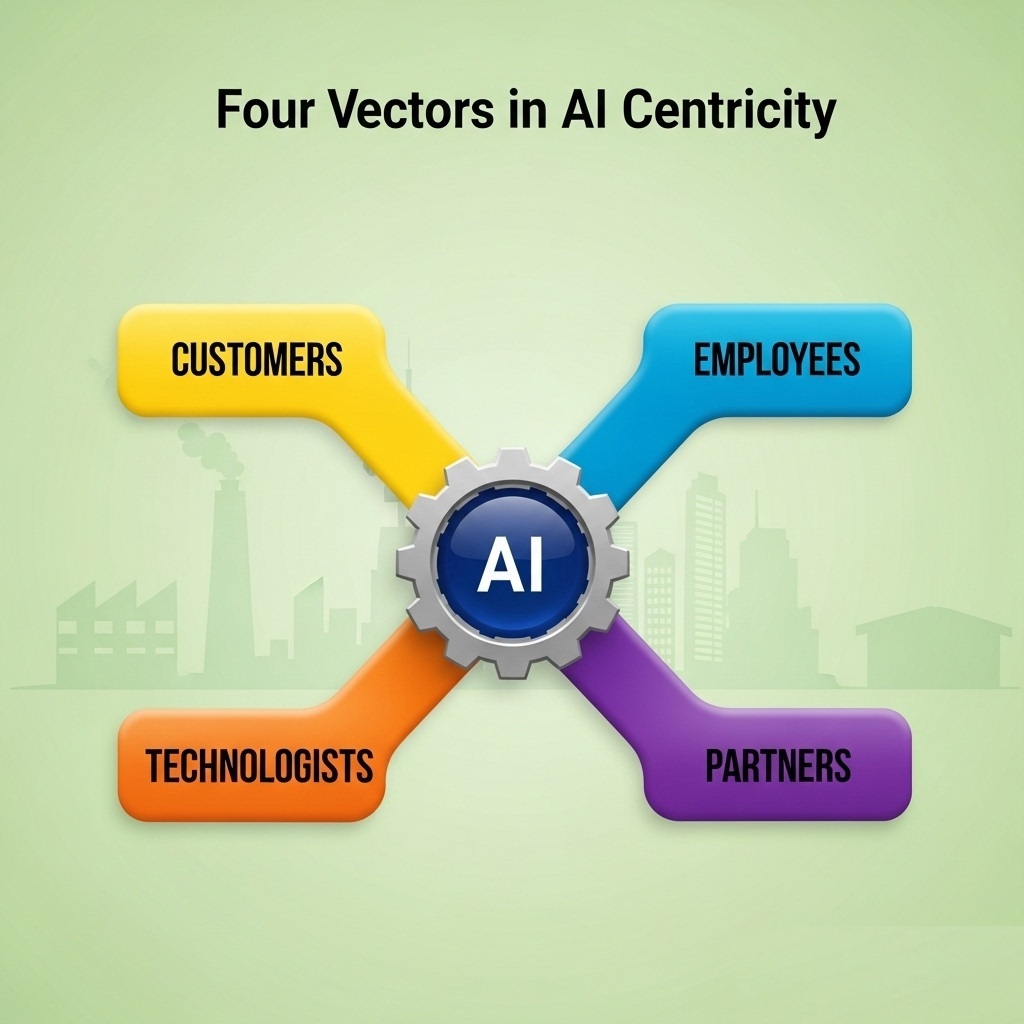
Yes, we don’t do strategy in the abstract. We do engineering of change. We believe that AI must be integrated into the fabric of your business. Here, we apply our AI-Centricity Framework so your customers, employees, technologists, partners and suppliers all become nodes of an AI-enabled ecosystem. We know both boardrooms and code, frameworks and chatbots.

The Outcome: You emerge not merely as a business that uses AI, but one that is AI-anchored. Yes, a firm where the factor of knowledge produces value continuously. As I often say: “Capital without knowledge is like a river without waterbed”. When AI becomes embedded, you shift from incremental productivity to whole-scale transformation.

Learn more at Tekedia Institute’s Enterprise AI Consulting

Best Crypto Coins to Buy: BlockDAG, SUBBD, SpacePay, and BlockchainFX Shine in 2025’s Next Big Wave

0

Each year, new digital assets rise with unique ideas, advanced technology, and thriving communities. As 2025 progresses, people are looking beyond the familiar giants toward projects building strong utility and lasting ecosystems. From futuristic payment systems to high-speed networks and creator-powered platforms, a few names are stealing the spotlight for their innovation and traction.

Among the most exciting contenders this year are BlockDAG, SUBBD, SpacePay, and BlockchainFX. Each offers something distinct, from powerful technology to record-breaking growth. Here’s why these names lead the list of the best crypto coins to buy in 2025.

1. BlockDAG: The High-Speed Hybrid Powering Massive Momentum

BlockDAG is redefining crypto infrastructure through its hybrid design that tackles the “Blockchain Trilemma.” It combines Bitcoin-level security with extreme scalability using a Directed Acyclic Graph (DAG) model. Unlike standard blockchains that process one block at a time, BlockDAG’s system can handle multiple transactions in parallel, reaching speeds between 2,000 and 15,000 TPS. This makes it suitable for everything from global payments to gaming and decentralized apps.

The BlockDAG presale has already raised over $430 million, selling more than 27 billion BDAG coins to 312,000+ holders. Now in Batch 31, BDAG remains priced at $0.0015 using the “TGE” code, ahead of the planned mainnet launch price of $0.05, a 33× potential rise for early participants.

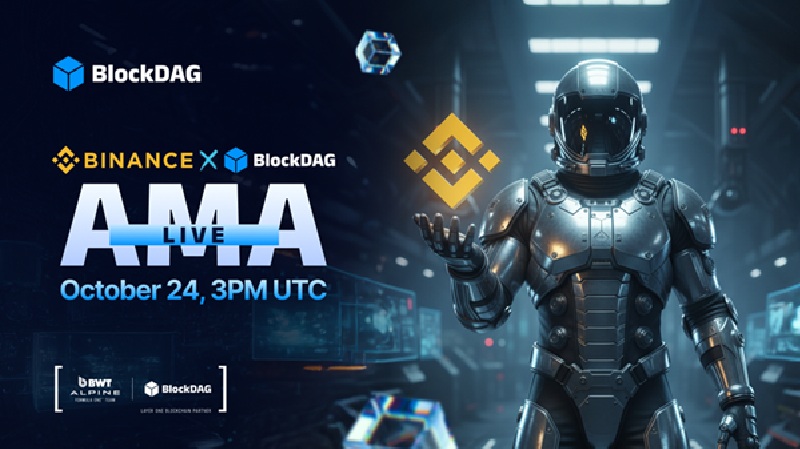
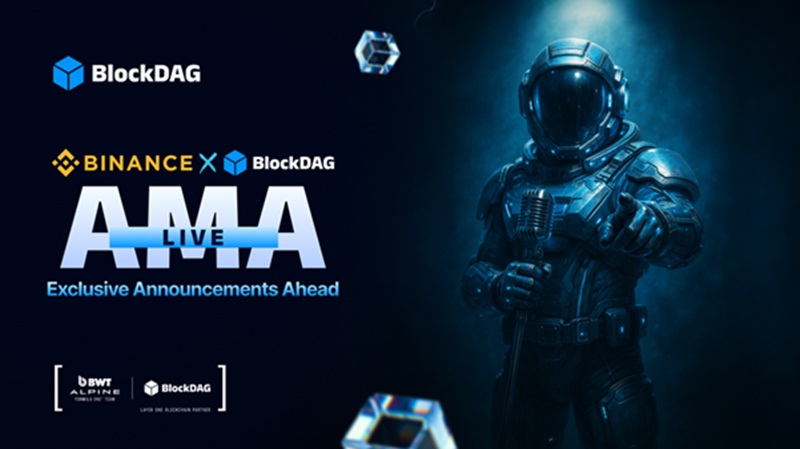
BlockDAG is set to go LIVE on Binance for an exclusive AMA this Friday, October 24, at 3 PM UTC, marking one of its biggest global appearances yet. The session will include insider updates, new roadmap reveals, and major insights ahead of Keynote 4: The Launch Note and GENESIS DAY. This will be a crucial moment as the crypto community watches BlockDAG share the next chapter of its $430M+ ecosystem.

With strong leadership under CEO Antony Turner, guidance from Dr. Maurice Herlihy, audits by CertiK and Halborn, and a multi-year collaboration with the BWT Alpine F1® team, BlockDAG (BDAG) continues to merge cutting-edge tech with global visibility. For those exploring the best crypto coins to buy, BlockDAG stands as a major force heading into its long-awaited mainnet launch.

2. SUBBD: Redefining the Creator Economy on Web3

SUBBD is bringing the subscription model into the Web3 world, allowing creators and audiences to connect directly without traditional platforms. Its system gives full control over subscriptions, payments, and revenue tools, powered by blockchain. This fits perfectly with the rise of digital creators, making SUBBD one of the most talked-about projects among the best crypto coins to buy this season.

The presale has already raised over $750,000, with the coin priced close to $0.0558. Analysts predict it could reach between $0.44 and $0.61 by late 2025 if adoption expands as expected. Backed by strong community support and a clear focus on empowering creators, SUBBD merges practical use with online momentum, offering a rare balance of utility and accessibility in today’s presale market.

3. SpacePay: Making Crypto Transactions Effortless

SpacePay aims to bridge the gap between digital currency and everyday use. Instead of introducing new hardware, SpacePay upgrades existing POS terminals to handle crypto payments through a simple software update. Its goal is to make crypto payments as easy and natural as using cash or cards anywhere in the world.

The SpacePay presale has already raised over $1.3 million, with SPY priced at around $0.00318. Its appeal lies in practicality, offering real-world merchant solutions that promote mass crypto adoption without technical barriers. Still in early development, its focus on ease and scalability positions SpacePay as one of the best crypto coins to buy for those who prioritize real usability over hype.

4. BlockchainFX: The All-in-One Platform for Modern Trading

BlockchainFX is built as a unified trading hub that lets users handle crypto, stocks, and commodities all in one place. It aims to blend decentralized finance (DeFi) with traditional finance (TradFi), allowing smooth access to multiple markets through a single platform. Users can also enjoy staking options, daily rewards, and a Visa-style card for spending crypto worldwide.

Reports show that BlockchainFX’s presale has raised more than $9 million, with coin prices between $0.027 and $0.028, aiming for a listing price of $0.05. Features like daily USDT rewards and strong APY rates have caught major attention. As demand grows for all-in-one trading apps, BlockchainFX is becoming one of the best crypto coins to buy, combining flexibility and growth potential in one platform.

Final Thoughts: Innovation Driving the Next Crypto Era

From BlockDAG’s presale crossing $430 million to SpacePay’s global payment push and SUBBD’s creator-focused platform, these projects highlight how quickly crypto innovation is evolving. Each tackles a real-world need: scalability, monetization, payments, or multi-market access, making them powerful contenders for 2025.

Whether drawn to solid technology or emerging innovation, these four projects capture the spirit of progress. With smart exploration and clear understanding, people can discover the best crypto coins to buy that are shaping the next phase of the digital economy.

Top Crypto to Buy Now: BlockDAG, Hyperliquid, XRP, and Tron Lead the Race for 2025 Gains

0

Crypto markets have seen another wild week, but some projects continue to show real progress backed by strong performance and active development. Whether through new architecture, solid fundamentals, or expanding real-world adoption, market watchers are again focusing on the top crypto to buy now. Among the most discussed names are BlockDAG, Hyperliquid, XRP, and Tron, all showing promising signals for near-term growth.

What makes these stand out isn’t hype, it’s real delivery. Each has proven traction through testnets, technical upgrades, or billion-dollar ecosystems. Here’s why these projects are leading attention in the current market cycle.

1. BlockDAG: The Presale Giant Powering Toward Launch

BlockDAG has emerged as the biggest presale phenomenon of 2025, having raised over $430 million with more than 315,000 holders worldwide. Its unique hybrid framework combines Bitcoin-level Proof-of-Work security with a Directed Acyclic Graph (DAG) structure that can handle 2,000 to 15,000 transactions per second. This design makes it fast, secure, and scalable, setting BlockDAG apart as the top crypto to buy now for those watching the evolution of blockchain infrastructure.

BlockDAG will host an exclusive AMA on Binance this Friday, October 24, at 3 PM UTC, featuring roadmap updates and insights ahead of Keynote 4 and Genesis Day. With over $430M raised, BDAG remains priced at $0.0015 in Batch 31. Users can apply code “TGE” for extra rewards before the Dashboard V4 upgrade and upcoming price rise.

The project’s live “Awakening Testnet,” which supports the Ethereum Virtual Machine, allows seamless dApp development and testing. Currently, Batch 31 coins are available at $0.0015, ahead of the confirmed mainnet launch price of $0.05. With a growing community of over 27 billion coins sold and partnerships like the multi-year collaboration with the BWT Alpine Formula 1® Team, BlockDAG (BDAG) is already positioned for a high-impact debut.

Led by CEO Antony Turner and advised by computing expert Dr. Maurice Herlihy, BlockDAG pairs transparency with technical depth. Backed by security audits from CertiK and Halborn, it’s one of the few projects combining proven delivery with verifiable credibility. For early participants, this balance of innovation, security, and a clear growth path cements BDAG as a front-runner among the top crypto to buy now.

2. Hyperliquid: Redefining Decentralized Trading

Hyperliquid’s HIP-3 upgrade has reshaped how decentralized perpetual trading operates. For the first time, anyone who stakes 500,000 HYPE (around $20 million) can create new perpetual markets without centralized oversight.

This new setup empowers creators and traders while maintaining control through validator slashing and strict open-interest limits. The network’s framework blends freedom with structure, a rare mix in DeFi today.

Hyperliquid has also executed large-scale buybacks worth around $644 million this year, removing more than 21 million HYPE from circulation. That’s nearly 2% of the total supply burned, reinforcing scarcity and long-term stability.

Currently, HYPE trades near $40.10 with strong daily volume and growing market participation. With this mix of advanced design, governance, and consistent activity, Hyperliquid stands as a strong contender among the top cryptos to buy now for those exploring liquidity-focused opportunities in decentralized finance.

3. XRP: Awaiting Its Defining ETF Decision

XRP has seen pressure recently, dropping from $2.49 to about $2.41, as one of the ten pending XRP ETF applications nears its SEC review deadline this week. Despite the decline, analysts believe the broader setup remains healthy, suggesting the drop stems more from liquidations than weakness. Should ETF approval arrive, XRP could attract significant institutional engagement.

The asset’s daily volume remains massive at $5.56 billion, though it’s down 17% from last week, and open interest has reduced to $4.2 billion as leveraged positions unwind. Market watchers expect a rebound once large holders ease selling pressure. That possible reversal keeps XRP in focus among the top crypto to buy now, especially for those anticipating regulatory clarity and mainstream integration through ETFs.

4. Tron: The Steady Force in Stablecoin Activity

TRON (TRX) continues to dominate in transaction count and stablecoin transfers. Currently priced near $0.322 with daily volume above $770 million, TRX maintains solid support around $0.32. Analysts predict a move toward $0.35 if this zone continues to hold, showing signs of steady accumulation by holders.

Beyond price, TRON remains a preferred platform for USDT movement, handling billions in transactions every day. Its low fees and high-speed network make it appealing for fintech use cases. A recent study titled Decoding TRON highlighted its vast on-chain usage and leadership in stablecoin volume, proving it’s built on active utility, not just speculation.

With continuous growth, a mature DeFi landscape, and strong technical traction, TRON earns its place among the top cryptos to buy now for those who favor stability and consistent blockchain use.

Final Thoughts

From progress to adoption, each of these projects brings a unique strength to the market. BlockDAG leads with breakthrough technology and a record presale crossing $430 million. Hyperliquid is changing decentralized finance with its permissionless perpetuals.

XRP stands near a pivotal regulatory milestone with ETFs on the horizon, while TRON continues to anchor stablecoin activity across the blockchain world. Together, they represent the diversity and potential of shaping the crypto landscape today.

Whether drawn to infrastructure, DeFi, payment systems, or stablecoin ecosystems, these four are the top cryptos to buy now, not because of hype, but because of progress, proof, and momentum.