DD
MM
YYYY

PAGES

DD
MM
YYYY

spot_img

PAGES

Home Blog Page 2843

No More Tax on Bitcoin and Crypto Transactions in Dubai

0

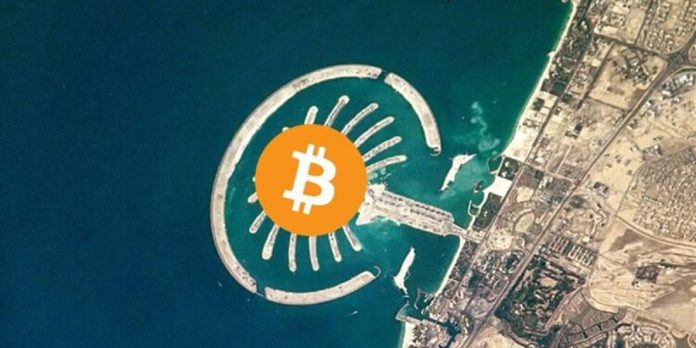
The United Arab Emirates (UAE) has taken a significant step in the cryptocurrency space by exempting digital asset transactions from value-added tax (VAT). This policy change, effective from November 15, 2024, is set to retroactively apply to transactions dating back to January 1, 2018. The move positions the UAE, and Dubai in particular, as a forward-thinking jurisdiction that is embracing the potential of blockchain technology and cryptocurrencies.

The exemption of crypto transactions from VAT is a clear indication of the UAE’s commitment to fostering a conducive environment for the growth of the virtual assets sector. By eliminating the 5% VAT previously imposed on such transactions, the UAE government is not only legitimizing the use of digital currencies but also encouraging businesses and investors to consider Dubai as a viable location for their crypto-related activities.

This policy change comes at a time when the global landscape for cryptocurrencies is still varied, with different countries adopting diverse regulatory stances. The UAE’s decision to provide tax relief for crypto transactions is a strategic move that could attract a wave of blockchain entrepreneurs and startups to the region. Dubai, known for its dynamic economy and progressive regulatory framework, could see a significant boost in its efforts to become a global hub for cryptocurrency and blockchain technology.

The Federal Tax Authority’s revised regulations reflect the UAE’s commitment to fostering a supportive environment for blockchain and cryptocurrency ventures. By eliminating the VAT, the UAE is sending a clear message of its intention to attract businesses and blockchain projects, further legitimizing the virtual assets sector.

This exemption also extends retroactively, meaning individuals or businesses that have paid VAT on cryptocurrency purchases or sales since 2018 could be eligible for refunds, subject to certain conditions and disclosures to the FTA.

Dubai’s approach contrasts sharply with more cautious regulatory environments elsewhere, highlighting the city’s progressive and responsive digital assets regime. With clear rules and guidance, Dubai is set to become an even more attractive destination for crypto investors and companies, offering significant tax advantages and a high standard of living.

The implications of this tax exemption are far-reaching. For one, it simplifies the process for businesses and individuals engaging in crypto transactions by removing the complexities associated with VAT compliance. Additionally, the policy is expected to enhance the attractiveness of the UAE’s crypto market, potentially leading to increased investment and innovation in the sector.

Moreover, the retroactive application of the VAT exemption means that individuals and businesses that have conducted crypto transactions since 2018 may be eligible for VAT refunds. This aspect of the policy underscores the UAE’s proactive approach to not only shaping future regulations but also rectifying past tax burdens that may have hindered the growth of the crypto industry.

The UAE’s exemption of crypto transactions from VAT is a landmark development that underscores the country’s vision to be at the forefront of the digital economy. As the world continues to grapple with the integration of cryptocurrencies into mainstream finance, the UAE’s bold move could serve as a model for other nations looking to create a more favorable environment for the burgeoning crypto industry. The future of crypto in Dubai looks promising, and this tax exemption is a testament to the city’s ambition to lead in the digital age.

Gold Price Trends

0

In September 2024, XAUUSD was influenced by both fundamental and technical factors, leading to high volatility as traders adjusted to economic data, central bank policies, and geopolitical uncertainties. However, this analysis will focus on the technical side:

Price Movement

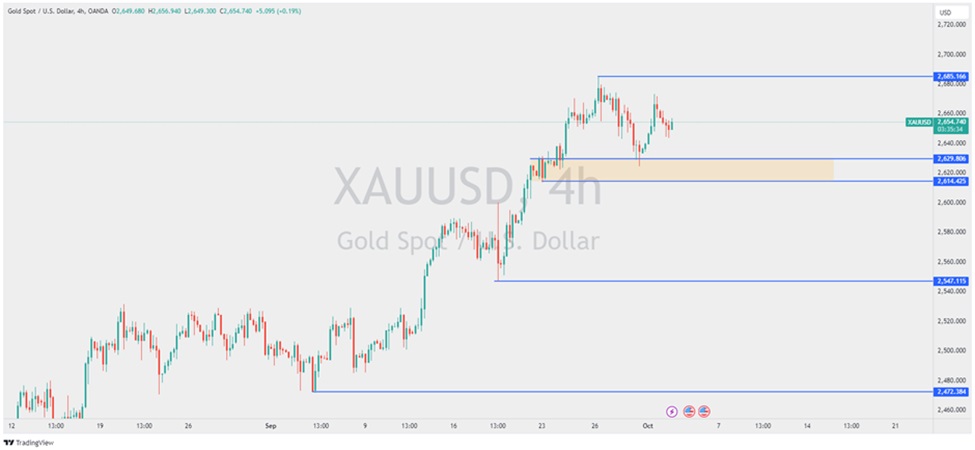
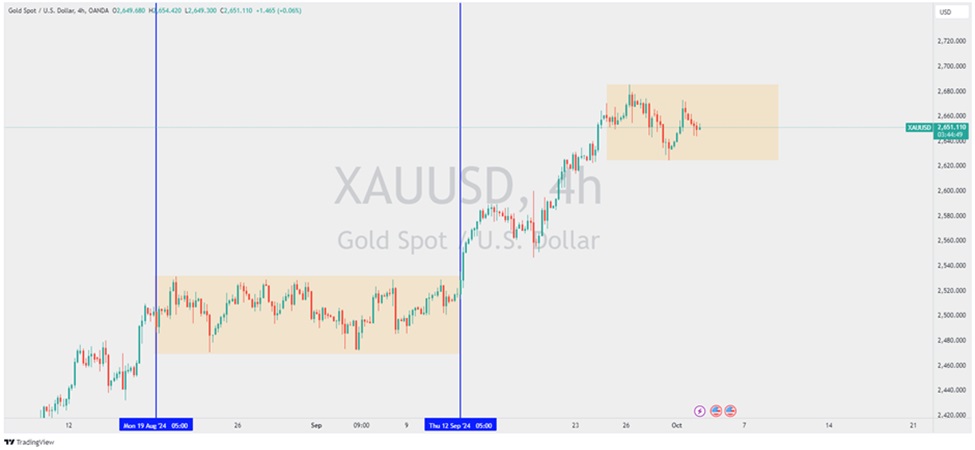
At the beginning of September, gold opened at 2,500 and dropped to 2,473. After that, it made a strong move to test its September high at 2,685 before finally closing at 2,635, resulting in a price increase of more than 5%.

Trend Outlook

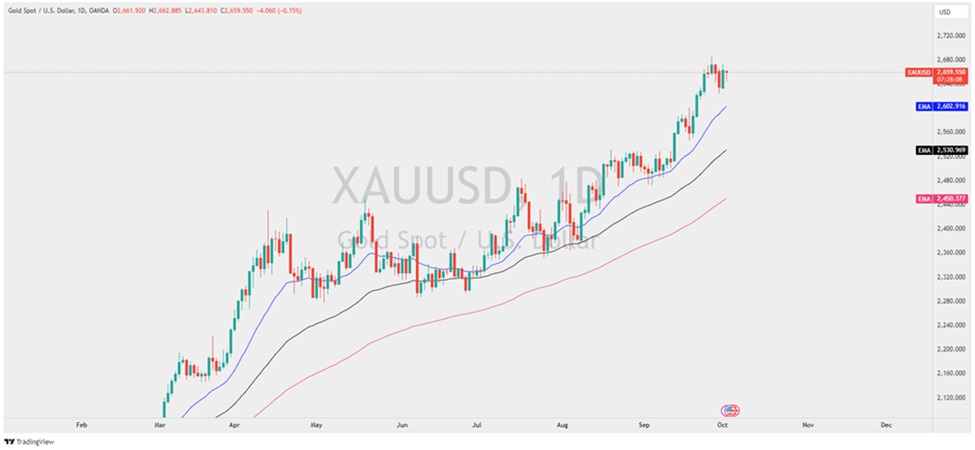
Overall, gold remains in a strong bullish trend. However, the short-term trend appears to be consolidating.

It’s important to note that this consolidation could last, similar to the previous consolidation, which took about three weeks. As shown in the XAUUSD chart above, this kind of movement may provide opportunities for short-term traders, while long-term traders might find it unsettling. Therefore, it’s crucial to adjust your trading and investment strategies to prepare for upcoming gold movements.

Key Support and Resistance

Support

The nearest significant support area for gold is currently in the 2,614-2,629 range. As previously mentioned, during the potential consolidation phase, this area is crucial since it could cause gold to bounce if touched. The next levels of support are at 2,547 and 2,472.

Resistance

The current key resistance for gold is 2685, a level that has not yet been breached. If gold continues to strengthen, this level may need to be tested several times before a breakthrough occurs. So it is necessary to pay attention to price action when it approaches that level.

Moving Averages

Due to gold’s recent strong movement, the moving averages to watch are the MA20 and MA50. Gold tends to react when it touches either the MA20 or EMA50. Currently, the price is still above both moving averages. Monitoring these indicators can help gauge the strength of the current trend.

Target

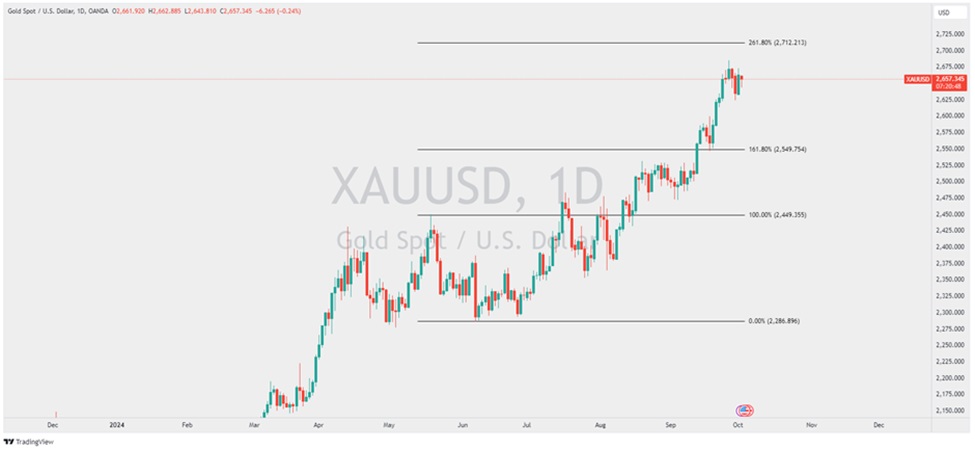
With gold in a bullish condition, further upward movement is expected. The target level for October 2024 is 2,712, which aligns with the 2.618 Fibonacci extension.

Conclusion

XAUUSD saw strong upward movement in September, supported by both macroeconomic and geopolitical conditions, as well as a bullish trend. Traders and investors involved in gold-related instruments should be mindful of potential rapid price movements, which may be triggered by economic data releases or market activity.

Earthquake in Iran Fits Profile of a Nuclear Test Explosion

0

The current tensions between Israel and Iran are indeed significant and have raised concerns globally. It’s important to approach such topics with a well-informed perspective, understanding the complexities of international relations. The situation in the Middle East has always been intricate, with a long history of conflicts and alliances shaping the region’s geopolitical landscape.

The recent seismic activity in Iran has raised questions and concerns among international observers and analysts. On October 5, a seismic event with a magnitude of 4.5 was detected in Aradan, Iran, and was felt as far as Tehran. The timing of this event, closely followed by a minor tremor reported in Israel, has led to speculations about its nature, with some suggesting it fits the profile of a nuclear test explosion.

The region of Iran has been under scrutiny for its nuclear activities, with incidents such as the 2021 Natanz blackout, which was suspected to be caused by a planned blast, adding to the tensions and suspicions regarding Iran’s nuclear intentions. The Natanz nuclear facility, which is monitored by the International Atomic Energy Agency (IAEA), has been a focal point in discussions about Iran’s nuclear program. The country’s nuclear program has been a subject of international concern, with various countries, including the US and Israel, taking measures to prevent the development of nuclear weapons by Iran.

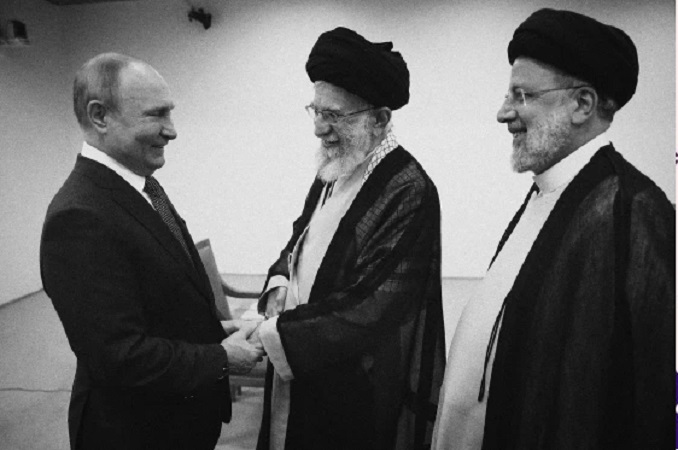
The historical roots of Israel-Iran tensions can be traced back to the geopolitical and ideological shifts that occurred in the late 20th century. Prior to 1979, Israel and Iran maintained a relatively friendly relationship, especially during the era of the Pahlavi dynasty when Iran was ruled by Shah Mohammad Reza Pahlavi. This period was characterized by mutual cooperation, as Iran was considered one of Israel’s closest allies in the region.

However, the Iranian Revolution of 1979 marked a turning point, as the establishment of the Islamic Republic under Ayatollah Ruhollah Khomeini brought about a new era of hostility towards Israel. The new regime in Iran viewed Israel as an illegitimate state and an ally of the Western powers that had supported the Shah’s authoritarian rule.

The animosity intensified over the years, with Iran supporting various groups and militias in the region, such as Hezbollah in Lebanon and Hamas in the Palestinian territories, which have been involved in conflicts with Israel. These proxies have been a significant aspect of the tensions, as they directly impact Israel’s security and regional stability.

Recent events have escalated tensions, with incidents such as missile attacks and strategic strikes being reported. These actions have not only affected the two nations involved but also have broader implications for regional stability. The international community is closely monitoring the situation, hoping for a de-escalation of hostilities and a peaceful resolution.

It’s crucial to rely on accurate and up-to-date information from trusted news sources when discussing such sensitive topics. Misinformation can lead to unnecessary panic and a distorted view of the events. As responsible citizens and members of the global community, it’s our duty to seek out facts and engage in discussions that promote understanding and peace.

It is important to note that Iran has consistently maintained that its nuclear technology is intended for peaceful purposes, such as power generation. However, the withdrawal of the US from the Joint Comprehensive Plan of Action (JCPOA) and Iran’s subsequent actions of enriching uranium beyond specified limits have only intensified the global apprehension.

The recent seismic event has not been officially confirmed as a nuclear test explosion, and there is a need for careful analysis and verification by relevant international authorities. Seismic stations, such as the one in Armenia, have detected the event but noted the absence of seismic compression waves, which typically accompany natural earthquakes, suggesting that the incident may resemble an explosion more than an earthquake.

The situation remains delicate, and the international community awaits further information and clarification. It is crucial for all parties involved to engage in dialogue and pursue diplomatic solutions to address the concerns surrounding Iran’s nuclear activities and ensure regional and global security.

Kaiko Uses Sonaverse to Expand its Blockchain Data Coverage

0

Kaiko, a prominent player in the digital assets data and market intelligence sector, has recently announced a strategic partnership with Sonarverse, a leading blockchain indexing and infrastructure company. This collaboration is set to significantly broaden Kaiko’s blockchain data coverage capabilities.

The partnership marks a substantial enhancement in Kaiko’s ability to deliver comprehensive market insights across a wide array of blockchain networks. By integrating Sonarverse’s robust infrastructure, Kaiko aims to improve its time-to-market for new offerings without compromising its core commitment to reliability and stability. The synergy between Kaiko’s proprietary node infrastructure and Sonarverse’s agile product development approach will enable quick Minimum Viable Product (MVP) deployments and new coverage areas.

One of the most notable outcomes of this partnership is the expansion of Kaiko’s on-chain data offerings. Previously covering seven major blockchains, including Bitcoin, Ethereum, Base, BSC, Polygon, BNB Chain, and Avalanche, Kaiko’s coverage will now extend to over 70 blockchains. This growth is not just in numbers but also in the quality and depth of the data provided, ensuring that Kaiko’s clients continue to receive the high-standard, compliant data they have come to expect.

The expanded blockchain coverage is a strategic move for Kaiko, driven by the need to cater to a versatile market characterized by rapidly changing crypto liquidity and supply dynamics. By leveraging Sonarverse’s expertise, Kaiko can efficiently allocate resources, scaling up or down its offerings in response to the maturity of the markets it serves.

Karamvir Singh, Chief Product Officer at Kaiko, praised Sonarverse’s technical expertise and the precision of their solutions, stating, “Their ability to deliver high-quality, reliable infrastructure at scale is exactly what we need to drive our business forward.” Jesse Bornstein, Global Head of Business Development, echoed this sentiment, expressing excitement about the partnership and its potential to complement Kaiko’s expertise perfectly.

Visa Launches its Tokenized Asset Platform

Visa, the global leader in digital payments, has taken a significant leap into the future of finance with the introduction of the Visa Tokenized Asset Platform (VTAP). This innovative platform is designed to bridge the gap between traditional financial institutions and the burgeoning world of blockchain technology.

The VTAP allows banks to issue fiat-backed tokens, including stablecoins, and manage digital transactions with greater efficiency. With the partnership of BBVA, Visa is set to pilot this platform on the Ethereum blockchain, with live pilots expected in 2025. This move represents a major milestone for Visa, which has been at the forefront of payment innovations for nearly six decades.

One of the key benefits of VTAP is its ease of integration. Banks can mint, burn, and transfer fiat-backed tokens using a test environment provided by Visa, with minimal technical integration required. The platform is accessible via APIs, enabling banks to enhance their financial infrastructure to be always on and more efficient.

Moreover, VTAP’s programmability feature is a game-changer. It allows banks to use fiat-backed tokens within smart contracts, digitizing and automating workflows, and potentially transforming the exchange of real-world assets. For instance, a bank could use smart contracts to administer complex lines of credit and release payments when terms are met or enable customers to purchase tokenized commodities with near-real-time settlement onchain.

Visa’s foray into tokenized assets is not just a technological advancement; it’s a strategic move that positions the company at the intersection of traditional finance and the digital asset space. As the ecosystem of tokenized real-world assets grows across various blockchain networks, Visa’s VTAP stands as a testament to the company’s commitment to innovation and its vision for the future of payments.

Animoca Brands’ Strategic Investment in RoOLZ Telegram Games

0

In a strategic move that underscores the growing convergence of gaming and blockchain technology, Animoca Brands has made a significant investment in RoOLZ Telegram Games. This investment is poised to catalyze the expansion of mobile intellectual properties (IPs), series, and games, marking a pivotal moment in the evolution of digital entertainment.

Animoca Brands, a leading company in the digital entertainment space, has been at the forefront of integrating blockchain technology into gaming. With a portfolio that includes partnerships with global brands and investments in various NFT-related blockchain companies, Animoca Brands is shaping the future of gaming.

The investment in RoOLZ Telegram Games aligns with Animoca Brands’ vision to onboard a mass gaming audience to Web3. GAMEE, a subsidiary of Animoca Brands, recently received an investment from TON Ventures, which will facilitate the integration of millions of Telegram users into the TON Network. This move is expected to introduce new community-centric and viral features driven by TON-based digital assets, enhancing user engagement and expanding the gaming ecosystem.

The integration of TON-based digital assets into GAMEE’s Telegram Mini App, such as TON-powered tokens and NFTs, is a testament to the potential of blockchain in creating immersive and interactive gaming experiences. With over 90 million registered users and 10 billion gameplay sessions, GAMEE’s platform is a testament to the scalability and appeal of blockchain-integrated gaming platforms.

Here’s a glimpse into some of the blockchain games and projects that Animoca Brands has invested in:

Mocaverse: Aiming to build the largest on-chain cultural economy, Mocaverse is at the heart of the Animoca Brands ecosystem, pioneering Web3 identity and reputation systems.

Wreck League: Known for its mech sports combat, Wreck League offers robust customization and competitive culture within the Metaverse.

Anichess: In collaboration with Play Magnus Group, Anichess is a decentralized chess-inspired game that adds an innovative spell mechanic to the classic game, enhancing strategy and gameplay.

REVV Motorsport: REVV is the primary currency across all REVV Motorsport blockchain games, enabling true digital ownership of game assets. The ecosystem includes titles like REVV Racing, MotoGP™ Ignition, and Formula E: High Voltage.

The Sandbox: A virtual world where players can build, own, and monetize their gaming experiences, The Sandbox is one of the leading platforms in the space.

nWay: A developer and publisher of competitive multiplayer games across mobile, console, and PC, nWay is part of the Animoca Brands family, contributing to the blockchain gaming ecosystem.

Axie Infinity: A digital pet universe where players can earn tokens through skilled gameplay and contributions to the ecosystem, Axie Infinity is among the notable investments by Animoca Brands.

OpenSea: As the world’s first and largest NFT marketplace, OpenSea is another significant investment, highlighting Animoca Brands’ belief in the NFT space.

Dapper Labs: Known for Crypto Kitties and NBA Top Shot, Dapper Labs is part of Animoca Brands’ investment portfolio, focusing on driving mainstream adoption of blockchain technology. Animoca Brands continues to support the growth of blockchain gaming and the open metaverse, leveraging its expertise and network to foster innovation and adoption.

Animoca Brands’ investment in RoOLZ Telegram Games is not just about financial backing; it’s about fostering innovation and driving the adoption of blockchain in gaming. As the largest validator on The Open Network (TON) blockchain, Animoca Brands is set to deliver blockchain-based games to Telegram’s vast user base, further bridging the gap between traditional gaming and the burgeoning world of GameFi.

The synergy between Animoca Brands and RoOLZ Telegram Games could potentially redefine the gaming landscape, offering players novel experiences that leverage the transparency, security, and community-driven aspects of blockchain technology. This collaboration may also pave the way for the development of new gaming IPs and series that resonate with the modern gamer’s desire for ownership and participation in the digital realms they inhabit.

As the gaming industry continues to evolve, the strategic partnership between Animoca Brands and RoOLZ Telegram Games serves as a beacon for the future of entertainment. It’s a future where gaming is not just a pastime but a dynamic ecosystem where players have a stake in the worlds they explore and the communities they build.