DD
MM
YYYY

PAGES

DD
MM
YYYY

spot_img

PAGES

Home Blog Page 285

Before Shutdown, Consider a Merger: A Playbook for Nigeria’s Startup Epoch

0

In Nigeria’s startup orbit, we are living in two epochs: Before Naira Float and After Naira Float. In that earlier era, the taps of foreign capital flowed with abundance. Term sheets came with less friction, and our innovators raised funds to pursue bold missions. But when the Naira was floated, the storehouse shifted. The currency weakened. Asset values, when mapped in dollars, evaporated. And in that erosion, foreign venture capitalists paused, recalibrated, and many stepped aside.

The impacts are reverberating across the land: young companies are scaling revenue in Naira but running out of oxygen in dollars. Cost structures denominated in foreign currencies have become existential burdens. And when the runway shortens, many founders conclude that the next logical thing is to power down. Lidya joined today: “Lidya, a Nigerian digital lending platform that empowered small and medium-sized enterprises (SMEs), has officially shut down operations due to severe financial distress.” Yet, I have a message: Do not shut down. Rather, consider merging.

Nations rarely expire; Nigeria will rise again. Our market cycles oscillate, but the fundamentals of this land remain evergreen. And when stability returns, and it will return, the ecosystems will blossom again. So, instead of premature endings, founders should look to fusions, to strategic consolidations, to alliances where strengths are pooled. Mergers are not failures. They are repositionings. And yes, someone may need to surrender the “CEO” badge for CTO, CPO, COO, etc. Greatness is not in titles but in outcomes.

Through mergers, startups acquire scale: shared technologies, expanded customer bases, harmonized teams, and optimized cost structures. Together, they can build resilience, innovate better, and sustain growth. That path is superior to solitary failure.

If you are contemplating shutdown, before you sign that final memo, Tekedia Capital would like to speak with you. We have developed a framework that is working with some of our startups. We understand the peculiar gestation cycle in Nigeria where patience is not just a virtue but a requirement for survival. And we know the opportunities embedded within this nation’s informal and formal markets.

The velocity of capital flow is improving, albeit quietly. Nigeria will be better and remains a promise. And for a merged, strengthened entity, the runway can be extended. So, pause. Re-examine. Reframe. Before concluding that the runway is over, explore the power of mergers. The difference between extinction and dominance may simply be collaboration.

5 Crypto Coins to Watch This Month – Blazpay Dominates the Best 100x Crypto Race

0
Blazpay – Best 100x Crypto

The crypto market enters Q4 2025 with mixed volatility, yet opportunities for explosive growth remain. Among top performers and emerging tokens, Blazpay is emerging as the Best 100x Crypto according to analysts and early investors. While Bitcoin, XRP, Cardano, and Avalanche consolidate, Blazpay’s ultra-low presale price of $0.0075 and AI-powered ecosystem are attracting serious attention.

Phase 2 of Blazpay’s presale is already 73.5% complete, raising over $812K, and the price is set to rise to $0.009375 once the phase ends. With a combination of multichain functionality, AI-driven DeFi tools, and SDK integration, Blazpay positions itself as a next-generation fintech platform and a top contender for massive growth heading into 2026.

1. Blazpay (BLAZ) – AI-Powered Presale Leader & Best 100x Crypto

Blazpay stands apart in the crowded crypto market due to its accessibility, utility, and innovative ecosystem. Unlike high-cap coins that require significant capital for meaningful exposure, Blazpay allows fractional entry with exponential growth potential. The platform has built a sophisticated AI-powered DeFi network, enabling users to manage payments, trading, and automation across multiple blockchains seamlessly. Its unified interface combines multichain SDK access with AI analytics, giving investors and everyday users a powerful toolkit for efficient digital finance.

Investment Scenario – $2,000 Entry:

Analysts project that as the ecosystem grows and adoption accelerates, Blazpay could reach $0.75 to $1 per token by mid-2026. A $2,000 investment at the presale stage could realistically translate into $200,000 or more, reflecting the 100x+ upside that cements its status as the Best 100x Crypto. Early participation before the Phase 2 price increase is key, and strategic monitoring of ecosystem milestones such as DeFi integrations, user growth, and exchange listings can help investors optimize their returns.

Blazpay – Best 100x Crypto

How to Buy:

  1. Visit the official Blazpay presale portal.
  2. Connect your MetaMask or Web3 wallet.
  3. Choose ETH, BNB, or USDT as payment.
  4. Enter the token amount & confirm purchase.
  5. Claim tokens at presale end or mainnet launch.

2. Bitcoin (BTC) – The Market Titan

Bitcoin remains the leading store of value and the backbone of the cryptocurrency market. With a current price of approximately $107,605 and a market capitalization of $2.12 trillion, Bitcoin continues to anchor investor confidence and institutional adoption. While it faces regulatory scrutiny and periodic volatility, technological improvements such as the Lightning Network for faster off-chain transactions and Taproot upgrades for enhanced privacy reinforce its long-term potential

Blazpay –Which Crypto Will Explode in 2025

3. XRP – Payment-Focused Growth Token

XRP has gained attention for its strong focus on cross-border payments and liquidity management through RippleNet. Following the resolution of the SEC lawsuit, regulatory clarity has improved investor confidence, and potential inclusion in spot ETF offerings could further increase institutional demand. Priced around $2.38 with a market cap near $134 billion, XRP continues to facilitate fast and low-cost transactions while maintaining steady adoption among financial institutions. Analysts project that XRP could potentially rise to $5 or higher by the end of 2025

4. Cardano (ADA) – Research-Driven Smart Contracts

Cardano continues to develop as a research-oriented blockchain platform focused on sustainability, scalability, and smart contract deployment. Trading at approximately $0.6356 with a market cap of $22.65 billion, Cardano has implemented Layer 2 scaling through Hydra and privacy enhancements using Halo 2 zkSNARKs. These upgrades enhance transaction throughput and confidentiality, allowing Cardano to remain competitive in the growing smart contract ecosystem.

5. Avalanche (AVAX) – High-Speed Layer 1

Avalanche is recognized for its high-throughput architecture and near-instant transaction finality, supporting thousands of transactions per second across its X-Chain, C-Chain, and P-Chain. With a current price of around $20 and a market capitalization of $8.5 billion, Avalanche offers enterprise-grade compliance and customizable subnets that cater to DeFi applications and regulatory environments. Analysts see the potential for AVAX to reach $55 depending on adoption trends in the final quarter of 2025

Conclusion – Blazpay Poised as the Best 100x Crypto

With major coins like Bitcoin, XRP, Cardano, and Avalanche stabilizing, Blazpay represents a unique chance to enter early in a high-utility, AI-powered ecosystem. Its presale offers low-cost entry, multichain access, gamified rewards, and SDK tools, combining real-world utility with massive growth potential. For investors seeking the Best Crypto Coin to Buy Now with 100x potential, Blazpay stands out as the top choice heading into 2026.

Blazpay –Which Crypto Will Explode in 2025


Join the Blazpay Community:

  • Website: blazpay.com
  • Twitter: @blazpaylabs
  • Telegram:me/blazpay

Bunni DEX Shuts Down After $8.4 Million Exploit, as Zepz Unveils Sendwave Stablecoin Wallet

0

Decentralized exchange (DEX) Bunni, built on Uniswap V4 and known for its adaptive liquidity pools and incentive mechanisms, has officially ceased operations following a major security breach in September 2025.

The exploit drained approximately $8.4 million in assets—primarily USDC and USDT—across Ethereum ($2.4 million) and Unichain ($6 million), exploiting a logic-level flaw in the BunniHub smart contract’s withdrawal function related to rounding errors and faulty rebalancing logic.

Despite prior audits by firms like Trail of Bits and Cyfrin, the vulnerability allowed attackers to repeatedly withdraw more tokens than deposited, with stolen funds quickly laundered through Tornado Cash and bridged via Across Protocol.

In an announcement on X dated October 22, 2025, the Bunni team expressed regret over the decision, stating that the incident “halted [their] growth” and that insufficient resources—estimated at six to seven figures for necessary audits, monitoring, and relaunch efforts—made a secure revival impossible.

The platform’s total value locked (TVL) plummeted from over $60 million pre-exploit to near zero, underscoring the severity of the fallout. Bunni offered a 10% bounty for the return of funds, but received no response from the attacker.

Liquidity providers can still access and withdraw assets via the Bunni website until further notice. Remaining funds will be allocated to holders of BUNNI, LIT, and veBUNNI tokens based on a pre-exploit snapshot, excluding team members, pending legal clearance.

As a parting contribution, Bunni relicensed its v2 smart contracts under the MIT license, making features like liquidity direction functions (LDFs), surge fees, and autonomous rebalancing available to the broader DeFi community.

The team is cooperating with law enforcement for recovery efforts. This incident adds to 2025’s DeFi losses, exceeding $3.1 billion industry-wide, and highlights ongoing risks in cross-chain protocols.

The shutdown has sparked discussions on X about DeFi security, with users lamenting the loss of an innovative DEX while emphasizing the need for diversified liquidity and enhanced bug bounties. Associated protocols like Euler Finance confirmed no direct impact.

Coinbase Unveils Payments MCP for AI Agents

In a push toward “agentic commerce,” Coinbase launched Payments Model Context Protocol—a framework enabling AI agents from models like Anthropic’s Claude (Desktop and Code), Google’s Gemini, OpenAI’s Codex, and Cherry Studio to directly interact with crypto wallets, on-ramps, and stablecoin payments.

Built on the x402 standard an HTTP “402 Payment Required” revival co-developed with Cloudflare, it allows AI to autonomously handle on-chain transactions via natural language prompts, without requiring API keys or complex coding.

Users set up dedicated agent wallets using just an email, with built-in on-ramps in supported regions and configurable spending limits, approval thresholds, and session caps for security. Transactions run locally on desktops to prioritize privacy and speed.

Agents can pay for compute resources, access paywalled data, tip creators, or manage micro-business operations—bridging AI’s analytical power with crypto’s programmable money.

Each agent uses isolated funds no access to users’ main wallets, with Coinbase’s layered checks ensuring regulatory adherence. Future expansions include ChatGPT support once streaming compatibility is resolved.

Coinbase VP Dan Kim and engineering head Erik Reppel described it as empowering AI to “transact and do, not just read and write,” positioning stablecoins as the “machine-perfect” rail for machine-to-machine economies.

The tool is part of the x402 Foundation’s efforts to standardize AI payments, with early testing confirming seamless integration. On X, reactions highlight its potential to make crypto “invisible” in everyday AI use cases, though some note the need for robust safeguards against unintended agent actions.

This development signals accelerating convergence between AI and blockchain, potentially unlocking new use cases like automated DeFi strategies or frictionless global micropayments. For developers, Coinbase’s AgentKit toolkit provides framework-agnostic support to build on it.

Zepz Unveils Sendwave Wallet, A Stablecoin-Based Solution For Seamless Global Transactions

Zepz, the global payments group behind WorldRemit And Sendwave, has launched the Sendwave Wallet, a globally accessible stablecoin-backed peer to peer cross border money solution.

The new wallet allows users to send, store, and spend funds seamlessly across more than 100 countries, providing stable value, near-instant transfers, and low transaction costs within the Sendwave ecosystem.

At its core, the Sendwave Wallet is designed to simplify global money management for individuals and families. Its user-friendly interface enables customers to send funds as easily as sending a message, making it ideal for everyday needs such as supporting loved ones or covering essential expenses.

Through the wallet, customers can quickly open a digital dollar balance within the Sendwave app to send, receive, and deposit funds. These balances are securely held in a stablecoin pegged to the US dollar, ensuring stability and confidence for users managing cross-border finances.

Speaking on the launch the wallet, Mark Lenhard, CEO of Zepz, stated that the launch represents a major step forward in empowering financially active communities across the Global South. “The financial lives of cross-border communities are far more complex and personal than traditional remittance transactions. With Sendwave Wallet, we’re giving customers a trusted, intuitive way to control their money. This is about stability, choice, and dignity for the communities we serve”, he said.

The Sendwave Wallet leverages stablecoin technology to combine the benefits of digital currency with everyday usability. By using stablecoins such as USDC, customers can hold value securely and transfer funds in real time, without the volatility and complexity commonly associated with cryptocurrency wallets. The platform continues Zepz’s legacy of offering transparent and competitive exchange rates, while providing a safe store of value.

With the support of Zepz’s global payout network, users can withdraw their USDC funds through trusted partners, converting them to local currencies for essential needs like food, healthcare, and education. In the future, the wallet will enable customers to spend directly using payment cards or QR codes, expanding its functionality beyond traditional remittance use cases.

To bring this innovation to life, Zepz collaborated with several leading Web3 organizations, including Circle, the issuer of USDC; Solana, a high-speed blockchain network; and Portal, a provider of borderless wallet infrastructure.

Kash Razzaghi, Chief Commercial Officer at Circle, highlighted the importance of integrating USDC into the Sendwave Wallet. He said, “By making USDC central to the Sendwave Wallet, customers gain a secure way to hold value, send near-instantly, and spend with confidence. This is about putting trusted digital dollars directly into the hands of communities, helping them plan, save, and build financial resilience.”

Lily Liu, President of the Solana Foundation, also praised the collaboration, noting that Solana’s scalability and low-cost infrastructure make it ideal for powering global payments. “Zepz’s vision to make global transfers defined by unparalleled speed, unwavering security, and universal affordability can uniquely take place on Solana,” she said.

Looking ahead, Zepz plans to further expand the Sendwave Wallet’s capabilities by enabling users to earn rewards on deposits, make global card payments, and pay bills directly bridging the gap between digital assets and everyday financial life.

More than just a technological advancement, the Sendwave Wallet represents a commitment to financial empowerment and inclusion. By combining the stability of stablecoins with the accessibility of everyday money movement, Zepz is helping families preserve the value of their earnings while building stronger financial futures.


Hyperliquid Strategies Files S-1 Registration with US SEC For $1B IPO

0

Hyperliquid Strategies, a newly formed entity focused on building a crypto treasury around the Hyperliquid ecosystem, has filed a Form S-1 registration statement with the U.S. Securities and Exchange Commission (SEC) to raise up to $1 billion through a public offering.

The primary goal is to acquire and stake Hyperliquid’s native token, HYPE, to expand its treasury holdings, while also funding general corporate purposes. This move underscores growing institutional interest in decentralized derivatives platforms like Hyperliquid, which has seen explosive trading volumes—over $317 billion in October 2025 alone.

The filing was submitted on October 22, 2025, and the company plans to issue up to 160 million shares of common stock via a committed equity facility with Chardan Capital Markets as the financial advisor.

Post-merger, Hyperliquid Strategies is expected to hold over 12.6 million HYPE tokens valued at approximately $470 million, positioning it as the largest corporate holder of the token.

The company emerges from a pending reverse merger between Nasdaq-listed biotech firm Sonnet BioTherapeutics Holdings Inc. and special purpose acquisition company (SPAC) Rorschach I LLC, announced in July 2025. The merger is slated to close by the end of 2025, after which the entity will trade on Nasdaq under a new ticker.

Chaired by Bob Diamond former Barclays CEO and led by CEO David Schamis. Beyond HYPE accumulation, the firm intends to stake nearly all its holdings to generate ongoing rewards, enhancing shareholder value through yield generation in the Hyperliquid Layer-1 ecosystem.

This reflects a broader trend of public companies diversifying treasuries into altcoins beyond Bitcoin and Ethereum. HYPE is the native token of Hyperliquid, a decentralized perpetual futures exchange known for high-leverage, 24/7 trading.

Recent monthly unlocks and buybacks have influenced price stability, but institutional demand—fueled by Hyperliquid’s dominance in perps trading—has driven resilience. The announcement triggered a ~7-8% price surge in HYPE shortly after the filing.

HYPE’s price jumped 7.67% following the news, with increased trading volume and order book depth signaling bullish sentiment. The story broke rapidly on X, with posts from crypto news aggregators and influencers highlighting the raise’s potential to solidify HYPE’s ecosystem.

For instance, users noted the filing’s ties to liquidity and basis trading opportunities. While buybacks support price floors, token unlocks pose short-term volatility risks. Long-term, this could attract more traditional investors via Nasdaq listing and HYPE ETFs, bridging TradFi and DeFi.

Staking HYPE allows token holders to lock their tokens in the Hyperliquid protocol to earn rewards, contribute to network security, and participate in governance. Staked HYPE helps secure the Layer-1 blockchain by incentivizing validators or node operators to maintain network integrity.

Stakers earn yields, typically in additional HYPE tokens, derived from protocol fees (e.g., trading fees from the perpetual futures exchange). Staked tokens may grant voting rights for protocol upgrades or parameter changes, though specifics on governance are less detailed in public sources.

Staking contributes to the ecosystem’s liquidity by locking tokens, reducing circulating supply and potentially stabilizing price volatility. Rewards primarily come from a portion of the trading fees generated on Hyperliquid’s perpetual futures exchange, which sees massive volumes.

Yields are proportional to the amount staked and the user’s share of the total staked pool. Users can withdraw their staked HYPE after the lock-up period. There may be an unbonding period common in PoS systems to prevent sudden dumps, though Hyperliquid’s exact unbonding rules are not fully specified.

Hyperliquid Strategies, as noted in the $1B raise announcement, plans to stake nearly all of its 12.6M HYPE tokens (~$470M) post-merger. This strategy: Maximizes Yield: By staking a significant portion, the firm aims to generate ongoing rewards to enhance shareholder value.

Locking 12.6M tokens 1.26% of the 1B total supply could reduce sell pressure and support HYPE’s price. Institutional staking reflects long-term commitment to Hyperliquid’s ecosystem, potentially attracting more investors.

For entities like Hyperliquid Strategies, staking in a regulated context (e.g., Nasdaq-listed entity) may face scrutiny, though the SEC filing suggests compliance. Hyperliquid Strategies’ staking plan, alongside potential HYPE ETFs, could increase staking participation, tightening supply.

This development positions Hyperliquid Strategies as a pioneer in regulated crypto treasury management, potentially amplifying Hyperliquid’s growth in the $100B+ perpetuals market.

Nigeria’s Digital Lending Platform Lidya Shuts Down Operation Amid Financial Distress

0

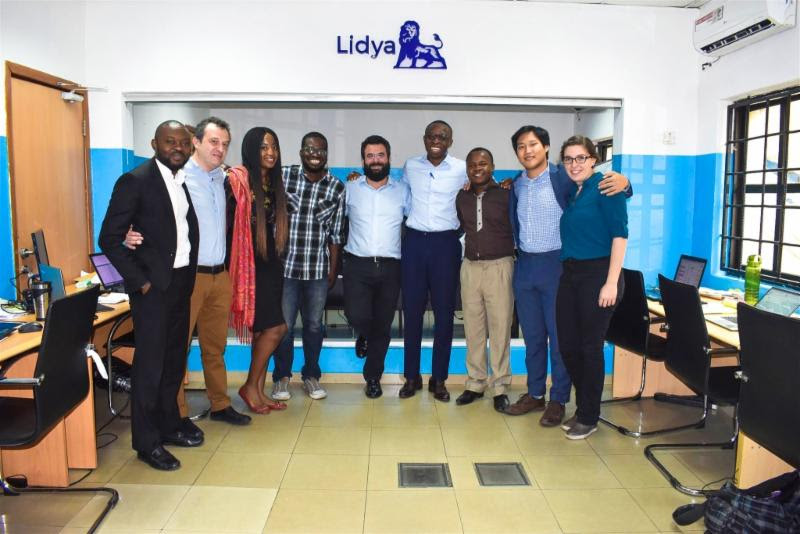
Lidya, a Nigerian digital lending platform that empowered small and medium-sized enterprises (SMEs), has officially shut down operations due to severe financial distress.

In an email sent to customers, the company explained that despite efforts to restructure and sustain its business, it could no longer continue operations.

“Despite best efforts to restructure and sustain operations, the Company has encountered severe financial distress and is no longer able to continue in business. As a result, the Company has ceased all operations,” the email read.

A follow-up statement in the same message added, “Due to the Company’s financial status, it is unable to process funds or settle claims at this time.”

The announcement confirmed what many customers had feared for months. Long before Lidya’s shutdown email arrived, users across Nigeria had been struggling to access their funds.  Reports of financial troubles began surfacing as early as June 2025. Customers described a series of frustrating experiences, which included failed withdrawals despite confirmation messages, visible but inaccessible wallet balances, and support tickets that were ignored or automatically closed.

In some cases, the Lidya app displayed “technical maintenance” notices for weeks without resolution. What began as minor complaints on social media has eventually escalated into a full-blown crisis, following the company’s recent shutdown.

Founded in 2016 by former Jumia executives Tunde Kehinde and Ercin Eksin, Lidya emerged with a powerful mission to provide fast, data-driven loans to small businesses often overlooked by traditional banks.

Using artificial intelligence and alternative data sources such as bank statements, mobile money transactions, and even social media activity, Lidya approved loans in under 24 hours. Its model quickly gained traction.

By 2018, the company had disbursed over 50,000 loans in Nigeria and secured $6.9 million in Series A funding led by Omidyar Network and Alitheia Capital. The platform was hailed as a catalyst for SME growth in Africa, targeting a massive market where small businesses contributed half of GDP but accessed less than 5% of bank credit.

Then came the global leap. In 2019, Lidya stunned many Africa-focused investors by launching operations in Warsaw, Poland. The move aimed to test the scalability of its lending model, hedge against naira volatility, and appeal to European investors with a dual-market narrative.

Partnering with BNP Paribas Poland, the company built a localized lending platform and began targeting Polish SMEs facing similar credit challenges. Initially, the expansion appeared promising. By 2020, Lidya had raised $8.5 million from global investors including Accion Venture Lab and Bamboo Capital. Headlines celebrated it as “the first African fintech to successfully expand into Europe.”

But the success was short-lived. Cultural and regulatory differences, limited alternative data, and slow adoption among Polish SMEs hindered growth. The European venture soon became a financial drain rather than a profit driver. Lidya was reportedly burning around $1 million per month across its Nigerian and European operations, with neither achieving profitability.

By early 2025, financial pressure forced Lidya to halt lending operations in both markets. The company quietly shut down its Polish arm and stopped issuing new loans in Nigeria.

In a last-ditch effort to survive, Lidya launched Lidya Collect, a business-to-business (B2B) debt recovery platform designed to monetize its existing loan book and pivot to SaaS. Unfortunately, the pivot came too late. Users began reporting frozen wallets and failed withdrawals as early as June 2025. Customer support went dark, and the app was ghosted.

The shutdown marks the end of a nine-year journey that began with bold ambition. Lidya had once envisioned becoming the “Goldman Sachs of Africa,” expanding across two continents before collapsing.