DD
MM
YYYY

PAGES

DD
MM
YYYY

spot_img

PAGES

Home Blog Page 2852

Early Elections slated to Hold February 23 in Germany after Coalition Falls

0

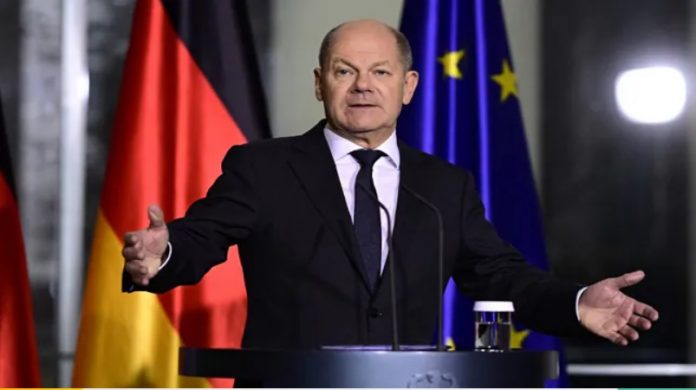
Germany is poised for an early election on February 23, a significant event precipitated by the recent collapse of the ruling coalition. This development marks a pivotal moment in German politics, as the nation grapples with the implications of a fragmented government and the quest for stability and direction.

The early election, set nearly a month ahead of the initially proposed date, underscores the urgency felt by political leaders to resolve the governmental impasse and address the pressing issues facing the country. The decision, reached after intense negotiations among parliamentary leaders, reflects a consensus on the need for swift action to ensure continuity in governance.

Chancellor Olaf Scholz’s centre-left coalition, which included the Social Democrats (SPD), the Greens, and the Free Democratic Party (FDP), faced mounting challenges that culminated in its dissolution. The departure of the FDP, triggered by disagreements over fiscal policies, left the Chancellor without a majority in the Bundestag and unable to effectively govern.

The upcoming election presents an opportunity for political parties to engage with the electorate and articulate their visions for Germany’s future. It is a chance for the SPD to regain its footing and for the Greens to potentially elevate their influence. Meanwhile, the conservative Christian Democratic Union (CDU), currently leading in the polls, may seek to consolidate its position and steer the country towards a different path.

key issues that are likely to influence the electorate’s decision include:

Economic Stability: Amidst manufacturing weaknesses, particularly in the automobile industry, and the looming threat of US tariffs, Germany’s economic resilience is a primary concern for voters.

Climate Policy: Environmental protection and climate change are pivotal issues, with a substantial portion of the electorate considering them crucial in their voting decisions. The debates over climate policy are expected to be intense, reflecting the public’s growing awareness and demand for sustainable action.

Political Integrity: The collapse of Chancellor Olaf Scholz’s coalition has raised questions about political stability and governance. Voters will be looking for a government that can provide both integrity and effective leadership.

EU Relations: Germany’s role within the European Union and its stance on future EU functioning are also significant considerations, especially in light of recent human rights and democracy concerns.

Social Issues: With the world facing numerous social challenges, German voters will be attentive to how the candidates address topics such as healthcare, education, and social security. These issues, among others, will shape the discourse and potentially the outcome of the elections, as Germany seeks a path forward in these complex times.

As Germany navigates this period of political uncertainty, the early election is more than just a procedural necessity; it is a democratic exercise that will shape the nation’s trajectory in the years to come. The outcome will determine Germany’s approach to domestic challenges, its role in the European Union, and its stance on global issues.

The world will be watching as Germany takes to the polls on February 23, anticipating the emergence of a government capable of leading with conviction and foresight. The stakes are high, and the decisions made by German voters will resonate beyond their borders, influencing the course of European politics and international relations.

‘Dinosaur’ thinking in the Blockchain Hospital

0

If you are in web 3 and you find yourself saying ‘people don’t care’, it’s important to be intentional about dropping it from your lexicon

Ethical building helps educate users and ‘shape’ the tech of the future.
This involves developing rational understanding among users about what to care about.
If you think ‘people don’t care’ about something, then it’s important to examine firstly, who is saying ‘people don’t care’ ? and why they are saying it?
What is their dependency on products related to web3? What are they trying to ‘sell’?

All people want the best possible product, but collectively those who ideate, build, and market products, are those who translate qualities like decentralization, security, privacy, speed, endurance and cost, into what ‘best’ is

Saying ‘people don’t care’ , sounds like some folks wanting to get a paycheck for doing stuff that doesn’t even attempt to envision what ‘best’ could be, and is trying to blame an uninformed public for perspectives where they have an ethical duty of shining the ‘light’

In essence, declaring ‘people don’t care’ is an advertisement of self inadequacy, uselessness and failure

Stop saying ‘people don’t care’ as if it is a function of ‘other people’

To be ‘in web3’ is to accept it is a function of YOU and to take the responsibility to be on the positive side of doing something about it

If you are not part of the solution, then you are part of the problem

Remember that data analysis tools are getting stronger all the time, and AI is putting them on steroids

We will all soon be able to analyse online content and see who has been repetitive with such rhetoric

As an advocate of Web3, growing awareness of  qualities like decentralization, security, privacy, and endurance, in addition to speed and cost, is your job. Own it, or find another profession

9ja Cosmos won’t ever hire people that serially pushed the ‘people don’t care’ thesis; They are obstacles to product at its ‘best’. We will probably not be alone

Preview our Sino Amazon/Sinosignia releases (Ente)

Preview our Sino Amazon/Sinosignia releases (Pinterest)

Visit 9ja Cosmos LinkedIn Page

Visit 9ja Cosmos Website

PayPal’s Integration with Layer Zero, Offers New Era for Cryptocurrency Transfers

0

The financial technology landscape is witnessing a significant transformation with PayPal’s recent integration with Layer Zero, enabling seamless transfers between Ethereum and Solana blockchains. This groundbreaking development is set to revolutionize the way users interact with PayPal’s stablecoin, PYUSD, offering unprecedented flexibility and convenience.

PayPal’s USD-pegged stablecoin, PYUSD, has been integrated with Layer Zero’s cross-blockchain bridging protocol, allowing for effortless transfers across the Ethereum and Solana networks. This integration utilizes the Omnichain Fungible Token (OFT) Standard, which empowers users who self-custody their tokens to move assets across blockchains without the need for centralized platforms like PayPal or Venmo.

The move by PayPal is a response to the growing demand for interoperability in the cryptocurrency space. As digital assets continue to gain mainstream acceptance, the need for a seamless transfer mechanism that can operate across different blockchain ecosystems has become increasingly apparent. Layer Zero’s protocol addresses this need by providing a solution that eliminates liquidity fragmentation and ensures fast, secure, and cost-effective transactions.

The integration of PYUSD with Layer Zero is a testament to PayPal’s commitment to expanding the accessibility and functionality of its stablecoin. In August, PYUSD achieved a record market capitalization of $1 billion, with significant circulation on both Solana and Ethereum. However, recent data indicates a decline in PYUSD’s market cap, which this new initiative aims to counteract by enhancing the user experience and boosting overall adoption.

Layer Zero enables secure cross-chain communication without relying on centralized bridges. This reduces the risk of single points of failure, making the system more resilient against attacks and outages. The protocol’s use of Ultra-Light Nodes (ULNs) minimizes resource consumption. This design choice allows Layer Zero to handle high volumes of cross-chain transactions efficiently, making it a scalable solution for growing blockchain ecosystems.

By facilitating cross-chain communication through a decentralized protocol, Layer Zero maintains the ethos of blockchain technology, which is to avoid centralization and retain control within the network of users. Developers can benefit from Layer Zero’s ability to support multiple blockchain communications, which simplifies the process of creating decentralized applications (dApps) that operate across various networks. This eliminates the need for separate integrations for each blockchain, streamlining the development process.

This strategic move is not only a win for PayPal but also for the broader cryptocurrency community. It signifies a step towards a more interconnected and efficient blockchain ecosystem. Users can now enjoy the flexibility of transferring their stablecoin holdings between two of the most prominent blockchains, tapping into the unique advantages each network offers.

For Ethereum, known for its robust smart contract capabilities and widespread adoption, this means an influx of new users and potential use cases. On the other hand, Solana, recognized for its high throughput and low transaction costs, could see increased liquidity and broader utility of its platform.

The implications of this integration extend beyond the technical realm. It represents a shift in the financial paradigm, where traditional financial institutions are increasingly embracing the potential of blockchain technology. By leveraging Layer Zero’s protocol, PayPal is positioning itself at the forefront of this shift, ready to cater to a new generation of users who demand greater control and flexibility over their digital assets.

“When I see a bubble forming, I rush in to buy” George Soros Quote Resonates on Crypto

0

The world of cryptocurrency has witnessed a remarkable event as Bitcoin Exchange-Traded Funds (ETFs) hit a staggering $7.2 billion in trading volume, marking the fifth highest volume in history. This surge in trading volume is a testament to the growing institutional interest and confidence in Bitcoin as an asset class.

Decentralized finance attracted $5 billion of inflows over the past week (as measured by stablecoin AUM) and centralized crypto exchanges likely attracted many billions more as people rushed in to buy the latest crypto bubble — the Drift token, for example, doubled this week and the Pnut and ACT memecoin tripled, both because they were listed by Binance.

On November 11, 2024, the trading volumes of spot Bitcoin ETFs peaked, with BlackRock’s IBIT ETF leading the charge, accounting for $4.6 billion of the total volume. This remarkable feat was closely followed by FBTC, which surpassed the $1 billion mark. The significant trading activity ties into the post-election momentum that Bitcoin experienced, following the victory of Donald Trump, perceived by many as favorable for crypto policies.

The record-breaking day is not just about high numbers; it represents a pivotal moment in the acceptance and integration of cryptocurrencies into the mainstream financial ecosystem. Institutional investors are increasingly turning to Bitcoin ETFs as a way to gain exposure to Bitcoin without the complexities of direct ownership and management of the digital assets.

Solana (SOL) has made headlines with its market capitalization soaring past the $100 billion mark. This milestone is particularly noteworthy as it represents a substantial increase from the $75 billion valuation at the peak of what many referred to as the “bubble” top. Solana’s robust performance is attributed to several factors that underline the network’s resilience and growth potential. The network metrics indicate a sustained expansion, with application revenue outpacing that of other leading platforms, such as Ethereum, despite having a smaller market capitalization. This growth is a testament to the increasing adoption and confidence in the Solana ecosystem.

The price forecast for SOL remains bullish, with analysts maintaining a target of $250 as the cryptocurrency holds strong at the $200 support level. The recent listing of new tokens on Binance, such as ACT and PNUT, has also contributed to the positive sentiment surrounding Solana. Solana’s surge is part of a broader rally in the crypto market, which has shown resilience in the face of various macroeconomic factors. The market’s total capitalization has increased, with Bitcoin reaching new all-time highs and Ethereum rallying above significant price points.

The surge also coincides with Bitcoin’s impressive market performance, flipping silver in market capitalization and becoming the world’s 8th largest asset. The valuation of Bitcoin reached $1.736 trillion, with its price shooting past $88,000, a 10% jump in a single day. This leap in value underscores the cryptocurrency’s growing relevance and potential as a store of value and investment vehicle.

The high trading volumes can indicate both buying and selling activity, and market observers may need several days to determine whether this surge will translate into sustained net inflows. However, the immediate impact is clear: there is a heightened demand and interest in Bitcoin ETFs, signaling a robust market appetite.

As the cryptocurrency landscape continues to evolve, the significance of such trading volumes cannot be overstated. It reflects a maturing market, where Bitcoin is not just seen as a speculative investment but as a viable and valuable part of a diversified investment portfolio.

The recent events in the Bitcoin ETF market are a clear indicator of the dynamic and rapidly changing nature of the financial world, where traditional and digital assets are increasingly intersecting. With such a monumental trading day, the future of Bitcoin and cryptocurrency ETFs looks brighter than ever, promising exciting developments for investors and the broader financial community.

MTN And Huawei Complete Africa’s First 5.5G Network Trial, Ushering in A New Digital Era

0

MTN South Africa, in collaboration with Huawei, has successfully conducted Africa’s first 5.5G network trial at MTN’s headquarters in Johannesburg.

Known for its leadership in 5G innovation, MTN is now setting the stage for 5.5G, a next-generation technology promising ultra-fast, intelligent connectivity that can drive Africa’s digital transformation forward.

The 5.5G trial showcased impressive advancements, featuring speeds of up to 10 gigabits per second, tenfold increases in loT connectivity, reduced latency, and significantly improved energy efficiency. During the trial, MTN achieved download speeds of 8.6 Gbps, a major milestone enabling futuristic applications like 24K extended reality, holographic meetings, high-speed fixed wireless access, and enhanced private 5G networks.

Key elements of the trial included Huawei’s advanced antenna systems, hybrid beamforming, and carrier aggregation technology, operated over both the -band and millimeter-wave spectrums. MTN’s Chief Technology Officer, Rami Farah, highlighted that this milestone extends beyond technological progress, noting that it is about providing South Africans with a better-connected future.

In his words,

“The successful validation of 5.5G technology by MTN South Africa and Huawei is not just a technical breakthrough but also a testament to MTN’s ongoing pursuit of excellence. We look forward to more innovative solutions to continuously build the best network and deliver an enhanced experience for South African residents”.

Also speaking, Huawei’s Vice President of the Sub-Saharan Region, Li Chen said,

“The joint release of 5.5G by MTN South Africa and Huawei, not only further deepens the strategic partnership between the two parties, but also fully fulfills Huawei’s responsibilities and vision in Africa, as a global ICT leader, to bring the most advanced technologies to Africa.”

He added that bringing 5.5G to South Africa will bridge the digital divide and propel the digital economy forward, positioning the country as a leader in advanced connectivity.

MTN’s deployment of 5.5G technology marks a new era of internet connectivity, with features including 10 gigabit speeds, multi-scenario loT capabilities, integrated communication and perception systems, L4 autonomous driving networks, and sustainable IT. These advancements enhance network performance by a factor of ten over current 5G technology, delivering not only high speeds but also a significant reduction in energy consumption and operational efficiency.

Launching 5.5G sets MTN apart as a premium brand that prioritizes customer experience and cutting-edge connectivity. This will strengthen the company’s brand image and may justify higher service fees due to the enhanced performance, drawing in customers who prioritize quality and innovation over cost.

Notably, the successful trial of 5.5G, is the first of its kind in Africa, establishing MTN as a technology trailblazer. This innovative technology offers MTN the first-mover advantage, thus enhancing its brand perception as an innovator and forward-thinker. By delivering these unique offerings before its competitors, MTN can build a reputation as the go-to provider for advanced digital experiences, appealing especially to tech-savvy consumers and high-tech industries.

Also, in terms of customer loyalty and attraction, the early adoption of 5.5G technology may draw customers who value high-performance connectivity, helping MTN capture market share from competitors who have yet to implement similar advancements.

In summary, MTN’s 5.5G launch gives it a significant head start over competitors, not just in terms of technology but also in operational efficiencies, enterprise solutions, and strategic partnerships. This pioneering position reinforces MTN’s market leadership, offering a powerful mix of innovation, efficiency, and premium service quality that sets it apart in Africa’s highly competitive telecom landscape.

As MTN and Huawei continue to push boundaries, this strategic partnership aims to drive South Africa’s digital economy by connecting the unconnected and creating new opportunities for both businesses and consumers.