DD
MM
YYYY

PAGES

DD
MM
YYYY

spot_img

PAGES

Home Blog Page 286

LILPEPE Crypto 2025 Price Target & How to Buy Little Pepe: Machine Learning Model Predicts 8,000% Rally

0

Little Pepe (LILPEPE) is no longer just another meme coin. It’s fast becoming one of the top cryptos to buy as analysts and AI-based models project an 8,000% surge in 2025. With its explosive presale, strong community, and unique zero-tax blockchain model, LILPEPE is quickly shaping up as the next big frog ready to leap past the meme crowd.

What Makes Little Pepe Different From Other Meme Coins

Little Pepe is a meme-driven yet utility-backed token redefining meme coin operations. Unlike typical hype coins, it’s built on a fast, low-cost layer chain with zero buy/sell tax and near-zero trading fees, making it investor and trader-friendly.

The project introduces several features that set it apart:

  • Sniper bots-resistant Layer 2 chain, ensuring fair and transparent trading
  • High-yield staking for long-term holders
  • A Meme Launchpad, allowing creators to launch new meme projects easily
  • Strict vesting schedule, protecting the price from early dumps

While most meme tokens rely purely on hype, Little Pepe combines fun, speed, and actual blockchain efficiency, giving it both meme power and tech credibility.

Presale Momentum: $27.1 Million Raised and Counting

Little Pepe’s presale has turned heads across the crypto market. It has seen over $27.1 million within a few months of launch.  With Stage 13 almost completed at $0.0022 per token, early investors are sitting on up to 120% unrealized profits.

The presale has seen surging investor demand, fueled by viral attention and solid fundamentals. Its growing community across Telegram and X has made it one of the fastest-selling meme coins of 2025.

Adding to the excitement, the team recently launched the Little Pepe Mega Giveaway for Stage 12–17 buyers:

  • 1st Buyer: 5 ETH
  • 2nd Buyer: 3 ETH
  • 3rd Buyer: 2 ETH
  • 15 Random Winners: 0.5 ETH each

With over 15 ETH in prizes plus entry into a $777,000 global giveaway, the presale is more than a fundraising round; it’s a movement.

LILPEPE 2025 Price Target: ML Predicts 8,000% Growth on the Horizon

According to a recent machine learning-based price model, Little Pepe could deliver up to 8,000% gains by 2025, driven by its strong utility base and early community traction.

Analysts estimate that if LILPEPE lists a conservative market cap of $100 million post-presale, its value could quickly climb toward the $2 billion range, giving early investors potential 80x returns.

Here’s what drives the model’s bullish forecast:

  • Rapid community expansion similar to early PEPE and SHIB phases
  • Scarcity-driven tokenomics via vesting and staking
  • Meme Launchpad and staking adoption are boosting demand
  • Anticipated CEX listings in 2025 Q1

If momentum continues, a $1,000 investment at the current presale stage could soar to over $80,000 next year, a number that places Little Pepe among the most explosive meme coins of the upcoming bull run.

Why Investors Are Backing Little Pepe

Little Pepe’s rise isn’t just about speculation. It’s about structure and sustainability. The token blends community-driven growth with technical reliability, which is rare in meme coin history.

Here’s why investors are bullish:

  • Transparent team with verified smart contracts
  • CertiK audit, strengthening trust and safety
  • High-staking APYs, giving passive income potential
  • Strong brand presence, with ongoing viral campaigns on X and Telegram

Its tokenomics ensure that both whales and small buyers have equal opportunities. Add the zero-tax model, and you get a token perfectly optimized for liquidity and volume, fueling massive growth during bull cycles.

Making A Smart Investor Move This Cycle

Little Pepe’s combination of humor, tech, and tokenomics makes it more than another meme coin. It’s a full-fledged ecosystem with real market potential. With a projected 8,000% upside, rapid presale growth, and one of the most vibrant communities in the space, LILPEPE could be the frog that defines 2025’s meme coin boom.


For more information about Little Pepe (LILPEPE) visit the links below:

Website: https://littlepepe.com

Whitepaper: https://littlepepe.com/whitepaper.pdf

 Telegram: https://t.me/littlepepetoken

Twitter/X: https://x.com/littlepepetoken

 $777k Giveaway: https://littlepepe.com/777k-giveaway/

Kalshi’s Valuation Surges From $5B to Potential $12B in Weeks

0

Based on a Bloomberg report, U.S.-regulated prediction market platform Kalshi is indeed fielding new investment offers from venture capital firms, with proposed valuations reaching as high as $12 billion—or potentially even higher—according to sources familiar with the discussions.

This comes just weeks after the company closed a $300 million funding round on October 10, 2025, at a $5 billion valuation, co-led by Andreessen Horowitz and Sequoia Capital.

The rapid interest highlights explosive growth in the prediction markets sector, fueled by regulatory wins and expanding use cases. Kalshi, founded in 2018, operates under a federal Commodity Futures Trading Commission (CFTC) license, allowing users to trade contracts on real-world events like elections, economic data releases, sports outcomes, and more.

In June 2025, Kalshi raised $185 million at a $2 billion valuation, led by Paradigm. A landmark court victory in late 2024 enabled election-related contracts, boosting trading volumes to an annualized $50 billion as stated by co-founder and CEO Tarek Mansour.

In August, Robinhood integrated Kalshi for football prediction markets. This week (October 2025), the National Hockey League (NHL) announced multi-year deals with Kalshi and rival Polymarket—the first major U.S. sports league to officially partner with prediction platforms.

Discussions with VCs have floated valuations between $10 billion and $12 billion, reflecting bets on Kalshi’s scalability in a “crowded and fast-moving space.” One source noted the new capital could “strengthen Kalshi’s position” amid competition.

This isn’t isolated—prediction markets are in a valuation arms race: Rival Polymarket: Reportedly in talks for up to $2 billion from Intercontinental Exchange at a $9 billion post-money valuation, up from $1 billion earlier in 2025.

Sports wagering alone is a multibillion-dollar industry, and regulated platforms like Kalshi are positioning for mainstream adoption via broker integrations and media rights. Overall, this signals maturing investor confidence in event-trading venues, though sustainability will depend on user retention and regulatory stability.

If deals close, it could reset benchmarks for fintech and crypto-adjacent startups. Kalshi’s rapid valuation jump from $5 billion to a potential $12 billion in weeks carries significant implications across financial markets, regulation, competition, and broader adoption of prediction markets.

The high valuation reflects growing investor confidence in prediction markets as a legitimate asset class, moving beyond niche crypto or gambling comparisons. Partnerships with major players like Robinhood and the NHL underscore this shift.

With Kalshi’s annualized trading volume at $50 billion and sports wagering already a massive industry, investors see prediction markets tapping into multibillion-dollar opportunities, potentially rivaling traditional betting or derivatives markets.

Polymarket’s parallel talks at a $9 billion valuation suggest a race for dominance. Kalshi’s CFTC license gives it a regulatory edge in the U.S., but Polymarket’s global reach and looser oversight creates a fragmented competitive landscape.

High valuations could trigger consolidation. Intercontinental Exchange’s interest in Polymarket and Kalshi’s VC talks hint at larger players (e.g., exchanges or fintech giants) eyeing acquisitions to control this emerging market.

Kalshi’s 2024 court win enabling election contracts sets a precedent, but rapid growth may invite scrutiny from the CFTC or SEC, especially if retail investor losses mount or markets are manipulated.

Global Ripple Effects: U.S. regulatory clarity could pressure other jurisdictions to define rules for prediction markets, potentially unlocking new markets or stifling innovation if regulations tighten.

The leap from $5 billion to $12 billion in weeks suggests speculative fervor, reminiscent of 2021 crypto or tech bubbles. If growth falters, valuations could face downward pressure, impacting investor confidence.

New funding could fuel Kalshi’s expansion (e.g., new contract types, international markets, or tech upgrades), but it also raises expectations for profitability and user growth in a crowded field.

Partnerships with Robinhood and the NHL signal prediction markets moving into everyday finance and entertainment. This could drive retail adoption, especially if integrated into popular trading apps or sports platforms.

Prediction markets’ ability to aggregate crowd wisdom could attract institutional users like hedge funds or pollsters, creating new revenue streams. High valuations assume sustained user growth and trading volume, but competition, regulatory shifts, or market saturation could undermine this.

Rapid growth demands robust infrastructure to handle trading volumes, prevent outages, and ensure compliance, all of which require significant investment. A $12 billion valuation would set a new bar for fintech startups, potentially spurring investment in adjacent sectors like DeFi or blockchain-based betting platforms.

While Kalshi operates in fiat, its success could bolster crypto-native platforms like Polymarket, driving hybrid models that blend regulated and decentralized approaches. Kalshi’s valuation surge signals a transformative moment for prediction markets, with implications for competition, regulation, and mainstream adoption.

However, the lofty $12 billion figure carries risks of overvaluation and regulatory backlash. If Kalshi capitalizes on its regulatory edge and partnerships, it could redefine event-based trading; if not, it risks becoming a cautionary tale of hype outpacing fundamentals.

Understanding the Nexperia Chip Supply Crisis

0

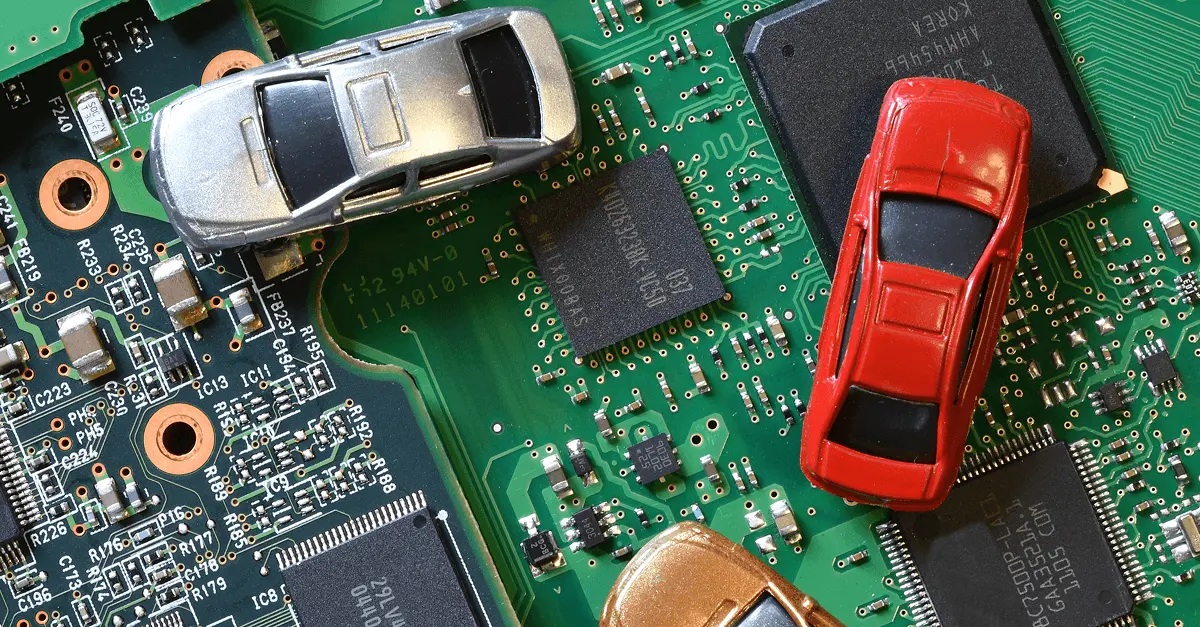
The Dutch semiconductor manufacturer Nexperia, a key supplier of basic but high-volume chips like diodes, transistors, and MOSFETs essential for automotive electronics (e.g., power management, steering controls, and electronic control units), is at the center of a geopolitical standoff.

These components are not highly advanced but are produced in massive quantities—over 50 billion annually across Nexperia’s facilities in Hamburg (Germany), Nijmegen (Netherlands), and Manchester (UK)—and are difficult to source quickly from alternatives due to customization and scale.

On September 30, 2025, the Dutch government invoked its Goods Availability Act to seize control of Nexperia from its Chinese parent company, Wingtech Technology, citing national security risks. Dutch officials feared Beijing could pressure the firm to divert technology or prioritize Chinese exports, potentially disrupting European supply chains in a crisis.

This move followed months of U.S. pressure, as Wingtech was added to the U.S. Entity List in December 2024 for alleged ties to military end-uses, extending export controls to subsidiaries like Nexperia.

In retaliation, on October 4, 2025, China’s Ministry of Commerce imposed export controls, blocking shipments of Nexperia’s finished products mostly packaged in China to global customers.

Nexperia notified automotive suppliers on October 10 that it could no longer guarantee deliveries. Existing inventories are estimated to last only 2–4 weeks for most carmakers, raising fears of assembly line halts similar to the 2021–2022 chip shortage that cost the industry billions.

Nexperia produces about 40% of the global market for these automotive-grade discrete semiconductors, affecting not just Europe but U.S. and Asian production as well. The crisis exacerbates ongoing challenges for the auto sector, including U.S. tariffs, weak demand, and foreign competition.

Impact on German Carmakers

Germany’s automotive industry, which employs over 700,000 people and relies heavily on just-in-time manufacturing, is particularly vulnerable. The German Association of the Automotive Industry (VDA) warned on October 21, 2025, that unresolved issues could lead to “considerable production restrictions… and possibly even to production stoppages” within weeks.

Suppliers like Bosch and ZF, which integrate Nexperia chips into modules, are scrambling for alternatives, but experts note the process could take months due to qualification and ramp-up times.

Production unaffected as of October 22, but not ruling out short-term outages. Wolfsburg plant world’s largest, building Golf/Tiguan at highest risk; considering “kurzarbeit” government-subsidized short-time work if halts occur. Nexperia parts enter via Tier 1 suppliers.

Temporary shutdowns within 2–3 weeks; broader supply chain ripple to U.S./global plants. Assessing impacts with suppliers; exploring alternatives. Mercedes-Benz; No short-term disruptions expected; monitoring closely. Minimal immediate risk, but prolonged halt could affect luxury EV models. Stockpiling and supplier diversification.

BMW; Supplier network impacted, but European production intact so far. Potential delays in components like power electronics; U.S. plants also vulnerable. Evaluating risks; collaborating with Nexperia for solutions. Part of VW Group; similar exposure. VDA-wide risks apply. Assembly line stoppages if inventories deplete. Industry-wide contingency planning.

The VDA’s Hildegard Müller emphasized the urgency, noting the halt “seriously affects the stability of global industrial and supply chains.” ZF Group reported working with customers to stabilize chains and qualify new suppliers, while Bosch described the situation as a “major challenge” and called for a swift resolution.

The European Automobile Manufacturers’ Association (ACEA) expressed “deep concern” on October 16, warning that without chips, suppliers can’t build parts, threatening “significant disruption” across members like Stellantis and Toyota Europe. U.S. production could also grind to a halt soon after, per ACEA.

Affects consumer electronics too, but autos are hit hardest. Analysts predict higher car prices if plants idle, echoing pandemic-era shortages that slashed output by millions of vehicles. Germany’s export-driven auto industry could see severe strain, with potential job impacts under kurzarbeit schemes.

Economy Minister Vincent Karremans spoke with his Chinese counterpart on October 21 but failed to resolve the impasse. The government aims to protect Nexperia’s viability and ensure emergency supplies. Berlin’s Economy Ministry convened a crisis meeting on October 22 with auto/electronics stakeholders to accelerate solutions. Officials are pushing for pragmatic fixes to avoid broader trade escalation.

China: The Commerce Ministry labeled Dutch actions “selective and discriminatory,” urging a focus on “global industry stability.” Nexperia’s Chinese unit has asserted independence, allowing employees to ignore “external instructions,” and resumed limited local supplies.

U.S./EU: Indirect involvement via export controls; no formal intervention yet, but pressure on allies to secure chips. A quick fix seems unlikely, with Nexperia negotiating with governments and customers. Short-term: Rationing stockpiles and partial restarts from non-Chinese facilities.

Diversifying suppliers, though costly and time-intensive. Industry watchers like Capgemini’s Peter Fintl stress that while chips are “mass-produced,” their customization makes swaps “complicated.” If resolved by early November, disruptions might be limited; otherwise, expect plant idles and price hikes by mid-2026.

This crisis underscores deepening U.S.-China tech decoupling’s risks to interdependent supply chains, hitting Europe’s auto heartland hardest.

Before Shutdown, Consider a Merger: A Playbook for Nigeria’s Startup Epoch

0

In Nigeria’s startup orbit, we are living in two epochs: Before Naira Float and After Naira Float. In that earlier era, the taps of foreign capital flowed with abundance. Term sheets came with less friction, and our innovators raised funds to pursue bold missions. But when the Naira was floated, the storehouse shifted. The currency weakened. Asset values, when mapped in dollars, evaporated. And in that erosion, foreign venture capitalists paused, recalibrated, and many stepped aside.

The impacts are reverberating across the land: young companies are scaling revenue in Naira but running out of oxygen in dollars. Cost structures denominated in foreign currencies have become existential burdens. And when the runway shortens, many founders conclude that the next logical thing is to power down. Lidya joined today: “Lidya, a Nigerian digital lending platform that empowered small and medium-sized enterprises (SMEs), has officially shut down operations due to severe financial distress.” Yet, I have a message: Do not shut down. Rather, consider merging.

Nations rarely expire; Nigeria will rise again. Our market cycles oscillate, but the fundamentals of this land remain evergreen. And when stability returns, and it will return, the ecosystems will blossom again. So, instead of premature endings, founders should look to fusions, to strategic consolidations, to alliances where strengths are pooled. Mergers are not failures. They are repositionings. And yes, someone may need to surrender the “CEO” badge for CTO, CPO, COO, etc. Greatness is not in titles but in outcomes.

Through mergers, startups acquire scale: shared technologies, expanded customer bases, harmonized teams, and optimized cost structures. Together, they can build resilience, innovate better, and sustain growth. That path is superior to solitary failure.

If you are contemplating shutdown, before you sign that final memo, Tekedia Capital would like to speak with you. We have developed a framework that is working with some of our startups. We understand the peculiar gestation cycle in Nigeria where patience is not just a virtue but a requirement for survival. And we know the opportunities embedded within this nation’s informal and formal markets.

The velocity of capital flow is improving, albeit quietly. Nigeria will be better and remains a promise. And for a merged, strengthened entity, the runway can be extended. So, pause. Re-examine. Reframe. Before concluding that the runway is over, explore the power of mergers. The difference between extinction and dominance may simply be collaboration.

5 Crypto Coins to Watch This Month – Blazpay Dominates the Best 100x Crypto Race

0
Blazpay – Best 100x Crypto

The crypto market enters Q4 2025 with mixed volatility, yet opportunities for explosive growth remain. Among top performers and emerging tokens, Blazpay is emerging as the Best 100x Crypto according to analysts and early investors. While Bitcoin, XRP, Cardano, and Avalanche consolidate, Blazpay’s ultra-low presale price of $0.0075 and AI-powered ecosystem are attracting serious attention.

Phase 2 of Blazpay’s presale is already 73.5% complete, raising over $812K, and the price is set to rise to $0.009375 once the phase ends. With a combination of multichain functionality, AI-driven DeFi tools, and SDK integration, Blazpay positions itself as a next-generation fintech platform and a top contender for massive growth heading into 2026.

1. Blazpay (BLAZ) – AI-Powered Presale Leader & Best 100x Crypto

Blazpay stands apart in the crowded crypto market due to its accessibility, utility, and innovative ecosystem. Unlike high-cap coins that require significant capital for meaningful exposure, Blazpay allows fractional entry with exponential growth potential. The platform has built a sophisticated AI-powered DeFi network, enabling users to manage payments, trading, and automation across multiple blockchains seamlessly. Its unified interface combines multichain SDK access with AI analytics, giving investors and everyday users a powerful toolkit for efficient digital finance.

Investment Scenario – $2,000 Entry:

Analysts project that as the ecosystem grows and adoption accelerates, Blazpay could reach $0.75 to $1 per token by mid-2026. A $2,000 investment at the presale stage could realistically translate into $200,000 or more, reflecting the 100x+ upside that cements its status as the Best 100x Crypto. Early participation before the Phase 2 price increase is key, and strategic monitoring of ecosystem milestones such as DeFi integrations, user growth, and exchange listings can help investors optimize their returns.

Blazpay – Best 100x Crypto

How to Buy:

  1. Visit the official Blazpay presale portal.
  2. Connect your MetaMask or Web3 wallet.
  3. Choose ETH, BNB, or USDT as payment.
  4. Enter the token amount & confirm purchase.
  5. Claim tokens at presale end or mainnet launch.

2. Bitcoin (BTC) – The Market Titan

Bitcoin remains the leading store of value and the backbone of the cryptocurrency market. With a current price of approximately $107,605 and a market capitalization of $2.12 trillion, Bitcoin continues to anchor investor confidence and institutional adoption. While it faces regulatory scrutiny and periodic volatility, technological improvements such as the Lightning Network for faster off-chain transactions and Taproot upgrades for enhanced privacy reinforce its long-term potential

Blazpay –Which Crypto Will Explode in 2025

3. XRP – Payment-Focused Growth Token

XRP has gained attention for its strong focus on cross-border payments and liquidity management through RippleNet. Following the resolution of the SEC lawsuit, regulatory clarity has improved investor confidence, and potential inclusion in spot ETF offerings could further increase institutional demand. Priced around $2.38 with a market cap near $134 billion, XRP continues to facilitate fast and low-cost transactions while maintaining steady adoption among financial institutions. Analysts project that XRP could potentially rise to $5 or higher by the end of 2025

4. Cardano (ADA) – Research-Driven Smart Contracts

Cardano continues to develop as a research-oriented blockchain platform focused on sustainability, scalability, and smart contract deployment. Trading at approximately $0.6356 with a market cap of $22.65 billion, Cardano has implemented Layer 2 scaling through Hydra and privacy enhancements using Halo 2 zkSNARKs. These upgrades enhance transaction throughput and confidentiality, allowing Cardano to remain competitive in the growing smart contract ecosystem.

5. Avalanche (AVAX) – High-Speed Layer 1

Avalanche is recognized for its high-throughput architecture and near-instant transaction finality, supporting thousands of transactions per second across its X-Chain, C-Chain, and P-Chain. With a current price of around $20 and a market capitalization of $8.5 billion, Avalanche offers enterprise-grade compliance and customizable subnets that cater to DeFi applications and regulatory environments. Analysts see the potential for AVAX to reach $55 depending on adoption trends in the final quarter of 2025

Conclusion – Blazpay Poised as the Best 100x Crypto

With major coins like Bitcoin, XRP, Cardano, and Avalanche stabilizing, Blazpay represents a unique chance to enter early in a high-utility, AI-powered ecosystem. Its presale offers low-cost entry, multichain access, gamified rewards, and SDK tools, combining real-world utility with massive growth potential. For investors seeking the Best Crypto Coin to Buy Now with 100x potential, Blazpay stands out as the top choice heading into 2026.

Blazpay –Which Crypto Will Explode in 2025


Join the Blazpay Community:

  • Website: blazpay.com
  • Twitter: @blazpaylabs
  • Telegram:me/blazpay