DD
MM
YYYY

PAGES

DD
MM
YYYY

spot_img

PAGES

Home Blog Page 2860

Nigeria Proposes Single Revenue-Collecting Agency Named Nigerian Revenue Service (NRS)

0

President Bola Tinubu’s administration is on the verge of reshaping Nigeria’s revenue collection system in a bold reform aimed at consolidating efforts and boosting government earnings. If passed, his new plan would bar over 60 revenue-generating agencies from collecting revenues on behalf of the Federal Government.

In their place, a single entity, the Nigeria Revenue Service (NRS), will take up the responsibility of tax and levy collection, drastically altering how revenue streams flow into national coffers.

This sweeping overhaul is part of a broader tax reform initiative by the administration, which seeks to address Nigeria’s revenue challenges head-on. For years, the country has struggled with an abysmally low tax-to-GDP ratio, hovering below the African average and placing Nigeria among the world’s lowest in terms of tax collection. This has worsened the fiscal deficit and left the government heavily reliant on borrowing to fund public spending, resulting in a cyclical trap of insufficient funding for essential development projects.

The Punch reported that the new reforms aim to streamline the process, with a clear goal, which is to push Nigeria’s tax-to-GDP ratio to a minimum of 18%. The creation of the Nigeria Revenue Service, which will handle the task of revenue collection, represents the most significant change. This new agency is expected to take over from bodies like the Nigerian Customs Service, Nigerian Ports Authority (NPA), and numerous others currently involved in collecting revenues for the government.

Ending Fragmentation in Revenue Collection

At the heart of this initiative is the desire to create a more efficient, transparent, and accountable system. Currently, multiple agencies, including the Federal Airports Authority of Nigeria (FAAN), Nigeria Customs Service (NCS), the Nigerian Maritime Administration and Safety Agency (NIMASA), the Corporate Affairs Commission (CAC), and many others, manage their revenue streams independently. This often leads to overlapping functions, inefficiencies, and difficulties in monitoring and ensuring compliance.

A senior official at the Presidency, while explaining the move to The Punch, dispelled rumors that the reform would lead to the merger of agencies. Instead, the plan focuses on centralizing revenue collection duties under the new Nigeria Revenue Service, allowing other agencies to focus on their primary mandates.

“There is no merger of agencies. The bill will only take the revenue collection arm of each agency involved and allocate it to the Nigerian Revenue Service,” the official clarified.

In outlining the purpose of the reforms, the source compared the proposed NRS to similar agencies in developed countries like the United States and the United Kingdom, where centralized bodies manage all government revenue collections.

“The new revenue agency will be like the US or UK revenue agencies that collect all government revenues, while other revenue agencies like NIMASA, NPA, Customs, etc., will now focus on their core mandate, which is trade facilitation. There is no merger at all,” the official emphasized.

The policy shift was set in motion when President Tinubu forwarded four executive bills to the National Assembly for consideration. One of the key proposals included in these submissions is the renaming of the Federal Inland Revenue Service (FIRS) to the Nigeria Revenue Service. This bill, called the Nigeria Revenue Service (Establishment) Bill, seeks to repeal the existing Federal Inland Revenue Service (Establishment) Act, No. 13, 2007, effectively creating a more robust framework for revenue generation.

In a letter read during plenary sessions by Senate President Godswill Akpabio and Speaker of the House of Representatives Tajudeen Abbas, Tinubu highlighted the urgency of passing the new tax reform bills. According to him, the proposed changes will not only strengthen fiscal institutions but also foster greater transparency in tax administration. Tinubu noted that the Nigeria Revenue Service would be responsible for assessing, collecting, and accounting for revenue accruing to the government from various sectors.

A Broader Tax Reform Agenda

Tinubu’s tax reform bills extend beyond the creation of the NRS. The President also submitted three other key bills under the umbrella of fiscal policy and tax reform, aimed at overhauling the nation’s fiscal framework.

These proposals include:

  1. The Nigeria Tax Bill: This legislation seeks to consolidate Nigeria’s fiscal framework for taxation, streamlining the tax codes and making it easier for taxpayers to navigate the system.
  2. The Nigeria Tax Administration Bill: Designed to provide clarity on the administration of tax laws, this bill aims to ensure fair, consistent, and efficient enforcement of tax regulations. It’s expected to reduce disputes, make tax compliance easier, and boost revenue collection.
  3. The Joint Revenue Board (Establishment) Bill: This bill proposes the creation of a Joint Revenue Board, along with a Tax Appeal Tribunal and a Tax Ombudsman. These bodies will be tasked with harmonizing and resolving disputes arising from tax administration in Nigeria.

He believes that once enacted, the bills will spur investment, increase consumer spending, and fuel the country’s economic growth.

“I am confident that the bills, when passed, will encourage investment, boost consumer spending, and stimulate Nigeria’s economic growth,” he stated.

The urgency of these reforms is underscored by Nigeria’s ongoing revenue challenges. The nation is grappling with a fiscal deficit that continues to balloon, largely due to the decline in oil production and poor tax collection system. Currently, Nigeria’s tax-to-GDP ratio is around 6%, far below the African average of 18%. Without significant reform, experts warn that the country’s over-reliance on borrowing could deepen, jeopardizing its ability to fund crucial infrastructure projects and social programs.

Speaker of the House of Representatives, Tajudeen Abbas, echoed these concerns, emphasizing the importance of the bills. He stated that the proposed laws align with the Tinubu administration’s objectives and are critical for ensuring the country’s economic stability.

“These bills, when passed, will encourage the growth and sustainability of the economy,” Abbas said.

The House also took steps to repeal the Fiscal Responsibility Act, of 2007, consolidating six bills to enact the Fiscal Responsibility Bill, of 2024, which aims to ensure prudent management of national resources, macroeconomic stability, and greater accountability in fiscal operations.

Mixed Reactions to the Reforms

However, not everyone is on board with the proposed changes. Some experts have expressed concerns, particularly about the implications for agencies like the Nigeria Customs Service, which has long been one of the country’s primary revenue-generating bodies.

Dr. Eugene Nweke, former National President of the National Association of Government Approved Freight Forwarders, criticized the idea, arguing that revenue collection is an integral part of Customs’ mandate worldwide.

“Customs all over the world are known for revenue collection. What it means is that they would outsource that function to a third party,” he said.

Nweke also pointed out the technical complexities involved in revenue collection, warning that stripping Customs of this function could lead to inefficiencies.

Taiwo Fatobilola, National Public Relations Officer of the Association of Registered Freight Forwarders of Nigeria, echoed similar sentiments.

“It is not possible, don’t mind the government. They think revenue collection is what anybody can wake up and start with? Do they know how much it takes to train people on something the NCS has been trained to do?” Fatobilola questioned.

On the other hand, some industry experts support the reforms, noting that centralizing revenue collection could curb corruption and leakage while improving efficiency. The Presidential Fiscal Policy and Tax Reforms Committee, led by Taiwo Oyedele, has been vocal in its support of the changes. Oyedele believes that Nigeria’s fiscal system is overdue for an overhaul and that protecting the poor and vulnerable, while taxing the rich effectively, is the way forward.

“We found out that poor persons are those paying taxes, so it is time for them to take a break,” Oyedele stated. “We have to look at the system to take that burden away from vulnerable people, small businesses, and let the middle class and the rich, who can afford to pay, do so.”

If successfully passed, the creation of the Nigeria Revenue Service could usher in a new era of centralized, efficient revenue collection that could help the country achieve its ambitious tax-to-GDP ratio target and reduce its reliance on debt. The future of Nigeria’s fiscal policy now rests in the hands of the legislators and stakeholders who will decide whether this reform, touted as the solution to the nation’s revenue woes, will come to be.
Coinbase to Delist USDT and other Non-Compliant Stablecoins in the EU

1

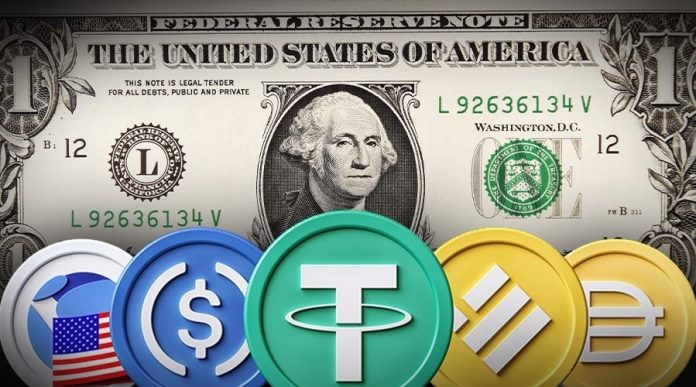
In a significant move that aligns with the upcoming regulatory changes in the European Union, Coinbase, one of the leading cryptocurrency exchanges, has announced its plan to delist USDT and other non-compliant stablecoins by the end of 2024. This decision comes as a response to the EU’s Markets in Crypto-Assets (MiCA) regulation, which aims to establish a comprehensive framework for digital assets and their associated activities within the European market.

The MiCA regulation, which began regulating stablecoin issuers on June 30, mandates that all stablecoins available in the European Economic Area (EEA) must hold an e-money license in at least one EU member state. This regulation directly affects leading tokens like Tether’s USDT (USDT), which may be forced off the Coinbase platform unless it obtains the required authorization.

Coinbase’s commitment to compliance is evident in their statement, indicating that they intend to restrict the provision of services to EEA users in connection with stablecoins that do not meet the MiCA requirements by December 30, 2024. The exchange has also indicated that European users will be offered conversion options to compliant stablecoins, such as Circle’s USD Coin (USDC), in the coming months.

Coinbase’s decision to delist non-EU-regulated stablecoins, including USDT, has significant implications for traders, especially those operating within the European Union. This move is in response to the upcoming Markets in Crypto-Assets (MiCA) regulation, which aims to establish a uniform regulatory framework for crypto-assets in the EU.

Traders may need to reassess their portfolios, especially if they hold a significant amount of non-compliant stablecoins. They might have to convert these assets into compliant ones or withdraw them from the platform before the delisting takes effect. The removal of popular stablecoins like USDT could impact market liquidity. As traders transition to compliant alternatives, there may be temporary liquidity constraints, affecting the ability to execute large trades without slippage.

Traders will have to stay informed about regulatory changes and ensure their trading activities comply with the new rules. This could involve additional administrative work and adjustments to trading strategies. With Coinbase offering conversion options to compliant stablecoins such as USDC, traders might witness a shift in stablecoin preference within the market. This could potentially lead to a change in the dominance of certain stablecoins.

The delisting could accelerate the adoption of compliant stablecoins. Traders may start using these alternatives more frequently, leading to increased demand and possibly affecting the valuation of these assets. Overall, Coinbase’s decision reflects the broader industry trend towards regulatory compliance. Traders will need to adapt to these changes, which could bring both challenges and opportunities in the evolving crypto landscape.

Other crypto platforms like OKX, Bitstamp, and Uphold have already taken steps to limit the availability of noncompliant stablecoins, including USDT. With competition in the stablecoin market heating up, companies like Robinhood and Revolut are exploring the development of their own stablecoins to challenge Tether and Circle’s dominance.

The delisting of non-compliant stablecoins by Coinbase is a clear signal to the market that regulatory compliance is not optional. It underscores the importance of adhering to the legal frameworks established by governing bodies, particularly in regions like the EU, where financial regulations are stringent. For users, this development may mean a shift towards more regulated and potentially more stable digital assets, as the industry continues to mature and integrate with traditional financial systems.

As the deadline for compliance draws near, the crypto community will be watching closely to see how other exchanges and stablecoin issuers respond to the MiCA regulations. The impact of these regulations on the stability and liquidity of the crypto market in Europe will be a subject of much analysis and discussion in the months to come.

Nigeria’s Debt Servicing Payments Rises By 69% at N6.04tn In H1 2024 – CBN

0

Nigeria’s debt servicing payments surged by 69% in the first half of 2024, reaching a monumental N6.04 trillion, compared to N3.58 trillion in the same period in 2023, according to data from the Central Bank of Nigeria.

This sharp rise has further compounded the financial burden on the Federal Government, as an increasing share of its revenue is being siphoned off to service debt. The situation paints a grim picture of the country’s fiscal health, highlighting the government’s deepening reliance on borrowing to meet its financial obligations.

Data from the CBN reveals the alarming extent to which debt servicing has grown relative to revenue generation. In the first half of 2024, debt servicing accounted for 50% of the Federal Government’s total expenditure of N12.17 trillion, a significant increase from the previous year.

More concerning is the fact that debt servicing expenses represent 162% of the total revenue generated during the same period, which stood at N3.73 trillion. This means that Nigeria is spending far more on repaying debt than it is earning, leaving the government with no choice but to borrow even more to bridge the gap.

Both domestic and foreign debt obligations have ballooned due to rising interest costs, worsened by the devaluation of the naira, which makes repaying foreign-denominated debt more expensive.

In January 2024, for instance, the government spent N755.9 billion on debt servicing, up 37% from N550.3 billion in January 2023, according to the CBN’s data. Although February 2024 saw a slight dip in debt servicing to N505.9 billion (down from N518.7 billion in February 2023), this reprieve was short-lived. By March 2024, debt servicing costs shot up again to N1.01 trillion, a 12.2% increase year-on-year. In May 2024, the debt burden reached a staggering N2.26 trillion, a 332% rise from N523.8 billion in May 2023, likely due to principal repayments and the devaluation of the naira.

Borrowing Spurred by Declining Oil Production

A major factor driving Nigeria’s rising debt is the continuous decline in oil production, the country’s primary source of revenue. Nigeria, Africa’s leading oil producer, has seen a steep drop in its crude oil output due to a range of structural problems, most notably oil theft and vandalism of pipelines. This has significantly hampered the nation’s ability to generate revenue, leaving the government with a precarious fiscal position.

Oil accounts for about 90% of Nigeria’s foreign exchange earnings and over half of its government revenues. With oil production, currently at 40,000 barrels below its August’s 1.35mbpd, consistently falling short of OPEC’s 1.5mbpd quota and official targets, Nigeria’s ability to fund its budget and service debt has been severely constrained.

Oil theft, in particular, has escalated in recent years to alarming levels. Nigeria loses an estimated 400,000 barrels of oil per day to theft, a figure that equates to billions in lost revenue annually. Efforts by security forces have not substantially curbed the rampant theft, alluding to allegations that the oil is being stolen by the people in government.

Against this backdrop, the government has found itself increasingly dependent on borrowing, both domestically and internationally, to fill the revenue gap.

In a speech earlier this year, President Bola Tinubu emphasized the need for comprehensive reforms in the oil sector, acknowledging that unchecked theft and inefficiencies were bleeding the economy dry.

World Bank Warns of A Looming Debt Trap

The rising debt, buoyed by declining oil revenues, has drawn international concern. In a recent report, the World Bank sounded the alarm over the growing debt burden in developing nations like Nigeria. Indermit Gill, the World Bank’s Chief Economist, stated that many countries are on the brink of a financial crisis due to the twin pressures of record-high debt levels and soaring interest rates.

Gill noted that the combination of escalating debt and rising interest rates is creating an unsustainable situation for many developing countries. He warned that Nigeria, with its heavy reliance on oil revenues and increasing debt servicing obligations, is facing a precarious fiscal future unless swift and coordinated actions are taken.

One of the most troubling aspects of Nigeria’s debt servicing obligations is the strain it places on the government’s ability to invest in critical sectors. With 50% of total expenditure in H1 2024 going towards debt repayment, the government has little fiscal space left for infrastructure development, healthcare, education, and social services. These areas are crucial for Nigeria’s long-term economic growth, yet they are being sidelined as more resources are channeled into servicing debt.

The Way Forward

Economists have long advocated that addressing Nigeria’s debt crisis will require a multi-pronged approach, noting that first, the government must take decisive action to combat oil theft and increase production.

Second, economists said fiscal reforms are necessary to improve tax collection and diversify the economy away from its heavy reliance on oil. Additionally, they warned that the government must engage in prudent borrowing, ensuring that loans are used for productive investments that can generate returns and stimulate economic growth.

Simply borrowing to service existing debt will only prolong the crisis and push the country deeper into a debt trap, they said.

Nigeria’s Industrial Sector Contracts For Ninth Consecutive Month in September 2024 – CBN

0

Nigeria’s industrial sector continued its contraction for the ninth consecutive month in September 2024, according to the latest Purchasing Managers’ Index (PMI) report published by the Central Bank of Nigeria (CBN).

The PMI for the industrial sector stood at 49.7, reflecting ongoing challenges, although the rate of contraction has slowed compared to previous months. This slight improvement signals a potential shift, with the sector edging closer to expansion, as it had earlier recorded a PMI of 49.4 in August 2024.

The contraction in the industrial sector, which began in January 2024, has become a persistent concern for Nigeria’s economy. The industrial PMI has struggled to break above the 50-point threshold, the benchmark for growth, throughout the year, underlining a sector hampered by declining production, weak demand, and structural inefficiencies.

The industrial sector encompasses key subsectors like manufacturing, mining, quarrying, electricity, and construction, which are crucial to the country’s economic stability and growth. A slowdown in the contraction of these industries signals that while challenges persist, there are pockets of resilience that could spur future growth if the right interventions are implemented.

The September PMI reading of 49.7 suggests that the rate of decline is easing, providing a glimmer of hope for an eventual recovery.

The report revealed that 10 out of the 17 subsectors within the industrial sector recorded expansion during September, while three remained unchanged, and four experienced contractions. The worst-performing subsector was Paper Products, which saw the largest decline, whereas Cement experienced the most significant expansion, underscoring the varied performance across industries.

Sectoral Breakdown: Mixed Performance Across Industries

While the industrial sector remains in contraction, the Services and Agricultural sectors showed stronger performance. The Services sector expanded for the fourth consecutive month, buoyed by increasing demand and higher consumer activity. This sustained growth in services indicates a healthier performance in non-industrial areas of the economy.

Similarly, the Agricultural sector recorded its second consecutive month of growth, driven by improved harvests and government support programs aimed at boosting food production and agro-industrial activities. The positive trajectory in agriculture is vital for Nigeria, as it helps cushion the negative impacts of industrial sector declines by bolstering food supply chains and stabilizing rural employment.

However, the performance in the industrial sector remained uneven. While Mining, Quarrying, Electricity, Gas, Water Supply, and Construction registered expansions, the Manufacturing subsector continued to decline, underscoring the structural weaknesses plaguing Nigeria’s manufacturing base. High production costs, poor infrastructure, unreliable power supply, and supply chain disruptions have all contributed to the sector’s challenges, limiting its ability to recover fully.

Output and Raw Materials Are Positive but Employment Remains Weak

One of the few bright spots in the industrial sector’s performance in September was the expansion in the Stock of Output and Raw Materials indices, which reached 50.7 and 51.7 points, respectively. This indicates that businesses were able to build up inventories and secure raw materials for production, providing a cushion against potential future disruptions.

However, challenges remain in other key areas. The indices for New Orders and Employment continued to show contraction, with New Orders slipping to 49.9 points and the Employment index dropping to 48.2 points. The decline in New Orders signals weak demand across the industrial sector, while the shrinking employment numbers highlight persistent difficulties in sustaining jobs.

The Employment index in the industrial sector has been contracting since March 2024, when it hit a low of 45 points. While there has been gradual improvement, with September’s index at 48.2 points, employment levels remain under pressure, particularly in key subsectors such as manufacturing and heavy industry. Out of the 17 subsectors surveyed, eight experienced a decline in employment, seven reported growth, and two — Transportation Equipment and Water Supply, Sewerage & Waste Management — maintained stable employment levels.

This slow recovery in employment aligns with the findings of the Nigeria Labour Force Participation report, released by the National Bureau of Statistics (NBS) last month, which noted that the country’s unemployment rate rose to 5.3% in the first quarter of 2024. The report also pointed out that industries, especially in manufacturing, continue to shed jobs in response to sluggish demand and high operating costs.

However, the data from the September 2024 PMI report suggests that while the industrial sector remains in contraction, there is hope for a potential turnaround. Industry leaders note that the slowing rate of decline in the sector and the expansion seen in certain subsectors indicate that recovery, while fragile, is possible.

They, however, added that concerted efforts are needed to address the structural issues impeding growth, particularly in manufacturing and heavy industry, for a full-scale rebound to materialize,

Fincra Secures Third-Party Provider License in South Africa, Expanding Payment Solutions Across The Region

0

Fincra, a leading African payment infrastructure provider, has obtained a Third Payment Provider (TPPP) license in South Africa, a major milestone that allows the company to extend its innovative payment solutions to businesses across the country.

This regulatory approval marks a significant advancement in Fincra’s mission to facilitate seamless, cross-border transactions across Africa and beyond. The Firm’s Co-Founder and CEO Wole Ayodele, expressed his excitement about the expansion, highlighting South Africa as a key market for the company’s growth.

“We have long recognized South Africa as an ideal market for us, and we are excited to contribute with our innovative payment solutions”, he noted.

Fincra’s latest move aligns with the broader strategy of expanding into vital African markets. By securing the TPPP license, the fintech can now offer its comprehensive suite of payment services to legitimate and pre-approved South African businesses. These services include Pay-In and Pay-Out solutions, with card payment options available for customers. The platform is designed to be user-friendly, allowing businesses to set up accounts, comply with Know Your Customer (KYC) regulations, and begin processing payments swiftly.

Fincra also provides transparent pricing, charging a percentage of each transaction for both inbound and outbound payments. The company’s expansion into South Africa is part of the company’s larger vision to create a robust payment infrastructure across the African continent, ensuring full compliance with local regulations while enabling seamless and secure transactions. This comes after the Nigerian fintech startup in September 2024, secured an international Money Transfer Operator (IMTO) license from the Central Bank of Nigeria (CBN) to allow the company to integrate cross-border payment services into its product offerings in the Nigerian market.

Since its founding in October 2021, Fincra has enabled businesses with local payment solutions. The fintech is also set to launch its Multicurrency Account, a new Banking as a Service (BaaS) product designed to help businesses and platforms facilitate easy foreign currency transactions in USD and Euro, with more currencies to be added soon. The Multicurrency Account product provides solutions for remittance, cross-border e-commerce, and work payments for local talents looking to offer their skills to the global workforce and receive their payments in USD and Euro.

The company is on a mission to make it easier for businesses in emerging or frontier markets to transact digitally at low cost and high speed seamlessly. Notably, it’s vision is to create a world where the movement of money is instant and as easy as sending a text message.