DD
MM
YYYY

PAGES

DD
MM
YYYY

spot_img

PAGES

Home Blog Page 2861

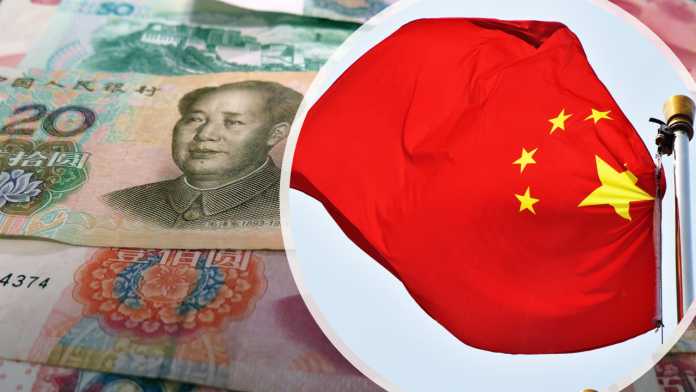
China Cuts Rates on Mortgage by 0.5%

0

In a significant move to bolster the housing market and provide economic relief, China has announced a reduction in mortgage rates by an average of 0.5%. This decision comes as part of a broader set of policies aimed at reviving the property sector, which has been under considerable strain.

The People’s Bank of China (PBOC) has instructed commercial banks to implement a cut in interest rates on existing mortgages to no less than 30 basis points below the PBOC’s Loan Prime Rate. This directive is expected to be completed by the end of October, signaling a swift response to the economic slowdown.

The impact of this policy is multifaceted. For homeowners, it translates into a reduced financial burden, potentially freeing up income for other expenditures. For the property market, it’s a breath of fresh air, as the cost of borrowing is lowered, potentially stimulating demand and investment.

Moreover, major cities like Guangzhou have fully lifted home purchase limits, while Shanghai and Shenzhen have introduced partial relaxations ahead of the National Day holiday. These local adjustments complement the central bank’s rate cut, showcasing a concerted effort to stabilize and stimulate the property market.

The timing of these measures is critical. China’s economy, the world’s second largest, has shown signs of a slowdown, exacerbated by a crisis in the property sector. Property sales have slumped, and new home prices have seen their fastest decline in over nine years. The mortgage rate reduction is a strategic move to ease homeowners’ mortgage burdens and, by extension, aim to boost the property market and weak domestic consumption demand.

Analysts suggest that while this is a positive step, the impact on the broader economy will need to be assessed over time. The reduction in mortgage rates is expected to provide some immediate relief, but whether it will be sufficient to move the needle and boost spending by homeowners remains to be seen.

This policy change is a part of China’s most significant stimulus efforts since the COVID pandemic, aiming to pull the economy out of its current slump. It demonstrates the government’s proactive approach to managing economic headwinds and supporting one of the critical pillars of the Chinese economy—the property market.

However, some analysts suggest that the mortgage cut may still be insufficient to significantly move the needle and boost spending by homeowners. It raises the question of whether additional measures or a more substantial rate cut would be necessary to achieve the desired economic uplift.

As China continues its market-oriented reforms and addresses the changing supply and demand dynamics in the real estate market, the current mortgage rate pricing mechanism is undergoing urgent adjustments and optimization. The PBOC has acknowledged the need for these changes in light of the public’s strong responses to the economic situation.

The largest state-owned banks in China, including the Industrial and Commercial Bank of China Ltd and China Construction Bank Corp, have expressed their active response to the policy, promoting the orderly adjustment of existing mortgage interest rates.

This mortgage rate cut is a clear indication of China’s proactive approach to managing its economic challenges. It reflects a broader strategy to support the property market and provide economic relief to households. As the situation evolves, it will be essential to monitor the effectiveness of these measures and the potential need for further action to ensure the stability and growth of China’s economy.


Global Banks to Test Tokenized Assets and Digital Transaction on SWIFT Network next year

0

The financial world is on the cusp of a significant transformation as global banks prepare to test tokenized assets and digital transactions on the SWIFT network in 2025. This pivotal move marks a progressive step towards the integration of traditional financial systems with the burgeoning digital economy.

The inherent security features of blockchain technology, such as encryption and distributed ledgers, provide a robust framework for managing tokenized assets, reducing the risk of security breaches.

Tokenization, the process of converting rights to an asset into a digital token on a blockchain, is poised to revolutionize the way we think about and handle assets. From real estate to artworks, tokenization allows for fractional ownership, increased liquidity, and a reduction in transaction times and costs. The digital transaction, on the other hand, refers to the transfer of assets using digital currencies or other forms of digital money, which can streamline processes and enhance security.

The SWIFT network, a cornerstone of global banking communication, is set to leverage its expansive reach to facilitate these trials. With over 11,000 financial institutions connected and more than 5 billion messages carried annually, SWIFT’s infrastructure is uniquely positioned to support this evolution.

The integration of tokenized assets into the financial ecosystem holds the promise of a more inclusive, efficient, and innovative market. As the technology matures and adoption increases, we may witness a significant transformation in how assets are created, managed, and traded across the globe. The potential for tokenized assets to revolutionize the financial industry is immense, and the coming years will be critical in determining the trajectory of this exciting development.

The trials will explore a range of use cases, including payments, foreign exchange, securities, and trade. The focus will be on multi-ledger Delivery-versus-Payment (DvP) and Payment-versus-Payment (PvP) transactions, which are critical for ensuring the simultaneous exchange of assets and currencies. This could potentially reduce counterparty risk and enhance the efficiency of global trade.

Moreover, the tokenized asset market is projected to reach a staggering $16 trillion by 2030, indicating a substantial shift in asset management and investment strategies. The integration of Central Bank Digital Currencies (CBDCs) and tokenized assets into the SWIFT network could bridge the gap between emerging and established forms of value, allowing for seamless transactions across different asset classes.

The trials follow Swift’s successful demonstration of transferring tokenized value across public and private blockchains, interlinking CBDCs globally, and integrating multiple digital asset and cash networks. This showcases Swift’s capability to connect disparate digital networks with traditional fiat currencies, using existing infrastructure.

As the financial landscape evolves, the trials by SWIFT will be a litmus test for the scalability and adaptability of digital assets within the mainstream financial ecosystem. The success of these trials could herald a new era of banking, where digital and traditional forms of value coexist and complement each other, paving the way for a more inclusive and efficient global financial system.

The anticipation for 2025 is palpable, as the financial industry watches closely to see how these trials will unfold and what implications they will have for the future of banking, commerce, and asset management. The integration of tokenized assets and digital transactions on the SWIFT network could very well be the harbinger of a new financial paradigm.

The Lesson from U.S. dockworkers As AI Era Brings Job Disruptions

1

During the industrial revolution, many British farm workers protested as they feared that tractors and broad mechanization in agriculture would displace them at work. Of course, protests or no protests, mechanization continued. But over time, most of those workers moved into other sectors, with few people working in farming even as productivity and farm output improved in agriculture.

Fast forward today: “Some 45,000 U.S. dockworkers at ports along the East and Gulf coasts are back at work Friday after their union reached a tentative deal that provides a roughly 62% pay bump. …Among the concerns of the International Longshoremen’s Association is ensuring job security or upskilling as automation takes hold.”

Yes, men and women working in ports and wharfs went on strike to protect their jobs in this age where robots and AI are expected to take many jobs. Any victory will be temporary because the ports of the future will likely be fully automated as they have in China these days. But what is amazing in this protest is the requirement of “upskilling” where the workers are saying, if you do use robots to do our jobs, you can retrain us to be the people who will do the new jobs.

I think we can learn from what is happening here: these workers are getting 62% bump even as they would be retrained. Simply, as AI comes, companies should explore how NOT to see cutting careers as the first solution. They can be nuanced on this, making sure innovation does happen even as families are not thrown under the bus. 

You can argue that the dockworkers got this deal because they are unionized. That is correct. But we must not all be unionized before we can ask companies and business leaders to see families in this emerging automation redesign. People will lose jobs, but new jobs would be created, just as what happened during the industrial revolution. 

But as that happens, there needs to be a way to ensure the process is not destructive to families. Political leaders have a role to play here to avoid a scenario where the 1% will expand their wealth even as the 99% are lost economically.

Stuck on a Monthly Salary? DTX Exchange’s (DTX) 100X Growth Prospects Stun Analysts, Outclassing Ripple (XRP) and Cardano (ADA)

0

As Q4 unfolds, appetites for more promising cryptocurrencies grow. At the same time, retailers are making their way back, especially those seeking life-changing gains. Among the several options, one stands out: DTX Exchange (DTX).

This emerging cryptocurrency boasts a staggering 100x upside potential, outclassing top altcoins like Ripple (XRP) and Cardano (ADA). Hailed as the best crypto to invest in by analysts, its ascent will be fueled by its novelty as a hybrid exchange platform.

DTX Exchange (DTX): A New DeFi Project to Bet on For 100X Gain

DTX Exchange (DTX) is an emerging cryptocurrency teeming with potential. It isn’t surprising that the presale has been selling out fast—over $3.5 million has been raised in early funding. Also driving demand is its hybrid exchange protocol, the first to integrate conventional financial instruments with Web3 products.

Its proprietary unified blockchain, VulcanX, will bridge the gap between TradFi and DeFi. This unique approach will allow retailers to trade thousands of assets across stocks, bonds, ETFs, forex, commodities and cryptocurrencies. Further, to ensure financial inclusion and global accessibility, it will employ wallet-based trading—there will be no reliance on traditional bank accounts.

The above is a sneak peek at how it intends to transform the $3.2 billion global trading market and compete against top cryptos like Ripple (XRP) and Cardano (ADA). Meanwhile, in the 3rd round of the ICO, a token costs $0.06 and is tipped to skyrocket post-launch. Hailed as the best crypto to invest in by experts, it is on track for a 100x upswing after its debut.

Ripple (XRP): Geopolitical Tension in the Middle East Spark Sell-Off

Ripple (XRP) is an industry leader at the intersection of traditional and decentralized finance. The payment-based cryptocurrency assists with cross-border transactions and has been adopted by several payment companies.

As one of the top crypto coins, Ripple (XRP) is constantly on the radars of retailers and institutional investors. The recent launch of the Grayscale XRP Trust offers even more institutional exposure to the payment-based crypto.

In the crypto market today, the XRP price is in the red. It tumbled over 10% on the daily charts, exchanging hands at $0.53. There has also been a 7% slump in the past 7 days, suggesting declining interest. Also behind its bearish woes is geopolitical tension in the Middle East, although it is still a good crypto to buy.

Cardano (ADA): Poised for a Comeback

Cardano (ADA), a Layer-1 token, wasn’t exempt from the latest market downturn. It tumbled as Bitcoin (BTC) retested $60,000, losing key price levels. While a comeback is around the corner, fear and uncertainty linger.

Trading in tandem with the wider crypto market, the Cardano price slumped 9% on the weekly charts. It trades at $0.34, maintaining key support—a silver lining is its price attractiveness. With this likely the last discount before the next leg of the market’s bull run, Cardano (ADA) is one of the best coins to invest in.

A Cardano price prediction is optimistic about a comeback and upswing above $0.5 in the coming days, making it an altcoin to watch out for. Meanwhile, its outlook for the rest of the year is promising: a rally above $1.

Conclusion

The significant upside potential of DTX Exchange (DTX) dwarfs Ripple (XRP) and Cardano (ADA), making it one of the best cryptos to invest in this quarter. As it sails toward adoption thanks to its hybrid approach to trading, it is an altcoin worth backing in the upcoming bull run.

Learn more:

Buy Presale

Visit DTX Website

Join The DTX Community


Challenges and Risks: Financial Ramifications of Sports Betting in Developing Economies

0

Sports betting has become a big part of many developing economies. It promises fun, excitement, and the chance to make some extra money. But it also brings many challenges and risks that can affect people’s lives. It’s important to look at both sides to understand how sports betting affects the financial health of these countries. Let’s explore some of these challenges.

In Search of Quick Money and the Risk It Brings

Many people are drawn to sports betting because they hope to win big. It’s just like when someone tries their luck with cleopatra free slots no download, hoping to hit a jackpot. The idea of getting rich quickly can be very tempting, especially in places where job opportunities are limited, and incomes are low.

However, not everyone wins. In fact, most people lose money over time. The losses can lead to serious financial problems, especially when people use money meant for food, rent, or other basic needs to place bets. When betting becomes a habit, it can lead to debt and poverty, affecting entire families.

Social Problems and Addiction

One major risk of sports betting is addiction. Betting can become something that people feel they must do, even when they are losing. It is easy for someone to think, “Maybe the next bet will be the winning one.” This hope can keep people playing, even when they can no longer afford it.

Addiction to sports betting can cause social problems. It might lead to arguments at home, as family members worry about money being spent on gambling instead of important needs. Children may be affected if their parents are more focused on betting than caring for them. Relationships can suffer, and the overall happiness of a family can decline.

Impact on Savings and Investments

In developing countries, many people do not have much saved up. Sports betting can make this worse. Instead of putting money aside for the future, people may spend it on bets. This means they are not prepared for emergencies, like sickness or losing a job.

Investing in businesses or education could help improve a person’s life in the long term. But when money is used for betting, those opportunities are lost. This affects not just individuals but also the growth of the entire community. When fewer people invest in businesses, there are fewer jobs, and the economy does not grow as fast as it could.

Young People and Sports Betting

Young people are also affected by sports betting. Many teenagers and young adults are interested in sports, and betting seems like a way to make watching games even more exciting. But young people may not fully understand the risks involved. They may spend their pocket money or even steal to place bets.

Getting involved in betting at a young age can lead to lifelong problems. It can affect their education if they are more focused on betting than studying. It can also lead to early addiction, making it hard for them to manage money responsibly as adults.

Government Revenue vs Social Costs

One reason why governments in developing countries allow sports betting is because it brings in money through taxes. This money can be used for public projects, like building roads or schools. However, the social costs of sports betting can be very high.

The money that governments earn from betting taxes may not be enough to cover the problems it creates, such as addiction and poverty. The cost of treating people with gambling addiction or helping families who have lost everything can be greater than the income from betting. This makes it hard for governments to decide whether the benefits are worth the risks.

Solutions and Responsible Betting

It is clear that sports betting brings both opportunities and risks. So, what can be done to reduce the negative effects? One solution is to encourage responsible betting. People need to understand that betting is not a way to make a living. It should be seen as a form of entertainment, not as a way to solve financial problems.

Governments and betting companies can also help by setting limits on how much people can bet and by offering support to those who have gambling problems. Educating people about the risks of betting can help them make better choices. Just as you wouldn’t spend all your money on cleopatra free slots no download hoping to win big, people need to know the risks of losing when they bet on sports.

To Cap it

Sports betting in developing economies comes with both hopes and dangers. It offers excitement and the chance of winning money, but it also brings risks such as addiction, poverty, and crime. The financial impact on individuals and communities can be severe if betting is not done responsibly.

To reduce these risks, it is important for people to understand the dangers and for governments to regulate betting properly. Responsible betting and proper education can help ensure that sports betting does not become a source of financial ruin. Developing economies need to find a balance that allows them to benefit from the revenue of sports betting while keeping their people safe from harm.