
DD
MM
YYYY

PAGES

DD
MM
YYYY

spot_img

PAGES

Home Blog Page 2864

Nigeria’s Newly Gazetted Withholding Tax Regime Takes Effect Jan 1, 2025 – Tax Agency Announces

0
FIRS signpost

The Federal Inland Revenue Service (FIRS) has officially announced that the newly gazetted withholding tax regime will take effect from January 1, 2025, in a change that is poised to bring significant alterations to the current withholding tax system, which has been in place for decades.

In a notice signed by the Executive Chairman of FIRS, Zacch Adedeji, the service clarified that the existing withholding tax regime, outlined in the Company Income Tax (CIT) regulation, will remain in force until December 31, 2024. The FIRS emphasized the importance of compliance with tax regulations and urged taxpayers, tax practitioners, and the general public to prepare for the upcoming changes.

The notice states, “The Federal Inland Revenue Service (“the Service”) hereby notifies taxpayers, tax practitioners, and the general public as follows:

“The Deduction of Tax at Source Withholding (WHT) Regulations, 2024 published in the Federal Government Gazette takes effect from January 1, 2025.

“The current WHT regime as enshrined in the Companies Income Tax (Rates, ETC, of Taxes Deducted at Source (Withholding Tax) Regulations (S.I.10 of 1997) and relevant WHT provisions remains in force up to and until December 31, 2024.”

The Evolution of Withholding Tax in Nigeria

The introduction of the new withholding tax regime marks a significant shift from a system that has largely remained unchanged since its establishment in 1978. The old regulations have faced increasing scrutiny for being outdated and ambiguous, particularly as the scope of taxable transactions has expanded over the years.

The previous system, known for its lack of clarity, led to complexities that created barriers for businesses, especially those operating on thin margins. Issues such as inequities in tax burden and the strain on working capital for low-margin businesses prompted the need for reform.

The Chairman of the Presidential Committee on Fiscal Policy and Tax Reforms, Taiwo Oyedele, had previously indicated in June that the government approved a new withholding tax regime, awaiting an official gazette, as a means to address these long-standing concerns.

Key Changes and Reforms

The new withholding tax regime, known as The Deduction of Tax at Source (Withholding) Regulations, 2024, seeks to overhaul the previous regulations by implementing the following key reforms.

Reduced Rates for Low-Margin Businesses

Recognizing the unique challenges faced by smaller businesses, the new regulations will feature reduced withholding tax rates for low-margin companies. This change aims to ease the tax burden on these entities, allowing them to maintain better cash flow.

Exemptions for Small Businesses

In a bid to foster growth and encourage entrepreneurship, the revised regime will exempt small businesses from withholding tax. This exemption is expected to stimulate economic activity by allowing smaller enterprises to reinvest more of their income back into their operations.

Measures Against Tax Evasion

The new regulations will introduce enhanced measures to combat tax evasion and avoidance, ensuring a more equitable tax system. These measures are crucial for maintaining public trust in the tax administration and ensuring that all taxpayers contribute fairly.

Deduction Timing and Key Terms

One of the significant criticisms of the previous system was its ambiguity regarding when tax deductions should occur. The updated regulations will provide clearer guidelines on deduction timing and important terms, helping taxpayers understand their obligations better.

Implications for Taxpayers and Businesses

The FIRS has reiterated that withholding tax (WHT) serves as an advance collection method for income tax, with rates ranging from 5% to 10%, depending on the nature of the transaction. Taxpayers will be required to submit returns by the 21st of the month following the deduction, with penalties for late filing set at N25,000 for the first month and N5,000 for each additional month of non-compliance.

Taxpayers are urged to familiarize themselves with the new regulations, as non-compliance can result in financial penalties. The FIRS’s proactive communication signals an effort to prepare businesses for a smooth transition to the new regime.

The new withholding tax regime is part of a broader strategy by the Nigerian government to modernize its tax system, ensuring it aligns with contemporary economic realities and promotes fairness.

The Presidential Tax Reform Committee was set up in 2023 with the aim of rectifying the inadequacies of the tax system. The reforms are expected to ease businesses of the burden of multiple taxation and foster a more conducive environment for businesses.

How to Build a Crypto Portfolio With Just $100 for Massive DeFi Returns!

0

Building a crypto portfolio doesn’t require thousands of dollars. In fact, with just $100, you can position yourself for massive returns in the DeFi (Decentralized Finance) space. As DeFi continues to disrupt traditional financial systems, early investors in promising projects find that even small investments can become life-changing gains. But how can you take that first step, and where should you place your bets to maximize your potential for success?

In this guide, we’ll explore how to structure a diversified crypto portfolio with just $100, focusing on DeFi projects with real-world utility and explosive growth potential. We’ll also explore the key strategies and projects you should consider to get the most out of your investment.

Start With High-Potential DeFi Projects

When building a portfolio with limited capital, your goal should be to focus on projects that offer the potential for high returns. DeFi is one of the most innovative sectors within the crypto world, offering decentralized alternatives to traditional financial services like lending, trading, and earning interest. One such project that draws significant attention is FXGuys ($FXG).

FXGuys is currently in Stage 1 of its presale, priced at $0.03 per token, after selling out 68,000,000 tokens in a private round that raised over $1 million. FXGuys is pioneering a PropFi (Proprietary Finance) model that brings the forex market to the blockchain. This unique approach makes forex trading, one of the largest financial markets in the world, accessible to everyday traders through a decentralized platform.

For a small investment, FXGuys presents a major opportunity. It’s expected to see significant growth due to its real-world utility in forex trading and its innovative Trade2Earn model. By combining DeFi with traditional finance, FXGuys opens up an entirely new market, making it an essential addition to a crypto portfolio.

Diversify Across Other High-Utility Tokens

While FXGuys is an excellent starting point, diversification is key to reducing risk and increasing your chances of success. In the world of DeFi, it’s essential to look for projects with strong use cases and growing ecosystems. Two other promising projects that should be part of your $100 portfolio are Ethereum (ETH) and Polygon (POL).

Ethereum has long been the backbone of the DeFi ecosystem, powering many decentralized applications (dApps) and protocols.

While its price may be higher than smaller tokens, allocating a small portion of your portfolio to Ethereum ensures exposure to the wider DeFi market. Ethereum’s Layer-1 network continues to lead the space, and with its upcoming upgrades aimed at reducing gas fees and increasing scalability, it remains a solid foundation for any portfolio.

Next is Polygon (POL), a Layer-2 scaling solution for Ethereum. With Ethereum’s high gas fees becoming an issue, Polygon offers a more cost-effective way to access DeFi protocols. Polygon’s ecosystem has seen rapid growth, attracting many dApps and projects looking to offer users faster and cheaper transactions. Its potential for continued adoption makes it a great addition to your $100 portfolio.

Rebalance and Stake for Long-Term Growth

Once you’ve invested in high-potential tokens like FXGuys, Ethereum, and Polygon, it’s important to rebalance your portfolio periodically. This ensures you’re not overly exposed to any asset, allowing you to capitalize on market movements. For example, if one of your tokens surges in value, you may want to redistribute some profits to other promising projects.

In addition to rebalancing, staking is a great way to generate passive income from your investments. Many DeFi platforms allow you to stake your tokens, earning interest while supporting the network. FXGuys, for example, offers a staking system where you can lock in your $FXG tokens and earn passive rewards over time.

By staking, you increase the long-term potential of your investment and actively participate in the decentralized networks you believe in.

Conclusion: Turn $100 Into Massive DeFi Returns

Building a crypto portfolio with just $100 is possible and can lead to massive returns if you invest wisely in high-potential DeFi projects. Start with tokens like FXGuys, which offers real-world utility in the forex market and is already showing signs of significant growth. Pair this with foundational tokens like Ethereum and Polygon, and you’ll have a diversified portfolio poised for long-term success.

With regular rebalancing, staking, and a focus on projects with strong utility, your $100 investment could grow into something more substantial. As the DeFi market continues to evolve, now is the perfect time to position yourself for the next wave of innovation.

Website | Whitepaper | Socials | Audit

USE PROP10 FOR 10% BONUS

Google Contributed Estimated $1.8bn to Nigeria’s Economy in 2023 – Public First Report

0

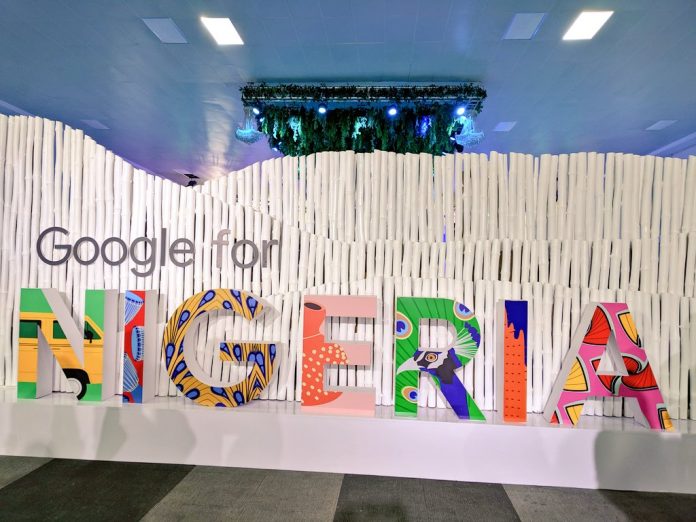
A new report by Public First has shed light on the significant impact of Google’s digital tools and services on Nigeria’s economy, revealing that the tech giant contributed an estimated $1.8 billion to the country’s economy in 2023 alone.

The Nigeria Digital Opportunity report, released on Thursday, highlights the crucial role that platforms like Google Search, Ads, Google Play, YouTube, and Google Cloud played in enhancing the productivity of Nigerian businesses, creators, and workers. It also highlighted the opportunity that the evolution of artificial intelligence holds for Nigeria’s digital economy, estimating the value at billions of dollars in the near future.

The report further underscores how Google’s educational initiatives, including its digital skills and Career Certificates programs, have equipped millions of Nigerians with critical skills. In 2023, more than 1.5 million young adults in Nigeria acquired new digital competencies, positioning themselves for a more technologically driven future, according to the report.

As Nigeria experiences rapid digital transformation, the Nigeria Digital Opportunity report outlines tremendous potential for even further economic growth. The study points out that for every $1 invested in digital technology in Nigeria, more than $8 in economic value is generated. This impressive return reinforces the idea that digital technology—particularly innovations such as cloud computing, artificial intelligence (AI), and enhanced connectivity—is pivotal to Nigeria’s economic trajectory.

Projections within the report estimate that AI alone could boost Nigeria’s economy by an additional $15 billion by 2030. Google’s commitment to responsible AI development is expected to be a driving force behind this growth, creating opportunities for Nigerian businesses to leverage cutting-edge technology.

To ensure Nigeria fully capitalizes on this opportunity, the report offers strategic recommendations for policymakers. It advocates for the adoption of cloud-first policies and improvements to digital infrastructure to facilitate AI integration. It also stresses the importance of strengthening STEM (Science, Technology, Engineering, and Mathematics) education and increasing AI literacy to prepare the Nigerian workforce for the future.

Olumide Balogun, Director for West Africa at Google, commented on the findings of the report, expressing optimism about the future of Nigeria’s digital economy.

“We’re thrilled to see the positive impact that digital technology is having on Nigeria’s economy. This report underscores the importance of continued investment in digital skills and infrastructure to unlock the full potential of Nigeria’s vibrant digital economy,” he said.

Amy Price, Director & Head of Technology Policy at Public First, echoed this sentiment, noting the critical role of technological investment in shaping Nigeria’s future.

He said: “Nigeria is a digital front-runner in Africa, and tech investment will be a powerful catalyst for further growth and development across the country. This is particularly true when it comes to connectivity, cloud computing, and artificial intelligence.”

Google’s Long-Term Commitment to Nigeria’s Digital Economy

Google’s impact in Nigeria is part of a broader, long-term investment strategy in Africa. In 2021, the tech giant announced a $1 billion commitment to accelerate the continent’s digital economy. This pledge focused on expanding internet access, supporting local entrepreneurs, and driving innovation across African markets, with Nigeria at the forefront.

One of the flagship projects of this investment is the Equiano fiber-optic cable, which landed in Nigeria in 2022. Named after Nigerian-born writer and abolitionist Olaudah Equiano, the cable connects Western Africa to Europe, bringing with it around 20 times more network capacity than the last undersea cable installed in the region. Equiano is projected to increase internet penetration in Nigeria by 7% by 2025, making internet access faster, more reliable, and more affordable for millions of Nigerians.

This boost in connectivity is crucial for Nigeria, a country where digital adoption has surged in recent years but remains unevenly distributed. The increased network capacity is expected to help bridge the gap between urban and rural areas, enabling more people to participate in the digital economy. Faster internet access also powers numerous Google-funded programs aimed at developing the skills of young Nigerians and entrepreneurs.

The Nigeria Digital Opportunity report highlights how Google’s ecosystem of tools and services has already made a substantial impact, and with further investments in connectivity, AI, and digital skills, the potential for future growth is even greater.

For policymakers, the challenge lies in creating an enabling environment that fosters innovation while ensuring that all Nigerians, from urban hubs to rural communities, can access and benefit from these technological advancements.

Lagos Announces Plan to Ban Sachet Water, Single-use Plastics

0

The Lagos State Government’s announcement of a plan to ban the circulation of single-use plastics (SUPs), such as PET bottles and sachet water, starting in January 2025 has sparked discussions about its impact on businesses and the economy.

This measure is understood to be part of the state’s broader strategy to combat the mounting plastic waste problem that has clogged drainage systems and contributed to environmental degradation.

At the stakeholders’ workshop held at the Manufacturers Association of Nigeria (MAN) House in Ikeja, Lagos, representatives from both the private sector and the government gathered to discuss the potential impacts of the ban. Tokunbo Wahab, Commissioner for the Environment and Water Resources, who was represented by his Special Adviser on The Environment, Olakunle Rotimi-Akodu, explained that the policy is part of broader efforts to manage plastic waste sustainably and ensure a healthy environment for Lagosians.

“It has become a highly visible part of the waste stream, PET, Styrofoam, and nylon for sachet water, popularly called “pure water” commonly being used for water and beverages, take away plates and cups, carrier bags, among others.

“This development is posing environmental challenges ranging from Ecosystems degradation, Drainage clogging and flooding, Lagoon and Ocean debris with attendant harm to human resulting in high socio-economic impacts on the State,” he said.

Wahab outlined that the SUP ban would be backed by appropriate legal frameworks and an enabling law. He disclosed that Lagos currently generates around 13,000 tonnes of waste monthly, with plastics accounting for over 60% of the waste.

The proposed ban builds on earlier measures taken in January 2024, when the state government prohibited the use of styrofoam in all government establishments and throughout the metropolis due to the rising prevalence of plastic waste.

However, the move has also revived concerns about Nigeria’s long-standing reliance on bans as a solution to complex challenges, a strategy that, in the past, has resulted in the collapse of industries and severe economic repercussions.

Nigeria’s governments, both at the federal and state levels, have historically turned to outright bans as a quick fix for various problems. While these measures are often introduced with the aim of addressing pressing issues—ranging from environmental hazards to public safety—they have also frequently led to unintended consequences.

One of the most glaring examples of this approach is the 2020 motorcycle (popularly known as “okada”) ban in Lagos. This policy not only targeted informal motorcycle operators but also brought down burgeoning tech-driven motorbike ride-hailing startups like Gokada, Max.ng, and ORide.

The okada ban, introduced with the intent to improve road safety and reduce traffic congestion, essentially wiped out a nascent industry that had attracted millions of dollars in foreign investment.

Gokada, for instance, had raised $5.3 million in funding and was poised to become a major player in Nigeria’s transportation ecosystem. However, the blanket ban left these companies struggling to pivot their business models or face collapse, resulting in massive job losses and the stifling of innovation in an industry that held great promise for urban mobility.

Against this historical backdrop, stakeholders in the plastics industry are now raising concerns regarding the looming 2025 ban on SUPs. While the environmental benefits of curbing plastic waste are clear, many fear that an outright ban, without sufficient support for businesses to transition to alternative materials, could lead to the collapse of key sectors and further exacerbate the economic challenges facing Nigeria.

In light of these concerns, stakeholders in the water packaging and plastic manufacturing sectors are urging the Lagos State Government to reconsider the implementation strategy for the SUP ban. They are calling for a phased approach, which they argue would allow businesses enough time to transition to eco-friendly alternatives and prevent the severe economic shocks that could arise from a sudden enforcement of the ban.

Mosaku Ololade, chairperson of the Lagos chapter of the Association for Table Water Producers of Nigeria (ATWAP), reiterated the need for a phased implementation.

“We have over 2,000 members in Lagos alone, with over 10,000 workers. We implore the government to implement the ban in phases, allowing our members ample opportunity for compliance,” Ololade stated.

Economic Implications of the SUP Ban

Experts have warned that the impending SUP ban in Lagos carries significant economic implications, particularly for the small and medium-sized enterprises (SMEs) involved in plastic manufacturing and water packaging. Many of these businesses operate in the informal sector, providing livelihoods for thousands of Nigerians. Business leaders warn that an abrupt enforcement of the ban could lead to the collapse of these businesses, with ripple effects across the supply chain, from plastic manufacturers to distributors and retailers.

In addition to job losses, they also pointed out that the sudden elimination of single-use plastics could lead to supply chain disruptions, particularly in the food and beverage industry, where plastic packaging plays a critical role in product distribution and shelf life. Without viable, cost-effective alternatives, businesses may face increased operational costs, which could ultimately be passed on to consumers in the form of higher prices.

Policymakers Deserve Punishment for Harmful Policies

The Manufacturers Association of Nigeria (MAN) recently warned against policies that could be detrimental to business operations, particularly those that are introduced without adequate consultation or a clear transition plan. The Director-General of MAN, Segun Ajayi-Kadir, has been vocal about the need to hold policymakers accountable for enacting what he calls “business-killing policies.”

Ajayi-Kadir argues that policies like the SUP ban, while well-intentioned, have the potential to cripple entire industries if they are not properly executed. In a recent address, he called for punitive measures against policymakers who introduce and enforce regulations that result in the collapse of industries or significant job losses.

“There must be consequences for government officials who make policies that ruin businesses,” Ajayi-Kadir stressed. “I mean, you make a policy today, it becomes a disaster for industry, and government simply changes it, and you walk away. We don’t have this luxury in the private sector. If you make a mistake, your business is gone, and you could distrain your property. So, I think we need to see that movement also on the part of government.”

His comments reflect a growing frustration among Nigerian businesses, which have often borne the brunt of abrupt regulatory changes. The collapse of the motorbike ride-hailing industry following the 2020 okada ban is one example, adding to numerous other instances where policy decisions have led to the demise of promising sectors.

BlockDAG Presale Hits $79.5M as Traders Jump in on 50% Bonus! DOGE Surges While Monero Encounters Troubles

0

As the cryptocurrency landscape evolves in 2024, various altcoins are experiencing divergent paths. Dogecoin has recently enjoyed a 4% uptick in its trading value, now at $0.1133, with market analysts suggesting a potential increase to $0.15. Conversely, Monero is grappling with market adversity, struggling to surpass the crucial resistance level of $180.79, casting a shadow over its near-term trajectory.

In the midst of these market dynamics, BlockDAG has emerged as a focal point for cryptocurrency enthusiasts, thanks to its enticing 50% bonus offer on BDAG coin acquisitions. This strategic promotion has propelled the presale to an impressive $79.5 million. This surge in presale activity coincides with the successful deployment of BlockDAG’s Testnet, underscoring the technology’s robustness and potential.

Dogecoin’s Ascending Potential: Analysts Anticipate Up to 40% Increase

Over the past week, Dogecoin has registered a modest 4% increase in value, stabilizing around $0.1133. Analysts posit that maintaining a price above $0.11 could catalyze a significant rally, potentially elevating its price by 40% to reach $0.15. Currently boasting a market capitalization of $16.5 billion, Dogecoin continues to attract attention in the altcoin community.

Nonetheless, the optimism is tempered by caution due to Dogecoin’s inherent price volatility, which tends to be swayed more by market sentiment and speculative activity than by foundational market elements. This volatility poses a risk of rapid declines if the broader market sentiment were to reverse.

Monero’s Bearish Challenges: Technical Indicators Suggest Downward Pressure

Monero, renowned for its privacy-centric features, is currently navigating a tough market phase. Despite efforts to breach the $180.79 resistance mark, it has faced repeated rejections, with its price retracting to $169.13. The inability to sustain above this resistance level has heightened concerns about a potential extended bearish period.

Technical analyses further compound these concerns; the Moving Average Convergence Divergence (MACD) indicator has demonstrated a bearish crossover, and the Relative Strength Index (RSI) rests below 50, both signaling increased selling pressure. These indicators suggest that Monero may face further downward adjustments in the near term, complicating its market position.

BlockDAG’s Limited-Time 50% Bonus Offer Concludes Soon

BlockDAG is captivating the cryptocurrency community with an exclusive 50% bonus offer, available through the use of promo code BDAG50. This promotion, ending on October 14, commemorates the launch of BlockDAG’s Testnet and honors the commitment of its expanding user base. The promotion is strategically positioned to bolster the community’s engagement with the BDAG coin, amplifying their holdings under advantageous terms.

The offer marks a pivotal moment for both newcomers and longstanding participants in the crypto space, as it enhances their capacity to increase their BDAG coin holdings. With over 140,000 holders already, BlockDAG is establishing itself as a formidable presence in the cryptocurrency arena, underscored by innovative incentives that are drawing widespread attention.

The influx of participants has propelled the presale total to a remarkable $79.5 million. Initial participants have witnessed exponential growth, with returns skyrocketing to 1820%, as the BDAG coin’s value has escalated from $0.001 to $0.0192. This surge in value and the imminent closure of the bonus offer are prompting a rush of acquisitions, with expectations of further price increases as new batches of BDAG coins are released.

The countdown to the bonus offer’s expiration aligns with the unveiling of BlockDAG’s revamped website and platform on October 14. This synchronicity highlights an optimal moment for community members to leverage this unique opportunity, poised to amplify their returns significantly in a rapidly evolving market landscape.

Final Considerations

While Dogecoin demonstrates promise with a recent 4% increase in value, and Monero faces challenges with persistent bearish trends, the standout opportunity in the current market is BlockDAG. Its presale success, reaching $79.5 million combined with the limited-time 50% bonus offer, positions BlockDAG as a prime candidate for those seeking to expand their cryptocurrency portfolios.

The substantial gains already realized by early participants underscore the momentum building behind BlockDAG. As other currencies navigate market fluctuations, BlockDAG’s robust growth trajectory and strategic offerings establish it as an advantageous choice for enhancing cryptocurrency holdings.


Join BlockDAG – Act Now Before Prices Increase:

Presale: https://purchase.blockdag.network

Website: https://blockdag.network

Telegram: https://t.me/blockDAGnetwork

Discord: https://discord.gg/Q7BxghMVyu