DD
MM
YYYY

PAGES

DD
MM
YYYY

spot_img

PAGES

Home Blog Page 2869

MAN DG Calls for Nigerian Officials to Be Punished for Poor Policies Disrupting the Economy

0

Segun Ajayi-Kadir, Director-General (DG) of the Manufacturers Association of Nigeria (MAN), has called for government officials to face consequences for implementing policies that devastate businesses and disrupt the economy.

Speaking during a forum themed ‘Nigeria’s Challenging Economy: Strategies for Recovery,’ organized by Channels Television in celebration of Nigeria’s 64th Independence anniversary, Ajayi-Kadir underscored the need for accountability within the government.

“There must be consequences for government officials who make policies that ruin businesses,” Ajayi-Kadir stressed. “I mean, you make a policy today, it becomes a disaster for industry, and government simply changes it, and you walk away. We don’t have this luxury in the private sector. If you make a mistake, your business is gone, and you could distrain your property. So, I think we need to see that movement also on the part of government.”

Ajayi-Kadir’s remarks resonate with a growing belief among Nigerians that policymakers act recklessly because they face no accountability for the economic damage their decisions often cause. Many have argued that the country’s policymakers are shielded from the consequences of their actions, unlike in the private sector where poor decisions are met with consequences.

Comparing the private and public sectors, it is believed that the former thrives and the latter deteriorates due to their different approaches to policymaking.

Interest Rates, Stifling Businesses and Productivity

Ajayi-Kadir also voiced concerns about the persistently high interest rates in Nigeria, which have made borrowing increasingly expensive for businesses. He described the rising interest rates, currently between 30-35%, as unsustainable, particularly in an economy where consumer purchasing power has been eroded by inflation, unemployment, and stagnant wages.

According to Ajayi-Kadir, many businesses are finding it nearly impossible to survive in such an environment.

“We should be able to assuage the challenges we are having with continuously raising interest rates,” he said. “You’ve done it for more than 18 months plus, and you’ve not done any impact assessment on the productive sector. I think you need to be able to insulate that sector so that you can inflate the economy.”

The ongoing increases in the monetary policy rate (MPR) by the Central Bank of Nigeria (CBN) are part of efforts to curb inflation, but Ajayi-Kadir noted that the CBN’s approach is undermining the productive sector. He pointed out that despite over 18 months of these rate hikes, there has been no comprehensive evaluation of their impact on the manufacturing sector or the broader economy.

The lack of impact assessments, according to the DG, is indicative of the disconnect between policy formulation and real-world business needs.

The Need for a Coordinated Industrial Policy

Beyond interest rates, Ajayi-Kadir highlighted the absence of a clear and consistent industrial policy to guide Nigeria’s economic recovery. He called for the development of a robust industrial policy that would provide long-term direction for the country’s industrialization efforts.

“There’s a need for an industrial policy to guide the government’s approach to industrialization,” he said.

According to the DG, such a policy would promote better coordination between key government ministries, including the Ministry of Industry, Trade, and Investment, the Ministry of Finance, and the CBN.

“I must say that policy coordination is extremely important for us because you can’t operate in such a way that you don’t know what to expect tomorrow. It will basically define where we want to be, and it will guide our operations,” he said.

Ajayi-Kadir’s comments reflect broader concerns in Nigeria’s business community about the unpredictable nature of government policies, which frequently change without warning, causing disruption and uncertainty in the marketplace.

For instance, in early 2020, the Lagos State government abruptly announced the ban on Bike-hailing startups, Gokada, ORide, MaxNG, and other commercial motorcycles (okada). The ban also affects Keke Napep (tricycle) operators within the state.

The decision eventually stifled the bike-hailing idea, which had made commuting in the state’s wild traffic easier, resulting in the loss of millions of dollars in investors.

Ajayi-Kadir argued that improved coordination between government ministries and agencies would prevent the kind of policy flip-flopping that has hurt businesses in the past.

Ineffective Nigerian Embassies and Lack of Economic Diplomacy

Another issue Ajayi-Kadir raised was the ineffectiveness of Nigeria’s embassies abroad in promoting Nigerian businesses and attracting foreign investments. He criticized the country’s embassies for not doing enough to facilitate market penetration for Nigerian products in foreign markets.

“There needs to be key performance indicators (KPIs) for our embassies to track their effectiveness in helping Nigerian products reach foreign markets and attracting foreign direct investment (FDI) to Nigeria,” he said.

Ajayi-Kadir emphasized that embassies should play a crucial role in economic diplomacy, helping to forge international partnerships that would boost Nigerian industries and increase the country’s foreign exchange (FX) inflows. However, without clear KPIs and accountability measures, embassies have largely failed to fulfill these roles.

While commending Wale Edun, the Minister of Finance and Coordinating Minister of the Economy, for his efforts to stabilize Nigeria’s economy, Ajayi-Kadir urged the government to avoid playing politics with economic policies. He called for a more deliberate and coordinated approach to policymaking.


BlockDAG’s 50% Extra Offer Catapults Presale to $78M While Cardano Achieves New Monthly High & Helium Primed to Surge 

0

This week, the crypto sphere is buzzing with transformative developments, setting an electrifying tone for the final quarter of the year. Cardano is at the forefront of innovation with its new liquid staking feature, propelling ADA to unprecedented monthly peaks. Simultaneously, Helium’s price trajectory has the community on the edge of their seats, with forecasts suggesting a potential doubling in the near future.

Amidst these seasoned players, BlockDAG has burst onto the scene with a bold announcement: a 50% bonus on all coin purchases, valid only for a limited time. This strategic move has ignited the market, propelling their presale beyond the $78 million mark as the fourth quarter promises to spotlight the top gainers in the crypto world.

Cardano’s Liquid Staking Elevates ADA’s Market Position

Cardano is grabbing headlines with its latest venture into liquid staking, courtesy of a $2 million pre-seed injection by Helix Labs. This initiative aims to unlock a staggering $13 billion in liquidity for ADA holders, enhancing Cardano’s integration within the decentralized finance (DeFi) landscape.

By allowing ADA holders to stake their tokens while simultaneously receiving a liquid-staked counterpart, Cardano not only bolsters its utility within DeFi platforms but also cements its position as a key player in the ecosystem. This groundbreaking move has already nudged ADA’s price to a new monthly high, fueling anticipation for continued expansion as the network evolves.

Helium’s Price Forecast: A Promising Horizon

Helium’s ($HNT) market sentiment is overwhelmingly positive, with current trends and analyses indicating a possible price surge to $14, doubling its current standing. Having risen by 396% over the past year, Helium’s recent formation hints at a robust double bottom pattern, further solidifying hopes for its upward trajectory.

With Helium trading at $7.35 and enjoying solid support at $6.93, the ongoing buying momentum positions it for further ascents. However, challenges such as regulatory scrutiny and shifts in interest towards IoT tokens could pose obstacles. Participants in the Helium arena are advised to keep an eye on these broader market dynamics as they navigate the possibilities.

BlockDAG Unleashes a 50% Bonus Offer, Fueling Crypto Portfolios

BlockDAG is stirring up the cryptocurrency market with an enticing 50% bonus offer, giving crypto enthusiasts a thrilling chance to amplify their holdings. By applying the promo code BDAG50 at checkout, participants can significantly boost their portfolios, setting the stage for continued growth.

Since the kickoff of its presale, the BlockDAG community has witnessed a staggering 1820% rise, with over 13.2 billion coins already distributed. With the recent launch of its Testnet and the compelling bonus offer, demand for BDAG coins has surged, drawing in both new participants and those already holding BDAG coins, and positioning them for potentially substantial gains.

BlockDAG’s financial influx has soared past $78 million, propelled by developers engaging with the Testnet and the community capitalizing on the 50% bonus. The current trading price of the coin stands at $0.0192, with expectations of climbing to $0.0206 in the imminent 24th batch—a milestone that seems to be approaching rapidly due to heightened demand.

As BlockDAG continues its upward trajectory, the coin’s value is on a steady rise, with sights set on reaching a $600 million milestone. However, the 50% bonus offer is ticking down, set to expire on October 14th, narrowing the window for this opportunity.

Spotlight on This Week’s Top Crypto Contenders

This week’s crypto arena showcases distinct frontrunners. Cardano is capturing attention with its liquid staking feature, propelling ADA to new market heights. Meanwhile, bullish forecasts for Helium have market watchers poised for potentially lucrative returns.

Amid these developments, BlockDAG stands out with its aggressive 50% bonus strategy, turbocharging the progress of its presale’s 23rd batch, which has now exceeded the $78 million threshold. With each announcement and the unfolding of the presale, BlockDAG’s momentum builds, making it a token to keep an eye on as 2024 winds down.


Learn About BlockDAG – Act Now Before Prices Increase:

Presale: https://purchase.blockdag.network

Website: https://blockdag.network

Telegram: https://t.me/blockDAGnetwork

Discord: https://discord.gg/Q7BxghMVyu

California Bans “Affirmative Wealth” admission, after the Supreme Court Changed Affirmative Action

1

California bans the biggest affirmative action in America. Yes, you are used to those court cases where people argue that black kids, latino kids, etc should not be admitted in universities when there are other more qualified Asian and white kids ahead of them. Even the Supreme Court ruled that “race” cannot evidently be used for admission purposes. Fair game!

Personally, I support affirmative action and I support the thesis that minorities in America (not immigrants like me) deserve an accommodation because if you do check data, the admission system is not that fair. What do I mean? Obama was rumoured to have gotten into Harvard Law via affirmative action, but he graduated top 10% of his class, and served as the president of the law review there.

In other words, any system which will not discover a student, who then needs special help to get in, and end up becoming one of the best graduating students is defective and cannot be relied upon. So, if indeed Obama needed help and ended up among the best, how can you argue that affirmative action is not necessary to fix the discriminatory systems built over centuries in the admission processes?

They do not care but have continued to support “affirmative wealth” where elite universities admit children of the rich and famous without competition. So, these fighters are happy when “race” is replaced with “wealth”. But there is good news because California has made it illegal: “It will soon be illegal for public and private universities in California to consider an applicant’s relationship to alumni or donors when deciding whether to admit them.”

Understand that more students are admitted based on “wealth” than “race”: “Self-reported numbers showed that in 2022, USC admitted the highest percentage of students with legacy and donor ties of any California university, 14.4 percent. It was followed by Stanford and Santa Clara, where those numbers were 13.8 percent and 13.1 percent respectively.”

But few care, rather, they want to beat down the latino or black kid on campus because 5% of them are on campus.  Of course many are not happy with this decision, including those who do not support the use of race in admission. I tell them as they say in Nigeria: go to court!

QubeQode IDE: Qubetics User-Friendly Approach to Blockchain

0

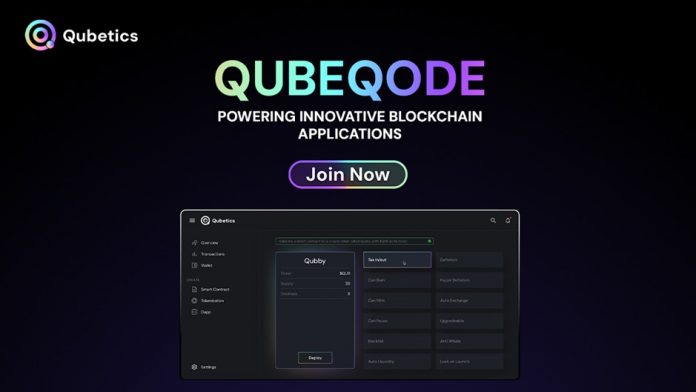
Blockchain technology is always surrounded by hype, which comes with challenges and risks. Implementing technology is not easy for organisations, as there are hurdles associated with it. Qubetics’ revolutionary QubeQode IDE is designed to democratise blockchain technology by making it accessible to everyone, not just seasoned programmers. With user-friendly tools like drag-and-drop functionalities and form-based configurations, QubeQode allows even novices to design and develop blockchain applications quickly. Best of all, the new crypto presale projects have just gone live, offering a unique opportunity for early adopters to get involved. This presale invites you to be part of a community driving innovation in decentralised technology. Dive into blockchain development with QubeQode and help shape the future of decentralised applications.

Why Blockchain Development is Inaccessible?

Traditionally, entering the blockchain world has been akin to stepping into a complex process. The technical barriers are high, often deterring those without extensive coding experience. This complexity limits the pool of innovators and slows the pace at which new, useful applications are introduced to the market. Moreover, the intricate details required in coding smart contracts can lead to vulnerabilities, posing significant security risks and dampening enthusiasm among potential developers and users.

Qubetics’ Robust Solution: QubeQode IDE

Qubetics’ QubeQode IDE offers a streamlined, intuitive development environment. Imagine dragging and dropping components like building blocks on a screen to form fully functional apps. This interface is user-friendly and powerful enough to handle complex blockchain functions. It’s tailored for creators who may have big ideas but not necessarily the technical skills traditionally required to realise them in the blockchain space.

User-Friendly Features for Broad Accessibility

QubeQode’s drag-and-drop functionality allows users to visually piece together the elements of their blockchain applications, significantly lowering the entry barrier for non-technical users. Additionally, the platform offers form-based configuration, which eliminates the intimidating prospect of writing lines of code, making the development process more approachable and less error-prone.

Empowering Developers with AI-Driven Tools

Beyond simplicity, QubeQode enhances the development experience with AI-driven tools that help create smarter, more secure smart contracts. These tools help generate code, complete partial code snippets, and detect potential errors before they become problems. This AI assistance is like having an expert coder provide guidance and ensure that your applications function well and are built on a solid security foundation.

Enhanced Security with Quantum-Resistant Features

In the evolving world of technology, future-proofing is key. Qubetics takes this seriously by incorporating quantum-resistant features into QubeQode IDE. Using a Post-Quantum Cryptography (PQC) based scheme, the platform ensures that all transactions and user data are secure against current and emerging threats, particularly those posed by quantum computing. This level of security is akin to having a vault equipped not just for today’s technology but for tomorrow’s as well.

Invest in the Future: Be Part of the Qubetics Presale

As Qubetics unveils this revolutionary tool, it also emerges as one of the best new crypto presale projects, offering a unique opportunity for forward-thinking investors and blockchain enthusiasts to get involved early. These presale projects are your chance to support and benefit from a platform setting new blockchain development standards.

Conclusion

Qubetics’ QubeQode IDE is more than just a development tool; it’s a gateway to the future of blockchain technology. By simplifying the development process and integrating advanced AI and quantum-resistant technologies, QubeQode invites diverse thinkers and makers to innovate within the blockchain space. Whether you’re a tech enthusiast, a budding developer, or a visionary investor, participating in one of the top-notch new crypto presale projects offers a rare opportunity to be at the forefront of blockchain innovation. Join Qubetics today and help shape the future of decentralised technology.


Don’t Miss Your Chance, Presale Is Live Now

Qubetics: https://www.qubetics.com/

Telegram: https://t.me/qubetics

Twitter: https://twitter.com/qubetics

Why XRP, Kaspa, and JetBolt Could Surge This Year as Altseason and Crypto Bull Run Become a Possibility

0

The crypto market is bracing for a potential bull run with the possibility of a new altseason. With market sentiment slowly shifting towards optimism and crypto whales seeking coins that could surge, tokens like XRP, Kaspa, and JetBolt are in the spotlight. All three tokens have shown contrasting market performances and it has crypto analysts and traders at the edge of their seats. Let’s dive into the factors and recent insights that make a strong case for their possible surge this year.

XRP’s Gut Wrenching Performance as of October 2, 2024

Ripple (XRP) has experienced a recent drop of around 4%, partly due to Ripple releasing 1 billion XRP tokens on October 1, which increased the circulating supply and added downward pressure on its price. Another contributing factor is the uncertainty surrounding the SEC, which might appeal the court’s ruling in Ripple’s favor by October 7. This looming legal challenge continues to weigh on investor sentiment.

XRP’s sustained downward trend has led some major crypto whales to seek out fresh altcoins such as JetBolt that offer more advanced technologies and more room for growth when the crypto bull run comes around. 

Kaspa’s Value Nosedives, Shedding 6.36% in Just One Week

For Kaspa (KAS), the price has been on a downward trend, declining by over 5.47% within the last 24 hours to around $0.15. Adding to insult to injury, Kaspa (KAS) further dropped to 6.36% in the past week. While KAS 24-hour trading volume seems to be recovering at 103%, this hasn’t been enough to lift the price. 

As KAS faces some market challenges, it will be interesting to see how both tokens perform amidst the broader market shifts and potential upcoming bull run.

JetBolt: The Rising Star Attracting Crypto Whales

Among all the predictions surrounding a possible altseason, the new entrant JetBolt (JBOLT) is emerging as a popular choice among crypto whales looking for new opportunities. With the JetBolt presale already surpassing $230,000 and growing community backing, JetBolt’s huge splash since August 2024 has caught the eye of whales from both the XRP and Kaspa camps. 

JetBolt is a next generation crypto platform that offers unique features that could revolutionize the crypto space. Leveraging Skale, JetBolt offers zero gas fees, allowing cost-efficient and frictionless trading—something that’s grabbing attention as a key differentiator. 

JetBolt stands at the forefront of innovation by integrating artificial intelligence with Web3. JetBolt token holders can access its AI-powered tool which provides the latest news and insights on the crypto industry. In a market where timely information is crucial, JetBolt gives its holders an edge.

JetBolt’s ongoing presale success and continued momentum continue to attract crypto whales who are looking for innovative new projects that could grow during the next crypto bull run.

Market Trends Suggest a Bull Run is on the Horizon

Recent analyses point toward a bull run starting as early as October 2024, primarily driven by Bitcoin’s cycle patterns following its halving event earlier in the year. According to crypto analyst 0xNobler, Bitcoin cycles typically start to rally 170 days after a halving and peak 310 days later. With Bitcoin entering its expected bull phase, this momentum often translates to a rally for altcoins like XRP, Kaspa, and newer players like JetBolt. Given the market’s current stage, October through December has been forecasted by multiple crypto analysts as an optimal period for crypto gains?.

Key Catalysts for a 2024 Bull Market

The upcoming potential bull run is expected to be driven by major catalysts, including Bitcoin’s halving, anticipated Federal Reserve rate cuts, and the launch of spot Bitcoin ETFs. Additionally, with the U.S. presidential elections approaching, pro-crypto policies could further boost the market. 

Final Thoughts – Can XRP, Kaspa and JetBolt Surge

As the saying goes, “The early bird catches the worm”. With the crypto market looking primed for an altseason, XRP, Kaspa, and JetBolt are lining up to be the best tokens that could surge in 2024. While XRP faces market volatility and Kaspa seeks a rebound, JetBolt stands out as a fresh opportunity with strong presale traction and advanced features. With the right timing and strategy, early movers into these altcoins could benefit from the incoming crypto bull run.


Those interested in exploring the JetBolt presale can visit the following links:

Website: https://jetbolt.io/

Whitepaper: https://jetbolt.io/whitepaper.pdf?v=1x

X/Twitter: https://x.com/jetboltofficial

Telegram: https://t.me/jetboltcoin


This article is for informational purposes only and not intended as financial or investment advice. Cryptocurrencies are volatile and carry inherent risks. Readers should do their own research and make decisions based on their individual risk tolerance.