DD
MM
YYYY

PAGES

DD
MM
YYYY

spot_img

PAGES

Home Blog Page 288

Whitelist Coming Soon – Zero Knowledge Proof’s Unified Model Could Win Over Enterprises

0

For years, a fundamental debate has split the blockchain world: zk-SNARKs versus zk-STARKs. One side championed SNARKs for their speed and small proof sizes, ideal for private transactions. The other advocated for STARKs, valuing their transparency and resistance to quantum computing. Teams have dedicated entire roadmaps to proving one is superior. But what if the answer wasn’t to choose a side, but to combine their strengths? This is precisely what Zero Knowledge Proof (ZKP) has done, creating a hybrid architecture that leverages the best of both worlds. By doing so, it has engineered a solution that is flexible, powerful, and built to adapt to any challenge the future might hold.

A Masterstroke of Engineering: The Hybrid Advantage

The decision to integrate both zk-SNARKs and zk-STARKs into a single Layer 1 protocol is a defining feature. This isn’t a compromise; it’s a strategic advantage that allows the network to apply the right tool for every specific job. Imagine a network that can process simple, high-frequency private payments with the lightning-fast efficiency of zk-SNARKs, keeping fees low and confirmation times short.

Now, picture that same network handling complex, large-scale smart contract computations for decentralized finance or enterprise applications using the scalable and transparent power of zk-STARKs. This dual capability means Zero Knowledge Proof doesn’t have to sacrifice performance for security or decentralization for privacy. It’s a unified system designed for maximum utility, providing developers and users with a level of flexibility previously thought impossible. This creates a resilient and adaptable foundation for building next-generation applications.

Designed to Outmaneuver and Adapt

This hybrid approach gives Zero Knowledge Proof (ZKP) an unmatched ability to evolve. While other protocols are locked into a single cryptographic method, this network can pivot based on technological advancements and changing market needs. This “future-proof” design is a core element of its architecture, ensuring long-term relevance and performance in a rapidly changing industry. The benefits are clear and substantial:

  • Optimal Performance: It uses zk-SNARKs for tasks where proof size and verification speed are critical, like confidential transactions.
  • Ultimate Scalability: It deploys zk-STARKs for complex computations where transparency and quantum resistance are paramount, without needing a trusted setup.
  • Unmatched Versatility: Developers can build DApps that draw on the strengths of both systems, creating more sophisticated and secure applications.
  • Long-Term Resilience: By incorporating STARKs, the network is already prepared for the potential threat of quantum computing, a challenge other networks have yet to address.

A Complete Ecosystem Built on a Flexible Foundation

The hybrid technology of Zero Knowledge Proof is not just a theoretical concept; it is the engine powering a comprehensive and practical ecosystem. The project’s vision extends far beyond simple private transactions. This flexible foundation supports a wide array of real-world applications, each benefiting from the network’s unique combination of privacy and scale. The platform is being built to host private DeFi protocols, allowing for confidential swaps and lending. It enables zero-knowledge identity solutions, where users can prove compliance without revealing sensitive personal data. Even NFTs and gaming economies can operate securely, with private ownership verification. By providing the tools for these multi-sector utilities, Zero Knowledge Proof is establishing itself as a foundational layer for the future of a private, decentralized internet. This is what makes the network’s bandwidth so valuable.

Pre-Purchase the Bandwidth of the Future

The whitelist to join the Zero Knowledge Proof ecosystem will be opening soon. This presents a rare window of opportunity for early participants to get involved at the entry level. This isn’t just about early access; it’s an opportunity to pre-purchase the future-proof bandwidth of this next-generation network. As more developers and users begin to build on and use the platform, the demand for its unique capabilities will grow.

The architecture of Zero Knowledge Proof (ZKP) has solved core industry challenges, positioning it for significant adoption. Securing a spot through the whitelist means becoming an early part of a network built for longevity and adaptability. The chance to participate before the project gains mainstream recognition is limited.

Conclusion: The Unmatched Solution

By refusing to choose a side in the cryptographic proof debate, Zero Knowledge Proof (ZKP) has created something far more powerful: a unified solution. This hybrid network represents a technological singularity that competitors, locked into a single methodology, simply cannot match. It’s a complete ecosystem that balances privacy, scalability, and security without compromise. Its design is inherently adaptable, ready for the challenges of today and the innovations of tomorrow. The upcoming whitelist offers a brief chance to get in early on a project that has already addressed some of blockchain’s most fundamental limitations. It’s an invitation to become part of a network built not just for the current market, but for the future.


Find Out More about Zero Knowledge Proof:

Website: https://zkp.com/
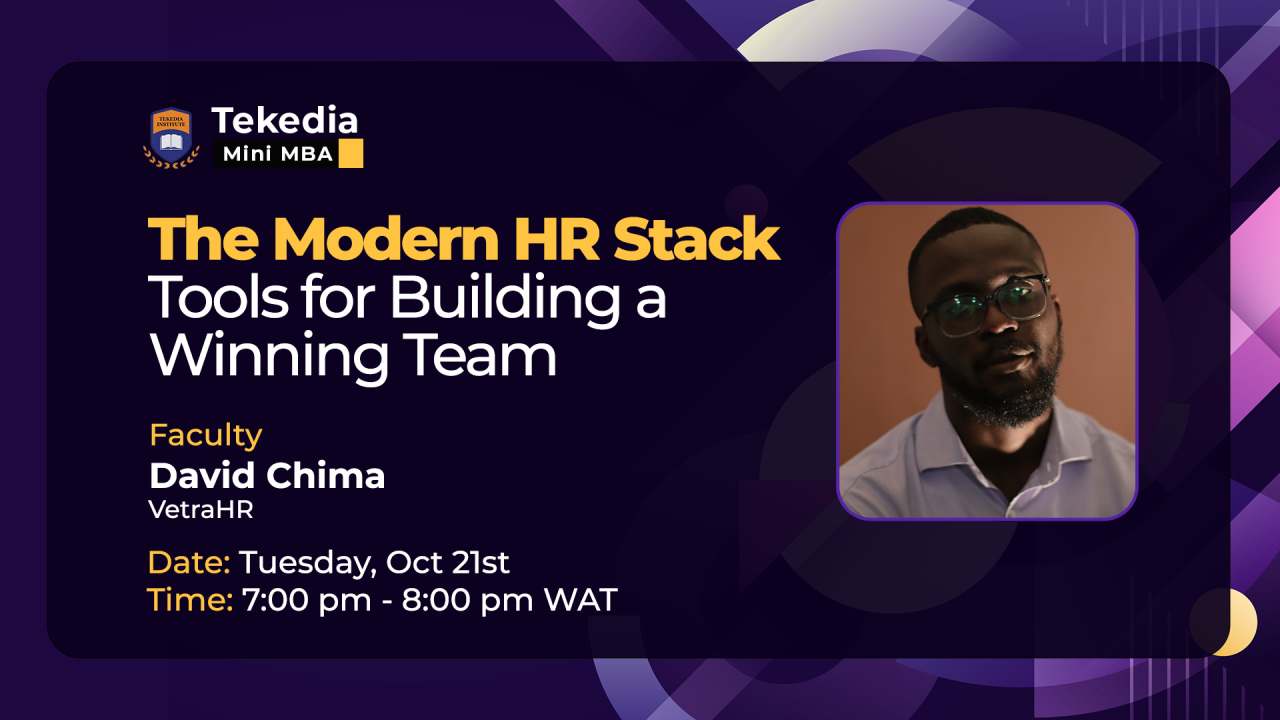
The Modern HR Stack: Tools for Building a Winning Team

0

In today’s accelerated business era, talent is not just a component of production, it is the production itself. The modern Human Resource (HR) stack has evolved beyond payroll and performance reviews into a full ecosystem of digital intelligence. From AI-driven recruitment engines to culture analytics dashboards, the HR stack is now the foundation upon which organizations build enduring competitiveness.

The best teams are not formed by chance; they are architected through systems that optimize how humans and algorithms collaborate. As industries digitize, HR leaders who understand technology’s leverage will become the true builders of institutional capability.

Across the enterprise, tools such as Applicant Tracking Systems (ATS), Learning Management Systems (LMS), performance analytics platforms, and engagement dashboards now create data loops that refine talent decisions. The result is a new order where intuition is augmented by data, and leadership is informed by insights.

Imagine a recruitment process powered by predictive AI that identifies cultural fit, or an LMS that personalizes learning paths based on employee performance signals; this is no longer science fiction, it is the daily playbook of winning organizations. The modern HR stack, therefore, is not about managing people; it is about engineering human potential.

Ultimately, a great HR stack enables what I call the Accumulation of Capability. Every hire, every training, every feedback session compounds to build an institutional muscle that outperforms competitors. Nations and companies grow when knowledge compounds within their people. As machines automate repetitive work, it is the well-equipped HR systems that will unleash creativity, collaboration, and capital in the workforce. To build a winning team in this age, leaders must see HR not as a department, but as the command center of organizational greatness.

Join us at Tekedia Mini-MBA as David Chima, CEO of VetraHR educates on how to build that modern HR Stack.

Tue, Oct 21 | 7pm-8pm WAT | The Modern HR Stack: Tools for Building a Winning Team– David Chima, VetraHR | Zoom link

BlockDAG Crosses $430M Raised with $0.0015 Entry & Upcoming Binance AMA as Bitcoin Cash & Binance Coin Enter Breakout Zones

0

The search for the top altcoins is intensifying as market momentum shifts into high gear. BNB is approaching a key breakout near $1,400, while Bitcoin Cash is recovering toward $580 after a strong rebound.

But BlockDAG (BDAG) is now leading the narrative with $430 million raised and a high-speed testnet already live. Its limited-time TGE code unlocks early access and a prime entry price of $0.0015, making it a standout among presale-stage projects.

As market cycles tighten and institutional attention increases, these altcoins stand out for their positioning, momentum, and roadmap clarity. In a landscape driven by delivery, this group is attracting attention as potential leaders heading into the final quarter of 2025.

BlockDAG’s TGE Code Drives Buying Before Genesis Day Launch

BlockDAG is rapidly gaining recognition among the top altcoins for 2025, especially as its Genesis Day approaches on November 26. With a total of $430 million raised, 27 billion+ coins sold, and over 312,000 holders, the project has established a credible presence even before hitting public markets. Its hybrid Proof-of-Work and DAG-based architecture is built to solve blockchain’s toughest issues, offering both scalability and speed. Currently, buyers can still access BDAG coins at $0.0015 through the TGE code.

Adding to the hype; BlockDAG is going LIVE on Binance for an exclusive AMA this Friday, October 24 at 3 PM UTC, marking one of its most significant global appearances to date. The session will deliver insider updates, roadmap previews, and major insights ahead of Keynote 4: The Launch Note and GENESIS DAY. This is the moment the crypto community will be watching closely as BlockDAG joins Binance to showcase the next phase of its $430M+ ecosystem. Buyers are encouraged to use code “TGE” to maximize earnings before the dashboard upgrade and price rise, with BDAG still priced at $0.0015 in Batch 31. Time is running out, secure your spot before this landmark event drives the next surge of momentum.

With 20,000+ miners sold, 3.5 million+ users on its X1 app, and a functioning testnet running smart contracts, token transfers, and NFT modules, BlockDAG has passed the stage of speculative hype. Its roadmap is clear, the audits from CertiK and Halborn are complete, and its developer base continues to grow. As a fully doxxed project with a global partnership with the BWT Alpine Formula 1® Team, BlockDAG checks all the boxes for what sets a top-tier presale apart in today’s market.

BNB Price Prediction Eyes Breakout Toward $1,400 Range

BNB continues to show strong momentum, currently trading around $1,184 after reaching a local high of $1,247. The BNB price prediction for Q4 2025 places the asset in a $1,000 to $1,400 range, with bullish projections reaching as high as $1,500 or more if whale accumulation and token burns stay consistent.

Confidence in Binance’s ecosystem remains high, driven by the auto-burn mechanism and its dominant position in the centralized exchange market. Analysts note that if BNB can maintain support above $1,000, it could make another push toward reclaiming its all-time high.

While macro factors and global regulation could impact sentiment, BNB remains one of the top altcoins backed by utility and long-term fundamentals. For buyers eyeing strength within established assets, BNB is still holding its ground as a proven performer.

Bitcoin Cash Price Forecast Targets $580 Breakout

Bitcoin Cash (BCH) is stabilizing near $535, recovering from recent lows of $510. Analysts are watching closely as the BCH price forecast aims for a breakout toward $580, with short-term models like CoinCodex suggesting a climb to $692 if momentum holds.

Predictions for late 2025 stretch from $500 to $750, depending on adoption, trading volume, and network activity. More ambitious models see potential highs reaching $1,000 or even $2,000 by 2030, though that would require major improvements in usage and broader DeFi integration.

With active addresses rising and volatility easing, BCH appears to be entering a phase of healthy consolidation. Traders and analysts now see it as one of the top altcoins in recovery mode, quietly rebuilding support ahead of what could be a stronger second leg in the 2025 bull cycle.

Final Thoughts: Three Altcoins, One Clear Early Winner

BNB and Bitcoin Cash are proving their staying power in a market that’s becoming increasingly selective. Both continue to perform well technically and are maintaining attention among traders searching for the top altcoins heading into 2026. BNB is holding near critical resistance, while BCH shows signs of regaining long-term support.

Still, BlockDAG’s token presale progress stands in a category of its own. With $430M raised, a $0.0015 entry price, live testnet activity, and the TGE code giving early buyers priority on Genesis Day, the project isn’t just promising results, it’s delivering them.

For those seeking more than speculative trades, BlockDAG may be the most grounded opportunity on the table right now.

Presale: https://purchase.blockdag.network

Website: https://blockdag.network

Telegram: https://t.me/blockDAGnetworkOfficial

Discord: https://discord.gg/Q7BxghMVyu

Africa’s Fundraising Momentum 2025: Fintech Faces New Rivals as Climate And Energy Contend For Share of Funds

0

As 2025 enters its final quarter, Africa’s start-up ecosystem continues to evolve, reflecting shifting investor priorities and sectoral momentum.

A review of year-to-date (YTD) fundraising data from January to September 2025 by Africa: The Big Deal reveals key trends shaping the continent’s innovation landscape. While Fintech continues to command significant attention, Energy and Climate-focused ventures are rapidly catching up.

Fintech Still Dominates

Fintech remains the dominant force in African start-up fundraising, but its share is narrowing. So far in 2025, the sector has attracted 33% of total funding, equivalent to $725 million out of $2.2 billion, excluding exits. Of this, fintechs accounted for 33% of equity funding and 29% of debt funding.

While this performance underscores fintech’s enduring appeal, the proportion is relatively lower than the historical average. Between 2019 and 2024, fintech captured around 45% of total funding, reaching a peak of 56% in 2021. The last time its share dipped to 33% was in 2020.

Among the 11 start-ups that raised more than $50 million in 2025, five are fintechs which are; Wave, secured $137 million in debt financing, Bokra, raised $59 million (also in debt). Stitch and LemFi completed Series B rounds of $55 million and $53 million, respectively, and Tasaheel (MNT-Halan) issued a $50 million corporate bond.

Energy Sector Surges, Matching Fintech in Funding Share

For the first time since 2019, the energy sector is nearly neck-and-neck with fintech in total funding raised, accounting for another 33% of the total so far in 2025. This is largely driven by a wave of debt financing, with energy start-ups raising $585 million this year, almost as much as all sectors combined in the entirety of 2024.

Four of the top 11 largest fundraisers this year are in the energy space which are, d.light ($300 million debt), Sun King ($156 million debt), Burn ($90 million debt), and PowerGen ($55 million equity).

Energy ventures have been particularly active in the debt market, capturing 63% of all debt raised in 2025, compared to 29% for fintech. However, their share of equity funding remains more modest at 11%, well below fintech’s 33%.

Climate Tech Gains Momentum

The strong performance of the energy sector has also boosted the profile of climate-focused start-ups, which now account for 39% of total funding in 2025, the highest share on record. This reinforces a trend first identified in 2023, as investors increasingly prioritize sustainability and green innovation.

Since 2019, over $5 billion has been invested in African climate tech start-ups, including $2.7 billion in just the past three years. This underscores the sector’s growing maturity and its critical role in Africa’s economic and environmental future.

Debt Financing on the Rise

Another defining feature of 2025 is the continued growth of debt financing in African start-up funding. So far this year, start-ups have raised $935 million in debt, surpassing the totals for both 2022 and 2024, and putting the ecosystem on track to exceed the $1.1 billion record set in 2023.

Debt now represents 42% of all funding raised in 2025, the highest share since 2019. This shift reflects a maturing ecosystem where:

  • Start-ups with stable revenues are increasingly turning to debt.
  • Debt instruments are becoming more available.
  • Energy and infrastructure ventures require larger debt packages.
  • Start-ups are more transparent about their debt financing, and
  • Media reporting on debt rounds has improved.

Since 2019, Africa’s start-ups have raised an estimated $3.9 billion in debt, with energy ventures accounting for nearly half ($1.9 billion). Fintech follows with 32%, and logistics and transportation with 11%. In 2025, the dominance of energy in debt financing has reached new heights, at 63% of all debt raised.

Outlook

The report suggests that while fintech continues to lead Africa’s start-up scene, the funding landscape is becoming more diversified. Energy and climate tech ventures are emerging as major contenders, backed by rising investor confidence in sustainable infrastructure.

Overall, Africa’s start-up funding in 2025 paints the picture of a maturing and diversifying innovation economy, one that balances profitability, sustainability, and long-term impact.

What Is Your Platform Risk?

0

More than 25 startups collapsed or pivoted in Nigeria when WhatsApp banking faded in Nigeria. Yes, that your big bank’s WhatsApp banking solution suddenly disappeared in the channel. That is one of the perils of building on some of these platforms. Simply, one change in the Terms & Conditions can break business models.

Meta which owns WhatsApp has one this week and it has to do with using WhatsApp to distribute AI agents: “Starting next year, Meta will ban some chatbots from WhatsApp… Meta said businesses using AI to serve customers on the platform won’t be affected. So, for example, a travel company won’t be barred from running a bot for customer service on the app. Rather, the move aims to prevent companies, besides Meta, from using WhatsApp to distribute AI agents. ” -LinkedIn News.

In other words, Meta wants to keep WhatsApp for the distribution of only Meta’s AI agents! So, OpenAI, Perplexity, etc must find new ecosystems to distribute their agents. And that brings to my question: “What Is Your Platform Risk?”