DD
MM
YYYY

PAGES

DD
MM
YYYY

spot_img

PAGES

Home Blog Page 288

BlockDAG Rises as 2025’s 1000x Crypto While Kaspa and Celestia Lose Steam Ahead of the Big Binance AMA Event

0

Recent updates around the Celestia (TIA) price movement and Kaspa (KAS) price outlook show how quickly momentum can fade in crypto. Celestia remains near the $1 range after months of steady decline, while Kaspa’s predictions suggest potential dips toward $0.04, even with strong community support. Both stories show the same pattern: advanced technology alone isn’t enough without strong visibility. But what happens when a project already has the global stage before its full release?

That’s where BlockDAG (BDAG) enters. With its multi-year partnership with the BWT Alpine F1® team, it’s pushing crypto beyond online circles and into worldwide recognition. The combination of speed, precision, and engineering excellence has made BlockDAG the best crypto for 2025, supported by unmatched global exposure and growing credibility.

How BlockDAG’s F1® Alliance Builds Global Presence and Market Trust
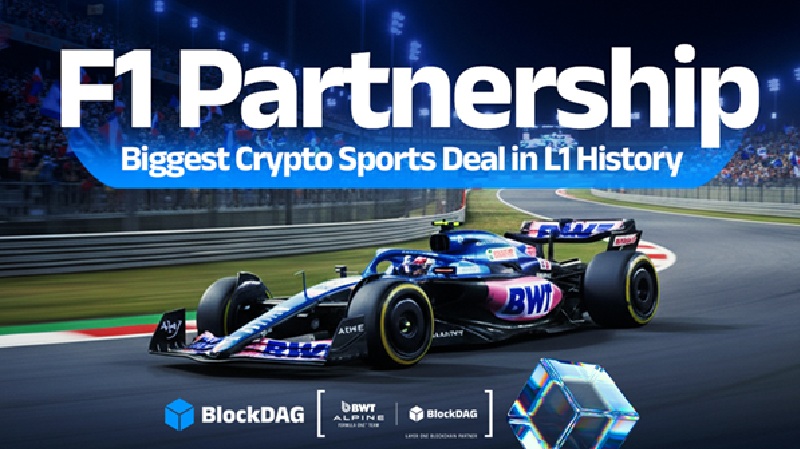
BlockDAG isn’t seeking attention; it’s already part of a worldwide audience. The partnership with the BWT Alpine F1® team has positioned it alongside leading names like Rolex and Pirelli, giving it a strong global presence across Grand Prix events. Each race weekend places BlockDAG in front of millions, tying its image to innovation, reliability, and high performance. This is not a short campaign but a lasting alliance that connects blockchain technology with one of the most-watched sports on the planet.

This visibility is one of the reasons many now regard BlockDAG as the best crypto for 2025. It bridges technology and real-world awareness, combining innovation with large-scale recognition. The F1® partnership ensures that BlockDAG’s story is not just told within the crypto space but seen by a global audience, building lasting credibility through association with excellence.

The figures behind BlockDAG show how far it has progressed. The presale has raised over $431 million, selling more than 27 billion BDAG coins across 31 batches. With over 312,000 holders worldwide and a presale price of $0.0015, the project is heading toward a public launch price of $0.05. Analysts believe it holds potential for 1000x growth, supported by real technology and a strong community base.

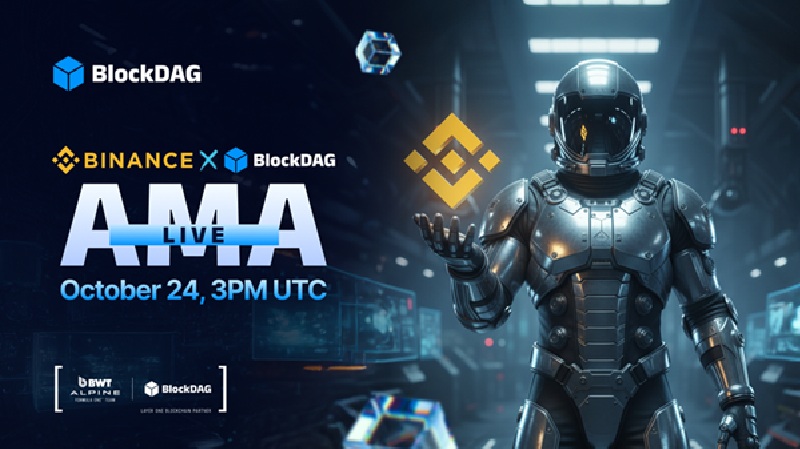
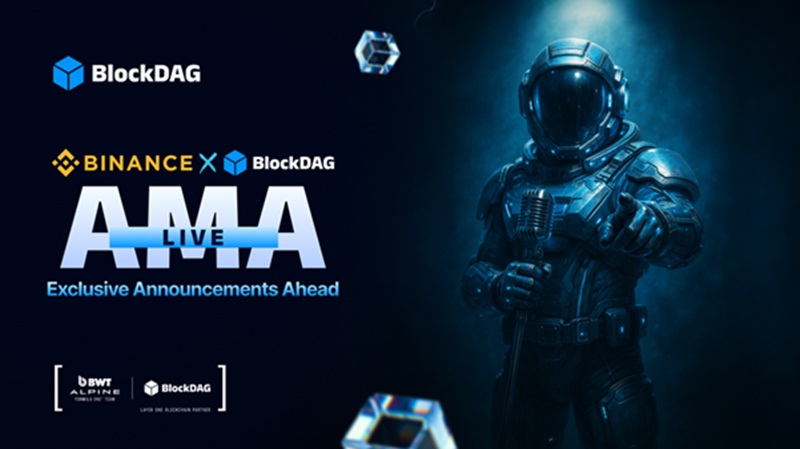
Adding to the excitement, BlockDAG will host an exclusive AMA on Binance this Friday, October 24, at 3 PM UTC, featuring insider updates, new roadmap details, and announcements ahead of Keynote 4: The Launch Note and GENESIS DAY.

With global partnerships, massive presale success, and verified progress, BlockDAG continues to make its case as the best crypto for 2025, showing what happens when real innovation meets worldwide visibility.

Kaspa Outlook Points to a Careful Climb Ahead

The latest Kaspa (KAS) forecast shows a cautious outlook for the short term. Some predictive models expect the price to fall near $0.04097 by mid-November 2025, marking about a 24.6% drop from current levels. Projections for April 2026 show a slight recovery to around $0.04472, hinting at limited near-term growth.

Still, the longer-term view paints a more hopeful picture. Certain forecasts suggest that KAS could reach $0.125 by late 2025 if overall sentiment improves. Some analysts even mention a possible climb to $0.19 by 2030 in a strong market environment. While these targets sound promising, they depend on broader adoption, steady progress in development, and improved market conditions to materialize.

Celestia Maintains Balance While the Market Waits for Direction

The Celestia (TIA) trend remains stable through mid-October 2025, with daily prices fluctuating around $1.00 to $1.05. On October 19, it closed near $1.019, staying within a tight range. This narrow movement suggests traders are waiting for a new trigger before taking decisive positions.

Looking forward, some models predict that Celestia (TIA) could dip to $0.74 by mid-November 2025 if momentum weakens. On the other hand, a few optimistic projections indicate potential upside, targeting values near $2.40 under favorable market conditions. For now, Celestia remains in a holding phase, balanced but ready to react once sentiment or adoption provides a clear direction.
From Quiet Markets to BlockDAG’s Rapid Momentum

Both the Celestia (TIA) trend and the Kaspa (KAS) forecast reveal a cautious mood in the market. Celestia’s price steadies around the $1 mark, waiting for stronger drivers, while Kaspa’s short-term outlook shows minor pullbacks before any major recovery. These signals highlight how uncertain performance can be when projects rely mainly on speculation without broad awareness.

That’s where BlockDAG stands apart. Its partnership with the BWT Alpine Formula 1® team gives it unmatched global visibility and credibility that most blockchain projects lack. Supported by massive presale success and rising recognition, BlockDAG has already raised over $431 million, sold more than 27 billion coins, and is now in batch 31. With this level of momentum and exposure, it is being widely seen as the best crypto for 2025, driving excitement and curiosity across the global crypto space.

Presale: https://purchase.blockdag.network

Website: https://blockdag.network

Telegram: https://t.me/blockDAGnetworkOfficial

Discord: https://discord.gg/Q7BxghMVyu

U.K. Regulator Grants Apple and Google “Strategic Market Status,” Signaling Tighter Oversight of Mobile Platforms

0

The United Kingdom’s Competition and Markets Authority (CMA) has formally designated Apple and Google as holding “strategic market status” (SMS) within their respective mobile ecosystems, marking one of the most consequential regulatory actions in recent years aimed at curbing the dominance of the two companies in the smartphone sector.

The designation, announced on Wednesday, covers the companies’ operating systems, app stores, browsers, and browser engines. According to the CMA, the new classification grants it expanded powers to impose “targeted interventions” designed to foster competition and prevent what it described as entrenched market control.

The announcement follows months of investigation and consultation involving more than 150 stakeholders, including app developers, businesses, consumer groups, and both companies themselves. The regulator said its findings revealed that Apple and Google possess “substantial, entrenched market power and a position of strategic significance in their respective mobile platforms.”

The CMA’s decision stems from an inquiry launched in January 2025 into how Apple’s iOS and Google’s Android ecosystems shape competition in the U.K. mobile sector. In July, the regulator had already signaled that both companies could qualify for SMS under Britain’s Digital Markets, Competition and Consumers Act — a law passed earlier this year to give the CMA more authority to scrutinize powerful digital platforms.

The designation is not a finding of wrongdoing but rather a legal classification that enables the regulator to intervene where it identifies anti-competitive practices.

“This allows the regulator to consider proportionate, targeted interventions to ensure that mobile platforms are open to effective competition,” the CMA said. It added that the framework aims to guarantee that “consumers and businesses that rely on Google and Apple can have confidence that they are treated fairly.”

Will Hayter, executive director for digital markets at the CMA, said in a statement that Apple and Google’s mobile ecosystems underpin significant portions of the U.K. digital economy and have far-reaching effects on innovation.

“Apple and Google’s mobile platforms are used by thousands of businesses right across the economy to market and sell products and services to millions of customers, but the platforms’ rules may be limiting innovation and competition,” Hayter said.

The CMA’s 2025 investigation reaffirmed that both Apple and Google exercise deep control over how apps are distributed, monetized, and accessed. According to the regulator, users of either company’s mobile ecosystem are “unlikely to switch between Apple and Google’s mobile platforms once they have adopted the ecosystem of their choice.”

That lack of mobility, the CMA said, has entrenched the companies’ power. Both platforms effectively require app developers and businesses to distribute applications through their respective app stores — Apple’s App Store and Google’s Play Store — which serve as the exclusive gateways to mobile users.

In addition to app distribution, the CMA examined browser engines and search integration, finding that Apple and Google each maintain ecosystem-wide influence through default settings and preinstalled software. The regulator’s report also highlighted how both companies’ control extends beyond mobile phones into wearables, home devices, and connected cars, creating an “interlocking web of dependencies” that limits user choice.

The CMA further concluded that the rapid rise of artificial intelligence would not meaningfully alter this dominance in the near term. It stated that “new technologies, like AI, were unlikely to eliminate Apple or Google’s market power over the five-year designation period.”

Potential Regulatory Actions

The CMA gains the ability to impose legally binding conduct requirements by designating Apple and Google with SMS. These could include measures to increase interoperability between platforms, lower barriers for rival app stores, or limit the companies’ ability to prioritize their own products and services.

The regulator did not specify which actions it would take next, emphasizing that any interventions would be “proportionate” and “targeted.” The CMA added that its approach will focus on ensuring that competition and innovation thrive without “undermining the user experience or security.”

However, the decision marks the most assertive move yet under the U.K.’s new digital markets regime, which aims to create a more level playing field for app developers, advertisers, and consumers. It follows similar efforts by regulators in the European Union, where the Digital Markets Act (DMA) has already forced Apple and Google to make technical and policy changes to their mobile ecosystems.

Apple and Google Push Back

Both Apple and Google have expressed disagreement with the CMA’s decision, arguing that the designation could harm consumers and hinder the rollout of new products and services in the U.K.

Apple, in a statement, warned that the ruling could slow down access to key innovations for British users. The company said the decision could mean that users in the U.K. would lose access to getting new features in a timely fashion, referencing its recent delay in releasing Apple Intelligence features to U.K. users pending regulatory reviews.

Google also challenged the rationale behind the regulator’s findings. The company said it “didn’t see the rationale for the decision,” suggesting that its Android platform already provides users and developers with extensive freedom and competition.

Both companies are expected to engage in further discussions with the CMA as it develops specific obligations tied to the SMS designation.

The CMA’s move underlines a global trend of antitrust regulators stepping up oversight of large technology platforms. In recent years, the European Union, the United States, and Australia have each taken steps to examine the dominance of Apple and Google in mobile software, payments, and advertising.

In the U.K., the CMA’s action signals an intention to align with the EU’s more aggressive stance while carving out its own approach under post-Brexit competition law. The regulator’s Digital Markets Unit, which leads these investigations, now has the power to impose fines of up to 10% of global turnover for violations of conduct requirements once they are established.

Analysts believe the SMS designation could pave the way for structural remedies, including opening Apple’s iOS to third-party app stores or relaxing restrictions on browser engines. However, the CMA has maintained that its first priority is to ensure fairness and transparency, not to dismantle existing ecosystems.

Ethereum Foundation Faces Backlash Over Low Pay for Core Devs

0

A long-simmering tension within the Ethereum ecosystem erupted into public view when Péter Szilágyi, the former lead developer of Go-Ethereum (Geth)—Ethereum’s primary execution client—resurfaced a private letter he sent to Ethereum Foundation (EF) leadership in May 2024.

In it, Szilágyi detailed his frustrations with the Foundation’s compensation practices, centralization dynamics, and overall treatment of key contributors. This revelation quickly snowballed, drawing sharp criticism from Polygon CEO Sandeep Nailwal and others, who accused the EF of undervaluing builders while preaching decentralization.

The Resurfaced Letter: Szilágyi’s $625K Revelation Szilágyi’s letter, now publicly shared on GitHub, paints a picture of disillusionment from one of Ethereum’s longest-serving developers. Over his six-year tenure as Geth lead roughly 2018–2024, Szilágyi earned a total of approximately $625,000 before taxes—no raises, benefits, or incentives included.

This averages out to about $104,000 per year, which he described as 50–60% below market rates for similar roles in the private sector. “The Foundation took away life-changing money from every single one of their employees over the past decade… Nobody’s arguing against the upside of being a successful founder, but the Foundation—led by Vitalik—went above and beyond to avoid paying their people fairly.”

He alleged that Ethereum’s decisions are controlled by a tight “inner circle” of 5–10 people, with co-founder Vitalik Buterin exerting “complete indirect control.” This setup, he argued, creates “perverse incentives” and risks “protocol capture” by underpaying passionate contributors who are then forced to seek funding elsewhere.

Szilágyi called himself a “useful fool” in a “lose-lose situation,” either staying silent as Geth’s reputation suffers or speaking out and damaging his own standing. He noted Geth as the “oldest team in the ecosystem apart from Buterin himself,” yet feeling unappreciated.

Szilágyi was reportedly fired from the EF in June 2025, which he linked to these tensions. The letter’s resurfacing has sparked widespread debate on X, with users calling the pay “insanely low” for maintaining the backbone of a $480 billion network.

“If someone’s not complaining that they are paid too little, then they are paid too much.” Polygon CEO’s Call-Out: “Questioning My Loyalty” The letter hit a nerve with Sandeep Nailwal, co-founder and CEO of Polygon Foundation, who responded on X with a lengthy thread expressing his own frustrations.

Nailwal revealed that Polygon—often positioned as an Ethereum Layer-2 scaler—has received “zero direct support” from the EF or Ethereum’s core tech (CT) community, and in fact faced opposition. Despite this, he maintained a “moral loyalty” to Ethereum, even at the cost of “billions of dollars in Polygon’s valuation.”

Polygon PoS is “effectively hinged” on Ethereum and acts as a major fee-paying “customer,” yet it’s not embraced as a true L2. He contrasted this with how successes like Polymarket are hailed as “Ethereum wins,” while Polygon is sidelined.

By aligning with Ethereum instead of declaring independence as a Layer-1, Polygon sacrificed 2–5x higher potential valuation compared to Hedera Hashgraph. Major contributors are forced to question or even regret their allegiance. Nailwal tagged this as “mind-boggling” and called for the EF to “embrace” rather than “shun” allies.

Polygon Labs CEO Marc Boiron echoed this, stating Polygon is a “customer of Ethereum” that deserves better treatment. The outburst has fueled speculation about Polygon pivoting toward rivals like Solana, with Solana co-founder Raj Gokal and former strategy head Austin Federa suggesting collaboration.

DeFi Voices and Vitalik’s Response

The drama has amplified calls for EF reform: Andre Cronje: Blasted the EF for providing “zero support or funding” to core devs while sitting on a massive treasury recently used to sell $43M in ETH. Cronje slammed the Foundation for failing to scale Ethereum despite contributions from projects like his.

Ethereum’s price dipped to around $3,871 on October 21, with $284M in ETF outflows amid the noise. Broader concerns include talent drain to higher-paying chains and risks to Ethereum’s decentralization narrative.

Vitalik Buterin responded measuredly on X, praising Polygon’s innovations (e.g., zero-knowledge EVM investments and AggLayer) and Nailwal’s philanthropy, without directly addressing pay or control issues. He positioned it as a call for unity: “Ethereum may be decentralized, but Vitalik absolutely has complete indirect control over it” quoting Szilágyi, but framing positively.

This isn’t isolated—earlier 2025 saw similar whispers about EF underpay (e.g., core devs at ~$150K/year vs. $360K market offers). Critics argue the non-profit model relies too heavily on “value alignment” idealism, breeding resentment.

If unaddressed, this could accelerate shifts to Solana, new L1s, or even Polygon independence. For now, it’s a stark reminder: Decentralization starts with fair incentives. Ethereum’s insiders are speaking—will the Foundation listen?

Barclays Lifts Profit Target and Launches £500m Buyback Amid Scandal Provisions and Investment Bank Weakness

0

Barclays Plc on Wednesday surprised investors with the announcement of a £500 million ($670 million) share buyback and an upgrade to its key profitability target for 2025, as confidence in its cost-cutting measures and steady income outweighed fresh provisions tied to a motor finance mis-selling scandal and a weak showing from its investment bank.

The British lender said it now expects to achieve a return on tangible equity (RoTE) above 11% this year, rather than merely reaching that figure, citing “better-than-expected income and faster implementation of cost-saving plans.” Barclays will also shift to quarterly buyback announcements, signaling a more aggressive approach to returning capital to shareholders.

Shares in the bank rose more than 4% in early London trading as investors welcomed the buyback and improved profitability outlook.

“We have been robustly and consistently generating capital for our shareholders consecutively over the last nine quarters,” CEO C.S. Venkatakrishnan said, noting that the progress gave the bank the confidence to accelerate plans to distribute excess capital.

Scandal and Setbacks Still Shadow Results

Barclays set aside another £235 million to cover potential costs from the motor finance mis-selling scandal, which has been under review by Britain’s Financial Conduct Authority (FCA). The issue concerns allegations that UK banks, including Barclays, allowed unfair commissions that inflated costs for car buyers before 2021.

The bank also booked a £110 million charge related to the collapse of U.S. lender Tricolor, one of several high-profile bankruptcies that have raised concerns about banks’ exposure to the fast-growing private credit market—a largely unregulated sector where lending has surged as traditional banks pulled back.

Barclays reported third-quarter pretax profit of £2.1 billion, a 7% decline from the same period a year earlier, aligning with analysts’ forecasts. However, Hargreaves Lansdown senior equity analyst Matt Britzman said that if the motor finance provision were excluded, profits would have been 13% ahead of expectations.

“Barclays’ latest results show a bank quietly outperforming despite headline noise,” Britzman said, suggesting the bank’s core operations remain resilient even as legacy issues weigh on sentiment.

Investment Bank Lags Behind Wall Street

Despite the overall positive tone, Barclays’ investment banking division underperformed compared to its U.S. rivals. Income from the unit grew 8% year-on-year, supported by a 15% rise in global markets revenue, but deal-making fees fell 2%, even as American peers such as JPMorgan, Goldman Sachs, and Morgan Stanley reported double-digit gains.

The decline pushed Barclays six spots down to 14th place in the global mergers and acquisitions ranking for the quarter, according to LSEG data, underscoring its waning influence in global deal-making. For the year to date, Barclays ranks seventh, behind six U.S.-based investment banks.

Venkatakrishnan attributed the shortfall to timing rather than strategic missteps. “The quarter was dominated by a few large deals that we were not fortunate enough to be on,” he told reporters, rejecting suggestions that Barclays was underinvesting in the unit.

A brighter spot emerged in the U.S. consumer business, where income surged 19%, driven by pricing adjustments and the integration of the General Motors co-branded credit card portfolio, which Barclays acquired in 2021.

With recent corporate defaults rattling investors, Barclays moved to reassure markets about its private credit exposure, which totals £20 billion, or roughly 6% of its loan book. The bank said 70% of that exposure is concentrated in the United States.

Venkatakrishnan emphasized that Barclays had taken a conservative approach to underwriting and disclosed that the bank had no exposure to First Brands, an auto-parts manufacturer that recently filed for bankruptcy.

We turned down doing business with it because of concerns about its financial projections, he said.

Cost Discipline and Investor Confidence

Barclays’ latest results suggest the lender’s ongoing cost-reduction program—announced earlier this year—is starting to pay off. Analysts view the shift to quarterly buyback updates as an attempt to boost investor confidence amid a difficult operating environment marked by weak deal activity, tighter regulatory scrutiny, and exposure concerns across global credit markets.

While its investment bank remains under pressure, the lender’s diversified business model—including retail, credit card, and consumer lending arms—continues to provide resilience.

Venkatakrishnan reaffirmed his focus on capital efficiency and shareholder returns, calling 2025 a year of “operational discipline and measured optimism” for the group.

Barclays’ latest move comes as European banks face pressure to deliver more consistent shareholder payouts to compete with U.S. peers, which have benefited from stronger capital markets activity and higher interest rates.

For Barclays, the combination of improved income, controlled costs, and a strong capital position appears to have given investors enough reason to stay on board—even as the shadows of past scandals and uncertain global credit conditions linger.

Solana Expands, ZCash Rallies 12%, and BlockDAG’s TGE Code Offers a Strategic Edge Before Binance AMA

0

October’s market action shows contrasting moves but a clear trend innovation is driving leadership again. Solana (SOL) continues to accelerate with new integrations, while ZCash (ZEC) is reclaiming attention through its bridge expansion and rising private transaction metrics. Each project is gaining momentum by solving structural challenges, yet one new player, BlockDAG (BDAG), is transforming timing itself into a measurable market advantage.

The presale stage of BlockDAG (BDAG) is not about waiting for opportunity; it’s about earning it through strategy. With its TGE code, BDAG’s traders gain more than just discounted pricing; they secure ranked early access. For analytical traders comparing the top crypto to buy right now, that timing advantage is an uncommon asset in a market obsessed with speed.

BlockDAG’s TGE Code Creates Measurable Advantage

In a field where milliseconds matter, BlockDAG has turned its launch into a controlled system of timing and reward. The TGE code enables participants to lock in the final presale price of $0.0015 while also determining the exact order of airdrop access.

Those ranked 1–300 will receive their coins instantly once trading begins, while others will follow in phases across 24 hours. This ranking mechanism creates a practical, transparent structure that replaces chaotic coin launches with predictable distribution. It’s a system designed for serious participants who value strategy over chance.

The numbers validate its success. Nearly $430 million has already been raised, with over 27 billion BDAG coins sold to 312,000+ holders worldwide. The roadmap targets $600 million before public trading, and progress toward that goal has been steady.

BlockDAG will also go LIVE on Binance for an exclusive AMA this Friday, October 24, at 3 PM UTC, a pivotal event offering insider updates, roadmap insights, and pre-launch details ahead of Keynote 4: The Launch Note and Genesis Day.

With its hybrid Proof-of-Work + DAG architecture capable of 2,000–15,000 TPS, EVM compatibility, and verified audits from CertiK and Halborn, the technology behind BDAG matches its strategic vision. This combination of transparency, scalability, and early access has positioned BlockDAG among the top crypto to buy right now for those who measure opportunity in precision, not speculation.

Solana’s Firedancer Upgrade Strengthens Its Core

Solana (SOL) continues to lead in network efficiency, and recent developments have significantly improved its scalability outlook. The Firedancer validator client, developed by Jump Crypto, is being hailed as a critical upgrade to boost throughput and eliminate past bottlenecks.

At the same time, Uniswap’s integration with Solana coins through the Jupiter Ultra API has opened a new gateway to over one million assets, broadening liquidity access and trading options. As a result, SOL has maintained prices near $185–$186, with modest daily gains that reinforce trader confidence.

The broader picture shows Solana maturing into a multi-chain hub for both DeFi and meme-based assets. Analysts note that transaction volume, developer participation, and network resilience continue to strengthen its position. Firedancer’s introduction marks a technical turning point if fully implemented as planned, Solana could consolidate its lead as one of the most efficient networks in the market.

ZCash Price Outlook: Renewed Optimism with Caution

The ZCash (ZEC) market analysis reflects a quiet but notable comeback. Trading near $214, ZEC has rebounded approximately 12%, supported by its new Solana bridge, Zolana, which enables seamless movement of ZEC across Solana-based decentralized exchanges such as Raydium.

This integration improves liquidity and access while maintaining ZCash’s long-standing privacy functionality. Around 27% of ZEC now sits in shielded addresses, indicating continued user demand for confidentiality in transactions. Institutional interest has also increased, with inflows from Grayscale and other funds signaling renewed trust in ZEC’s role within privacy-focused ecosystems.

Analysts are watching the $200–$225 support zone, expecting potential movement toward $300 if buying strength sustains. While technical indicators hint at mild overbought conditions, ZEC’s expanding use cases through Solana are helping it shed past isolation. For data-driven traders, ZCash’s steady rebound reinforces its place among the top crypto to buy right now, blending legacy technology with new interoperability.

Timing, Strategy, and Technology Drive Gains

The latest Solana (SOL) and ZCash (ZEC) developments show strong progress one in scalability, the other through privacy and cross-chain functionality. Both continue to demonstrate the kind of adaptive innovation that attracts institutional capital and technical developers.

However, BlockDAG introduces a layer of structured advantage unmatched by either. Its TGE code not only rewards participation but quantifies access to a precise, measurable edge that appeals to both strategic traders and long-term traders.

For those evaluating the top crypto to buy right now, the takeaway is clear. Solana and ZCash show momentum within their respective niches, but BlockDAG is building momentum around the structure itself. Its rank-based entry system transforms participation into priority, a concept that aligns timing, fairness, and technology into one practical model for growth.


Presale: https://purchase.blockdag.network

Website: https://blockdag.network

Telegram: https://t.me/blockDAGnetworkOfficial

Discord: https://discord.gg/Q7BxghMVyu