DD
MM
YYYY

PAGES

DD
MM
YYYY

spot_img

PAGES

Home Blog Page 29

Changpeng Zhao Warns Against FOMO and Reveals the Path to Lasting Wealth

0

Changpeng Zhao, widely known as CZ and the founder of Binance, believes that building long-term wealth is far less about chasing the next hot investment than mastering a simple strategy: patience.

In a financial world dominated by headlines, social media hype, and the fear of missing out (FOMO), Zhao argues that investors who consistently think long-term are far more likely to succeed than those who constantly jump from one trend to another.

His philosophy is rooted in a straightforward principle: invest in assets you understand, hold them through market cycles, and allow time to work in your favor.

While many investors focus on making quick profits, Zhao has repeatedly emphasized that true wealth is often created by staying invested rather than trying to predict every market movement.

This mindset has become particularly relevant in the cryptocurrency industry, where prices can experience dramatic swings within days or even hours. The crypto market has produced extraordinary success stories, but it has also exposed the dangers of speculation.

Many retail investors buy assets after prices have already surged, only to panic and sell during market downturns. According to Zhao, this emotional cycle is one of the biggest obstacles to financial success. Investors who react to every price fluctuation often end up locking in losses.

While those with conviction and a long-term outlook are better positioned to benefit when markets recover. Zhao’s investment philosophy also stresses the importance of continuous learning.

Before committing capital, investors should understand the technology, business model, or economic fundamentals behind an asset. Whether investing in cryptocurrencies, stocks, or traditional businesses, knowledge reduces emotional decision-making and increases confidence during periods of uncertainty.

Informed investors are less likely to be influenced by rumors, market manipulation, or sensational headlines. Another key aspect of Zhao’s strategy is risk management. Long-term investing does not mean ignoring risk or investing recklessly.

Instead, it involves allocating only what one can afford to invest, maintaining diversification, and avoiding excessive leverage.

History has shown that highly leveraged positions can generate rapid gains during bull markets but can also lead to devastating losses when markets reverse. Sustainable wealth, Zhao suggests, comes from disciplined capital management rather than aggressive speculation.

His message also reflects one of the oldest principles in finance: compounding. Investors who remain committed over many years allow both investment returns and reinvested gains to accumulate.

While daily price movements often appear significant, they become less meaningful when viewed over a decade or longer. This long-term perspective encourages investors to focus on broader trends such as technological innovation, blockchain adoption, artificial intelligence, and the continued digitization of the global economy.

Beyond cryptocurrency, Zhao’s advice applies to virtually every asset class. Legendary investors such as Warren Buffett have similarly argued that patience is one of the greatest competitive advantages in investing.

Markets will inevitably experience corrections, recessions, and periods of uncertainty, but history has consistently rewarded disciplined investors who remain focused on their long-term objectives.

As digital assets continue to mature and institutional adoption expands, Zhao believes that investors should resist the temptation to chase short-term excitement.

Instead, they should develop a clear investment thesis, remain disciplined during market volatility, and allow time to maximize the value of quality investments. Zhao’s message is remarkably simple yet powerful.

Building lasting wealth is rarely about finding a secret formula or perfectly timing the market. It is about understanding what you own, managing risk responsibly, staying patient during difficult periods, and allowing long-term growth to compound over time.

In an era where instant gratification often dominates financial decision-making, that simple strategy may prove to be one of the most valuable lessons any investor can learn.

Kevin O’Leary Says China’s Rise Will Ultimately Drive Deeper North American Economic Integration

0

Venture capitalist and “Shark Tank” investor Kevin O’Leary believes strategic competition with China, particularly in artificial intelligence and advanced technologies, will become the defining force pushing the United States, Canada and Mexico toward closer economic integration, even as political tensions and trade disputes persist.

Speaking in a video posted Sunday on X and Instagram, the Canadian businessman noted that concerns over China’s growing technological and industrial capabilities would outweigh political disagreements across North America, making regional cooperation an economic imperative.

“There is only one thing that would drive economic integration in North America: the fear of China,” O’Leary said.

He said the race for leadership in artificial intelligence, advanced technology, military capabilities and power generation would encourage Washington, Ottawa and Mexico City to strengthen economic ties in order to remain globally competitive.

“As the race for AI, energy, and critical infrastructure accelerates, economic reality will outweigh political disagreements because the United States, Canada, and Mexico are stronger when they work together,” O’Leary wrote in the caption accompanying the video.

He outlined what he sees as complementary strengths across the three economies.

“Canada has the energy and critical minerals, the United States has the scale and innovation, and Mexico plays a vital role in the North American economy,” O’Leary said. “In the long run, cooperation is not just good policy, it’s an economic necessity.”

His comments come as governments and corporations increasingly view artificial intelligence as a strategic industry with implications extending beyond commercial competition to national security, economic resilience and geopolitical influence. AI development depends heavily on access to advanced semiconductors, large-scale computing infrastructure, reliable electricity supplies and critical minerals, areas where North American cooperation could provide competitive advantages.

Canada possesses abundant reserves of minerals such as nickel, cobalt and graphite that are essential for batteries and semiconductor supply chains, while the United States remains home to many of the world’s leading AI companies and cloud computing providers. Mexico has become an increasingly important manufacturing hub, benefiting from nearshoring as companies diversify production away from Asia.

O’Leary’s remarks echo concerns voiced by several prominent technology and business leaders about China’s accelerating progress across strategic industries.

In a recent interview with The Economist, SpaceX Chief Executive Elon Musk said China already generates significantly more electricity than the United States and argued that sufficient computing capacity could allow the country to become the global leader in artificial intelligence.

Leading U.S. AI developers have also highlighted the narrowing technology gap. OpenAI and Anthropic executives have acknowledged that Chinese AI companies are making rapid advances in large language models, while Moonshot AI’s recently introduced Kimi K3 model has attracted attention for demonstrating capabilities approaching those of leading frontier AI systems.

Competition extends beyond AI. Executives across the automotive sector, including Ford CEO Jim Farley, Rivian CEO RJ Scaringe and Uber CEO Dara Khosrowshahi, have repeatedly praised Chinese automakers for their speed, manufacturing efficiency and competitiveness in electric vehicles, underscoring China’s growing influence across advanced manufacturing industries.

Yet O’Leary’s vision of greater North American integration comes at a time of heightened trade friction within the region.

President Donald Trump recently imposed a new round of tariffs, including 50% duties on some Canadian goods, adding to trade tensions between two of North America’s closest economic partners. The measures have complicated commercial relations even as policymakers continue to emphasize supply chain security and domestic manufacturing.

The contrast highlights a central challenge facing North America: balancing short-term political disputes with long-term interests. While tariffs and trade disagreements can disrupt cross-border commerce, many business leaders argue that competition with China is creating a stronger incentive for regional cooperation in sectors such as semiconductors, clean energy, artificial intelligence and critical minerals.

O’Leary has been an outspoken advocate for expanding AI infrastructure across North America. Through O’Leary Ventures, he is developing large-scale data center projects in Utah and Canada, noting that increasing computing capacity will be essential to maintaining the region’s competitiveness in artificial intelligence, even as some projects face opposition from local communities over their energy consumption and environmental impact.

His view reflects that of policymakers and investors who increasingly see AI infrastructure, energy production and supply chain security as interconnected pillars of economic competitiveness.

Gold Climbs Above $4,100 as Easing Middle East Tensions Shift Market Focus

0

Gold has climbed back above $4,100 per ounce, regaining momentum after a brief pause in hostilities between the United States and Iran reduced immediate fears of a broader regional conflict.

The temporary easing of geopolitical tensions also pushed oil prices lower, helping calm concerns that a fresh energy shock could reignite global inflation.

Even so, investors continue to view gold as one of the world’s most reliable safe-haven assets, demonstrating that demand for the precious metal remains resilient despite improving market sentiment.

The relationship between gold, oil, and geopolitical events has long played a crucial role in shaping global financial markets. During periods of conflict in major oil-producing regions, crude oil prices typically rise because traders anticipate disruptions to global energy supplies.

Higher oil prices often translate into increased transportation and production costs, fueling inflation across economies. When inflation expectations increase, investors frequently seek protection by purchasing gold, which has historically preserved its value during periods of economic uncertainty.

The recent pause in fighting between the United States and Iran temporarily eased those concerns. As fears of supply disruptions faded, oil prices declined, reducing expectations that inflation would accelerate further in the coming months.

Equity markets responded positively, while bond yields stabilized, reflecting renewed confidence that global economic conditions may remain relatively steady if diplomatic efforts continue.

Despite the decline in oil prices, gold managed to extend its gains instead of retreating sharply. This highlights an important shift in investor psychology.

Market participants are increasingly looking beyond short-term geopolitical developments and focusing on broader structural risks facing the global economy. One of the biggest drivers supporting gold remains uncertainty surrounding monetary policy.

Investors continue to monitor signals from major central banks, particularly the U.S. Federal Reserve, regarding future interest rate decisions. While easing inflation may provide policymakers with greater flexibility, persistent concerns over government debt.

Slowing economic growth, and financial market volatility continue to encourage diversification into hard assets like gold. Another important factor supporting gold is continued demand from central banks around the world.

Over the past several years, many countries have increased their gold reserves as part of broader efforts to diversify away from heavy dependence on the U.S. dollar. This steady institutional buying has created a strong foundation for gold prices, even during periods when geopolitical risks temporarily subside.

Additionally, investors remain cautious about the long-term outlook for global growth. Ongoing trade disputes, technological competition, rising sovereign debt levels, and political uncertainty across multiple regions continue to create an environment where safe-haven assets remain attractive.

Gold benefits from this backdrop because it carries no default risk and has maintained its purchasing power across centuries of economic cycles.

The recent movement above $4,100 also reflects strong market momentum.

Technical traders often interpret new highs as confirmation of sustained bullish sentiment, attracting additional investment from both institutional and retail participants.

Exchange-traded funds backed by physical gold, along with futures markets, continue to experience robust activity as investors position themselves for further price appreciation.

Gold’s trajectory will likely depend on several interconnected factors, including the durability of peace efforts in the Middle East, the direction of oil prices, inflation data, and future central bank policy decisions.

If geopolitical tensions re-emerge or inflation proves more persistent than expected, gold could receive additional support. Sustained diplomatic progress and stronger global economic growth could reduce some demand for safe-haven assets, although structural factors may continue to underpin prices.

Gold’s return above $4,100 underscores its enduring role as a cornerstone of global financial markets. Even as immediate geopolitical risks ease and oil prices retreat, investors continue to rely on the precious metal as a trusted store of value amid an increasingly complex and uncertain economic landscape.

Hot Inflation, Rising Oil Prices, and Tariffs Put Pressure on the Federal Reserve

The U.S. Federal Reserve is set to announce its latest interest-rate decision on Wednesday, and this meeting has become one of the most closely watched in recent years.

While investors always pay close attention to the central bank’s policy decisions, the gap between what economists expect and what financial markets are pricing in has rarely been this wide.

The divergence reflects growing uncertainty over the direction of inflation, economic growth, and the potential impact of geopolitical developments on the U.S. economy.

According to a Reuters survey, all 104 economists questioned expect the Federal Reserve to leave interest rates unchanged. Their consensus is based on the belief that policymakers need additional time to evaluate recent economic data before making another move.

Inflation has cooled significantly from its peak in previous years, but it remains above the Fed’s long-term target of 2%. At the same time, labor market conditions have remained relatively resilient, giving officials room to maintain a cautious approach.

Financial markets, however, are sending a different message. Futures traders currently assign roughly a 36% probability that the Federal Reserve could surprise markets with a rate hike.

Although this is still not the most likely outcome, it represents a substantial increase in expectations compared to just a week earlier. Several developments have contributed to this shift, including stronger-than-expected inflation data.

Rising global oil prices, and the introduction of new tariffs that could place additional upward pressure on consumer prices. Oil prices play a particularly important role in inflation expectations. Higher energy costs tend to ripple throughout the economy by increasing transportation, manufacturing, and production expenses.

Businesses often pass these higher costs on to consumers, making goods and services more expensive. With geopolitical tensions continuing to influence energy markets, investors worry that inflation could remain stubbornly elevated for longer than previously anticipated.

The recent announcement of additional tariffs has also complicated the inflation outlook.

Import tariffs raise the cost of foreign goods, forcing businesses to either absorb the added expense or increase prices for consumers. Tariffs may support domestic industries in some cases, they can also contribute to inflationary pressures, making it more difficult for the Federal Reserve to achieve price stability without keeping monetary policy tighter for longer.

Despite these concerns, many economists argue that the Federal Reserve is unlikely to act immediately. Central bank officials have consistently emphasized that monetary policy decisions will remain data dependent.

Rather than reacting to a single inflation report or short-term market movement, policymakers typically seek sustained evidence before adjusting interest rates. Holding rates steady would also allow the Fed to monitor how previous policy decisions continue to affect borrowing, consumer spending, business investment, and employment.

The stakes surrounding Wednesday’s announcement extend far beyond financial markets. Interest-rate decisions influence mortgage costs, auto loans, credit card interest, business financing, and investment returns.

Equity markets often react sharply to changes in monetary policy expectations, while bond yields and the value of the U.S. dollar can experience significant volatility following Federal Reserve announcements.

Wednesday’s meeting represents more than a simple decision on interest rates.

It will provide investors with valuable insight into how Federal Reserve officials view the balance between controlling inflation and supporting economic growth. Whether policymakers hold rates steady or deliver an unexpected increase.

The accompanying policy statement and Fed Chair’s remarks will likely shape market expectations for the remainder of the year. In an environment marked by persistent inflation risks, volatile energy markets, and evolving trade policies.

Every word from the Federal Reserve will be closely analyzed for clues about the future path of U.S. monetary policy.

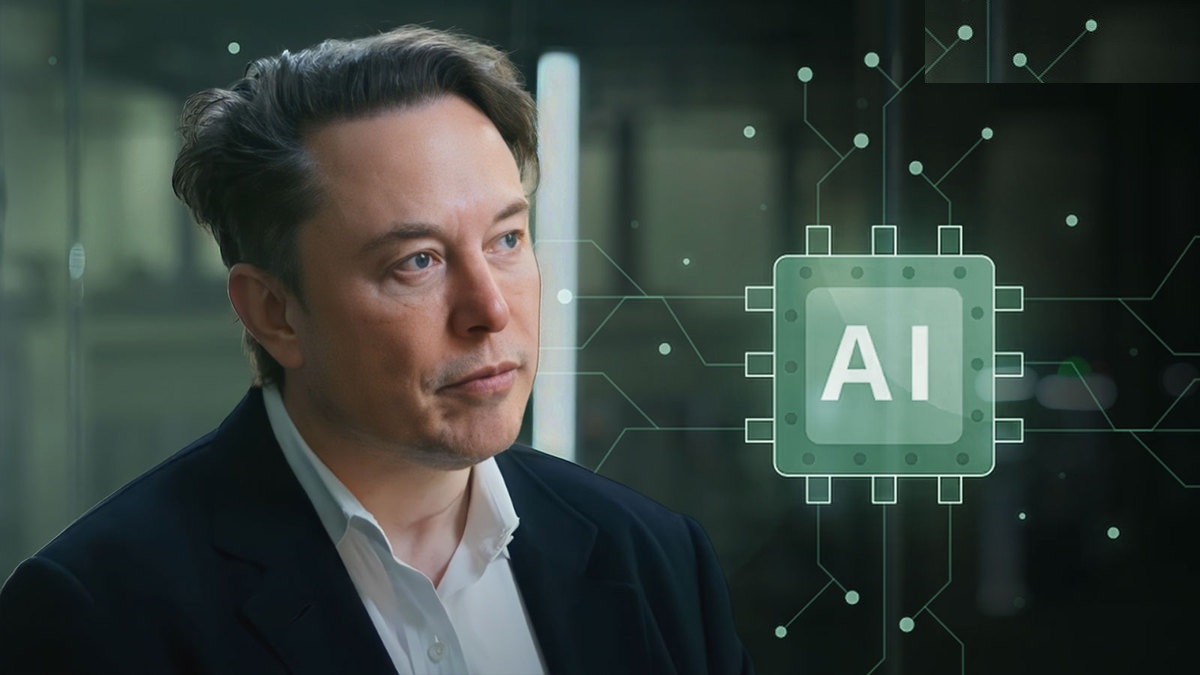
Elon Musk Predicts Money Will Be Obsolete by 2036 Due to AI and Robots

0

Elon Musk has once again sparked global debate with a bold prediction about the future of the economy.

According to the billionaire entrepreneur, money may lose much of its importance by 2036 as artificial intelligence and advanced robotics transform the way goods and services are produced.

While the statement may sound futuristic, it reflects Musk’s long-standing belief that AI and automation will eventually create an era of unprecedented abundance.

Musk argues that as intelligent machines become capable of performing nearly every form of labor more efficiently than humans, the cost of producing goods and delivering services could fall dramatically.

Factories powered by autonomous robots, AI-driven logistics networks, and self-managing infrastructure could reduce production costs to levels previously thought impossible. Scarcity—the primary reason money exists as a medium of exchange—could begin to disappear for many essential goods.

The idea is rooted in what economists often describe as a post-scarcity economy. If machines can manufacture products, grow food, transport goods, generate energy, and even provide professional services with minimal human intervention.

Society could enjoy access to resources at significantly lower costs. Musk believes AI may ultimately become the engine that powers this transformation, making many necessities nearly free or extremely inexpensive.

The transition to such a future is unlikely to be straightforward. The rapid deployment of AI and robotics is already disrupting industries ranging from manufacturing and transportation to software development and customer service.

Millions of workers could see their jobs fundamentally altered or replaced by intelligent systems over the coming decade. This raises critical questions about employment, wealth distribution, and economic stability during the transition period.

To address these concerns, Musk has repeatedly expressed support for concepts such as Universal Basic Income, arguing that governments may need to provide financial assistance if AI eliminates a significant share of traditional employment.

Under such a system, citizens would receive regular payments regardless of whether they are employed, helping maintain purchasing power while society adapts to widespread automation.

Despite the optimism surrounding AI, many economists remain cautious about predictions that money itself will become irrelevant. Markets are built not only around production costs but also around ownership, intellectual property, land, energy, natural resources, and human preferences.

Even if AI dramatically reduces manufacturing expenses, limited resources such as housing, rare minerals, healthcare, and premium services would likely continue to carry economic value.

Access to advanced AI infrastructure may not be evenly distributed. Companies and governments that control powerful AI models, semiconductor manufacturing, energy production, and robotic systems could accumulate significant economic influence.

This concentration of technological power could create new forms of inequality rather than eliminating the need for money altogether.

Musk’s comments highlight the extraordinary pace at which AI is reshaping global industries. Breakthroughs in generative AI, humanoid robotics, autonomous vehicles, and machine learning are already redefining productivity across multiple sectors.

Major technology companies are investing hundreds of billions of dollars into AI infrastructure, suggesting that the next decade could witness one of the largest technological shifts since the Industrial Revolution.

Whether or not money truly won’t matter by 2036 remains highly speculative. What is far more certain is that artificial intelligence and robotics will continue to redefine work, business, and economic systems.

As automation accelerates, governments, businesses, and society will need to adapt policies and institutions to ensure that the benefits of AI-driven prosperity are shared broadly, rather than concentrated among a small number of technology owners.

Nvidia Weighs $250bn Financing Guarantee For OpenAI In Landmark AI Infrastructure Push

0

Nvidia is in talks to provide approximately $250 billion in financing guarantees for OpenAI as part of a massive data center project in Ohio, according to a Wall Street Journal report, in a move that would deepen the chipmaker’s role in financing the artificial intelligence infrastructure boom while securing long-term demand for its processors.

The proposed arrangement would support OpenAI’s plans to lease a 10-gigawatt AI data center campus being developed in southern Ohio by an energy subsidiary of Japan’s SoftBank, marking what could become one of the largest AI infrastructure investments ever undertaken.

If completed, the project would represent a major strategic shift for OpenAI, allowing the ChatGPT developer to gradually build greater control over its computing infrastructure rather than relying primarily on cloud providers such as Microsoft, Amazon and Oracle for the enormous computing power needed to train and operate advanced AI models.

The deal is also expected to extend Nvidia’s influence beyond supplying chips into financing the infrastructure that powers artificial intelligence, boosting its dominant position at the center of the global AI ecosystem. The Wall Street Journal reported that the overall project is expected to cost more than $500 billion, including the Nvidia graphics processors that would eventually populate the facility.

Under the proposed structure, Nvidia’s $250 billion guarantee would cover the project’s lease obligations and debt financing but would not include the cost of the AI chips themselves. Separately, Nvidia is reportedly discussing financing OpenAI’s chip purchases worth as much as $350 billion, potentially bringing its total financial exposure to roughly $600 billion if both arrangements proceed.

Such financing commitments would help reassure banks and other lenders backing the project by strengthening the credit profile of the development, lowering financing risks for one of the world’s most capital-intensive technology investments.

The first phase of the campus is expected to be completed in 2028 and deliver approximately 800 megawatts of computing capacity, with additional phases gradually expanding the project toward its planned 10-gigawatt scale. To put that into perspective, a 10-gigawatt data center would consume roughly as much electricity as several large metropolitan areas combined, highlighting the unprecedented energy demands of next-generation artificial intelligence.

The project also is part of the growing convergence of technology, energy and geopolitics.

According to the report, the electricity allocation for the Ohio campus is controlled by the U.S. government and funded separately by Japan under a recent bilateral trade agreement linked to Tokyo’s $33 billion investment in a natural gas plant. U.S. Commerce Secretary Howard Lutnick is reportedly involved in determining access to the power supply, underscoring the strategic importance governments increasingly place on AI infrastructure.

OpenAI is said to have been in advanced negotiations for several weeks to lease the site and is viewed as the leading prospective tenant. Other major AI developers, including Anthropic, Microsoft and Google, have also reportedly discussed the project with Lutnick in recent weeks, suggesting the campus could eventually host multiple AI companies.

The discussions highlight an important evolution in the economics of artificial intelligence. Until recently, Nvidia’s business model centered on selling high-performance GPUs to cloud providers and enterprise customers. By helping finance AI infrastructure directly, the company would effectively secure years of future chip demand while reducing the risk that customers delay purchases because of funding constraints.

The move, though costly, offers OpenAI a silver lining. Owning or controlling dedicated computing infrastructure could reduce dependence on hyperscale cloud providers, provide greater flexibility in deploying increasingly sophisticated AI models and potentially lower long-term operating costs as computing demand continues to surge.

The proposed transaction also shows that technology companies are increasingly turning to combinations of debt, equity and financing guarantees to fund projects whose costs now rival those of major national infrastructure developments. The approach becomes an alternative to relying solely on corporate balance sheets.

Industry analysts expect global spending on AI infrastructure to exceed $700 billion this year, fueled by intense competition among leading AI developers to build larger data centers, acquire more advanced processors and secure sufficient electricity to power next-generation AI systems.

The Ohio development, if finalized, would rank among the largest AI infrastructure projects ever announced and further cement Nvidia’s position as a central financial enabler of the industry’s next phase of expansion.