

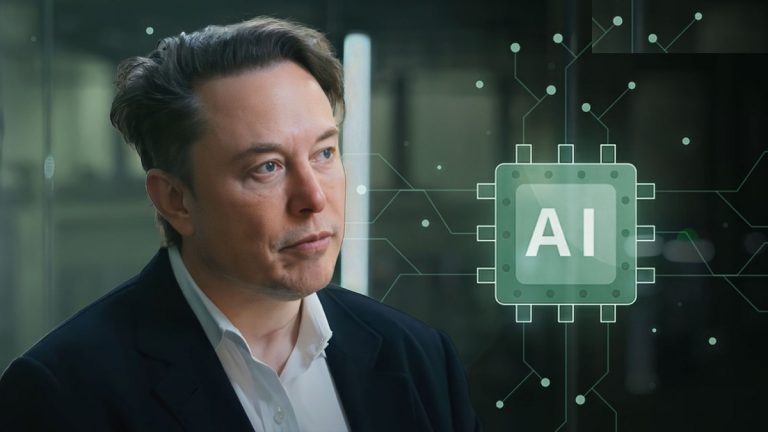
Elon Musk has once again sparked global debate with a bold prediction about the future of the economy.
According to the billionaire entrepreneur, money may lose much of its importance by 2036 as artificial intelligence and advanced robotics transform the way goods and services are produced.
While the statement may sound futuristic, it reflects Musk’s long-standing belief that AI and automation will eventually create an era of unprecedented abundance.
Musk argues that as intelligent machines become capable of performing nearly every form of labor more efficiently than humans, the cost of producing goods and delivering services could fall dramatically.
Register for the next Tekedia Mini-MBA.
Register for Tekedia AI in Business Masterclass.
Join Tekedia Capital Syndicate and co-invest in great global startups.
Factories powered by autonomous robots, AI-driven logistics networks, and self-managing infrastructure could reduce production costs to levels previously thought impossible. Scarcity—the primary reason money exists as a medium of exchange—could begin to disappear for many essential goods.
The idea is rooted in what economists often describe as a post-scarcity economy. If machines can manufacture products, grow food, transport goods, generate energy, and even provide professional services with minimal human intervention.
Society could enjoy access to resources at significantly lower costs. Musk believes AI may ultimately become the engine that powers this transformation, making many necessities nearly free or extremely inexpensive.
The transition to such a future is unlikely to be straightforward. The rapid deployment of AI and robotics is already disrupting industries ranging from manufacturing and transportation to software development and customer service.

Millions of workers could see their jobs fundamentally altered or replaced by intelligent systems over the coming decade. This raises critical questions about employment, wealth distribution, and economic stability during the transition period.
To address these concerns, Musk has repeatedly expressed support for concepts such as Universal Basic Income, arguing that governments may need to provide financial assistance if AI eliminates a significant share of traditional employment.
Under such a system, citizens would receive regular payments regardless of whether they are employed, helping maintain purchasing power while society adapts to widespread automation.

Despite the optimism surrounding AI, many economists remain cautious about predictions that money itself will become irrelevant. Markets are built not only around production costs but also around ownership, intellectual property, land, energy, natural resources, and human preferences.
Even if AI dramatically reduces manufacturing expenses, limited resources such as housing, rare minerals, healthcare, and premium services would likely continue to carry economic value.
Access to advanced AI infrastructure may not be evenly distributed. Companies and governments that control powerful AI models, semiconductor manufacturing, energy production, and robotic systems could accumulate significant economic influence.
This concentration of technological power could create new forms of inequality rather than eliminating the need for money altogether.
Musk’s comments highlight the extraordinary pace at which AI is reshaping global industries. Breakthroughs in generative AI, humanoid robotics, autonomous vehicles, and machine learning are already redefining productivity across multiple sectors.
Major technology companies are investing hundreds of billions of dollars into AI infrastructure, suggesting that the next decade could witness one of the largest technological shifts since the Industrial Revolution.
Whether or not money truly won’t matter by 2036 remains highly speculative. What is far more certain is that artificial intelligence and robotics will continue to redefine work, business, and economic systems.
As automation accelerates, governments, businesses, and society will need to adapt policies and institutions to ensure that the benefits of AI-driven prosperity are shared broadly, rather than concentrated among a small number of technology owners.