
DD
MM
YYYY

PAGES

DD
MM
YYYY

spot_img

PAGES

Home Blog Page 290

BlockDAG’s TGE Code Offer: The Strategic Move Designed to Eliminate Launch Day Chaos!

0

Following an unprecedented presale that generated over $430 million, attention now turns to BlockDAG (BDAG) Network’s highly anticipated mainnet debut. In these decisive final stages, the project has launched its TGE code, often viewed as a final opportunity for discounted entry. Yet, its true impact is far more strategic.

The TGE code not only unlocks the final special price of $0.0015 but also determines your standing in the upcoming tiered airdrop. This ranking system defines how early you receive your tokens at launch. It’s not just a token presale, it’s a well-crafted structure rewarding loyal participants while maintaining a stable, transparent market introduction.

Typical Launch Mayhem & Its Drawbacks

Anyone who has witnessed a major crypto launch knows the drill. The opening moments usually spiral into a frenzy dominated by bots and wealthy participants. These players use automation and vast resources to grab early allocations and manipulate price movements before ordinary users can react. The result is excessive volatility, network slowdowns, and widespread frustration.

Many smaller buyers end up paying inflated prices or watching their holdings lose value through rapid sell-offs. This flawed pattern sets up weak price stability and benefits short-term profiteers instead of genuine community members focused on long-term growth.

BlockDAG’s Tiered Airdrop: A Fair & Strategic System

BlockDAG is redefining launch mechanics through a structured, tiered airdrop system designed to eliminate disorder. Instead of an uncontrolled buying rush, coins are distributed in a regulated, phased process, transforming the event into a fair and engaging experience. This model discourages front-running and promotes equality. Here’s the breakdown:

  • Rank-Based Allocation: Participant ranking depends on the purchase timing and amount during the closing presale phase.
  • Immediate Access for Top 300: Holders ranked from 1 to 300 receive their tokens instantly.
  • Controlled Token Unlocks: Participants beyond this tier will have tokens released progressively from 30 minutes up to 24 hours later.

This gamified rollout rewards early engagement and ensures a balanced start. Before the next price rise, participants are using the “TGE” code to secure BDAG at $0.0015. Adding to the anticipation, BlockDAG will host a global AMA live on Binance this Friday, October 24, at 3 PM UTC, revealing key insights before Keynote 4: The Launch Note and GENESIS DAY.

TGE Code: More Than a Price Cut, It’s a Priority Pass!

The TGE code isn’t just a discount; it’s the entry key to BlockDAG’s strategic launch framework. While $0.0015 is an appealing rate, the bigger benefit lies in ranking placement within the airdrop system. Using this code signals dedication, giving participants a stronger position and earlier access to their tokens.

Acting promptly ensures a higher ranking and quicker token receipt during launch. This transforms the last presale stage into a strategic timing game, rewarding early participants with better launch-day advantages. It’s an invitation to join as one of the core holders driving a stable and well-organized start while avoiding launch volatility.

Creating a Controlled and Sustainable Launch

This approach has one clear goal: to build a launch that supports long-term stability. By releasing tokens gradually, BlockDAG avoids the sharp sell-offs typical of new projects. Many launches experience an immediate price surge followed by an equally steep fall when early participants cash out.

The staggered release prevents mass liquidations, fostering a steady price floor and a healthy growth curve. This strategy allows the market to mature naturally and supports consistent value appreciation. It’s a calculated method that builds confidence, strengthens community trust, and establishes steady progress from the outset.

Closing Statement

BlockDAG’s entire launch plan mirrors its broader vision, precision, preparation, and sustainable growth. The TGE code and airdrop structure aren’t mere marketing tools; they form a solid system prioritizing fairness and discipline.

With over 27 billion coins sold, $430 million raised, and Batch 31 priced at $0.0304 (currently offered at $0.0015 for a limited time), BlockDAG demonstrates how organized execution drives trust and momentum. As the crypto presale nears its finale, the TGE code stands as more than a price opportunity; it’s a gateway to becoming part of a meticulously designed, success-driven launch built on stability and foresight.

Presale: https://purchase.blockdag.network

Website: https://blockdag.network

Telegram: https://t.me/blockDAGnetworkOfficial

Discord: https://discord.gg/Q7BxghMVyu
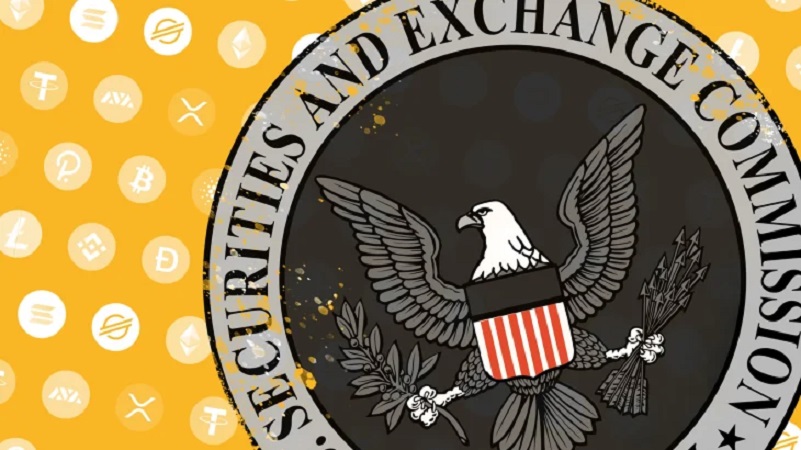
The SEC and CFTC Push For End-of-Year Crypto Oversight

0

The U.S. federal government has been in a shutdown for over three weeks, stemming from Congress’s failure to pass funding legislation by the September 30 deadline.

This marks the second-longest shutdown on record, severely curtailing operations at key financial regulators like the Securities and Exchange Commission (SEC) and the Commodity Futures Trading Commission (CFTC).

Despite these constraints—where the SEC operates with only about 10% of its staff roughly 393 out of 4,289 employees and the CFTC with just 5.7% around 31 out of 543—leaders from both agencies are pushing to meet ambitious end-of-year milestones for cryptocurrency oversight.

This effort aligns with broader White House recommendations to foster innovation while clarifying regulatory roles.The shutdown has halted non-essential activities, including most rulemaking, enforcement actions, and approvals for crypto-related products like spot ETFs for Solana and XRP.

However, essential market surveillance and fraud prevention continue. Crypto industry stakeholders, including the Blockchain Association, have voiced concerns that prolonged disruptions could exacerbate regulatory uncertainty and market volatility, though bipartisan momentum for crypto-friendly policies persists.

Both agencies are prioritizing initiatives to advance crypto integration into traditional finance, even amid limited resources. Announced in August 2025, these aim to enable direct trading of spot crypto asset contracts and standardize tokenized real-world assets. Pham emphasized these as priorities in a recent X post, building on the agency’s derivatives oversight role.

Project Crypto innovation exemption. Safe harbors and “fit-for-purpose” registration exexemptions. Launched earlier this year, Project Crypto seeks to provide regulatory sandboxes for crypto experimentation.

Atkins highlighted in a CNBC interview the urgency to finalize exemptions by December 31, allowing non-security digital assets to bypass full securities registration. This echoes White House guidance for tailored rules.

The CFTC’s push for spot trading follows its historical focus on futures, while the SEC’s exemptions address criticisms of overreach under previous leadership. A joint SEC-CFTC roundtable in September 2025 discussed these overlaps, signaling collaboration.

The shutdown has stalled progress on market structure bills like the Responsible Financial Innovation Act and the CLARITY Act. These would delineate SEC oversight for security-like tokens and CFTC authority for commodities, potentially resolving jurisdictional turf wars.

Crypto prices have shown volatility, with Bitcoin hitting record highs amid “devaluation trades” but facing “risk-off” sentiment from investors. Delayed ETF approvals (e.g., Litecoin, Solana) could suppress liquidity, though stablecoin volumes have surged to $19.4 billion year-to-date.

Democrats like Rep. Maxine Waters warn the shutdown leaves markets vulnerable, while some analysts argue over-reliance on decentralization in bills creates gaps. The CFTC’s understaffing has drawn scrutiny, with calls for stronger funding to match its expanding crypto role.

Agency leaders remain optimistic, with Atkins noting in interviews that core teams are working extended hours to hit deadlines. Resolution depends on Congress averting further extensions, but these milestones could mark a pivotal shift toward a more innovation-friendly U.S. crypto regime if achieved.

The shutdown’s reduction of SEC and CFTC staff to 10% and 5.7%, respectively, delays rulemaking, enforcement, and approvals e.g., Solana, XRP spot ETFs. This prolongs ambiguity over which agency regulates specific crypto assets, hindering innovation and compliance.

Crypto firms face challenges planning operations, as seen in Coinbase’s public calls on X for clearer rules. Smaller startups may struggle most, lacking resources to navigate uncertainty. Prolonged delays could drive crypto businesses offshore to jurisdictions with established frameworks, weakening U.S. competitiveness.

Suspended ETF approvals and stalled market structure bill like the Responsible Financial Innovation Act limit institutional entry, capping liquidity. Bitcoin’s volatility, driven by “devaluation trades,” reflects investor unease, while stablecoin volumes $19.4B YTD signal alternative demand.

Investors may shift to unregulated platforms or stablecoins, increasing exposure to fraud or systemic risks, as Rep. Maxine Waters noted in recent critiques. A “risk-off” market sentiment could suppress crypto prices if regulatory progress falters, especially for altcoins awaiting ETF approvals.

SEC’s Project Crypto exemptions and CFTC’s spot trading/tokenized collateral frameworks aim to foster innovation via regulatory sandboxes and tailored rules. Success could integrate crypto into traditional finance, aligning with White House recommendations.

Safe harbors and exemptions could lower compliance costs for non-security tokens, benefiting DeFi and tokenized asset projects. However, limited staff slows implementation. Overly permissive rules, as criticized by some Democrats, could expose markets to fraud or manipulation if oversight remains underfunded.

The SEC-CFTC roundtable in September 2025 signals joint efforts to clarify roles SEC for securities, CFTC for commodities. Achieving milestones could set precedents for dividing oversight, reducing legal disputes like those seen in SEC v. Ripple.

Meeting year-end goals could position the U.S. as a leader in crypto regulation, countering perceptions of lagging behind jurisdictions like Singapore or the UAE. Bipartisan support for crypto-friendly policies suggests momentum, but shutdowns threaten progress.

The SEC and CFTC’s push for crypto oversight milestones amid a shutdown reflects a critical juncture. Success could usher in a balanced, innovation-friendly framework, boosting market confidence and U.S. competitiveness.

Tesla Reports Strong Deliveries And Energy Deployments in Q3 2025, Despite Profit Decline Amid Rising R&D Costs

0

In the third quarter (Q3) of 2025, Tesla achieved record global vehicle deliveries and energy storage deployments across the residential, industrial, and utility sectors, underscoring the company’s operational strength and continued global expansion.

The strong performance translated into record revenue and free cash flow generation, despite a drop in profitability due to increased research and development spending.

Tesla reported a 12% year-over-year (YoY) increase in total revenue to $28.1 billion, exceeding analyst estimates of $26.37 billion. However, earnings per share came in at 50 cents adjusted, slightly below the expected 54 cents. Automotive revenue climbed 6% YoY to $21.2 billion, up from $20 billion a year earlier, while total revenue rose from $25.18 billion in the same period last year.

Net income, however, fell 37% to $1.37 billion, or 39 cents per share, compared with $2.17 billion or 62 cents per share a year earlier. The company attributed the decline to lower electric vehicle (EV) prices and a 50% rise in operating expenses, driven by investments in artificial intelligence (AI) and other R&D initiatives.

Tesla’s operating income dropped 40% YoY to $1.6 billion, resulting in a 5.8% operating margin. The company noted that year-over-year performance was influenced by increased vehicle deliveries, growth in energy generation and storage, expansion in services and other categories, offset by lower regulatory credit revenue and a one-time full self-driving (FSD) revenue recognition in Q3 2024 related to the Cybertruck and other advanced features.

Despite the profit squeeze, Tesla expanded its vehicle lineup in October with the Model 3 Standard and Model Y Standard, each offering over 300 miles of range and starting at $36,990 and $39,990, respectively. These new models aim to make Tesla vehicles more accessible following the expiration of the EV tax credit in the United States.

The company also launched the Model Y Performance, which accelerates from 0–60 mph in 3.3 seconds, and introduced leasing options for certified pre-owned Model 3s and Model Ys. In China, the EV giant launched the Model YL in China, a longer wheelbase version of the Model Y with 6 seats and 3 rows, expanding its product portfolio in this critical market.

Notably, Tesla achieved record deliveries in South Korea, Taiwan, Japan and Singapore and began deliveries of the Model Y in India. South Korea is now its third largest market behind only the U.S. and China, serving as validation of

the company’s competitive positioning in a robust EV market.

In the energy sector, Tesla unveiled the Megapack 3 and Megablock, next-generation battery products designed to simplify large-scale installations by reducing deployment costs and time. The company expects these innovations to strengthen its position in the renewable energy market.

Tesla emphasized that its scale, cost efficiency, and AI advancements position it to adapt to changing market conditions better than competitors. The company’s focus remains on scaling core hardware and maximizing deliveries and deployments, with each Tesla product designed to deliver increasing value through AI-driven services such as Autobidder and virtual power plant optimization.

Looking ahead, Tesla reaffirmed its commitment to integrating AI across its automotive and energy portfolios, driving toward what it calls a “future of sustainable abundance,” as outlined in its Master Plan Part IV.

With record Q3 deliveries and continued innovation across both vehicles and energy products, Tesla remains a leader in pushing the boundaries of technology, sustainability, and AI-driven mobility.

Nigeria Launches Federal Treasury Receipt (FTR) to Curb Leakages and Boost Fiscal Transparency

0

Nigeria has launched the Federal Treasury Receipt (FTR), a major digital reform initiative designed to plug revenue leakages, strengthen accountability, and improve transparency in public finance management.

According to the Ministry of Finance, the system creates a single, standardized, and digitally verifiable proof of all payments made into federal accounts. It ensures that every government-issued receipt corresponds directly with actual funds received by the Treasury — a mechanism officials say will help close long-standing loopholes in revenue collection.

The ministry described the FTR as “a significant step toward tightening public financial controls,” adding that it is part of a broader reform agenda to strengthen fiscal discipline and ensure real-time tracking of government revenues.

A Unified System for Fiscal Oversight

The FTR rollout coincides with the introduction of the Central Billing System (CBS), which standardizes pricing and billing for all government services. Both systems are integrated into a larger digital architecture known as the Revenue Optimization and Assurance Platform (RevOp) — an end-to-end ecosystem that went live on August 1, 2025.

The Finance Ministry explained that RevOp provides real-time visibility into inflows from ministries, departments, and agencies (MDAs), enabling automated reconciliation and settlement between the Treasury and the various revenue-generating institutions.

In an official statement, the ministry said the combined system is built “to ensure every naira due to the Federation is captured, reconciled, and accounted for.”

Officials believe that, once fully operational, the platform will give Nigeria one of the most integrated public finance systems in Africa — a development they say will not only curb corruption but also raise the efficiency of non-oil revenue management.

Addressing Nigeria’s Chronic Revenue Gaps

If the system performs as intended, analysts say the FTR–CBS–RevOp ecosystem could reshape Nigeria’s fiscal trajectory.

Digital receipts will create clearer audit trails and help identify discrepancies between reported and actual collections. Transparent verification of payments could also encourage voluntary tax compliance, a critical factor in raising Nigeria’s low tax-to-GDP ratio, which currently averages below 10% — one of the lowest in the world.

The International Monetary Fund (IMF), in its 2025 Article IV consultation, again emphasized the need for Nigeria to expand its tax base, improve collection efficiency, and strengthen digital oversight of revenues. The IMF has long argued that without a wider and more transparent revenue net, Nigeria’s fiscal space will remain too constrained to meet development goals.

The introduction of the FTR system, therefore, aligns closely with those recommendations. By automating verification and integrating all billing under one platform, the reform targets the weak links that have historically enabled manipulation and misreporting of payments at various collection points.

Over time, reduced leakages could free up significant funds for infrastructure, education, and healthcare — areas repeatedly starved of adequate budgetary support. Stronger non-oil revenue collection, in turn, would help reduce Nigeria’s dependence on crude exports, which still account for most of its foreign exchange earnings despite years of diversification pledges.

Learning from Earlier Reforms

The Treasury Single Account (TSA), introduced in 2015, was Nigeria’s first major attempt to consolidate federal revenues into a single account under the Central Bank. While the TSA helped enhance visibility of government balances, it did not address the full revenue chain, particularly the verification of receipts and standardization of service pricing.

Subsequent tax reforms and non-oil revenue initiatives brought modest improvements, but persistent challenges — including manual leakages, weak digital integration, and poor inter-agency coordination — continued to undermine progress.

The new digital suite represents a more comprehensive approach. By combining billing, receipts, and reconciliation within a unified ecosystem, it aims to create an end-to-end fiscal data trail, enabling both transparency and accountability.

This comes amid broader fiscal restructuring efforts. In August 2025, the government directed the Revenue Mobilization, Allocation and Fiscal Commission (RMAFC) to review the revenue-sharing formula, a move that signals renewed efforts to not only enhance collections but also improve the equity of distribution among the three tiers of government.

Pilot Phase and Implementation Roadmap

The Ministry of Finance said it has already commenced a 30-day pilot phase across ten federal agencies to test the system’s compliance and operational readiness.

This pilot will assess the capacity of the existing ICT infrastructure to support real-time, nationwide data capture and reconciliation. Upon successful evaluation, the government plans to launch full-scale implementation, bringing all MDAs under the FTR framework.

The rollout also coincides with preparations for the formal takeoff of the Nigeria Revenue Service (NRS) in January 2026. The NRS is expected to consolidate revenue administration under a single authority, streamlining oversight and enforcement currently fragmented across multiple agencies.

Officials have described the two reforms — the FTR system and the creation of the NRS — as mutually reinforcing, both designed to simplify revenue collection, eliminate duplication, and create a transparent, traceable process from payment initiation to treasury confirmation.

Key Challenges Ahead

Despite its promise, experts warn that institutional resistance and technological limitations could impede the system’s effectiveness.

Many MDAs, accustomed to legacy systems and discretionary control over certain revenue streams, may resist full integration into the centralized digital network. Ensuring compliance across hundreds of agencies will therefore test the government’s political will.

There are also concerns about infrastructure readiness. The success of the FTR depends on real-time connectivity, secure data management, and interoperability between the Treasury, the Central Bank, and the MDAs’ financial systems. Any lag or inconsistency could undermine the accuracy of reconciliation and erode trust in the platform.

The Finance Ministry has, however, expressed confidence that these issues will be addressed through continuous system upgrades, stakeholder training, and phased adoption supported by the Office of the Accountant-General and the Ministry of Communications, Innovation and Digital Economy.

US Sanctions Russian Oil Companies

0

The United States imposed sanctions on Russia’s two largest oil producers, Rosneft and Lukoil, marking the first such action against Russia in President Donald Trump’s second term.

These measures, announced by the US Department of the Treasury’s Office of Foreign Assets Control (OFAC), aim to pressure Moscow into agreeing to an immediate ceasefire in its ongoing war against Ukraine, which began in February 2022.

The sanctions were enacted under Executive Order 14024, targeting entities operating in Russia’s energy sector. The move follows the abrupt cancellation of a planned summit between Trump and Russian President Vladimir Putin in Budapest, Hungary, which Trump described as not “feeling right.”

Treasury Secretary Scott Bessent emphasized that the sanctions address “Putin’s refusal to end this senseless war,” noting that the targeted companies fund the Kremlin’s “war machine.”

The US has urged allies to join these efforts, with a wind-down period for existing transactions until November 21, 2025. Rosneft state-controlled, led by Putin’s ally Igor Sechin and Lukoil. Nearly three dozen subsidiaries are also affected.

Freezing of all US-based assets owned by these companies. Prohibition on US persons individuals and entities conducting business with them. Threats of secondary sanctions on foreign financial institutions that facilitate transactions involving Rosneft or Lukoil oil sales. Such banks risk losing access to US markets and the dollar-based financial system.

Oil and gas account for about 25% of Russia’s federal budget. Rosneft and Lukoil together produce around 3.1–3.7 million barrels per day (bpd) of oil and gas condensate, representing nearly half of Russia’s crude exports and about 3.3% of global oil output.

Vertically integrated; 49% stake in India’s Nayara refinery 400,000 bpd, reliant on Russian crude; projects in Central Asia, Africa, Latin America. Major exporter to India, China; earned ~$13.28 billion in profit.

Exploration/production/refining; supplies to Hungary, Slovakia, Turkey’s STAR refinery; refineries in Bulgaria (190,000 bpd) and Romania; retail networks in Europe. Key supplier to Europe and Asia; international downstream projects.

Brent crude surged 4.7–5% to $65.53 per barrel, a two-week high, due to fears of reduced Russian supply. This echoes a 1.6% rise after the UK’s similar sanctions last week. The MOEX Russia Index dropped 3.6% to 2,546, its lowest in over a week.

Chinese state oil majors suspended seaborne Russian oil purchases. India’s refiners are reviewing contracts and poised to sharply cut imports—potentially to zero—to avoid secondary sanctions, amid US tariffs of up to 50% on Indian goods as retaliation for past Russian oil buys. This could remove a major buyer for Russia’s discounted crude.

Sanctioned Rosneft and Lukoil last week, warning of global fuel disruptions. EU: Adopted its 19th sanctions package, banning Russian liquefied natural gas (LNG) imports from January 2027. Rosneft is already sanctioned, but Lukoil has exemptions for buyers like Hungary and Slovakia.

Unlike the Biden administration, which delayed sanctioning these firms to avoid inflating energy costs, Trump’s approach combines diplomacy with economic leverage. Trump has expressed hope that the sanctions “won’t be on for long” if peace talks resume, while imposing tariffs on non-compliant allies like India.

Experts view this as a “significant escalation,” potentially constricting Russia’s revenue but risking higher global energy prices. A former Treasury official noted that secondary bank sanctions could be the most effective, as they deter third-party enablers.

However, some analysts doubt immediate impact on Putin without broader targeting of banks or key buyers like China. The sanctions could degrade Russia’s war funding by limiting exports to major markets, forcing discounted sales or rerouting via “shadow fleets.”

Ukraine hailed it as “great news,” while Russia warned of supply disruptions. With nuclear drills underway in Moscow and US restrictions eased on Ukraine’s long-range missiles, tensions remain high. Further US actions are possible if no ceasefire emerges, potentially including asset seizures to aid Ukraine’s defense.