DD
MM
YYYY

PAGES

DD
MM
YYYY

spot_img

PAGES

Home Blog Page 2904

RCO Finance’s Ethereum Token Presale Keeps Growing as RCOF Eyes 100x Price Spike

0

The Ethereum Token RCO Finance (RCOF) is gaining significant momentum, attracting attention to its presale as RCOF prepares for a 100X rally.

This token of increasing demand highlights the growing confidence in RCO Finance. As RCOF proceeds with an explosive rally, smart investors buy the asset. Let’s find out whether the 100X is feasible.

RCO Finance Rolls Out Secure Trading Tool

RCO Finance is a trading platform where investors and traders can access top investment products and digital assets. To ensure user safety, the platform will launch secure trading instruments. This revolutionary safety tool is a robo-advisor that offers more than protection.

The robo-advisor is a trading tool designed with machine-learning algorithms and advanced AI technology.

This tool performs market analysis, identifies investment opportunities, and executes self-operating trades. Its machine-learning algorithm allows it to run without human intervention.

RCO Finance’s robo-advisor also provides AI-driven insights to help investors make insightful and informed investment decisions.

It can also develop strategies that align with the investor’s financial goals, needs, and preferences. It is a cheaper trading guide than a human advisor but cheaper and more efficient.

RCO Finance Unveils Trading And Investment Marketplace

RCO Finance is showcasing a marketplace where investors and traders can access massive digital assets for investment.

This marketplace contains over 120,000 digital assets in 12,500 asset classes, a classic opportunity for investors to build a well-rounded investment portfolio.

Some categories these assets fall into include stocks, shares, real-world assets, and exchange-traded funds.

The platform offers several DeFi services, such as incentivized staking, low-interest lending and borrowing, and yield farming. Traders can trade any preferred assets with up to 1,000X leverage to boost returns.

Moreover, crypto traders can swap their holdings for other assets listed on RCO Finance to ease transactions.

RCO Finance has undergone a thorough, smart contract audit, presenting it as a safe trading zone. Its user-friendly no-KYC approach makes it appealing to investors looking to stay anonymous while enjoying similar services to the platform. It will also be regulated under the European Union’s Market In Crypto-Asset (MiCA) regulation.

RCO Finance’s tokenomics will protect the ecosystem from liquidity crunches after the project goes live on exchanges.

Its token allocation strategy involving setting aside 50% of RCOF’s circulating supply for its presale, 12% retained for liquidity and must be locked for three years, 10% for marketing, and whatever is left to be burned was designed to keep the ecosystem from pumps and dump schemes.

RCO Finance’s Native Token Presale Breaks Records

RCOF, the native token of RCOF Finance, is slowly approaching a critical point in its presale at the current stage.

Trading at $0.0343 in Stage 2, RCOF has gotten halfway to the end of this stage, with the price ready for a rally. The rally will lead RCOF to Stage 3 at $0.0558, indicating a 73% increase in its market value.

In the next few months, RCOF could be listed between $0.4 and $0.6 on crypto exchanges. This means that presale investors, particularly those who joined the presale in Stage 2, will benefit from a 1,000% to 1,600% price increase. In the long run, additional perks will be given as rewards to token holders.

RCOF holders will receive a 50% discount, quarterly dividends, tier-based rewards, airdrop access, and voting privileges.

The tier-based rewards will be based on the number of tokens an investor has in their wallets. It is worth noting that buying RCOF now is the best way to take advantage of these perks.

For more information about the RCO Finance Presale:

Visit RCO Finance Presale
Join The RCO Finance Community

Nigerian Fintech Rise Expands Footprint to Kenya With The Acquisition of Hisa

0

Nigerian fintech startup Rise, that provides clients with access to global investments, has expanded its footprint to East Africa after it acquired Kenyan investment platform Hisa.

Rise, which connects users to global stock investments denominated in US dollars, aims to create a borderless investment experience for Africans, similar to Hisa’s mission of providing access to local and global assets like stocks, ETFs, bonds, and alternative investments.

Kenya has seen significant growth in its fintech sector, with increasing demand for investment opportunities and financial education. The acquisition of Hisa allows Rise to tap into this market and offer its expertise in providing diversified global investment products to Kenyan users.

The acquisition, approved by Kenya’s Capital Markets Authority (CMA), is Rise’s second within a year and solidifies its presence in Kenya, a key fintech hub in East Africa. Under the deal, Hisa will retain its brand identity and all existing staff, with no immediate changes planned.

“We’re not planning to change the Hisa name it resonates well with Kenyans,” said Eke Urum, CEO of Rise. “We are not planning to make a lot of changes, it is time to understand the company, the culture, the context, and the market we are coming into”.

While Rise declined to share the details about the transaction, Techcabal reports that an insider revealed that the deal involved a mix of stock and cash.

Hisa was co-founded in 2020 by Eric Jackson and Eric Asuma, founder of Kenya Wall Street. Jackson, who previously served as CTO, will continue in that role, while Asuma will stay on as a strategy advisor.

Leah Njoroge, a former investment analyst at Kenyan Wall Street and finance associate at Hisa, has been named head of operations. All seven Hisa employees will report to her. Njoroge will report directly to Urum, who will now oversee Hisa as part of his wider portfolio of acquired startups.

Hisa’s acquisition follows Rise’s earlier purchase of Nigerian digital trading platform Chaka in September 2023. With over 620,000 users across both Rise and Chaka, the fintech continues to grow its footprint across Africa’s digital investment landscape.

With this move, Risevest strengthens its mission to promote financial inclusion by offering easy-to-use investment tools and educational resources to help individuals make informed financial decisions. Hisa’s platform, which provides financial news, analysis, and investment education, complements Risevest’s portfolio, positioning it as a leading player in Africa’s investment space.

The integration of Hisa’s services into Risevest’s platform will provide users in Kenya with a seamless experience, allowing them to invest in both local and international assets while continuing to receive valuable financial insights. According to Statista, Kenya’s digital investment market is expected to reach a transaction value of $2.776 billion by 2024, signaling promising growth opportunities for Rise in the region.

Huawei Secures Major Cloud Deal With UBA Worth $3 Million, Challenging IBM Dominance in Nigerian Banking

0

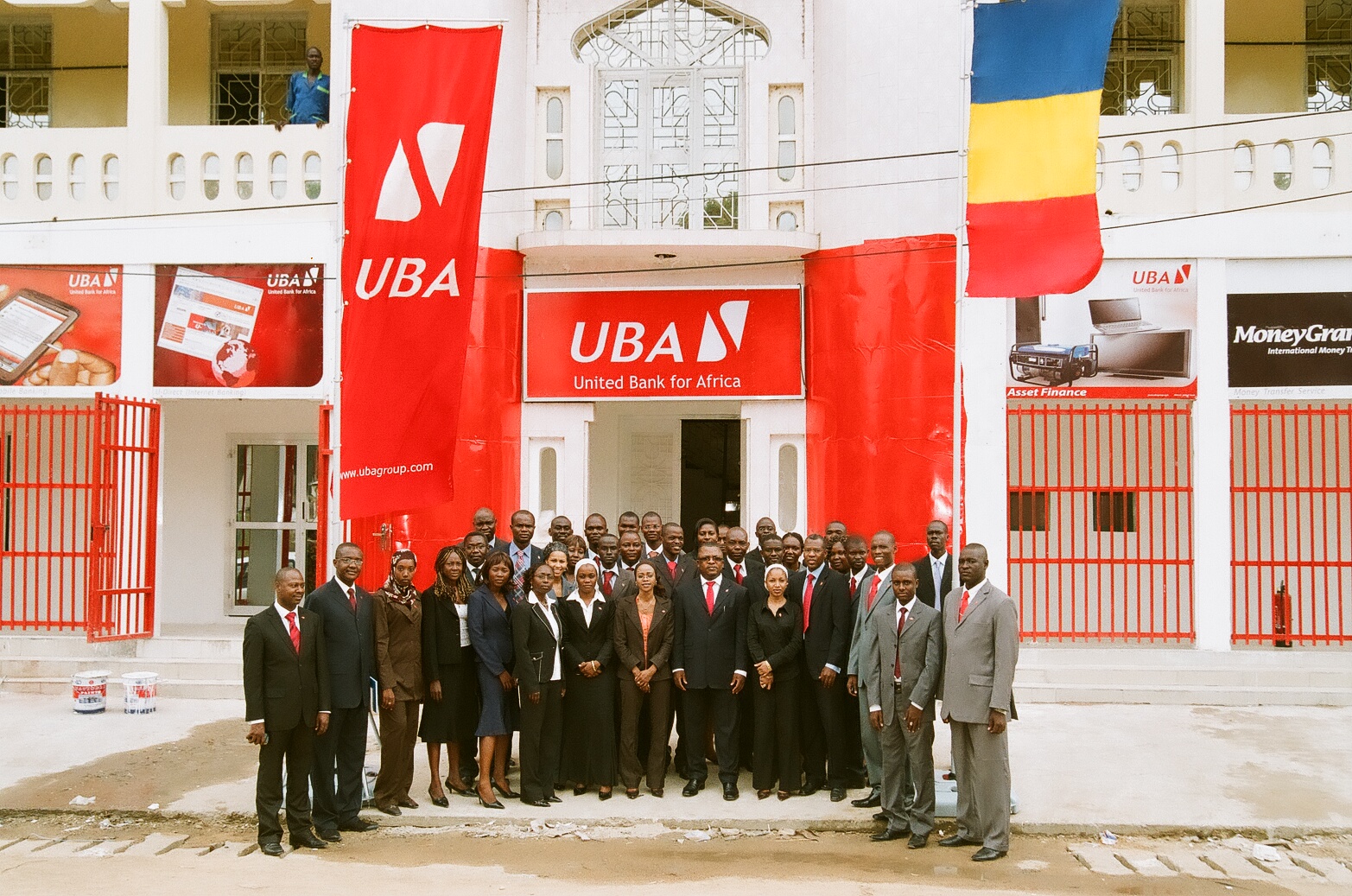
Huawei has reportedly secured a multi-million dollar cloud services deal with the United Bank for Africa (UBA), one of Nigeria’s largest financial institutions.

This deal which provides UBA with 200 petabytes of storage cloud solutions, signals a shift in the Nigerian banking sector, where IBM has long dominated the cloud infrastructure landscape.

By choosing Huawei, UBA is embracing a shift towards alternative, more flexible cloud solutions, leveraging Huawei’s extensive expertise in cloud computing, artificial intelligence, and data analytics.

Under the terms of the deal, Huawei will provide UBA with its cutting-edge cloud infrastructure, enabling the bank to enhance its digital banking services, streamline operations, and improve overall efficiency. With a presence across several African countries, UBA’s adoption of Huawei’s cloud technology is expected to enhance its capabilities in scaling operations and delivering seamless financial services to its expansive customer base.

Commenting on the deal, Zhang Li, Vice President of Huawei Cloud Africa, said,

This is a milestone achievement for Huawei Cloud in Nigeria and Africa at large. UBA is a key player in the African banking industry, and we are excited to help them drive digital transformation. We believe this partnership will be a game-changer for the financial sector in Africa”.

This deal is seen as a strategic move by UBA to enhance its digital transformation efforts and improve operational efficiency, data storage, and customer experience. Huawei’s cloud solutions are known for their high-performance computing capabilities and robust cybersecurity features, which are critical for banks handling sensitive financial data.

For Huawei, this deal represents a significant win in its quest to expand its cloud services footprint in Africa, where it has been aggressively targeting the digital infrastructure needs of businesses. It also puts pressure on IBM, which has long held a dominant position in providing cloud infrastructure to Nigerian banks.

It is worth noting that financial institutions across Africa for have years selected hybrid cloud and AI capabilities from IBM to unlock digital innovation and continue their work to develop digital-first solutions, with the aim to broaden access to financial services on the continent.

However, Huawei’s entry into the market with a robust cloud offering signals a significant shift in the competitive landscape. Huawei’s ability to deliver high-performance cloud solutions at competitive pricing gives it an edge, especially as Nigerian banks look for more cost-effective ways to manage their data and enhance customer offerings.

This deal marks a major victory for Huawei’s cloud business in Africa, as the company continues its aggressive push to expand its presence on the continent. Huawei has been making inroads into African markets, particularly in the areas of telecommunications and cloud services, by offering highly scalable and cost-effective solutions.

Notably, Huawei’s partnership with UBA could signal the beginning of a larger trend where Nigerian banks increasingly adopt Chinese cloud technology providers. As cloud services become more integral to the banking industry, the need for cost-effective, secure, and efficient cloud platforms is growing.

GTCO Records N494.5bn PBT in Q2, Hitting N1tn Profit in H1 2024

0

In a move that has taken the Nigerian financial sector by storm, Guaranty Trust Holding Company Plc (GTCO) reported a staggering pre-tax profit of N494.5 billion in its audited second-quarter financial statements for 2024.

This marks a near-doubling of its pre-tax profits compared to the same period last year, making it the most significant second-quarter result ever achieved by any Nigerian bank or financial holding company.

The second quarter’s success comes on the heels of an equally explosive first quarter, where the bank reported a pre-tax profit of N509.3 billion. This back-to-back performance has propelled GTCO to an unprecedented total of N1 trillion in profits for the first half of 2024, setting a new standard in the banking industry and reinforcing its position as a financial powerhouse.

Key Financial Highlights – Q2 2024

  • Interest Income: N336.2 billion, a massive +176% increase.
  • Net Interest Income: N264.2 billion, up +177%.
  • Loan Impairments: N33.9 billion, down -79%.
  • Net Commission and Fees: N48.8 billion, a jump of +126%.
  • Other Income: N305.2 billion, a -15% dip.
  • Total Operating Expenses: N102.7 billion, up by +48%.
  • Pre-tax Profit: N494.4 billion, an impressive +95%.
  • Loans & Advances: N3.1 trillion, a +34% increase.
  • Total Deposits: N10.2 trillion, up +62%.
  • Net Assets: N2.3 trillion, nearly doubling with a +96% growth.
  • Earnings Per Share (EPS): N16.

The Drivers of The Growth

At the core of GTCO’s phenomenal second-quarter performance is the bank’s outstanding growth in net interest income, which surged by 177% to N264.2 billion. Notably, this is the highest net interest income ever recorded by the bank in a single quarter, and it’s a clear reflection of the robust performance of its risk assets.

To illustrate this monumental achievement, GTCO’s total net interest income for the entirety of 2022 was N259.3 billion. In just the first half of 2024, the bank has already surpassed that figure, generating N491.5 billion in net interest income. This growth has been largely fueled by loans to customers, with the bank earning N361.9 billion from its Nigerian operations and another N255.9 billion from its international branches.

Despite global economic headwinds, Nigeria contributed a hefty N843.1 billion to GTCO’s pre-tax profits, further underscoring the bank’s strong presence and dominance in its home market.

Unrealized Gains

A deep dive into GTCO’s income statement reveals that a significant chunk of the bank’s profits—over N520 billion—is tied to unrealized gains. Specifically, the bank reported N493 billion in unrealized fair value gains on financial instruments and N130.2 billion in unrealized gains from forward transactions, both of which are related to forex revaluation. This suggests that while GTCO’s results are undeniably impressive, a substantial portion of its income is yet to be fully realized, raising questions about the sustainability of these figures in future quarters.

Fee-Based Income and Commissions

GTCO’s foray into e-business has proven lucrative, with the bank earning N32.5 billion from its e-business services and N16.3 billion from commissions on foreign exchange deals. Additionally, account maintenance charges brought in another N15.6 billion. In total, the bank recorded gross commission and fees of N113.9 billion for the first half of 2024.

Corporate Banking and Retail Banking Contributions

The bank’s Corporate Banking Group continues to be its cornerstone, contributing a staggering N521 billion to pre-tax profits. However, the bank’s retail division has also been a formidable player, generating N298.6 billion in pre-tax profits, a notable increase from N63.2 billion in the first half of 2023.

To reward its shareholders, GTCO declared an interim dividend of N1 per share, double the 50 kobo per share paid out during the same period in 2023. This bold move not only showcases the bank’s financial strength but also reinforces its commitment to delivering value to its investors.

The Stock Market Reaction

Interestingly, despite the groundbreaking financial results, GTCO’s share price took a minor hit, closing at N45.45 per share, down by 0.11%. This may indicate that the market is cautiously optimistic, possibly due to concerns about the unrealized gains in the bank’s financial statements or the broader economic challenges facing the country.

To put GTCO’s performance into perspective, the bank’s total deposits now stand at N10.2 trillion, representing a 62% increase from the previous year. This level of deposit growth signals increased customer confidence in the bank’s operations and a robust liquidity position that sets the stage for even greater profitability in the coming quarters.

While GTCO’s stellar performance is undoubtedly a triumph, there are still challenges on the horizon. Analysts believe the heavy reliance on unrealized gains in GTCO’s income statement suggests that the bank’s long-term profitability could face pressures if these gains fail to materialize.

Dangote Refinery Faces Local Market Boycott, May Be Forced to Export Most Products

0

The Vice President of Dangote Industries Limited, Devakumar V.G. Edwin, has voiced his frustration over a boycott of Dangote Refinery’s products by local petroleum marketers, despite the refinery’s capacity to supply affordable petroleum products.

Speaking during a Twitter space hosted by Nairametrics on Wednesday, Edwin revealed that despite the refinery’s efforts to provide cheaper products, local traders continue to favor importing refined products from abroad rather than supporting local refining.

Edwin explained that the core vision behind the Dangote Refinery was to reduce Nigeria’s dependence on imported petroleum products by refining domestic crude oil for the local market. However, this goal has been hampered by the reluctance of local marketers to engage with the refinery.

According to him, only about 3% of the refinery’s output is currently sold locally, while the remaining 97%, including diesel and jet fuel, is exported.

“The whole purpose of doing this refinery in Nigeria was to utilize our local crude instead of exporting raw materials and importing finished products,” Edwin stated. “We should be able to refine and use the finished products within Nigeria and produce more to export the surplus.”

Edwin indicated that there may be deliberate attempts by some local marketers to block the Dangote Refinery’s products even though the refinery has reduced prices twice to encourage sales. He noted that marketers continue to resist, even going as far as writing to President Bola Tinubu to complain about the refinery’s pricing strategy, accusing Dangote of undercutting the market.

“They wrote to His Excellency, the president, claiming that we are disturbing the market by dropping our prices,” Edwin said. “We reduced prices to meet market dynamics, but instead of cooperation, they pushed back.”

This resistance has forced the Dangote Refinery to export most of its production, a significant deviation from the refinery’s original goal of supplying the domestic market. Edwin highlighted that the refinery, with a production capacity of up to 54 million liters of refined petroleum products per day, could easily meet Nigeria’s demand, yet local marketers remain hesitant to engage.

Dependence on Imported Crude Oil

One of the other challenges faced by the refinery is inconsistent crude oil supply from local sources. This has forced Dangote Refinery to import crude from countries like the U.S. and Brazil. International oil companies (IOCs), which typically prioritize foreign markets, often sell crude oil at higher prices to local buyers.

Aliko Dangote, Chairman of Dangote Industries, previously announced that the refinery’s operations had already led to a 60% reduction in the local price of diesel. Prior to the refinery’s commencement, diesel sold for approximately N1,700 per liter, but the refinery was able to lower this to around N1,000. Despite the significant depreciation of the Naira, with exchange rates soaring to about N1,500 per dollar, Dangote Refinery has kept diesel prices below N1,200.

Edwin explained that 44% of the refinery’s production capacity could supply 100% of Nigeria’s demand for refined products. Yet the lack of consistent local crude supply, coupled with local marketers’ reluctance to patronize the refinery, means the refinery has had to look internationally for both crude inputs and product exports.

NNPC Wants A Direct Role

Amid these challenges, the Nigerian National Petroleum Corporation (NNPC) has requested a more direct involvement in Dangote Refinery’s operations. According to Edwin, NNPC has asked to permanently station a team of six to ten people at the refinery to oversee crude supply and production processes. The arrangement is part of a crude supply agreement where Dangote Refinery would purchase crude oil from the NNPC in Naira, process it, and sell the refined products back in Naira.

Edwin noted that discussions with the NNPC are still ongoing, with key issues such as crude pricing and the exchange rate for the Naira yet to be finalized. The potential shift from transacting in dollars to conducting business in Naira marks a significant departure from the refinery’s original model, which was designed as a free zone company.

“We are still in talks with the government about receiving crude in Naira,” Edwin said. “Some unresolved issues include the pricing of crude, the pricing mechanism, and determining the appropriate exchange rate for the Naira.”

Impact of Boycott on Nigeria’s Energy Security

The importation of Premium Motor Spirit (PMS) continues to soar, with Nigeria spending N3.22 trillion on petrol imports in the second quarter of 2024 alone, according to data from the National Bureau of Statistics (NBS). This import bill represents a 100% increase compared to the same period in 2023, signaling the ongoing reliance on foreign products despite Dangote Refinery’s ability to meet local demand.

Energy experts have raised concerns over the reluctance of local marketers to support Dangote Refinery, viewing the situation as a deliberate pushback by those benefiting from importing substandard petroleum products into the country. Kelvin Emmanuel, an energy expert, highlighted that some state actors are involved in the conspiracy to block local refining efforts while continuing the importation of lower-quality fuel.

“You see the conspiracy I speak of? These are the people working with state actors to ensure Nigeria doesn’t achieve energy security, while they keep importing ‘dirty’ substandard petrol and diesel that can only be accepted in Nigeria,” Emmanuel stated.

The ongoing importation of substandard products, and a potential boycott of locally refined goods, are a threat to Nigeria’s efforts to achieve energy security and backward integration. Emmanuel explained that international blending plants are under a “take or pay” contract, meaning that the transshipment of substandard fuel into Nigeria will continue until at least the end of 2024.