DD
MM
YYYY

PAGES

DD
MM
YYYY

spot_img

PAGES

Home Blog Page 2915

Microsoft Teams Up With BlackRock to Launch AI Investment Fund Valued At Over $30bn

0

BlackRock, the world’s largest asset manager, is preparing to launch a landmark artificial intelligence (AI) investment fund valued at over $30 billion, in collaboration with technology giant Microsoft, the Financial Times has reported.

With the demand for AI technologies skyrocketing and stretching existing energy resources to their limits, this fund arrives as a timely intervention to meet the growing needs of the next technological age.

But beyond its size, this fund is seen as a bold statement—an ambitious bet on the future of AI infrastructure. The Global AI Investment Partnership isn’t merely about expanding energy capacity; it’s a vision for tomorrow.

Through this deal, BlackRock’s infrastructure unit, Global Infrastructure Partners (GIP), has joined hands with Microsoft and MGX, an Abu Dhabi-backed investment firm, to tackle one of the most significant challenges of our time: the overwhelming energy consumption of AI. With Nvidia, the chipmaking powerhouse, advising on factory design, this alliance is set to usher in a new era of technological expansion, making it one of Wall Street’s largest-ever investment vehicles.

The evolution of AI has come with energy demands far more than the world’s power grids can handle. Generative AI, in particular, is placing massive strain on data centers, which are now on course to surpass 1,000 terawatt-hours in electricity consumption by 2026, more than doubling their energy usage from just four years ago. This surge is testing global infrastructure like never before.

The International Energy Agency (IEA) has sounded the alarm, projecting a dramatic rise in electricity demand due to data centers. As AI tools grow more advanced and ubiquitous, the energy required to power them could push existing infrastructure to its breaking point. In the U.S. alone, electricity demand has nearly doubled in projections, from 2.6% to 4.7%, driven largely by AI infrastructure needs.

Microsoft, known for its visionary strategies, recognizes this strain and has fully embraced the opportunity to expand renewable energy projects. It recently committed $10 billion to back such projects, and now, through this partnership, it’s going even further. The tech giant aims to match 100% of its energy consumption with zero-carbon energy by 2030. This new fund, with its unprecedented scope, will contribute significantly to that goal, building the data centers and power facilities necessary to keep AI running without jeopardizing the environment.

Larry Fink, BlackRock’s CEO, sees AI infrastructure as not just an opportunity, but an imperative.

“Mobilizing private capital to build AI infrastructure like data centers and power will unlock a multitrillion-dollar long-term investment opportunity,” he says, hinting at the transformative potential of this partnership.

For Fink, this isn’t just about meeting today’s demand but shaping the future economic landscape where AI will dominate.

GIP, now integrated into BlackRock following a $12.5 billion acquisition deal set to close in October, is entering uncharted territory with this new fund. This is its first major foray under BlackRock’s wing, signaling a new chapter in private capital mobilization. The fund is expected to raise $30 billion in equity, leveraging it to attract another $70 billion in debt financing—a staggering total that could change the face of global infrastructure.

Brad Smith, Microsoft’s president, emphasized the magnitude of the challenge ahead, stating that “the country and the world are going to need more capital investment to accelerate the development of the AI infrastructure needed.” His words underscore the urgency with which these investments must be made to keep pace with the rapid growth of AI technology.

Meanwhile, MGX, the Abu Dhabi-backed general partner in this fund, is no stranger to AI ambitions. Backed by Mubadala, one of the world’s largest sovereign wealth funds, MGX was created to position the UAE at the forefront of AI development. As it seeks to invest in the next funding round for OpenAI, MGX’s involvement signals a broader geopolitical investment in AI that goes beyond mere economic considerations.

Jensen Huang, Nvidia’s visionary founder, puts it succinctly: “Accelerated computing and generative AI are driving a growing need for AI infrastructure for the next industrial revolution.”

His words speak to the seismic shift AI is bringing, not just to tech, but to industries across the board. It’s not just about smarter algorithms and faster processors; it’s about entire sectors—finance, healthcare, manufacturing—being redefined by AI, and all of them need power.

The urgency for such infrastructure investments has been demonstrated in the past. In 2017, Blackstone launched a $40 billion infrastructure fund in partnership with Saudi Arabia, and just last year, Brookfield Asset Management raised $28 billion for what was at the time the largest infrastructure fund in history.

But those initiatives pale in comparison to the demands AI is placing on the grid now. The $30 billion fund BlackRock is launching could set new records, but more importantly, it could pave the way for a future where AI can thrive without overwhelming our energy systems.

“There is a clear need to mobilize significant amounts of private capital to fund investments in essential infrastructure,” Bayo Ogunlesi, GIP’s CEO, said.

This fund is believed to be a necessary evolution in sustaining AI’s future—through massive, sustained investment in the energy and digital grids that will support it.
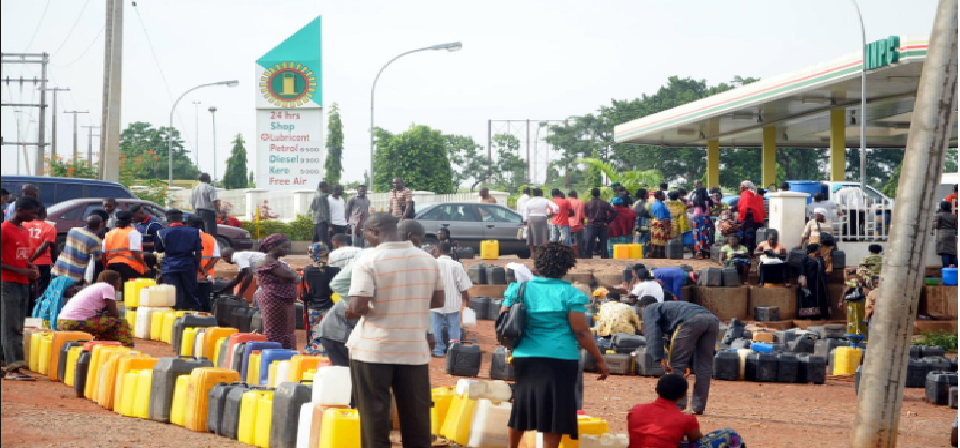

The Power of Data in Framing Nigeria’s Fuel Crisis

0

The ongoing fuel crisis in Nigeria has drawn attention from a wide range of stakeholders, including government bodies, advocacy organisations, and market players. News headlines on this issue demonstrate the strategic use of data to shape public narratives, justify policy decisions, and influence perceptions. Our analysis delves into selected headlines from The Punch, a leading Nigerian newspaper, to explore how data power is wielded in this crisis. What insights do these headlines offer about the underlying power dynamics, and how do they influence the way Nigerians understand the complexities of their nation’s fuel crisis?

Data Framing and Social Justice

The Social and Economic Rights and Accountability Project (SERAP) has called for a reversal of petrol prices to N600 per litre, framing this demand within the context of social justice. This figure suggests an attempt to establish a threshold of affordability based on citizens’ purchasing power and economic conditions. However, the absence of clarity regarding how this price was determined raises questions about the broader economic implications, including inflation and government revenue considerations. SERAP’s advocacy positions it as a representative voice for the populace, highlighting the tension between civil society organisations and state power in addressing fuel pricing issues.

Government Narratives and Comparative Data

In contrast, the Nigerian government has asserted that petrol prices remain among the cheapest in Africa. This narrative utilizes comparative data to suggest that current prices should be deemed reasonable by citizens. However, this framing selectively emphasizes affordability without adequately considering local economic realities such as minimum wages and inflation rates. By choosing specific benchmarks for comparison, the government seeks to legitimize its pricing policies while downplaying potential negative impacts on citizens’ livelihoods.

Financial Strain and Economic Power

Recent reports indicate that petrol’s landing cost has risen to N232, with subsidies now costing the government N5.58 billion daily. This technical data underscores a financial strain on the state and is leveraged to justify potential subsidy removals or price hikes. The emphasis on substantial daily subsidy figures serves to convey urgency regarding the sustainability of current pricing models. This narrative may prepare the public for upcoming changes that could disproportionately affect vulnerable populations.

Alternative Solutions Through Data Projections

The Independent Petroleum Marketers Association of Nigeria (IPMAN) posits that functional refineries could reduce petrol prices to below N200 per litre. This optimistic projection introduces an alternative narrative focused on enhancing local refining capacity rather than relying on imports or subsidies. By presenting this scenario, IPMAN advocates for infrastructure investments as a viable solution to high petrol prices, contrasting sharply with government or external market data.

Forecasting Future Prices

Another significant headline forecasts that fuel subsidies could reach N1.68 trillion, with potential petrol prices climbing to N900 per litre. This future-oriented data serves to provoke anxiety among citizens while shaping expectations around subsidy removals or price increases. The use of such large-scale projections highlights how data can control public discourse, making alternatives like deregulation appear necessary in light of projected financial burdens.

Market Justifications and Corporate Interests

Finally, projections indicating that petrol from Dangote’s refinery might sell for N950 per litre are used by marketers to justify further importation of fuel despite local production capabilities. This strategic use of specific figures illustrates how market actors leverage data to rationalize their actions within a complex economic landscape where corporate interests intersect with public policy.

Across these narratives surrounding Nigeria’s fuel crisis, data power plays a crucial role in shaping discussions about policy changes and public sentiment. Different stakeholders utilize data strategically—whether to advocate for social justice, justify governmental policies, or promote corporate interests—demonstrating that data is not neutral but deeply embedded in socio-political dynamics. Understanding these power dynamics is essential as Nigeria navigates its ongoing fuel crisis and seeks sustainable solutions for its energy needs.

Elon Musk To Cure Blindness with Neuralink Blindsight

0

His generation’s finest innovator and one the greatest ever, Elon Musk, has opened another separation from all humans: “We have received Breakthrough Device Designation from the FDA for Blindsight”, his company, Neuralink, wrote. 

Then Musk added: “The Blindsight device from Neuralink will enable even those who have lost both eyes and their optic nerve to see. Provided the visual cortex is intact, it will even enable those who have been blind from birth to see for the first time.”

Do you know the implication of this? He can cure blindness! #respect


Enugu State Seals N40bn Deal With Jelfa Nigeria Limited to Revitalize Sunrise Flour Mills

0

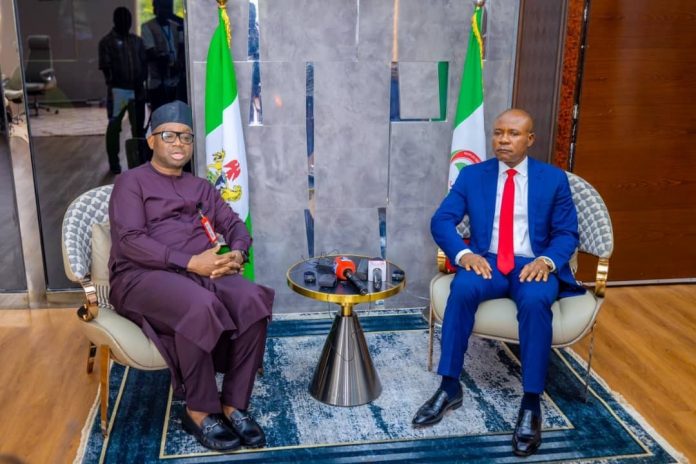
The Enugu State Government has taken a significant step towards revitalizing its industrial sector by signing a landmark N40 billion agreement with Jelfah Nigeria Limited to restore the long-abandoned Sunrise Flour Mills in Emene, a suburb of the state.

This initiative, announced by Governor Peter Mbah on his official X (formerly Twitter) account, is part of broader efforts to reinvigorate the state’s economy through strategic partnerships with the private sector.

Jelfah Nigeria Limited, under the leadership of Chairman Moses Saromi, will invest N24 billion in the deal, acquiring a 60% equity stake in the mills. Out of this, N22 billion will be dedicated to revitalizing the facility, while N2 billion will directly benefit the state.

“Today, we took another decisive step towards revitalizing our moribund assets. We signed a landmark N40bn deal with Jelfah Nigeria Ltd, led by the chairman, Moses Saromi, to revitalize the long-abandoned Sunrise Flour Mills at Emene.

“This significant partnership will see Jelfah acquiring a 60% equity stake and investing N24bn in the mills – N22bn for the revitalization and N2bn benefiting the state directly,” the statement read in part.

A critical component of the deal involves the establishment of a Special Purpose Vehicle (SPV) to manage 10,000 hectares of farmland. This land will be dedicated to cultivating essential inputs for the flour mill, including cassava and grains, ensuring a steady supply of raw materials and strengthening the state’s agricultural-industrial integration.

This agreement follows earlier initiatives by the Enugu State Government to revive key economic sectors. Notably, the state secured an N100 billion partnership with Pragmatic Palms Limited in September to restore the Enugu United Palm Products Limited (EUPPL). This investment aims to create 3,500 jobs, restore 20,000 hectares of palm plantations, and establish oil mills with refining capacities—further evidence of the state’s drive toward agro-industrialization.

In addition to these developments, the state has also partnered with a Danish firm to establish a tractor assembly plant. This move is expected to end the reliance on imported agricultural machinery, with 300 tractors projected to be assembled by the end of 2024 and up to 1,000 tractors by the following year.

Governor Mbah’s administration has shown notable interest in industrialization and economic expansion. Earlier in August, the state launched an N4.6 billion agricultural and MSME grant program, providing 12,000 farmers with fertilizers, distributing 51 power tillers, and offering other essential agricultural inputs to over 1,200 beneficiaries across all local government areas.

However, while Enugu is forging ahead with these transformative projects, it stands out alongside Abia as one of the few southeastern states actively working to boost their industrial sectors. Abia, under the leadership of Governor Alex Otti, has also made strides in revitalizing its economic landscape, particularly through efforts to clear inherited salary and pension arrears and rejuvenate the state’s industrial output.

Both states appear to be setting an example for the rest of the region. Abia’s efforts to restore key industries, alongside its initiatives to enhance trade and economic growth, mirror the work being done in Enugu. In contrast, other states in the southeastern region have not demonstrated similar levels of commitment or investment in industrial development, leaving a gap in the region’s overall economic growth.

How to Install the 1Win App in 2024: Installation Guide for Android and iPhone

0

Gaming and betting on mobile devices is an easy and enjoyable way to get away from the worries of everyday life. In South Africa, many gamblers choose the 1Win app because it is a well-known global brand with a good reputation. If you too have settled on this software, our article will tell you in detail how to install the app from here https://1winsbet.co.za/app/, as well as what to do if installation is not possible for you at the moment.

How to Prepare to Install the Application

Before you start downloading and installing the 1Win app on your Android or iPhone, consider the following important points:


  • Make sure there is enough memory on your device to install the application (15 MB). Clear the memory if necessary.
  • The app works better on the latest versions of Android and iOS. Update your system if available.
  • You will need a reliable internet connection to download and install. It is best to use a secure Wi-Fi network.
  • To install the apk file on Android, go to security settings and allow installation of apps from unknown sources.
  • Make sure you have the login and password for your 1Win account handy. This will make it easier to log in after installation.
  • Make sure that the device is sufficiently charged (more than 30%) so as not to interrupt the installation.
  • To be safe, only download the app from the official 1Win website or the App Store for iOS.
  • Prepare your deposit details in advance if you plan to bet and play in the casino.

Installing the 1Win App for Android

The process of installing the 1Win app on Android devices may seem complicated at first glance, but by following these simple steps, you’ll be able to do everything quickly and easily:

  1. To get started, open the browser on your device and navigate to the official 1Win website. It is recommended to use the default browser installed on your device, such as Chrome, to avoid download problems.
  2. On the homepage of the site, find the menu located in the top right corner of the screen. When you open it, you will see the “Downloads” section. Select it and go to the page where you can download the Android application.
  3. Select the option to download the application to Android. This will start downloading the apk file that you will need to install. Note that you may need to allow downloading files from unknown sources in the security settings of your smartphone.
  4. Once the download is complete, open the apk file.
  5. When the installation is complete, open the app. If you already have an account, login. Otherwise, you can sign up directly through the app by following the simple instructions.

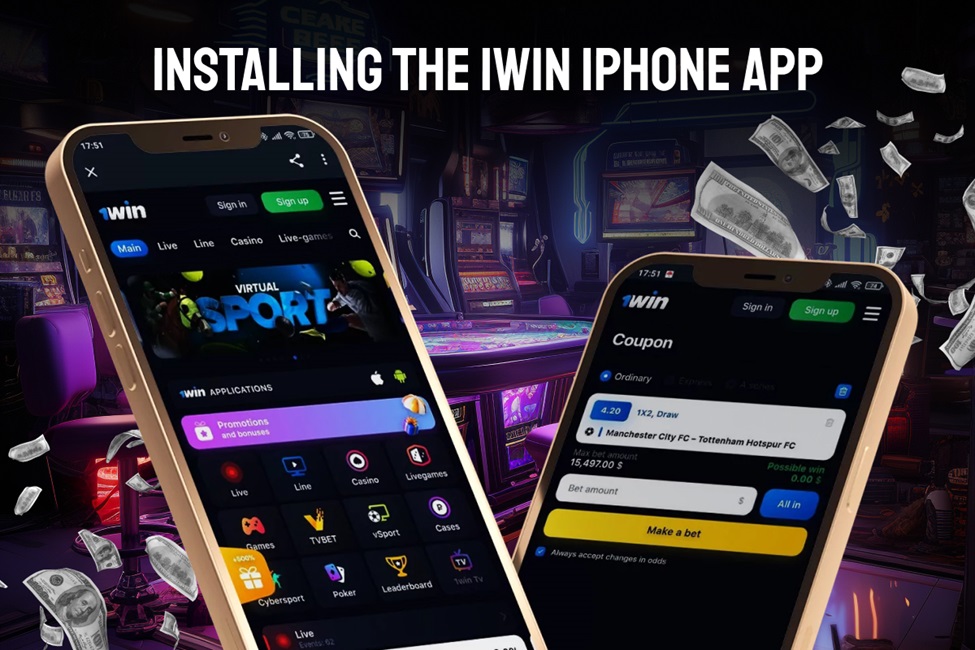
Installing the 1Win iPhone App

The 1Win app is also available for users of iOS devices. The installation is slightly different from Android, as Apple uses a different app distribution system.

  1. Open Safari browser (or any other available browser) on your iPhone and go to the official 1Win website. Find the “Downloads” section in the menu to proceed to install the app.
  2. Click on the iOS icon. This option will automatically redirect you to the App Store where you can download the app. It is important to note that you will need a valid Apple ID to install apps through the App Store.
  3. Click the “Install” button in the App Store and wait for the process to complete. The app will automatically install on your device.

Once installed, open the app on your iPhone. As with Android, you will be able to sign in to your account or register to create a new one.

Mobile Version of the 1Win Website

Not all users want to install apps on their devices. For such people there is a mobile version of the 1Win website. It provides the same game, features, bonus work and promotional code. Let’s take a look at its advantages and disadvantages:

  • The mobile version of the site does not take up any memory space on your device as it works through your browser.
  • Unlike the app, the mobile version does not need to be updated manually. All changes to the site are applied automatically.
  • The mobile version is accessible from any device with a browser, regardless of its operating system.
  • The mobile version is completely dependent on the speed of your internet connection, which can cause pages to load slowly if you have a weak signal.
  • Unlike the app, the mobile version does not provide notifications of events or bonuses.

Ultimately, of course, everyone will choose for themselves: download the app or use the mobile version. It is important to understand what your priorities are. But we can confidently say that the content in both cases will not disappoint you. Try your hand at mobile games and may you be lucky!