DD
MM
YYYY

PAGES

DD
MM
YYYY

spot_img

PAGES

Home Blog Page 2915

Solana, Ethereum, and Dogecoin Investors Are All Talking About Lightchain Protocol AI—Here’s Why

0

In a crypto market driven by innovation, Lightchain Protocol AI has become the talk of the town among investors from Solana, Ethereum, and even Dogecoin. With its revolutionary LCAI token presale, this project is setting a new standard for what blockchain can achieve by seamlessly integrating artificial intelligence (AI). But what exactly makes Lightchain Protocol AI stand out, and why are seasoned investors paying attention?

The Hype Around Lightchain Protocol AI

Unlike many projects that rely on speculative value, Lightchain Protocol AI delivers cutting-edge utility designed to solve real-world problems. Here’s why it’s becoming the go-to investment for crypto veterans:

1. Early-Stage Opportunity

Priced at just $0.03, the LCAI token presale provides a rare opportunity for investors to enter at ground level. Predictions of 10x to 100x returns make it an enticing option for those looking to diversify into a next-generation project.

2. Revolutionary Technology

Lightchain Protocol AI goes beyond what existing platforms like Solana or Ethereum offer with its Artificial Intelligence Virtual Machine (AIVM) and Proof of Intelligence (PoI):

  • The AIVM enables real-time AI computations on the blockchain.
  • PoI incentivizes meaningful contributions, such as AI model training, fostering innovation while maintaining network security.

3. Broad Use Cases Across Industries

While Ethereum dominates DeFi and Solana leads in NFTs, Lightchain Protocol AI focuses on industries where AI has transformative potential:

  • Healthcare: AI-driven privacy-preserving solutions for patient data and research.
  • Finance: Decentralized fraud detection and automated trading systems.
  • Supply Chain: Enhanced logistics transparency powered by AI.

4. Whale Activity and On-Chain Signals

On-chain analytics reveal increasing activity among whales from Solana and Ethereum moving into the LCAI presale. These investors see the potential in Lightchain Protocol AI’s scalable and innovative solutions.

Lightchain Protocol AI vs. Solana, Ethereum, and Dogecoin

  • Solana: While Solana excels in transaction speed, it lacks the AI-specific integrations that Lightchain offers.
  • Ethereum: Ethereum’s general-purpose framework is powerful, but it doesn’t address the niche need for decentralized AI computations.
  • Dogecoin: Doge thrives on community hype, but LCAI delivers real-world value, making it a more sustainable long-term investment.

Why You Should Join the LCAI Presale

Lightchain Protocol AI is more than just a blockchain project—it’s a pioneer in the integration of AI and decentralized technology. The LCAI presale is your chance to be part of this revolution, with early-stage pricing that promises significant returns as adoption grows.

Don’t miss your chance—join the LCAI presale today and be part of the future of decentralized AI.

Crypto Experts Suggest It Is Only A Matter of Time Before This New Viral Trending MemeFi Token Flips Shiba Inu

0

According to the crypto gurus, Yeti Ouro, the newly emerging meme coin may pose a threat to Shiba Inu (SHIB) soon. As Shiba Inu price continues to grow at a high rate, Yeti Ouro (YETIO) has become the latest token of interest, especially in the DeFi and P2E sectors. Some people think that Yeti Ouro may become a competitor of Shiba Inu and take a place in the meme coin market.

Shiba Inu’s Impressive Performance And Future Outlook

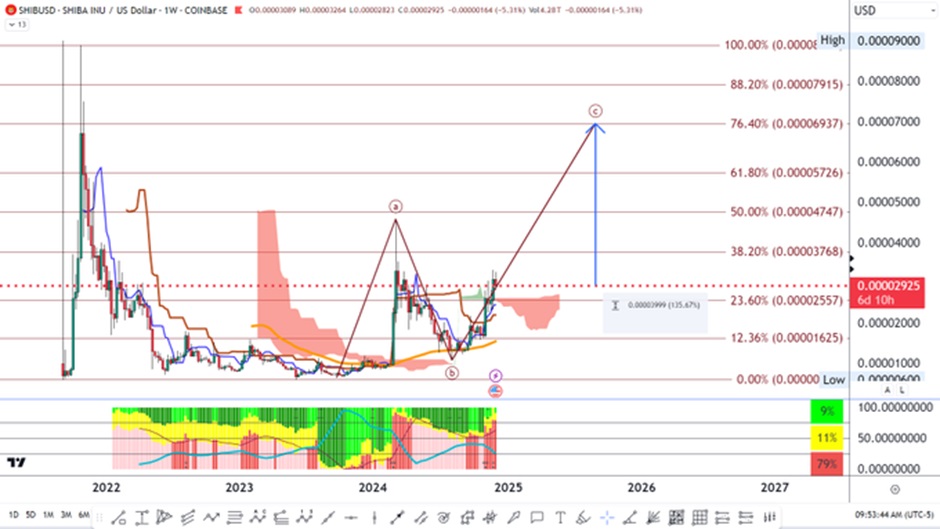
Shiba Inu has been on an upward trend for the last few months, with significant gains in the different time frames. By the time of writing, the meme token had depreciated by 6% over the past 24 hours, signaling short-term dips exchanging hands at $0.0000278.

SHIB has been one of the best performers in the meme coin space within the past month, having gained 69% within the last 30 days and 230% in a year.

Source: X

However, some analysts have recently started to explore the possibility of new competitors that may pose a threat to Shiba Inu’s position. The token hit a multi-month high of $0.000033159, on 1st December, and then experienced a small pullback. Nonetheless, it continues to trade above the crucial $0.00005 level, and, should the bulls manage to clear the $0.00006 ceiling, some analysts expect SHIB to rally by 130% to $0.00006937.

Yeti Ouro: A New MemeFi Token With Real Utility

Yeti Ouro is quickly becoming popular in the meme coin market due to its differentiated model. Unlike other meme tokens which are mainly driven by speculation, Yeti Ouro combines DeFi and P2E elements into its system.

The project is backing the Yeti Go game which allows players to engage in races and get rewarded with YETIO tokens. Furthermore, the investors can use their tokens to stake and get more rewards as well as unlock special features.

The Yeti Ouro project also has deflationary mechanics where 5% of the total supply will be used for token burns. This is a way of limiting supply in the long run hence making the remaining tokens valuable. Yeti Ouro is based on the Ethereum blockchain, which provides the project with security and interconnectivity, making it more sustainable in the long run.

Yeti Ouro’s Rapid Growth In Presale And Pricing Performance

Yeti Ouro’s presale has been a resounding success, raising over $895,000 so far. With stage one currently in its final stages, the token has already sold over 74.6 million YETIO tokens indicating great interest from the crypto community.

The presale is slowly moving towards the $1 million mark which will make Yeti Ouro even more promising in the market.

As of the time of writing, the current price of YETIO in the presale is $0.012 per token, which many investors find to be an affordable price for tokens in the early stage of the project.


Join the Yeti Ouro Community
Website: https://yetiouro.io/

Telegram: https://t.me/yetiouroofficial

Discord: https://discord.gg/YtUsEZ2ZrV

X (Formally Twitter): https://x.com/yetiouro

Decoding Nigerian Media Editorial Choices Through a Discursive-Material Lens

0

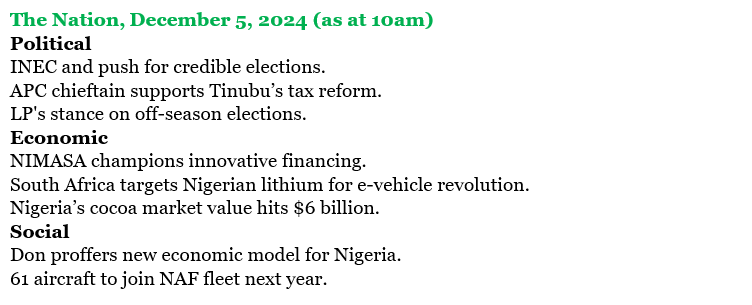
The news stories that dominate the Nigerian media provide invaluable insights into the prevailing conditions in the country. Through a discursive-material analytical framework, our analyst examines how editorial choices are shaped by political, economic, and social contexts, and how they reflect both the immediate material realities and the power dynamics that influence public discourse. The selection of stories in leading newspapers like The Guardian, The Punch, and The Nation reveals much about how media outlets frame the narrative around governance, public policy, and societal challenges.

Political Narratives: Power, Pushback, and Governance

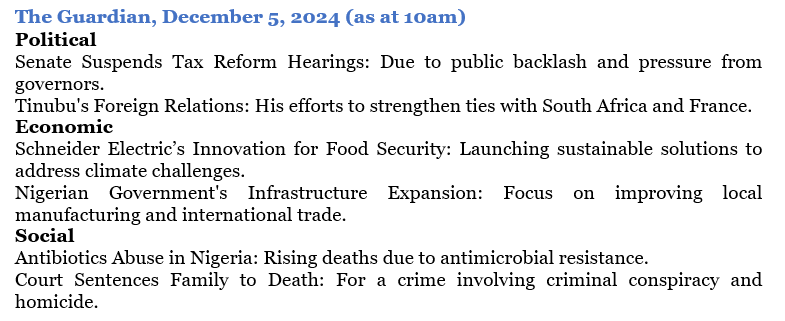
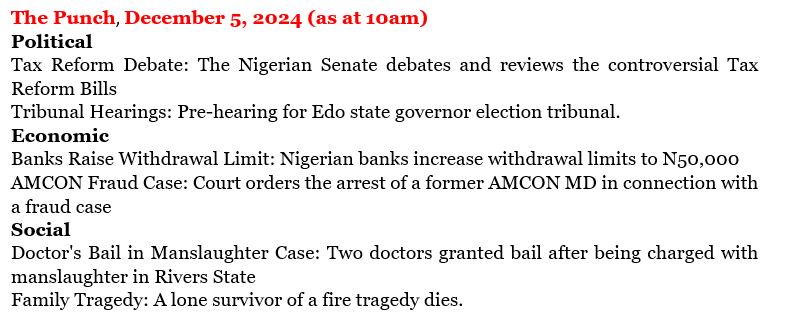
At the heart of Nigerian political discourse is a constant negotiation between the government and the public. The stories reported by The Guardian and The Punch around the suspension of the Tax Reform Bills by the Senate reflect ongoing power struggles between different political forces. The Guardian reports that the Senate suspended hearings on the controversial tax reform due to “public backlash and pressure from governors”? This decision is a direct response to public sentiment, with governors and citizens questioning the fairness of proposed taxes in an already economically strained environment.

In a broader sense, the suspension of the Tax Reform Bills shows the discursive practices of governance—how political institutions frame their actions in response to popular pressure. The public backlash that led to the suspension highlights the influence of discourse on policymaking. By framing the debate in terms of democratic participation and popular opinion, the media underscore the importance of public voice in shaping policy. This discursive strategy reflects the material conditions of an economy struggling with inflation, poverty, and underemployment, as the government’s policies are continuously tested by economic realities. In contrast, foreign policy coverage, such as President Tinubu’s efforts to strengthen ties with South Africa and France, highlights Nigeria’s diplomatic positioning amidst global challenges. These diplomatic efforts are not just political gestures but strategic moves to enhance Nigeria’s international standing and economic prospects. In this case, the discursive framing focuses on Nigeria’s role in international diplomacy, positioning the country as a key player in global trade, especially in relation to South Africa and France.

Economic Recovery and Diversification: Challenges and Strategic Innovations

Economic stories, particularly those covered by The Guardian and The Punch, reflect a nation grappling with the long-term impacts of economic mismanagement, corruption, and the need for diversification. The Guardian reports on Schneider Electric’s innovative solutions for food security and climate challenges, emphasizing the importance of sustainable development in Nigeria’s economic recovery. Similarly, the Punch covers the growing value of the Nigerian cocoa market, pegged at $6 billion. These stories are part of a broader narrative about economic diversification—moving away from oil dependency towards sectors that promise long-term growth, such as agriculture and renewable energy.

The rise in food security innovations reflects a material response to the climate crisis, which is hitting Nigeria particularly hard, with unpredictable weather patterns disrupting traditional farming practices. At the same time, the focus on the cocoa industry illustrates the government’s efforts to tap into non-oil sectors, aiming to strengthen local economies and create jobs. This discursive shift towards sustainable solutions in food security and cocoa exports speaks to a broader strategy of rebuilding the economy by focusing on resilience and diversification. The media, by amplifying these issues, also plays a role in reshaping public expectations and supporting government policies that address these material needs.

Yet, the economic realities are far from ideal. The Nigerian economy still faces high inflation, unemployment, and a struggling infrastructure. The Punch highlights the decision of Nigerian banks to raise withdrawal limits, responding to cash flow challenges. This decision is a direct consequence of inflationary pressures and the broader economic environment, where the cost of living is increasing faster than wages. The discursive framing of these changes—focusing on consumer protection and financial inclusivity—acknowledges the material conditions of Nigerians who are finding it increasingly difficult to access their own money.

Social Issues: Public Health and Social Justice

Social stories, particularly those covered by The Nation, The Punch, and The Guardian, illustrate the intersecting challenges of health, safety, and social justice in Nigeria. The rise in antibiotic abuse and its devastating impact on public health, as reported by The Guardian, highlights a growing health crisis that is claiming thousands of lives each year. This issue is not just a health concern but also a social one, as the overuse of antibiotics exacerbates antimicrobial resistance, a condition that renders many infections harder to treat. The media’s focus on this issue is a call for greater public awareness and government intervention in the health sector, urging policy action in response to the material consequences of this public health challenge. Similarly, reports on tragic family incidents, like the sentencing of a family to death for criminal conspiracy and homicide in The Punch, reflect broader societal concerns about crime, justice, and accountability. The judicial system’s role in addressing societal issues like homicide speaks to the importance of the rule of law in maintaining social order. The media’s coverage of such issues helps frame the discourse around crime and justice, highlighting the need for effective law enforcement and a functioning judiciary to address the material realities of crime in Nigerian society.

The Latest Trump Crypto Rumours In The News, As DeFi Altcoin Cutoshi ($CUTO) Continues To Trend

0

As President Donald Trump continues to explore ways to make the US ‘the crypto capital of the world,’ we examine the promises made which coins are set to benefit from the new crypto policies, such as the DeFi project Cutoshi.

A Bitcoin National Reserve – Ambitious Or Achievable?

Among Trump’s most eye-catching proposals is the idea of a Bitcoin National Reserve. The concept would see the United States stockpiling Bitcoin as part of its national treasury to reduce debt and secure its financial future.

While analysts like Geoff Kendrick from Standard Chartered call it a long shot, the idea has rallied crypto enthusiasts who see it as a landmark moment for blockchain’s mainstream acceptance.

If implemented, this reserve could shift global attitudes toward Bitcoin, increasing its legitimacy and boosting the broader crypto market.

Projects like Cutoshi, which sit at the intersection of DeFi and meme culture, could benefit from the renewed interest in decentralized systems as investors explore altcoins with strong narratives and utility.

Loosening Regulations And A Shake-Up At The SEC

One of Trump’s first promises to the crypto industry is to remove the regulatory bottlenecks created by the SEC under Gary Gensler.

Known for his aggressive stance against major players like Binance, Coinbase and Ripple, Gensler’s leadership has been widely criticized for creating uncertainty in the industry. Trump has even promised to fire Gensler on day one, although legal experts note this could be challenging given the SEC’s independent status.

However, rumors suggest that Gensler is going to step down on the first day of the Trump administration, and the crypto market is following this by boosting coins previously targeted by the SEC, such as XRP, and privacy coins like Monero.

The administration is also considering a pivot to the Commodity Futures Trading Commission (CFTC) as the primary regulator for digital assets. This move could result in fewer enforcement actions and a more welcoming environment for crypto innovators.

Trump has also announced his anti-CBDC (Central Bank Digital Currency) stance, which crypto enthusiasts support because CBDCs move away from the original blockchain ethics of decentralization.

For DeFi projects like Cutoshi, a friendlier regulatory landscape could open the door to wider adoption. With plans to build a cross-chain decentralized exchange and introduce features like token farming and DeFi education, Cutoshi is creating a more fun way for people to participate in the crypto economy.

The Crypto Power Players Behind Trump’s Administration

Vice President-elect JD Vance is a Bitcoin holder and key cabinet picks like Robert Kennedy Jr., Howard Lutnick and Pete Hegseth have all disclosed significant investments in digital assets. Lutnick, for example, has deep ties to Tether, managing the US Treasury holdings that back the world’s largest stablecoin.

This pro-crypto team is expected to push for reforms that make it easier for banks and financial institutions to hold and manage digital assets. If successful, this could bring more institutional capital into the market, lifting projects like Cutoshi that combine strong community engagement with real-world utility.

Trump and his family also stand to benefit from the World Liberty Finance project, a crypto that is not about trading but rather having a voice in governance to vote on future DeFi-related proposals.

Cutoshi’s Place In The Golden Era Of Crypto

Cutoshi is building a foundation for long-term success. With a focus on making DeFi accessible and fun, the project has meme appeal with practical tools, like a P2P cross-chain DEX and an education platform for new users. This is the perfect combo for retail who are DeFi curious.

CUTO is now in stage 4 of presale, having just sold out of stage 3 after recently trending on X. CUTO is currently trading at $0.031.

Presales have sometimes caused issues with the SEC, such as Ripple or Toncoin, so now US investors can feel free to take part in this project. From a long-term perspective, its ability to introduce new people to DeFi is something that fits well with the timing and geopolitical climate, meaning that altcoins like Cutoshi may be the next moonshot.


For more information on the Cutoshi (CUTO) Presale:

https://cutoshi.com/


Join and become a community member:

https://twitter.com/CutoshiToken

https://t.me/cutoshi

Nigeria Raises $2.2 Billion Through Eurobond Auction Amid Rising Concerns Over Debt Sustainability

0

Nigeria has successfully raised $2.2 billion through its latest Eurobond auction, a move aimed at addressing the country’s widening fiscal deficit.

This development marks Nigeria’s first return to the international capital markets since March 2022, signaling renewed efforts to bolster its strained finances in the face of persistent revenue shortfalls and growing public spending demands.

The auction saw the issuance of two bonds with varying tenors: a 6.5-year bond priced at 9.625%, which raised $700 million, and a larger 10-year bond priced at 10.375%, which secured $1.5 billion. These bonds were issued under the Regulation S/144A structure, making them accessible to U.S. and international investors. According to sources, the total subscription exceeded $9 billion, with only $2.2 billion ultimately allotted.

The proceeds from the bond sale are earmarked to support Nigeria’s 2024 budget, which has been stretched thin by disruptions in crude oil production, insufficient tax revenues, and challenges in diversifying the economy. The Debt Management Office (DMO) announced that the bonds will settle on December 9, 2024, and be listed on the London Stock Exchange’s Main Market.

In its official statement, the DMO described the auction as a significant success, noting that the bonds attracted a wide range of investors from regions such as the United Kingdom, North America, Europe, Asia, and the Middle East, alongside domestic participants.

“The transaction attracted a peak orderbook of more than $9.0 billion,” the statement read. “This underscores the strong support for the transaction across geography and investor class. With respect to investor class, demand came from a combination of fund managers, insurance and pension funds, hedge funds, banks, and other financial institutions.”

The oversubscription has been touted as a sign of investor confidence in Nigeria’s economic direction under President Bola Tinubu’s administration. Finance Minister Olawale Edun highlighted the issuance as evidence of growing trust in the government’s efforts to stabilize the economy and promote sustainable growth. Similarly, Central Bank Governor Olayemi Cardoso praised the outcome as a reflection of improved liquidity and market access for the country.

DMO Director-General Patience Oniha also celebrated the achievement, emphasizing strong investor demand, which was 4.18 times the offer size.

“The competitive pricing of the new 6.5-year and 10-year Notes reflects the confidence investors have in Nigeria’s sound macro-economic policy framework and prudent fiscal and monetary management,” she said.

High Yields Raise Concerns

Despite the oversubscription, the yields on the bonds—particularly the 10-year bond at 10.375%—have sparked concerns about Nigeria’s financial stability. These high yields suggest that investors are demanding significant risk premiums due to the country’s economic challenges and perceived credit risks. Analysts have noted that such high yields place the bonds near junk status, raising red flags about Nigeria’s ability to manage its escalating debt burden.

“The secured overnight financing rate in the US floats between 2.9% and 3.2%,” financial analyst, Kelvin Emmanuel, noted. “The SOFR in emerging markets is typically 6%. The country risk premium for the issuer default rating in Nigeria has added additional 3.6%. Borrowing money to finance deficits in the 2024 budget that’s less than 30-days to its end is not an achievement.”

Another analyst, Rufai, echoed similar sentiments, stating, “If you issue a 10-year Eurobond at a 10% interest rate during a time when global financial conditions are expected to improve, investors will likely buy in heavily, leading to oversubscription. This surge in demand doesn’t necessarily reflect confidence in your economy.”

The Eurobond issuance comes as Nigeria grapples with a burgeoning fiscal deficit and mounting public debt. The auction, managed by a consortium of international and domestic financial institutions including Citigroup, Goldman Sachs, JPMorgan Chase, and Standard Chartered, underscores the government’s continuous reliance on external borrowing to bridge funding gaps.

While the government views the oversubscription as a positive signal, critics caution that the high borrowing costs could exacerbate Nigeria’s long-term debt sustainability challenges. There is concern that with less than a month left in the fiscal year, the raised funds provide a short-term reprieve but do little to address the underlying structural issues that have strained Nigeria’s finances for years.