DD
MM
YYYY

PAGES

DD
MM
YYYY

spot_img

PAGES

Home Blog Page 292

US Sanctions Russian Oil Companies

0

The United States imposed sanctions on Russia’s two largest oil producers, Rosneft and Lukoil, marking the first such action against Russia in President Donald Trump’s second term.

These measures, announced by the US Department of the Treasury’s Office of Foreign Assets Control (OFAC), aim to pressure Moscow into agreeing to an immediate ceasefire in its ongoing war against Ukraine, which began in February 2022.

The sanctions were enacted under Executive Order 14024, targeting entities operating in Russia’s energy sector. The move follows the abrupt cancellation of a planned summit between Trump and Russian President Vladimir Putin in Budapest, Hungary, which Trump described as not “feeling right.”

Treasury Secretary Scott Bessent emphasized that the sanctions address “Putin’s refusal to end this senseless war,” noting that the targeted companies fund the Kremlin’s “war machine.”

The US has urged allies to join these efforts, with a wind-down period for existing transactions until November 21, 2025. Rosneft state-controlled, led by Putin’s ally Igor Sechin and Lukoil. Nearly three dozen subsidiaries are also affected.

Freezing of all US-based assets owned by these companies. Prohibition on US persons individuals and entities conducting business with them. Threats of secondary sanctions on foreign financial institutions that facilitate transactions involving Rosneft or Lukoil oil sales. Such banks risk losing access to US markets and the dollar-based financial system.

Oil and gas account for about 25% of Russia’s federal budget. Rosneft and Lukoil together produce around 3.1–3.7 million barrels per day (bpd) of oil and gas condensate, representing nearly half of Russia’s crude exports and about 3.3% of global oil output.

Vertically integrated; 49% stake in India’s Nayara refinery 400,000 bpd, reliant on Russian crude; projects in Central Asia, Africa, Latin America. Major exporter to India, China; earned ~$13.28 billion in profit.

Exploration/production/refining; supplies to Hungary, Slovakia, Turkey’s STAR refinery; refineries in Bulgaria (190,000 bpd) and Romania; retail networks in Europe. Key supplier to Europe and Asia; international downstream projects.

Brent crude surged 4.7–5% to $65.53 per barrel, a two-week high, due to fears of reduced Russian supply. This echoes a 1.6% rise after the UK’s similar sanctions last week. The MOEX Russia Index dropped 3.6% to 2,546, its lowest in over a week.

Chinese state oil majors suspended seaborne Russian oil purchases. India’s refiners are reviewing contracts and poised to sharply cut imports—potentially to zero—to avoid secondary sanctions, amid US tariffs of up to 50% on Indian goods as retaliation for past Russian oil buys. This could remove a major buyer for Russia’s discounted crude.

Sanctioned Rosneft and Lukoil last week, warning of global fuel disruptions. EU: Adopted its 19th sanctions package, banning Russian liquefied natural gas (LNG) imports from January 2027. Rosneft is already sanctioned, but Lukoil has exemptions for buyers like Hungary and Slovakia.

Unlike the Biden administration, which delayed sanctioning these firms to avoid inflating energy costs, Trump’s approach combines diplomacy with economic leverage. Trump has expressed hope that the sanctions “won’t be on for long” if peace talks resume, while imposing tariffs on non-compliant allies like India.

Experts view this as a “significant escalation,” potentially constricting Russia’s revenue but risking higher global energy prices. A former Treasury official noted that secondary bank sanctions could be the most effective, as they deter third-party enablers.

However, some analysts doubt immediate impact on Putin without broader targeting of banks or key buyers like China. The sanctions could degrade Russia’s war funding by limiting exports to major markets, forcing discounted sales or rerouting via “shadow fleets.”

Ukraine hailed it as “great news,” while Russia warned of supply disruptions. With nuclear drills underway in Moscow and US restrictions eased on Ukraine’s long-range missiles, tensions remain high. Further US actions are possible if no ceasefire emerges, potentially including asset seizures to aid Ukraine’s defense.


Transparent Leadership & Trusted Audits: Why BlockDAG Is the Best Crypto to Buy This October

0

Crypto has had its share of hidden teams and short-lived promises, leaving many cautious about where to place their trust. BlockDAG (BDAG) has set a different example, opting for transparency, accountability, and verified performance. Led by CEO Antony Turner, supported by Dr. Maurice Herlihy, and backed by CertiK and Halborn audits, the project combines visibility, expertise, and security into one credible framework.

Having raised nearly $430 million in its presale and priced at $0.0015 for a limited time, BlockDAG isn’t a faceless venture; it’s a public, accountable ecosystem that’s setting new standards for openness in crypto. The project’s upcoming Binance AMA on Friday, October 24, at 3 PM UTC will give the global community direct access to insider updates, new roadmap details, and developments ahead of Keynote 4: The Launch Note and GENESIS DAY. With BDAG still available in Batch 31 and the TGE code offering extra benefits before the dashboard upgrade and price jump, the countdown is officially on.

Why Transparency Matters More Than Ever

Anonymous founders and disappearing projects have shaken confidence in crypto. BlockDAG’s decision to maintain a public, fully accountable team has changed that narrative. Antony Turner, a seasoned executive known for his work at Spirit Blockchain and SwissOne Capital, gives the project visible, responsible leadership. This clarity allows buyers to see the people driving progress rather than faceless profiles.

Transparency doesn’t just inspire confidence, it builds stability. It allows supporters to evaluate decisions, technology, and partnerships based on evidence, not speculation. In an environment where credibility is rare, BlockDAG’s open leadership structure offers a foundation that makes participation feel secure and informed. This clear, accountable framework is what makes BDAG one of the best cryptos to buy now for those seeking long-term reliability in a volatile market.

The Value of Real Expertise

Leadership is crucial, but expertise turns ideas into lasting systems. BlockDAG’s advisory board includes Dr. Maurice Herlihy, a world-renowned computer scientist and recipient of the Gödel and Dijkstra Prizes, often considered the highest honors in computing. His involvement ensures that BDAG’s architecture is built on academically validated design principles, not untested concepts.

Dr. Herlihy’s experience in distributed computing directly strengthens BlockDAG’s hybrid architecture, which merges Proof-of-Work security with DAG scalability. This ensures the network isn’t only efficient but also structurally sound, ready for real adoption. When credible research meets capable execution, projects transition from hype to substance. That’s why BlockDAG continues to be viewed as one of the best cryptos to buy now, bridging theory with practice.

How CertiK and Halborn Validated BlockDAG’s Security

For most crypto projects, claims of safety are marketing slogans. BlockDAG has taken the extra step by completing full audits from CertiK and Halborn, two leading blockchain security firms trusted by global institutions. These audits examine the project’s codebase, network structure, and smart contract layers to detect vulnerabilities before public release.

Passing both reviews confirms that BlockDAG’s technical foundation is sound and ready for real-world application. It shows that the project values verifiable proof over speculation, which is key to earning lasting trust. This commitment to transparency and audit-backed quality assurance has drawn attention from both individual users and large-scale backers. It’s this proactive approach to security that reinforces why BlockDAG is seen as the best crypto to buy now, a project built to perform and endure.

How Credibility Becomes Value

In crypto, short-term hype fades quickly, but genuine credibility builds value that lasts. BlockDAG’s success formula, visible leadership, world-class advisory, and independent audits, creates a feedback loop of trust and adoption. This structure attracts not only casual participants but also larger entities that value proven governance and compliant frameworks.

The BDAG coin, currently available at $0.0015, provides access to one of the few ecosystems that combine institutional-level trust with technological performance. This mix of transparency, verified systems, and community backing has created lasting traction, pushing BlockDAG far beyond typical presale expectations. It’s a demonstration that trust and growth can coexist, making BDAG a leading choice for those looking for the best crypto to buy now before the final presale window closes.

Final Overview

For years, the biggest question in crypto has been simple: who can you trust? BlockDAG answers that question through proof, not promises. With Antony Turner’s public leadership, Dr. Herlihy’s advisory guidance, and audits by CertiK and Halborn, the project has built its credibility from the ground up.

As its presale crosses $430 million and the Binance AMA approaches, BlockDAG continues to deliver on every front: security, visibility, and scalability. The TGE code offers a last entry at $0.0015, providing access before the dashboard upgrade and price rise. In a market full of uncertainty, BlockDAG has made reliability measurable. That’s why it’s consistently recognized as the best crypto to buy now, combining trust, technology, and timing into one complete package.

Presale: https://purchase.blockdag.network

Website: https://blockdag.network

Telegram: https://t.me/blockDAGnetworkOfficial

Discord: https://discord.gg/Q7BxghMVyu


China Reclaims Position as Germany’s Top Trading Partner as U.S. Tariffs Bite

0

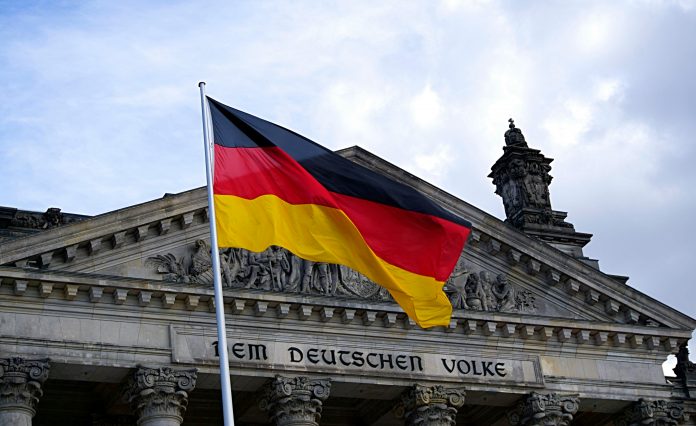
China has overtaken the United States to become Germany’s largest trading partner once again, underscoring how renewed U.S. tariffs and shifting global supply dynamics are reshaping the economic relationship between Europe’s biggest economy and its top export markets.

Preliminary data from Germany’s statistics office showed that total trade between Germany and China reached €163.4 billion ($190.7 billion) from January to August 2025, narrowly surpassing €162.8 billion in trade with the United States. The figures, calculated by Reuters, reveal how rising protectionism under President Donald Trump’s second administration has reversed last year’s trend, when the U.S. temporarily displaced China after eight years of Chinese dominance in German trade.

The latest shift comes despite Berlin’s stated efforts to reduce its economic dependence on Beijing amid political frictions and concerns about unfair trade practices. The data, however, suggest that Germany’s diversification efforts have run into the hard realities of global demand and industrial interdependence.

Tariffs Take a Toll on German Exports

U.S. tariffs have played a central role in the latest reversal. German exports to the United States fell 7.4% in the first eight months of 2025 to €99.6 billion, a sharp decline that worsened as the year progressed. In August alone, exports to the U.S. dropped 23.5% year-on-year, signaling that the impact of trade barriers is accelerating.

“There is no question that U.S. tariff and trade policy is an important reason for the decline in sales,” said Dirk Jandura, president of the BGA foreign trade association.

Jandura explained that U.S. demand for Germany’s signature export products—automobiles, machinery, and chemical goods—has weakened significantly. These categories, long pillars of German industry, are among those hit hardest by new American tariffs targeting vehicles and industrial components.

The Trump administration’s latest trade measures, introduced earlier this year, were aimed at narrowing the U.S. trade deficit and protecting domestic manufacturers. But for Germany, which relies on the U.S. as its second-largest export destination, the measures have cut deep.

Carsten Brzeski, global head of macro at ING, said that the combination of tariffs and a stronger euro had dealt a double blow to German exporters.

“With the ongoing tariff threat and the stronger euro, German exports to the U.S. are unlikely to rebound any time soon,” he said.

Germany’s export-driven economy is particularly sensitive to global policy shifts. Automakers such as Volkswagen, BMW, and Mercedes-Benz have large production bases in the United States but still depend heavily on transatlantic trade flows. Machinery and equipment manufacturers—another key sector—also face headwinds as American companies source more domestically to avoid import penalties.

While exports to the United States fell, Germany’s trade relationship with China followed a more complex pattern. Exports to China dropped even more steeply than those to the U.S.—down 13.5% year-on-year to €54.7 billion in the first eight months of 2025. However, this was more than offset by a surge in imports from China, which rose 8.3% to €108.8 billion.

This import boom pushed the overall trade balance in China’s favor and reestablished Beijing as Berlin’s top trading partner, continuing a trend of structural dependence that German policymakers have struggled to unwind.

“The renewed import boom from China is worrying,” said Brzeski, noting that “data shows that these imports come at dumping prices.”

Economists have linked the surge in Chinese imports to aggressive pricing in key sectors such as electric vehicles, solar technology, and consumer electronics. These low-cost goods have gained significant market share in Europe, challenging local producers and raising fears of deindustrialization in Germany’s manufacturing heartland.

Brzeski warned that such trends “not only increased German dependence on China but could add to stress in key industries where China has become a major rival.”

The concerns echo similar warnings from European Union officials, who have launched investigations into alleged Chinese dumping practices in the electric vehicle market. The European Commission has accused Chinese automakers of benefiting from heavy state subsidies that allow them to undercut European competitors, a charge Beijing has denied.

For Germany, which remains the EU’s largest importer of Chinese goods, these developments present a policy dilemma. Berlin has been vocal about the need for “de-risking” from China—a term Chancellor Olaf Scholz’s government uses to describe reducing economic exposure without outright decoupling. Yet, as the new data show, German industry continues to rely heavily on Chinese components and intermediate goods.

Repercussions for Berlin

The return of China as Germany’s top trading partner points to how geopolitical and economic forces are pulling Berlin in opposing directions. On the one hand, the government has urged companies to diversify supply chains and reduce dependence on authoritarian regimes. On the other hand, the structural integration of the two economies—especially in automotive and machinery sectors—makes any sudden decoupling costly and complex.

The imbalance between imports and exports also raises questions about competitiveness. Germany’s exports to China have been declining amid slowing Chinese growth and increased local competition. Meanwhile, Chinese companies have deepened their footprint in Europe, expanding exports in high-value segments such as green energy and advanced manufacturing.

Economist Salomon Fiedler of Berenberg Bank said the shifts highlight Germany’s growing vulnerability to external shocks.

“In the absence of economic dynamism at home, some in Germany may now be troubled by any shifts on world markets,” he observed.

Fiedler’s remarks point to a broader malaise in the German economy, which has been stagnating under weak domestic investment, rising energy costs, and subdued consumer demand. The latest trade figures thus expose not just a change in trading partners but a structural imbalance that could constrain Germany’s growth for years.

A Shifting Global Trade Order

The developments also mirror a wider reordering of global trade ties in 2025. As Washington doubles down on tariffs and industrial policy, and Beijing continues to expand its export dominance, Europe finds itself navigating between two rival powers.

For Germany, once the undisputed export powerhouse of Europe, the growing trade friction with the United States and rising dependence on China represent a narrowing strategic corridor. The country’s export sector—long the engine of its prosperity—now faces mounting pressure to adapt to a multipolar world defined by protectionism, currency fluctuations, and technological rivalry.

Germany’s trade policy is expected to be a central issue in upcoming EU economic strategy discussions. Analysts say Berlin’s challenge will be to strike a balance between safeguarding its industrial base and aligning with broader Western efforts to limit reliance on Chinese supply chains.

As Brzeski warned, the data show that “the renewed import boom from China” could deepen Germany’s vulnerabilities if unchecked. At the same time, with U.S. tariffs showing no sign of easing, the country’s traditional export model appears to be under its greatest strain in years.

What began as a statistical shift in trade tables now reflects a deeper structural reality: Germany’s economic compass, long anchored between Washington and Beijing, is once again swinging toward China — even as the political winds in Berlin blow the other way.

Baidu Expands Global Self-Driving Push with PostBus Partnership in Switzerland

0

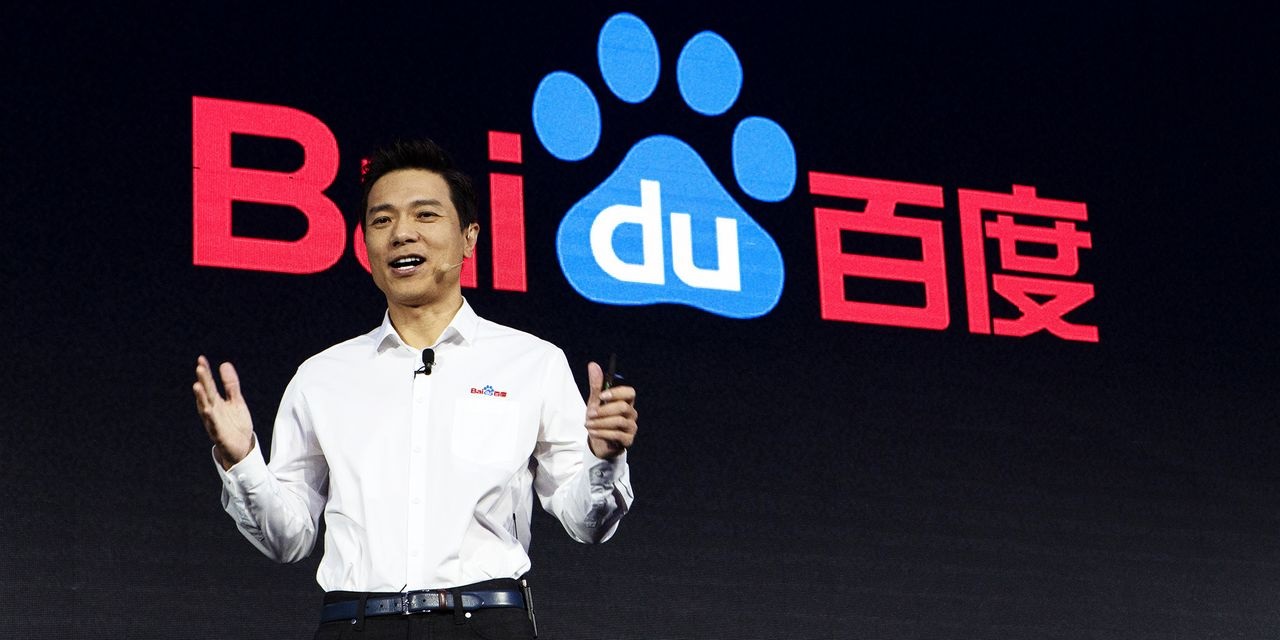
Baidu has announced a partnership with Switzerland’s PostBus, the public transport arm of Swiss Post, to launch its Apollo Go autonomous vehicle service in the European country, marking another major step in the Chinese technology company’s bid to expand its self-driving business across international markets.

Under the agreement, Baidu and PostBus will begin trial operations in December 2025, with full commercial service expected by early 2027, according to a joint statement on Wednesday. The program will deploy Baidu’s Apollo Go robotaxis in eastern Switzerland, operating routes that stretch across the cantons of St. Gallen, Appenzell Ausserrhoden, and Appenzell Innerrhoden.

The collaboration signals a strategic shift for Baidu as it moves to globalize its autonomous driving operations beyond China and the Middle East, leveraging partnerships with established Western transport operators to gain regulatory traction and local credibility.

A European Debut for Apollo Go

The partnership with PostBus marks Apollo Go’s first entry into continental Europe, expanding its current operations in Dubai, Abu Dhabi, and Hong Kong, where Baidu already runs a fleet of more than 1,000 fully driverless vehicles.

The European launch will see Baidu’s autonomous shuttles integrated into Switzerland’s regional mobility network, where PostBus has long served as a critical public transit link for remote and mountainous communities.

The companies said the goal is to combine Baidu’s AI-driven navigation and perception systems with PostBus’s deep operational experience in local transport logistics. If successful, the service could serve as a model for integrating autonomous driving technology into existing European public transport systems.

While Switzerland has a relatively open regulatory framework for autonomous testing compared to larger EU markets, Baidu’s move is still seen as a significant regulatory and technological milestone. The Swiss government has previously permitted pilot programs for self-driving delivery and shuttle services, making it a logical testbed for Baidu’s expansion.

The deal with PostBus follows Baidu’s recent string of alliances aimed at accelerating its global rollout of Apollo Go. In August 2025, Baidu struck a partnership with Lyft to deploy robotaxis across multiple European cities beginning next year. Earlier this year, it also signed a major agreement with Uber to integrate thousands of its autonomous vehicles into the Uber platform across several international markets.

Through these partnerships, Baidu appears to be adopting a collaborative model that contrasts sharply with the go-it-alone approach of U.S. competitors such as Waymo and Cruise, which have focused primarily on the American market.

Analysts believe Baidu’s decision to align with established mobility networks gives it an advantage in entering highly regulated markets. By piggybacking on local transport operators, Baidu gains access to existing fleets, infrastructure, and passenger networks while minimizing the regulatory burden typically associated with introducing autonomous systems from scratch.

From Search Engine to AI Powerhouse

Baidu, long recognized as China’s dominant search engine, has spent the last several years diversifying its business as advertising revenues slowed amid a weakening domestic economy. The company has poured billions into artificial intelligence, autonomous driving, and cloud computing, positioning these sectors as its future growth engines.

Apollo Go is now a central pillar of that transformation. The platform combines Baidu’s proprietary self-driving software stack, high-definition mapping, and vehicle-to-infrastructure communication technologies. The company says its systems are capable of Level 4 autonomy — meaning vehicles can operate without human intervention in most conditions.

Baidu’s autonomous division has achieved several firsts in China, including commercial driverless taxi services in Beijing, Wuhan, and Shenzhen, and it has received the country’s highest-level permits for fully driverless operations. However, growth within China has slowed as domestic rivals such as Pony.ai, WeRide, and AutoX expand their presence, while regulatory scrutiny on AI systems tightens.

The push into Europe and the Middle East, therefore, reflects both a strategic hedge and an effort to position Baidu as a global AI mobility brand rather than one confined to the Chinese market.

A Test Case for China’s Autonomous Ambitions

The Swiss rollout also underscores China’s growing ambitions in exporting AI-powered mobility technology. While Chinese automakers have made significant inroads into Europe’s electric vehicle market, Baidu’s move represents one of the first major attempts by a Chinese tech company to operate fully autonomous passenger services on European soil.

Baidu’s debut in Switzerland comes as its American counterparts — including Waymo, backed by Alphabet, and Cruise, owned by General Motors — continue to struggle with regulatory pushback and public safety concerns in the United States. Both companies have faced operational suspensions and investigations after a series of accidents in San Francisco and Phoenix, leading U.S. regulators to impose stricter oversight on autonomous vehicle deployments.

It is expected that success in Switzerland could help Baidu establish a bridgehead for expansion into larger EU markets, including Germany and France, where regulators remain cautious but are under pressure to modernize transportation infrastructure.

Switzerland’s emphasis on innovation and high public trust in technology could provide fertile ground for public acceptance of self-driving vehicles. However, questions remain about data governance, cybersecurity, and cross-border control of AI-driven mobility systems—sensitive issues in a continent increasingly wary of Chinese technology influence.

With operations now spanning 16 cities worldwide, Baidu’s Apollo Go network is emerging as one of the most geographically diverse autonomous fleets in the world. Its expansion strategy—anchored in partnerships with established transport and ride-hailing firms—suggests that Baidu aims to build a federated ecosystem of robotaxi networks that adapt to local conditions rather than imposing a single centralized model.

For PostBus, the partnership offers an opportunity to modernize its fleet and test cost-efficient automation technologies in regions where low population density makes traditional bus services expensive to maintain.

In a joint statement, both companies said they see a long-term opportunity to integrate autonomous vehicles into everyday mobility, combining safety, sustainability, and accessibility.

As global competition intensifies among AI transport pioneers, Baidu’s European entry sets the stage for what could become a defining chapter in the race to commercialize driverless mobility at scale.

Baidu’s partnership with PostBus gives the company something none of its major U.S. counterparts can yet claim — a commercial pathway for fully autonomous operations in Europe.

Polymarket Will Serve As Clearinghouse For DraftKings’s Railbird

0

DraftKings, a leading U.S. sports betting platform, has acquired Railbird Technologies—a CFTC-regulated designated contract market (DCM) specializing in event-based contracts—to expand into prediction markets.

As part of this move, blockchain-based prediction platform Polymarket will serve as the official clearinghouse for DraftKings’ new “DraftKings Predictions” mobile app, handling trade verification, collateral management, and settlement to ensure secure and fair operations.

This partnership was announced by Polymarket founder Shayne Coplan on October 22, 2025, shortly after the Railbird acquisition news broke. DraftKings purchased Railbird founded in 2021 and CFTC-approved as a DCM in June 2025 for an undisclosed amount one report speculates around $250M.

Railbird’s platform enables regulated event contracts on non-sports topics like finance, entertainment, and culture, with potential expansion to sports in states without existing sports betting (e.g., California, Texas).

Polymarket’s Role: Through its QC Clearing arm acquired from QCEX for $112M in June 2025, Polymarket will act as the backend intermediary, reducing counterparty risk and leveraging its expertise in decentralized prediction markets. This aligns with a recent CFTC no-action letter easing reporting requirements for event contracts.

DraftKings Predictions app is slated for release in the coming months, initially focusing on non-sports events to comply with regulations. CEO Jason Robins highlighted the combo of Railbird’s tech, DraftKings’ 28-state reach, and mobile expertise as a “win” for the $4B+ monthly prediction market sector.

Prediction markets like Polymarket and Kalshi have exploded in 2025, with October trading volumes already at $4.63B Kalshi leading at $2.87B. DraftKings’ entry pits it against these players while benefiting from Polymarket’s infrastructure.

Polymarket also inked a multi-year NHL licensing deal on the same day, signaling U.S. sports betting integration. This deal bridges traditional sports betting with crypto-native prediction markets, potentially accelerating mainstream adoption.

It could reshape competition, with DraftKings using its brand to capture non-crypto users, while Polymarket gains B2B revenue and regulatory credibility. However, concerns linger about blurring lines between gambling and finance, as noted by analysts. Shares of DraftKings rose ~2% post-announcement, though down 8% YTD.

DraftKings’ entry into prediction markets, leveraging Polymarket’s blockchain-based clearinghouse, bridges traditional sports betting with decentralized platforms. This could drive broader acceptance of prediction markets among non-crypto users, given DraftKings’ established brand and 28-state presence.

DraftKings becomes a direct competitor to platforms like Kalshi and Polymarket, which dominate with $4.63B in October 2025 trading volume. Its mobile expertise and regulatory compliance via Railbird’s DCM status may attract users seeking regulated alternatives, potentially pressuring standalone prediction platforms.

By serving as DraftKings’ clearinghouse, Polymarket secures a stable B2B revenue stream and enhances its regulatory credibility through QC Clearing’s CFTC alignment. This strengthens its position in the U.S. market, especially after its NHL licensing deal.

The blurring of gambling and financial speculation raises questions about consumer protection and market integrity. Analysts note potential risks of unchecked speculation in event contracts, which could invite stricter CFTC oversight.

The “DraftKings Predictions” app, focusing initially on non-sports events (e.g., finance, entertainment), could tap into states without sports betting, like California and Texas, expanding the $4B+ prediction market sector.

DraftKings’ stock rose ~2% after the announcement, reflecting optimism, though its 8% YTD decline suggests broader market challenges. X posts highlight excitement for innovative markets like crypto events, potentially boosting user engagement.

These dynamics suggest a transformative moment for prediction markets, balancing growth potential with regulatory and competitive hurdles.