DD
MM
YYYY

PAGES

DD
MM
YYYY

spot_img

PAGES

Home Blog Page 2926

Nigeria’s Inflation Rate Drops to 32.15% in August 2024

0

Nigeria’s inflation rate recorded a slight decline in August 2024, dropping to 32.15% from 33.40% in July 2024, according to the latest Consumer Price Index (CPI) report released by the National Bureau of Statistics (NBS).

This indicates a 1.25 percentage point decline from July’s rate, signaling some relief for the country’s economy.

However, the year-on-year (YoY) headline inflation rate for August 2024 was 6.35 percentage points higher than the 25.80% recorded in August 2023. This demonstrates that while inflation is easing month-on-month, it remains significantly higher compared to the same period in the previous year.

The report notes that inflationary pressures persist, especially given that price increases have been a consistent trend since early 2024.

“On a month-on-month (MoM) basis, inflation in August 2024 stood at 2.22%, a slight decline of 0.06 percentage points from the 2.28% recorded in July 2024,” the report said, underscoring a reduction in the pace of price increases in August compared to July.

The average CPI for the twelve-month period ending August 2024 was 31.26%, marking an 8.88 percentage point increase from the 22.38% recorded for the same period ending in August 2023. This data underlines the long-term upward trajectory of inflation over the past year.

Urban and Rural Inflation

The NBS also provided data on inflation in urban and rural areas. In urban areas, the inflation rate in August 2024 was 34.58% YoY, reflecting a 6.89 percentage point increase from the 27.69% recorded in August 2023. On a MoM basis, urban inflation was 2.39%, a slight decline from 2.46% in July 2024.

“The twelve-month average urban inflation rate for August 2024 was 33.44%, a 9.98 percentage point increase compared to August 2023,” the report said.

For rural areas, inflation was recorded at 29.95% YoY in August 2024, which was 5.85 percentage points higher than the 24.10% in August 2023. The rural MoM inflation rate in August 2024 was 2.06%, down slightly from 2.10% in July 2024.

“The average annual rural inflation rate for the twelve-month period ending in August 2024 was 29.32%, representing a 7.93 percentage point increase from the previous year,” the NBS said.

Food Inflation

Food inflation in August 2024 stood at 37.52% YoY, a sharp 8.18 percentage point increase from 29.34% in August 2023. The rise in food prices was driven primarily by increases in the cost of bread, maize grains, yam, cassava, palm oil, and certain beverages like Ovaltine and Lipton.

On a MoM basis, food inflation for August 2024 was 2.37%, a marginal decline from 2.47% in July 2024. The report attributes this slight decline to a reduction in the price increases for items such as tobacco, tea, coffee, groundnut oil, yam, and potatoes.

The twelve-month average food inflation rate for the period ending in August 2024 was 36.99%, which was 11.98 percentage points higher than the 25.01% recorded for the same period in 2023. This indicates that food inflation has been a major driver of the overall inflation rate, worsening the economic challenges faced by households across the country.

Core Inflation

Core inflation, which excludes volatile items like agricultural produce and energy, was recorded at 27.58% YoY in August 2024, up by 6.43 percentage points from 21.15% in August 2023. The highest price increases were observed in categories such as rents, bus and motorcycle transport, and medical services.

“On a MoM basis, core inflation stood at 2.27% in August 2024, a slight rise from 2.16% in July. The twelve-month average core inflation rate for August 2024 was 25.18%, 6 percentage points higher than the 19.18% recorded in August 2023,” the report said.

Regional Inflation Differences

Regionally, Bauchi State recorded the highest YoY all-items inflation rate at 46.46%, followed by Kebbi (37.51%) and Jigawa (37.43%). Benue (25.13%), Delta (26.86%), and Imo (28.05%) had the slowest YoY inflation rates. MoM, Kwara recorded the highest increase at 4.45%, followed by Bauchi (4.22%) and Adamawa (3.99%). Conversely, Ogun (0.21%), Abuja (0.92%), and Kogi (1.14%) saw the slowest MoM rise in inflation.

For food inflation, Sokoto recorded the highest YoY increase at 46.98%, followed by Gombe (43.25%) and Yobe (43.21%). Benue (32.33%), Rivers (33.01%), and Bayelsa (33.36%) had the slowest YoY food inflation rates. MoM, Adamawa had the highest increase in food inflation at 5.46%, with Kebbi (4.48%) and Borno (3.88%) following closely. Ogun (0.08%), Akwa Ibom (0.45%), and Sokoto (1.00%) recorded the slowest MoM rise in food inflation.

Given the month-on-month decline, economists have called on the Central Bank of Nigeria (CBN) to reassess its monetary policy stance, reducing the Monetary Policy Rate (MPR). Many argue that lowering the MPR, which currently stands at 18.75%, could help ease borrowing costs and stimulate economic activity.

However, Nigerians say that the technical reduction in the inflation rate has not resulted in the reduction of the costs of goods and services. Nigerians continue to face unaffordable prices for everyday goods and services, especially food – leading many to question the practical impact of these figures.


Pepe (PEPE) Millionaires Add Yeti Ouro (YETIO) To Their Portfolio For 100X Gains.

0

Key Points

Meme coins’ success heavily relies on community engagement, social media advocacy, and the viral nature of internet culture.

PEPE millionaires are adding YETIO to their portfolios in search of 100X gains.

Meme coins like YETIO and Pepe (PEPE) have significantly contributed to the mass adoption of crypto assets among users worldwide. Their humorous and viral appeal has attracted a large user base.

Introduction

As with any crypto assets, Pepe millionaires are always on the prowl for the next big thing to happen in the crypto world. Recently, everyone has been focusing on Yeti Ouro (YETIO), a new token that can gain massive profits. This article will explain why YETIO is trending in SHIB investors and its unique characteristics and scalability.

Yeti Ouro (YETIO): The Next 100X Investment Opportunity

Yeti Ouro (YETIO) is an altcoin in the form of a meme currency that operates on the Ethereum (ETH) network, and the number of coins is fixed at 1 billion tokens. It has a balanced tokenomics structure that allows for the creation of sustainable growth, active engagement with the community, and stable rewards for stakeholders. It is based on the YetiGo platform, a play-to-earn (P2E) game currently being developed. YETIO is in its presale phase, where tokens can be bought for $0.012 each. This low entry price simplifies the chances of making the highest returns, making it the best business for those who wish to make high profits. Presale is essential as it allows investors to buy tokens at a lower price before they soar through the market.

YetiGo is an upcoming fast-and-furious racing action game with integrated P2E. It is intended for active use, and users will have chances to earn certain rewards during gameplay. The game is developed on Unreal Engine, which allows it to gives the game an impressive graphical quality.

Meme coins are volatile and associated with con; some stay in the market for a short time. But it also means a marked volatility accompanied by potentially significant gains. That is why Yeti Ouro’s uniqueness and primary focus on the community can become considerable advantages in the current market tendencies.

Pepe Coin (PEPE): A Potential Investment for Significant Gains

The fact that Pepe Coin is associated with a meme, in this case, the Pepe meme, ensures that it is popular among users outside the usual cryptocurrency audience. The strong community support and constant development add to its growth factors. Pepe Coin’s (PEPE) price is as low as $0.00000704. This relatively average price shows that the market has somewhat stabilized compared to the previous shift.

Pepe has a market capitalization of over $3.25 billion and is rated as the fourth largest meme token based on its market cap, second to Dogecoin, Shiba Inu, and Doge Killer (LEASH). There are 420,689,899,999,995 tokens in circulation, which also serves as its total and maximum supply.

Pepe Coin has grown substantially since its inception, with an over 500% price increase in 2024. Such a significant price increase proves its high profitability and desire to make it one of the most popular meme coins.

Like other meme coins, PEPE shares the key features of high volatility and the focus on purchases made out of enthusiasm. As this can be highly beneficial, it implies potentially colossal losses. As such meme coins, investors need to be on the lookout for extreme price volatility, and overall, these assets do not possess intrinsic value.

Conclusion

Yeti Ouro (YETIO) is becoming a favorite among Pepe (PEPE) millionaires as it thrives on high rewards, features, and advocacy groups. YETIO has developed good tokenomics between its token, YETIO, and a P2E game that fosters user engagement and a secure smart contract. Progressing as a project over time gives an investor the potential to invest in it and get good returns on their portfolios.

Join the Yeti Ouro Community:

Ndubuisi Ekekwe To Deliver Keynote of AEO’s GOLD Lecture, Sept 19, 2024

0

He was my classmate and one of the finest student-leaders of his generation in Nigeria. During our time in Federal University of Technology, Owerri (FUTO), he led and brought order taking student leadership to an enviable level; we admired him. Cerebral,  uncommonly helpful and unalloyed in his passion to support and assist, he was ahead of everyone on his political sagacity, and finding protocols to advance his fellow students.

Good People, I am truly honoured that our Mr. Presdo, Augustine Elochukwu Okeke, a leader in our time in FUTO as the Students Union Government President, and a leader even more today (he continues to check how everyone is doing), asked me to deliver the 3rd GOLD Keynote lecture, under the Augustine Elochukwu Okeke Foundation, on Sept 19, 2024 at Civic Centre, Victoria Island,  Lagos at 1pm WAT.

In this keynote, I will speak on “Winning the Future, and Nigeria’s Development for the Rise of All”. I picked that title, and reminded Mr. Presdo that many years ago, as we were living FUTO, you asked me to join the team reviewing the Students Union Constitution, with a statement: “Ekekwe, I am inviting you to the SUG secretariat, and I want you to be part of the team reviewing the Constitution because as we leave FUTO, we need a better framework for the future”.

I went and they asked me “have you ever seen the SUG Constitution?” I responded “No”. Lol. But magically, all the members in the committee said “we will not allow you to go. Here is a copy, study it”. And just like that, I was recruited. The outcome was praised. But today, it is not just FUTO that must win, Nigeria must WIN the future.

Mark your calendar for an intellectual conversation as leaders across industries are coming. The AOE’s 3rd GOLD will be hosted by Nigeria’s ace TV anchor, Kayode Okikiolu, and moderated by Dr Franklin Ngwu, with legends of trade and commerce in the panel discussion. Senator Wasiu Eshilokun Sanni, Chairman Senate Committee on Marine Transport, will chair the event.

Business on Social Networks: How to Effectively Promote Products and Services

0

Social networks have become an integral part of our lives, and companies of all sizes use them as a tool to attract new customers and expand their presence in the market. Promotion is a vital part of the marketing funnel that should not be ignored under any circumstances. Use the Top4SMM website link here to get professional help in quality promotion. In the meantime, let’s look at the main tools for online growth in 2024.

1. Using viral marketing

Viral marketing is a method in which information about a product or service is distributed over the Internet by the users themselves. For example, the widely known provocative posters from Burger King or humorous videos from Old Spice spread across the Internet simply as examples of funny content, but at the same time significantly increased the popularity of the author’s brands.

Promoting a business on social networks using viral marketing is very profitable for several reasons:

  1. Low costs. This method requires less costs compared to traditional advertising. After all, companies do not pay for posting their materials on popular platforms, only the creation of content and its initial distribution are paid for. The audience does everything else voluntarily – and absolutely free of charge.
  2. Wide coverage. Viral content can be distributed to a large number of people, which allows companies to reach a large audience without significant costs.
  3. Increasing brand awareness. Even those who have never been part of the target audience will learn about your brand. Everyone loves funny videos and memes!
  4. Forming brand loyalty. Thanks to viral marketing, users associate the brand with interesting and exciting content. A stable connection in the memory of customers “brand = good mood” greatly contributes to the formation of a positive image of the company.
  5. Increasing website traffic. Viral content attracts new visitors to the company’s website, which leads to increased traffic and sales.

2. Market research

Analysis of social media data helps companies understand the needs and preferences of the target audience and optimize product promotion strategies.

The following techniques are used for this:

  1. Researching the target audience. Having gotten to know your target audience better, you will be able to create more attractive content and communicate with customers on a personal level. This is done by using data about your audience’s demographics, behavioral patterns, and interests.
  2. Competitor research: Analyzing what other companies in your industry are doing can help you identify effective and ineffective marketing strategies. You can monitor what your competitors are posting on their accounts and use this information to improve your own social media strategies.
  3. Analyzing customer reviews: Customer reviews provide valuable information about what people like and dislike about your products. Reading and responding to reviews can help you improve your product and show customers that you genuinely care about their opinions.
  4. Identifying trends: Social media helps companies identify trends that can impact their business. For example, studying popular topics and hashtags shows what people are currently searching for.
  5. Testing new ideas: Companies use social media to test new ideas or products before investing heavily in them. To do this, they use surveys or contests with prizes for using the product.

3. Target

Targeted advertising on social networks uses users’ data to show them relevant ads. This data may include age, gender, location, interests, and users’ behavior on the Internet. When a person visits a social network website or application, his or her data is analyzed and compared with advertisers’ data. If the user’s interests match the advertiser’s parameters, they are shown an ad. This method allows you to significantly reduce advertising costs, while increasing its effectiveness.

Advertisers can target specific audiences. For example, you can specifically show ads to elderly knitting enthusiasts or residents of Massachusetts who are interested in coffee machines. Thanks to “precise targeting”, the chance of successful product implementation increases significantly.

Social networks are a powerful multifunctional tool that can solve many problems. Proper use of social networks in business improves the brand image, attracts customers and ensures effective interaction with the target audience. These are the most important factors for achieving success in modern business.

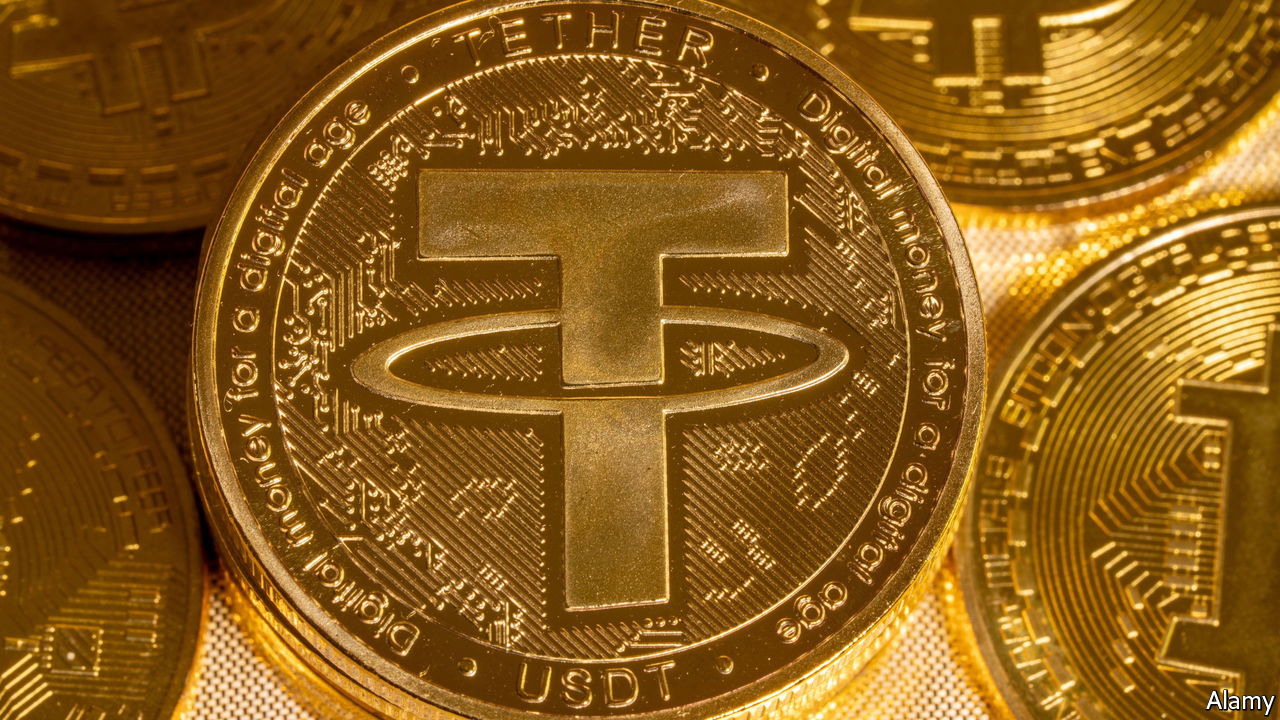
The Pros and Cons of Using USDC vs. USDT for Businesses

0

When it comes to stablecoins, two of the most popular options are USDC (USD Coin) and USDT (Tether).

Both are pegged to the U.S. dollar, meaning 1 USDC or 1 USDT is supposed to always be worth $1.

But there are some differences that businesses need to know about before choosing which one to use.

This article will look at the pros and cons of each and help businesses decide which might be better for them.

What Are USDC and USDT?

Stablecoins are designed to give the stability of traditional currencies while allowing businesses to still use them in the world of cryptocurrency.

An example of such stablecoins includes USDC and USDT.

USDC is one of the newer cryptocurrencies created in 2018 by Circle in collaboration with Coinbase. It works very transparently and is backed 1:1 with U.S. dollars in reserve.

By contrast, USDT, otherwise known as Tether, was created as far back as 2014 and hence is one of the oldest stablecoins.

It is also pegged at 1:1 to the U.S. dollar, but the percentage of its reserves in actual cash has come under a lot of question.

Key Differences Between USDC and USDT

Let’s break down the difference between USDC and USDT into simple terms.

Feature USDC (USD Coin) USDT (Tether)
Founded 2018 by Circle and Coinbase 2014 by Tether Limited
Transparency High – Audited by third-party firms Medium – Quarterly attestations
Reserves Mostly cash and U.S. Treasuries Mix of cash, loans, bonds, and other assets
Regulatory Compliance Strong focus on compliance Faced legal challenges and fines
Adoption Growing rapidly in business sectors Widely used on exchanges and DeFi
Blockchains Supported Over 10 including Ethereum, Algorand Multiple including Ethereum, Tron, Solana

Advantages of Using USDC

  • Transparency: USDC is relatively transparent when it comes to its reserves. They are audited on a regular basis, for instance, by the companies Grant Thornton LLP. Therefore, you actually know what your USDC tokens are backed with.
  • Regulatory Compliance: USDC obeys the law. This can be a huge plus for businesses that need to be very sure of their compliance with financial regulations.
  • Lower depegging risk: USDC usually has a lower depegging risk against the dollar due to its more conservative strategy of keeping its reserves in cash and short-duration U.S. Treasuries.

Cons of Using USDC

  • Lower liquidity: While USDC is one of the fastest-growing cryptocurrencies, it is not as widely adopted as USDT and, hence, not as liquid. That might mean higher trading costs or longer trading times if moving big figures.
  • Dependence on U.S. Regulations: Since this is based on compliance, it’s more dependent on changes in U.S. regulations. If rules tighten, it could affect USDC more so than USDT.
  • Limited Exchange Support: USDC may not be supported on all exchanges, particularly new or smaller exchanges.

Pros of Using USDT

  • High Liquidity: USDT happens to be one of the most traded stablecoins; therefore, its liquidity is high. One can easily convert it into other cryptocurrencies or even into fiat currency.
  • Wide Adoption: Most, if not all, major crypto exchanges support USDT. Due to that fact, USDT should be very convenient for those businesses seeking fast trades.
  • Diversified, flexible reserve management: Tether keeps a diversified portfolio of its reserves in cash, bonds, and other investments. This theoretically means additional stability in changing economic conditions.

Cons of Using USDT

  • Lack of Transparency: Tether has faced scrutiny, and even fines, for not being totally transparent about its reserves. That could be a risk if trust is essential in your business.
  • Legal risks include regulatory ones: For instance, there is the $18.5 million fine against USDT by New York’s Attorney General Office in 2021. It is a risk to which businesses need to pay attention.
  • Risk of depegging: There have also been times when USDT has lost peg against the dollar, and the holder can be faced with short-run losses. This may be a problem if you are holding in great quantity.

How to Choose Between USDC and USDT

When deciding between USDC and USDT, think about what matters most to your business:

  1. Regulatory Compliance: If you need to follow strict regulations, USDC might be better.
  2. Liquidity Needs: For quick and easy trading, USDT is more widely accepted.
  3. Transparency and Trust: If you want clear proof of reserves, USDC wins.

Tips for Businesses

  1. Diversify: You don’t have to choose just one. Consider holding both USDC and USDT to balance liquidity and compliance needs.
  2. Stay Updated: Regulations and market conditions can change fast. Keep an eye on updates from both Circle and Tether.
  3. Test Small: Start with small amounts to see which stablecoin works best for your specific use cases.

Future Trends to Watch

Stablecoins like USDC and USDT could play even bigger roles as businesses move more into digital assets. Watch for:

  1. New Regulations: Governments are looking more closely at stablecoins. Future regulations could change how USDC and USDT operate.
  2. Integration with DeFi: Both USDC and USDT are used in Decentralized Finance (DeFi). New partnerships or blockchain support could shift the balance of power.

Conclusion

In my opinion, it depends on your business needs. If you value transparency and regulation, go with USDC.

But if you need high liquidity and ease of access, USDT might be better. Consider what aligns with your goals and risk tolerance.

Remember: Both USDC and USDT have their strengths and weaknesses. Use this information to make the best choice for your business.