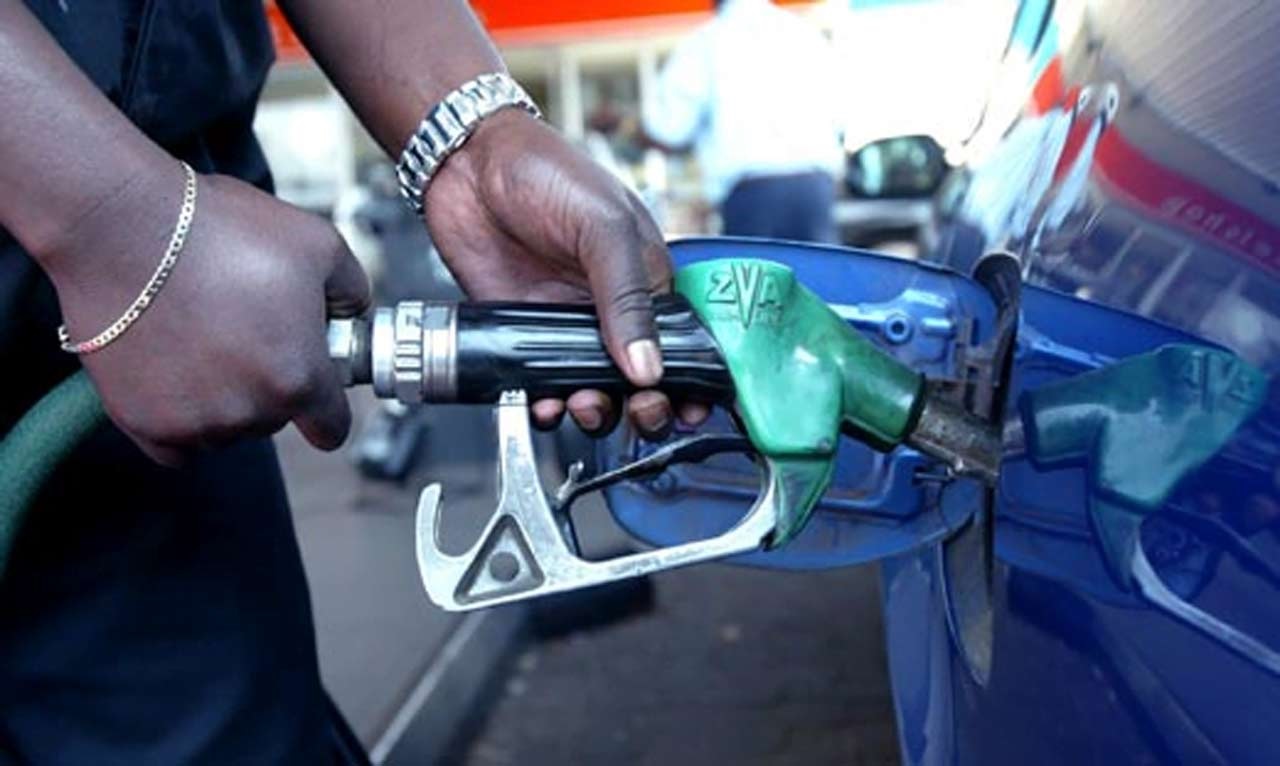
This will be a consequential policy in many ways because that means we will forever abolish petroleum equalization mechanism, a fudge factor pricing adjustment backed by Naira, which makes the prices of petrol in Yobe and Lagos to be the same, despite the varying distances from the ports: “The Nigerian National Petroleum Company Limited (NNPCL) has announced that Premium Motor Spirit (PMS), commonly referred to as petrol, from the Dangote Refinery, will begin entering the market starting September 15, 2024.
“In a statement signed by NNPCL’s Chief Corporate Communications Officer, Olufemi Soneye, and released in Abuja, the company confirmed that the prices of PMS will no longer be regulated by NNPCL or the government but will be determined by market forces. This statement, attributed to NNPCL’s Executive Vice President of Downstream, Adedapo Segun, comes amidst speculation that NNPCL might continue fixing prices even after the sector’s deregulation.“
Market forces will be super-interesting. If this happens, put it in the annals of Nigeria that the current government has enabled Energy Federalism. In the past, prices of petrol were uniform because governments paid to equalize prices across all parts of Nigeria. As this new era opens, that may not be the case: Tarabans may pay N1,000/litre when Lagosians are paying N850/litre on petrol. Across all indicators, this policy is generation-shaping and must be further studied.
Why? Let me bring the wisdom of AO Lawal; I read his book, and wrote GCE in 4th year in secondary school since WAEC did not allow me to study Economics over the 9-subject limitation. In his O’Level Economics textbook, on demand and supply, you would get the idea that deregulating DISTRIBUTION even when SUPPLY is regulated is not a smart policy on inelastic products.
In other words, if only NNPC can practically import petrol, you cannot deregulate the distribution (i.e. the price sold at pumps). For it to be wholly market-driven, AO Lawal economics would have required that SUPPLY should be deregulated, internally and externally, so that thousands of companies can produce or import petrol into Nigeria.
But if you have one person importing or one company producing, and you deregulate the prices at pumps, you will shift the pricing unfavourably, creating welfare losses for the citizens. Yes, if SUPPLY is restricted, supplying below average moving equilibrium point, and demand remains flat, ceteris paribus, prices will go up for an inelastic product like petrol.
So, a village boy from Ovim posits that Nigeria cannot run a market-driven regime on petrol when its supply of petrol remains regulated, restricted and controlled, if we hope to attain parity, without welfare losses, in the market system.
PRESS RELEASE
NNPC Ltd Not the Sole Offtaker; Market Open to Lower Prices from Any Domestic Refinery
The attention of the NNPC Ltd has been drawn to a press release by the Muslim Rights Concern, MURIC, which claims that the Dangote Refinery Limited (DRL) is being undermined by actions of the Nigerian National Petroleum Company Limited (NNPC Ltd). Specifically, MURIC asserts that recent changes to the pump price of Premium Motor Spirit (PMS) will prevent the Dangote Refinery from offering lower prices and that NNPC Ltd. has become the sole offtaker of all products from the refinery.
To set the records straight, NNPC Ltd. wishes to further state as follows:
- The pricing of petroleum products from any refinery, including the Dangote Refinery Ltd. (DRL), is determined by global market forces. The recent changes in PMS prices have no impact on the DRL or any other domestic refinery’s access to the Nigerian market. In fact, if current prices are perceived as high, it presents an ideal opportunity for the refinery to sell its products at lower prices in the Nigerian market.
- Furthermore, we emphasize that there is no guarantee of lower prices associated with domestic refining compared to any global parity pricing framework, as confirmed by the DRL. The NNPC Ltd. will only fully offtake PMS from the DRL if the market prices of PMS are higher than the pump prices in Nigeria. The DRL and any other domestic refinery are free to sell directly to any marketer on a willing buyer, willing seller basis, which is the current practice for all fully deregulated products. NNPC Ltd. has no desire or intention to become the distributor for any entity in a free market environment, and therefore, the notion of becoming a sole offtaker does not arise.
- The NNPC Ltd. cannot undermine a business in which it holds a billion-dollar stake.
- As an advocacy group for fair and just treatment, MURIC should have verified the facts before making statements that are entirely flawed and has the potential to incite ordinary Nigerians against the NNPC Ltd.
Olufemi Soneye
Chief Corporate Communications Officer
NNPC Ltd.
Abuja