DD
MM
YYYY

PAGES

DD
MM
YYYY

spot_img

PAGES

Home Blog Page 2928

CBN Approves $20,000 Allocation to BDC Operators to Boost Forex Liquidity Amid Naira’s Mixed Performance

0

In a fresh move to address forex liquidity challenges and meet growing demand, the Central Bank of Nigeria (CBN) has approved the sale of $20,000 to each qualified Bureau De Change (BDC) operator at a rate of N1,580 per dollar.

The apex bank announced this in a statement signed by Dr. W.J Kanya, Director of the Trade & Exchange department, detailing the conditions and the expected outcome of the move.

According to the CBN, this initiative is aimed at facilitating “invisible transactions,” a term that refers to payments for services like school fees, medical bills, and personal travel allowances (PTA), which have been under intense pressure due to high demand and dwindling foreign exchange reserves.

To ensure proper compliance and pricing, the CBN mandated that BDCs sell to eligible end-users at a margin not exceeding 1% above the purchase rate of N1,580 per dollar.

The statement reads: “The CBN has approved the allocation of $20,000.00 to each qualified Bureau de Change at an exchange rate of N1,580 per dollar. This measure aims to address the demand for invisible transactions.”

It also clarified that interested BDC operators must deposit funds into CBN accounts to facilitate the purchase of forex.

Mixed Sentiments in the Market

Despite this liquidity injection, the Naira’s performance remains mixed. While the official market showed signs of recovery, the black market continued to depreciate. According to data from FMDQ, the official foreign exchange market saw the Naira appreciate significantly to close at N1,593.32 per dollar on Friday, an improvement from the N1,625.88 rate recorded on Thursday. This represents a notable gain of N32.56 against the dollar in a single trading day.

This upward trend in the official market reflects increased liquidity, suggesting a positive market response to the central bank’s intervention efforts. Additionally, the Naira posted a week-on-week gain of N5.24 compared to last Friday’s exchange rate of N1,598.56 per dollar at the official market, signaling improved sentiment in the formal sector.

However, the Naira’s trajectory in the black market tells a different story. The parallel market, often seen as a barometer of real demand pressures, saw the Naira weaken further to close at N1,665 per dollar on Friday, slipping from N1,660 the day before. This decline highlights the continued struggle for forex liquidity in the informal sector, where higher demand for dollars is significantly suppressing CBN interventions.

The black market saw a week-on-week decline of N20 per dollar. Last week, the Naira traded at N1,645 per dollar, highlighting the growing disparity between the official and parallel markets.

For many Nigerians, especially those reliant on foreign transactions, the black market remains a critical source of forex, given the limited availability of dollars through official channels. Hence, the continued depreciation of the Naira in the parallel market is expected to keep inflationary pressures elevated in the short term.

A Fragile Recovery

The recent appreciation of the Naira in the official market, though encouraging, remains fragile. Analysts warn that the gains may be short-lived unless more sustained measures are put in place to bridge the wide gap between the official and parallel exchange rates. They note that the persistent scarcity of foreign exchange and the volatility of the parallel market indicate that demand pressures remain strong, despite the CBN’s latest interventions.

The forex market in Nigeria has been under immense strain in recent years, compounded by declining oil revenues amid a surge in demand for dollars.

While the CBN’s approval of forex sales to BDCs is seen as a stopgap measure to alleviate immediate pressures, the overarching concern remains whether this move will be enough to bring lasting stability to the market. The reintroduction of BDC allocations marks a shift in CBN’s forex management strategy, given the earlier stance that limited the role of BDCs in favor of formal banking channels.


Mastering Prompt Engineering: Key Tips for Working with AI Models

0

As AI tools like large language models (LLMs) become an integral part of our daily lives, prompt engineering is emerging as a must-have skill. Whether you’re creating content, writing code, or leveraging AI to tackle complex problems, mastering how to effectively prompt these systems can transform your results. I’ve been diving deep into this, exploring courses like this (Deeplearning.ai’s Prompt Engineering for Vision Models) and this (ChatGPT Prompt Engineering for Developers), and experimenting with prompts almost every day.

After attending Anthropic’s AI Prompt Engineering workshop, I realized just how much potential there is to boost productivity with the right techniques. The workshop was filled with valuable insights, and I’m excited to share them with you! Whether you’re new to AI or already experienced with models like Claude or GPT, these tips will elevate your interactions and help you get more out of your AI tools.

1. Be Clear and Precise: When writing prompts, always state tasks clearly and avoid ambiguity. This helps the AI grasp your instructions better and produce more accurate responses.

2. Iterate Rapidly: Don’t settle for your first prompt. Prompt engineering is all about testing and refining your instructions. Try different approaches to see how the model responds.

3. Think Beyond the Usual: Consider how your prompt would perform in unusual or edge-case scenarios. You don’t want it to fail in unexpected ways.

4. Test Imperfect Inputs: Not every user will have perfect grammar or formatting. Test your prompts with realistic, imperfect inputs to see how well the model adapts.

5. Analyze Model Outputs: Carefully study the AI’s responses to ensure it’s following your instructions correctly. You might discover small tweaks to improve clarity.

6. Break Tasks Down: Instead of giving all instructions at once, break tasks into manageable steps. It can help the AI follow your plan more effectively.

7. Consider AI’s “Theory of Mind”: Try to think like the AI. How might it misunderstand your instructions? Be mindful of possible misinterpretations.

8. Use Version Control: Treat your prompt work like code. Keep track of what you’ve tried and how the model responded. It’ll save you time in the long run.

9. Ask for Feedback: Don’t be afraid to ask the model where it’s confused or uncertain. Often, it can give helpful clues on how to improve your prompts.

10. Keep It Simple: Avoid overcomplicating things. Stick to clear, direct instructions without unnecessary layers of abstraction.

11. Balance Edge Cases and Typical Use: While you want to cover edge cases, don’t forget about the standard, primary use cases for your prompts.

12. Consider System-Level Context: Prompts don’t work in isolation. Think about how your input integrates into the larger system, especially when factors like latency or data sources come into play.

13. It’s Not Just About Writing Skills: Good writers don’t always make great prompt engineers. You’ll need logical, clear thinking and a methodical approach to get the best results.

14. Guide Users Towards Real Use Cases: If you’re working with clients or teammates, help them understand how the model responds to real-world inputs versus idealized examples.

15. Practice!: The more you experiment with different prompts and data, the better you’ll understand how the model responds. Get hands-on and familiarize yourself with its quirks!

With these practical tips, you’ll be well on your way to becoming a prompt engineering master. Remember, it’s all about clarity, iteration, and understanding how AI models interpret the world. I’ve found that the more you play around with prompts, the better you’ll get at extracting useful insights from models like Claude and GPT.

If you want to dig deeper into these strategies, check out Anthropic’s recent deep dive on prompt engineering — it’s a must-watch!

Enjoy experimenting, and have a Bonne weekend!

Some Useful Extras

  1. Anthropic prompt engineering docs — https://docs.anthropic.com/en/docs/build-with-claude/prompt-engineering/overview
  2. OpenAI’s Prompt Engineering guide — https://platform.openai.com/docs/guides/prompt-engineering
  3. ChatGPT Prompt Engineering for Developers — https://www.deeplearning.ai/short-courses/chatgpt-prompt-engineering-for-developers/

Joining RCO Finance’s (RCOF) Ethereum Token Presale is the Opportunity of a Lifetime, This is Why

0

RCO Finance (RCOF) presents investors with a rare chance to achieve millionaire status through its advanced AI-powered trading platform and ongoing presale. As its presale picks up speed, experts say it is an opportunity of a lifetime.

Let’s dive in and see why this promising project is poised to make a major impact in the industry.

Enhanced Crypto Trading Offerings: Why RCO Finance Trumps Other DeFi Projects

RCO Finance is a decentralized trading platform that combines blockchain and AI technologies to transform crypto trading. It operates on the Ethereum network and includes an innovative tool called the robo-advisor, which utilizes machine learning and artificial intelligence.

The robo-advisor offers personalized trading recommendations based on its AI insights, guiding investors on when to buy, sell, or diversify based on their risk profiles.

By analyzing market conditions, the robo-advisor helps investors make informed decisions about managing their digital assets, minimizing risks during market volatility.

This AI-powered tool equips investors with data-driven strategies, improving their chances of success by delivering well-researched recommendations.

RCO Finance’s robo-advisor appeals to seasoned and beginner investors, providing tailored strategies based on individual preferences through its machine-learning capabilities. Additionally, the platform offers trading across multiple asset classes, with options for high leverage.

RCO Finance: The AI-Powered Crypto Platform Unlocking 24/7 Trading and 1,000X Leverage

RCO Finance gives investors access to over 120,000 financial instruments, allowing them to diversify across 12,500 asset classes. This includes real-world assets, derivatives, stocks, and major cryptocurrencies like Bitcoin and Ethereum, with 24/7 trading and leverage of up to 1,000X.

The platform offers low interest rates for lending and borrowing, automated market-making, and DeFi pre-derivatives such as options, futures, and swaps, enhancing the overall trading experience.

RCO Finance also features a borderless debit card, enabling users to convert fiat currencies into cryptocurrencies or other assets easily. As the tokenization of real-world assets grows, RCO Finance will position itself as a leader in this space.

Joining RCO Finance is easy, as it doesn’t require a lengthy KYC process. The platform’s community-driven approach and intuitive interface make it appealing to newcomers in the crypto space.

To guarantee user safety, RCO Finance underwent a thorough audit by SolidProof, a trusted blockchain auditor, to identify and mitigate potential risks or vulnerabilities.

The Opportunity of A Lifetime: RCOF Token Presale Could Earn You 10,000% Returns!

RCO Finance presents a unique chance to join its platform early through the enticing RCOF token presale. Currently, in Stage 2, RCOF is priced at $0.0344, with an anticipated increase to $0.0559 when it moves to Stage 3.

Projected to launch between $0.4 and $0.6, RCOF could offer investors at least 3,000% gains at launch, with potential for further growth as more buyers enter the market.

The RCOF team has established robust tokenomics to avoid liquidity issues after listing. Notably, 12% of the RCOF supply is locked for three years to maintain trading liquidity, while 50% is set aside for the presale.

With a deflationary model, any unsold tokens during the presale will be burned to help increase the price.

Currently, 50.23% of the tokens for Stage 2 have been sold, generating close to $2 million, highlighting the swift progress of this phase. Now is the perfect time to invest in RCOF to maximize potential profits.

For more information about the RCO Finance Presale:

Visit RCO Finance Presale

Join The RCO Finance Community

Nigeria’s Mistake of Market-Driven Distribution Pricing When Supply of Inelastic Product (Petrol) is Controlled

1

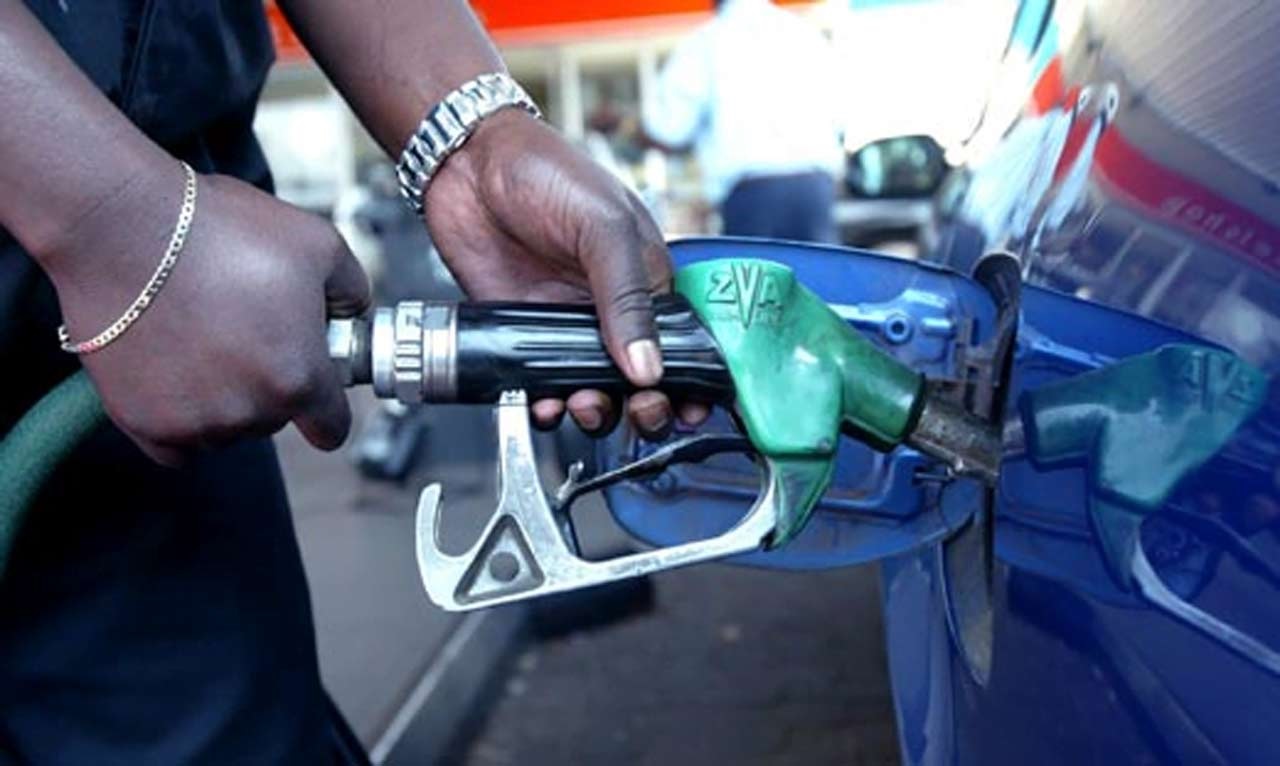
This will be a consequential policy in many ways because that means we will forever abolish petroleum equalization mechanism, a fudge factor pricing adjustment backed by Naira, which makes the prices of petrol in Yobe and Lagos to be the same, despite the varying distances from the ports: “The Nigerian National Petroleum Company Limited (NNPCL) has announced that Premium Motor Spirit (PMS), commonly referred to as petrol, from the Dangote Refinery, will begin entering the market starting September 15, 2024.

“In a statement signed by NNPCL’s Chief Corporate Communications Officer, Olufemi Soneye, and released in Abuja, the company confirmed that the prices of PMS will no longer be regulated by NNPCL or the government but will be determined by market forces. This statement, attributed to NNPCL’s Executive Vice President of Downstream, Adedapo Segun, comes amidst speculation that NNPCL might continue fixing prices even after the sector’s deregulation.

Market forces will be super-interesting. If this happens, put it in the annals of Nigeria that the current government has enabled Energy Federalism. In the past, prices of petrol were uniform because governments paid to equalize prices across all parts of Nigeria. As this new era opens, that may not be the case:  Tarabans may pay N1,000/litre when Lagosians are paying N850/litre on petrol. Across all indicators, this policy is generation-shaping and must be further studied.

Why? Let me bring the wisdom of AO Lawal; I read his book, and wrote GCE in 4th year in secondary school since WAEC did not allow me to study Economics over the 9-subject limitation. In his O’Level Economics textbook, on demand and supply, you would get the idea that deregulating DISTRIBUTION even when SUPPLY is regulated is not a smart policy on inelastic products.

In other words, if only NNPC can practically import petrol, you cannot deregulate the distribution (i.e. the price sold at pumps). For it to be wholly market-driven, AO Lawal economics would have required that SUPPLY should be deregulated, internally and externally, so that thousands of companies can produce or import petrol into Nigeria.

But if you have one person importing or one company producing, and you deregulate the prices at pumps, you will shift the pricing unfavourably, creating welfare losses for the citizens. Yes, if SUPPLY is restricted, supplying below average moving equilibrium point, and demand remains flat, ceteris paribus, prices will go up for an inelastic product like petrol.

So, a village boy from Ovim posits that Nigeria cannot run a market-driven regime on petrol when its supply of petrol remains regulated, restricted and controlled, if we hope to attain parity, without welfare losses, in the market system.


PRESS RELEASE

NNPC Ltd Not the Sole Offtaker; Market Open to Lower Prices from Any Domestic Refinery

The attention of the NNPC Ltd has been drawn to a press release by the Muslim Rights Concern, MURIC, which claims that the Dangote Refinery Limited (DRL) is being undermined by actions of the Nigerian National Petroleum Company Limited (NNPC Ltd). Specifically, MURIC asserts that recent changes to the pump price of Premium Motor Spirit (PMS) will prevent the Dangote Refinery from offering lower prices and that NNPC Ltd. has become the sole offtaker of all products from the refinery.

To set the records straight, NNPC Ltd. wishes to further state as follows:

  1. The pricing of petroleum products from any refinery, including the Dangote Refinery Ltd. (DRL), is determined by global market forces. The recent changes in PMS prices have no impact on the DRL or any other domestic refinery’s access to the Nigerian market. In fact, if current prices are perceived as high, it presents an ideal opportunity for the refinery to sell its products at lower prices in the Nigerian market.
  1. Furthermore, we emphasize that there is no guarantee of lower prices associated with domestic refining compared to any global parity pricing framework, as confirmed by the DRL. The NNPC Ltd. will only fully offtake PMS from the DRL if the market prices of PMS are higher than the pump prices in Nigeria. The DRL and any other domestic refinery are free to sell directly to any marketer on a willing buyer, willing seller basis, which is the current practice for all fully deregulated products. NNPC Ltd. has no desire or intention to become the distributor for any entity in a free market environment, and therefore, the notion of becoming a sole offtaker does not arise.
  1. The NNPC Ltd. cannot undermine a business in which it holds a billion-dollar stake.
  1. As an advocacy group for fair and just treatment, MURIC should have verified the facts before making statements that are entirely flawed and has the potential to incite ordinary Nigerians against the NNPC Ltd.

Olufemi Soneye

Chief Corporate Communications Officer

NNPC Ltd.

Abuja

Petrol Prices In Nigeria Will No Longer Be Regulated – NNPCL

0

The Nigerian National Petroleum Company Limited (NNPCL) has announced that Premium Motor Spirit (PMS), commonly referred to as petrol, from the Dangote Refinery, will begin entering the market starting September 15, 2024.

In a statement signed by NNPCL’s Chief Corporate Communications Officer, Olufemi Soneye, and released in Abuja, the company confirmed that the prices of PMS will no longer be regulated by NNPCL or the government but will be determined by market forces. This statement, attributed to NNPCL’s Executive Vice President of Downstream, Adedapo Segun, comes amidst speculation that NNPCL might continue fixing prices even after the sector’s deregulation.

Segun disclosed that the downstream sector is now fully deregulated, and petrol prices will be dictated by unrestricted free market forces, as outlined in the Petroleum Industry Act (PIA).

This recent announcement contradicts previous remarks made by Aliko Dangote, the founder of the Dangote Group. Earlier, Dangote had stated that the government would still have a role in determining the price of refined petrol, even after deregulation. He had indicated that the prices of petrol from his refinery would not be left solely to market forces, raising hopes among Nigerians that prices might remain somewhat controlled.

However, NNPCL’s clarification that prices will be determined by the open market, influenced heavily by foreign exchange fluctuations and global oil prices, means that the Nigerian will have to pay more for fuel. This marks a significant policy shift and underscores the full extent of the deregulation initiative undertaken by the government, leaving no room for direct price controls as previously speculated.

One major challenge highlighted in the statement was the issue of foreign exchange (forex) illiquidity, which NNPCL identified as a critical factor affecting petrol prices. The ongoing scarcity of forex in Nigeria has been directly tied to the volatility in PMS pricing.

Segun explained, “The market has been deregulated, meaning that petrol prices are now determined by market forces rather than by the government or NNPC Ltd. Additionally, the exchange rate plays a significant role in influencing these prices.”

The statement also addressed the ongoing fuel scarcity across the country. Segun assured Nigerians that the scarcity was expected to ease within a few days as more filling stations recalibrate their systems and resume selling PMS. NNPCL is working closely with marketers to ensure extended operational hours at stations, intending to meet the demands of Nigerians and alleviate the current scarcity.

Segun said, “No right-thinking individual would be comfortable with the current fuel scarcity.”

The Dangote Refinery, which is expected to be a game-changer in Nigeria’s fuel supply chain, has long been anticipated to alleviate the country’s dependence on imported refined petroleum products. Once the refinery ramps up production and begins supplying the local market with PMS, it is expected to reduce Nigeria’s vulnerability to global oil price fluctuations and forex volatility.

Segun also hinted at broader economic reforms, which might be necessary to ensure a stable and competitive market for PMS.

NNPCL’s Supply to Dangote Refinery

In addition to the refining timeline, NNPCL revealed that it has already supplied 30 million barrels of crude oil to the Dangote Refinery, with plans to deliver another 17 million barrels soon. Of these, 6.3 million barrels are expected in September, followed by 11.3 million barrels in October, delivered in seven cargoes.

While this substantial supply signals a robust partnership between NNPCL and the Dangote Refinery, Segun expressed concern that current petrol pump prices do not accurately reflect market realities.

“The pump price today is not market reflective,” Segun explained, noting that while NNPCL remains the sole importer of PMS in Nigeria, this is not a sustainable situation.

“NNPCL is the sole importer of PMS in the country, which is abnormal. We should be coming to a situation where the free market determines prices,” he added, indicating a shift towards a fully competitive market.

Addressing Concerns of Monopoly

NNPCL’s role as the sole importer of PMS has been a contentious issue, especially with rumors of monopolistic tendencies. However, Segun clarified that this position was not a deliberate strategy by the company but a response to market conditions.

“NNPCL did not put itself in the position of sole importer. We decided to step in when others reduced their participation in the market. It’s not about us wanting to be monopolists,” Segun clarified.

He also emphasized that achieving price stability and an ideal fuel supply would require a more liquid forex market, as well as broader economic reforms.

“Market conditions need to be perfect, and there needs to be FX liquidity,” Segun said.

Nigerians to Brace for Price Hikes

With NNPCL’s confirmation that it will not interfere with price determination, experts have predicted that fuel prices could spike significantly once Dangote’s petrol enters the market. Already, prices of petrol have surged, with reports indicating that PMS is being sold for as high as N1,200 per liter in some parts of Nigeria due to scarcity. The deregulated market, combined with forex shortages and the broader economic downturn, points to the likelihood of further price increases.

It is important to note that Dangote Refinery has yet to announce the official price at which it will sell refined petrol. However, market analysts have warned that Nigerians should brace for prices around N1,000 per liter or even higher, depending on prevailing market conditions and forex availability.