DD
MM
YYYY

PAGES

DD
MM
YYYY

spot_img

PAGES

Home Blog Page 2934

Navigating on the Bank of Canada’s Recent Policy Rate Cut

0

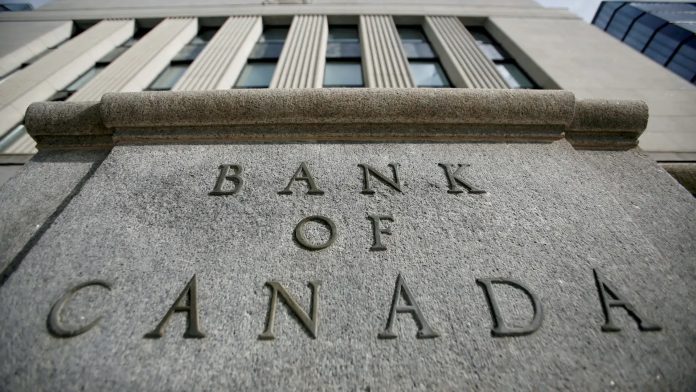
In a strategic move that reflects the ongoing adjustments in the global economic landscape, the Bank of Canada has announced a reduction in its policy rate by 25 basis points. This decision marks the third consecutive rate cut, bringing the policy rate down to 4.25 percent. The ripple effects of this decision are significant, impacting various sectors of the economy, from the prime rate adjustments by major banks to the potential for future cuts depending on economic performance.

The prime rate, closely tied to the policy rate, saw an immediate response from RBC Royal Bank, which decreased its prime rate to 6.45 percent, a 25-basis point reduction following the Bank of Canada’s announcement. This adjustment is expected to be mirrored by other major banks, signaling a broader impact on borrowing costs for Canadians.

The Bank of Canada’s decision comes at a time when the global economy has shown signs of expansion, albeit with regional variations. Economic growth in the United States outpaced expectations, driven by robust consumer spending, while the Euro-area saw a boost from tourism and services, despite a softer manufacturing sector. Meanwhile, China experienced a dampening in domestic demand, affecting its economic growth trajectory.

In Canada, the economy exhibited a 2.1 percent growth in the second quarter, spurred by government spending and business investment. This growth was slightly stronger than forecasted in July, yet preliminary indicators suggest a softening of economic activity in the subsequent months. The labor market has also shown signs of slowing, with employment levels remaining relatively unchanged recently. Despite these challenges, wage growth has maintained a steady pace, outstripping productivity gains.

Inflation, a key indicator influencing the Bank of Canada’s policy decisions, has moderated to 2.5 percent in July. Core inflation measures and the proportion of consumer price index components growing above 3 percent are aligning with historical norms. However, high shelter price inflation remains a significant contributor to overall inflation, although it has begun to decelerate.

The Bank of Canada’s policy rate cut is a calibrated response to the opposing forces exerted on inflation. On one hand, excess supply in the economy exerts downward pressure on inflation, while on the other, persistent price increases in shelter and certain services prop up inflation levels. The Governing Council’s decision to lower the policy rate is a testament to their commitment to restoring price stability for Canadians, balancing the need to support economic growth with the imperative to keep inflation in check.

Looking ahead, the Bank of Canada has indicated that monetary policy decisions will be guided by incoming information and their implications for the inflation outlook. The next scheduled announcement for the overnight rate target is set for October 23, 2024, when the Bank will also publish its full outlook for the economy and inflation in its Monetary Policy Report.

As the Bank of Canada navigates the complex interplay of economic indicators, its recent policy rate cut serves as a strategic maneuver to foster a stable and resilient economic environment. Stakeholders, from financial institutions to consumers, will be closely monitoring the effects of this policy shift and the potential for further adjustments in the near future.


How to Control Inflationary Assets

0

Inflation is an economic phenomenon that erodes purchasing power and can have a significant impact on investment portfolios. As prices rise, the real value of assets can decline unless they are inflation-resistant or managed in a way that mitigates the effects of inflation. Investors and financial managers alike seek strategies to control inflationary assets effectively, ensuring that their investments do not lose value over time.

One of the primary methods to control inflationary assets is through diversification. A well-diversified portfolio can include a mix of asset classes that historically have shown resilience against inflation. For instance, tangible assets like real estate and commodities often act as a hedge against inflation because their value rises with the cost of living. Real Estate Investment Trusts (REITs) and infrastructure investments can also provide income that keeps pace with inflation.

Another asset class that is considered effective for inflation control is Treasury Inflation-Protected Securities (TIPS). TIPS are government bonds specifically designed to protect against inflation. The principal value of TIPS rises with inflation and falls with deflation, as measured by the Consumer Price Index. This makes them an attractive option for investors looking to maintain the purchasing power of their capital.

Moreover, equities, especially those of companies with strong pricing power and solid balance sheets, can be beneficial. Such companies can pass on increased costs to consumers, potentially maintaining profitability during times of rising prices. It’s also wise to review personal budgets and investment allocations regularly. Reducing unnecessary expenditures and ensuring that your portfolio aligns with your risk tolerance can provide additional protection against inflation.

Controlling inflationary assets requires a proactive and diversified approach. By investing in a mix of asset classes, such as commodities, real estate, TIPS, and select equities, investors can create a buffer against inflation and safeguard their financial future. Gold has traditionally been viewed as an inflation hedge. During times of currency devaluation or when inflation rates are high, gold prices tend to increase. However, it’s important to note that gold does not produce income like dividends or interest, and its performance can be volatile.

Equities can also serve as a long-term inflation hedge. Companies have the ability to pass on increased costs to consumers, which can lead to higher profits and potentially higher stock prices. However, this is not uniform across all sectors, and some may be more sensitive to inflation than others.

Investing in growth assets is another strategy to consider. Growth assets, such as stocks in emerging markets or sectors like technology, can potentially outperform during inflationary periods. These investments may offer higher returns that can offset the diminishing purchasing power caused by inflation.

It’s also crucial to manage cash holdings effectively. While holding cash provides liquidity, it can be detrimental during inflationary times as it loses value. Ensuring that emergency savings keep up with rising costs and reducing overallocation to cash can help protect against inflation.

Lastly, consulting with a financial advisor to review investment allocation and personal budget expenditures can provide tailored strategies to control inflationary assets. An advisor can help evaluate risk appetite and suggest adjustments to the investment portfolio that align with individual financial goals and the current economic climate.

Former Open AI’s Chief Scientist, Ilya Sutskever’s Startup SSI, Raises $1 Billion For Expansion

0

In a major boost for the Artificial Intelligence (AI) industry, Ilya Sutskever, former Chief Scientist and co-founder of OpenAI, has raised an impressive $1 billion for his new startup, Safe Superintelligence (SS1).

The funding round included Investors from top venture capital firms which are; Andreessen Horowitz, Sequoia Capital, DST Global, and SV Angel. NFDG, an investment partnership run by Nat Friedman and SSI’s Chief Executive Daniel Gross, also participated.

According to Reuters, the startup will use the funds to invest in computing resources to develop its models as well as attract the highly skilled talent required to build the business and give it a competitive edge in the AI industry.

Announcing the fundraise, the startup wrote on X,

“SSI is building a straight shot to safe superintelligence. We’ve raised $1B from NFDG, a16z, Sequoia, DST Global, and SV Angel. We’re hiring”

In a response to the post, CEO Ilya Sutskever responded with the statement, “Mountain Identified. Time to Climb”.

SSI is reportedly building cutting-edge Al models aimed at challenging the already established AI firms among which include Sutskever’s former employer OpenAl, Elon Musk’s AI, and Anthropic. This comes as competition in the Al sector is intensifying with firms constantly upgrading their models while others launch new products to stay ahead and gain competitive advantage.

According to Reuters, all these other businesses are focusing on developing Al models with wide consumer and business applications, but SSI wants to build “a straight shot to safe superintelligence.” SSI chief executive Gross revealed this will also be supported by research and development. 

In his words,

“It’s important for us to be surrounded by investors who understand, respect, and support our mission, which is to make a straight shot to safe superintelligence and in particular to spend a couple of years doing R&D on our product before bringing it to market.”

SSl’s core mission is to address several ethical challenges by focusing on the safe and responsible development of superintelligent Al. The startup aims to build Al systems that not only possess advanced capabilities but are also controllable, transparent, and aligned with human goals. This approach involves integrating cutting-edge research in machine learning, ethics, and Al alignment.

The CEO Ilya Sutskever, brings unparalleled expertise to SSl. As a co-founder and Chief Scientist at OpenAl, Sutskever played a pivotal role in advancing Al research, contributing to breakthroughs in neural networks, deep learning, and large-scale models like GPT-3 and GPT-4. His work has shaped the trajectory of Al’s development globally, and his new venture, SSl, represents a natural progression in addressing the next frontier-superintelligence.

Sutskever’s vision for SSl is to foster collaboration across the Al community, industry, and academia to ensure that superintelligent Al systems are developed in a way that benefits society while minimizing risks. SSI is expected to bring together a team of Al researchers, ethicists, and engineers to focus on both technical and philosophical aspects of Al safety.

One of SSl’s key areas of focus is Al alignment the process of ensuring that At systems’ objectives align with human intentions and ethical values. This is particularly critical in the development of superintelligent systems, which could potentially make autonomous decisions on a global scale. SSI aims to pioneer solutions that guarantee Al systems behave predictably and in accordance with human safety standards, even as they become more capable. SSI is also expected to explore techniques such as reinforcement learning, interpretability of AI models, and robustness to create systems that can self-improve without deviating from desired behaviors.

With $1 billion in funding, Safe Superintelligence is well-positioned to become a leading force in the next generation of Al development. The startup’s focus on safe, ethical Al is a direct response to growing concerns about the potential dangers of superintelligence.  By prioritizing safety from the outset, SSI aims to ensure that superintelligent Al serves the broader interests of humanity, rather than posing a threat.

The startup’s success will likely have a far-reaching impact, not only in the tech industry but also in how Al is integrated into society.  With Sutskever at the helm, SSl represents a bold step toward the future, where superintelligence is both powerful and aligned with the values and safety of its creators.

Bitfarms’ Planned Acquisition Of Stronghold Digital Mining To Strengthen US Exposure, Says CEO

0

Bitfarms CEO Ben Gagnon discusses his firm’s acquisition of rival company Stronghold Digital Mining to strengthen its presence in the US market. According to the CEO, the firm is looking to enhance operational efficiency and capitalize on a more stable energy environment in the United States.

Experts believe these market changes are a result of the Bitcoin (BTC) halving earlier in the year, which cut miner rewards by 50%. Meanwhile, the new DeFi token ETFSwap (ETFS) is grabbing headlines amid an impressive presale rally, raising millions in a few months.

Bitfarms Buy Rival Firm Stronghold For $175M In Stock And Debt

Bitfarms has agreed to buy Stronghold Digital Mining for $175 million in stock and debt and has revealed its plans to diversify revenue sources beyond crypto mining. The diversification to other revenue sources is a result of crypto mining companies reconciling with the 50% decrease in Bitcoin (BTC) block rewards earlier in April this year.

The reduction in rewards adds more pressure on the industry to reduce mining costs, which mostly comprise energy costs, and replace other equipment with more efficient ones. Mining companies often have four years to prepare for Bitcoin halving. Still, it usually results in a “survival of the fittest” battle, which is an obvious reason for the Stronghold Digital Mining buyout by Bitfarms.

In an interview with CNBC, Bitfarms CEO Ben Gagnon also discussed the recent trend of Bitcoin miners moving to AI to grow revenue since the halving in April. According to him, while the main reason for his company’s acquisition is to grow its foothold in the United States, it also gives Bitfarms the capacity to explore these alternative revenue sources.

Gagnon states that this transaction enables his company to increase its portfolio by almost 50% in the coming year. He further discusses that the acquisition will enable Bitfarms to rebalance their portfolio towards the United States and have 65% of their firm in North America.

ETFSwap (ETFS) Set For Success As Presale Continues To Grow

ETFSwap (ETFS) is emerging as the best market opportunity for life-changing profits as the promising platform exhibits early signs of success. The new platform is an Ethereum-based decentralized protocol that will enable on-chain access to ETF investments. ETFSwap (ETFS) will list ETF assets from traditional markets in their tokenized forms.

Tokenized real-world assets have emerged over the past year as one of the best market narratives to bet on toward the next bull run. Combine that with the sentiment on ETFs in the crypto market, and ETFSwap (ETFS) may well be set for a massive rally toward launch.

More so, ETFSwap (ETFS) offers a new way to explore the ETF market beyond the boundaries of centralized trading platforms. Leveraging the blockchain, ETFSwap (ETFS) will be able to facilitate features such as fast ETF settlements, 24/7 market coverage, crypto-to-ETF swaps, staking and lending opportunities, smart-contract-enabled features, lower trading costs, permissionless trading, and many more.

Considering the popularity of ETFs in the crypto landscape, ETFSwap (ETFS) offers a crypto-friendly entry into ETFs, which is a more refreshing asset class. ETFSwap (ETFS) has seen massive growth on presale as investors look to capitalize on its early advantages. As the first solution for decentralized ETF trading, ETFSwap (ETFS) is set to claim a giant share of this emerging market.

Additionally, ETFSwap (ETFS) has announced that the platform is set for beta launch in the coming months. The beta launch will enable early access to the ETF platform, and users will be able to test the features and provide feedback, which ultimately helps to improve the platform.

SolidProof has KYCed the ETFSwap (ETFS) team and verified the project ownership, which assures investors of security when buying into the early project.

Conclusion

The Bitfarms’ acquisition highlights the continued efforts by institutional stakeholders to invest in the crypto market. This interest by institutional investors transfers to new projects like ETFSwap (ETFS), which has received several significant early investments from big investors. Seize the opportunity now to buy what big firms are buying and make millions in profit when ETFSwap (ETFS) skyrockets from its current price of $0.01831.


For more information about the ETFS Presale:

Visit ETFSwap Presale

Join The ETFSwap Community

Beyond Taxation, Nigeria Needs A National Blueprint for Growth and Opportunity

1

“Over time, there are plans for Nigeria to fund the government more than it does today. The actual tax collection in Nigeria is pretty low,” Bill Gates to Nigeria 

I know Bill Gates very well, and have been in meetings with him. Those twisting his statements need to look at the context. Bill is not telling Nigerians to INCREASE tax rates or add more taxes, rather, he is asking Nigerians to become more effective on collecting taxes.

Understand that increasing the tax rate to boost tax revenue without improving collection is counter-productive, because you are simply over-taxing the few ones already paying taxes. That is not what Bill is saying: he wants Nigeria to deepen its tax collection efficiency.

Nigeria is under severe stress as many manufacturing companies may not pay taxes in the next three years, after declaring record losses. According to the government tax agency, FIRS, more than 3000 manufacturing companies shut down in 2023, wiping out more than a trillion naira of revenue: “Zacch Adedeji, the chairman of the tax agency, Federal Inland Revenue Service (FIRS), noted that the Nigerian manufacturing sector lost N1.7 trillion in 2023 as a result of changes in FX policies, and most of those companies collapsed.”

That lost revenue would have generated billions of naira in tax revenue. The retroactive taxing of bank FOREX realized profits was partly done to recover some of the potential tax losses, since while the factories lost money, banks gained!

That said, Nigeria needs to GROW the economy even as it does any taxation engineering. I think even though the citizens may not be paying taxes formally, they are already over-taxed. Petrol was less than N300/litre in June 2023, today, it is close to N900/litre, that is a huge tax there!

So, in the real sense, Nigeria is doing well on tax collection. Where we are not doing well is presenting a  strategic national blueprint for growth and opportunity,  to help all the citizens understand where the nation is going. That is more important than any discussion on tax.

Bill Gates Calls on Nigeria to Increase Tax Revenue