DD
MM
YYYY

PAGES

DD
MM
YYYY

spot_img

PAGES

Home Blog Page 294

Meta Cuts 600 Jobs in Superintelligence Lab as Zuckerberg Pursues “Talent-Dense” AI Strategy

0

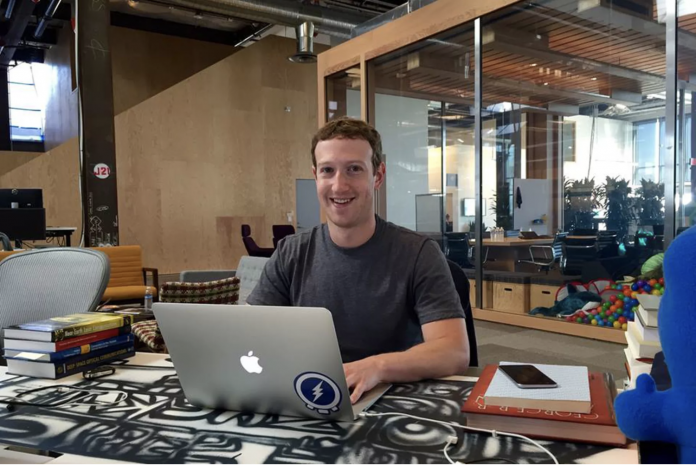
Meta is cutting around 600 jobs from its newly formed superintelligence division as the company reorganizes its sprawling artificial intelligence operations, signaling a shift toward smaller, faster teams in what CEO Mark Zuckerberg has called Meta’s “year of efficiency.”

In a memo to staff on Wednesday, Meta’s chief AI officer, Alexandr Wang, said the restructuring was meant to make the team “more agile and talent-dense” as the company pursues its ambitious goal of building “personal superintelligence” — a term Zuckerberg uses to describe AI systems that could eventually surpass human capabilities.

“By reducing the size of our team, fewer conversations will be required to make a decision, and each person will be more load-bearing and have more scope and impact,” Wang wrote.

The layoffs mark one of the most significant reorganizations within Meta’s AI division since the company established the Meta Superintelligence Lab (MSL) in June. The division was designed to spearhead research into next-generation AI models, consolidating engineers and scientists from multiple Meta units — including Facebook AI Research (FAIR), infrastructure, and product teams — under one structure.

Meta has described MSL as a cornerstone of its long-term AI strategy, with Zuckerberg pledging billions of dollars in compute and talent to compete with OpenAI, Anthropic, and Google DeepMind. The company has been aggressively recruiting since mid-2024, offering multimillion-dollar pay packages to lure researchers from rival firms.

Over the summer, Meta poached more than 50 scientists and engineers from competitors, including OpenAI and Google, though OpenAI CEO Sam Altman downplayed the departures. “None of our best people took the offers,” Altman said at the time.

Despite the hiring spree, the rapid growth of MSL has created internal strain. Current and former employees have described overlapping mandates and shifting priorities that led to confusion and tension across Meta’s broader AI organization. Several senior researchers reportedly left within months of joining.

The latest cuts appear aimed at resolving that internal friction by consolidating roles and tightening coordination. Wang’s memo said the reorganization would allow the division to “move faster” and empower each remaining team member to have greater influence.

“These are talented people who have worked extremely hard and contributed to our AI effort,” Wang wrote. “We are supporting the majority of those impacted in finding new roles at the company.”

He added that Meta had formed a “tiger team of recruiters” to help displaced employees quickly transition into new positions within the company.

Meta said the restructuring does not meaningfully reduce its overall headcount, as many of those affected are expected to be rehired in other AI or engineering roles.

The company’s move fits into a broader philosophy articulated by Zuckerberg since early 2023, when he began describing Meta’s “year of efficiency” as a way to make the company “leaner is better.” That initiative led to tens of thousands of job cuts across divisions, aimed at flattening management layers and improving decision speed.

In the case of the superintelligence lab, the goal appears to be organizational streamlining rather than cost-cutting.

“Our goal is to enable MSL to move faster,” Wang wrote, emphasizing that Meta’s investment in compute and AI infrastructure would continue. “We remain excited about the models we are training, our ambitious compute plans, and the products we are building, and I’m confident in our path to superintelligence.”

The superintelligence project has become one of Meta’s most expensive bets, with the company investing hundreds of millions of dollars to scale its compute clusters and train large AI models. Meta’s AI ambitions span multiple fronts — from the consumer-facing “Meta AI” assistant integrated into its apps to foundational models powering future augmented and virtual reality experiences.

Zuckerberg has framed AI as central to Meta’s long-term future, positioning the company as a challenger to OpenAI and Google in both research and product deployment.

“We want to build general intelligence openly and responsibly,” he said earlier this year. “Our goal is to make it available to everyone as widely as possible.”

Wang’s memo reflects that same ethos of aggressive efficiency paired with scale. His remarks echo a recurring theme across Meta’s AI units — that smaller, specialized teams are better suited to innovate in a field moving at unprecedented speed.

The restructuring also comes at a time when competition among leading AI companies has intensified. OpenAI, Anthropic, Google, and Meta are each training new frontier models that require massive amounts of compute power, driving a surge in demand for Nvidia chips and data center capacity.

Within this race, Meta has sought to differentiate itself by emphasizing open research and democratized access to its AI tools, including the Llama family of open-source models. The company recently launched Llama 3, which has been widely adopted by developers and integrated into several enterprise systems.

Still, internal tensions have emerged as Meta expands its ambitions beyond open-source models to the more exclusive superintelligence project, where research secrecy and proprietary models are expected to play a larger role. Some researchers reportedly expressed unease over the shift toward confidentiality and the heavy emphasis on rapid scaling.

Wang’s decision to trim the MSL workforce underscores the company’s effort to stabilize the division’s structure and clarify its direction after a summer of intense hiring and shifting goals. Analysts see the move as a sign that Meta is entering a more disciplined phase in its AI race — focusing on execution rather than expansion.

While the exact financial impact of the restructuring remains unclear, Meta insists that the investment pipeline for its AI research remains intact.

“This by no means signals any decrease in investment,” Wang reiterated. “We will continue to hire industry-leading AI-native talent.”
U.S. Government Shutdown Update: White House Advisor Predicts End This Week

0

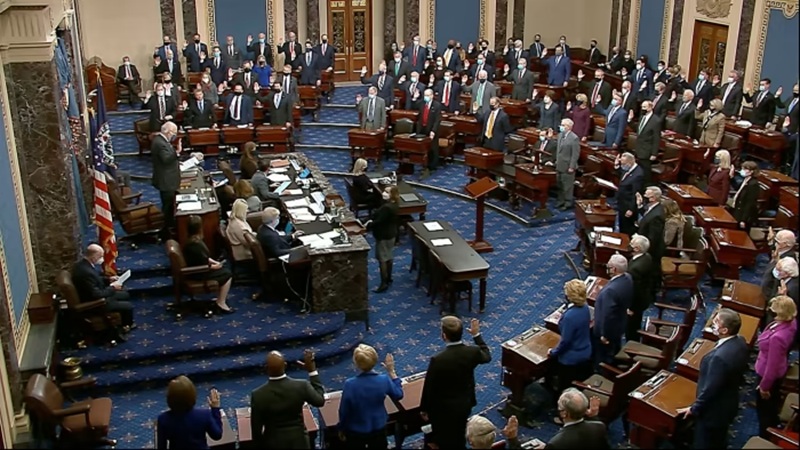
White House economic advisor Kevin Hassett stated on October 20, 2025, that the ongoing U.S. federal government shutdown—now in its 20th day—is “likely to end sometime this week.”

Speaking on CNBC’s Squawk Box, Hassett expressed optimism that moderate Democrats in the Senate would move forward with a vote to reopen the government, potentially as early as this week ending October 25, 2025, allowing subsequent negotiations on policy issues like extending Affordable Care Act (ACA) tax credits.

The U.S. federal government shutdown, now in its third week, has become the second-longest in history, surpassing the 21-day shutdown of 2018-2019 but trailing the record 35-day one from late 2018 to early 2019.

It began on October 1, 2025, after Congress failed to pass a funding bill ahead of the fiscal year deadline, amid disputes over extending Affordable Care Act (ACA) subsidies and broader spending priorities.

Republicans, controlling the White House, House, and Senate, have passed short-term continuing resolutions (CRs) in the House, but Senate Democrats have blocked them multiple times—now 11 votes deep—demanding protections for ACA tax credits set to expire at year’s end.

The shutdown began around October 1, 2025, after Congress failed to pass a continuing resolution (CR) to fund the government beyond the fiscal year deadline. It’s one of the longest in U.S. history, surpassing the 2018-2019 shutdown in duration as of October 18.

It has furloughed hundreds of thousands of federal workers, delayed paychecks (e.g., House aides won’t see funds until after Thanksgiving if unresolved), and disrupted services like national park access and Smithsonian operations though the latter may continue briefly on reserves.

Republicans, controlling Congress and the White House under President Trump, demand spending cuts and reforms tied to Project 2025 initiatives, including reductions in “Democrat agencies.”

Democrats insist on protecting ACA subsidies set to expire end-2025 and avoiding deep cuts, leading to a partisan standoff. Senate Majority Leader John Thune (R-S.D.) has floated a compromise vote to extend ACA credits in exchange for reopening the government.

Hassett suggested Democrats delayed action due to “bad optics” ahead of nationwide “No Kings” protests against Trump scheduled for this weekend October 25-26. Public polls largely blame Republicans for the impasse, with strong bipartisan support for ACA extensions.

Potential Timeline for Resolution

Hassett’s prediction hinges on Senate action post-protests, but key dates to watch include: October 24-25: Possible CR vote if moderates align. October 31: End-of-month pay cycle for federal workers, adding urgency. November 21: Previously proposed CR extension date, if no deal is reached sooner.

If no agreement materializes, Hassett warned of “stronger measures,” such as expanded “Reductions in Force” permanent layoffs already underway or further agency cuts.

Senate Majority Leader John Thune (R-SD)’s recent overtures. He proposed swapping ACA credit extensions for immediate government reopening, but Democrats insist on bundling both to avoid piecemeal concessions.

However, as of October 22, no breakthrough has occurred—Senate Republicans met with Trump at the White House yesterday October 21 for lunch in the Rose Garden, but emerged without a deal. Thune reiterated that Democrats hold the key, blaming their “fear of the radical left” for the delay.

President Trump, meanwhile, has doubled down on criticism of Democrats, posting on Truth Social about “Democrat Agencies” as “political SCAM[s]” and meeting with OMB Director Russ Vought to discuss potential cuts. Trump is set to depart for an Asia trip on October 26, adding urgency to resolve before then

The news has sparked optimism in financial circles, with some viewing an end to the shutdown as “bullish” for markets and sectors like crypto regulation delayed by the impasse.

On X, discussions range from bullish crypto takes to shares of Hassett’s comments, reflecting relief amid economic uncertainty. This situation remains fluid—Congressional leaders have shown little progress so far, but Hassett’s remarks signal internal White House confidence in a breakthrough.

CNN analysis on October 21 described “stasis” in Washington, with neither party budging amid blame games. Senate Minority Leader Chuck Schumer (D-NY) accused Republicans of using the shutdown for “stronger measures” like layoffs.

GOP figures like Sen. Lindsey Graham (R-SC) slammed Democrats for “blabbing” during marathon protest speeches like Sen. Jeff Merkley’s overnight filibuster-style address against Trump.

BitMine Immersion Technologies (BMNR) Bolsters Ethereum Treasury with $800M Acquisition

0

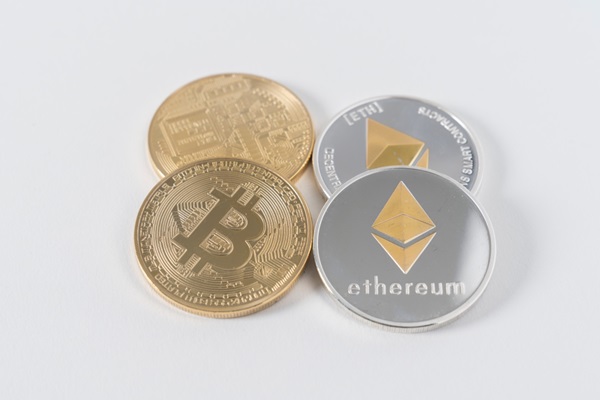
BitMine Immersion Technologies Inc. (NYSE American: BMNR), the Ethereum-focused digital asset treasury firm chaired by Fundstrat Global Advisors’ Thomas “Tom” Lee, announced that it purchased 203,826 ETH tokens last week for approximately $800 million at an average price of $4,022 per token.

This brings BMNR’s total ETH holdings to 3,236,014 tokens, valued at over $13 billion based on current prices around $4,033–$3,992 per ETH. These holdings now represent roughly 2.7% of Ethereum’s total circulating supply of approximately 120.5 million ETH, surpassing the halfway mark toward the company’s ambitious “Alchemy of 5%” goal to accumulate 5% of all ETH.

BMNR’s combined crypto, cash, and strategic equity (“moonshot”) holdings now exceed $13.4 billion, including:3.24 million ETH (~$13 billion). 192 BTC (~$21 million at ~$109,000–$111,000 per BTC). $219 million in unencumbered cash. A $119 million equity stake in Eightco Holdings (NASDAQ: ORBS), a prior “moonshot” investment focused on Worldcoin (WLD) and proof-of-human (PoH) verification.

The purchase occurred amid a recent crypto market correction, which Lee described as an “attractive risk/reward” opportunity due to lower open interest and price dislocations. BMNR has consistently accumulated 200,000 ETH weekly ($800M–$1B) for months, capitalizing on dips to build its position as the world’s largest corporate ETH holder.

BMNR shares rose ~7–8% post-announcement, trading around $53–$54, maintaining a slight premium to its net asset value (NAV). Year-to-date, the stock has surged over 600%, ranking it among the top 40 most-traded U.S. stocks by volume.

BMNR, which listed on NYSE American in July 2025, is emulating MicroStrategy’s (MSTR) Bitcoin treasury playbook but tailored for Ethereum’s staking yields and ecosystem potential. Unlike BTC, ETH generates passive rewards (currently ~3–5% APY), allowing BMNR to reinvest earnings for compounded growth.

The firm is backed by heavyweights like ARK Invest’s Cathie Wood, Founders Fund, Pantera Capital, and Galaxy Digital, underscoring institutional conviction in ETH’s “supercycle.” This move aligns with rising corporate ETH adoption: BMNR now holds more ETH than the next five treasury firms combined.

Peers like SharpLink Gaming (SBET) added 19,000 ETH (~$76M) last week, but BMNR’s scale dwarfs them. Ethereum ETFs (e.g., potential stETH products from VanEck) and DeFi innovations could amplify demand.

A key component of BMNR’s strategy is leveraging Ethereum’s staking mechanism to generate passive income, which differentiates it from Bitcoin-focused treasury firms like MicroStrategy. Staking involves locking up ETH in the Ethereum network to validate transactions and secure the blockchain.

In return, stakers earn rewards in the form of newly issued ETH for validating blocks and proposing new ones. Fees paid by users for transaction priority, distributed to validators. Additional profits from reordering or including specific transactions, often captured by sophisticated validators.

BMNR stakes a significant portion of its 3.24 million ETH to generate yield. BMNR deposits ETH into Ethereum’s validator smart contract or via liquid staking protocols like Lido or Rocket Pool, though specifics are unconfirmed for BMNR. Each validator node requires 32 ETH. With 3.24 million ETH, BMNR could theoretically run ~101,250 validator nodes (3,240,000 ÷ 32), though it likely delegates some staking to third-party providers for efficiency.

Staked ETH is locked but earns rewards continuously, paid out periodically daily/weekly, depending on setup. Ethereum’s staking yield varies based on the total ETH staked network-wide. 30–35% of ETH’s 120.5 million supply is staked 36–42 million ETH, yielding an annual percentage yield (APY) of 3–5% for most validators.

BMNR’s public filings suggest it earns within this range, likely closer to 4% APY, factoring in validator efficiency and potential liquid staking fees (e.g., Lido charges ~10% of rewards). At 4% APY on 3.24 million ETH ($13 billion at $4,000/ETH), BMNR could earn ~129,600 ETH annually ($519 million), or 2,492 ETH weekly ($10 million).

BMNR reinvests staking rewards to compound its ETH holdings, aligning with its “Alchemy of 5%” goal to own 5% of Ethereum’s supply. Rewards are either restaked directly compounding validator balances or used to purchase additional ETH during market dips, as seen in its weekly ~200,000 ETH acquisitions.

The 3–5% APY provides a steady cash flow equivalent to hundreds of millions annually, without selling principal ETH holdings. Reinvesting rewards accelerates BMNR’s path to 5% of ETH’s supply, potentially achievable within 2–3 years at current rates. Staking yields provide a buffer against ETH price fluctuations, enhancing BMNR’s treasury stability compared to non-yielding assets like Bitcoin.

As one of the largest ETH stakers, BMNR may wield significant influence in Ethereum governance (e.g., validator votes on protocol upgrades). Validators can lose a portion of staked ETH (typically <1%) for misbehavior (e.g., downtime or double-signing). BMNR’s scale suggests professional infrastructure to minimize this.

Staked ETH is technically locked, but liquid staking tokens (e.g., stETH) provide liquidity if BMNR uses such protocols. Direct staking withdrawals, if needed, take days to process. APY decreases as more ETH is staked network-wide. If staking participation rises to 50%+, yields could drop below 3%, impacting returns.

Annual Rewards: 3,240,000 ETH × 0.04 = 129,600 ETH (~$519 million at $4,000/ETH). Monthly Rewards: 10,800 ETH ($43 million). Weekly Rewards: 2,492 ETH ($10 million). These figures are reinvested or held, boosting BMNR’s $13.4 billion treasury and supporting its stock premium (~$53–$54/share, ~7–8% above NAV).

Ethereum Foundation Transfers $654M ETH As SpaceX Moves $268M BTC

0

The Ethereum Foundation (EF) executed a significant internal transfer of 160,000 ETH, valued at approximately $654 million at the time of the transaction.

This movement was first flagged by on-chain analytics firm Lookonchain and quickly analyzed by Arkham Intelligence. The funds were shifted from an EF-controlled address to a Gnosis Safe multisig wallet also under EF management, indicating a routine treasury reorganization rather than a deposit to exchanges for sale.

A multisig wallet historically used for ETH sales to Kraken or SharpLink Gaming, but no outflows to exchanges occurred post-transfer. EF Co-Executive Director Hsiao-Wei Wang clarified on X that this was part of a “scheduled wallet migration” for security and custodial updates. All ETH remains in EF-controlled wallets.

This marks the EF’s largest single transfer in 2025 and follows a July sale of 10,000 ETH ~$40M at the time to fund R&D. The EF holds ~$827M in total assets, mostly ETH, with smaller positions in BTC, BNB, and ARB.

ETH price rose ~2.8% to reclaim $4,000 amid broader recovery, despite initial speculation of a dump. This event coincides with heightened scrutiny of the EF, including a resurfaced 2024 letter from former Geth developer Péter Szilágyi criticizing internal favoritism and developer support.

Elon Musk’s aerospace company— SpaceX, moved 2,395 BTC valued at ~$268 million from two labeled wallets to new, unmarked addresses. Tracked by Nansen and Arkham Intelligence, this is the company’s second major BTC activity in three months, following a $153M transfer in July.

1MDyM sent ~1,298 BTC or $130M and “1AXeF” sent ~1,197 BTC or $127M. Destination Addresses: “bc1qj” and “bc1qq” (inactive post-receipt; no sales or further transfers). Small test transactions ~$150–$177 via Coinbase Prime, typical for custody verification.

Likely internal housekeeping, such as upgrading to enhanced cold storage or multisig setups—common for institutional holders. SpaceX has not commented, but analysts view it as non-selling maintenance. SpaceX retains 8,285 BTC total $894M–$1.1B, acquired mostly in 2021, with unrealized gains over $621M. It sold ~70% of its position in 2022 amid market turmoil.

Bitcoin dipped below $108,000 amid U.S.–China trade tensions and ETF outflows, but the transfer didn’t trigger additional selling pressure. SpaceX’s BTC strategy contrasts with Musk’s vocal support for the asset’s “inflation-proof” model, though his companies including Tesla have a history of selective holdings.

Both moves highlight institutional crypto management in volatile times: EF focusing on Ethereum ecosystem sustainability amid internal debates, and SpaceX maintaining long-term BTC exposure despite competitive pressures in space tech.

No evidence of sales emerged, easing fears of market dumps. These events underscore growing on-chain transparency, with tools like Arkham enabling real-time scrutiny. These transfers align with a pattern of large entities optimizing treasury security without disrupting markets.

Péter Szilágyi, a former Ethereum Foundation (EF) developer known for his work on the Geth client, publicly criticized the EF in a June 2024 letter that resurfaced during the recent $654M ETH transfer discussion on October 21, 2025.

His critiques, primarily shared via a blog post and echoed on X, focus on internal mismanagement and misalignment with Ethereum’s ethos. Szilágyi alleged that the EF prioritizes funding for projects led by insiders or those with personal connections, sidelining independent developers. He claimed this creates an “old boys’ club” dynamic, undermining meritocracy.

He pointed to inconsistent grant allocation, where well-connected teams received substantial funding while others, including critical infrastructure like Geth, were underfunded. Szilágyi argued that the EF underinvests in essential Ethereum infrastructure, such as the Geth client, which powers a significant portion of the network’s nodes.

He noted that Geth’s team operated on a lean budget, risking long-term network stability. He contrasted this with lavish spending on less critical or speculative projects, accusing the EF of prioritizing “shiny” initiatives over foundational needs.

He criticized the EF’s opaque decision-making, particularly around treasury management and grant distribution. Szilágyi called for clearer accountability on how the EF’s ~$827M in assets (mostly ETH) is allocated. This resonated with community concerns during the $654M ETH transfer, where some X users speculated about potential sales or mismanagement, though the EF clarified it as a routine wallet migration.

He argued that the EF’s focus on high-profile events and marketing (e.g., Devcon) overshadows the need for consistent developer funding and morale. He expressed concern that the EF was drifting from Ethereum’s decentralized, open-source ethos toward centralized control and corporate-like behavior, risking community trust.

The EF has not directly addressed Szilágyi’s letter in recent statements. However, Co-Executive Director Hsiao-Wei Wang clarified the $654M transfer as a security-driven wallet migration, aiming to quell speculation. The criticisms fueled debates about the EF’s role as Ethereum scales.

The EF’s treasury, holding ~$827M, remains a flashpoint, with community scrutiny intensified by on-chain transparency tools like Arkham. While Szilágyi’s letter didn’t directly impact the October 2025 transfer’s execution, it amplified skepticism about the EF’s long-term strategy.

GM to Roll Out Google Gemini-Powered AI Assistant Across Vehicle Lineup in 2026

0

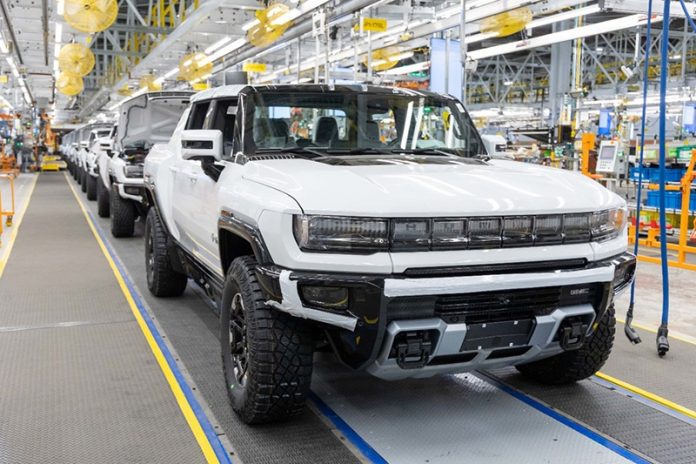
General Motors has announced plans to introduce a conversational AI assistant powered by Google’s Gemini across its cars, trucks, and SUVs starting next year, marking a significant leap in the automaker’s broader effort to fuse artificial intelligence with its connected vehicle ecosystem.

The announcement was made on Wednesday at the GM Forward event in New York City, where the company unveiled several upcoming technologies. The Gemini integration is expected to be the first among them to reach consumers, ahead of a planned automated driving feature and a revamped vehicle computing platform slated for release in 2028.

GM’s integration of Gemini builds on an already deep relationship with Google, whose “Google built-in” operating system currently powers infotainment systems in Buick, Chevrolet, Cadillac, and GMC vehicles. Those systems already allow drivers to access Google Assistant, Maps, and other Android apps directly from their dashboard screens.

In 2023, GM expanded that collaboration by using Google Cloud’s Dialogflow chatbot to manage non-emergency OnStar services such as navigation assistance and general inquiries. The forthcoming Gemini-powered assistant will take that concept further by leveraging generative AI to hold more natural, context-aware conversations with drivers.

“One of the challenges with current voice assistants is that they’re often frustrating — they rely on code words and struggle with accents or phrasing,” said Dave Richardson, GM’s senior vice president of software and services, in an interview with TechCrunch. “What’s great about large language models is they’re flexible in how you speak to them. They understand context from previous interactions, so you get a better, more natural experience.”

The Gemini assistant will be capable of managing a wide range of tasks — from drafting and sending messages and planning routes with multiple stops to accessing information from the web, such as answering a driver’s query about a historical landmark.

It will also integrate more deeply with OnStar, GM’s in-car concierge system, allowing it to provide maintenance alerts, route suggestions, and even control features like heating or cooling before the driver enters the car.

In essence, GM envisions the system as “a mix between a health wearable and an AI companion, but for your car,” Richardson said.

The assistant will be distributed over the air via the Google Play Store, and will be available to OnStar-equipped GM vehicles dating back to model year 2015 — significantly broadening access to existing customers.

Privacy and Data Concerns After Past Controversy

The announcement comes amid growing scrutiny of how automakers handle driver data. GM faced backlash earlier this year after reports revealed that the company had shared customer driving and geolocation data with insurance firms, prompting privacy concerns.

Addressing those concerns directly, Richardson emphasized that the new AI system will prioritize user consent and data protection.

“Everything that we’re going to do is going to be driven by customer consent, so you can always opt in or opt out,” he said. “Our viewpoint is that data and privacy have to be built into everything that we do.”

He also noted that GM has hired a new data governance team, including Christina Montgomery, who previously served as IBM’s chief privacy and trust officer, to establish stronger oversight mechanisms and compliance frameworks.

Richardson added that any driver data collected through Gemini “goes directly toward improving the product and won’t be sold for revenue.”

Toward a Custom-Built AI

While GM’s collaboration with Google is central to the Gemini rollout, Richardson said the company intends to test multiple AI models, including those from OpenAI, Anthropic, and others, as it moves toward developing a custom-built, domain-specific AI system trained on vehicle data.

“The idea is to take a base language model and train it on the vehicle’s specifications — distill that down and have it running locally on the vehicle,” Richardson said.

That approach would give GM more control over performance and data privacy, while enabling the AI to understand specific vehicle functions such as one-pedal driving or energy optimization in EVs.

GM’s move places it squarely in the middle of an emerging AI arms race among automakers. Competitors have already begun incorporating generative AI into their vehicles: Mercedes-Benz has integrated ChatGPT, Stellantis is working with French AI firm Mistral, and Tesla has rolled out Grok, the conversational assistant developed by Elon Musk’s xAI.

For GM, however, the Gemini rollout could serve as a bridge between existing OnStar services and a future where AI-driven personalization becomes a key selling point for vehicles. The assistant will enable the company to build a continuous feedback loop — learning from driver behavior while providing proactive assistance — potentially transforming how customers interact with their cars.

Analysts say that if executed effectively, the Gemini assistant could also enhance GM’s competitiveness in the electric and autonomous vehicle markets, where software-defined vehicles are increasingly defining brand differentiation.

With its rollout planned for 2026, GM’s Gemini-powered assistant is expected to mark a pivotal moment for the company’s digital transformation.