DD
MM
YYYY

PAGES

DD
MM
YYYY

spot_img

PAGES

Home Blog Page 2952

Goldman Sachs Fires 1,300 Workers

0
The logo for Goldman Sachs is seen on the trading floor at the New York Stock Exchange (NYSE) in New York City, New York, U.S., November 17, 2021. REUTERS/Andrew Kelly/Files

In the ever-twisting plot of the corporate world, Goldman Sachs has recently made a move that’s as bold as it is controversial: they’ve decided to part ways with 1,300 of their employees. Now, before you start imagining a dramatic “You’re fired!” scene straight out of a reality show, let’s dive into the details that paint a more complex picture.

According to reports, this decision is part of Goldman Sachs’ annual performance review process, a tradition as steadfast in the corporate world as the office coffee machine that never works when you need it most. It seems that even in the gilded halls of Goldman Sachs, not all that glitters is gold, especially if you’re in the bottom percentile of the performance charts.

The move is set to affect between 3% and 4% of the staff across various divisions of the Wall Street firm. It’s like the corporate version of musical chairs, and when the music stops, some find themselves without a seat at the high-stakes table. The company has stated that this is a standard procedure, as routine as the annual holiday party where everyone pretends not to remember what happened last year.

In the high-stakes world of finance, even the giants have to occasionally shuffle the deck. Now, you might be scratching your head, wondering, “Why would a bank that’s raking in profits need to let go of its employees?” Well, it’s not because they’ve all decided to pursue a career in yoga teaching or avocado farming.

The truth is, it’s all about staying lean and mean in the financial jungle. Think of it as corporate pruning – sometimes, to keep the money tree healthy, you need to snip a few branches, even if they’re bearing fruit. It’s a tough pill to swallow for those on the receiving end, but in the grand scheme of things, it’s Goldman Sachs’ way of ensuring they remain nimble-footed in the ever-evolving dance of the stock market.

So, while the news may seem grim, it’s just another day in the life of a banking behemoth. They’re playing chess, thinking several moves ahead, and sometimes that means saying goodbye to a few pawns. It’s not personal; it’s just business – a mantra that echoes through the halls of finance, right before the sound of a thousand desk drawers being cleared out. And who knows? Maybe this is just their way of making room for an army of robot traders.

Now, let’s address the elephant in the room: layoffs are no laughing matter. They affect lives, families, and careers. But in the spirit of finding a silver lining, perhaps this is an opportunity for those 1,300 individuals to find new paths that lead to even greater successes. After all, one door closes and another opens, possibly to a startup that doesn’t require suits or understands the concept of “casual Fridays” every day of the week.

For Goldman Sachs, it’s business as usual. The company has assured that despite the layoffs, they expect to have more people working for them in 2024 than in 2023. It’s a bit like saying, “We’re downsizing to upsize,” a paradox that only makes sense in the dizzying world of finance.

Bitcoin and Pepe Suffer Price Dip As Raboo Nears Stage 5 Of Its Presale

0

The Raboo presale has had quite the run in the crypto-verse lately. More traders are interested; the $RABT community is growing, and, more importantly, launch day is getting closer.

Meanwhile, top crypto coins, like Bitcoin (BTC) and Pepe, are experiencing the aftermath of profit-taking all around. Bitcoin fell below its $60,000 mark, and Pepe took another hit from resistance.

More on crypto’s latest and Raboo’s ($RABT) presale coming up.

Is another Bitcoin slump imminent?

Bitcoin has been under close monitoring from most traders all summer, and it’s safe to say the top crypto has not delivered as expected. The BTC price fell to about $50,000 in August before correcting upwards.

The correction led to a 20% rise to $60,000 early this week before profit-taking from the traders pulled it under. Now, the BTC price is tagged at about $58,318, some 5.4% less than it was last week.

FXStreet concluded that closing above $58,700 was essential to keeping Bitcoin above the bearish trends. At any rate, the Bitcoin bulls have work to do.

Pepe follows Bitcoin dip; sell or buy top crypto coins?

Much like Bitcoin, Pepe is losing some of its value too to profit-taking in the market. The PEPE price was pushing $0.00001 last week, with the bulls intent on pushing the token past its $0.0000085 resistance. Pepe peaked at about $0.00000955 on Friday and set its sights on the next resistance at $0.000013.

The bears have taken over proceedings, however, as Pepe has fallen considerably. The token is down to its immediate support at $0.0000075, while many predictions state that the PEPE price could go even lower.

So, top crypto coins Pepe and Bitcoin are out of the to-buy list; a new project, perhaps?

Raboo for crypto profits, short-term and long-term

The top tokens are failing their holders, and the crypto market is looking even more volatile than anyone imagined. Bitcoin and most of the best projects are out of commission, and traders are turning to Raboo for gains.

All that’s for a good reason, too, as Raboo is presenting features that are out-of-the-box, even for a meme coin. Its mission is to change the perception of memes and meme coins, upgrading the sector from horrible memes to perfect, consistent humor all over the crypto-verse.

Raboo is not all mouth, either, unlike a lot of the meme coins. The $RABT project is incorporating algorithms to help with meme creation; Rabooscan will be the gatherer for memeable content all over the internet, combining them into relatable memes.

The $RABT community will not only be creating memes and having fun. The Raboo project will offer $RABT incentives to creators whose content the Rabooscan finds worthy enough for memes. It’s all creativity and rewards on Raboo through its post-to-earn feature.

Conclusion

Even the best altcoins are falling victim to the crypto-verse’s bears; only a few projects are immune to the strike, and Raboo is one of them.

With the presale underway–and almost in stage 5–you’d have to act fast to benefit from the expected ROI. And whatever you see is only a tip compared with Raboo’s potential when it lists.

You can participate in the Raboo presale here.


Telegram: https://t.me/RabootokenPortal

Twitter: https://twitter.com/Raboo_Official

Nigeria’s Failure to Use Its Real-Time Tracking System As the Spate of Kidnapping Grows

0

In 2015, the Nigerian Police Force announced a new era of intelligence-led policing, with the installation of a groundbreaking tracking device. The device wasn’t just another tool; it was the embodiment of a strategy designed to disrupt criminal networks, particularly the scourge of kidnapping that has plagued the nation. Its mission was to intercept the darkest plots before they could come to fruition.

The Intelligence Response Team (IRT), an elite unit within the police force, became the operational arm of this technological marvel. Armed with real-time data from the tracking system, the IRT was empowered to move swiftly and decisively.

The device played a pivotal role in high-profile cases that once gripped the nation in fear. One such case was the abduction of Chief Olu Falae, a former Secretary to the Government of the Federation, who was kidnapped by herdsmen on his 77th birthday. The tracking platform proved its worth by guiding the police to the kidnappers, who were apprehended with the ransom money still in their possession.

“Immediately the kidnappers removed the SIM card used to negotiate, we knew where they were and intercepted them at the last bridge to Minna,” recalled a senior police officer who was instrumental in the operation, in a conversation with Vanguard.

The kidnappers were caught with “the ransom money they collected still in the boot,” he added.

The justice system swiftly followed, sentencing the criminals to life imprisonment. However, the battle against crime had taken a decisive turn.

Technology, no matter how advanced, is only as good as the people who wield it. And here, the story takes a darker turn. According to the senior police officer, what was meant to be a shield against criminals became a tool for political espionage. The tracking system, once the pride of the police force, was slowly corrupted from within.

As the years passed, the leadership of the Nigerian Police Force changed hands. Successive Inspectors General, lacking the technical acumen of their predecessor, began to lose sight of the system’s true purpose. The platform, once a beacon of hope, was now at the mercy of those who saw it as an opportunity to further their own agendas.

“The priority of successive IGPs was quite different,” lamented the retired senior officer. “Solomon Arase set up the platform when he was the IGP. It was a technical platform to track calls.”

The system, which was initially housed within the IGP’s office and accessible only to a select few, soon fell into the wrong hands.

“People in the National Assembly and Villa got hold of the platform and used it to track their enemies and mistresses,” he revealed.

The division between the technical and operational units, crucial to maintaining the system’s integrity, was blurred. The IRT, once a separate entity, was merged with the technical platform, allowing for greater control by a single individual—control that was soon compromised, the retired senior officer narrated.

A System in Decline

With the passage of time, the once-formidable tracking system began to falter. Its decline was not due to any inherent flaw in the technology but rather a lack of maintenance and foresight. The retired officer noted with regret that the platform was never upgraded as required.

“They had money to pay for the accumulated subscription but they refused to pay,” he explained. Subscriptions went unpaid, and the service provider, after a grace period, withdrew its support. “When you leave such a system for more than one year, it requires recalibration,” the officer added.

The consequences were severe. As the system’s effectiveness waned, kidnappers and criminals regained their footing. The very tool that had once struck fear into their hearts was now nothing more than a relic of a bygone era. The police, once armed with real-time data, were left to rely on traditional methods that were no match for the evolving tactics of criminal networks.

“The tracker, particularly, became non-functional due to non-subscription as well as failure to engage the relevant company to carry out required system upgrades,” the officer explained. “Due to the failure to pay subscription fees for about three years, and after a grace period had expired, the company overseeing its maintenance and upgrade decided to withdraw its services. This made it difficult to track bandits, kidnappers, and other forms of violent crimes.”

A Glimmer of Revival

Yet, all is not lost. Recently, the current Inspector-General of Police, Kayode Egbetokun, has made efforts to breathe new life into the defunct system. The tracking device has been reactivated, offering a glimmer of hope that the tide may once again turn in favor of law enforcement. But the challenges remain immense.

Despite the reactivation, in addition to the tracking devices of the Department of State Security service and Office of the National Security Adviser, the impact has been limited. Kidnappers continue to operate with impunity in many regions, sharing their activities online and flaunting the ransom they received on social media.

In addition to the tracker, Nigeria uses NIGCOMSAT, a satellite that tracks location and generates data. However, a satellite engineer at the NIGCOMSAT LTD, who didn’t want his name mentioned, had told Vanguard that the onus of taking action on whatever the communications satellite reveals, in terms of crimes, is squarely at the doorsteps of the security agencies, adding that, the door of the company has always been open to them for valuable information that aid their operations.

Navigating the Complex Terrain of Bitcoin Adoption in Africa

0

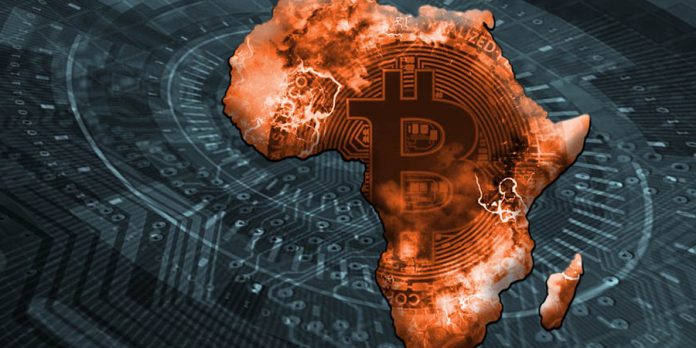
Africa is witnessing a significant surge in Bitcoin adoption, with over 110 businesses across the continent now integrating the cryptocurrency into their operations. This remarkable growth is not just a number; it represents a diverse array of industries and countries coming together to embrace the potential of Bitcoin.

Nigeria, known for its vibrant economy and entrepreneurial spirit, is leading the charge. The country has seen a proliferation of Bitcoin-related activities, ranging from media coverage and mining operations to business transactions and educational initiatives. Companies like Bitcoin in Nigeria Media and Suga Mines are just a few examples of the innovative approaches being taken.

South Africa is not far behind, with businesses like Pick n Pay accepting Bitcoin and community projects like Bitcoin Stellenbosch fostering a deeper understanding of cryptocurrency. The Simply Sow Foundation is also playing a crucial role in enhancing media representation of Bitcoin in the region.

Kenya and Ghana are also key players, with their own set of Bitcoin businesses, educational programs, and technology meetups. These gatherings are crucial for sharing knowledge and driving the adoption of Bitcoin forward.

The growth of Bitcoin in Africa is not limited to the business sector. Daily transactions, remittances, and educational efforts are also on the rise, as seen in Zambia, Zimbabwe, and Uganda. Initiatives like Victoria Falls and Bitcoin Kampala are testament to the increasing use of Bitcoin in everyday life.

The adoption of Bitcoin in Africa presents a unique set of challenges that reflect the continent’s diverse economic landscape. Despite the growing interest and increasing number of businesses embracing cryptocurrency, several hurdles stand in the way of widespread adoption.

One of the primary challenges is the infrastructure deficit. Many African countries grapple with underdeveloped financial systems, which can hinder the seamless integration of Bitcoin into existing economic frameworks. This is compounded by the fact that a significant portion of the population remains unbanked, making it difficult to access traditional banking services, let alone sophisticated cryptocurrency platforms.

Another significant obstacle is the high volatility of Bitcoin. While it is seen as a hedge against inflation and currency devaluation in some African countries, its price fluctuations can be a deterrent for both individuals and businesses looking to adopt it as a stable store of value. This has led to a shift towards stablecoins, which are perceived as less volatile and more suitable for daily transactions.

Regulatory uncertainty also poses a challenge. The stance of central banks and financial regulators across Africa varies, with some countries adopting a hostile approach towards cryptocurrency exchanges. This regulatory ambiguity can discourage potential adopters and stifle the growth of the Bitcoin ecosystem.

Moreover, the level of financial literacy and understanding of digital currencies is another hurdle. Without adequate knowledge and education on cryptocurrencies, people may be hesitant to invest in or use Bitcoin for transactions. This is especially true in regions where investment options are limited and traditional assets like real estate or stocks are more familiar.

Lastly, the need for formal infrastructure, investment, and expertise cannot be overlooked. For Bitcoin mining and other operations to flourish, there must be a concerted effort to build the necessary framework and cultivate local expertise.

Despite these challenges, the potential for Bitcoin to revolutionize the African financial landscape is immense. With targeted educational initiatives, infrastructure development, and regulatory clarity, Bitcoin could pave the way for a more inclusive and decentralized financial system in Africa. The journey may be complex, but the destination holds the promise of economic empowerment and innovation.

This pan-African Bitcoin movement is not just about individual countries making strides independently; it’s about a collaborative effort across the continent. Organizations like Peach Bitcoin Africa and The Bitcoin Foundation are working across borders to promote adoption and education, fostering a sense of unity and shared purpose.

The rise of Bitcoin in Africa is a clear indicator of the continent’s willingness to adopt new technologies and innovate. With a collaborative approach and a focus on education and adoption, the future of Bitcoin in Africa looks bright and promising.

As the Bitcoin ecosystem in Africa continues to thrive, it’s essential to remember that this information is for educational purposes only and should not be considered financial advice. Always exercise caution and consider seeking professional advice before making any financial decisions involving cryptocurrency.

X (Formerly Twitter) Suspended in Brazil

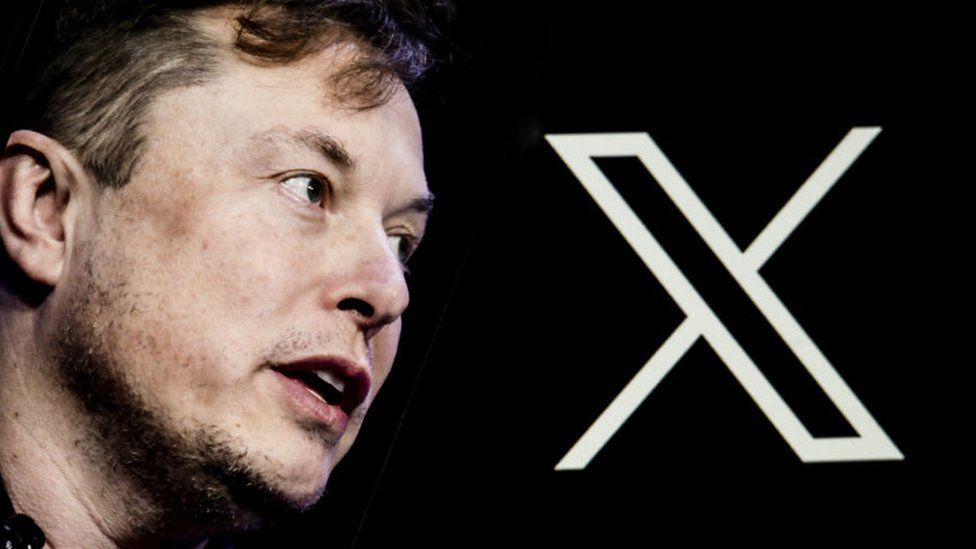
Meanwhile, in a move that seems straight out of a cyberpunk novel, Brazil has officially suspended X, the social media platform formerly known as Twitter. The suspension comes after a high-stakes game of legal chicken between the Brazilian judiciary and the platform’s owner, Elon Musk. The drama unfolded when Musk refused to appoint a legal representative in Brazil, leading to Supreme Court Justice Alexandre de Moraes pulling the plug on X’s operations in the country.

The saga began with a court order demanding the suspension of several X accounts accused of spreading disinformation. Musk, in a move that surprised absolutely no one, responded with a tweet that could be roughly translated as, “Free speech, yay! Brazilian courts, nay!” This digital standoff escalated quickly, with fines piling up and deadlines swooshing by unmet. The final straw came when X failed to comply with a court order to name a local representative, resulting in the “immediate and complete suspension” of the platform.

The Brazilian Supreme Court’s decision to suspend X, the platform formerly known as Twitter, was primarily due to the company’s failure to appoint a legal representative in Brazil. This action was the culmination of a series of events that highlighted the ongoing struggle between national laws and the operations of global social media companies.

Justice Alexandre de Moraes, who issued the suspension order, had set a deadline for X to comply with this requirement. The company’s non-compliance led to the immediate suspension as a measure to enforce the court’s ruling. The underlying issues at stake were free speech, the spread of misinformation, and the platform’s role in public discourse.

The Brazilian telecommunications agency, Anatel, was tasked with enforcing the ban, which they did with the enthusiasm of a kid in a candy store. Internet service providers were given five days to block X, and app stores were instructed to remove the platform posthaste. Users attempting to access X via VPNs were threatened with fines, making the whole situation feel like a game of whack-a-mole, but with internet access instead of pesky rodents.

The decision has sparked a flurry of reactions, ranging from outrage to support, and has raised questions about the future of free speech and digital sovereignty. As the situation develops, the world watches with bated breath to see how this digital standoff will resolve and what implications it will have for the future of social media governance globally. For now, the “tweet” of birds is the only chirping allowed in Brazil’s digital landscape.

From the football fanatics to the crypto enthusiasts, everyone’s got something to say about this digital blackout. Football pages are bidding a dramatic adieu to their followers, with heartfelt tributes that could rival the emotional intensity of a World Cup final. It’s not just a goodbye; it’s a “see you on the flip side” as they navigate this new, tweet-less reality.

Meanwhile, the crypto community is in a frenzy, labeling the suspension as “absolutely nuts.” They’re not just tweeting about it; they’re probably already devising a blockchain-based social platform as we speak. And let’s not forget the memes. Oh, the memes! They’re flooding in like Carnival, turning the situation into a digital samba of satire and humor. It’s a coping mechanism, a digital shrug, and a collective chuckle all rolled into one.

Brazilian netizens are left to ponder the void left by X’s suspension, and perhaps, find solace in the myriads of other social platforms still at their fingertips. The saga continues, and only time will tell how this story will unfold.

Brazil Suspends Elon Musk’s X, Imposes $9,000 Daily Fine on Users With VPNs

0

The Brazilian government has escalated its conflict with Elon Musk by blocking access to his social media platform, X, across the country. This action, which began early Saturday, came after Musk refused to appoint a legal representative in Brazil, a requirement set by Supreme Court Justice Alexandre de Moraes.

The decision to block X, formerly known as Twitter, marks a significant moment in the ongoing feud between Musk and Brazilian authorities, highlighting broader issues of free speech, misinformation, and exercise of governmental authority.

Justice de Moraes, who has been at the forefront of combating misinformation and far-right extremism in Brazil, ordered the suspension of X after Musk failed to comply with a directive to appoint a legal representative in the country. This representative is crucial for responding to legal demands and ensuring that the platform abides by local laws. De Moraes had warned Musk on Wednesday that failure to comply would result in X being blocked, and established a 24-hour deadline for action.

In response to the justice’s order, Brazil’s telecommunications regulator, Anatel, instructed internet service providers to suspend access to X. By Saturday after midnight, major operators had begun enforcing the block, making X largely inaccessible both on the web and through mobile apps.

“In Brazil, we do not have X anymore since midnight. I am tweeting this with a VPN. This tweet may cost me almost 10,000 USD according to the decision of tyrant @alexandre de Moraes, friends with @LulaOficial: every Brazilian that posts on X from now on will be fined R$ 50,000 according to his illegal “ruling”, a Brazilian journalist named Marcel van Hattem tweeted on Saturday.

Musk responded to the post by saying that “the current Brazilian administration likes to wear the cloak of a free democracy while crushing the people under its boot.”

De Moraes in his ruling, had accused Musk of showing “total disrespect for Brazilian sovereignty and, in particular, for the judiciary, setting himself up as a true supranational entity and immune to the laws of each country.”

He added that the platform will remain suspended until it complies with the court’s orders, with a daily fine of 50,000 reais ($8,900) for individuals or companies using VPNs to access it.

Musk Has Been Defiant

Elon Musk, known for his outspoken stance as a “free speech absolutist,” has clashed repeatedly with de Moraes and the Brazilian judiciary. In April, de Moraes included Musk in an ongoing investigation into the dissemination of fake news and opened a separate inquiry into the executive for alleged obstruction. Musk has often taken to X to criticize de Moraes, calling him a dictator and tyrant, and arguing that the justice’s actions amount to censorship.

In a statement released late Friday, X’s CEO Linda Yaccarino expressed dismay over the situation, calling it a “sad day for X users around the world, especially those in Brazil, who are being denied access to our platform.”

She lamented that Brazil was failing to uphold its constitutional pledge to forbid censorship. X’s official Global Government Affairs page also criticized the Brazilian judiciary, claiming that de Moraes’ actions were illegal and politically motivated.

Broader Impacts of the Ban

Brazil is one of X’s largest markets, with around 40 million users, representing roughly one-fifth of the population. The platform has played a significant role in the country’s political discourse, particularly during and after the presidency of Jair Bolsonaro. Accounts linked to Bolsonaro’s far-right movement have often been at the center of legal battles over misinformation and extremist content, with X being ordered to block many such accounts.

The Brazilian government has a history of clashing with social media platforms over compliance with local laws. In previous instances, courts have temporarily suspended services like Meta’s WhatsApp and threatened others like Telegram. However, the situation with X marks a more severe and prolonged conflict, exacerbated by Musk’s personal involvement and defiance.

Adding to the complexity, de Moraes also targeted Musk’s satellite internet service, Starlink, freezing its finances in Brazil. This move was justified by the justice on the grounds that X did not have enough funds to cover mounting fines, and that Starlink and X were part of the same economic group. Musk reacted sharply to this development, labeling de Moraes a criminal and offering free internet service in Brazil through SpaceX, Starlink’s parent company until the matter is resolved.

Legal Experts Express Mixed Opinions

Legal experts have weighed in on the situation, with opinions divided. Some, like Filipe Medon, a digital law specialist, argue that the suspension of X is a necessary measure to ensure compliance with the court’s order.

Others, like Luca Belli from the Getulio Vargas Foundation, question the legality of extending the sanctions to Starlink, given the lack of direct connection between the two companies beyond shared ownership by Musk.

“Yes, of course, they have the same owner, Elon Musk, but it is discretionary to consider Starlink as part of the same economic group as Twitter (X). They have no connection, they have no integration,” Belli said.

As the standoff continues, it remains unclear how long the block on X will last and what the long-term implications will be for Musk’s operations in Brazil.

“Brazilians will take to the streets. On the 7th of September we will make our voices heard very clearly. We will demand Moraes to be impeached by the Senate and to be sent to jail after a fair trial – which Moraes cruelly and unconstitutionally gives not to the people that he persecutes,” van Hattem said.