
DD
MM
YYYY

PAGES

DD
MM
YYYY

spot_img

PAGES

Home Blog Page 2953

NCR Atleos and LibertyX Integration Enables Bitcoin Cashout at ATMs

0

The financial landscape is witnessing a significant transformation with the integration of cryptocurrency into traditional banking systems. A prime example of this evolution is the recent development by NCR Atleos, a renowned retail banking company, which has enabled Bitcoin cashout at ATMs through a collaboration with LibertyX.

NCR Atleos, having acquired LibertyX, a leading cryptocurrency software provider for ATMs, point-of-sale systems, and kiosks, in early 2022, has now launched a service that allows Americans to sell Bitcoin and withdraw cash at numerous ATM locations across the United States. This innovative feature leverages the Atleos ReadyCode API suite, a one-time use code system that supports a variety of cash in and out options.

The process is straightforward and user-friendly. Enrolled LibertyX users initiate a transaction by selling their Bitcoin using the LibertyX app’s locator to find a participating ReadyCode-enabled Atleos ATM. Once the transaction is staged, users can conveniently withdraw their cash. This service not only enhances the value proposition of LibertyX but also increases foot traffic at participating merchants and boosts the productivity of the ATMs involved.

The strategic move by NCR Atleos to bridge the gap between digital and physical currency transactions represents a significant step forward in modern banking. It provides a practical solution for Bitcoin users who wish to convert their digital assets into physical cash, thereby expanding the utility of cryptocurrencies in everyday transactions.

This feature is set to be rolled out across all participating ATMs, with a transaction point within five miles of more than three-quarters of Americans, indicating a widespread and accessible service for a vast majority of the population.

Firstly, the Atleos ReadyCode API suite, which is central to the service, employs a one-time use code system. This means that each transaction is unique, reducing the risk of fraudulent activities. Additionally, the service requires users to be enrolled with LibertyX, which involves a verification process designed to prevent unauthorized access to accounts.

NCR Atleos has also published a document outlining the best practices for logical security, emphasizing a layered approach to protect against various attack vectors. This approach ensures that all security layers are in place, maximizing the protection of the ATM network.

Moreover, NCR Atleos has developed endpoint security software that prevents unauthorized code from running on the ATMs, effectively blocking the potential for malicious programs or individuals to compromise the network.

While no system can be entirely foolproof, the security measures implemented by NCR Atleos and LibertyX demonstrate a robust effort to safeguard their Bitcoin ATM service. Users are encouraged to follow best practices for digital security, such as keeping their app and device software up to date and being cautious of phishing attempts, to further enhance the security of their transactions.

The implications of such an integration are far-reaching. It not only signifies the growing acceptance of cryptocurrencies in mainstream finance but also highlights the adaptability of retail banking companies like NCR Atleos in embracing technological advancements to meet the evolving needs of consumers.

As the world continues to move towards a more digitized economy, the role of cryptocurrencies in retail banking will likely become more prominent. The initiative by NCR Atleos and LibertyX is a testament to the potential of cryptocurrencies to coexist and enhance traditional financial services, paving the way for a more inclusive and versatile banking experience for customers around the globe.
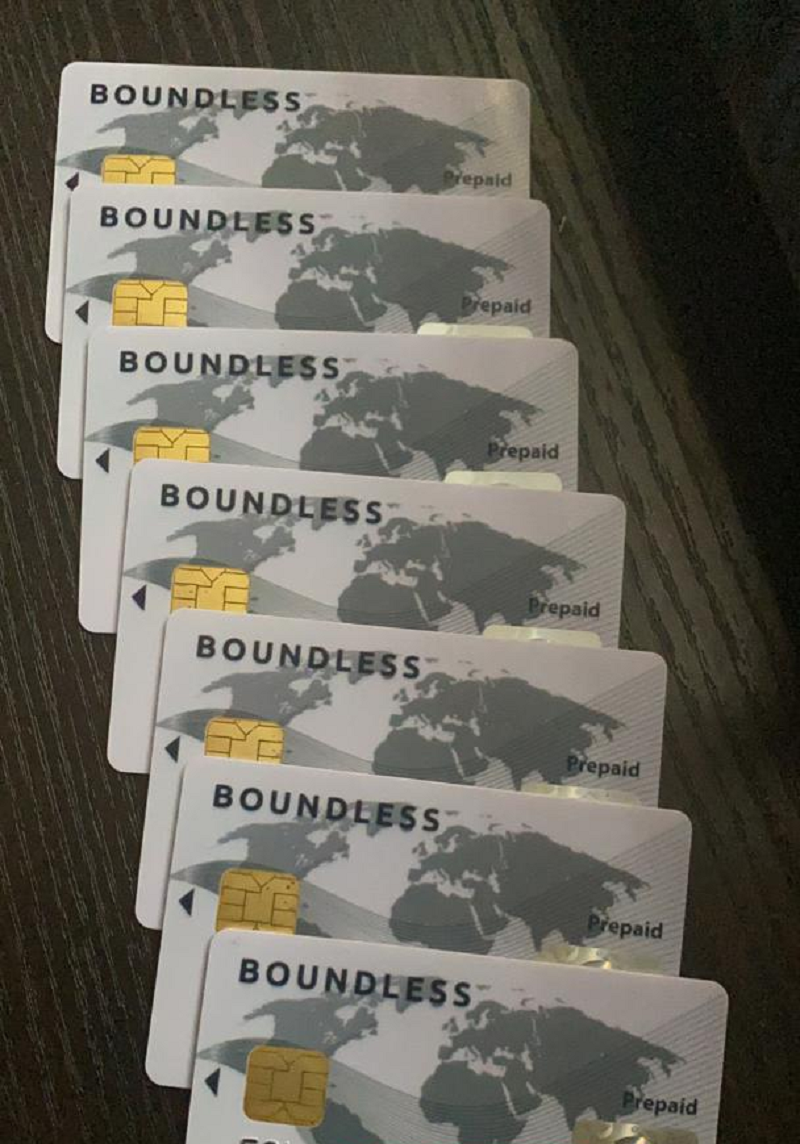

The Implications of Escalating Credit Card Debt in the U.S.

0

The United States is witnessing a significant surge in credit card debt, reaching an unprecedented high of $1.14 trillion. This alarming figure is indicative of a broader economic trend that affects millions of Americans. The reasons behind this rise are multifaceted, involving a combination of consumer behavior, economic factors, and financial policies.

One of the primary drivers of this increase is consumer spending habits. Post-pandemic, there has been a noticeable shift in spending patterns, with a marked increase in services spending. Additionally, the high inflation rates and rising interest rates have put considerable pressure on household budgets, prompting many to rely on credit cards to make ends meet.

Another contributing factor is the modest rise in unemployment rates, which has led to economic uncertainty for many. This uncertainty often results in increased credit card usage as a short-term solution to financial instability. The Federal Reserve Bank of New York’s data shows a $27 billion increase in credit card debt in just the second quarter of 2024, highlighting the rapid growth of this issue.

The impact of high credit card debt is not uniform across the population. It disproportionately affects those with lower incomes, who struggle to keep up with the cost of living. The burden of debt is exacerbated by the fact that credit card interest rates are at record highs, making it even more challenging for consumers to pay down their balances.

The consequences of such high levels of debt are far-reaching. Prolonged debt can lead to increased delinquency rates, which were reported to have risen from 5% to 7.18% in the second quarter. This not only affects individual credit scores but also has broader implications for the economy, potentially leading to a credit crunch and reduced consumer spending.

Addressing this issue requires a multi-pronged approach. Financial education and responsible credit card usage are critical in preventing consumers from falling into a debt trap. Additionally, policy interventions may be necessary to provide relief to those most affected by high interest rates and to stimulate economic growth. Reducing credit card debt is crucial for financial health and can be approached through various methods tailored to individual circumstances.

One popular strategy is the debt snowball method, which involves paying off the smallest debts first to gain momentum before tackling larger debts. This method capitalizes on psychological wins, providing motivation to continue debt repayment efforts. Conversely, the debt avalanche method prioritizes debts with the highest interest rates, potentially saving more money in the long run by reducing the amount of interest paid.

Another approach is to pay more than the minimum payments required by credit card companies. Minimum payments often cover just the interest, barely making a dent in the principal balance. By paying more, consumers can reduce the principal faster and decrease the overall interest accrued.

For those with multiple credit card debts, debt consolidation can be a viable option. This involves combining all debts into a single loan with a lower interest rate, simplifying monthly payments and potentially reducing the amount paid overtime.

Additionally, transferring balances to a credit card with a 0% introductory APR can provide a temporary reprieve from interest, allowing more of the payment to go towards the principal. However, it’s important to have a plan to pay off the balance before the promotional period ends to avoid high-interest rates.

Financial discipline is also key. Creating a budget, tracking expenses, and cutting unnecessary spending can free up funds to pay down credit card debt. It’s also wise to build an emergency fund to avoid falling back into debt during unforeseen circumstances.

The Federal Reserve’s potential rate cut could offer some respite to borrowers. A reduction in the benchmark rate could lead to lower APRs on credit cards, providing much-needed relief for those struggling with high-interest debt.

The $1.14 trillion credit card debt in the U.S. is a complex issue that calls for immediate attention. It is a reflection of underlying economic challenges and requires concerted efforts from individuals, financial institutions, and policymakers to address. As we navigate through these economic headwinds, it is imperative to foster a culture of financial literacy and responsible borrowing to mitigate the impact of such debt on American households.

Goldman Sachs Fires 1,300 Workers

0
The logo for Goldman Sachs is seen on the trading floor at the New York Stock Exchange (NYSE) in New York City, New York, U.S., November 17, 2021. REUTERS/Andrew Kelly/Files

In the ever-twisting plot of the corporate world, Goldman Sachs has recently made a move that’s as bold as it is controversial: they’ve decided to part ways with 1,300 of their employees. Now, before you start imagining a dramatic “You’re fired!” scene straight out of a reality show, let’s dive into the details that paint a more complex picture.

According to reports, this decision is part of Goldman Sachs’ annual performance review process, a tradition as steadfast in the corporate world as the office coffee machine that never works when you need it most. It seems that even in the gilded halls of Goldman Sachs, not all that glitters is gold, especially if you’re in the bottom percentile of the performance charts.

The move is set to affect between 3% and 4% of the staff across various divisions of the Wall Street firm. It’s like the corporate version of musical chairs, and when the music stops, some find themselves without a seat at the high-stakes table. The company has stated that this is a standard procedure, as routine as the annual holiday party where everyone pretends not to remember what happened last year.

In the high-stakes world of finance, even the giants have to occasionally shuffle the deck. Now, you might be scratching your head, wondering, “Why would a bank that’s raking in profits need to let go of its employees?” Well, it’s not because they’ve all decided to pursue a career in yoga teaching or avocado farming.

The truth is, it’s all about staying lean and mean in the financial jungle. Think of it as corporate pruning – sometimes, to keep the money tree healthy, you need to snip a few branches, even if they’re bearing fruit. It’s a tough pill to swallow for those on the receiving end, but in the grand scheme of things, it’s Goldman Sachs’ way of ensuring they remain nimble-footed in the ever-evolving dance of the stock market.

So, while the news may seem grim, it’s just another day in the life of a banking behemoth. They’re playing chess, thinking several moves ahead, and sometimes that means saying goodbye to a few pawns. It’s not personal; it’s just business – a mantra that echoes through the halls of finance, right before the sound of a thousand desk drawers being cleared out. And who knows? Maybe this is just their way of making room for an army of robot traders.

Now, let’s address the elephant in the room: layoffs are no laughing matter. They affect lives, families, and careers. But in the spirit of finding a silver lining, perhaps this is an opportunity for those 1,300 individuals to find new paths that lead to even greater successes. After all, one door closes and another opens, possibly to a startup that doesn’t require suits or understands the concept of “casual Fridays” every day of the week.

For Goldman Sachs, it’s business as usual. The company has assured that despite the layoffs, they expect to have more people working for them in 2024 than in 2023. It’s a bit like saying, “We’re downsizing to upsize,” a paradox that only makes sense in the dizzying world of finance.

Bitcoin and Pepe Suffer Price Dip As Raboo Nears Stage 5 Of Its Presale

0

The Raboo presale has had quite the run in the crypto-verse lately. More traders are interested; the $RABT community is growing, and, more importantly, launch day is getting closer.

Meanwhile, top crypto coins, like Bitcoin (BTC) and Pepe, are experiencing the aftermath of profit-taking all around. Bitcoin fell below its $60,000 mark, and Pepe took another hit from resistance.

More on crypto’s latest and Raboo’s ($RABT) presale coming up.

Is another Bitcoin slump imminent?

Bitcoin has been under close monitoring from most traders all summer, and it’s safe to say the top crypto has not delivered as expected. The BTC price fell to about $50,000 in August before correcting upwards.

The correction led to a 20% rise to $60,000 early this week before profit-taking from the traders pulled it under. Now, the BTC price is tagged at about $58,318, some 5.4% less than it was last week.

FXStreet concluded that closing above $58,700 was essential to keeping Bitcoin above the bearish trends. At any rate, the Bitcoin bulls have work to do.

Pepe follows Bitcoin dip; sell or buy top crypto coins?

Much like Bitcoin, Pepe is losing some of its value too to profit-taking in the market. The PEPE price was pushing $0.00001 last week, with the bulls intent on pushing the token past its $0.0000085 resistance. Pepe peaked at about $0.00000955 on Friday and set its sights on the next resistance at $0.000013.

The bears have taken over proceedings, however, as Pepe has fallen considerably. The token is down to its immediate support at $0.0000075, while many predictions state that the PEPE price could go even lower.

So, top crypto coins Pepe and Bitcoin are out of the to-buy list; a new project, perhaps?

Raboo for crypto profits, short-term and long-term

The top tokens are failing their holders, and the crypto market is looking even more volatile than anyone imagined. Bitcoin and most of the best projects are out of commission, and traders are turning to Raboo for gains.

All that’s for a good reason, too, as Raboo is presenting features that are out-of-the-box, even for a meme coin. Its mission is to change the perception of memes and meme coins, upgrading the sector from horrible memes to perfect, consistent humor all over the crypto-verse.

Raboo is not all mouth, either, unlike a lot of the meme coins. The $RABT project is incorporating algorithms to help with meme creation; Rabooscan will be the gatherer for memeable content all over the internet, combining them into relatable memes.

The $RABT community will not only be creating memes and having fun. The Raboo project will offer $RABT incentives to creators whose content the Rabooscan finds worthy enough for memes. It’s all creativity and rewards on Raboo through its post-to-earn feature.

Conclusion

Even the best altcoins are falling victim to the crypto-verse’s bears; only a few projects are immune to the strike, and Raboo is one of them.

With the presale underway–and almost in stage 5–you’d have to act fast to benefit from the expected ROI. And whatever you see is only a tip compared with Raboo’s potential when it lists.

You can participate in the Raboo presale here.


Telegram: https://t.me/RabootokenPortal

Twitter: https://twitter.com/Raboo_Official

Nigeria’s Failure to Use Its Real-Time Tracking System As the Spate of Kidnapping Grows

0

In 2015, the Nigerian Police Force announced a new era of intelligence-led policing, with the installation of a groundbreaking tracking device. The device wasn’t just another tool; it was the embodiment of a strategy designed to disrupt criminal networks, particularly the scourge of kidnapping that has plagued the nation. Its mission was to intercept the darkest plots before they could come to fruition.

The Intelligence Response Team (IRT), an elite unit within the police force, became the operational arm of this technological marvel. Armed with real-time data from the tracking system, the IRT was empowered to move swiftly and decisively.

The device played a pivotal role in high-profile cases that once gripped the nation in fear. One such case was the abduction of Chief Olu Falae, a former Secretary to the Government of the Federation, who was kidnapped by herdsmen on his 77th birthday. The tracking platform proved its worth by guiding the police to the kidnappers, who were apprehended with the ransom money still in their possession.

“Immediately the kidnappers removed the SIM card used to negotiate, we knew where they were and intercepted them at the last bridge to Minna,” recalled a senior police officer who was instrumental in the operation, in a conversation with Vanguard.

The kidnappers were caught with “the ransom money they collected still in the boot,” he added.

The justice system swiftly followed, sentencing the criminals to life imprisonment. However, the battle against crime had taken a decisive turn.

Technology, no matter how advanced, is only as good as the people who wield it. And here, the story takes a darker turn. According to the senior police officer, what was meant to be a shield against criminals became a tool for political espionage. The tracking system, once the pride of the police force, was slowly corrupted from within.

As the years passed, the leadership of the Nigerian Police Force changed hands. Successive Inspectors General, lacking the technical acumen of their predecessor, began to lose sight of the system’s true purpose. The platform, once a beacon of hope, was now at the mercy of those who saw it as an opportunity to further their own agendas.

“The priority of successive IGPs was quite different,” lamented the retired senior officer. “Solomon Arase set up the platform when he was the IGP. It was a technical platform to track calls.”

The system, which was initially housed within the IGP’s office and accessible only to a select few, soon fell into the wrong hands.

“People in the National Assembly and Villa got hold of the platform and used it to track their enemies and mistresses,” he revealed.

The division between the technical and operational units, crucial to maintaining the system’s integrity, was blurred. The IRT, once a separate entity, was merged with the technical platform, allowing for greater control by a single individual—control that was soon compromised, the retired senior officer narrated.

A System in Decline

With the passage of time, the once-formidable tracking system began to falter. Its decline was not due to any inherent flaw in the technology but rather a lack of maintenance and foresight. The retired officer noted with regret that the platform was never upgraded as required.

“They had money to pay for the accumulated subscription but they refused to pay,” he explained. Subscriptions went unpaid, and the service provider, after a grace period, withdrew its support. “When you leave such a system for more than one year, it requires recalibration,” the officer added.

The consequences were severe. As the system’s effectiveness waned, kidnappers and criminals regained their footing. The very tool that had once struck fear into their hearts was now nothing more than a relic of a bygone era. The police, once armed with real-time data, were left to rely on traditional methods that were no match for the evolving tactics of criminal networks.

“The tracker, particularly, became non-functional due to non-subscription as well as failure to engage the relevant company to carry out required system upgrades,” the officer explained. “Due to the failure to pay subscription fees for about three years, and after a grace period had expired, the company overseeing its maintenance and upgrade decided to withdraw its services. This made it difficult to track bandits, kidnappers, and other forms of violent crimes.”

A Glimmer of Revival

Yet, all is not lost. Recently, the current Inspector-General of Police, Kayode Egbetokun, has made efforts to breathe new life into the defunct system. The tracking device has been reactivated, offering a glimmer of hope that the tide may once again turn in favor of law enforcement. But the challenges remain immense.

Despite the reactivation, in addition to the tracking devices of the Department of State Security service and Office of the National Security Adviser, the impact has been limited. Kidnappers continue to operate with impunity in many regions, sharing their activities online and flaunting the ransom they received on social media.

In addition to the tracker, Nigeria uses NIGCOMSAT, a satellite that tracks location and generates data. However, a satellite engineer at the NIGCOMSAT LTD, who didn’t want his name mentioned, had told Vanguard that the onus of taking action on whatever the communications satellite reveals, in terms of crimes, is squarely at the doorsteps of the security agencies, adding that, the door of the company has always been open to them for valuable information that aid their operations.