DD
MM
YYYY

PAGES

DD
MM
YYYY

spot_img

PAGES

Home Blog Page 2956

Enhancing Investor Relationship: Key Insights And Best Practices For African Startups

0

A report by Wimbart, a leading PR agency specializing in African startups, revealed that despite receiving regular updates, a significant number of investors remain dissatisfied with the quality and consistency of communication they receive from startups they’ve invested in.

The report highlights a growing demand among investors for more effective and transparent communication. Many investors expressed frustration with the lack of timely information, unclear reporting, and inconsistent updates, which hinders their ability to make informed decisions and track the progress of their investments.

To ensure effective communication between African startups and their investors, the survey explored investors’ preferences ranking in order of importance. Two factors emerged as top priorities: “Consistency” and “Reliability.”

These highlight investors’ emphasis on accurate, dependable data. “Consistency,” which ranked as number 1, reveals that investors want startups to avoid conflicting or contradictory information in their reports. Therefore, startups should ensure their communications align with previous reports and external sources to maintain trust.

The second top factor, “Reliability,” focuses on the credibility of the data backing a startup’s performance and projections. Investors want to ensure that the startup has a track record of delivering on promises made in earlier reports. This makes it crucial for startups to back their claims with credible sources and a history of accurate reporting.

Next in importance are “Comprehensiveness” and “Usability.” which stress the need for detailed, insightful information on the startup’s business model, market analysis, potential, and risks. Investors appreciate reports that are not only thorough but also easy to digest, providing a clear snapshot of essential information. However, without consistency and reliability, these factors lose significance.

“Brevity” ranks fifth, indicating that while investors appreciate concise reports, they do not want startups to compromise on necessary details. Startups should balance providing sufficient information without overwhelming investors with unnecessary details.

Based on feedback from African investors, several recommendations have emerged for improving investor communications:

1. Standardize Reporting Formats

Investors suggest startups create a consistent template for reports that integrates feedback from investors, allowing easier comparison across portfolios. For startups with multiple investors, reports can be streamlined to reduce duplicated efforts while still addressing the core needs of each investor.

2. Ongoing Updates of Key Highlights and Challenges

Startups should maintain an ongoing list of highlights (achievements), lowlights (challenges), and specific requests for help. Reporting becomes a continuous process rather than tied to rigid cycles, with time-sensitive updates shared proactively.

3. Transparency in Communication

Investors value honesty and want both good and bad news reported. Startups should communicate key performance indicators (KPIs), risks, and challenges, along with forward-looking insights, to maintain transparency. Asking for support when needed is essential to building strong investor relationships.

4. Focus on Relevant KPIs

Startups should prioritize reporting a few key metrics that matter most to their business, like historical revenue trends and financial/operational data. Investors want to see how these metrics contribute to the company’s success and its competitive advantages as it grows.

5. Anticipate Questions

After completing a report, startups should anticipate common investor questions and address them upfront. This adds clarity and comprehensiveness to their updates.

6. Regular Updates and Quarterly Reviews

Providing monthly updates keep investors engaged, while comprehensive quarterly reports covering financials, company performance, challenges, and opportunities give a holistic view of the business.

7. Concise Reports Focusing on Fundamentals

Keep reports brief and focused on core business aspects. Summaries of key financial metrics should be simple and easy to read, prioritizing essential information to help investors make informed decisions.

To sustain the trend of investor funding, Africa-focused startups must become deliberate in ensuring effective communication with existing and potential investors as it is critical to attracting and maintaining credibility and lasting relationships, which are key factors for attracting long-term funding.

Notably, by following these best practices above mentioned, startups can strengthen their investor relations, foster trust, and improve overall communication.


How to Sustain the Lean Management Process Over Time

0

Achieving results by minimizing waste and maximizing value has become quite trendy, especially with lean management techniques. This method can significantly boost productivity and efficiency. The real test lies in maintaining this progress over time. Here’s a guide that explores ways to sustain lean management methods for lasting success in any company or group.

Commitment to Continuous Improvement

A key principle in the lean management process is to strive for improvement, promoting a culture that values constant evaluation and refinement of processes within organizations. Established procedures should be regularly assessed to identify inefficiencies and opportunities for development. Seeking input from individuals at all levels fosters a range of perspectives in the enhancement journey.

Maintaining high levels of employee engagement is essential for upholding effective work practices within an organization or business setting. When team members feel their contributions are appreciated and believe they have a stake in the operations and decision-making processes of the company or team, they are more likely to show commitment and dedication to their roles. Encouraging team members to share their thoughts and suggestions can promote teamwork and pave the way for creative solutions to challenges faced by the organization.

Leadership’s Role in Sustainability

The longevity of lean management practices is greatly influenced by leadership qualities. Leaders play a critical role in upholding and exemplifying lean principles for their teams to emulate effectively. By demonstrating a commitment to ongoing enhancement and minimizing inefficiencies, leaders motivate their staff to adopt these principles wholeheartedly.

Effective communication and leadership are crucial for sustaining momentum on this journey within teams. A consistent flow of updates on achievements and acknowledgment of milestones helps keep team members engaged and committed to the process. Additionally, addressing challenges promptly prevents minor issues from escalating into major hurdles and fosters a culture of continuous improvement.

Training and Development

Continuous training and development programs are essential to ensure that employees possess the skills and knowledge needed to support lean management efforts effectively. By investing in employee education, organizations not only enhance individual capabilities but also demonstrate their dedication to lean principles.

Employees can acquire skills and effective methods through workshops and seminars. Motivating team members to participate in training sessions and attend industry events introduces them to innovative concepts and strategies that nurture a culture of continuous learning and flexibility.

Standardization and Documentation

Consistency is key to maintaining effective practices over time. Following standardized procedures helps minimize discrepancies and improves productivity, leading to more reliable results. It is crucial to have documentation in place to ensure that everyone comprehends the processes and can adhere to them correctly.

It’s important to keep documentation up to date to capture any changes in procedures and enhancements effectively, benefiting teams and maintaining consistency across the organization.

Embracing Technology

Incorporating technology can greatly enhance lean management initiatives. Automation tools simplify tasks and allow human resources to focus on strategic activities. Data analysis provides valuable insights into performance metrics and aids in identifying patterns and areas that require improvement.

Utilizing software tools that align with principles like project management or workflow optimization significantly enhances productivity. These digital solutions improve communication and collaboration while enabling progress tracking to bolster the longevity of practices.

Fostering a Lean Culture

Fostering a culture of efficiency and quality within an organization involves integrating lean principles into its core values and day-to-day functions. This promotes employee dedication to enhancing efficiency levels and customer satisfaction.

Recognizing and celebrating wins—whether for individuals or teams—is essential to emphasize the significance of lean management practices and principles. This positive acknowledgment serves as motivation for dedication to lean methodologies and creates an atmosphere of continuous enhancement.

Adapting to Change

The business landscape is always evolving. It is important to be able to adapt in order to maintain lean management practices that can endure. Promoting a positive attitude toward change helps teams prepare for obstacles and devise solutions before they escalate into major problems. Regular evaluations and adjustments to lean strategies in alignment with the company’s objectives and market dynamics bolster resilience and long-term success.

Conclusion

Maintaining a lean management approach demands a commitment to improvement, adaptability, and dedication over time. Organizations can sustain efficiency and productivity by nurturing a culture that values principles and emphasizes training and growth opportunities. Leadership is crucial in advancing these endeavors by facilitating communication and endorsing strategies. Adopting technology and establishing standardized procedures also contribute to long-term sustainability. In essence, a steadfast focus on lean management principles positions businesses for lasting success in today’s dynamic landscape.

DIY Methods to Recover Photos from a Corrupted SD Card

0

Having a corrupted SD card can be a daunting experience. You may have stored your precious and memorable moments as photos or videos on that SD card, and when it became corrupted, all its stored data became inaccessible. Luckily, there are various SD card recovery methods available online that you can try to recover lost photos from your corrupted SD card.

Here, in this comprehensive guide, we will explore various DIY methods to recover photos from a corrupted SD card, along with preventive tips to avoid future data loss.

Why Do SD Cards Get Corrupted?

Before knowing the photo recovery methods to recover lost or deleted photos from a corrupted SD card, it is important to find the exact cause for such corruption. Common causes of SD Card corruption are:

  • – Physical Damage: SD cards are delicate, so rough handling or exposure to water or excessive heat can cause damage.
  • – Malware Infection: If you connect your SD card to any device infected with malicious software such as virus or malware, it can corrupt the card’s file system.
  • – Power Surges: Sudden power losses or surges can disrupt data written to the card, leading to corruption.
  • – Improper Removal: Removing the SD card while transferring files between devices is also the main cause of corruption or data loss on it.

Basic Troubleshooting Methods to Fix Corrupt SD Cards

Now, if you’re dealing with a corrupted SD card, try the following methods one-by-one to repair it at your end.

1: Restart the Device

Sometimes, your SD card is not actually corrupted but it may appear so due to your device-related issues. If the SD card isn’t recognized by your device, try rebooting your computer or camera. This can help to resolve minor issues with the device reading the SD card.

2: Clean the Card’s Contact

Dust and dirt on the SD card contacts can generate connectivity issues. To avoid such instances, try cleaning the card slot of your device with a soft, lint-free cloth or an electronics cleaner. Be careful not to damage the contacts.

3: Use File Explorer or Disk Utility to Check for Errors

Both Windows and Mac OS provide built-in utilities that can scan and repair basic file system errors on an SD card. You just need to connect the corrupt SD card to your device via a card reader and then launch the respective tool on it. Now, follow the below steps to check the errors on your SD card:

For Windows Users:

  • Launch File Explorer and right-click on the SD card drive.
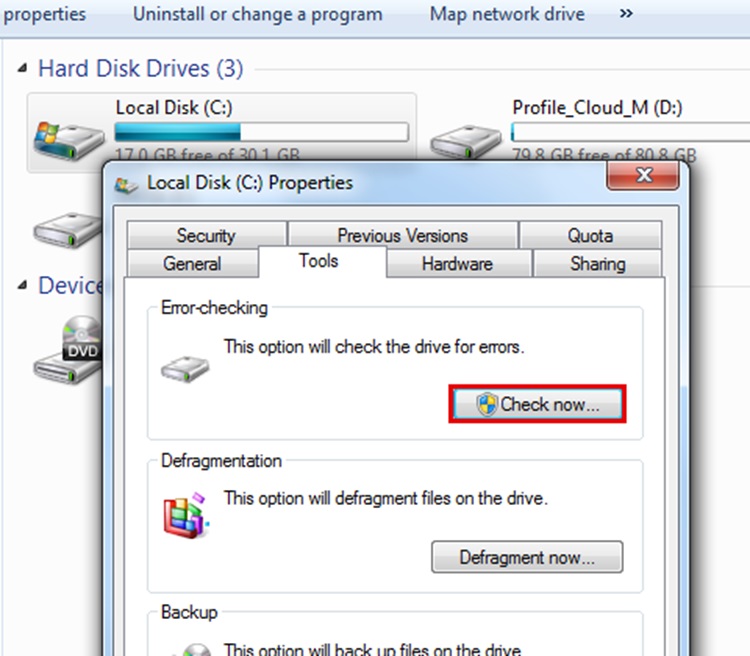
  • Select Properties from the context menu and go to the Tools
  • Click on the Check now button under the Error Checking section, then select Scan and repair drive. 

  • Once the process is complete, check if you are able to access your SD card files.

For Mac Users:

  • Open Disk Utility from the Applications > Utilities
  • Select your SD card from the left pane.
  • Click First Aid, and then choose Run to initiate the error-checking process.
  • If Disk Utility finds any errors, it will attempt to repair them. Once completed, check to see if the card is readable.

Quick Steps to Recover Photos from a Corrupt SD Card Using Photo Recovery Software

If the SD card is still unreadable, formatting it may be the only option. However, formatting erases all its content including your precious photos. There are several photo recovery software available online that you can try to recover photos from your corrupt SD card. Stellar Photo Recovery is an all-in-one photo recovery software that supports the recovery of photos deleted due to accidental deletion, formatting, human error, etc.

This amazing photo recovery software is compatible with both Windows and Mac devices. You can use this tool to recover photos from any internal or external storage devices, including SD cards, SSDs, HDDs, memory cards, etc. Follow the below given simple steps to recover photos from a corrupted SD card using this tool:

  • Firstly, download and install the Stellar Photo Recovery software on your Windows/Mac PC. Also, connect the corrupt SD card to your computer using a card reader.
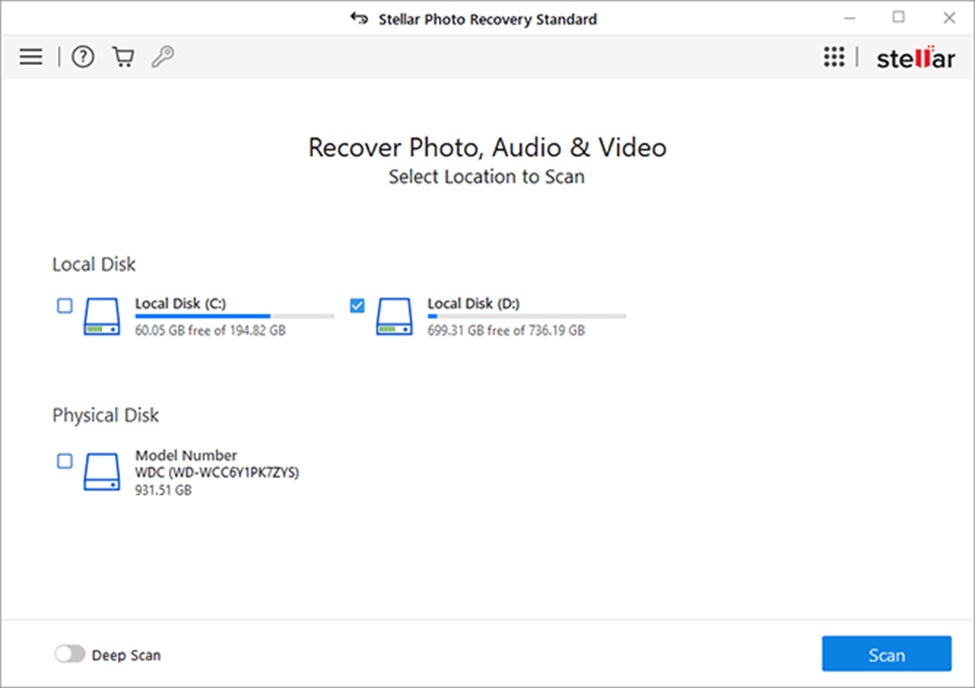
  • Launch the software and from the homepage, select the storage drive where your photo was earlier stored and click Scan to initiate the scanning process.

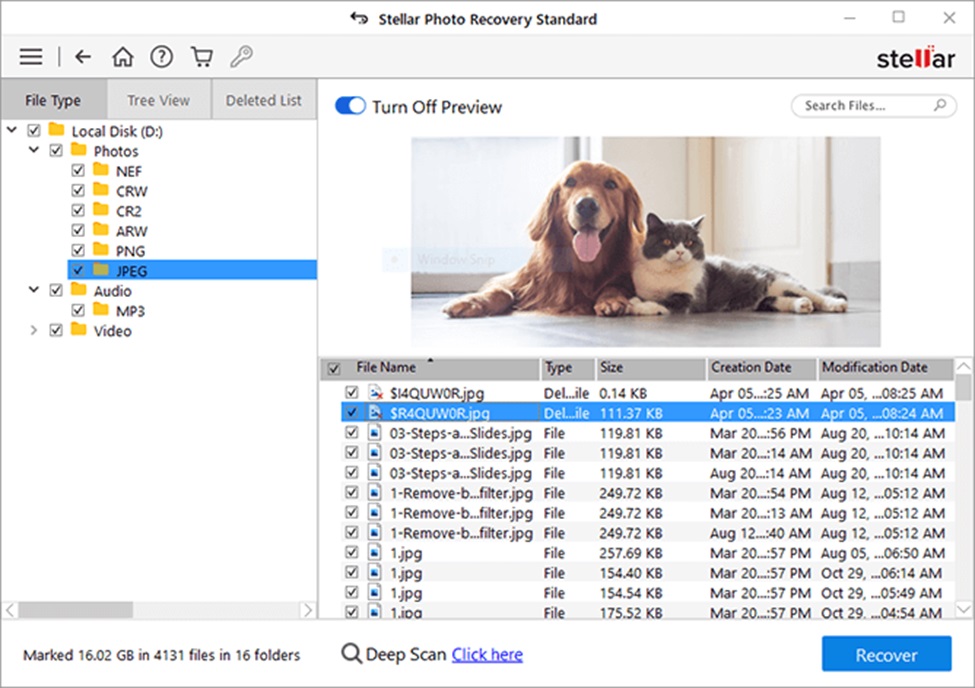
  • Now, after completion of the scan, preview the recoverable files and choose the photo(s) you need to restore.

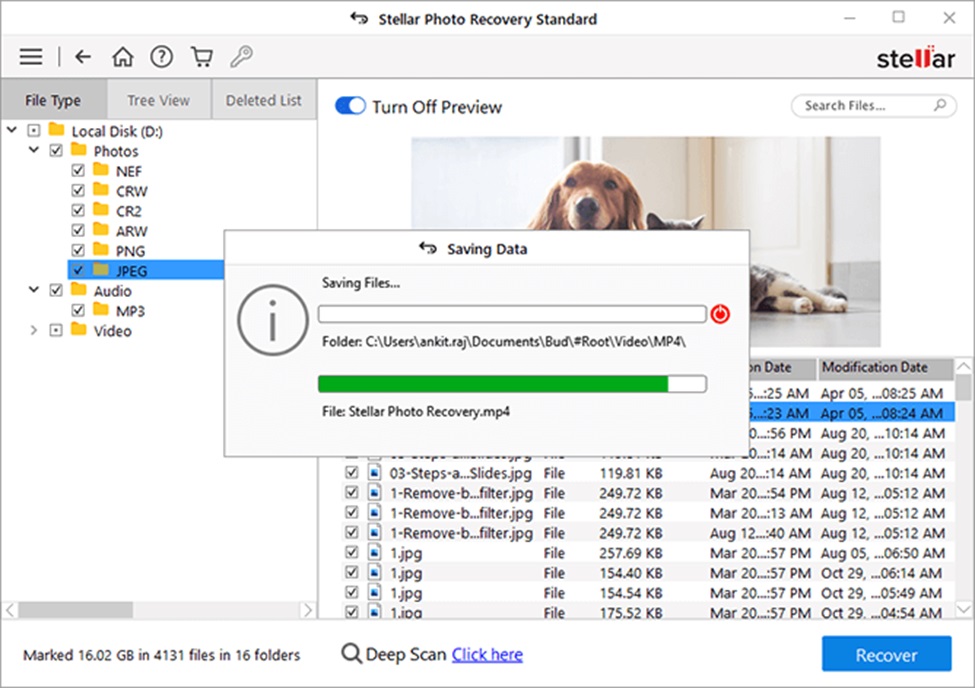
  • Lastly, click the Recover button to save selected photos at the desired location on your device.

Final Steps: Backup and Long-term Data Management

Now that you have access to photos lost from a corrupted SD card, it’s time to take measures to prevent future data loss. For this:

  • – Backup Regularly: Use cloud storage or an external drive to back up photos at least once a week.
  • – Avoid Overwriting: When data loss occurs, avoid using the SD card until you’ve attempted recovery. Continued use may overwrite lost files.
  • – Invest in Quality SD Cards: Purchase reliable SD cards from trusted brands. Low-quality cards are more prone to failure.
  • – Use an Antivirus: As data loss can occur due to malicious program attacks, it’s better to install a reliable antivirus software on your device to prevent such instances.

Conclusion

Hope, the above-mentioned DIY methods to recover photos from a corrupted SD card help you in recovering your lost memories. By following these steps and using the right photo recovery software such as Stellar Photo Recovery, you can often retrieve lost photos without professional help. However, prevention is the best approach to data loss, so back up your files regularly and handle your SD card with care.

3 Altcoins That Could Flip Dogecoin in Market Cap by 2025

0

This cycle’s bull season is estimated to run between this quarter and the first half of next year. With huge gains to be made, not forgetting surprises, the three altcoins that could flip Dogecoin (DOGE) in market size come 2025 are Shiba Inu (SHIB), Toncoin (TON) and IntelMarkets (INTL).

Their growth prospects are staggering, not to mention their rapidly growing ecosystem. Moreover, as a blend of AI, blockchain and DeFi, INTL is on track to flip top crypto coins after its debut.

IntelMarkets (INTL): A New DeFi Project to Keep on the Radar

IntelMarkets (INTL) is a new altcoin teeming with potential. As an emerging cryptocurrency with no bull market history, its upside potential is staggering and largely unmatched. Equally important is its AI-DeFi narrative and the future transformation of the crypto trading scene.

As an AI-powered trading platform—the first modern-generation protocol to integrate artificial intelligence across all levels—it will provide users with unprecedented computing power. Further, it will host advanced trading features and tools like copy trading, Intelli-M trading systems and self-learning trading robots.

The above is expected to put it at the forefront of the $347 billion crypto trading market, driving huge demand. Over $1.5 million has been raised by the fourth stage of the ICO, with a token priced at $0.036. On track for a 100x upswing by 2025, it is set to overtake Dogecoin, competing against Shiba Inu (SHIB) and Toncoin (TON).

Shiba Inu (SHIB): Flipping Dogecoin to Become the Top Meme

If any memecoin could flip Dogecoin in market size, it would likely be Shiba Inu (SHIB). The dog-themed cryptocurrency is the second-largest memecoin, behind DOGE. Its intersection with utility, as evident in the ecosystem featuring tangible projects like Shibarium (a Layer-2 scaling solution) and ShibaSwap (a top DEX), adds to its appeal.

Moreover, its community is one of the most vibrant—a catalyst for price growth. Following the recent market upswing, SHIB leads in gains. The Shiba Inu price leaped over 30% in the past 30 days, changing hands above $0.000018.

Another layer of appeal is its budget-friendliness. With investors having no need to break the bank before positioning for significant gains, Shiba Inu (SHIB) is a retail favorite, which might contribute to it becoming the top meme—one of the best cryptos to invest in.

Toncoin (TON): Mass User Onboarding to Propel Price

Toncoin (TON), the Telegram-based cryptocurrency, is one of the best altcoins to invest in. Its affiliation with one of the world’s largest messaging apps sets it apart. Telegram’s almost 1 billion global users and the TON Foundation’s vision to empower 500 million users to own their digital identity, assets and data by 2028 meant more TON adoption.

A key strategy for onboarding users to Telegram and the TON ecosystem is Telegram mini-apps. Successful ones include Notcoin (NOT), DOGS, Hamster Kombat and Catizen, among others. These tap-to-earn and play-to-earn games introduced normies to crypto and Toncoin (TON) for the first time, pushing it to an all-time high.

Given future explosive growth, Toncoin (TON) is among the altcoins to watch out for. It is on course to flip top altcoins and at the current Toncoin price of $5.3, it is a low entry to what might be huge gains. As it gears up to surpass the current ATH of $8.24, it is a top crypto to invest in.

Conclusion

The three altcoins with the potential to flip Dogecoin in market size by 2025 are Shiba Inu (SHIB), Toncoin (TON) and IntelMarkets (INTL). Their growth prospects, not forgetting rapidly expanding ecosystems and communities, set the stage for huge gains.

Buy Presale

Website

Telegram

Netizens React to Naira’s Fluctuation

0

In June 2023, the Federal Government of Nigeria announced the unification of the country’s currency to reduce the gap between the CBN’s official exchange rate and the black-market rates, bolster Nigeria’s foreign exchange reserves, and encourage economic expansion. To understand how the current economic policy has affected everyday Nigerians and understand their perspectives on the policy, our analyst looks into social media data, specifically YouTube, to understand the direction of the commenters’ sentiment and perception of the prevailing economic condition.

Having collected a total number of 274 comments from a video titled “N820 Naira to $1? Exchange Rate Policy Explained” and posted on Fisayo Fosudo’s YouTube Channel, the sentiment revealed in the comments demonstrated that Nigerians perceive the country’s exchange rate policy differently.

A step toward economic growth and expansion

Many of the commenters expressed views that demonstrate that the policy is a good one and expressed their conviction in its ability to help the country’s struggling economy significantly. For instance, some commenters believe the policy will help attract foreign investors. They opined that a more stable exchange rate could create a favorable economic atmosphere for international investors, thereby fostering increased capital inflow. According to one of the commenters, “The unification is good. It will attract investors.”

Another commenter named @jonesh6204 observed that the policy will help the country’s economy if the refineries start functioning. According to him, “I think it will have a positive effect if our petroleum refineries start working again and we start selling to other African countries accepting only naira as means of payment.” Others noted that it will help address and eradicate the country’s multiple exchange rates, which they believe will culminate in greater transparency and fairness in the market. “Multiple exchange rate is evil, it is [exploitative] and creates room for double-standard sharp practices. Thanks for its abolishment, it makes no sense having multiple exchange rates,” one commenter who goes by the name @ufotekere9391 asserted.

Some commenters highlighted that the policy will encourage self-sufficiency, which is a prerequisite for bolstering a country’s economy. According to these people, a concentration of effort on production capabilities can enhance economic resilience and reduce dependency on foreign currencies. A user stated, “Being self-sufficient is what grows the economy and makes the Naira strong.” 

Concerns over its negative economic implications

However, contrary to the idea of the commenters who believe the policy will turbocharge economic growth, others highlight and express concerns over the influence of foreign institutions, stating that Nigerian political leaders always want to pander to the whims of the World Bank and the IMF, at the expense of the general well-being of the people who entrusted them with the power to govern the state on their behalf.

A commenter with the name @darkev said, “Let’s be clear about one thing: as long as we continue to pursue neoliberal economic ideas promoted and enunciated by [the] IMF and [the] World Bank, that limits government in the commanding heights of the economy, the exchange rate will continue to fluctuate and depreciate.”

Other commenters also warned that letting the demand and supply of the market determine the direction of the naira will affect many households, stating that allowing the adoption of such an economic policy in a country where most of the inputs of local manufacturing are imported will erode the purchasing power of ordinary Nigerians. One commenter named @MichaelO2 wrote, “At this point, the unification is ill-timed, senseless, and doing things backward because it will cause more foreign exchange flight out of Nigeria.”

Another commenter also echoed the view that the economic policy is poorly timed and can exacerbate the living conditions of ordinary citizens, as their purchasing power consistently weakens. “While the idea of unification is positive, the unfortunate reality is that the timing is unfavorable. It is clear to anyone in their right mind that implementing a floating rate without building up reserves is unwise,” a commenter with the name @PersonalFinanceProdigy noted.

What Next?

Chinenye Iwuh notes that switching exchange rates doesn’t exactly address the systemic economic issues the country faces. Similarly, Lagos-based economist Ejike Nwolisa observes that “the real solution for our foreign exchange problems lies outside the monetary policy space” and noted that achieving a strong economic structure requires more than just floating the currency. “The best policy combo to achieve this is policies that fast-track local production of our major consumables. Stable and regular electricity, good transport infrastructure, and quality education are no-brainers in achieving this target. Without these fundamentals, our economic woes, exchange rate inclusive continue. Sad but true!” he concluded.

Additional reports by Salaudeen Gbolahan