DD
MM
YYYY

PAGES

DD
MM
YYYY

spot_img

PAGES

Home Blog Page 2956

TRON’s Q3 Revenue Hits $577M Surpassing BTC and ETH, as Ripple Secures Financial Services Approval in Dubai

0

In a remarkable turn of events in the cryptocurrency market, TRON has reported an unprecedented quarterly revenue of $577 million for Q3 2024. This figure not only marks the highest earnings for TRON since its inception but also represents a significant 43% increase from the previous quarter. Such a surge has positioned TRON as a formidable competitor in the blockchain industry, outpacing giants like Bitcoin and Ethereum.

The substantial revenue of TRON can be attributed to several strategic moves and market dynamics. A key factor is the increasing activity around stablecoins on the TRON network. TRON has established itself as the second-largest blockchain for stablecoins, accounting for a considerable portion of the stablecoin market cap. The network’s appeal, especially in emerging markets in South America and Africa, has been bolstered by its handling of over $62 billion in stablecoins, with USDT being a notable example.

Another significant contributor to TRON’s revenue boost has been the launch of SunPump, a memecoin generator that has quickly gained popularity within the ecosystem. Since its introduction, SunPump has generated substantial revenue, with a large number of memecoins created on the platform. This initiative underscores TRON’s ability to tap into trending sectors within the crypto space and diversify its revenue streams.

Bitcoin, traditionally the market leader, has experienced a slowdown in mining revenues, reaching yearly lows in September. This downturn reflects the broader market sentiment, which has been bearish throughout the quarter. Despite this, Bitcoin’s dominance in the market has increased, suggesting a consolidation of trust in the face of a bearish market.

Ethereum, on the other hand, has faced its own challenges. The network has been the primary target of crypto hacks, with a significant amount of funds stolen in Q3. However, it’s not all negative for Ethereum; the platform has consistently outperformed most other digital assets and remains a key player in the blockchain space.

The contrasting fortunes of Bitcoin and Ethereum highlight the dynamic and unpredictable nature of the cryptocurrency market. Investors and enthusiasts alike will be watching closely to see how these trends develop in the final quarter of 2024.

Comparatively, Bitcoin and Ethereum reported Tron’s Q3 Revenue Hits $577M Surpassing Bitcoin and Ethereum revenues of $56.3 million and $256 million respectively, which pales in comparison to TRON’s impressive figures. Despite this financial success, TRON’s native cryptocurrency, TRX, has experienced a slight dip in price, which analysts attribute to broader market conditions rather than network performance.

Bitcoin and Ethereum will remain a focal point for gauging the health and direction of the overall market. The final quarter of 2024 will undoubtedly bring more developments, and with them, new opportunities and challenges for these leading cryptocurrencies.

As TRON continues to innovate and expand its offerings, it is becoming a formidable contender in the blockchain arena. The network’s consistent revenue generation and strategic initiatives have positioned it well for future growth. Industry analysts are keeping a close eye on TRON’s ongoing competition with Cardano (ADA) for a spot in the top 10 cryptocurrencies, as well as the potential of emerging projects like Lunex Network (LNEX) to shake up the market dynamics.

Ripple Secures Financial Services Approval in Dubai

Ripple has obtained in-principle approval from the Dubai Financial Services Authority (DFSA). This approval marks a pivotal step in Ripple’s strategy to broaden its global footprint and enhance its services within the United Arab Emirates (UAE).

Ripple, a leader in providing digital asset infrastructure, is now set to introduce its end-to-end payment services, including Ripple Payments Direct (RPD), to the UAE market. This expansion aligns with Ripple’s mission to offer businesses faster, more cost-effective, and efficient cross-border payment solutions. The company combines robust regulatory compliance with investments in critical infrastructure components such as liquidity and on/off-ramps between fiat and digital assets.

The DFSA’s in-principle approval is a testament to Ripple’s commitment to adhering to regulatory standards and fostering the institutional adoption of blockchain technology. With over 20% of Ripple’s global customer base located in the UAE, the company is poised to meet the growing demand for innovative payment solutions in the region.

Brad Garlinghouse, Ripple’s CEO, emphasized the staying power of blockchain and crypto technologies and lauded the UAE for its forward-thinking regulatory approach. He noted that the UAE is positioning itself as a global leader in the new era of financial technology.

In a significant move for the cryptocurrency market, Bitwise Asset Management has filed for the first XRP-based Exchange-Traded Fund (ETF). This filing comes after a series of regulatory advancements that have paved the way for more crypto-based investment products. The proposed ETF, which will directly hold XRP, aims to track the price movements of one of the most well-known digital assets.

The initiative by Bitwise reflects the growing interest in providing investors with regulated and accessible ways to gain exposure to cryptocurrencies. XRP, the native token of the XRP Ledger—a blockchain network designed for efficient cross-border payments—has been chosen by Bitwise due to its enduring presence and recognition among mainstream investors.

The UAE’s strategic position as a global financial services and trade hub, with access to fast-growing markets across the Middle East, Africa, and South Asia, has been a key factor in Ripple’s decision to continue investing in the region. The comprehensive regulatory framework established by the DFSA and other regulators in the country has created an environment conducive to the growth of innovative crypto firms.

Reece Merrick, Ripple Managing Director for the Middle East and Africa, highlighted this as a pivotal moment for Ripple’s operations in the Middle East. The DFSA is recognized globally for its rigorous regulatory process, and Ripple’s receipt of in-principle approval reflects the company’s dedication to compliance and innovation.

This development is not only a milestone for Ripple but also for the DIFC, which is committed to fostering a future-focused financial ecosystem that supports innovation and growth. Ripple’s expansion in the DIFC is expected to drive the growth of blockchain technology in the region and support the UAE’s vision to become a leading global crypto and fintech hub.

The in-principle approval from the DFSA underscores the strategic importance of regulatory clarity and the role it plays in advancing financial services innovation. As Ripple sets out to roll out its enterprise-grade digital asset infrastructure to a broader customer base in the UAE, the company is well-positioned to contribute significantly to the region’s fintech landscape.

Why This Prop Trading Hidden Gem Could Outperform Bitcoin and Skyrocket 20x in 2024!

0

As Bitcoin continues to dominate the cryptocurrency world, savvy investors are looking for the next big opportunity. While Bitcoin is expected to see continued growth, experts are turning their attention to a new PropFi hidden gem that could deliver exponential returns in 2024FXGuys (FXG). With its unique approach to decentralized finance (DeFi) and the potential to revolutionize the forex trading market, FXGuys is positioned to outperform even the biggest names in crypto, including Bitcoin. Analysts predict that FXGuys could surge by 20x in the coming year, making it one of the most exciting tokens to watch in 2024.

What is FXGuys?

FXGuys is an emerging PropFi (Proprietary Finance) project integrating traditional finance (TradFi) with decentralized finance. At its core, FXGuys is a decentralized trading platform that aims to disrupt the forex trading market, one of the largest financial markets globally, with over $6 trillion in daily trading volume. The platform allows users to trade crypto, equities, indices, FX, and commodities in a decentralized and transparent environment.

The project’s standout feature is its Trade2Earn model, which rewards traders with FXG tokens for every trade they execute, whether or not the trade is profitable. This incentivizes users to stay active on the platform while driving continuous demand for the token. Additionally, FXGuys offers a prop firm funding program, where skilled traders can access up to $500,000 in capital to trade with, significantly increasing their potential to capture market opportunities.

Why a 20x Surge is Within Reach

Analysts are predicting that FXGuys could see gains of 20x in 2024, and for good reason. FXGuys is already making waves with its Stage 1 presale, where $FXG tokens are priced at $0.03 each. The project raised over $1,000,000 during its private round, selling out 68,000,000 $FXG tokens, creating strong momentum going into its public launch. The token is expected to launch at $0.10, giving early investors immediate gains before it even hits major exchanges.

As the platform grows, the demand for $FXG tokens is expected to rise, driving up its price. The staking system, which allows users to lock in their tokens and earn passive income, further incentivizes long-term holding, creating scarcity and increasing the token’s value over time. Furthermore, FXGuys’ no buy-or-sell tax policy ensures that traders can maximize their profits without worrying about hidden fees, adding another layer of appeal to the platform.

With its early success in the presale, the unique PropFi approach, and its focus on real-world utility, FXGuys has the potential to outshine not just Bitcoin, but many of the established players in the crypto space.

Conclusion: FXGuys is the PropFi Hidden Gem of 2024

While Bitcoin will always be a foundational part of the cryptocurrency landscape, projects like FXGuys (FXG) are emerging as serious contenders with the potential to deliver massive returns. By targeting the forex market, offering real utility through its Trade2Earn model, and providing traders with access to substantial capital, FXGuys is positioned to become a major player in the DeFi and TradFi space.

For investors looking to capitalize on the next big opportunity in crypto, FXGuys represents a rare chance to get in early on a project with 20x potential. As 2024 concludes, FXGuys is the PropFi hidden gem that is taking the market by storm.

Website | Whitepaper | Socials | Audit

USE PROP10 FOR 10% BONUS

The Absurdity of Restraining Police with Court Order in Rivers State

0

“Firstly, it is important to clarify that there is a subsisting Federal High Court order barring the Nigeria Police Force from participating in the Rivers State elections. This order was duly served on both the NPF and the Rivers State Government. As a law-abiding institution, the IGP instructed the Commissioner of Police in Rivers State to strictly adhere to this court order by refraining from any direct involvement in the election process.” – Nigerian Police on Rivers State local elections.

There was this GST (general studies) course we took in first year in FUT Owerri titled something like Nigeria and Political Economy. That course explained the structure of the Nigerian polity. My understanding of that course was that the Police have a constitutional responsibility to protect lives and properties. In other words, if you have a scenario where two politicians will likely battle, that is even more important for the Police to show up. That the Police will obey Court order NOT to show up is very unfortunate for Nigeria.

I think some of these judges should be paid to retire as I do not see the value they are delivering. I am not sure they read some of the confusions they are sending as rulings. How do you tell the Police not to protect people and properties especially when you model a possibility of problems? Simply, what justice is that judge delivering to the Nigerian people?

Good People, the Nigerian judiciary is messing up big time. I hope some bad guys do not get a court injunction telling the military not to operate in Abuja. Because if the military obeys that court order, I am not sure the judges will be safe!

I am just a lay common man, but Nigeria must not allow the Police to be restrained by Court orders because the idea does not make sense. I agree with the Nigerian Bar Association. Yes, go there, protect people and properties but do not get involved in the political, voting or electioneering apparatus.

The responsibility of the police to ensure peace and security is constitutional and cannot be restrained by any court. The Police should at all times provide security for the good people of Nigeria and should in fact be worried that any court order purports to prevent them from discharging this responsibility. The duty to secure the lives and property of the people is one that should never be restrained by the court . The Police as much as all Nigerians should be concerned that such a statement should be issued by the Police confirming they would abdicate their duty. The Police must ensure they discharge their duties at all times and urgently take steps to set aside any judgement that seeks to prevent the Police from discharging their constitutional responsibilities. To do otherwise may enthrone a reign of terror or breakdown of law and order. The people of Rivers must never be left unprotected, no matter what. – Nigerian Bar Association

[The Police do not need to get involved, via any form of assistance, in the voting, political, etc processes but cannot be restrained from operating to maintain law and order even during the processes]

President of the Atlanta Federal Reserve, Raphael Bostic, Signals Openness to a 50bps Rate Cut in November

0

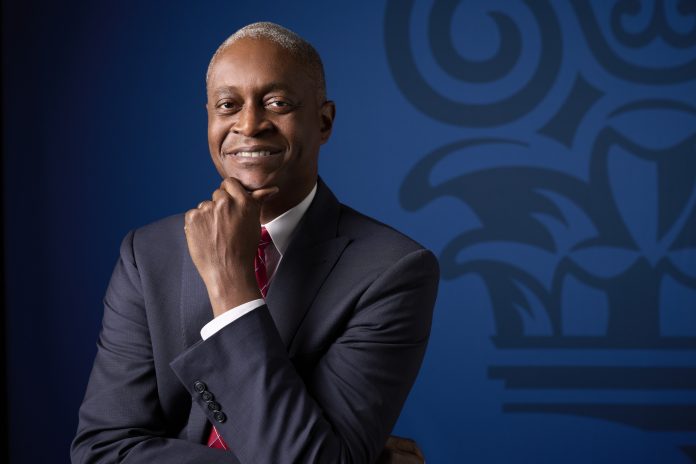
In the ever-evolving landscape of economic policy, signals from key figures in the Federal Reserve can have significant implications for financial markets and the broader economy. Raphael Bostic, President of the Atlanta Federal Reserve, has recently indicated a willingness to consider a substantial rate cut in the upcoming November meeting. This openness to a 50-basis points reduction comes amid discussions on the health of the job market and its potential weakening.

Bostic’s stance is particularly noteworthy given the context of the Federal Reserve’s dual mandate to foster maximum employment and price stability. The possibility of a rate cut of this magnitude suggests a shift in the Fed’s assessment of economic conditions, with a focus on supporting job growth should data indicate a faster-than-expected slowdown.

One of the primary risks associated with a 50bps rate cut is the possibility of igniting inflation. Lower interest rates can lead to increased borrowing and spending, which, in turn, can drive up prices if the supply does not meet the heightened demand. This is particularly concerning if the rate cut leads to an overheated economy, where the production capacity cannot keep up with the consumption demand, resulting in inflationary pressures.

Another risk is the potential for asset price inflation, where the easy monetary policy could inflate the prices of assets such as stocks and real estate beyond their intrinsic values. This can create bubbles in the market, which, if burst, could have severe repercussions for the economy.

Moreover, a significant rate cut could signal to the market that the Federal Reserve is concerned about the state of the economy, potentially leading to a decrease in consumer and business confidence. If households and firms interpret the rate cut as a sign of economic distress, they may reduce spending and investment, which could further slow economic growth.

Bostic’s comments come at a time when inflation measures, such as the personal consumption expenditures price index, have shown signs of slowing to levels near the Fed’s 2% target. This deceleration in inflation, coupled with a robust yet cooling job market, presents a complex scenario for policymakers. Balancing the need for restrictive measures to manage inflation with the desire to support employment growth requires careful deliberation and a nuanced understanding of economic indicators.

As the November meeting approaches, market participants and observers will be closely monitoring the data and the Fed’s interpretation of it. Bostic’s openness to a rate cut underscores the dynamic nature of economic policymaking, where decisions are contingent on the latest developments and trends. It also highlights the Fed’s commitment to adapting its strategies to ensure the continued resilience of the U.S. economy.

The coming weeks will be critical in shaping the Fed’s policy direction, with the September employment report and other key indicators likely to influence the decision-making process. Bostic’s remarks have set the stage for a potentially significant policy adjustment, reflecting the Fed’s proactive stance in navigating the complexities of the current economic environment.

For investors, businesses, and consumers alike, the anticipation of the Fed’s next move serves as a reminder of the interconnectedness of monetary policy, economic health, and financial stability. As the debate on the appropriate course of action continues, the Federal Reserve’s commitment to its mandate remains a guiding principle in its efforts to sustain a stable and thriving economy.

International Monetary Fund’s Stance on El Salvador’s Cryptocurrency Policies

0

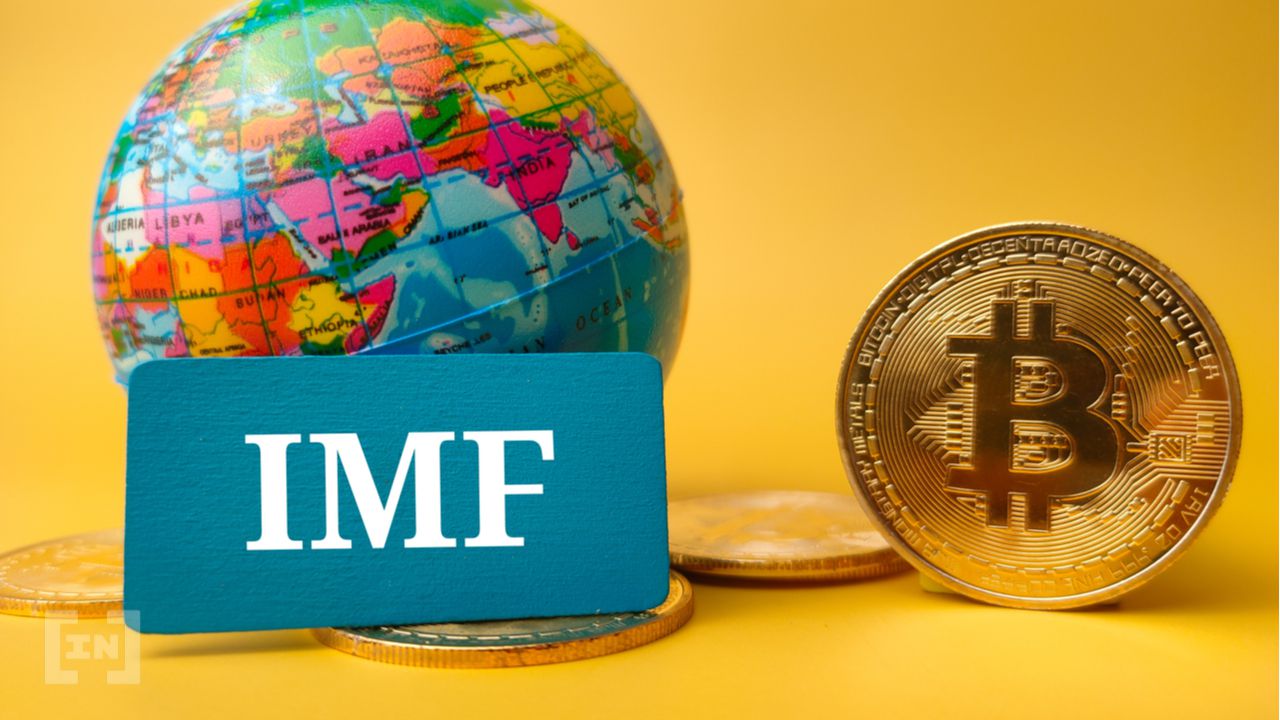
The International Monetary Fund (IMF) has been vocal in its recommendations for El Salvador regarding its cryptocurrency policies, particularly its adoption of Bitcoin as legal tender. The IMF’s concerns revolve around the potential risks associated with the use of Bitcoin and other cryptocurrencies, including financial stability, financial integrity, consumer protection, and fiscal contingent liabilities.

El Salvador made history in September 2021 by becoming the first country to establish Bitcoin as legal tender. This bold move was part of President Nayib Bukele’s plan to foster economic growth and financial inclusion. However, the IMF has consistently urged El Salvador to reconsider its approach. In recent statements, the IMF has recommended narrowing the scope of the Bitcoin law, strengthening the regulatory framework, and limiting public sector exposure to Bitcoin.

Since the enactment of this groundbreaking policy, El Salvador has navigated through various challenges and criticisms. The International Monetary Fund (IMF) has been vocal about its concerns, urging the country to reconsider its stance on Bitcoin due to potential fiscal and financial stability risks. The IMF’s recent calls for El Salvador to tighten its crypto regulations underscore the ongoing debate over the integration of digital currencies into traditional financial systems.

Despite the IMF’s warnings, El Salvador’s government has remained steadfast in its commitment to Bitcoin, with President Nayib Bukele often taking to social media to defend the policy and highlight its benefits. The nation’s Bitcoin bet has seen ups and downs, reflecting the volatile nature of cryptocurrency markets. At times, the value of El Salvador’s Bitcoin holdings has dipped, raising concerns about the impact on the country’s finances.

However, El Salvador’s journey with Bitcoin is more than just about market value; it’s about innovation and the pursuit of financial autonomy. The government has launched initiatives like the Chivo Wallet, offering incentives to encourage its use among citizens. Plans for Bitcoin City, a development project funded by Bitcoin-backed bonds, showcase the country’s long-term vision for leveraging cryptocurrency to fuel economic growth.

The IMF’s recommendations come amid concerns about the volatility of cryptocurrencies and their potential impact on the financial system. The organization has highlighted the need for enhanced transparency and measures to mitigate potential fiscal and financial stability risks from the Bitcoin project. Despite these warnings, many of the risks have not yet materialized, but the IMF maintains that further discussions and efforts are necessary to address these concerns.

El Salvador’s government has defended its position, with President Bukele stating that the adoption of Bitcoin has been net positive, although it has fallen short of expectations in terms of widespread adoption. The country holds a significant amount of Bitcoin, and the president has recently announced plans to present a debt-free budget for 2025, which the IMF has acknowledged positively.

The debate between El Salvador and the IMF reflects broader discussions on the role of cryptocurrencies in the global financial system. While some view digital assets like Bitcoin as a way to democratize finance and reduce reliance on traditional banking systems, others, like the IMF, emphasize the need for robust regulatory frameworks to ensure financial stability and protect consumers.

As the situation evolves, it will be crucial for El Salvador to balance the potential benefits of its cryptocurrency policies with the need to address the concerns raised by international financial institutions. The outcome of this balancing act could have significant implications for the future of cryptocurrency adoption by other nations and the global financial landscape as a whole.