

DD
MM
YYYY

PAGES

DD
MM
YYYY

spot_img

PAGES

Home Blog Page 2957

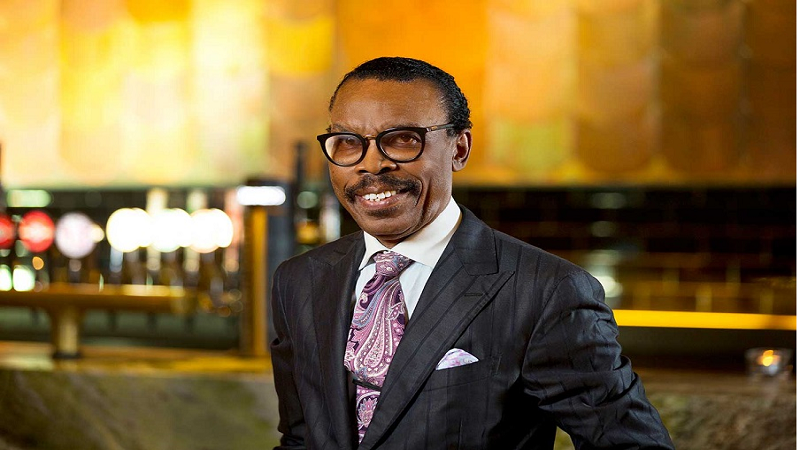
Bismarck Rewane: $1 Trillion Economy Target Unlikely in the Next 5-6 Years

0

Prominent economist and Managing Director of Financial Derivatives Company, Bismarck Rewane, has expressed skepticism over the current administration’s ambitious goal of achieving a $1 trillion economy within the next few years.

Speaking during an interview on Arise TV’s morning show, Rewane outlined several challenges that make this target unattainable in the near term, despite the government’s optimistic projections.

He highlighted the sluggish GDP growth rate as a major obstacle to reaching the $1 trillion target. Nigeria’s GDP grew by 3.19% in the second quarter of 2024, a slight increase from the 2.98% growth recorded in the first quarter.

Rewane, who is part of Tinubu’s Economic Management Team, pointed out that this growth is insufficient, especially considering that approximately 75% of the economy’s sectors contracted during the same period.

“The current GDP growth rate of 3.19% is too slow to make any significant difference,” Rewane stated.

He further emphasized that Nigeria’s economy is not progressing toward its long-term goals.

“What are the broad economic goals of this economy? We wanted to be among the top 20 economies in the world; at one point, we were 26th. Today, we are 32nd, so we have worked our way down the ladder of success,” he said.

He also underscored the enormity of the task ahead for Nigeria to reach the $1 trillion economy target.

“We now said that we want the economy to be a $1 trillion economy, but currently, we are at $384 billion. That means we would need to achieve around 200% growth in the next 4 to 5 years, and that is not going to happen,” Rewane asserted.

Challenges with Economic Integration and External Shocks

Rewane also noted that while the government aims to insulate the economy from external shocks, the reality has been quite the opposite.

“We also said we want to insulate our economy from external shocks, but as we integrate our economy into the global economy, we are increasingly exposed to those shocks,” he remarked.

He explained that this increasing integration has brought about vulnerabilities, particularly as global economic conditions remain unpredictable. The combined pressures of inflation and exchange rate volatility have further complicated Nigeria’s economic trajectory, making the $1 trillion target even more elusive.

Critique of the Windfall Tax on Banks

Before his assessment of the GDP growth rate, Rewane has also critiqued the federal government’s focus on generating revenue through the recently approved windfall tax. He argued that this move contradicts the administration’s stated objective of promoting investment-led growth, explaining that the federal government’s intense focus on generating revenue through the windfall tax is counterproductive to the investment-led growth strategy that the administration claims to promote.

He pointed out that while Nigerian companies reported N1.4 trillion in foreign exchange revaluation gains, they also faced N1.7 trillion in forex losses during the same period. This resulted in a net loss of N300 billion to the economy, further questioning the effectiveness of the tax policy.

Rewane further elaborated on the disincentives for Nigerians to comply with tax policies, citing the lack of visible benefits from taxes already paid. Despite the tax-to-GDP ratio improving from around 4% to 9%, Rewane observed that there has been little to no improvement in the well-being of the populace, which diminishes the incentive to pay taxes.

Rewane’s comments come against the backdrop of President Bola Tinubu’s ambitious projections during the Nigeria Economic Summit in 2023. At the time, President Tinubu stated that a $1 trillion economy was possible within the next three years, with an even more ambitious goal of reaching $3 trillion by 2030. These projections were based on optimistic growth assumptions and anticipated policy reforms aimed at driving economic expansion.

However, the recent GDP figures and ongoing economic challenges paint a less rosy picture. While the Presidency has celebrated the 3.19% growth rate as a sign of better things to come, Rewane’s analysis suggests that significant hurdles remain, particularly in tackling inflation and stabilizing the exchange rate, which continues to be major obstacles to sustained economic growth.
Ndubuisi Ekekwe To Speak in US-Nigeria Trade & Investment webinar series Tomorrow

0

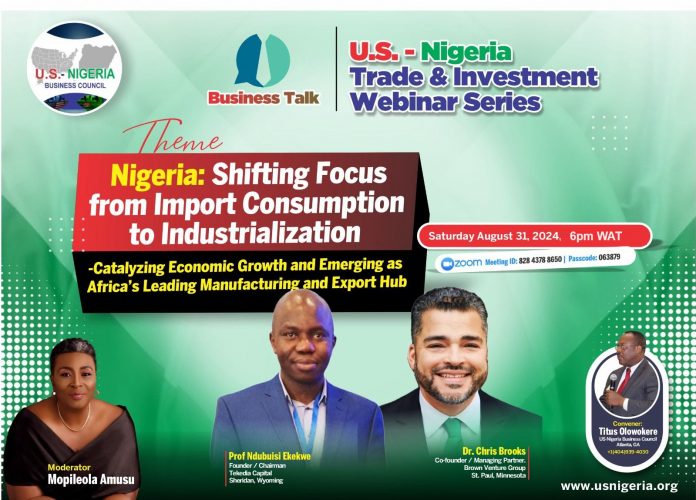
Good People, join me tomorrow as I keynote the US-Nigeria Trade & Investment webinar series. This knowledge series is designed to facilitate meaningful discussions, the exchange of innovative ideas, inspire critical thinking, spark constructive conversations, and proffer positive solutions.

Theme: “Nigeria: Shifting Focus from Import Consumption to Industrialization – Catalyzing Economic Growth and Emerging as Africa’s Leading Manufacturing and Export Hub.”

Date: Saturday, August 31, 2024.

Time: 6:00pm Nig./UK, 1:00pm EST/NY.


Keynote Speaker

Prof Ndubuisi Ekekwe

Founder / Chairman, Tekedia Capital


Moderator: Mopileola Amusu

Free Zoom link https://us02web.zoom.us/meeting/register/tZYlc-qvpjMsH9RyxrJaHbWUrXEveIMDeWRc#/registration

Navigating Russia’s Foray into Cryptocurrency for International Transactions

0

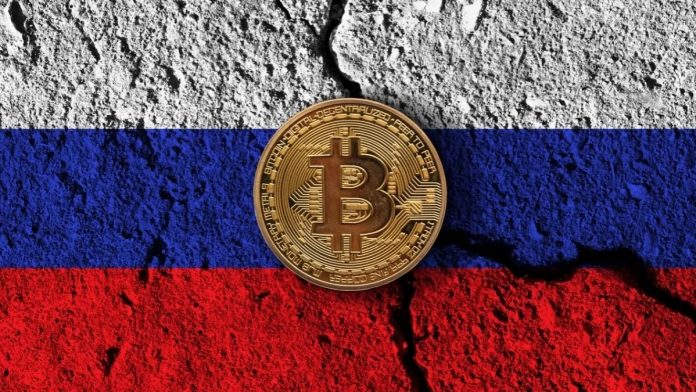
In a strategic pivot, Russia is set to commence the use of cryptocurrencies for international transactions starting September 1st. This move represents a significant shift in the country’s financial strategy, especially in light of the economic sanctions imposed by Western countries. The adoption of digital currencies for cross-border payments is seen as an effort to circumvent these sanctions and facilitate smoother financial exchanges on the global stage.

Cryptocurrency has emerged as a revolutionary force in the financial world, offering a new paradigm for conducting transactions across borders. Its decentralized nature, speed, and cost-effectiveness have made it an attractive option for international trade. However, with these benefits come significant risks that must be carefully considered.

Background of Russia’s Economic Sanctions

The sanctions, which have targeted Russia’s access to traditional payment systems, have necessitated the exploration of alternative transaction methods. Previously, Russia had been largely cut off from the SWIFT international payment system, which significantly hampered its ability to engage in global trade. The sanctions were a response to the geopolitical tensions and conflicts involving Russia, and they aimed to isolate the country economically.

The Shift to Cryptocurrency

In response to these challenges, Russian authorities have turned their attention to cryptocurrencies. The legal groundwork for this shift was laid on August 8th, when President Vladimir Putin signed legislation that legalized the experimental use of cryptocurrencies for international payments and Forex transactions.

This legislation marks a departure from Russia’s earlier stance on digital currencies. Before the conflict in Ukraine in 2022, the Central Bank of Russia had advocated for a total ban on cryptocurrencies. However, the landscape has changed, and now, cryptocurrencies are being embraced as a viable solution for international trade.

Stablecoins, which are digital currencies pegged to traditional fiat currencies, are expected to play a crucial role in these international transactions. The Central Bank of Russia is overseeing the process and is also continuing trials for the digital ruble, which began in August 2023. The digital ruble is part of Russia’s broader plan to integrate cryptocurrencies into its system for international trade, particularly with China, its largest trading partner.

The success of Russia’s cryptocurrency initiative may heavily rely on support from the BRICS nations (Brazil, Russia, India, China, and South Africa). Some of these countries have indicated that they are working on the matter, although their full commitment remains to be seen. The collaboration among these nations could potentially create a new dynamic in international trade, one that is less dependent on traditional Western financial systems.

Despite the potential benefits, there are several challenges that Russia may face in implementing cryptocurrencies for international trade. These include the volatility of cryptocurrency values, technical complexities, and restrictions on cryptocurrency use in certain countries. Moreover, the security measures for these transactions are still a subject of discussion and development.

Russia’s decision to use cryptocurrencies for international transactions is a testament to the evolving nature of global finance. It reflects a world where digital currencies are becoming increasingly mainstream, offering new avenues for countries to engage in trade and commerce. As September 1st approaches, the international community will be watching closely to see how this experiment unfolds and what implications it will have for the future of economic sanctions and cryptocurrency’s role in global trade.

Nigerian Fintech Grey Partners dLocal to Revolutionize Cross-Border Payments in Emerging Markets

0

Grey, a Nigerian fintech company dedicated to simplifying cross-border payments, has announced a strategic partnership with dLocal, a leading payment platform specializing in building out the infrastructure for financial services in Africa, Asia, and Latin America, to revolutionize cross-border payments in emerging markets.

This collaboration marks a significant step towards making global transactions more accessible, affordable, and seamless for millions of users across the globe.

In an increasingly digital world, the challenges of cross-border transactions remain significant, particularly for individuals and businesses in developing countries. Despite advances in digital banking, around 1.7 billion people globally, still lack access to traditional banking services, making global payments costly, slow, and cumbersome. This partnership between Grey and Local is poised to change that by offering a more efficient and affordable solution.

Through this partnership, Grey users in countries such as Brazil, Mexico, Indonesia, South Africa, and the Philippines will be able to send and receive payments instantly into their wallets and bank accounts. This service will be available at a low cost, significantly reducing the financial burden associated with cross-border transactions.

Whether a freelancer working for international clients, a digital nomad in Southeast Asia, or simply sending money to family back home, this collaboration ensures that global transactions are not only faster but also more secure and convenient.

Notably, this partnership is just the beginning of Grey’s broader mission to revolutionize global banking. The fintech is committed to providing seamless and hassle-free banking, experience to users around the world, especially in regions where access to financial services has traditionally been limited.

Since its launch in 2020, with over 50+ employees across six countries, Grey has helped hundreds of people open bank accounts and receive payments from companies worldwide. dLocal on the other hand is constantly through its remarkable feature, is constantly pushing the boundaries of innovation to assist merchants and businesses.

The payment platform currently has over 900 payment methods, with more options and alternatives constantly being added. Through developing cross-border financial infrastructures, the payment platform wants to make it as simple as possible to make a transaction or receive a payment within emerging economies. For anyone merchants and their customers alike.

As Grey forms this strategic partnership with dLocal to expand its reach, it remains dedicated to innovating until everyone, regardless of location, can enjoy limitless banking services. Through this partnership, Grey is taking a significant step towards fulfilling its vision of a world where global payments are no longer a barrier but a gateway to new opportunities for all.

The Fintech is on a mission to make it easier for digital nomads and remote workers to live and work in the modern world.

Brazil’s Supreme Court Blocks Starlink’s Bank Accounts As Feud with Musk Escalates

0

In the latest episode of the escalating tension between Elon Musk and Brazil’s judiciary, the country’s Supreme Court has blocked the local bank accounts of Starlink, Musk’s satellite internet firm, intensifying an ongoing feud that could see X, another of Musk’s companies, pushed out of one of its most significant markets.

Musk, who also helms electric vehicle giant Tesla, has been embroiled in a bitter standoff with Brazil’s Supreme Court, particularly with Justice Alexandre de Moraes, who has emerged as a formidable adversary.

On Thursday, the Supreme Court, through an order signed by Moraes, froze Starlink’s bank accounts in Brazil. This action was taken as part of a broader strategy to compel Musk to comply with a separate court order involving X. The order required Musk to appoint a legal representative for X in Brazil, a requirement the platform had failed to meet by the set deadline of 8:00 p.m. (2300 GMT) on Thursday.

The Supreme Court’s actions have put Musk’s companies on the brink of losing access to one of their largest markets, a move with potentially significant financial repercussions.

The Roots of the Dispute

The origins of this clash date back several months when Brazil’s Supreme Court began ordering X to block accounts accused of spreading misinformation and hate speech, particularly those linked to supporters of far-right former President Jair Bolsonaro. These accounts had been a source of significant controversy, with many being implicated in efforts to undermine Brazil’s democratic processes following Bolsonaro’s electoral defeat in 2022.

Musk, who has positioned himself as a staunch defender of free speech, viewed these orders as antithetical to the platform’s principles. In a defiant move, Musk’s X, which initially complied with some of the court orders, later reversed course, leading to Moraes opening an inquiry into Musk’s businesses in April. This inquiry marked the beginning of a legal battle that has since spiraled into a full-blown standoff.

The situation escalated earlier this month when X announced it was shutting down its operations in Brazil, citing what it described as “censorship orders” from Moraes. However, X continued to operate in the country, keeping its service available to Brazilian users while firing its local staff. Musk’s defiance has been met with increasing pressure from Brazil’s judiciary, culminating in the freezing of Starlink’s bank accounts.

Musk’s Defiant Response

Musk has not taken these actions lying down. In a series of incendiary posts on X, he lashed out at Justice Moraes, labeling him an “evil dictator” and accusing the judge of acting illegally. He also described Moraes as “an outright criminal of the worst kind, masquerading as a judge.”

Musk said that the ruling to freeze Starlink’s accounts was not only unjust but also harmful to ordinary Brazilians who rely on the service. He also announced that SpaceX would provide free internet service to Brazilian users until the legal dispute is resolved.

“This order is based on an unfounded determination that Starlink should be responsible for the fines levied—unconstitutionally—against X,” Starlink wrote in a statement on X. “It was issued in secret and without affording Starlink any of the due process of law guaranteed by the Constitution of Brazil. We intend to address the matter legally.”

The fines in question, which reportedly total at least 20 million reais ($3.6 million), stem from X’s failure to comply with previous court orders. The fines are part of a broader effort by Brazil’s judiciary to hold Musk accountable for his refusal to adhere to the country’s legal requirements.

The Fight for Free Speech and Market Access

The ongoing dispute has raised significant questions about the balance between free speech and efforts to spread harmful content on digital platforms. While Musk argues that the court’s actions amount to censorship, Moraes and other Brazilian officials insist that the measures are necessary to protect the country’s democratic institutions.

Brazil’s President Luiz Inácio Lula da Silva has also weighed in on the matter, subtly backing Moraes by pinning a post on X that listed alternative social media platforms. This move could be interpreted as a signal to Brazilians that there are other ways to communicate online if X becomes inaccessible.

Economically, the stakes are high for Musk. Brazil is one of X’s largest markets, and losing access to the country could deal a significant blow to the platform, which is already struggling with declining advertising revenue. The financial implications for Starlink are also considerable, as the satellite internet service has been touted as a key part of SpaceX’s global strategy.

A Divided Public

Public opinion in Brazil is deeply divided over the dispute. On X, the platform at the center of the controversy, Brazilians have posted memes and commentary, with some siding with Moraes and others defending Musk’s stance on free speech.

The polarized responses reflect the broader societal debates that have emerged in the wake of Bolsonaro’s presidency, with issues of misinformation, judicial overreach, and the role of social media platforms in shaping public discourse all coming to the fore.