DD
MM
YYYY

PAGES

DD
MM
YYYY

spot_img

PAGES

Home Blog Page 2972

Shan Hanes, Ex-US Bank CEO, Sentenced to 24 years in Prison over Crypto Fraud

0

The recent sentencing of a former U.S. bank CEO to 24 years in prison for a $47 million cryptocurrency fraud marks a significant moment in the ongoing battle against financial crime in the digital age. Shan Hanes, the ex-CEO of Heartland Tri-State Bank, was convicted of embezzling funds from the bank’s coffers into a cryptocurrency scheme, leading to the bank’s collapse and a substantial loss covered by the Federal Deposit Insurance Corporation (FDIC).

This case highlights the growing concern over the misuse of cryptocurrencies in fraudulent activities and the importance of rigorous oversight and regulation within the banking sector. The severity of the sentence reflects the gravity of the crime and the betrayal of trust that occurred, not only affecting the bank’s investors but also shaking the confidence in financial institutions as a whole.

The method used by Hanes, known as a “pig butchering” scam, involves luring investors into fake cryptocurrency opportunities and then stealing their funds. This type of scheme is becoming increasingly common and poses a significant threat to the integrity of the financial system. The fact that Hanes used his position of authority to facilitate such a scam is particularly egregious, as it undermines the role of banks as protectors against fraudulent activities.

The cryptocurrency landscape has been a frontier of innovation and financial opportunity, but it has also seen its share of challenges, particularly in the form of high-profile fraud cases. One such case involved the crypto exchange Gemini, which, along with crypto lender Genesis and its parent company Digital Currency Group, was accused of defrauding investors of over $1 billion. This lawsuit emerged amidst the market downturns that affected the crypto industry last year.

Another significant enforcement action by the Department of Justice charged six individuals in separate cases involving over $100 million in intended losses. These cases included the largest known Non-Fungible Token (NFT) scheme to date, a fraudulent investment fund, a global Ponzi scheme, and a fraudulent initial coin offering.

The case also underscores the challenges of tracing and recovering funds in the realm of digital currencies. Cryptocurrency transactions can be difficult to trace due to their decentralized and often anonymous nature, making it harder for authorities to follow the money trail and recover stolen assets.

Investing in cryptocurrencies can be a thrilling experience, but it’s crucial to remain vigilant for signs of fraud. Here are some red flags to watch out for: Be wary of any project that promises high returns with little to no risk. The volatile nature of crypto markets makes such guarantees implausible.

Transparency is key; Projects that do not disclose team member identities could be a cause for concern. If the project makes claims that seem too good to be true, such as rapid and substantial profits, it’s likely not legitimate. Projects that aren’t listed on recognized exchanges may lack the scrutiny and regulation that come with such listings. A comprehensive whitepaper should outline the project’s purpose, technology, and roadmap. Its absence is a significant red flag.

As the digital currency space continues to evolve, this case serves as a stark reminder of the potential risks and the need for vigilance among both consumers and financial institutions. It also emphasizes the role of law enforcement and the judiciary in upholding the law and ensuring that those who engage in such fraudulent activities are held accountable for their actions.

The aftermath of this case will likely have far-reaching implications for the banking industry, particularly in how it approaches the security and oversight of digital assets. It may also influence the development of regulatory frameworks designed to prevent similar incidents in the future.


Bitcoin’s Uptrend Threatened by Impending ‘Stochastics’ Signal

0

In the whimsical world of cryptocurrency, where fortunes can be made or lost on the flip of a digital coin, Bitcoin has been riding the rollercoaster of market trends with the gusto of a seasoned thrill-seeker. But hold onto your virtual hats. A new challenger approaches, and it’s not another blockchain-based upstart or a tweet from a tech mogul—it’s the ‘Stochastics’ signal, looming like a storm cloud over Bitcoin’s sunny uptrend.

The ‘Stochastics’ indicator is a bit like a financial fortune teller, but instead of reading tea leaves, it reads stock prices. Created in the late 1950s by George Lane, this indicator measures the momentum of price movements by comparing the closing price of a security to its high-low range over a certain period of time. It’s a favorite tool among traders because it’s like having a crystal ball that tells you if a stock is feeling overexcited (overbought) or a bit under the weather (oversold).

For those not in the know, the ‘Stochastics’ indicator is like the mood ring of the trading world. It measures the momentum of price movements, and when it starts flashing red, traders take notice. It’s the financial equivalent of a weather forecast, and right now, it’s predicting a strong chance of market showers with a possibility of a bearish downpour.

Since November 2022, Bitcoin has been on a tear, climbing nearly 300% from the depths of $15,470 to the dizzying heights of… well, let’s just say it’s been up there. But as any seasoned crypto astronaut will tell you, what goes up in the cryptosphere can come down faster than you can say “blockchain bubble.”

Now, with the ‘Stochastics’ indicator dipping below 80, the party lights are flickering. If this trend continues through the end of August, it could signal the end of the crypto conga line and the start of a more subdued shuffle. The monthly chart whispers of a pending overbought downturn, and if confirmed, it could be the buzzkill that sends Bitcoin’s uptrend packing.

But fear not, dear crypto enthusiasts. This is but a blip on the radar, a mere hiccup in the grand banquet of blockchain. Bitcoin has weathered storms before, and it’ll do it again, with all the resilience of a digital phoenix rising from the ashes of market volatility.

So, as we watch the charts with bated breath, let’s not forget to laugh in the face of uncertainty and remember the golden rule of cryptocurrency: HODL on for dear life, and keep your sense of humor close at hand. After all, in the wild west of digital currencies, the only sure thing is that nothing is sure—except, perhaps, for the entertainment value of watching the market’s dramatic ups and downs.

The ‘Stochastics’ indicator is the life of the trading party, keeping an eye on the ebb and flow of prices with the cool detachment of a bouncer with a math degree. Just remember, no indicator is perfect, and it’s always best to pair it with other tools, like the Relative Strength Index (RSI).

And who knows? Maybe this ‘Stochastics’ signal is just the universe’s way of saying, “Hey, take a break from staring at charts and go enjoy some fresh air.” So, step outside, take a deep breath, and rest assured that the crypto world will keep spinning, with or without a looming signal.

The Role of Technology in Identity Documentation Verification

0

In today’s world, it is essential for businesses in various industries to ensure the accuracy and legitimacy of identity documents. The need for identity verification, from customer registration to fraud prevention, has grown significantly. Technological advancements have made this process easier and more efficient, allowing businesses to enhance their security measures while providing a better experience for customers. This article will discuss how technology has transformed identity document verification practices and highlight some of the solutions being used.

1. The Influence of Artificial Intelligence (AI) and Machine Learning (ML)

AI and ML technologies have revolutionized various aspects of our lives, including identity documentation verification procedures. These technologies empower businesses to detect altered documents by analyzing patterns, image quality, and data consistency. Through algorithms, AI models can be trained to identify different types of identification documents from various countries.

By leveraging AI-powered Optical Character Recognition (OCR), businesses can quickly and accurately extract data from identity documents. This not only helps eliminate input errors but also enables real-time validation against databases to verify the authenticity of the documents.

2. Facial Recognition Technology

The adoption of facial recognition technology has gained popularity due to its range of applications in verifying identities. Traditionally, confirming someone’s identity required face-to-face interactions to compare their appearance with the photo on their ID card.

Facial recognition technology has simplified the identification process. By using algorithms that examine characteristics such as landmarks, contours, and expressions, facial recognition systems can now compare real-time images taken through webcams or mobile devices with photos on documents like passports or driver’s licenses. This not only reduces the risk of document fraud but also enhances user convenience by eliminating the need to physically submit documents.

3. Biometric Data Integration

Another innovative method involves integrating biometric data into the verification process. This includes techniques like fingerprint scanning and iris recognition, in addition to validating government-issued IDs. By storing and cross-referencing biometric data, businesses can strengthen their security measures. Biometric verification ensures that the person presenting a document is indeed its owner and not an imposter, thereby significantly reducing instances of identity theft and fraud.

4. Blockchain Technology

Blockchain technology provides a platform for recording transactions, making it an excellent choice for identity verification purposes. With this technology, document verification becomes more secure by preventing any possibility of tampering or alterations. Storing identity information on a blockchain ledger allows individuals to maintain control over their data while granting businesses access when required. Blockchain-powered platforms enable users to share identity details while protecting privacy by withholding unnecessary information.

5. Data Verification APIs

Verification APIs facilitate the connection between software systems, allowing developers to leverage existing technologies without starting from scratch. These APIs empower businesses to remotely authenticate identity documents promptly by accessing government databases and other trusted sources.

These APIs enable organizations to confirm if documents match issuance numbers, ensure the accuracy of names and spellings, and validate addresses against government records. Such validations enhance confidence in customer identities during interactions, reducing the risks associated with fraudulent activities.

6. Enhanced Security Features in Documents

To combat fraudulent practices, identity documents have evolved with enhanced security features. These advancements aim to make it more challenging for counterfeiters to replicate or alter identification papers.

One notable security feature is holographic foil stamping, which adds complexity and uniqueness to the document. Holograms are difficult to duplicate and require specialized equipment and techniques. Under specific lighting conditions, these documents exhibit characteristics of authenticity. Many options are available including the ability to merge PDF document files.

In summary, as businesses strive to maintain security and protect against fraudulent transactions, technology has played a pivotal role in transforming the process of authenticating identity documents. By utilizing machine learning algorithms, facial recognition technology, biometric integration, blockchain technology, and data verification APIs, companies can enhance security measures while delivering a seamless experience for their customers.

As technology progresses, we can expect to see innovative solutions emerging in the field of identity document verification. It will be crucial for businesses to adopt these advancements in order to mitigate risks and enhance customer experiences.

Donald Trump and A Lesson on Luck and Timing

1

Time is most things. For Donald Trump, it is even more. On two recent occasions, in the political world, time has not aligned for him. In 2020, he was on an ascension to be re-elected. Then the pandemic struck and changed many things. It was not just the tanking of the economy and the associated loss of jobs. The real deal was that pandemic normalized “Remote Voting” or what they call mail-in voting at scale. 

Before the pandemic, virtual conferences, training, mail-in voting, etc were seen as sub-par, but when the pandemic struct, most cities and states defaulted to the “virtual option”. Unfortunately for Trump, Democrats typically outperform on that mail-in voting. I do posit that he lost partly as a result. I voted via the mail-in voting process.

Fast forward to 2024. I called the election for Trump here even before the game began. Personally, I made up my mind that I was not going to vote since I could not vote for Biden; he had served and should retire. But then something happened and Biden and Trump decided to debate.

Yes, the question remains: why did they do that before the conventions when it would have been impossible to change candidates? It comes down to Timing. Trump wanted early debate. Had he waited for post-convention, Biden would have remained his opponent. But by debating earlier, he gave Democrats the opportunity to see what I saw which made me call the election for Trump. Quickly, Biden was replaced by Kamala Harris. Just like that, it is game on. I have since requested the paperworks to now vote!

Good People, despite how brilliant or excellent you are in life, desire and wish to also meet the fortune of LUCK, favour, grace or whatever you call it. If Trump loses this election, he will never forget the date he agreed to debate Biden before the Democrats’ convention, instead of the post-convention when it would have been impossible to replace his opponent!

Exploring How Artificial Intelligence (AI) Assistants will Transform the Job Market

0

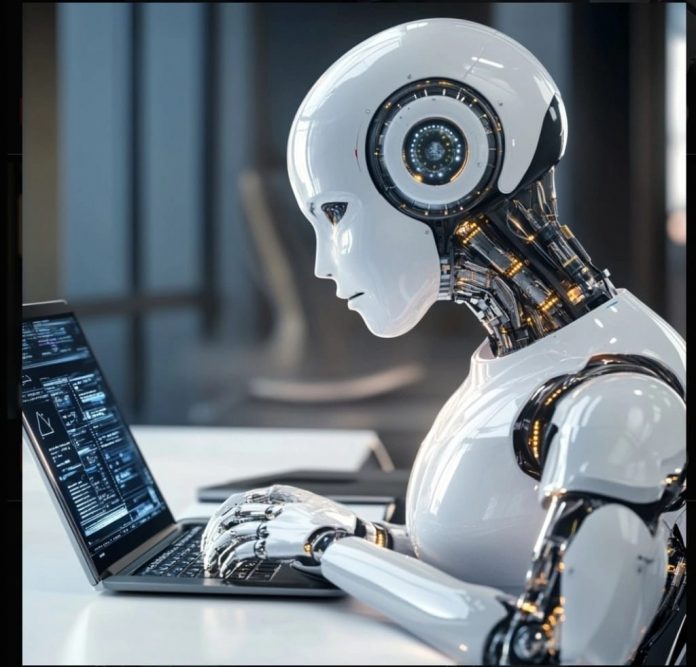
The advent of artificial intelligence (AI) has ushered in a new era of technological innovation, fundamentally altering the landscape of the job market. AI assistants, with their advanced capabilities, are at the forefront of this transformation, reshaping the way businesses operate and employees work.

One of the recurring themes of the societal discussion on generative AI is how it will transform the future of work. According to CEO of MotleyCrew, Egor Kraev it doesn’t seem too far-fetched that systems using Large Language Models (LLMs) could, for example, produce code comparable in quality to that of at least a junior programmer – and there is no shortage of investment, in both large firms and startups, into making that happen. The same holds for other knowledge workers, for example copywriters and illustrators. 

AI’s journey began in the mid-20th century, but it has seen exponential growth in recent years, especially with the advent of generative AI technologies. Companies like Microsoft have recognized the potential of AI to drive efficiencies and enhance data-driven decision-making. The market for generative AI is expected to burgeon into a $1.3 trillion industry by 2032.

Would large-scale societal disruption follow as whole segments of white-collar work are automated? 

Let us start with some historical perspective. How many of our readers know what a typing pool is? These days encountered almost only in last-century detective novels, the typing pool was, before computers became commonplace, a room where typists sat, that is people whose job was to type business correspondence fast and without mistakes (as correcting typos made with a mechanical typewriter was unsightly).

With the advent of computers, one could correct errors before printing the letter (if it needed to be printed at all), and typing pools, and the profession of typist, disappeared. Did typing disappear? Of course not, but from a profession, it turned into merely a skill that people in certain jobs are supposed to possess. 

Let us also consider another profession, that of a car mechanic. Once upon a time, when cars were a novelty and required constant maintenance, to own and use one, it was necessary to employ a full-time mechanic who took care of the car. As cars evolved and required ever less routine maintenance, did the profession of car mechanic disappear? On the contrary, as cars became cheaper and easier to own, the total demand for cars, and thus car mechanics, has only grown. The profession has become more demanding and highly skilled but is unlikely to become obsolete. 

A combination of these two trajectories is precisely the path that many current knowledge-intensive roles, such as data analysis or programming, will follow: their basic level will go from a full-time job to a skill that people in other roles, such as product management, are simply expected to have; and their advanced level will become even more advanced and powerful, due to all the new generative AI tools available to practitioners.  

Contrary to the common fear that AI will replace human jobs, the reality is more nuanced. AI is creating new job roles and augmenting existing ones, enabling workers to focus on more strategic tasks. There is a burgeoning demand for AI experts, including programmers, data scientists, and professionals well-versed in AI frameworks.

Over the last half a century or so, programming has moved from assembler (literal “copy memory address x to memory address y” kind of instructions) to languages like C++, with their explicit control over memory allocation, to simpler and more forgiving languages such as Python. Of course, use cases for assembler or C++ are still there, but someone wanting to learn coding to do, for example, data analysis these days will likely start with Python and often find it enough for their needs. As this was happening, the profession of the programmer was never in danger of becoming extinct, just like that of the car mechanic – it only changed tools – Egor Kraev.

Many other creative professions (and yes, programming is a highly creative pursuit), for example, copywriters or illustrators, as well as managerial roles, haven’t experienced a similar sort of change merely because until the current generation of Generative AI Models, Computer Algorithms just weren’t very good at working with natural language text, or with images.

Now that this has changed, we can expect a similar evolution in those professions: ever more powerful tools that take away the drudgery and leave to the human the quintessentially human part: the human dimension, the intent of the work, its strategic implications, and the judgment calls involved. 

The potential impact AI goes beyond front-line jobs, too. When you think about it, how much management work in large companies can be thought of as consuming and generating text according to a set of relatively fixed (if not always explicitly written down) rules? Not all of it, certainly, but a lot. 

The integration of AI into business systems has led to a significant shift in hiring trends. The Upwork Research Institute reports a 600% increase in job posts seeking generative AI skills from the fourth quarter of 2022 to the first quarter of 2023. Moreover, 49% of hiring managers surveyed indicated they would hire more independent talent and full-time employees due to generative AI.

Millennials and Gen Z are leading the conversation on AI, with the latter being particularly tech-savvy and open to embracing emerging technologies. This generational shift is crucial as it indicates a growing AI literacy among the workforce, which is essential for navigating the AI-transformed job market. Professional services, technology, and education are the sectors most actively engaging with AI. In these industries, AI is not only popular but is also driving significant changes in job functions and skill requirements.

As AI takes over routine tasks, the remaining jobs will increasingly require critical thinking and soft skills such as communication, collaboration, and problem-solving. This shift may lead to job displacement in certain roles, but it also opens up opportunities for innovation and the creation of new job categories.