DD
MM
YYYY

PAGES

DD
MM
YYYY

spot_img

PAGES

Home Blog Page 2984

Chinese Firm, Zhongshan Fucheng, Seizes Another Nigeria’s Jet in Canada

0

The escalating legal confrontation between Nigeria and Zhongshan Fucheng Industrial Investment Ltd, a Chinese firm, has turned a new leaf, as Zhongshan confiscates another luxury jet owned by Nigeria in Canada. This move is part of a broader campaign by Zhongshan to recover assets as compensation for an unresolved arbitration award.

The dispute, which stems from a failed investment deal, has seen Nigeria’s assets being seized across multiple countries, with the potential for further losses looming on the horizon.

Background of the Dispute

The conflict between Nigeria and Zhongshan Fucheng Industrial Investment Ltd originates from a botched free trade zone contract in Ogun State. The Chinese company had entered into an agreement with the Nigerian government to develop the Ogun-Guangdong Free Trade Zone, a project that promised significant economic benefits for both parties.

However, the deal soured over time, with both sides accusing each other of contractual breaches.

Zhongshan, feeling aggrieved by what it perceived as Nigeria’s failure to honor its commitments, took the matter to international arbitration. The arbitration panel ruled in favor of Zhongshan, awarding the company over $70 million in damages. But Nigeria has consistently contested the outcome, claiming no wrongdoing and challenging the enforcement of the arbitration award in courts across various jurisdictions.

Seizure of Nigerian Assets

Zhongshan’s efforts to recover its awarded compensation have led to a series of legal actions resulting in the seizure of Nigerian assets across the globe. These seizures have been strategically executed in countries where Nigeria holds valuable properties or interests, allowing Zhongshan to recoup its losses in lieu of the unpaid arbitration award.

United Kingdom: Zhongshan successfully seized guest houses belonging to the Nigerian government. These properties, used primarily for diplomatic purposes, were among the first to be confiscated as part of the enforcement of the arbitration award.

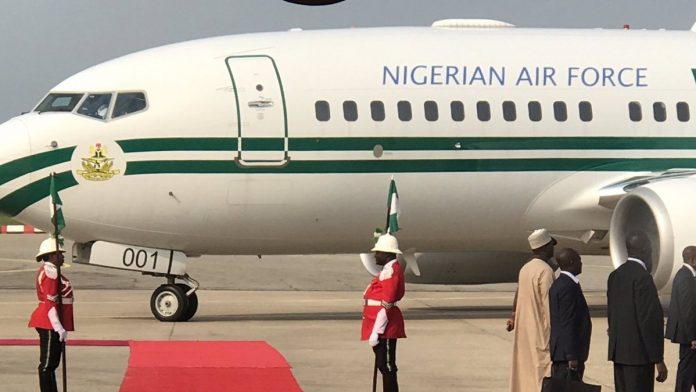
France: In a similar vein, assets related to Nigeria’s diplomatic missions in France were targeted. Nigerian presidential aircraft were seized, including the newly purchased jet which was later released by the firm as a sign of “goodwill.”

Canada: The most recent and high-profile seizure involved the luxury jet, a Bombardier 6000 type BD-700-1A10, which was once owned by former Nigerian oil minister Dan Etete. The jet, which was purchased for $57 million from the proceeds of the controversial OPL 245 oil field sale, had been under Nigeria’s custody since 2016. However, following a court ruling in March 2024, Zhongshan took control of the aircraft, marking a significant victory in its asset recovery campaign.

The aircraft, with tail number M-MYNA and serial number 9471, was part of the luxurious assets amassed by Dan Etete during his tenure as oil minister. After Nigeria seized the jet from Etete in Dubai, it was flown to Canada in 2020, where it remained under Nigerian control until Zhongshan’s recent legal victory.

Judge David Collier of the Superior Court of Quebec ruled against Nigeria, dismissing the country’s sovereign immunity claims and rejecting its argument that it could not respond to the lawsuit due to the general elections. Nigeria in its defense, told the court that it was unable to respond to the suit early enough due to its 2023 general elections.

The judge’s decision paved the way for Zhongshan to take possession of the jet, further eroding Nigeria’s international assets.

Potential Future Seizures

Zhongshan Fucheng Industrial Investment Ltd has made it clear that it will continue to pursue Nigeria’s assets until the full amount of the arbitration award is recovered. With over $70 million still outstanding, the Chinese firm is expected to target additional Nigerian properties and assets in other countries.

There are credible reports that Zhongshan is eyeing Nigerian assets in Belgium and the United States, where the country maintains valuable properties, including diplomatic buildings, bank accounts, and potentially more aircraft. The legal framework in these countries, particularly concerning international arbitration awards, could allow Zhongshan to successfully execute further seizures.


Yellow Card Partners Fireblocks to Revolutionize Cross-Border Transactions in Africa

0

Yellow Card, a Pan-African fintech company company that focuses on cryptocurrency transactions and financial services, has partnered with digital asset infrastructure provider Fireblocks, to enhance cross-border transactions for businesses and individuals across Africa.

With this partnership, Yellow Card is leveraging Fireblocks technology to overcome challenges faced by global corporate treasuries when entering African markets. By utilizing Fireblocks’ Wallets-as-a-Service (WaaS) platform, Yellow Card can efficiently create, manage, and secure up to 14 million multi-party computation (MPC) wallets. This ensures that customers assets are protected at scale, providing a secure and effective on-chain solution that facilitates seamless access to the African financial landscape.

Commenting on the partnership CEO and Co-founder of Yellow Card Chris Maurice said,

“We are excited to work with Fireblocks to enable real-world use cases for stablecoins, solving the complex challenges of international and pan-African transactions. Together, we enhance how businesses around the world manage their treasury, make payments and drive innovation across Africa”.

Also speaking on the partnership, Ran Goldi, SVP payments and Network at Fireblocks said,

Africa, like the rest of the world, is witnessing a significant transition from traditional payment systems to alternative digital payments, driven by emerging technologies. With $100 billion in remittances flowing into the continent, the shift is clear. However, the challenge of high costs in cross-border transactions remains, particularly for low-value payments, which often incur hefty fees. We are thrilled to partner with Yellow Card to provide our direct custody Wallets-as-a-Service (WaaS) solution, enabling them to securely manage their customers’ digital assets at scale.”

Fireblocks is an enterprise-grade platform delivering a secure infrastructure for moving, storing, and issuing digital assets. The platform enables exchanges, custodians, banks, trading desks, and hedge funds to securely scale digital asset operations through patent-pending SGX & MPC technology.

Also, it is committed to serving clients through partnering with the most sophisticated and innovative teams. From industry-leading technology providers to the newest innovators/advances in DeFi, Fireblocks is actively seeking partners that will empower more companies to build and scale their digital asset businesses. The company has partnered with great companies such as coincover, Chainalysis, Azure, AAVE, EIGER, Kiln and Temenos, amongst others.

Together, with Yellow Card, both companies will tackle the complex challenges faced by multinational corporate treasuries such as regulatory compliance, currency volatility, and inefficient legacy banking systems.

Notably, this strategic partnership, marks a pivotal moment for both companies as they pave the way for more streamlined and secure financial operations across Africa. With a shared vision of innovation and excellence, Yellow Card and Fireblocks have a common goal of transforming cross-border transactions by introducing new benefits to businesses and the economy through innovation and excellence.

BOLT Ride-hailing Requests In Nigeria and South Africa Expose Design Flaws

0

The ongoing rivalry between Nigerians and South Africans has evolved into a high-tech conflict, with the latest chapter unfolding on social media and within the ride-hailing industry. This new skirmish, involving coordinated actions by individuals in both countries to disrupt ride-hailing services, particularly Bolt, has exposed the flaw of inter-country ride-hailing requests.

The latest twist in the Nigeria-South Africa rivalry emerged on X (formerly Twitter), where reports surfaced that South Africans were intentionally ordering and then canceling rides in Nigeria through Bolt.

These actions were reportedly aimed at frustrating Nigerian drivers and inflicting financial harm. A viral video allegedly shows a South African man mocking a Nigerian Bolt driver, Kotoro-Ola, after canceling a ride, exemplifying the malicious intent behind these actions. Numerous screenshots shared online show similar instances, where South Africans placed ride requests in Nigeria with the sole purpose of canceling them to cause stress and economic loss to the drivers.

Nigerians Counterattack

Nigerians, not to be outdone, responded by launching a coordinated campaign to disrupt Bolt services in South African cities like Cape Town and Johannesburg. This retaliatory action led to a significant surge in ride requests, causing a shortage of available rides and driving up prices, leaving many South Africans stranded.

A widely circulated video on X depicted over 40 Bolt drivers converging on a single street in Johannesburg, all responding to what turned out to be a coordinated hoax by Nigerians, further exacerbating the chaos. This eventually forced many drivers to turn off their apps.

Rivalry Intensified by Miss South Africa Controversy

The ride-hailing skirmish comes on the heels of another contentious issue between the two nations—the withdrawal of Chidimma Adetshina, who is of Nigerian descent, from the Miss South Africa pageant. South African-born Miss Adetshina, a 23-year-old law student living in Soweto, withdrew from the competition amid a storm of criticism regarding her nationality.

The situation escalated when South Africa’s Home Affairs Department began investigating claims that Miss Adetshina’s mother might have committed “identity theft” to secure South African citizenship. Faced with growing hostility and concerns for her safety, Adetshina chose to withdraw from the pageant, citing the need to protect herself and her family.

Bolt’s Response to the Crisis

In response to the unfolding chaos, Bolt swiftly implemented several measures to prevent further misuse of its platform. The company released a statement acknowledging the recent incidents and outlining the steps it has taken to safeguard its operations.

“Bolt is aware of the recent fake ride requests between individuals in Nigeria and South Africa. We’ve swiftly implemented measures to resolve the issue, including restricting inter-country ride requests, and have blocked those responsible from the Bolt app,” the company stated.

Bolt’s actions, including suspending accounts and restricting inter-country ride requests, have had an immediate impact on its operations.

The Flaw in Inter-Country Ride Requests

While this incident highlights the effects of unemployment, as both Nigeria and South Africa have 33.3% and 32.9% unemployment rates respectively, it points to the flaw in inter-country ride requests.

The ease with which individuals in South Africa were able to disrupt Bolt services in Nigeria, and vice versa, points to a potential vulnerability in the ride-hailing platform’s design. Many have noted that Bolt’s technology did not adequately anticipate or prevent such abuse, leaving the platform open to manipulation by those with malicious intent. Inter-country ride requests, while convenient for users who travel internationally, can be exploited to create chaos across borders, as this incident has demonstrated.

Against this backdrop, the Bolt episode is seen as more than just a story of petty rivalry, with many pointing to it as a reflection of the broader challenges that come with operating in a hyper-connected world.

Critics argue that the ability of users in one country to impact the availability and pricing of rides in another suggests a need for more robust safeguards within the platform’s architecture.

1Win App Review: Bonuses, Benefits, Types of Games and Bets

0

Designed specifically for Nigerian punters, the 1Win app offers unrivalled betting opportunities by putting the user experience at the centre of the experience. With a user-friendly interface that allows for seamless navigation, accessing the vast array of sports markets is made easy. In addition, constant updates and enhancements ensure optimal functionality, making the 1win app a trusted companion for every bettor. Experience the convenience and excitement of mobile betting today: simply download the 1win app, install it and start betting.

What Does the 1Win App Offer?

For Nigerian punters seeking a seamless and reliable betting experience, the 1Win app is a promising choice. With an intuitive interface and easy navigation, users get quick access to a huge range of betting features. The app’s multilingual support further enhances accessibility by providing clarity of understanding and navigation. Notably, Nigerian punters can take advantage of a wide range of secure in-app banking services, facilitating transactions right from their mobile device. The app’s commitment to security ensures fast and secure payments, building user confidence. In essence, the 1Win app epitomises convenience, accessibility and reliability, fully replicating the functionality of its official website.

System Requirements of the Application

For optimal performance and smooth betting on the 1Win apk platform, it is important that your device meets the specified system requirements. The 1Win betting app works effectively on devices running Android version 5.0 or higher and iOS version 12 or higher. With at least 32MB of free memory and 1GB+ of RAM, as well as a processor clocked at least 1.4GHz, your device will be able to easily handle the requirements of the 1Win app.

Importantly, compatibility is ensured with a wide range of modern Android devices such as:

  • Samsung Galaxy models from 2018
  • Nokia and Oppo devices from 2019
  • Xiaomi smartphones from 2019 onwards.

Similarly, iOS users can seamlessly use 1Win on a variety of Apple devices, including but not limited to:

  • iPhone X, Xs, Xs Max
  • iPhone XR
  • iPhone 8, 8 Plus
  • iPhone 11
  • iPhone SE models (SE, SE2, SE3)
  • iPhone 12 lineup (12, 12 Pro, 12 mini, 12 Pro Max)
  • iPad Pro (11, 12) models
  • iPad Air (3, 4) models
  • iPhone 13 series
  • iPhone 14 series

Bonus Programme of the Application

The 1Win app welcomes new players to Nigeria by offering them a registration package with a solid 500% bonus on their first four deposits. This offer, available immediately after downloading the app, is designed to enhance the player experience right from the start. The bonus is divided into four tiers, with each deposit giving a different percentage boost:

  • 200% bonus on first deposit,
  • 150% bonus on second deposit,
  • 100% bonus on your third deposit,
  • 50% bonus on the fourth deposit.

The maximum bonus amount is NGN 685,000. In addition, the Express Bonus feature offers up to 15% extra interest on winning accumulative bets with five or more events, each with odds of 1.3 or higher. The Cashback feature offers compensation of 30 per cent on losses incurred on slots in the previous week. With these attractive bonuses, the 1Win app provides Nigerian players with a favourable gaming experience.

Sports Betting in the 1Win App

1Win download now and dive into a world of diverse betting opportunities with the 1Win app. Offering over 35 sports and esports including football, baseball, handball, handball, wrestling and Welsh football, the platform provides a convenient betting experience no matter where you are. Whether you are an experienced player or a beginner, the 1Win app provides a convenient and accessible experience for punters from Nigeria.

Casino Games at 1Win

Within the 1Win betting app, the casino section is a robust offering with over 11,000 different online games from nearly 150 reputable providers. These include industry giants such as Evolution Gaming, Pragmatic Play and Red Tiger Gaming. Players can choose from 20 different categories, from bonus and jackpot games to fast games and slots, providing a dynamic and exciting gaming experience for all enthusiasts.

Mobile Version of the 1Win Website

For players who prefer an alternative to the 1Win app or face restrictions in accessing it, the mobile version will be a great solution. Built on HTML5 technology, it works easily in modern browsers, offering users a similar experience to the app. With this version, users can place live bets and enjoy live streaming services, providing seamless access to betting offers on the go.

Main Advantages of the 1Win App

Appreciate the many benefits of the 1Win bet app:

  • User-friendly interface: Enjoy a user-friendly interface designed to make it easy to create an account, make deposits and play for real money.
  • Sleek Design: Enjoy a visually pleasing design in a dark theme, mirroring the sophistication of the desktop site and providing a seamless transition between platforms.
  • Efficient navigation: Quickly navigate between sections thanks to the app’s intuitive layout, making it easy to play on the go.
  • Unlimited Access: Get access to all betting and gambling opportunities at your convenience and wherever you want to have uninterrupted fun.
  • Generous bonuses: Get tempting no-deposit bonuses after installing the app and enable push notifications.

In conclusion, 1Win Nigeria is a solid choice for Nigerian bettors looking for a seamless and intuitive betting experience. With a user-friendly interface and a variety of betting options, 1Win offers convenience and excitement in equal measure.

Oando Plc Completes $783 Million Acquisition of Nigerian Agip Oil Company

0

Oando Plc, a leading energy company in Nigeria, has successfully completed the acquisition of Nigerian Agip Oil Company (NAOC), a subsidiary of Italy’s oil giant Eni. This landmark transaction, valued at $783 million, marks a significant milestone in Oando’s strategic expansion and the ongoing trend of international oil companies divesting from offshore operations in Nigeria.

Oando, which is publicly traded on both the Lagos and Johannesburg stock exchanges, announced the completion of the deal on Thursday, nearly eleven months after the initial agreement was struck. The acquisition aligns with Oando’s long-term strategy to scale up its upstream operations and strengthen its foothold in the Nigerian oil and gas sector.

The transaction increases Oando’s stakes in Oil Mining Leases (OMLs) 60, 61, 62, and 63 from 20% to 40%, significantly enhancing its production and asset base. In a regulatory filing, Oando highlighted that the deal includes “forty discovered oil and gas fields, of which twenty-four are currently producing,” as well as approximately forty identified prospects and leads.

The assets also encompass twelve production stations, 1,490 kilometers of pipelines, three gas-processing plants, the Brass River Oil Terminal, and the Kwale-Okpai phases 1 & 2 power plants, with a combined nameplate capacity of 960MW.

Oando’s CEO, Wale Tinubu, expressed optimism about the acquisition’s impact on the company’s operations and the broader Nigerian energy sector.

“It is a win for Oando and every indigenous energy player, as we take our destiny in our hands and play a pivotal role in this next phase of the nation’s upstream evolution,” Tinubu stated. “With our assumption of the role of operator, our immediate focus is on optimizing the assets’ immense potential, advancing production, and contributing to our strategic objectives.”

Impact of The Deal on Reserves and Cash Flow

This acquisition is expected to double Oando’s total reserves, with the company’s reserves jumping by 98% from 505.6 million barrels of oil equivalent (MMboe) to over 1 billion barrels of oil equivalent (Bnboe). The transaction is immediately cash-generative, and Oando anticipates a substantial boost to its cash flows as a result.

The acquisition also places Oando in a stronger position within the Nigerian energy sector, particularly as the company assumes the role of operator for the newly acquired assets. This operational control will enable Oando to optimize production processes and leverage the full potential of the assets, further enhancing its market position.

Oando’s acquisition of NAOC is part of a broader trend of international oil companies (IOCs) exiting offshore and shallow-water operations in Nigeria. These IOCs are increasingly focused on onshore activities, driven by challenges such as oil theft, pipeline vandalism, and security concerns that have adversely affected production.

In recent years, several major players have either completed or are in the process of completing similar divestitures. For instance, Norway’s Equinor and China’s Addax have entered agreements to sell their offshore assets, while Shell has reached a deal to divest its local subsidiary to a consortium of indigenous firms. ExxonMobil is also advancing a transaction to sell its shallow-water oil assets to Seplat, a deal valued at approximately $1.3 billion.

Eni, in a statement on its website, confirmed that the deal with Oando excludes its 5% participating interest in the Shell Production Development Company Joint Venture (SPDC JV). The Italian firm reiterated its commitment to Nigeria, stating that it will continue to operate in the country through investments in deep-water projects and Nigeria LNG, while also exploring new opportunities in the agri-feedstock sector.

Oando has experienced a remarkable 314% increase in its stock price since the beginning of the year, making it the second-best-performing stock on the Nigerian market. The completion of the NAOC acquisition is expected to strengthen Oando’s market position further and contribute to its long-term growth trajectory.

This acquisition is not only a significant milestone for Oando but also a reflection of the evolving dynamics within the Nigerian oil and gas industry, where indigenous companies are increasingly taking on larger roles in the sector.