DD
MM
YYYY

PAGES

DD
MM
YYYY

spot_img

PAGES

Home Blog Page 2989

Nigeria Increases Passport Fees, Effective September 2024

0

In a significant policy shift, the Federal Government of Nigeria has officially announced an upward revision of passport fees for citizens residing within the country, set to take effect on September 1, 2024.

The fee adjustment was made public through a statement released on Wednesday by DCI KT Udo, the Service Public Relations Officer at the Nigeria Immigration Service (NIS) Headquarters. The announcement was also posted on the official X (formerly Twitter) account of the NIS, ensuring that the information reached a wide audience.

This move is part of broader efforts to enhance the quality, security, and international credibility of the Nigerian Standard Passport, according to the NIS.

Under the new pricing structure, the cost of obtaining a 32-page passport booklet with a 5-year validity will rise from N35,000 to N50,000. Similarly, the fee for a 64-page passport booklet with a 10-year validity will increase from N70,000 to N100,000.

The NIS explained that the hikes were prompted by the government’s commitment to maintaining the passport’s quality and ensuring it meets the rigorous standards required for international travel and identification. It also noted that the decision to raise fees was driven by the need to cover the increasing costs associated with passport production and issuance.

These include the expenses tied to integrating advanced security features, adopting new technologies, and ensuring the overall sustainability of the passport issuance process. The NIS emphasized that the revision is essential for preserving the integrity and credibility of the Nigerian passport in the global arena.

The fee adjustments apply solely to Nigerians living within the country, with no changes to the fees for citizens residing abroad. This distinction acknowledges the different economic conditions faced by Nigerians at home compared to those in the diaspora.

The Nigeria Immigration Service also acknowledged the potential inconvenience that the fee increase may cause for prospective applicants. However, it reassured the public of its dedication to providing transparent, efficient, and high-quality services. The agency stressed that despite the fee hike, it remains committed to facilitating a smooth and reliable passport application and issuance process.

The official statement from the NIS announcing the fee increase is as follows:

“As part of its efforts to maintain the quality and integrity of the Nigerian Standard Passport, the Federal Government has approved an upward review of the fees for the Passport effective from 1st September, 2024. Based on the review, a 32-page Passport booklet with 5-year validity, previously charged at Thirty-five Thousand Naira (N35,000) will now be Fifty Thousand Naira (N50,000) only; while a 64-page Passport booklet with 10-year validity, which was Seventy Thousand Naira (N70,000), will be One Hundred Thousand Naira (N100,000) only. However, the fees remain unchanged for Nigerians in the Diaspora.”

“While the Nigeria Immigration Service regrets any inconvenience this increase might cause prospective applicants, it assures Nigerians of unwavering commitment to transparency and quality service delivery.”

Impact of Naira Devaluation

The increase in passport fees is not happening in isolation; it is believed to be a direct response to the ongoing economic challenges in Nigeria, particularly the sharp devaluation of the naira. The devaluation, which has triggered a surge in inflation, driving up the cost of goods and services across the country has placed a heavy burden on various sectors, including government operations, which are heavily reliant on imported materials and services.

The production of passport booklets involves significant foreign exchange components, as materials are often sourced from international markets. With the naira’s depreciation, these costs have escalated, making it unsustainable to maintain the previous fee structure without compromising the quality and security standards required in today’s global environment.

A Ripple Effect Across Government Agencies

The NIS is not the only government agency adjusting its fees in response to the economic downturn. The Nigerian Customs Service (NCS) has continued to revise its charges for clearing goods at ports, aligning them with the fluctuating exchange rates. The devaluation of the naira has significantly increased the cost of importing goods, leading to higher duties and taxes, which are calculated based on the prevailing exchange rate.

As the naira continues to take a beating in the foreign exchange market, more government agencies are expected to follow suit, raising their charges to cope with the increasing operational costs. This trend reflects the broader economic challenges facing the country, where inflationary pressures and currency devaluation are forcing both public and private sector entities to re-evaluate their pricing strategies.
Court Orders Chinese Firm to Take Over Nigerian Properties in The UK

0

The Nigerian government is facing a mounting crisis as foreign courts continue to issue rulings against it, resulting in the seizure of its assets abroad. Another significant legal battle has culminated in a UK court granting final charging orders in favor of Chinese firm Zhongshan Fucheng Industrial Investment, allowing it to claim two residential properties in Liverpool owned by the Nigerian government.

This decision, revealed in a court document made available to the media, is the latest chapter in a prolonged dispute rooted in a $70 million arbitration award against Nigeria, which prompted a French court to also order the seizure of three Nigerian presidential aircraft.

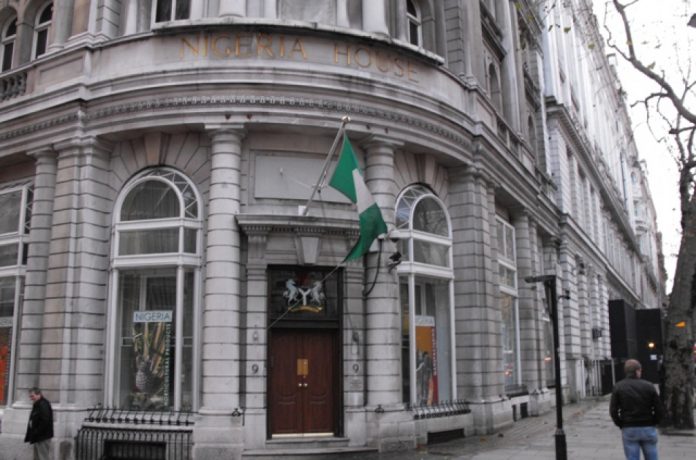
The two properties in question, located at 15 Aigburth Hall Road and Beech Lodge, 49 Calderstones Road in Liverpool, are estimated to be worth between £1.3 and £1.7 million. On June 14, Master Sullivan of the High Court of Justice, King’s Bench Division, Commercial Court in London, issued the final charging orders in favor of Zhongshan, despite Nigeria’s objections.

Nigeria had challenged both the interim and final charging orders, arguing that the application did not adhere to legal requirements and that the properties were protected by state immunity. The acting head of Nigeria’s High Commission in London had certified that the properties were not intended for commercial use, a claim central to Nigeria’s defense.

However, the court rejected these arguments, noting that the properties were not listed as diplomatic or consular premises, nor were they recognized as private residences of mission members.

French Court Seizes Nigerian Presidential Aircraft

The UK ruling comes on the heels of a separate legal blow delivered by a French court, which ordered the seizure of three Nigerian presidential aircraft. This order was part of the ongoing efforts by Zhongshan to enforce the arbitration award.

However, the Chinese company displayed an unexpected gesture of goodwill by releasing the newly purchased aircraft to the Nigerian president. This act was seen as a diplomatic move, perhaps intended to maintain a semblance of cooperation or to keep negotiations open.

Background of the Dispute

The legal entanglement originates from an investment treaty arbitration launched by Zhongshan against Nigeria. The parent company of Zhongshan, Zhuhai Zhongfu Industrial Group Co Ltd, had entered into an agreement in 2010 to develop and operate Fucheng Industrial Park within the Ogun Guangdong Free Trade Zone (OGFTZ). This arrangement was formalized when the Nigeria Export Processing Zones Authority registered Zhongfu International Investment (NIG) FZE, a subsidiary of Zhongshan, as a free trade zone enterprise in 2011.

However, tensions escalated in July 2016 when the Ogun State Government sought to terminate Zhongfu’s management of the zone. Zhongfu accused the state government of attempting to replace it with another manager, leading to the arbitration proceedings. The tribunal in London ruled in favor of Zhongshan in 2021, ordering Nigeria to pay $55.6 million in compensation for expropriation and other violations under the bilateral investment treaty between China and Nigeria.

Nigeria attempted to overturn the tribunal’s decision through various legal channels, including an appeal to the Court of Appeal (civil division) of the Royal Courts of Justice in London. However, in a judgment delivered on July 20, 2023, the court upheld the previous ruling, noting Nigeria’s failure to meet the generous time limit for challenging the order and its delayed invocation of state immunity, which came three months after the deadline.

For the UK properties, the court dismissed Nigeria’s request to challenge the enforcement order, emphasizing that the properties were being used for commercial purposes, as they were leased to residential tenants unconnected to Nigeria or its diplomatic mission. As a result, the court ruled that the properties did not qualify for state immunity under section 13(4) of the State Immunity Act (SIA), thereby allowing the enforcement against them.

In her June 14, 2024 judgment, Master Sullivan stated, “The properties are currently used for the purpose of leases to residential tenants unconnected with Nigeria and its Mission. Those are commercial purposes for the purpose of s13(4) of the SIA, and therefore, the enforcement against the properties is not barred by state immunity.”

She added: “There is no good reason why I should not exercise my discretion to make the charging orders final, and I do so.”

The Growing Implications of The Rulings

This ruling marks a significant setback for Nigeria in its efforts to protect its overseas assets from legal claims, signaling a deepening legal quagmire for the country, with more of its assets expected to be confiscated in the coming months.

The enforcement of the charging orders means that Zhongshan Fucheng Industrial Investment now has legal claims on the two Liverpool properties, bringing Nigeria a step closer to fulfilling the arbitration award.

Although the Nigerian government has repeatedly reiterated its commitment to recover its assets, the enforcement of these rulings indicates that the country is in a helpless situation.

Legal experts warn that the wave of asset seizures could have severe repercussions for Nigeria’s international standing and economic stability. The enforcement actions are not only a financial burden but also a significant diplomatic embarrassment for a country striving to project itself as a leader in Africa.

NNPC Declares Total Asset Base of N246.8tn, Surpassing Nigeria’s nominal GDP

0

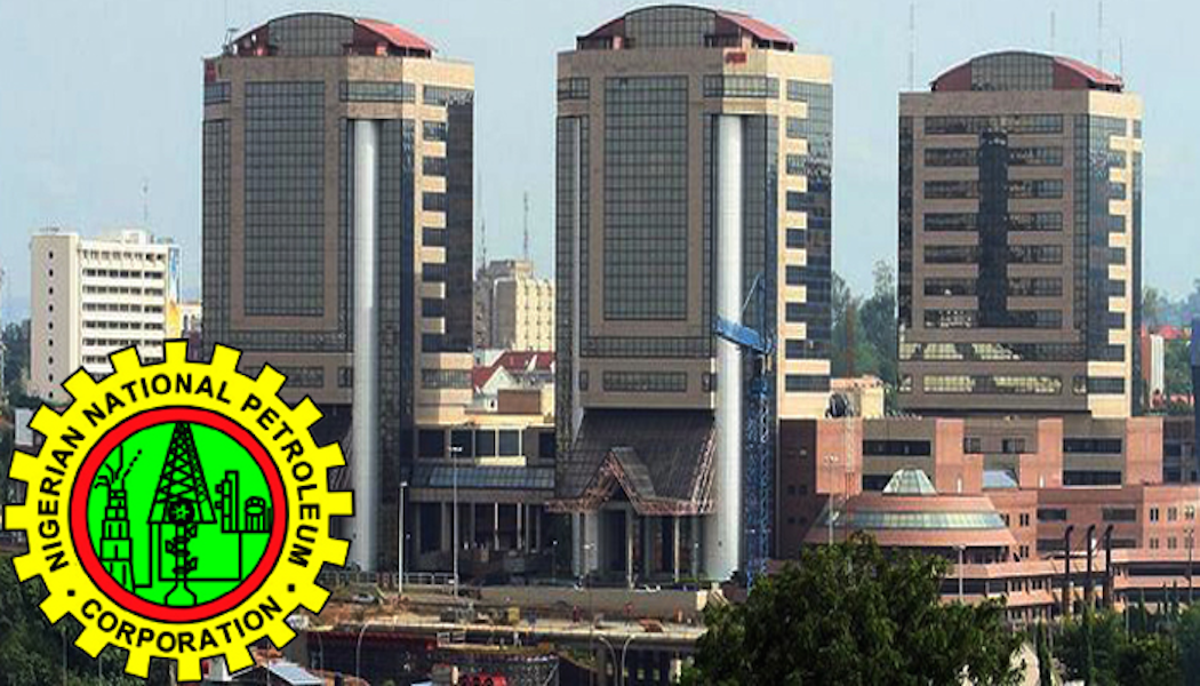
In a year marked by economic challenges for Nigeria, NNPC Limited has stunned the financial world with its 2023 full-year audited results, setting a new benchmark that has significantly eclipsed its past records.

While profit and revenue figures are impressive, it’s the sheer magnitude of the company’s total assets that has captured the most attention.

The state oil company’s 2023 full-year audited results reveal a staggering total asset base of N246.8 trillion, a figure that surpasses Nigeria’s nominal GDP of N229.9 trillion for the same year. This milestone not only marks NNPC as a titan of the oil and gas industry but also as a key pillar of Nigeria’s economic structure.

Breaking Down the Asset Composition

The foundation of NNPC Limited’s financial empire lies in its trade and other receivables, which constitute N162.9 trillion of its total assets. These receivables represent the company’s extensive dealings in crude oil, petroleum products, natural gas, and other services, reflecting the vast scope of its operations within Nigeria and internationally. Fixed assets, including property, plants, and equipment, add another N67.8 trillion to the total, underscoring NNPC’s significant investments in infrastructure and capital assets.

The scale of these figures is magnified when viewed in the context of currency translation. NNPC’s assets are predominantly dollar-denominated, and the depreciation of the naira in 2023 played a significant role in inflating the naira value of these assets. The company’s currency translation rate for fixed assets jumped to N907.1/$1 from N448.4/$1 in 2022, underlining how exchange rate movements can dramatically impact financial statements.

Crude Oil And Petroleum Sales

At the heart of NNPC’s financial success is its crude oil sales, which generated a record N14 trillion in revenue in 2023, up from N3.5 trillion the previous year. This growth was driven by increased sales volumes and higher global oil prices, as well as the company’s strategic focus on maximizing output and optimizing its supply chains. The majority of this revenue was earned domestically, with Nigeria accounting for N12 trillion of the total, while Panama emerged as a significant international market, contributing N2 trillion.

This dominance in crude oil sales is not just a financial triumph; it is also said to be a reflection of NNPC’s critical role in maintaining Nigeria’s energy security and economic stability.

In addition to crude oil, NNPC’s petroleum product sales also saw a significant uptick, reaching N7.1 trillion in 2023, compared to N4.5 trillion the previous year. This increase was largely driven by the removal of fuel subsidies in May 2023, which allowed the company to effect higher prices in its sales. Nigeria once again led the way, accounting for N6.9 trillion of the total revenue, with sales to the Bahamas contributing a modest N151.7 billion.

The removal of the fuel subsidy was a pivotal moment for NNPC, allowing it to capture more value from its petroleum product sales and boosting its overall profitability.

Natural Gas and Services

NNPC’s revenue from natural gas sales also experienced significant growth, rising to N2.3 trillion in 2023 from N683 billion the previous year. Nigeria was again the primary market, contributing N1.9 trillion, while international sales to the Cayman Islands added another N402.7 billion. This expansion in natural gas revenue highlights NNPC’s efforts to diversify its income streams and reduce its reliance on crude oil sales.

Revenue from services, which includes seismic contracts, gas transmission tariffs, and engineering services, also saw a substantial increase, reaching N464 billion in 2023, up from N100.5 billion in 2022. Nigeria was the dominant market for these services, generating N379.2 billion in revenue, a significant jump from zero in the previous year.

Cash Flow and Investments

NNPC Limited’s robust financial performance is further evidenced by its cash flow from operations, which more than doubled to N10 trillion in 2023, compared to N4.6 trillion in 2022. The company’s cash and bank balances also saw a dramatic increase, rising from N2.3 trillion to N7.1 trillion over the same period. This strong cash position provides NNPC with the financial flexibility to invest in new projects, manage its liabilities, and navigate the challenges of the global energy market.

On the investment front, NNPC reported N230.9 billion in proceeds from the sale of property, plants, and equipment, while spending N2.5 trillion on the purchase of new assets. This significant investment in infrastructure and capital assets underscores NNPC’s commitment to maintaining its leadership position in the oil and gas industry, while also preparing for the future by investing in new technologies and exploration activities.

Tekedia Capital Acquires African edtech Startup, Quizac

0

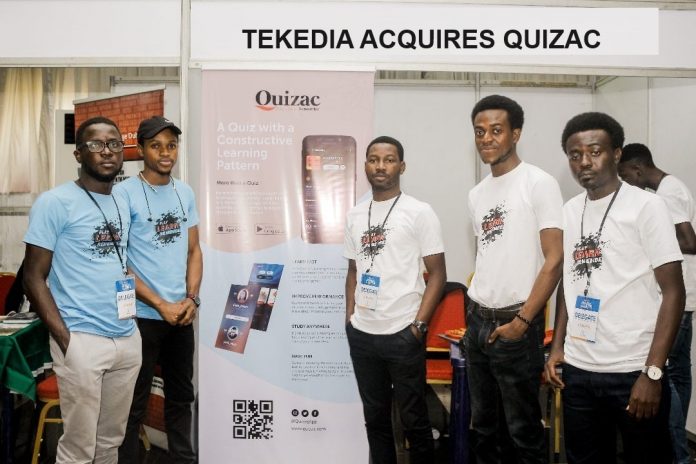
Tekedia Capital has acquired the pioneering gaming-anchored African edtech startup, Quizac. Brilliant young people came together and created an amazing product which won the “Most Innovative Gamification Platform in West Africa”.

Read the founders: “When we launched Quizac, our mission was to infuse learning with the same excitement and engagement that social media brings. Having witnessed the shift from a pre-internet era to a social media-driven world, we recognised the need for an educational platform that could compete for students’ attention in this new age. Quizac was designed to empower students, offering them an engaging alternative… Quizac will be seamlessly integrated into the Tekedia ecosystem, gaining access to Tekedia’s extensive data assets and resources.”

With this acquisition, Tekedia Institute, the home of Tekedia Mini-MBA, and other award-winning business management programs, will experience a massive evolution. We will bake Quizac technology into the core engine of Tekedia, offering learners immersive experience so that the pursuit of entrepreneurial capitalism and the mastering of fixing market frictions, within the pillars of people, processes and tools, powered by knowledge, capital, labour, and risk taking, will be gamified.

So, you want to play the game of 10x Growth in Lagos, launch the solution, and play yourself into success. Or you want to understand the risk vectors associated with that new market entry, click the button, and you will play a game of New Market Risks. With AI technology, the convergence of data, knowledge, and action will be unified, to serve people, communities and nations.

I want to commend the uncommon vision of the Quizac Team. Everyone at Tekedia appreciates Tade Samson, Alayo Hussein, and Oluwatobiloba Awogbemi for this partnership. Our promise is to extend their hypothesis, by nurturing and improving Quizac technology, and in the process advance the liberation of mind, through impactful education.

Previous, current and future Tekedia Institute Learners, we will make sure everyone benefits. A new portal for Tekedia is coming; it will provide business tools (inventory management, project management, invoicing, bookkeeping, etc), legal custodial services, global banking services, marketplace for your digital ware, etc, so that besides education, we will offer other enablers for success. We will be done in weeks and will update all.

Our product is Knowledge; we will continue to deepen how we educate for Knowledge.


Ndubuisi Ekekwe

  • Chairman, Tekedia Capital
  • Lead Faculty, Tekedia Institute

“Nneka” And Why Blocking Nationwide Ban On Noncompete Agreements Is Unfortunate

0

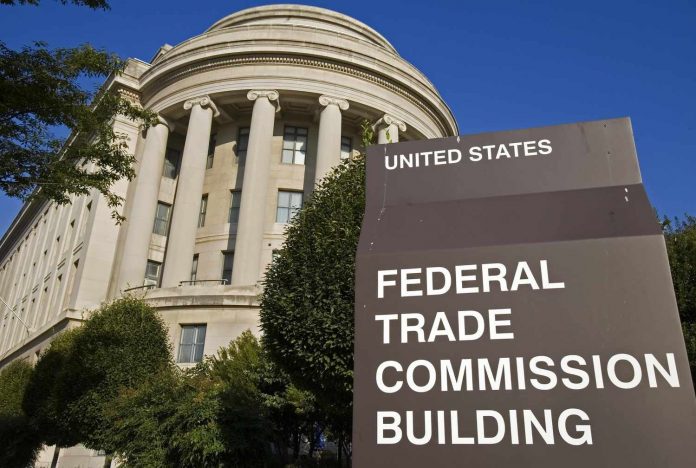
The United States does a u-turn on freeing “Labour” and that is unfortunate: “In a significant legal decision on Tuesday, U.S. District Judge Ada Brown blocked the Federal Trade Commission’s (FTC) nationwide ban on noncompete agreements, which was set to take effect in September. The ruling came as a response to a lawsuit filed by the Dallas-based tax firm Ryan LLC, the U.S. Chamber of Commerce, the Business Roundtable, and other business groups, who argued that the FTC had overstepped its authority with the proposed ban..” 

In the Igbo Nation, girls are named “Nneka” which means “mother is supreme”. There is a reason for that: if everyone fails you, and you have lost in all kingdoms, there is one place that cannot and must not fail you: your mother’s place. Simply, your mother’s place is the last place of abode. 

A federal judge in Texas has blocked a proposed rule by the Federal Trade Commission that sought to eliminate noncompete agreements. The rule, which was set to take effect Sept. 4, would have banned agreements that prevent workers from taking jobs with rival employers or starting their own competing ventures for a certain time period. The judge ruled that the FTC does not have the authority to implement such bans, saying the rule is “unreasonably overbroad without a reasonable explanation.” It would have affected about 30 million Americans, the FTC said.

Why this? Labour, our skill, is “Nneka”, supreme in all cases, and  should be free, unbounded and unconstrained,  even as we respect property rights of companies we work for. I think the United States should honour that even as we respect intellectual property rights. It is unfortunate when someone gathers capabilities and cannot utilize the same because of a non-compete clause. You have skills and cannot use the skills to feed yourself because of a document you signed years ago!

Good People, companies should give us certain rights and privileges when we show up at work because WE THE PEOPLE  matter today, and in the future, and not just the “hypothetical competition” which are designed to keep people down. This BLOCK should be reversed!