DD
MM
YYYY

PAGES

DD
MM
YYYY

spot_img

PAGES

Home Blog Page 3

Nvidia to Guarantee Up to $105 Billion for OpenAI Data Center in Ohio

0

Nvidia has agreed to provide a guarantee of up to $105 billion to support OpenAI’s lease of a massive data center campus in Ohio being developed by SoftBank-owned SB Energy, deepening the chipmaker’s role in financing the infrastructure required to sustain the artificial intelligence boom.

Nvidia said Monday it will also invest $1.5 billion in SB Energy, adding to a growing portfolio of infrastructure investments designed to expand the computing capacity available to customers using its chips.

The agreement is seen as the latest indication that Nvidia is moving beyond its traditional role as a supplier of AI processors and increasingly helping finance the data centers, power systems and other infrastructure needed to deploy them. It also raises fresh questions about the financial relationships developing across the AI industry, as chipmakers, cloud providers, model developers and infrastructure companies increasingly invest in one another.

The Ohio project, in Pike County, will have as much as 8 gigawatts of computing capacity, making it one of the largest AI infrastructure developments announced in the United States. The first 800 megawatts is expected to come online in 2028, while OpenAI will lease the facility for 20 years.

Nvidia will be the site’s exclusive chip supplier.

Nvidia CEO Jensen Huang defended the financing arrangement, rejecting suggestions that it represents circular financing in which AI companies effectively use money from their suppliers and investors to purchase the suppliers’ products.

“We are securing long-lived infrastructure for Nvidia compute so OpenAI can deploy the most productive AI factories that can be upgraded repeatedly with each new generation delivering more intelligence and better economics,” Huang said.

Nvidia said its guarantee will cover only a portion of the project’s lease and power payments, as well as a commitment to maintain a minimum value for the site. It will not guarantee the entire cost of construction or all of OpenAI’s obligations.

Under the proposed structure, OpenAI would remain responsible for rent. If OpenAI defaults, Nvidia would cover the difference between the guaranteed minimum value and whatever SB Energy can recover by leasing or selling the facility.

The final financing structure has not yet been determined, according to people familiar with the matter cited by Reuters. The project is expected to combine equity and debt. Equity could include money raised through a potential SB Energy initial public offering as well as direct investment from SoftBank.

Once the equity component is established, the remaining financing could come from project-finance loans and potentially public debt such as bonds, the people said.

Nvidia’s Infrastructure Bet

The deal represents an unusually large commitment by Nvidia to infrastructure that will ultimately create additional demand for its own processors.

Nvidia has pursued this strategy as AI developers race to secure scarce computing capacity. The company is effectively helping ensure that the physical infrastructure needed to deploy successive generations of its chips is built ahead of demand.

Huang said the Ohio facility could generate as much as $200 billion in Nvidia revenue over time. Including a potential 3.75-gigawatt expansion, Nvidia expects to sell OpenAI a total of 16 gigawatts of computing capacity and could generate as much as $600 billion in revenue from OpenAI through 2030.

That creates a powerful commercial incentive for Nvidia to help solve one of the biggest constraints facing the AI industry: the availability of suitable data centers with enough electricity and grid capacity.

Nvidia’s latest commitment follows a separate initiative announced last week in which the company partnered with six major financial institutions, including BlackRock, to establish financing platforms targeting more than $500 billion in third-party capital for AI infrastructure.

The scale of those commitments has intensified scrutiny over whether the industry’s rapid expansion is being supported by complex financial arrangements among companies that ultimately depend on one another.

“Investors are right to be worried about what seems to be a never-ending loop of AI deals but realistically the field of players isn’t all that vast and there was always going to be a degree of circular financing,” said Danni Hewson, head of financial analysis at AJ Bell.

“The biggest test is whether these investments ultimately generate decent returns for all those laying out cash and that’s something that can only be figured out further down the line,” she said.

Power Emerges As The Next AI Bottleneck

The Ohio project also reveals a challenge that is becoming as important to AI development as chips themselves: electricity. The proposed campus will initially have 4.25 gigawatts of capacity, eventually rising to as much as 8 gigawatts. One gigawatt of computing power is roughly equivalent to the electricity consumption of about 750,000 U.S. homes on average.

To support the development, SoftBank and SB Energy plan to build at least 10 gigawatts of new power generation and spend $4.2 billion on regional grid infrastructure through a partnership with AEP Ohio.

The scale of that investment highlights why AI infrastructure is now being planned around access to electricity rather than simply the availability of land. The U.S. power grid is already facing constraints in some regions, while data center projects have encountered opposition from communities concerned about electricity prices, water consumption, and the broader impact of large-scale facilities on local infrastructure.

The Ohio project is expected to create about 35,000 construction jobs through 2032 and roughly 2,500 permanent operating positions, according to OpenAI.

People familiar with the project said the risk of significant construction delays from local opposition is relatively low because Ohio officials have supported the development because of its expected economic benefits. OpenAI and SoftBank have also committed $80 million to community projects.

The project involves federal land and has participation from the U.S. Departments of Commerce and Energy.

A Test of The AI Infrastructure Economy

The Ohio development is part of a broader race to build what the AI industry calls “AI factories”: large computing facilities designed to train and run increasingly sophisticated models.

While securing these sites can help Nvidia create a predictable market for successive generations of its processors, it is expected to grant OpenAI essential long-term access to computing capacity as it scales its models and AI services.

But the economics of the arrangement will ultimately depend on whether demand for AI computing grows quickly enough to justify the enormous capital expenditure required to build and operate these facilities.

The 20-year lease provides OpenAI with long-term access to capacity, while Nvidia’s guarantee shifts part of the financial risk of the project onto the chipmaker. That creates an unusual alignment of interests. Nvidia benefits when OpenAI expands its computing footprint because the company is the exclusive chip supplier to the Ohio site. OpenAI benefits by securing infrastructure for future model development. SoftBank and SB Energy gain a major long-term customer for a large infrastructure project.

The arrangement therefore ties together the fortunes of three major participants in the AI infrastructure buildout.

FWA Rebounds as FWAir NFT Launch Fuels Renewed Market Interest

0

FWA has staged a notable rebound after announcing that the launch of its FWAir NFT collection will begin this week, drawing renewed attention from traders, collectors, and participants across the digital asset market.

The announcement has provided fresh momentum to the project at a time when NFT markets are once again searching for catalysts capable of reviving user engagement and speculative interest.

The planned FWAir NFT launch represents an important development for FWA because it introduces a new digital asset layer around the project’s ecosystem.

NFTs have evolved significantly from their early image as collectible profile pictures. Increasingly, projects are using NFTs as access mechanisms, membership assets, rewards, or components of broader digital economies.

FWA’s decision to introduce FWAir NFTs therefore places the project within a wider trend of platforms attempting to connect digital ownership with community participation. The immediate market reaction has been particularly significant because FWA rebounded following the announcement.

Price movements around NFT launches can often reflect expectations rather than fundamentals, as traders anticipate increased activity, new users, or future utility. The FWAir announcement appears to have provided investors with a new narrative around which to organize market interest.

However, the sustainability of the rebound will depend on what happens after the initial excitement. NFT launches frequently experience a sharp increase in attention before release, followed by volatility once assets become available.

The difference between a temporary speculative rally and a durable recovery usually comes down to execution, liquidity, community demand, and the utility attached to the NFTs.

For FWA, the launch could create an opportunity to strengthen its ecosystem if FWAir NFTs provide meaningful benefits beyond scarcity.

A successful collection could encourage participation, create new forms of engagement, and potentially establish additional revenue channels. It could also give existing users a reason to remain active while attracting NFT collectors who had previously paid limited attention to the project.

Market participants are likely to watch the launch closely for supply, pricing, distribution mechanics, and secondary-market activity. These factors can heavily influence how an NFT collection performs once trading begins. If demand significantly exceeds available supply.

The resulting scarcity could reinforce bullish sentiment around FWA. Conversely, weak participation could quickly undermine the momentum generated by the announcement. The broader NFT market also provides important context.

After the speculative boom of previous years, the sector has increasingly shifted toward projects that can demonstrate practical utility and sustainable communities. Investors are becoming more selective, making execution arguably more important than marketing.

FWAir will therefore need to demonstrate that its value proposition extends beyond the initial launch announcement. The NFT rollout has succeeded in giving FWA a fresh narrative and reversing some of the recent market weakness.

The coming days will reveal whether that momentum can translate into sustained demand. If FWAir delivers strong participation and meaningful utility, the launch could become a significant catalyst for FWA. If enthusiasm fades quickly, the rebound may prove to have been largely speculative.

This week’s launch marks a test of whether FWA can convert renewed attention into lasting ecosystem growth. The FWAir NFTs have created the catalyst; execution will determine whether the rebound becomes a recovery or simply another short-lived market rally.

Hong Kong’s First Licensed Stablecoin Fails a Security Review

0

Hong Kong’s ambitious push to establish itself as a regulated digital-asset hub has encountered an uncomfortable early test after an independent security review raised serious concerns about HKD At Par (HKDAP).

The city’s first regulated Hong Kong-dollar stablecoin to reach the market. The token, launched by Anchorpoint Financial on August 12, 2026, was designed to demonstrate how regulated digital money could support payments, settlement and tokenized financial products.

The timing makes the criticism particularly significant. Hong Kong has spent considerable effort building a formal stablecoin framework intended to distinguish regulated digital currencies from the loosely supervised tokens that have dominated much of the global cryptocurrency market.

The Stablecoins Ordinance took effect in August 2025, and the Hong Kong Monetary Authority (HKMA) subsequently granted licences to only two issuers in April 2026 after receiving 36 applications.

Anchorpoint is backed by major institutions including Standard Chartered, Animoca Brands and Hong Kong Telecommunications.

Its HKDAP stablecoin is intended to maintain a one-to-one relationship with the Hong Kong dollar and initially targets institutional distributors and professional investors rather than the mass retail market. The company has emphasized practical applications such as commercial payments and financial settlement.

However, a review conducted by blockchain security firm BlockSec has challenged the technical readiness of the live smart contract. According to the review, HKDAP’s deployed contract contains weaknesses involving its know-your-customer controls and governance architecture.

BlockSec reported that some KYC and revocation mechanisms do not function as intended, while a single key has the ability to mint, burn, pause or freeze tokens. The firm concluded that the contract was “not production-ready.”

For a stablecoin, these findings are particularly consequential because security is inseparable from trust. A stablecoin promises users that digital representations of fiat currency can be issued, transferred and redeemed under clearly defined rules.

If administrative keys are excessively concentrated or compliance mechanisms do not operate as expected, users and institutions must consider risks beyond the stability of the underlying currency.

The issue also creates an awkward regulatory question.

Hong Kong’s stablecoin regime was specifically designed around reserve management, redemption arrangements, technology security, risk management and other safeguards. Government statements have repeatedly emphasized that licensed issuers must meet stringent standards before launching.

Importantly, the security review does not necessarily mean HKDAP has lost its Hong Kong-dollar peg or that customer reserves have disappeared. The criticism is primarily about the implementation of the blockchain contract and its controls. That distinction matters because technical vulnerabilities and reserve insolvency are different categories of stablecoin risk.

The episode could influence how Hong Kong’s regulators and institutional market participants approach future launches. If regulated stablecoins are intended to become financial infrastructure, their smart contracts must receive scrutiny comparable to traditional financial systems.

Particularly where token issuance, redemption and administrative powers are involved. Hong Kong’s experiment is therefore entering a crucial phase. The city has succeeded in creating a regulatory framework and attracting heavyweight financial institutions.

But regulation alone cannot guarantee technological resilience. HKDAP’s early security controversy demonstrates that institutional credibility must extend from the licence and reserve structure all the way down to the code.

For Hong Kong’s stablecoin ambitions, the lesson is straightforward: being licensed is only the beginning of proving that a digital currency can be trusted.

Fireblocks Brings In Former SEC Commissioner As US Crypto Rules Take Shape, as Israel’s Largest Bank Plans Crypto Trading by 2027

0

Fireblocks, the enterprise platform securing more than $14 trillion in digital asset transactions, today appointed Elad Roisman as Chief Regulatory and Policy Officer and General Counsel, Regulatory.

Roisman will lead Fireblocks’ regulatory strategy and policy engagement, along with legal work on regulatory matters. He will also serve as Fireblocks’ principal liaison to regulators and standards bodies as digital asset legislation and regulation takes shape across the United States, Europe, and other major markets.

He joins the leadership team and is based in Washington, D.C. Stablecoins have become a core settlement rail for institutions. Tokenized real-world assets, including money market funds and private credit, are moving from pilot to production as banks and asset managers bring traditional instruments onchain.

Regulation is catching up: the United States now has federal stablecoin law and is negotiating market structure legislation, the European Union is implementing MiCA, and supervisors across Asia and the Middle East are setting their own standards.

For the hundreds of banks, payment companies, and asset managers that operate on Fireblocks, those rules decide how fast they can build and grow onchain-based revenues.

As an SEC Commissioner and Acting Chairman, Roisman voted on more than one hundred rulemakings and over one thousand enforcement actions, and represented the agency before Congress and international bodies including the International Organization of Securities Commissions and the Financial Stability Board.

He previously served as Chief Counsel to the U.S. Senate Committee on Banking, Housing, and Urban Affairs, and as Chief Counsel at NYSE Euronext. Most recently, at Cravath, he advised financial institutions and fintechs on digital asset regulation and testified before Congress on market structure legislation.

Michael Shaulov, Co-Founder and CEO of Fireblocks, said: “Having people who understand the mindset and missions of regulators enables us to help inform policymakers and support our clients as rules come into place.”

That matters now more than ever, as stablecoins scale into everyday payments and real-world assets move onchain at institutional pace. Elad has both been a regulator and a legal advisor to many of the world’s most prominent financial institutions.

As customers move deeper into regulated finance, that experience will enable our infrastructure to adapt and lead in a dynamic regulatory environment.

Elad Roisman, Chief Regulatory and Policy Officer at Fireblocks, said: “Today, we stand at an exciting time where there has never been more interest and work done by regulators and legislators to enable further innovation in this important space.”

The work now is engaging with these policymakers on the rapidly evolving digital asset environment and supporting institutions as they build and grow the next phase of the financial system under the new regulations and laws. I’m energized to embark on that work with the industry leading team at Fireblocks.

Fireblocks is the world’s most trusted digital asset infrastructure company, empowering global institutions to build, manage and grow their business on the blockchain. With the industry’s most scalable and secure platform.

Fireblocks streamline stablecoin payments, settlement, custody, tokenization, trading, accounting operations, and compliance reporting – enabling everything from institutional finance to consumer-facing digital experiences across the largest ecosystem of banks, payment providers, stablecoin issuers, exchanges and custodians.

Thousands of organizations – including Worldpay, BNY, Galaxy, and Revolut – trust Fireblocks to secure more than $14 trillion in digital asset transactions across 150+ blockchains.

Israel’s Largest Bank Plans Crypto Trading by 2027

Israel’s largest bank is preparing to deepen its involvement in the cryptocurrency market, with plans to offer customers direct access to crypto trading by 2027.

The move would represent another significant step in the integration of digital assets into the country’s traditional financial system, potentially bringing Bitcoin, Ether, Solana and other major cryptocurrencies closer to mainstream investors.

Reports indicate that Bank Leumi, through its digital banking platform Pepper, is preparing to expand its cryptocurrency offering. The bank has previously positioned Pepper as a bridge between conventional banking and digital assets.

In 2022, Pepper announced a partnership with Paxos to enable customers to buy, hold and sell cryptocurrencies, initially focusing on Bitcoin and Ethereum, subject to regulatory approval.

The planned expansion comes as Israel’s banking sector becomes increasingly comfortable with crypto-related financial services.

The Bank of Israel has acknowledged the potential for crypto and blockchain technology to generate innovation in financial services, while emphasizing the importance of risk management, consumer protection and regulatory compliance.

The 2027 timeline is therefore important because it suggests that crypto adoption is moving beyond experimental initiatives toward a more structured banking product. Rather than forcing customers to rely entirely on centralized exchanges or external wallets.

Integration into a bank’s digital platform could allow investors to access cryptocurrencies alongside traditional financial products. Convenience is likely to be one of the strongest drivers of adoption.

Traditional crypto ownership can involve opening exchange accounts, managing private keys, navigating wallets and handling tax obligations. A bank-integrated service could simplify much of this process.

Bank Leumi’s earlier Pepper initiative specifically highlighted the ability to trade without downloading a separate crypto wallet, while tax collection could be incorporated into the transaction process.

However, the expansion also demonstrates how important regulation has become for institutional crypto adoption. Israel’s banking supervisors have required banks engaging in crypto-related activities to conduct risk assessments and demonstrate that they can manage these services safely and in accordance with applicable regulations.

Banks must also notify the banking supervisor before entering crypto-related activities. This regulatory framework could ultimately strengthen the market. Bank participation gives customers an additional layer of institutional oversight.

While regulators gain greater visibility into how digital assets and Stablecoins interact with the traditional financial system. At the same time, banks must manage risks associated with market volatility, money laundering, cybersecurity and consumer protection.

The broader trend extends beyond Israel. Banks around the world are increasingly experimenting with crypto trading, custody and tokenized assets. In July 2026, Swiss bank BancaStato launched regulated crypto trading through its banking applications.

Allowing customers to trade Bitcoin, Ethereum, Litecoin and Solana. For Israel, the significance of Leumi’s planned expansion goes beyond the bank itself. Direct cryptocurrency access through one of the country’s largest financial institutions could normalize digital assets for a much wider population.

If the 2027 rollout proceeds as planned, cryptocurrency trading may increasingly become viewed not as an alternative financial activity operating outside traditional banking, but as another investment service offered within it. That shift could mark an important milestone in Israel’s evolving digital-asset economy.

PayPal’s $53 Billion Rejection and JPMorgan’s Global Food Crisis Warning

0
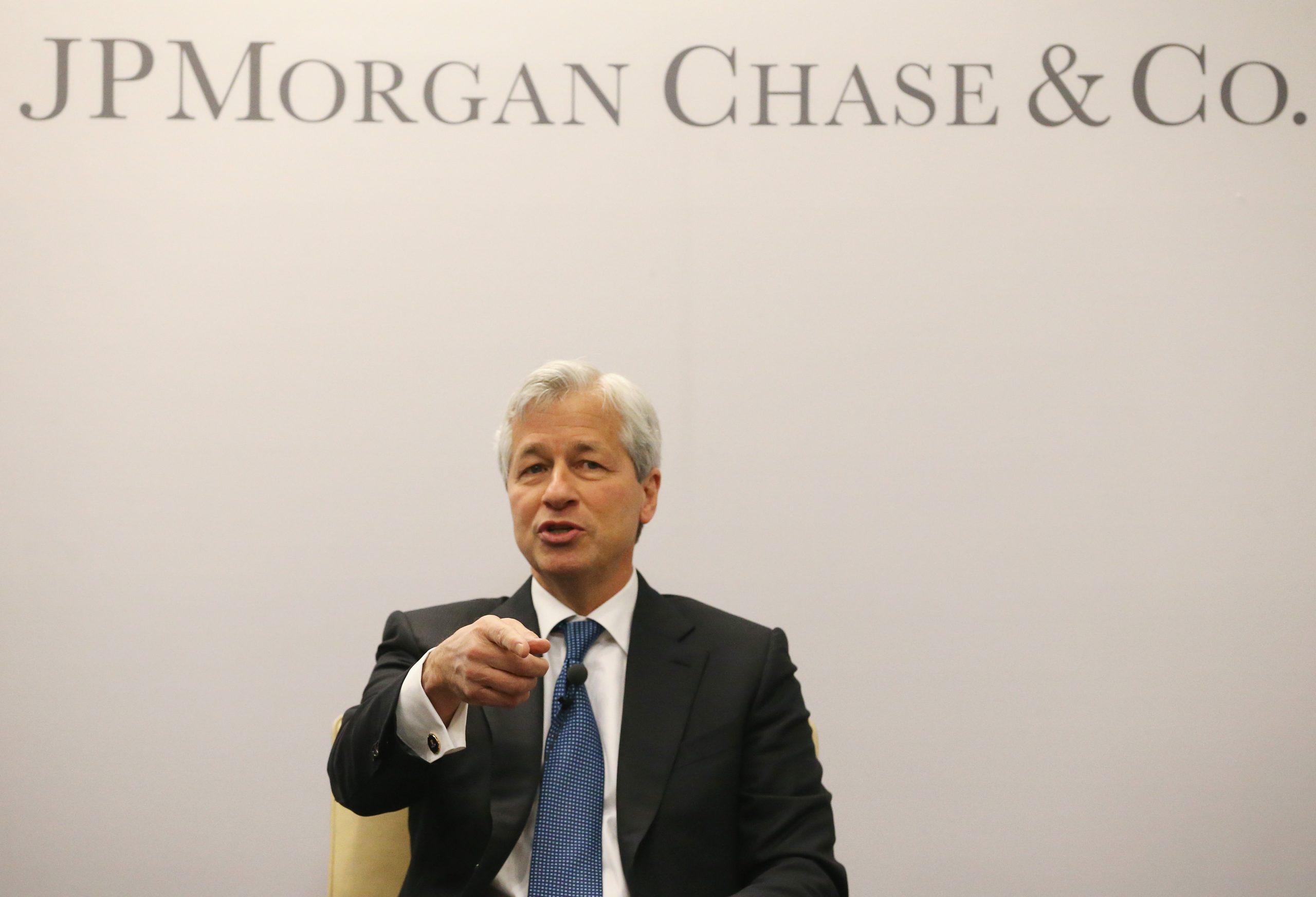
JP Morgan Chase puts contents through its CEO account, it goes viral. But the same content via JPMC account, no one cares (WSJ)

PayPal’s rejection of a $53 billion takeover proposal and JPMorgan’s warning of a possible global food crisis next year may appear to belong to separate worlds.

One concerns fintech consolidation and corporate valuation; the other involves fertilizer, shipping routes, climate and food inflation.

Yet both developments reveal a common vulnerability in the global economy: systems that look stable can become fragile when strategic pressures, supply disruptions and changing expectations collide.

In July, PayPal’s board rejected a $60.50-per-share proposal from Stripe and private-equity firm Advent International, valuing the payments company at more than $53 billion.

Reuters reported that the offer represented roughly a 28% premium to PayPal’s share price and was supported by about $50 billion in committed bank financing. PayPal nevertheless considered the proposal insufficient, effectively betting that its turnaround strategy can generate greater value independently.

The decision places pressure on PayPal’s leadership. Chief Executive Enrique Lores is pursuing cost reductions, organizational restructuring and greater use of artificial intelligence while attempting to accelerate growth across Venmo, Braintree and other businesses.

The company is asking investors to believe that operational improvements will eventually be worth more than the immediate premium offered by potential buyers. The story has not ended. Recent reports indicate that PayPal has reopened discussions with Stripe and Advent about a possible sale at a higher price.

The development suggests that the rejection was not necessarily a permanent refusal, but rather a negotiating position based on valuation.

At the same time, JPMorgan has issued a warning that carries consequences. The bank says global food production could face pressure from disruptions around the Strait of Hormuz combined with the possibility of a historically strong El Niño.

These forces could affect fertilizer supplies, agricultural costs, crop yields and ultimately food prices. JPMorgan’s own analysis highlights how geopolitical conflict and climate conditions can interact through supply chains.

The Strait of Hormuz is important because disruptions there can affect energy markets and shipping. Higher energy costs can feed into fertilizer production, transportation and farm operations. Fertilizer shortages or elevated prices can then reduce agricultural productivity, creating a second-round shock that reaches consumers far from the original conflict zone.

The potential El Niño risk adds a layer of uncertainty. Extreme weather can disrupt harvests, alter rainfall patterns and reduce yields in major agricultural regions. If that occurs while fertilizer and transportation costs remain elevated, food inflation could accelerate.

One recent report citing JPMorgan projections said global food inflation could rise from 2.8% in the first half of 2026 to 5% in the first half of 2027. The PayPal and food-supply stories illustrate two forms of economic repricing.

PayPal is negotiating over the value of a mature digital-payments network in an era shaped by artificial intelligence, stablecoins and new fintech competitors. Agriculture, is confronting the physical constraints of energy, fertilizer, logistics and climate.

For markets, the lesson is that valuation and resilience are becoming inseparable. Companies must prove that their strategies can withstand technological disruption, while governments and businesses must prepare for supply shocks that can move rapidly from geopolitical events into household budgets.

PayPal’s $53 billion rejection may lead to a larger transaction. JPMorgan’s warning may or may not become a food crisis. But both developments underline the same principle: in an interconnected economy, risks can quickly become financial realities.