

Fireblocks, the enterprise platform securing more than $14 trillion in digital asset transactions, today appointed Elad Roisman as Chief Regulatory and Policy Officer and General Counsel, Regulatory.
Roisman will lead Fireblocks’ regulatory strategy and policy engagement, along with legal work on regulatory matters. He will also serve as Fireblocks’ principal liaison to regulators and standards bodies as digital asset legislation and regulation takes shape across the United States, Europe, and other major markets.
He joins the leadership team and is based in Washington, D.C. Stablecoins have become a core settlement rail for institutions. Tokenized real-world assets, including money market funds and private credit, are moving from pilot to production as banks and asset managers bring traditional instruments onchain.
Register for the next Tekedia Mini-MBA.
Register for Tekedia AI in Business Masterclass.
Join Tekedia Capital Syndicate and co-invest in great global startups.
Regulation is catching up: the United States now has federal stablecoin law and is negotiating market structure legislation, the European Union is implementing MiCA, and supervisors across Asia and the Middle East are setting their own standards.
For the hundreds of banks, payment companies, and asset managers that operate on Fireblocks, those rules decide how fast they can build and grow onchain-based revenues.
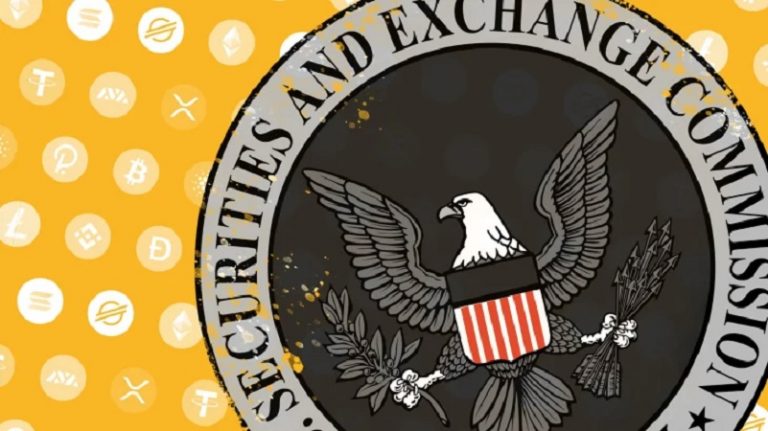
As an SEC Commissioner and Acting Chairman, Roisman voted on more than one hundred rulemakings and over one thousand enforcement actions, and represented the agency before Congress and international bodies including the International Organization of Securities Commissions and the Financial Stability Board.
He previously served as Chief Counsel to the U.S. Senate Committee on Banking, Housing, and Urban Affairs, and as Chief Counsel at NYSE Euronext. Most recently, at Cravath, he advised financial institutions and fintechs on digital asset regulation and testified before Congress on market structure legislation.

Michael Shaulov, Co-Founder and CEO of Fireblocks, said: “Having people who understand the mindset and missions of regulators enables us to help inform policymakers and support our clients as rules come into place.”
That matters now more than ever, as stablecoins scale into everyday payments and real-world assets move onchain at institutional pace. Elad has both been a regulator and a legal advisor to many of the world’s most prominent financial institutions.
As customers move deeper into regulated finance, that experience will enable our infrastructure to adapt and lead in a dynamic regulatory environment.
Elad Roisman, Chief Regulatory and Policy Officer at Fireblocks, said: “Today, we stand at an exciting time where there has never been more interest and work done by regulators and legislators to enable further innovation in this important space.”

The work now is engaging with these policymakers on the rapidly evolving digital asset environment and supporting institutions as they build and grow the next phase of the financial system under the new regulations and laws. I’m energized to embark on that work with the industry leading team at Fireblocks.
Fireblocks is the world’s most trusted digital asset infrastructure company, empowering global institutions to build, manage and grow their business on the blockchain. With the industry’s most scalable and secure platform.
Fireblocks streamline stablecoin payments, settlement, custody, tokenization, trading, accounting operations, and compliance reporting – enabling everything from institutional finance to consumer-facing digital experiences across the largest ecosystem of banks, payment providers, stablecoin issuers, exchanges and custodians.
Thousands of organizations – including Worldpay, BNY, Galaxy, and Revolut – trust Fireblocks to secure more than $14 trillion in digital asset transactions across 150+ blockchains.
Israel’s Largest Bank Plans Crypto Trading by 2027
Israel’s largest bank is preparing to deepen its involvement in the cryptocurrency market, with plans to offer customers direct access to crypto trading by 2027.
The move would represent another significant step in the integration of digital assets into the country’s traditional financial system, potentially bringing Bitcoin, Ether, Solana and other major cryptocurrencies closer to mainstream investors.
Reports indicate that Bank Leumi, through its digital banking platform Pepper, is preparing to expand its cryptocurrency offering. The bank has previously positioned Pepper as a bridge between conventional banking and digital assets.
In 2022, Pepper announced a partnership with Paxos to enable customers to buy, hold and sell cryptocurrencies, initially focusing on Bitcoin and Ethereum, subject to regulatory approval.
The planned expansion comes as Israel’s banking sector becomes increasingly comfortable with crypto-related financial services.
The Bank of Israel has acknowledged the potential for crypto and blockchain technology to generate innovation in financial services, while emphasizing the importance of risk management, consumer protection and regulatory compliance.
The 2027 timeline is therefore important because it suggests that crypto adoption is moving beyond experimental initiatives toward a more structured banking product. Rather than forcing customers to rely entirely on centralized exchanges or external wallets.
Integration into a bank’s digital platform could allow investors to access cryptocurrencies alongside traditional financial products. Convenience is likely to be one of the strongest drivers of adoption.
Traditional crypto ownership can involve opening exchange accounts, managing private keys, navigating wallets and handling tax obligations. A bank-integrated service could simplify much of this process.
Bank Leumi’s earlier Pepper initiative specifically highlighted the ability to trade without downloading a separate crypto wallet, while tax collection could be incorporated into the transaction process.
However, the expansion also demonstrates how important regulation has become for institutional crypto adoption. Israel’s banking supervisors have required banks engaging in crypto-related activities to conduct risk assessments and demonstrate that they can manage these services safely and in accordance with applicable regulations.
Banks must also notify the banking supervisor before entering crypto-related activities. This regulatory framework could ultimately strengthen the market. Bank participation gives customers an additional layer of institutional oversight.
While regulators gain greater visibility into how digital assets and Stablecoins interact with the traditional financial system. At the same time, banks must manage risks associated with market volatility, money laundering, cybersecurity and consumer protection.
The broader trend extends beyond Israel. Banks around the world are increasingly experimenting with crypto trading, custody and tokenized assets. In July 2026, Swiss bank BancaStato launched regulated crypto trading through its banking applications.
Allowing customers to trade Bitcoin, Ethereum, Litecoin and Solana. For Israel, the significance of Leumi’s planned expansion goes beyond the bank itself. Direct cryptocurrency access through one of the country’s largest financial institutions could normalize digital assets for a much wider population.
If the 2027 rollout proceeds as planned, cryptocurrency trading may increasingly become viewed not as an alternative financial activity operating outside traditional banking, but as another investment service offered within it. That shift could mark an important milestone in Israel’s evolving digital-asset economy.