DD
MM
YYYY

PAGES

DD
MM
YYYY

spot_img

PAGES

Home Blog Page 3

Knowledge: Factor of Production – A Tekedia Mini-MBA Show

0

Good People, if you want to understand why companies win or fail, do not begin with the CEO, the workers, or even the technology. Begin with the business model. The business model is supreme because it is the logic of the firm, the invisible engine that determines how value is created, delivered, and captured. Leadership and execution matter, yes, but they operate within the boundaries set by the business model. If that logic is flawed, excellence only helps you fail more efficiently.

Two companies can sell the same product to the same market and end up with wildly different outcomes, simply because they chose different business models. A freemium product versus a subscription version of the same offering will reorganize capital, labor, incentives, pricing power, and customer behavior in fundamentally different ways. The product may be identical, but the destiny of the firm will not be. This is why, in many struggling companies, the real problem is not the product or service, it is the model through which that product is taken to market.

This is also why boards do not just hire CEOs to “manage operations.” They hire CEOs to discover, refine, and operate the right business model for the moment. When Mr. A was relieved after eight straight quarters of declining revenue and Mrs. B stepped in, what changed was not the product and not even the team in any material way. What likely changed was the logic of the firm. Mrs. B re-anchored the company to a business model better aligned with market realities, customer behavior, and competitive forces, and suddenly growth returned.

So, invest time in your business model. Obsess over it. That web product you are building, should it be freemium, subscription-based, ad-supported, or transactional? Each option rewires how your company makes money and how it competes. When you debate these choices, you are not doing accounting; you are designing the economic soul of your company. Get the model right, and execution will amplify success. Get it wrong, and no amount of brilliance will save you.

I am Ndubuisi Ekekwe and from Feb 9, I will be teaching Business Model in Tekedia Mini-MBA. You are invited to register for this academic festival titled “Knowledge: factor of production”. Go here and get big bonus on early bird registration

Microsoft’s Investment in OpenAI Contributes $7.6bn Net Income in Q4

0

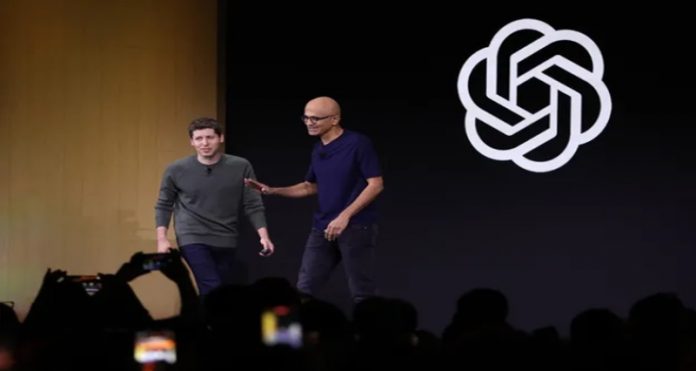
Microsoft’s investment in OpenAI is proving to be a financial masterstroke, with the software giant reporting that its stake in the AI lab contributed $7.6 billion to net income in its latest quarterly earnings.

The announcement eases concerns over investment returns for the software company, which made an early bet in the artificial intelligence company. It also underscores the growing importance of AI partnerships in Microsoft’s overall business strategy and highlights the enormous revenue potential embedded in OpenAI’s technology.

The OpenAI-Microsoft relationship began in earnest in 2019, when Microsoft invested $1 billion into OpenAI, marking one of the largest early strategic investments in the emerging AI sector. The deal gave Microsoft preferred access to OpenAI’s technologies, including its GPT family of language models, and tied the company closely to OpenAI’s cloud infrastructure needs.

Over the years, the partnership has evolved into a multi-billion-dollar ecosystem. Microsoft reportedly holds a 20% revenue share from OpenAI, though neither company has confirmed exact figures publicly. The AI lab also agreed to purchase substantial amounts of Azure cloud computing services, which are now reflected as part of Microsoft’s “commercial remaining performance obligations” (ROs). In the latest quarter, these obligations jumped to $625 billion from $392 billion, with 45% attributed to OpenAI, highlighting the magnitude of committed future revenue.

The partnership was restructured in September 2025 when OpenAI became a public benefit corporation. Part of the renegotiation included OpenAI committing to an additional $250 billion of Azure consumption, further cementing Microsoft’s position as the preferred cloud provider for AI workloads. The arrangement benefits both parties: OpenAI secures access to world-class computing resources, while Microsoft locks in decades of recurring cloud revenue from one of the fastest-growing AI companies.

The latest earnings report shows Microsoft capitalizing on this strategic alignment. Total revenue hit $81.3 billion, exceeding Wall Street estimates of $80.27 billion and up 17% year-over-year. Microsoft Cloud alone reached $50 billion, marking the first time it has surpassed this milestone.

Other AI partnerships, notably with Anthropic, also contributed to the strong results. Commercial bookings tied to Anthropic grew 230%, backed by Microsoft’s $5 billion investment and Anthropic’s $30 billion commitment to Azure compute, with plans for more capacity in the future.

Microsoft’s revenue growth is accompanied by massive infrastructure investments. The company spent $37.5 billion on capital expenditures in the quarter, approximately two-thirds of which was allocated to GPUs and CPUs for Azure’s AI workloads. These short-lived assets are critical to scaling AI services and meeting the computational demands of both OpenAI and other AI partners.

The Strategic Impact

The OpenAI-Microsoft deal exemplifies the shift in enterprise technology, underpinning that AI has moved from experimental R&D to a core driver of revenue growth. By embedding OpenAI’s offerings into Azure and securing multi-year commitments, Microsoft has created a predictable revenue stream with enormous upside potential. Analysts view this as a blueprint for how tech giants can monetize AI at scale while retaining strategic control over the underlying cloud infrastructure.

Most Microsoft business units posted double-digit growth, with the exception of Windows devices, which rose just 1%, and Xbox content and services, which fell 5%. These figures highlight that while traditional software and consumer hardware remain important, Microsoft is betting big on AI to boost its financial performance.

OpenAI is reportedly seeking additional funding at a valuation of $750 billion to $830 billion, underscoring the scale of its influence on the AI market. With committed Azure consumption already in the hundreds of billions and the AI lab’s technology forming the backbone of Microsoft’s AI strategy, the partnership is poised to dominate the sector for years to come.

This means that Microsoft is not just benefiting from AI innovation — it is profiting from the infrastructure and ecosystem that make that innovation possible. Analysts thus expect the company’s early and strategic bets on OpenAI and other AI labs like Anthropic to drive record-breaking revenue growth.

OpenAI Reportedly Seeks $40bn Funding from Nvidia, Amazon, and Microsoft

0

OpenAI is ramping up efforts to secure one of the largest private investments in artificial intelligence history, targeting up to $40 billion in funding from a combination of core infrastructure partners, sovereign wealth funds, and strategic investors.

The initiative comes as the company seeks to scale its data centers, expand global operations, and accelerate the deployment of increasingly sophisticated AI models.

Sources familiar with the discussions told The Information that Nvidia, Microsoft, and Amazon are expected to lead the initial phase of the funding round. Nvidia could contribute up to $20 billion, while Amazon is reportedly considering a $10 billion-plus commitment. Microsoft, which currently holds a 27 percent stake in OpenAI’s for-profit division, is likely to add several billion more.

In parallel, SoftBank’s Masayoshi Son has expressed confidence in the company, with potential commitments of up to $30 billion, while discussions with sovereign wealth funds such as the Abu Dhabi Investment Authority and MGX are ongoing.

The scale of these investments reflects the growing capital intensity of AI development. OpenAI relies heavily on Nvidia GPUs, cloud infrastructure from Microsoft Azure and AWS, and other high-performance computing resources to operate models at the frontier of AI research. Last year, Nvidia entered into a multiyear agreement to invest $100 billion in incremental $10 billion tranches to expand OpenAI’s data centers, although the deal remains unfocalized.

Analysts say the new proposed $20 billion injection may either supplement this prior agreement or lead to renegotiation of terms, highlighting the delicate balance between funding needs and operational independence.

OpenAI’s reliance on infrastructure providers for financing raises strategic and governance questions. Analysts note that when major investors are also critical suppliers, it concentrates influence and could shape pricing, technology priorities, and market access. It is believed that while these investments unlock rapid scaling, they also increase the risk of vendor dependence. Thus, OpenAI must navigate growth without ceding control over the platforms its models rely on.

The funding drive positions OpenAI to compete aggressively with a growing field of AI players. In the U.S., rivals such as Anthropic, Google DeepMind, and xAI are expanding model capabilities and commercialization efforts, while Chinese companies, including DeepSeek, Moonshot AI, and Alibaba-backed startups, are pursuing multi-modal models and omni-capable AI systems, intensifying global competition for talent, hardware, and market dominance.

Financially, OpenAI’s expansion is aimed at building additional data centers capable of supporting increasingly complex models. Industry sources say that Chinese competitors are investing heavily in local GPU alternatives and high-bandwidth memory to bypass U.S. export restrictions, while U.S. firms like Nvidia and Amazon benefit from these large-scale commitments, creating an intertwined ecosystem where capital, compute, and AI talent converge.

The massive funding round also underscores the central role of AI infrastructure in shaping the market. OpenAI’s models, including GPT and other generative AI offerings, require extraordinary computational resources, making the availability of advanced GPUs, storage, and cloud services as crucial as research talent. Analysts note that OpenAI’s strategy mirrors a broader trend in the AI industry that has seen companies with access to both deep capital and cutting-edge hardware, positioning to accelerate deployment and dominate key commercial applications.

But OpenAI’s aggressive fundraising comes amid intense scrutiny from regulators and investors. Observers caution that securing such large sums may bring pressure to commercialize quickly, potentially influencing product timelines and ethical oversight. Nevertheless, the company maintains that the investment is critical to expand its AI capabilities and bring large-scale automation and AI services into enterprise, government, and consumer markets.

However, the potential participation of Nvidia, Microsoft, Amazon, SoftBank, and sovereign wealth funds is believed to be a signal of confidence in OpenAI’s potential, but also highlights the challenge of scaling AI at the frontier.

TikTok Uninstalls Surge 150% After U.S. Joint Venture Announcement, as Privacy Fears and Platform Glitches Fuel User Anxiety

0

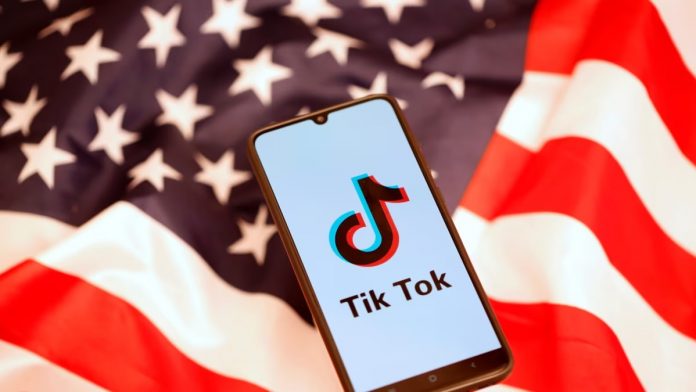
TikTok is facing a surge in app deletions in the United States following its announcement that its U.S. operations will be run under a new joint venture, a development that appears to have unsettled a segment of its user base even as overall engagement remains largely intact.

According to market intelligence firm Sensor Tower, the daily average of U.S. users deleting TikTok has jumped by nearly 150% over the past five days compared with the average seen over the previous three months. The spike followed TikTok’s disclosure last Thursday that it had created a joint venture designed to keep the video-sharing platform operating in the U.S. under new American leadership, with Adam Presser, previously TikTok’s head of operations, named as chief executive of the entity.

The announcement, meant to signal stability amid long-running scrutiny from Washington, instead triggered a wave of skepticism among users, particularly creators who rely on the platform for reach and income. Many were prompted the same day to agree to an updated privacy policy, which quickly became a flashpoint on social media.

Posts circulating on platforms such as Threads and X highlighted sections of the policy describing categories of data TikTok may collect, including sensitive information such as racial or ethnic origin, sexual life or sexual orientation, transgender or nonbinary status, citizenship or immigration status, and financial information. While those provisions sparked alarm, archived versions of TikTok’s privacy policy show that the same language was already present as far back as August 2024, suggesting the concerns were driven more by timing and mistrust than by any substantive policy change.

Even so, the combination of the joint venture announcement and renewed attention on data practices appears to have weighed heavily on user sentiment.

“If I can delete my biggest platform because their terms of agreement and censorship have gotten out of control, so can you,” creator Dre Ronayne wrote on Threads after deleting her TikTok account on Sunday.

Ronayne said she had nearly 400,000 followers on the app before leaving, underscoring the symbolic impact of high-profile departures even if they do not immediately dent overall usage.

Compounding the unease, some creators reported technical problems in the days following the announcement. Users complained of outages, failed uploads, and disruptions that prevented videos from posting. Nadya Okamoto, a TikTok creator with more than 4 million followers, told CNBC that the company has not clearly communicated what the new joint venture means for creators, leaving many in the dark.

“That’s why there is so much paranoia, because we’re all kind of looking at this platform and we just don’t know what’s happening,” Okamoto said.

She added that she was unable to upload videos for roughly 24 hours and has continued posting content on rival platforms such as Instagram and Google-owned YouTube as a hedge against further disruption.

Online, speculation has swirled over whether the service issues, policy changes, and joint venture rollout are connected.

“For everything to be happening at once, it is very scary,” Okamoto said, echoing a broader concern among creators that moderation or censorship dynamics could shift under the new structure.

TikTok has sought to tamp down those fears. An X account associated with the joint venture said on Monday that the service disruptions were caused by a power outage at a U.S. data center.

“We’re working with our data center partner to stabilize our service. We’re sorry for this disruption and hope to resolve it soon,” the account said.

Despite the surge in uninstalls, Sensor Tower data indicates that TikTok’s active user levels in the U.S. have remained relatively flat compared with the previous week, suggesting that while a vocal subset of users is leaving, the platform’s core audience has not yet followed suit. That dynamic points to a growing gap between sentiment and behavior: distrust and frustration are rising, but not at a scale that has materially dented daily usage.

Rival platforms, however, are already benefiting from the moment. Sensor Tower data shows that U.S. downloads of UpScrolled increased more than tenfold week over week, while Skylight Social surged 919% and Chinese-owned Rednote climbed 53%. The gains, though from relatively small bases, highlight how periods of uncertainty around TikTok can quickly redirect attention toward alternative social apps.

The episode underscores the fragile trust TikTok continues to navigate in the U.S., where concerns about data governance, transparency, and political oversight have lingered for years. While the joint venture was designed to address regulatory pressure and reassure policymakers, the immediate user response suggests that clarity for regulators does not automatically translate into confidence for creators and everyday users.

TikTok’s chance to stabilize sentiment will likely depend less on structural changes at the corporate level and more on how clearly and credibly it communicates with the millions of users.

UTribe Announces Silver-Backed Token Launch While Telling the Gold Story at Davos

0

Davos, Switzerland — January 2026 — Ubuntu Tribe announced the launch of its silver-backed token at the World Economic Forum’s 56th Annual Meeting. CEO Mamadou Kwidjim Toure, speaking at the Mindful Leaders panel, positioned the new asset as a natural extension of the gold story he presented on stage.

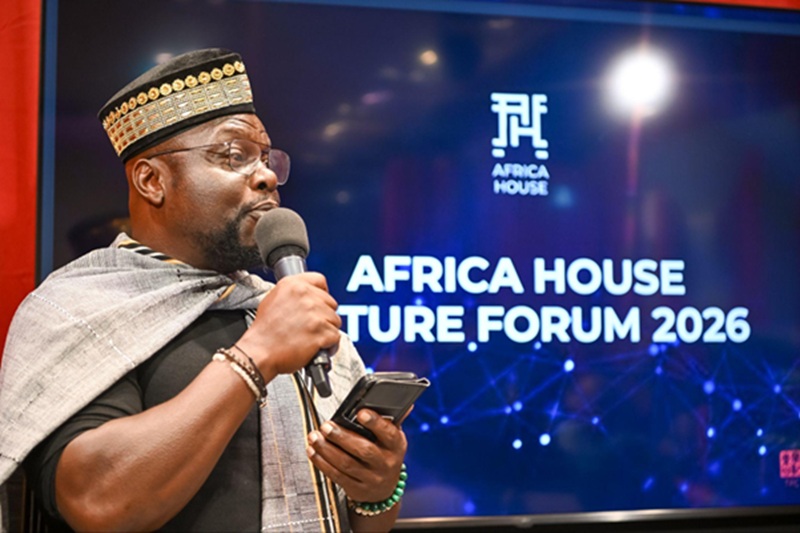
Toure was invited to join the Unicorn for Good panel at Mindful Leaders House on the Promenade. He made the announcement in front of African and international business and political leaders. Africa House, which Toure co-founded, recorded over 1,000 registered attendees for its programming alongside the WEF.

At Africa House, Toure led the session “Trading in Data: Compute, AI & the Gold Industry of the Future” and joined the “Roadmap to Wakanda” panel, a discussion on how Africa can leap ahead through AI, blockchain, and the IoT.

The launch comes as precious metals reach new highs:

  • Gold: Surpassed the historic $5,000 mark | +72% growth last year
  • Silver: Doubled in value to $100 | +170% increase over the same period

“Central bank gold reserves now surpass USD reserves,” Toure said. “The world is shifting toward commodity-backed stability, and we want to make sure everyday people can participate in that shift.”

Ubuntu Tribe’s gold token, $GIFT (Gold International Fungible Token), represents one milligram of gold backed one-to-one by physical reserves. The new silver token follows the same model. Together, the two assets democratize access to wealth-preserving metals, letting anyone, anywhere invest for less than one dollar.

The dual-token structure serves different investment profiles. Gold offers long-term, stable growth for conservative investors seeking predictable value appreciation. Silver carries higher volatility but offers faster, potentially higher short-term returns, positioned as a performance accelerator within a diversified digital metals portfolio.

Industrial growth in electric vehicles, batteries, solar infrastructure, and other high-growth technology sectors is driving silver demand. Toure pointed to these sectors as key catalysts for the metal’s medium-term price trajectory.

“Africa and Latin America are major exporters of gold and silver, yet historically the least rewarded by the global value chain,” Toure said. “Tokenization restores some of that balance. It lets citizens worldwide invest in these metals at fractional prices.”

Toure was recently featured in the official World Economic Forum January 2026 report published in African Business magazine. In the interview, he made the case that Africa is not poor but illiquid, and that Ubuntu Tribe is building the infrastructure to unlock the continent’s untapped wealth.

“In 2026, we are adding between $1bn and $1.2bn worth of gold into the system to match growing demand,” Toure said. “Our game is not just to make people escape the poverty trap. It’s to create a generation of well-prepared citizens who can navigate the risks and opportunities of democratized investment.”

Since its 2023 launch, $GIFT has crossed $100 million in trading volume. Tens of thousands of customers use the platform, and the wallet has been downloaded over 10,000 times. Ubuntu Tribe is fully regulated in Europe and aligned with MiCA regulations. The company is working toward approvals in Kenya and the Gulf Cooperation Council.

Toure spent two decades in senior finance roles at KPMG, BNP Paribas, the International Finance Corporation, and General Electric before founding Ubuntu Tribe. He was named one of Forbes’s Top 10 Most Influential Men in Africa and is a World Economic Forum Young Global Leader.

About Ubuntu Tribe

Ubuntu Tribe is a Web3 fintech company pioneering the tokenization of real-world assets to expand global financial inclusion. Rooted in the Ubuntu philosophy — “I am because we are” — the company makes access to wealth-preserving assets available to anyone, anywhere.

Ubuntu Tribe’s flagship product, GIFT (Gold International Fungible Token), is a digital certificate 100% backed by physical gold stored in regulated, independently audited vaults worldwide. By leveraging blockchain, AI, and a transparent Track-and-Trace infrastructure, Ubuntu Tribe democratizes gold ownership, enabling individuals and institutions to save, transact, and build wealth starting from as little as 1 milligram.

Beyond consumer access, Ubuntu Tribe delivers tokenization-as-a-service for corporations and governments, supporting the transition to ethical, compliant, asset-backed digital economies. The company champions responsible sourcing through mercury-free gold production and reinvests 10% of GIFT transaction fees into community-driven social impact initiatives.