DD
MM
YYYY

PAGES

DD
MM
YYYY

spot_img

PAGES

Home Blog Page 3

Anthropic Expands Cowork With Plug-Ins, Deepening Its Push to Make Claude an Enterprise AI Operating Layer

0

Anthropic is accelerating its push into the enterprise software market by expanding Cowork, its newly launched agentic AI product, with plug-ins designed to automate specialized tasks across business functions.

The move signals the company’s ambition to turn Claude into a configurable operating layer for corporate work rather than just a conversational assistant.

Earlier this month, Anthropic introduced Cowork as a research-preview product aimed at extending the capabilities of Claude Code beyond software developers to non-technical users. The latest update adds plug-ins, which allow companies to create narrowly focused, task-specific AI agents tailored to how work is actually done inside organizations.

The plug-ins are designed to automate repeatable, domain-specific workflows across departments such as marketing, legal, sales, finance, customer support, and data analysis. In practice, that could mean drafting marketing copy that adheres to internal brand guidelines, scanning contracts for risk exposure, preparing customer responses that align with company policy, or pulling insights from internal dashboards and CRM systems.

Anthropic describes plug-ins as a way for enterprises to explicitly define how Claude should behave inside their organization — specifying preferred workflows, approved data sources, internal tools to integrate with, and guardrails for critical processes. The intent is to move beyond generic AI outputs toward consistent, policy-aware execution that mirrors how teams already operate.

Matt Piccolella, a member of Anthropic’s product team, said the company expects enterprise users to build bespoke plug-ins for their own use cases rather than rely solely on prebuilt templates. While Anthropic open-sourced 11 of its own internal plug-ins to demonstrate what’s possible, Piccolella emphasized that custom plug-ins are meant to be easy to create, edit, and share, even for users without deep technical backgrounds.

The expansion of plug-ins into Cowork builds on functionality that has existed inside Claude Code, Anthropic’s AI coding assistant, for some time. The strategic shift is not about inventing new tooling, but about democratizing access to agentic automation. By embedding plug-ins into a more user-friendly, interface-driven environment, Anthropic is attempting to bring the same automation benefits to employees who do not write code but still manage complex, repetitive workflows.

“Really, what we’re doing with this launch is just bringing them to Cowork and giving them that kind of user-friendly, UI-centric flavor that will allow the maximum number of people to use them,” Piccolella said.

Internally, Anthropic has already seen traction in departments such as sales and data analysis. Piccolella said sales teams, in particular, have benefited from plug-ins that connect employees more directly to customer feedback, internal notes, and performance data, helping sales-adjacent staff operate with better context and less friction. That mirrors a broader enterprise trend in which AI tools are increasingly expected to unify fragmented data sources rather than simply generate text.

Anthropic says the more plug-ins an organization uses, the more Claude learns about that company’s workflows, enabling better optimization over time. That approach positions Cowork not just as a productivity tool, but as a system that incrementally absorbs institutional knowledge — a concept that appeals to large enterprises but also raises questions around governance, access control, and data management.

For now, plug-ins are stored locally on a user’s machine, limiting their scalability across large teams. Anthropic has acknowledged this constraint and says organization-wide sharing tools are in development, a step that will be critical for enterprises seeking standardized processes, auditability, and consistent outputs across departments.

Cowork remains in research preview, and Anthropic has not disclosed a timeline for a broader commercial launch. In the interim, plug-ins will be available to all paying Claude customers, allowing the company to observe real-world usage patterns and refine the product before a wider rollout.

The move comes as competition intensifies among AI developers to capture enterprise spending. As large language models converge in raw performance, differentiation is increasingly shifting toward tooling, workflow integration, and ease of deployment. Rather than positioning Claude purely as a chatbot or coding assistant, Anthropic is framing it as a flexible system of AI agents that can be molded to an organization’s specific needs.

That strategy also aligns with Anthropic’s broader positioning around control and safety. By encouraging companies to explicitly define how AI should act within their workflows — rather than leaving behavior implicit — plug-ins offer a way to operationalize guardrails while still delivering automation at scale.

Cowork and its new plug-in framework now mark a clear evolution in Anthropic’s enterprise strategy. The company is no longer just selling access to a powerful model; it is building the scaffolding for AI to become embedded in day-to-day business operations.
Trump Names Kevin Warsh as Next Fed Chair, Raising Stakes for U.S. Rate Policy and Central Bank Independence

0

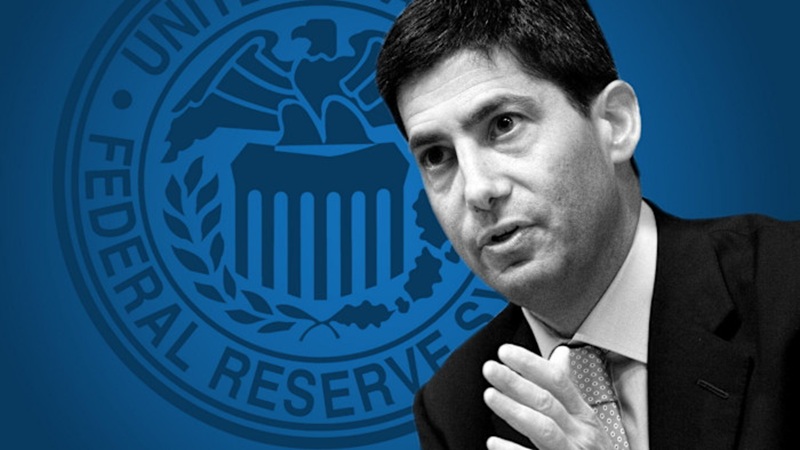
President Donald Trump has nominated Kevin Warsh to succeed Jerome Powell as chair of the Federal Reserve, a move that signals a possible shift in U.S. monetary policy as the administration presses for lower interest rates to support growth and ease borrowing costs.

The decision is already reshaping expectations around U.S. monetary policy, even before the Senate weighs in. The pick comes at a delicate moment for the economy, with inflation easing from its peak but borrowing costs still high, financial markets jittery over growth prospects, and political pressure mounting on the central bank to deliver rate cuts.

Trump framed the nomination as a vote of confidence in Warsh’s judgment and leadership, writing on Truth Social that he had “no doubt” Warsh would be among the greatest Fed chairs in history. The endorsement reflects more than personal admiration. It underscores the president’s broader economic agenda, which has increasingly focused on pushing interest rates lower to stimulate investment, support asset prices, and ease the financial strain on households and businesses.

If confirmed, Warsh will replace Jerome Powell in May, marking the first leadership change at the Fed during Trump’s second term. That transition alone carries weight. Powell’s tenure has been defined by extraordinary events, from the pandemic-era collapse and recovery to the sharpest inflation surge in four decades and the aggressive rate-hiking cycle that followed. Warsh would inherit a Fed that has largely completed its fight against inflation but remains cautious about declaring victory too early.

Warsh is not an unknown quantity. He served as a Fed governor from 2006 to 2011, a period that included the global financial crisis, giving him firsthand experience with market stress and emergency policy responses. Since leaving the Fed, he has built a career in finance and policy circles, maintaining close ties to Wall Street while positioning himself as a critic of what he sees as central bank overreach and credibility gaps.

That record complicates the assumption that Warsh will simply rubber-stamp rapid rate cuts. While he has recently criticized the Fed for being too slow to ease policy, he was widely viewed as hawkish during his earlier tenure, particularly on inflation and the risks of prolonged monetary accommodation. Brett House of Columbia Business School noted that, based on past statements and actions, Warsh was the most hawkish of the final candidates considered for the role. That history suggests his support for lower rates may be conditional rather than unconditional.

Trump’s economic message has been consistent: high interest rates, in his view, are choking off growth and leaving the United States at a disadvantage compared with economies where borrowing is cheaper. The Fed’s decision this week to hold rates steady after a two-day policy meeting only reinforced that tension. For consumers facing elevated credit card balances and for businesses weighing investment decisions, the lack of near-term relief has become a political as well as an economic issue.

Market reaction to Warsh’s nomination has reflected that backdrop. Investors appear to be interpreting the move less as a radical break and more as a signal that the White House expects the Fed to pivot more decisively toward easing later in the year. David Bahnsen of The Bahnsen Group captured that sentiment, saying that any plausible Fed chair pick at this stage would likely oversee rate cuts in the short term. In that sense, Warsh’s nomination may formalize expectations already embedded in markets rather than overturn them.

The deeper question is how Warsh would balance near-term growth concerns against longer-term inflation risks.

Mark Higgins of Index Fund Advisors warned that history offers little comfort when political pressure pushes central banks to prioritize short-term gains. He pointed to the 1970s, when then-President Richard Nixon leaned on Fed Chair Arthur Burns to keep rates low ahead of the 1972 election. The immediate boost was followed by years of entrenched inflation, culminating in a peak near 15% in 1980 and forcing the Fed, under new leadership, to impose punishing rate hikes in the early 1980s to restore price stability.

That episode remains central to debates about Fed independence. While the president nominates Fed governors and the chair, the institution’s credibility rests on its ability to resist short-term political demands in favor of long-term economic stability. Warsh’s critics will likely scrutinize whether his views align too closely with Trump’s rate agenda, while supporters will argue that his experience equips him to navigate those pressures without repeating past mistakes.

The stakes extend beyond interest rates. The Fed’s benchmark influences not only consumer borrowing but also asset valuations, capital flows, and the federal government’s own financing costs. With the U.S. carrying a large and growing debt burden, lower rates would ease pressure on the Treasury, a reality not lost on policymakers. At the same time, cutting too aggressively could reignite inflation or inflate asset bubbles, risks that Warsh has previously highlighted in other contexts.

As the nomination heads to the Senate, confirmation hearings are likely to focus on these tensions. Lawmakers will probe Warsh’s views on inflation, financial stability, regulatory policy, and, crucially, the independence of the central bank. His answers will shape perceptions of whether his leadership would mark continuity with Powell’s cautious approach or a more explicit alignment with the White House’s economic priorities.

While a leadership change at the Fed raises the prospect of a policy pivot, history suggests that the consequences of getting that balance wrong can be severe. Warsh’s challenge, if confirmed, will be to manage the transition from a restrictive policy stance without undermining the hard-won progress against inflation.

Best Presale Crypto to Buy Spotlight: ZKP Crypto’s 450-Day Presale Auction Booms in January 2026

0

The year 2026 has introduced a clear change in crypto market behavior. Bitcoin is trading near $88,500 after holding the key $87,000 support level that many traders were watching closely. Ethereum has moved higher to $2,930, slightly outperforming Bitcoin as buyers stepped in following yesterday’s pullback. Market sentiment has shifted away from extreme fear toward cautious observation as investors wait for the Federal Reserve decision.

The most important development today is political rather than technical. Reports point to progress within the US Senate Agriculture Committee, where Democrats have shown openness to talks around broader crypto regulation. A bipartisan framework could deliver the clarity institutional investors have been seeking for years. This update likely helped stop further losses in Bitcoin earlier today and may strongly influence the current presale environment.

For investors searching for the best presale crypto to buy during this period of change, regulatory direction is a key factor. Projects that align with compliance trends gain an edge as large investors prepare to increase exposure. Among active options, Zero Knowledge Proof is increasingly viewed as the best presale crypto to buy for those aiming to benefit from this regulatory shift.

How Regulation Signals Are Shaping Presale Choices

The Senate progress goes beyond simple political headlines. It suggests that the structure institutions need to invest with confidence may finally be forming. Family offices have already begun raising crypto allocations for 2026, bringing long-term capital that is designed to stay invested rather than trade short-term swings.

When identifying the best presale crypto to buy, this institutional lens is important. Projects built on full opacity face regulatory challenges. In contrast, platforms offering verifiable privacy, where compliance and confidentiality work together, match the direction policymakers appear to favor.

Recent price moves in privacy-focused assets highlight this trend. Monero fell sharply amid regulatory concern but later stabilized around $469, gaining 1.7% today. The initial market reaction proved excessive, and investors are now separating different privacy models. Fully opaque systems remain under pressure, while verifiable privacy is gaining support.

This contrast places Zero Knowledge Proof in a strong position among presale auction projects. The network applies zero-knowledge cryptography to confirm computation without exposing raw data. Outcomes can be verified while sensitive inputs stay private. This design meets both privacy needs and regulatory expectations.

Why ZKP Is Viewed as the Best Presale Crypto to Buy

Zero Knowledge Proof stands apart through execution instead of future promises. More than $100 million of self-funded capital was committed to infrastructure before public access began. Its four-layer blockchain structure is finished and running. The testnet operates alongside the presale auction.

This strategy removes much of the delivery risk seen in typical presale offerings. Participants are not backing an idea in hopes it becomes functional later. They are assessing a network that already works.

Funding has been clearly allocated across key areas: $20 million toward core blockchain development, $17 million for Proof Pod hardware production and global distribution, and $5 million for strategic domain purchases. This level of early investment is uncommon among presale auction projects and reinforces why analysts consider ZKP a strong contender for the best presale crypto to buy.

How ZKP’s Token Design Aims for Equal Access

ZKP distributes its tokens through a 450-day Initial Coin Auction spread across 17 stages. Stage 2 is now active, with a daily supply limit of 190 million tokens. The process is simple and transparent, as everyone joining within the same 24-hour period receives the same effective price based on total daily demand.

There are no private sales offering special pricing to early insiders. No venture capital allocations reduce access for public buyers. Any tokens left undistributed are permanently burned instead of being carried forward, which steadily tightens supply as each stage moves forward.

The model also features streak rewards that encourage regular participation. Buying on back-to-back days increases bonuses from 5% on the first day to 10% by the fifth day, paid in extra ZKP tokens. This approach favors long-term participants rather than short-term buyers.

For investors weighing the best presale crypto to buy, these rules offer a clear contrast to common presale setups where early insiders often secure most of the gains.


Where Privacy Meets Artificial Intelligence

ZKP’s long-term vision focuses on privacy-protected computation for artificial intelligence use cases. As AI expands into regulated fields such as finance, healthcare, and business analytics, the need to handle sensitive data without exposure becomes critical.

Most existing systems require choosing between privacy and proof. Zero-knowledge cryptography removes that choice. Computations can be verified as accurate without revealing the data being processed. This capability places ZKP at the meeting point of two fast-growing trends, rising AI adoption and stricter data protection standards.

The current regulatory climate further supports this position. As global rules become tighter, platforms that provide privacy while remaining compliant gain a clear advantage. ZKP’s design directly targets these conditions.

Market Events That Could Shape Near-Term Interest

The coming 24 hours are expected to bring increased volatility as the Federal Reserve announces its rate decision. Bitcoin needs to stay above $87,000 to avoid a drop toward $85,000. A move past $90,000 would signal a shift away from the current bearish setup.

Beyond short-term price moves, recent progress in Senate discussions on crypto regulation could speed up institutional involvement if talks lead to actual laws. Projects aligned with compliance, especially those offering enterprise-ready privacy solutions, may benefit the most.

ZKP’s Stage 2 is already underway, with token availability lower than during Stage 1. The streak reward system encourages early action, while regulatory alignment places the project in a favorable position once rules become clearer.

Closing Perspective

Markets have calmed following yesterday’s sharp fear-driven reaction. Regulatory signals are becoming more constructive. Institutional investors are quietly preparing for higher crypto exposure.

In this setting, ZKP combines finished infrastructure, open distribution rules, and a role at the crossroads of privacy, AI, and regulation. For those looking for the best presale crypto to buy during this period of transition, ZKP offers a case that deserves close attention.

The opportunity to position early remains before broader awareness builds and before regulatory clarity draws larger institutional capital into compliant crypto projects.

Website: https://zkp.com/

Buy: https://buy.zkp.com

Telegram: https://t.me/ZKPofficial

X: https://x.com/ZKPofficial

Best Crypto Presale 2026: 4 Presales to Follow Ahead of Listings

0

The crypto presale space continues to draw investors who want early access before new tokens reach major exchanges. Identifying the best crypto presale 2026 involves carefully reviewing token economics, technical foundations, and launch timing.

This year introduces several strong presale candidates across multiple sectors, including infrastructure, social platforms, and artificial intelligence. Knowing how to separate real value from pure hype is essential for improving return potential. Current market conditions have opened distinctive opportunities for investors willing to look beyond surface-level promotions.

Below is a detailed overview of leading crypto presales worth evaluating before they move into open market trading.

1. BlockDAG: A $0.0005 Flash Sale Offering a 10,000% Price Gap

BlockDAG has introduced what analysts describe as one of the largest pricing gaps seen in crypto presales during this cycle. The project is offering its final 1.25 billion tokens at a flash rate of $0.0005, while the confirmed exchange listing price is set at $0.05. This creates a projected 100x return for participants entering during this window, which will be closed in a few hours.

The calculation is simple. A $100 purchase at the flash sale price delivers 200,000 BDAG tokens. Once listed at the confirmed $0.05 level, that same holding would be worth $10,000. Opportunities like this are uncommon in presales, where early access usually provides 2x to 5x gains before exchange debut.

This pricing irregularity exists because BlockDAG is finalizing its presale allocation before shifting fully to public markets. Instead of extending additional rounds, the team introduced a last-stage entry point for investors who missed earlier phases. The flash sale functions as a supply closeout and a final high-upside opportunity.

From a risk-to-reward standpoint, this phase offers the strongest multiplier across BlockDAG’s entire roadmap. Earlier presale rounds delivered respectable gains, but none approached the current 10,000% spread. The few hours remaining in the timeframe add urgency to an already compelling numerical setup.

For those monitoring the best crypto presale 2026 landscape, this moment provides access at the lowest possible price with a confirmed exchange target. BlockDAG has consistently communicated its listing plans and partnerships, lowering uncertainty typically associated with presale exits.

2. LivLive: Combining Social Commerce With Tokenized Incentives

LivLive presents itself as a blockchain-enabled social commerce network that rewards users for content creation and audience interaction. Its presale centers on bringing crypto-based incentives into live streaming and online shopping, with a strong focus on the creator economy.

Users can earn tokens through engagement activity, product transactions, and original content. This structure attracts influencers and small brands seeking new monetization tools through blockchain adoption. The presale includes tiered pricing, where early buyers receive higher bonuses that gradually decrease as participation increases.

LivLive’s role in the best crypto presale 2026 discussion emphasizes real usage rather than short-term speculation. The team has secured collaborations with several Asian e-commerce companies, offering a practical foundation for user growth after launch.

3. Nexchain: Enterprise-Focused Layer-2 Blockchain Scaling

Nexchain is building a layer-2 blockchain solution designed for enterprise use cases, especially within logistics and supply chain management. The presale is aimed at institutions and businesses that require efficient blockchain systems with lower transaction fees.

Its technical design prioritizes high throughput and fast settlement, features essential for corporate operations. Nexchain’s presale model includes structured vesting periods that encourage long-term participation instead of immediate selling after exchange listing.

For investors studying the best crypto presales 2026, Nexchain fits the infrastructure category by supporting future blockchain adoption. The presale also offers allocation-based discounts for larger commitments.

4. Ozak AI: Distributed Artificial Intelligence Infrastructure

Ozak AI is developing a decentralized platform for training and deploying machine learning models. Presale funding supports GPU-sharing technology that allows contributors to provide computing power in return for tokens.

The platform serves AI developers and researchers who need scalable processing resources without depending on centralized cloud services. Ozak’s presale includes staking features that grant early participants governance influence and a share of network-generated fees.

This project attracts investors exploring AI and blockchain convergence as part of the best crypto presale 2026 opportunities. Its roadmap highlights partnerships with universities and research institutions, strengthening confidence in its delivery schedule.

Final Say

Selecting the best crypto presale 2026 requires balancing numerical upside with genuine project fundamentals. BlockDAG’s flash sale stands out due to its 10,000% pricing difference and confirmed listing level, offering the strongest risk-reward profile among current options. LivLive, Nexchain, and Ozak AI each target specific industries with utility-driven models that extend beyond price speculation.

Investors should carefully assess tokenomics, team experience, and development timelines before entering any presale. These projects represent diverse approaches across social commerce, blockchain infrastructure, and artificial intelligence, allowing investors to align choices with their broader crypto presale strategies.

Wall Street Stumbles as Earnings Expose Fault Lines in AI Trade

0

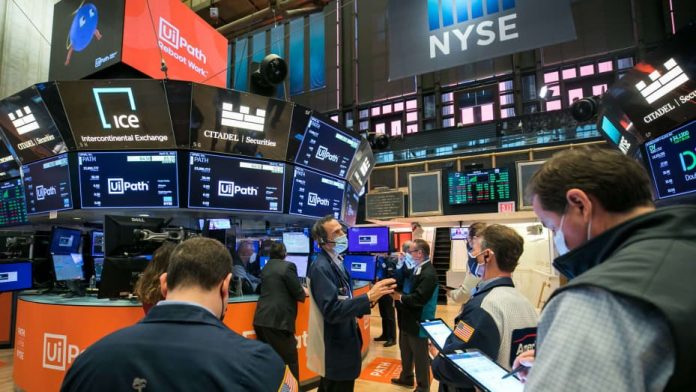
U.S. stocks ended Thursday on an uneasy footing as disappointing earnings from key technology companies sharpened investor doubts over whether the tens of billions of dollars being poured into artificial intelligence will deliver returns quickly enough to justify today’s valuations.

While major indexes clawed back some of their intraday losses, the session laid bare a growing fault line in the market: enthusiasm for AI remains intact, but tolerance for near-term underperformance is thinning fast.

The S&P 500 slipped 0.13% to 6,969.01, retreating from earlier, steeper losses. The Nasdaq Composite fell 0.72% to 23,685.12, dragged lower by a broad selloff in software and cloud stocks. The Dow Jones Industrial Average, more insulated from technology volatility, eked out a 0.11% gain to 49,071.56.

Microsoft Becomes the Epicenter

At the center of the market’s anxiety was Microsoft, whose shares plunged 10%, wiping out hundreds of billions of dollars in market value in a single session. The selloff followed quarterly results that showed cloud revenue growth slowing more than investors had anticipated, reigniting questions about how long it will take for Microsoft’s massive AI investments—particularly those tied to OpenAI—to materially boost profits.

Microsoft’s earnings landed at a sensitive moment. The company is widely seen as the bellwether for enterprise AI monetization, given its deep integration of generative AI into Azure, Office, and developer tools. Any sign of hesitation in cloud growth, therefore, reverberates far beyond the company itself.

“Microsoft disappointed and there are some genuine concerns that AI investments will eat the software companies’ lunches,” said John Praveen, managing director and co-CIO at Paleo Leon in Princeton, New Jersey.

The reaction underscored a broader recalibration underway in markets. For much of the past two years, investors rewarded companies simply for committing capital to AI. Now, those same companies are being pressed to demonstrate how quickly spending can be translated into revenue, margins, and cash flow.

Microsoft’s stumble triggered a cascade across the software industry. SAP’s U.S.-listed shares sank 15% after the company issued a cautious cloud outlook, while ServiceNow slid 9.9%, amplifying fears that enterprise customers may slow spending amid economic and political uncertainty.

Other major software names were swept into the selloff. Salesforce fell 6%, Oracle dropped 2.2%, Adobe declined 2.6%, and cloud security firm Datadog tumbled 8.8%.

For some companies, the worry goes beyond cyclical spending slowdowns. Investors are increasingly debating whether AI could eventually erode parts of the software business model itself.

“For some software companies, such as ServiceNow and Salesforce, the fear is that AI is going to disrupt their business a little bit,” said Jay Hatfield, CEO and CIO of Infrastructure Capital Advisors in New York. “If AI can be used to supplant some of their services, that’s a structural concern. Whether that happens or not, those stocks are getting hit pretty hard.”

Technology was the worst-performing sector in the S&P 500, down 1.9%, reflecting how concentrated the day’s losses were.

The selloff was compounded by a backdrop of broader uncertainty. Investors are navigating unresolved questions about U.S. monetary policy, including who will eventually lead the Federal Reserve and how aggressive future interest-rate cuts might be. Political risks also linger, from tensions surrounding Washington’s stance toward Iran and Greenland to the renewed threat of a U.S. government shutdown.

Against that backdrop, earnings disappointments are proving harder for markets to shrug off.

“Investors are trying to reduce exposure and play it safe,” Praveen said. “There are all sorts of storm clouds in the background.”

Pockets of Resilience

Not all of Wall Street was under pressure. Meta Platforms surged 10.4%, lifting the communications services sector, which rose 2.9% to lead the market. Investors welcomed Meta’s stronger-than-expected revenue outlook, even as the company disclosed plans for a 73% jump in capital expenditures this year, largely tied to AI infrastructure.

The reaction highlighted a subtle but important distinction emerging in markets: investors appear more forgiving of heavy AI spending when advertising demand is strong, and cash generation remains robust.

Apple traded choppily after the bell but held onto modest gains after beating quarterly revenue estimates. CEO Tim Cook told Reuters that demand for the company’s latest iPhone was “staggering,” pointing to a sharp rebound in China that helped ease concerns about the company’s growth trajectory.

Among other megacaps, Tesla fell 3.5% after outlining plans to more than double capital expenditures to a record level, reinforcing investor caution toward companies committing large sums of capital without near-term payoff visibility.

Outside the tech sector, earnings painted a more constructive picture. IBM shares rose 5% after the company beat fourth-quarter earnings estimates, offering reassurance that some legacy technology firms are navigating the AI transition more smoothly.

Industrial and consumer-facing names also drew buying interest. Caterpillar climbed 3.4% after reporting higher profit, while Mastercard jumped 4.3% after beating Wall Street expectations and announcing plans to cut about 4% of its global workforce as it reallocates investment.

Defense contractor Lockheed Martin advanced 4% after forecasting 2026 earnings above analyst estimates. Southwest Airlines surged 18.7%, the top percentage gainer in the S&P 500, after projecting stronger-than-expected annual profit.

The energy sector gained 1%, supported by a rally in oil prices. Brent crude rose to a near six-month high on rising concerns about a potential U.S. military confrontation with Iran.

Market Internals Signal Fragility

Market breadth reflected the session’s mixed tone. Advancers narrowly outnumbered decliners on the NYSE, but declining stocks led on the Nasdaq, underscoring persistent pressure on growth-oriented names.

Trading volume was elevated, with 23.36 billion shares changing hands across U.S. exchanges, well above the recent 20-day average—often a sign of heightened conviction and repositioning by investors.

Rare-earth and critical mineral stocks slid after reports that President Donald Trump’s administration may step back from price floor mechanisms for strategic materials, weighing on companies such as MP Materials, USA Rare Earth, and Critical Metals.

Put together, Thursday’s market action reinforced a shift that has been quietly building for months. Artificial intelligence remains a central investment theme, but Wall Street is becoming more discriminating. Companies are no longer being rewarded simply for ambition or scale; investors want clearer evidence that AI spending can generate sustainable profits without overwhelming balance sheets.

But analysts believe the AI trade is not collapsing—but it is maturing. And as earnings season progresses, markets are expected to remain volatile as investors reassess which companies can truly turn the promise of AI into durable financial performance.