DD
MM
YYYY

PAGES

DD
MM
YYYY

spot_img

PAGES

Home Blog Page 3

When Knocking Fails, Push: The Strategy of Entering Closed Doors

0

The door looks closed. Everyone can see it. But over time, I have learned that many closed doors are not locked. They are simply unattended. No one is inside waiting to respond to a knock. In such moments, knocking endlessly is an exercise in frustration. What is required is a push.

Life has many of these doors. Careers. Markets. Opportunities. We stand outside, knocking politely, hoping someone powerful will open. Often, nothing happens, not because the answer is “no,” but because no one is listening.

There is a difference between a knock and a push.

“Sir, may I review this work for you?” is a knock. The answer may be silence or a polite dismissal.

“Sir, this is my review of the work” is a push. Suddenly, you are inside the room.

A push demonstrates value. It collapses distance. It removes the burden of decision from the gatekeeper. Markets reward action, not permission-seeking. Power rarely opens doors; it responds to utility.

Here is the uncomfortable truth: the easiest way to get the attention of the powerful is not to ask for help, but to help them win. When you contribute to the growth of an empire, you earn a tent within it. The rich do not open doors for people, they open doors for leverage. Knocking is emotional. Pushing is strategic.

Simply, the best way to get help from the rich is finding a way to help them make more money! And that means you PUSH: “Chairman, with my understanding of this industry and technology vectors, here is a 5-page outlook for CoyA”. He or she reads that, and will then connect you to the MD or CEO or Director. Right there, you are IN.

China Grants Conditional Nvidia H200 Chip Approvals as U.S.-China AI Chip Race Intensifies

0

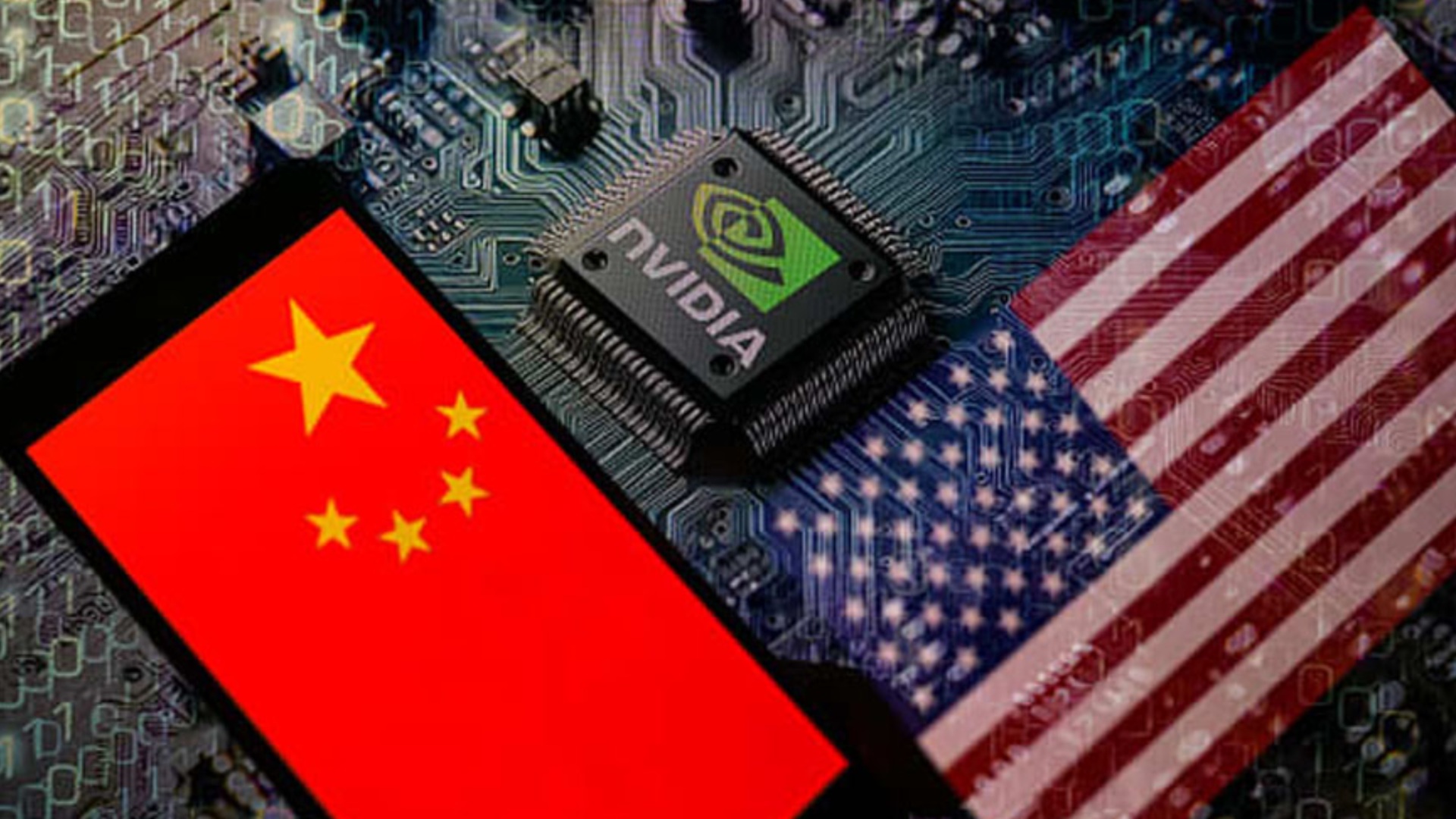
China has authorized three of its largest technology firms—ByteDance, Alibaba, and Tencent—to purchase Nvidia’s high-performance H200 AI chips, signaling a careful balancing act between meeting domestic AI demand and promoting homegrown semiconductor development.

According to sources familiar with the matter, who spoke to Reuters, the approvals cover more than 400,000 units, though the licenses are conditional, and exact terms are still being finalized. The news follows Nvidia CEO Jensen Huang’s recent visit to China, during which he engaged with regulators and company executives.

While the U.S. had already cleared Nvidia to export the H200 to China, Beijing’s approval remained the key barrier. Chinese regulators appear intent on limiting the amount of foreign technology entering the country without undermining domestic innovation, highlighting the strategic importance of the H200 in global AI development.

The approvals come with significant caveats. Chinese firms have yet to convert them into purchase orders, and sources said the licenses may include requirements to purchase domestic chips alongside imported H200 units. Previous reports suggested Beijing could enforce quotas to ensure foreign semiconductors complement, rather than replace, domestic production.

This is a clear signal that China intends to nurture its own semiconductor ecosystem even as it accelerates AI capabilities among its top internet companies.

Other firms remain in a queue for future approvals, suggesting a phased approach designed to prioritize the largest players while maintaining regulatory oversight. Chinese customs recently blocked H200 chips from entering the country pending approval, emphasizing the government’s careful control of the supply chain. Meanwhile, domestic companies have collectively placed orders exceeding two million H200 chips, far beyond Nvidia’s inventory, underscoring the intense demand for high-performance AI hardware.

The H200 represents a major leap in AI computing power. Delivering roughly six times the performance of Nvidia’s H20 chip, it allows firms to train and deploy large-scale generative AI models, process massive datasets, and run AI services at speeds previously unattainable.

While Chinese firms such as Huawei now produce chips that can rival the H20, they remain significantly behind the H200 in raw computational throughput. This gap has made controlled access to Nvidia chips both a practical necessity and a policy tool for Beijing.

From a strategic standpoint, the H200 approvals are a rare instance where U.S. and Chinese policy goals temporarily align. U.S. export controls were designed to restrict China’s access to leading-edge AI hardware, but the conditional approvals indicate a recognition by Beijing that top domestic AI players require state-of-the-art chips to remain competitive internationally.

Analysts suggest that selective imports for major companies will accelerate AI innovation while maintaining pressure on domestic semiconductor firms to close the technology gap.

China’s Domestic AI Chip Drive

Beijing’s cautious approach is part of a broader push to strengthen domestic semiconductor capabilities. Over the past decade, Chinese authorities have invested heavily in AI chip startups and state-owned ventures, seeking to reduce reliance on foreign suppliers. Even so, domestic chips remain behind in performance at the cutting edge of AI workloads, especially for large generative models and high-throughput inference tasks.

The approvals also incentivize domestic companies to accelerate innovation. Conditional purchases of foreign chips effectively create a hybrid ecosystem, where high-performance imported hardware supports immediate AI growth, while domestic chips are developed and deployed in parallel. Over time, this strategy could reduce China’s dependency on U.S.-made components, aligning with the country’s long-term industrial policy goals.

Implications for Global AI Competition

The Nvidia H200 approvals have significant ripple effects for the global AI and semiconductor landscape. China’s top firms, with access to these chips, can compete more effectively with U.S. rivals like OpenAI, Microsoft, and Google. At the same time, U.S. companies supplying cutting-edge hardware gain a lucrative market, albeit one constrained by Beijing’s regulatory conditions.

The approvals represent both an opportunity and a challenge for Nvidia. This is because Chinese demand for the H200 underscores the company’s dominant position in high-end AI chips. Also, the conditional nature of the approvals and potential bundling requirements introduces uncertainty in forecasting sales and supply chain management. With over two million units ordered by domestic firms, demand far exceeds supply, highlighting the tightness of the AI memory and compute market.

The approvals also underpin how semiconductor supply chains have become a central geopolitical issue. The U.S. aims to maintain technological leadership while limiting China’s access to top-tier chips, while China balances the need for competitiveness with the desire to grow its domestic industry. The result is a controlled, highly strategic flow of technology that could reshape AI development timelines, commercial competition, and cross-border technology cooperation.

The unfolding situation sets the stage for a new phase in the U.S.-China AI competition. Conditional imports of H200 chips enable immediate growth for top Chinese AI firms while reinforcing the government’s emphasis on domestic semiconductor development.

But China’s hybrid strategy—allowing conditional foreign imports while fostering domestic innovation—is likely to continue as both a safeguard and an accelerant for AI growth.

SK Hynix To Make $10 Billion AI Investment in U.S. as Memory Shortages and Trade Politics Converge

0

South Korea’s SK Hynix is deepening its commitment to artificial intelligence with a major strategic pivot toward the United States, announcing plans to establish a new U.S.-based company dedicated to AI solutions and to commit at least $10 billion to the effort.

The move underscores how central AI has become to the chipmaker’s growth strategy, while also reflecting the shifting geopolitical and trade pressures reshaping the global semiconductor industry.

The new entity, tentatively named “AI Company” or “AI Co.,” is designed to function as the nerve center for SK Group’s AI ambitions. According to the company, it will coordinate strategy across affiliates and accelerate the deployment of AI technologies in global markets, positioning SK Hynix not just as a component supplier, but as a broader solutions provider in the AI ecosystem.

SK Hynix’s growing influence in artificial intelligence is rooted in its dominance in high-bandwidth memory, or HBM, a specialized form of memory that has become essential for training and running large-scale AI models. HBM chips are tightly integrated with advanced processors, including Nvidia’s AI accelerators, and persistent shortages have turned them into one of the most strategically important bottlenecks in the AI supply chain.

That supply constraint has been financially transformative for SK Hynix. On the same day it announced the U.S. AI push, the company reported fourth-quarter results that exceeded market expectations, with profits lifted by tight memory supply and elevated prices. The imbalance between demand and production capacity has given leading memory suppliers unusual pricing power, reinforcing incentives to expand aggressively.

As part of the restructuring, SK Hynix said it will reorganize its California-based subsidiary Solidigm, an enterprise solid-state drive maker formed in 2021. Solidigm’s existing operations will be transferred into a newly established entity, Solidigm Inc., clearing the way for the creation of AI Co. as a distinct platform focused on higher-level AI solutions and strategic investments.

The planned $10 billion investment will not be deployed all at once. Instead, SK Hynix said funding will be provided on a capital-call basis, allowing flexibility as projects mature and opportunities emerge. Beyond internal development, AI Co. is expected to pursue strategic stakes in U.S. artificial intelligence companies, a move aimed at creating synergies across SK Group’s sprawling portfolio, which spans semiconductors, energy, telecommunications, and advanced materials.

The U.S. focus is not incidental, as Washington has made domestic semiconductor investment a central economic and national security priority, and President Donald Trump has repeatedly warned that foreign chipmakers could face tariffs if they fail to expand manufacturing and advanced packaging operations on U.S. soil. SK Hynix’s latest announcement fits squarely within that policy environment.

The company is already building a $3.87 billion advanced chip packaging and research facility in Indiana, a project unveiled in 2024. That site is expected to produce high-bandwidth memory for AI applications, with operations scheduled to begin in 2028. In parallel, SK Hynix has committed nearly $13 billion to an advanced packaging plant in South Korea, highlighting how the company is pursuing a dual-track strategy that strengthens capacity at home while embedding itself more deeply in the U.S. semiconductor ecosystem.

The timing also intersects with broader trade discussions between Washington and Seoul. President Trump has been engaged in tariff negotiations with South Korea in recent months, part of a wider effort to rebalance trade relationships. On Tuesday, he said the United States would “work something out” with South Korea after issuing fresh tariff threats, language that markets interpreted as a possible signal of de-escalation.

The convergence of AI-driven demand, memory shortages, and trade politics creates both opportunity and risk for SK Hynix. By anchoring a significant portion of its AI strategy in the United States, the company positions itself closer to its largest customers, including U.S. cloud and AI infrastructure giants, while also aligning with the industrial priorities of the Trump administration.

At the same time, the scale of the commitment reflects how fiercely contested the AI hardware race has become. With rivals such as Samsung Electronics and Micron Technology racing to expand HBM output and advanced packaging capacity, SK Hynix’s decision to establish a dedicated AI-focused U.S. company signals an ambition to move further up the value chain, from indispensable supplier to strategic partner in the AI era.

Waabi Raises $1bn, Teams Up With Uber to Take Autonomous AI From Trucking to Robotaxis

0

Autonomous vehicle startup Waabi has secured $1 billion in fresh capital and struck a landmark partnership with Uber, marking its first major push beyond self-driving trucks and into passenger robotaxis.

The move is expected to place the company at the center of the next phase of the global autonomy race.

The funding comprises an oversubscribed $750 million Series C round co-led by Khosla Ventures and G2 Venture Partners, alongside roughly $250 million in milestone-based capital from Uber. The Uber-backed tranche is tied directly to deployment and will support the rollout of at least 25,000 robotaxis powered by the Waabi Driver, which will operate exclusively on Uber’s ride-hailing platform.

The companies did not disclose a timeline, but the scale of the commitment signals a long-term strategic bet rather than a limited pilot.

The agreement reinforces Uber’s post-2020 strategy of positioning itself as a global marketplace for autonomous vehicles rather than developing the technology in-house. For Waabi, it represents a decisive expansion from freight into consumer mobility, testing its claim that a single AI system can scale across multiple autonomous driving verticals.

Founded in 2021 by Raquel Urtasun, Waabi has built its reputation in autonomous trucking, presenting itself as a capital-efficient counterpoint to earlier AV efforts that consumed billions of dollars without achieving widespread commercialization. Urtasun, who previously served as chief scientist at Uber’s autonomous driving division before it was sold to Aurora Innovation, has consistently argued that the industry’s first generation was constrained by data-hungry models, massive fleets, and sprawling engineering teams.

According to TechCrunch, at the core of Waabi’s approach is the Waabi Driver, trained and validated primarily in a closed-loop simulation environment known as Waabi World. Instead of relying on enormous volumes of real-world driving data, Waabi World creates detailed digital twins from limited sensor input, simulates complex driving conditions in real time, and automatically generates edge-case scenarios. The system then learns from its own errors without human intervention, a process Urtasun says enables human-like reasoning while dramatically reducing data and compute requirements.

That architecture underpins Waabi’s claim that it can move from trucks to robotaxis without rebuilding its technology stack from scratch, a challenge that has tripped up others. Waymo, widely regarded as the industry leader, previously attempted to pursue both autonomous trucking and robotaxis before shutting down its freight programme to focus solely on passenger vehicles. Waabi is betting that its generalizable AI can succeed where those efforts fell short.

“Our core technology enables, for the first time, a single solution that can handle multiple verticals at scale,” Urtasun said, rejecting the idea that robotaxis and trucks require separate programmes or teams.

The Uber partnership brings Waabi into an increasingly crowded ecosystem. Uber currently works with several autonomous vehicle companies, including Waymo, Nuro, Avride, Wayve, WeRide, and Momenta, deploying self-driving vehicles across different regions and use cases. The company has also launched a new unit, Uber AV Labs, designed to help partners collect and refine driving data using Uber’s global fleet.

While Uber’s platform offers distribution and scale, Waabi insists it is not dependent on Uber’s data advantage. Urtasun maintains that Waabi’s simulation-first approach allows the company to train and validate its system with fewer real-world miles, reducing costs and speeding development.

Waabi’s expansion into robotaxis comes as it continues to advance its trucking ambitions. Over the past four and a half years, the company has launched several commercial pilots in Texas with safety drivers. A fully driverless truck deployment, initially targeted for late 2025, has been delayed into the coming quarters as vehicle validation continues.

The company is working closely with Volvo to develop purpose-built autonomous trucks, unveiled last October, and has adopted a direct-to-consumer model that allows shippers to purchase autonomous-ready vehicles outright. Urtasun says demand remains strong, describing the trucking business as a stable foundation that supports Waabi’s broader ambitions.

The new funding round brings Waabi’s total capital raised to roughly $1.28 billion, following a $200 million Series B in June 2024. While that trails Aurora Innovation’s roughly $3.46 billion war chest, it places Waabi well ahead of several other competitors in terms of private funding momentum. Investors in the Series C include Uber, Nvidia’s venture arm NVentures, Volvo Group Venture Capital, Porsche Automobil Holding SE, BlackRock, and BDC Capital’s Thrive Venture Fund.

Looking ahead, Waabi is already signaling that autonomy may not be its final frontier. Urtasun has hinted that the same AI foundation could eventually extend into robotics, reinforcing her view that Waabi is building a general intelligence system for machines operating in the physical world, not just vehicles.

“We’re still in the early stages of robotaxi deployment,” she said. “There is much more scale ahead.”

If Waabi can translate its simulation-driven promises into safe, large-scale deployments on Uber’s platform, the partnership could reshape not only the company’s trajectory but also the broader narrative around how autonomous driving technology is built, financed, and brought to market.

Amodei Warns AI Elite of Impending Backlash, as Wealth Concentrates in the Age of Artificial Intelligence

0

Anthropic CEO Dario Amodei has issued a blunt warning to his peers in the artificial intelligence industry over their perception of the technology and attitude toward it.

In his warning, Amodei challenged his peers to dismiss public anxiety about AI at [your] peril, or risk triggering a political and social backlash that could reshape the sector in far harsher ways than many executives expect.

“You can’t just go around saying we’re going to create all this abundance, a lot of it is going to go to us, and we’re going to be trillionaires, and no one’s going to complain about that,” Amodei said in an interview with Axios. “Look, you’re going to get a mob coming for you if you don’t do this in the right way.”

The comments followed the publication of Amodei’s 19,000-word essay, The Adolescence of Technology, a sweeping meditation on how artificial intelligence could transform economies, politics, and social contracts. In it, Amodei argues that AI should be treated not as just another productivity tool, but as a “serious civilizational challenge” on par with industrialization or the advent of nuclear power.

At the center of his argument is a stark forecast about wealth concentration. Amodei openly predicts that AI will create unprecedented levels of economic output and efficiency, but that much of this new value will accrue to a narrow set of companies and individuals who control the most powerful models, data, and infrastructure. In his telling, the emergence of trillionaires is not a rhetorical flourish but a plausible outcome of AI-driven markets.

That prospect, he argues, makes traditional political assumptions about taxation and redistribution obsolete.

“I don’t think this is the tax policies of old,” Amodei said. “This is for a world where people are trillionaires.”

While Amodei stops short of proposing a specific framework, his essay suggests that new forms of taxation may need to be either broadly applied or explicitly targeted at AI companies. The alternative, he warns, is not the absence of redistribution, but the arrival of poorly designed, reactionary policies driven by public anger once the scale of inequality becomes politically impossible to ignore.

His intervention sets him apart from many technology leaders who emphasize AI’s potential to lower costs, boost growth, and raise living standards, often downplaying the distributional consequences. Amodei does not dispute the promise of abundance. Instead, he frames the central question as who ultimately benefits from it.

In both the essay and the interview, he urges policymakers to act early, not only on taxation but also on transparency and governance. He says he has advised lawmakers to push for stronger AI transparency laws, which would give regulators and the public clearer insight into how powerful systems are trained and deployed.

He has also backed continued restrictions on the export of advanced AI chips to China, arguing that controlling access to compute remains a key lever in managing global AI competition and security risks.

Amodei’s tone reflects his reputation as one of the industry’s more cautious voices. Often described as holding a “doomer” outlook, he has long emphasized existential and systemic risks from advanced AI. Yet he is careful to distinguish between what he sees as misdirected fears and what he considers the real stakes.

He dismisses claims that data centers are draining water supplies, saying they “don’t use that much water,” and characterizes anxiety over rising electricity bills as understandable but secondary.

“I think in the long run, it’s not about power bills,” he said. “It’s about enormous abundance, and whether they get their piece of the abundance.”

That framing places Amodei’s warning squarely in the realm of political economy rather than science fiction. His concern is less about machines turning hostile than about societies fracturing if AI-driven gains accrue too narrowly, leaving large segments of the population feeling excluded from a transformation they were promised would benefit everyone.

Amodei’s message adds pressure on both policymakers and industry leaders to confront uncomfortable questions early, especially as governments around the world scramble to regulate AI. In his view, ignoring those questions risks turning today’s optimism about AI into tomorrow’s backlash, with consequences that could be far more disruptive than any carefully designed reform.