DD
MM
YYYY

PAGES

DD
MM
YYYY

spot_img

PAGES

Home Blog Page 3

Current Oil Price Volatility Exerts Extreme Fear in Various Markets

0

Oil price volatility has been a dominant driver of the current extreme fear in markets. It stems primarily from the ongoing U.S.-Iran conflict, which has disrupted shipping through the Strait of Hormuz — the chokepoint for roughly 20% of global oil and significant LNG flows.

Brent crude recently traded around $107–$112 per barrel, with daily swings of 7–11% in volatile sessions. It has spiked sharply from pre-conflict levels near $60–$70 earlier in the year. WTI (U.S. benchmark): Hovering near $105–$112, with similar explosive moves. Prices briefly approached or exceeded $110–$120 in March amid fears of prolonged disruption, before partial pullbacks on de-escalation hopes — only to rebound on renewed threats.

This marks one of the largest supply shocks in modern history, with the International Energy Agency noting disruptions equivalent to losing millions of barrels per day. Iran-linked actions have effectively curtailed flows through the Strait of Hormuz, stranding exports and damaging infrastructure in the region.

Even partial blockades create massive uncertainty, as rerouting or alternatives like U.S. shale ramp-up can’t fully offset the volume quickly. Statements from leaders cause sharp intraday reversals. Implied volatility in oil options has hit extreme levels, far above typical readings. Pre-conflict forecasts were bearish, making the surge even more jarring.

High and volatile oil acts as a tax on the economy: Inflation pass-through: Energy costs feed into transportation, manufacturing, and consumer goods. U.S. gasoline has climbed above $4/gallon nationally with regional spikes higher, hitting household budgets and potentially curbing spending. Non-energy sectors; industrials, consumer discretionary, airlines face higher input costs.

Energy companies benefit; sector has outperformed but the broader market weighs the net drag. Sustained $100+ oil historically correlates with slower GDP and, in extremes, recession risks. Analysts note every major U.S. recession was preceded by oil spikes. The S&P 500 has shown a strong inverse correlation with oil moves recently — tracking crude tick by tick at times.

Recent pressure contributed to the Dow’s ~0.8% drop and S&P choppiness you mentioned, alongside the Q1 pullback of ~4–5%. Volatility (VIX) has risen, amplifying moves. U.S. energy independence now a net exporter cushions the blow compared to Europe/Asia, but global pricing still transmits pain. Extreme fear readings often reflect this priced-in pessimism, which can set up contrarian bounces if news improves.

Normally, geopolitical turmoil + higher oil boosts gold: Inflation ? higher rates and dollar: Oil-driven price pressures reduce expectations for Fed rate cuts or even raise higher for longer bets. Stronger U.S. dollar and rising yields make non-yielding gold less attractive. Markets prioritize dollar cash amid uncertainty, especially as the U.S. is relatively insulated versus import-heavy regions.

Gold has pulled back sharply even as safe-haven demand should theoretically rise. It’s behaving more like a risk asset in this specific shock. Low-volume holiday periods can exaggerate moves in futures or overseas trading. Any de-escalation signals could ease oil quickly; renewed escalation risks fresh spikes.

If disruptions persist weeks and months, prices could test higher; $150–$200 scenarios floated in extremes, though improbable. This would amplify inflation, squeeze consumers, and pressure equities further. Quick resolution might see oil normalize toward $70–$90, relieving pressure. Energy stocks have rallied; broader diversification or defensives; utilities, staples may help. Volatility creates both risk and potential entry points when sentiment bottoms.

Oil shocks are classic supply-side events where central banks have limited tools — they can fight demand-driven inflation but not easily fix disrupted flows. This dynamic explains much of the current risk-off mood.
US Shale Production Shows Limited and Delayed Response to the Iran Oil Shock

0

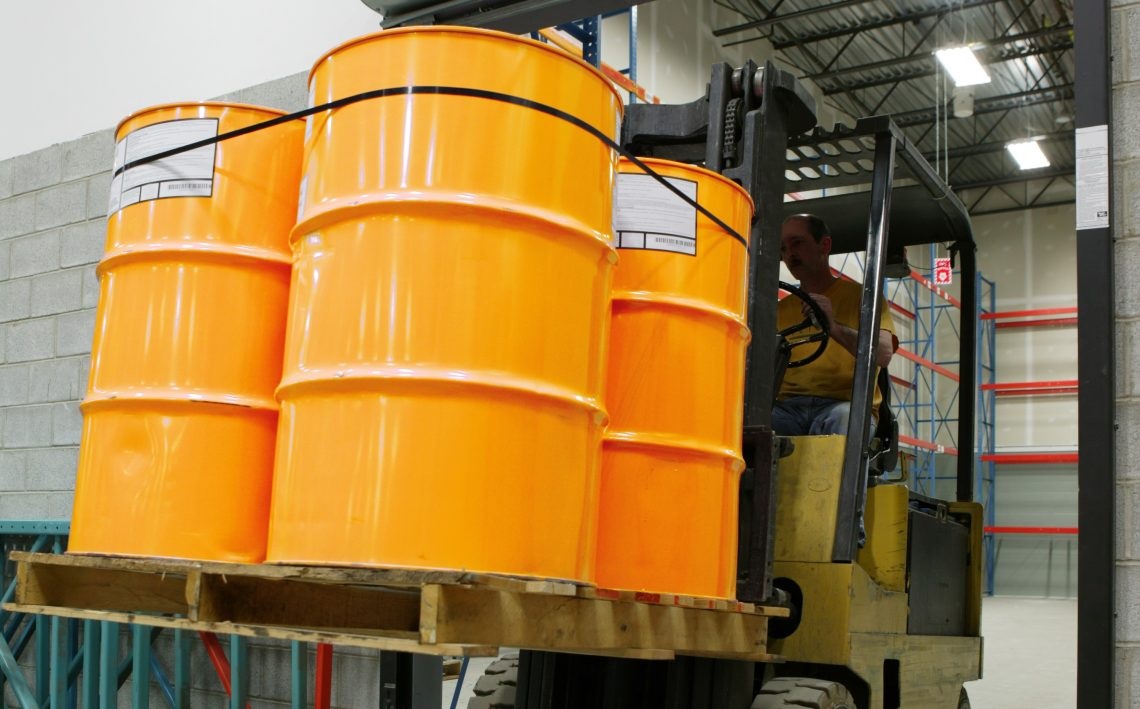
US shale production has shown a limited and delayed response to the 2026 Iran oil shock and associated price spike, despite higher crude prices from the Strait of Hormuz disruptions. The industry’s short-cycle nature allows some flexibility, but structural, financial, and operational constraints prevent it from quickly offsetting the massive Middle East supply losses estimated at 8–20 million barrels per day disrupted or shut in.

Current US Production Levels

Total US crude oil production including lease condensate averaged a record ~13.59–13.6 million barrels per day (bpd) in 2025. EIA forecasts it holding steady at ~13.6 million bpd in 2026, with a modest rise to 13.8 million bpd in 2027, driven partly by sustained higher prices from the conflict. The effect of elevated prices shows more in 2027 due to time lags.

Shale and tight oil accounts for the majority of Lower 48 output ~11.2 million bpd baseline in recent years, with the Permian Basin producing ~6.2–6.6 million bpd—nearly half of total US crude—and acting as the primary growth driver. Other basins like Bakken and Eagle Ford show flatter or declining trends.

Production has been relatively flat over the past 10+ months leading into the shock, reflecting prior capital discipline rather than resource exhaustion. US shale cannot act as a rapid swing producer like traditional OPEC fields:Time New wells take 6–9 months or longer from drilling decision to first significant output. Bringing drilled-but-uncompleted (DUC) wells online offers quicker gains—potentially 150,000–240,000 bpd in the near term—but this is tiny compared to Hormuz losses.

Many public producers entered 2026 with budgets assuming $55–60/bbl WTI and plans for flat and minimal growth, emphasizing efficiency, dividends, and buybacks over aggressive drilling. Volatility; prices swinging in a $40 range deters big commitments—executives want sustained high prices before ramping rigs. Higher cash flows are often returned to shareholders rather than reinvested immediately.

In the Permian, associated natural gas production strains takeaway capacity. New pipelines e.g., adding ~4 Bcf/d by late 2026 could ease this and support more oil output, but delays limit near-term upside. Baker Hughes rig count has been modest ~400–550 total oil and gas rigs, with small fluctuations. Horizontal rigs in shale plays remain below prior peaks; adding rigs to ~700 would take time and face crew and equipment constraints.

Shale wells decline rapidly ~74% in the first year, requiring constant drilling just to maintain output. Offsetting natural declines consumes most new activity. Analysts estimate potential US additions of only a few hundred thousand bpd in the short term from DUCs and modest drilling, scaling perhaps to 400,000–600,000 bpd by late 2026/Q4 under sustained high prices—but far short of closing multi-million-barrel gaps.

Permian Basin is most resilient due to lower breakeven prices ~$60–67/bbl for new wells in Midland and Delaware sub-basins and ongoing efficiency gains. It could see the bulk of any incremental growth, aided by future midstream relief. Some private and smaller operators are more responsive to the price spike and may accelerate activity.

Other shale plays (Bakken, Eagle Ford): More mature, with steeper declines and higher relative costs; limited upside. Larger publicly traded firms prioritize returns and caution; some smaller/private E&Ps are quicker to drill on higher prices. Existing wells often profitable well below $60/bbl; new wells need ~$60–70/bbl depending on basin and operator.

Current elevated prices; futures near $100+ at peaks, with physical premiums boost margins but haven’t triggered a broad drilling surge yet. Officials have urged producers to ramp up at events like CERAWeek, echoing past calls during energy shocks. Industry response has been measured, with some all on board rhetoric but skepticism over volatility.

The US provides a buffer via its status as top producer and limited direct reliance on Persian Gulf imports though global prices and refined product dynamics still transmit pain. SPR releases and other offsets help, but shale’s contribution remains incremental. If the conflict de-escalates quickly and Hormuz reopens, prices could fall sharply, causing producers to pull back as seen in past cycles.

Underinvestment in prior years and maturing acreage add longer-term headwinds. EIA and others see more pronounced response next year if prices hold, potentially adding hundreds of thousands of bpd via Permian expansion and Gulf of Mexico developments. The Iran shock has boosted US shale profitability and prompted some cautious activity increases especially among smaller operators and in the Permian, but it exposes the limits of shale as a quick-fix supply source.

The $34 physical-paper gap and overall tightness highlight that real-world relief from US production will arrive gradually, if at all, over months—not weeks—leaving global markets reliant on strategic stocks, rerouting, and any OPEC+ adjustments in the interim. Prolonged high prices could eventually elicit more drilling, but capital discipline and logistics suggest no dramatic surge.


AI Data Centers Put Insurers Through a Historic Stress Test as Trillions in Off-Balance-Sheet Financing Raise Fresh Risks

0

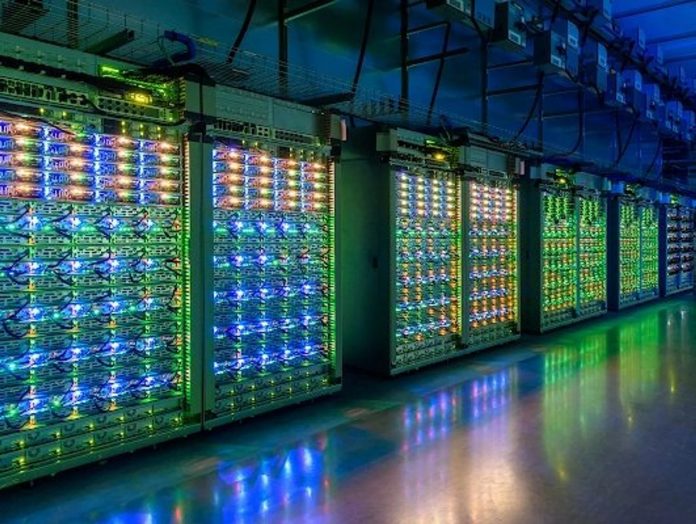
The breakneck buildout of artificial intelligence data centers is rapidly becoming one of the biggest stress tests the global insurance industry has faced in years, as unprecedented capital flows, complex financing structures, and the blistering pace of technological change create both enormous opportunities and hidden vulnerabilities.

CNBC reports quoting McKinsey that global spending on data centers could reach $7 trillion by 2030, and hyperscalers such as Microsoft, Google, and Amazon can no longer shoulder the burden alone. Big Tech is increasingly turning to private equity, private credit, debt markets, and sophisticated off-balance-sheet structures to fund the capital-intensive projects.

Private infrastructure data center deals routinely exceeded $10 billion last year, according to Preqin data, with the largest single transaction reaching $40 billion — a consortium involving Nvidia, Microsoft, BlackRock, and Elon Musk’s xAI to acquire Aligned Data Centers.

“When you put $10 to $20 billion plus in a single location, it creates capacity issues in the marketplace,” Tom Harper, data center leader at insurance broker Gallagher, was quoted by CNBC as saying about the situation.

He added that the insurance industry has always had an appetite for these risks because “they are such high-quality builds. They’ve got cutting-edge technology, they’re AA plus plus construction locations,” but the sheer scale has made providing adequate capacity extremely challenging.

Harper noted that in 2023 it was “nearly impossible to reasonably insure a $20 billion campus.” By 2026, such conversations will have become routine.

“We’re talking about trillions of dollars,” he said, “and almost going back to the same cycle where there’s almost no transparency about the financing structures — the scale is astronomical.”

Rajat Rana, a partner at Quinn Emanuel Urquhart & Sullivan who worked on structured finance litigation after the 2008 financial crisis, drew a direct parallel to the housing bubble.

“This is the largest peacetime investment project in human history, which is financed largely off balance sheet,” he told CNBC. “We’re talking about trillions of dollars, and almost going back to the same cycle where there’s almost no transparency about the financing structures — the scale is astronomical.”

The surge in demand is also accelerating innovation in power generation and semiconductor technology, creating a double-edged sword for insurers and lenders. Facilities require highly specialized coverage that blends traditional real estate risks with bleeding-edge technological assets. Some of the world’s largest insurers have created dedicated data center practices to underwrite these projects.

Harper explained that the concentration of value, the massive power requirements, and the advanced technology typically result in advantageous pricing, making data centers “very desirable” for insurers. However, problems arise when $20 billion worth of assets sit in high-wind or hurricane zones. Supply chain issues add a separate challenge, as clients import enormous shipments of high-value equipment that often sit in third-party warehouses before installation.

The M&A frenzy has kept transactional lawyers busy. According to the report, Kirkland & Ellis has noted that several companies are now forming dedicated data center teams spanning real estate, power, telecom, finance, insurance, trade, private equity, and cybersecurity. Marsh launched a dedicated digital infrastructure advisory group to help clients navigate increasingly complex contracts.

Last year, Marsh also created Nimbus, a €1 billion ($1.2 billion) insurance facility for data center construction in the UK and Europe, which it expanded just seven months later to offer limits of up to $2.7 billion.

Alex Wolfson, senior vice president of credit specialties at Marsh Risk, said private credit is playing a growing role.

“Private credit can meaningfully complement banks and can support non-hyperscale contracted offtakes,” he said.

As data center loans proliferate, however, insurers providing credit protection are beginning to hit capacity limits, prompting Marsh to develop new solutions for lenders.

Rana warned that the opacity of off-balance-sheet financing makes it difficult for insurers and investors to fully understand the risks. In January, four U.S. senators urged the government to investigate how Big Tech is borrowing “staggering sums of cash” through complex debt markets, warning that such leverage could lead to “destabilizing losses” for financial institutions and trigger a broader crisis.

Rana noted in a March report that this lack of transparency could create second-order litigation risks for pension funds, insurers, and asset managers invested in private credit vehicles if concentration risks later materialize.

He has already fielded concerns from private equity funds about commercial leases and property valuations. Tenants are pushing for lease extensions while landlords seek higher rents to reflect the premium value of AI-ready facilities.

“I’m not a doomsday guy who’s saying, hey, it’s gonna crash,” Rana said. “My point is, whether it crashes or not, the disputes are inevitable, and we have already seen those disputes.”

A particularly thorny debate centers on the so-called “GPU debt treadmill.” Data centers are built to last decades, but the high-performance GPUs that power them have an average useful life of only about seven years.

CoreWeave, a cloud provider of AI infrastructure, became the first company to secure investment-grade GPU-backed loans last week, raising $8.5 billion and sending its stock up 12%.

Rana described the mismatch as a “treadmill,” first coined by AI commentator Dave Friedman.

“This is almost like a treadmill that these AI data centers are running on,” he said.

Even ring-fenced, investment-grade structures may mask longer-term credit risks as operators repeatedly raise fresh debt to upgrade equipment and build new facilities.

“There are different data centers that are raising debt by disclosing different life cycles to investors,” Rana said. “As these new chips come in, the data centers will feel pressured to raise more debt, and then they will have to build new infrastructure, and then that basically creates a billion-dollar question: how fast can you build these facilities? How fast can you raise credit?”

Harper noted that the rapid evolution of GPU lifecycles has forced Gallagher to get creative with bespoke insurance policies that include pre-agreed valuation methods.

“It would be a nightmare with the size and scope of these [facilities] to determine [the value of] each individual unit,” he said.

Insurers have observed operators responding by building more modular facilities in anticipation of shorter equipment cycles.

Alex Wolfson of Marsh Risk summarized the core tension, saying: “Lenders typically want asset lives that exceed loan tenors by a comfortable margin, and the shorter useful life of GPUs challenges that assumption.”

As a result, lenders are structuring deals more conservatively to protect themselves.

The AI data center boom is reshaping the insurance industry in real time. What began as a specialized niche has become a multi-trillion-dollar stress test that is forcing underwriters, brokers, and lawyers to develop new products, risk models, and legal safeguards.

The development represents one of the largest growth opportunities in a generation for insurers willing to embrace the complexity. For those who misjudge the risks hidden in the opaque financing structures and rapid technological obsolescence, it could become a painful reminder of past bubbles.

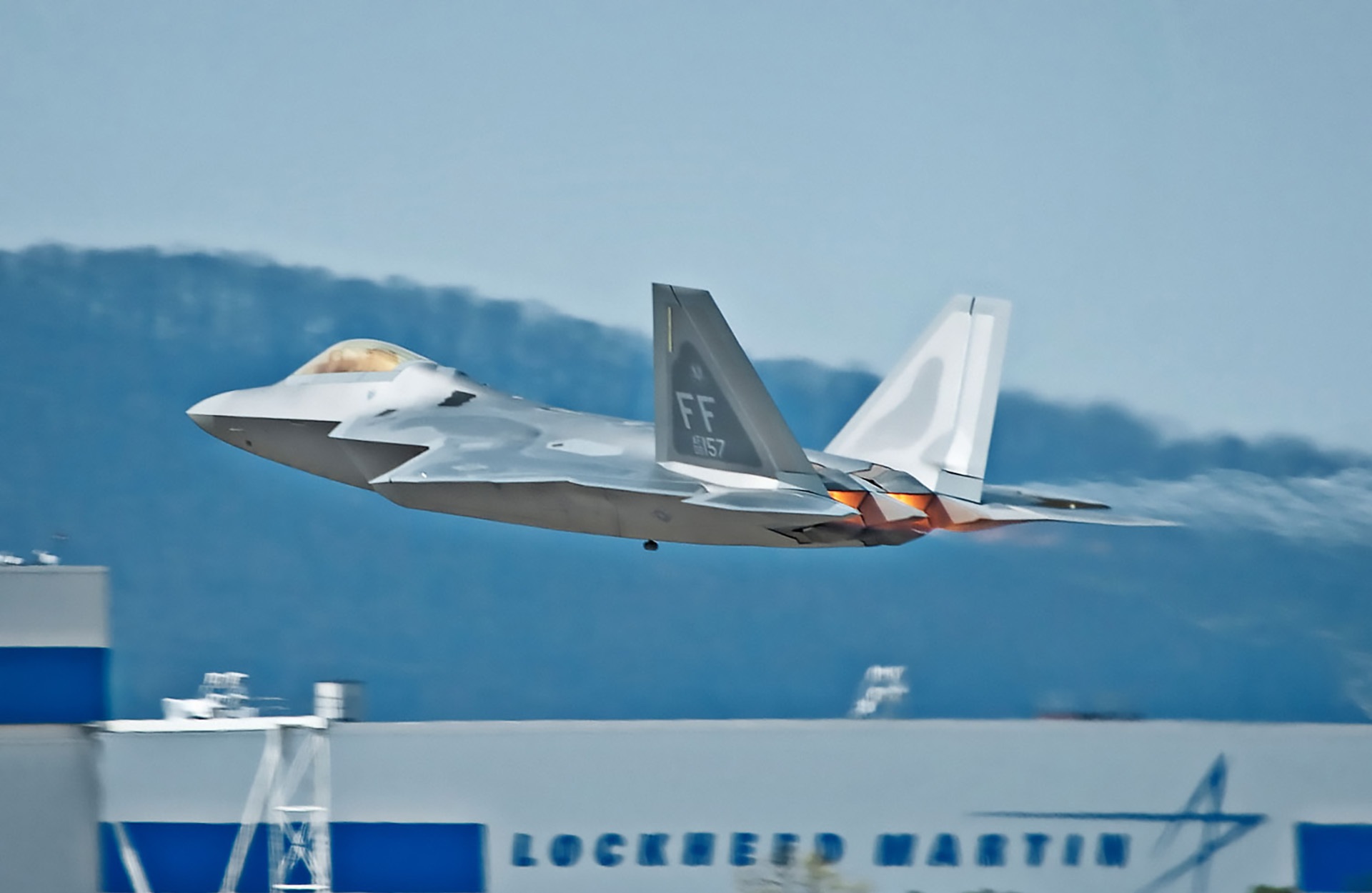
Implications of U.S Airforce F-15E Strike Eagle Being Shot Down by Iran

0

A US Air Force F-15E Strike Eagle (a two-seat fighter jet) was shot down over southwestern or western Iran— the first known US manned combat aircraft lost to enemy fire in over 20 years. Iran’s Islamic Revolutionary Guard Corps (IRGC) claimed responsibility, stating their air defenses downed the jet.

US officials confirmed the incident but provided limited initial details due to operational security. Both crew members; the pilot and the weapons systems officer, reportedly a colonel successfully ejected. The pilot was located and rescued relatively quickly within hours on the same day by US forces.

The F-15E Strike Eagle is a two-seat, all-weather multirole fighter derived from the F-15 Eagle air superiority platform. It excels in deep interdiction, precision air-to-ground strikes, and retaining strong air-to-air capabilities. Designed in the 1980s for long-range, high-speed strikes without needing escorts or dedicated electronic warfare support, it remains a key USAF asset in 2026, with ongoing upgrades enhancing its survivability and lethality.

Crew: 2; pilot in front seat + weapons systems officer/WSO in rear for targeting, navigation, and weapons management. Dimensions: Wingspan 42.8 ft (13 m), length 63.8 ft (19.44 m), height 18.5 ft (5.6 m). Weights: Maximum takeoff weight ~81,000 lb (36,700 kg); external payload capacity up to ~23,000–24,500 lb (10,400–11,100 kg) of ordnance, fuel tanks, and pods.

Powerplant: 2 × Pratt & Whitney F100-PW-220 or more commonly on later aircraft F100-PW-229 afterburning turbofan engines. Thrust: ~25,000 lb (F100-PW-220) to ~29,000 lb (F100-PW-229) per engine. High thrust-to-weight ratio enables excellent acceleration; idle to max afterburner in under 4 seconds in some configs.


The second crew member (weapons officer) was separated, seriously injured, and evaded capture for over 24–48 hours in rugged, remote mountainous terrain. He reportedly hid, climbed significant elevation (one account mentioned nearly 7,000 feet while injured), and faced an Iranian manhunt that included a bounty. US special operations forces (including Navy SEALs in some reports) conducted a high-risk night raid deep inside Iranian territory to extract him early on April 5 (local time).

President Trump publicly confirmed the successful rescues, calling one an Easter Miracle and the overall operation one of the most daring in US history, emphasizing WE GOT HIM! and WE WILL NEVER LEAVE AN AMERICAN WARFIGHTER BEHIND. He described it as the first time in military memory that two US pilots were rescued separately deep in enemy territory.

The mission involved multiple aircraft, including helicopters and a supporting A-10 Warthog which itself came under fire, forcing its pilot to eject over the Persian Gulf, where he was safely recovered. The operation occurred under challenging conditions: broad daylight elements for one rescue, hostile territory with Iranian search teams active, and coordination that reportedly included intelligence support possibly Israeli.

No US fatalities were reported from the rescues, though one airman was seriously wounded. Iran has made additional claims, including downing other US aircraft e.g., F-35s, which the US has denied and releasing images of wreckage. Some Iranian officials suggested the rescue operation might have had secondary objectives, such as targeting enriched uranium sites near Isfahan, though these appear unverified or propagandistic.

This incident occurred amid wider US and Israeli strikes on Iranian targets, including infrastructure and military sites, with tensions involving the Strait of Hormuz and regional escalation. The rescues have been portrayed in US media as a significant success highlighting special operations capabilities, while Iran frames it as part of ongoing conflict.

Iran’s Foreign Ministry Spokesperson Stated Recent Downed Airman May Have Been a Cover to Steal Enriched Uranium

Iran’s Foreign Ministry Spokesperson Esmaeil Baqaei stated that a recent US operation to rescue a downed airman may have been a cover to steal enriched uranium from Iranian territory, calling it a possible deception operation that should not be overlooked. He cited many questions and uncertainties about the mission’s details, including its location.

This stems from a US rescue mission reportedly involving special forces like SEAL Team 6, air support, and possibly MC-130s or helicopters to extract an injured crew member from a downed F-15E Strike Eagle in hostile Iranian terrain. US officials, including President Trump, described it as a high-risk success—sometimes called an Easter miracle or one of the most daring rescues—after the airman survived roughly 36–48 hours.

Iran’s military claimed the operation faced disruptions, involved losses, and occurred near sensitive areas like Isfahan; home to nuclear-related facilities. Iranian sources portrayed it as a failure or completely foiled. Tehran’s allegation ties into broader accusations that the mission’s scale, timing, and proximity to nuclear sites suggest a covert raid on enriched uranium stockpiles rather than a straightforward rescue.

Some Iranian statements mention craters or strikes to delay response forces. This fits Tehran’s pattern of framing US/Israeli actions as aggressive plots against its nuclear program, especially amid heightened tensions. Enriched uranium is a core issue in Iran’s nuclear activities, which it insists are peaceful but which the West and Israel view with deep suspicion due to enrichment levels, lack of full IAEA cooperation, and past covert elements.

No public US acknowledgment supports the theft claim. Official accounts focus on recovering the airman and crew from a crash in contested territory. Extraordinary claims like a secret uranium heist during a rescue would require substantial evidence which hasn’t surfaced publicly.

Large-scale special operations can have layered objectives, and special forces have conducted raids on high-value targets before. However, stealing significant quantities of enriched uranium; a heavily guarded, radioactive, traceable material mid-rescue in Iranian territory would be logistically immense—requiring secure transport, evasion of defenses, and avoiding detection and traceability.

Iran has not provided concrete proof of missing uranium or a botched raid beyond questioning logistics and claiming disruptions. Online speculation has circulated but remains unverified. This is classic information warfare in a hot conflict zone: Iran uses the narrative to portray the US as the aggressor and rally domestic and international support, while the US highlights operational success.

Without independent verification, the accusation functions more as propaganda than established fact. Tensions remain high, with risks of escalation. Iran’s nuclear program is a long-running effort centered on uranium enrichment and related fuel cycle activities. Iran maintains it is entirely peaceful, but many Western governments, the IAEA, and Israel suspect it has included weapons-related dimensions in the past and retains the potential for rapid weaponization.

Iran’s program suffered major setbacks from Israeli and U.S. military strikes in June 2025 targeting key sites. Damage included above-ground facilities, electrical infrastructure, and some underground elements at enrichment and support sites. However, much of the highly enriched uranium stockpile appears to have survived, largely stored in underground tunnels especially at Isfahan, which were harder to destroy.

The IAEA has been unable to access Iran’s four declared enrichment facilities since the strikes due to Iran’s suspension of cooperation. As a result, the agency cannot verify the current size, composition, location, or any ongoing enrichment and reprocessing activities. Satellite imagery shows activity at sites like Isfahan’s tunnel complex and some work at Natanz and Fordow, but the purpose remains unconfirmed.

Hyperliquid’s RWA Open Interest Reaches All Time High of Over $2.3B 

0

Hyperliquid just hit a notable milestone: its Real World Assets (RWA) open interest reached a new all-time high of over $2.3 billion.

This continues a strong upward trend in its HIP-3 markets which cover tokenized commodities like oil, gold, silver, and equities and indices. Weeks earlier, RWA/HIP-3 open interest had already climbed past $1.3B–$1.7B in rapid growth phases, with oil perps often leading volume and equities gaining ground.

Hyperliquid’s official account highlighted that RWA trading keeps setting new ATHs week after week, underscoring 24/7 on-chain access to traditional macro assets while traditional markets are closed. From near-zero six months ago to $2.3B OI represents explosive adoption for on-chain tokenized RWAs and perpetuals on non-crypto underlyings.

HIP-3 markets require locking $HYPE  to launch, so rising RWA activity increases locked supply. Trading fees also feed into buybacks/revenue mechanisms that benefit HYPE holders. It’s drawing interest beyond crypto-native users, with deep order books and two-sided liquidity in assets like WTI crude.

Hyperliquid Leading in Network Revenue

Hyperliquid has also been dominating on-chain revenue metrics recently: It frequently tops 24-hour fee rankings, sometimes beating legacy chains like TRON, BNB Chain, or Ethereum e.g., recent days saw it generate hundreds of thousands to over $2M in daily fees.

In longer periods, it has captured massive shares of total blockchain/DeFi revenue e.g., 35%+ in some months of 2025, with strong monthly figures like $106M in one peak period. This comes primarily from its high-volume perpetuals trading (crypto + RWAs), where it often holds a dominant market share among decentralized perps platforms.

Revenue leadership stems from intense trading activity rather than broad TVL or general-purpose activity—specialized derivatives platforms like Hyperliquid capture fees efficiently. Recent data shows it outpacing or competing closely with Solana and TRON in certain windows.

HIP-3 markets on Hyperliquid are builder-deployed perpetual futures (perps) — a permissionless system introduced via Hyperliquid Improvement Proposal 3. They allow qualified teams to launch their own perpetual futures markets directly on HyperCore (Hyperliquid’s high-performance order book and execution layer), turning the protocol into more of a modular “exchange-of-exchanges” infrastructure rather than a single centralized DEX.

This upgrade has driven much of the recent Real World Assets (RWA) growth, including tokenized equities, indices commodities like oil like WTI/Brent, gold, silver, and other non-crypto underlyings. Staking Requirement (Security Bond) Deployers must stake 500,000 HYPE tokens; value has fluctuated; historically ~$16M–$25M+ depending on price.

This acts as collateral and skin-in-the-game. The first 3 markets can often be launched “for free” after staking; additional market slots require winning a Dutch auction (bids in HYPE, auctions every ~31 hours). Stake can be slashed up to the full amount for issues like prolonged downtime, oracle manipulation, or actions that harm network integrity.

Oracle (external price feed they manage or provide; updates frequently, often ~every 3 seconds with a ~1% max change per update to prevent extreme jumps). Leverage limits, tick size, minimum order size, etc. Fee structure; builders can capture up to ~50% of trading fees from their markets on top of base protocol fees.

Markets deploy on HyperCore — inheriting its sub-second matching, margining, liquidation engine, and unified API. Users trade them seamlessly via hyperliquid.xyz or compatible interfaces. New markets can also benefit from growth mode features e.g., temporarily slashed taker fees by 90%+ to bootstrap liquidity.

Unlike native Hyperliquid perps which use integrated pricing, HIP-3 relies on the deployer’s oracle. Safeguards include price clamping, OI growth caps, and fallback to on-chain bid and ask if oracle stalls. This enables exotic or RWA assets but introduces slightly different risk profiles; oracle reliability matters more; not all backed by the same shared liquidity pool as core markets.

HIP-3 markets do not share the exact same risk pool as native perps, so they carry distinct counterparty/operational risks. Traditional stock/commodity markets close on weekends and holidays. HIP-3 perps trade continuously on-chain, attracting macro traders who want exposure outside regular hours.

Dominant Player: trade.xyz often linked to Hyperliquid’s tokenization efforts accounts for ~90%+ of HIP-3 open interest. It has led with tokenized equities, indices, and commodities. Other builders experiment with bonds, pre-IPOs, prediction markets, or even niche assets. From near-zero at launch to over $2.3B aggregated OI with rapid MoM increases. Volumes have hit billions daily in aggregate for HIP-3 categories.

Often pairs with spot tokenized assets via Unit or similar on HyperEVM for delta-neutral or basis strategies. HIP-3 has enabled Hyperliquid to expand far beyond crypto pairs into everything derivatives while keeping listings decentralized. In short, HIP-3 is the mechanism that made the $2.3B RWA open interest milestone possible by democratizing market creation.

It positions Hyperliquid as infrastructure for on-chain traditional finance rather than just another perp DEX. These figures point to Hyperliquid carving out a strong niche as an on-chain venue for both crypto perps and tokenized traditional assets. The $2.3B RWA OI milestone signals growing institutional and macro trader interest in blockchain-based 24/7 markets.

Note: Crypto markets move fast—OI and revenue fluctuate with volatility, leverage, and macro events.