DD
MM
YYYY

PAGES

DD
MM
YYYY

spot_img

PAGES

Home Blog Page 3

AI No Longer Hype, It’s Forcing Darwinian Reckoning in Software 

0

Software equities particularly SaaS and enterprise software stocks have experienced a significant crash/selloff in early February 2026, driven primarily by escalating investor fears that rapid advancements in artificial intelligence (AI) could disrupt or even cannibalize traditional software business models.

The selloff intensified around early February 2026, with a major catalyst being Anthropic’s release of new AI-driven automation tools including features like Claude plugins for legal and productivity tasks.

These tools demonstrated AI’s ability to automate workflows in areas like legal work, marketing, customer service, and administrative tasks—raising concerns that businesses might reduce or eliminate subscriptions to specialized software in favor of cheaper, more capable AI alternatives.

This sparked immediate sharp declines on Tuesday, February 3, 2026, with losses spilling over into Wednesday and beyond. Broader fears built on months of underperformance in the sector, amplified by comments from figures like Palantir CEO Alex Karp (who highlighted AI’s potential to write/manage enterprise software, threatening SaaS incumbents) and ongoing worries about AI capex vs. returns.

Software and services stocks lost hundreds of billions in market value in single sessions ~$300 billion on one Tuesday alone. The S&P 500 Software and Services Index or similar benchmarks like the Morningstar US Software Index or iShares Expanded Tech-Software Sector ETF/IGV dropped sharply: Down ~13% in the past week as of early February.

Some reports cite 15-20%+ monthly declines or 30%+ from recent peaks. The sector entered bear market territory in recent weeks, with the worst performance since the early 2000s dot-com fallout in some metrics.

Individual stocks hit hard: Thomson Reuters (-16%), LegalZoom (-20%), Intuit (-11%), Salesforce down ~26% YTD in 2026, ServiceNow, PayPal, Expedia, Equifax, and others saw double-digit percentage drops. Broader tech names like Microsoft, Adobe, and SAP also declined amid the contagion.

Investors worry AI represents an existential threat to software-as-a-service (SaaS) models: Cannibalization: AI agents could replace seat-based licensing, reducing demand for traditional apps.

Pricing pressure and moat erosion: Faster AI progress might commoditize software, with businesses opting for AI tools over renewals. AI spending surges, but total IT budgets grow slowly—implying AI eats into existing software allocations.

Terms like “SaaSpocalypse” or “software-mageddon” emerged among traders, describing panic selling. Not everyone sees this as terminal: Some analysts call the reaction overblown or “internally inconsistent,” comparing it to past panics like China’s DeepSeek AI scare in 2025 that proved temporary.

Others argue AI might expand markets rather than destroy them, or that software firms can adapt by integrating AI. Bargain-hunting has begun in some cases, with stabilization attempts by February 5, though volatility persists.

This event highlights a shift in 2026 market narrative: AI, once a universal tailwind for tech, is increasingly seen as creating clear winners and losers (disrupted incumbents in software). The selloff has rippled into broader tech and even related areas like consulting, but it’s most acute in software equities.

Markets remain volatile as investors reassess valuations amid this disruption debate. Not everyone sees doom—some view this as a temporary “repricing” akin to past panics, with AI ultimately expanding markets and enabling better software. Bulls point to strong earnings beats across the sector and argue the reaction is inconsistent.

Volatility will likely persist into earnings season as companies prove or fail to prove AI as a tailwind. This crash marks a pivotal narrative shift: AI is no longer just hype—it’s forcing a Darwinian reckoning in software. The fittest (those adapting fastest) survive and consolidate; others face prolonged pressure.

Investors should watch for signs of stabilization, like enterprise AI adoption stories or pricing model innovations, but expect choppiness as the market digests whether this is an overreaction or the start of a multi-year transformation.

Tesla Introduces Cheaper Model Y as Musk Pushes Sales Reset While Pivoting the Company Toward Robotics

0

Tesla is expanding its lower-cost offerings with the introduction of a pared-down all-wheel-drive version of the Model Y, while also simplifying how it names its vehicles — a move that underscores the company’s broader effort to reset its product strategy after months of softening demand.

The decision points to a tension at the heart of the company’s strategy: even as Elon Musk increasingly positions Tesla as a future-focused robotics and autonomy company, he continues to make incremental, pragmatic moves to stabilize and revive vehicle sales in the here and now.

The newly introduced pared-down Model Y AWD starts at $43,630, about $7,000 below the Model Y Premium AWD. As with Tesla’s other lower-cost trims, the model achieves its price point by stripping out features once considered core to the brand’s appeal, including leather seats, the panoramic glass roof, and rear climate-control screens. The approach mirrors the strategy used for the Standard Rear-Wheel-Drive Model Y unveiled three months earlier, which started at $41,630 and cut roughly $5,000 off the price of the RWD Premium variant.

The AWD version slots between Tesla’s cheapest and most expensive offerings. It sacrifices range — at 294 miles per charge, it is the shortest-range Model Y — but delivers a notable performance boost. The car accelerates from zero to 60 mph in 4.6 seconds, significantly faster than the rear-wheel-drive model. For buyers balancing price, traction, and performance, the trim is designed to broaden Tesla’s appeal without a full redesign or new platform.

Alongside the pricing changes, Tesla has quietly simplified its branding by dropping the “Standard” label from its entry-level Model 3 and Model Y vehicles. The cheapest versions are now branded simply as “Rear-Wheel Drive,” while “Premium” and “Performance” remain for higher trims. The change reflects Tesla’s long-standing preference for minimal trim complexity, but it also suggests an effort to make its lineup easier to understand at a time when buyers are more price-sensitive, and competition is intensifying.

These moves come as Tesla works to arrest a sales slowdown. The company’s five-car lineup posted a 9% decline in sales, and Tesla lost its position as the world’s largest EV seller to BYD last year. In Europe, Volkswagen overtook Tesla in electric vehicle sales, underscoring how quickly the competitive landscape has shifted as legacy automakers and Chinese manufacturers scale up.

While Musk has repeatedly said Tesla’s long-term value will come from autonomy, AI, and robotics, the company is still overwhelmingly dependent on vehicle sales for revenue and cash flow. That reality helps explain why Musk continues to approve pricing tweaks, new trims, and lineup adjustments even as he talks up a post-car future.

During Tesla’s most recent earnings call, Musk confirmed the company would discontinue its oldest models, the Model S and Model X, describing the move as an “honorable discharge.” Those vehicles have become marginal contributors to Tesla’s business. In 2024, the Cybertruck, Model S, and Model X together accounted for just over 50,000 units — a little more than 3% of Tesla’s total deliveries of 1.64 million vehicles. Sunsetting the S and X allows Tesla to concentrate resources on higher-volume models like the Model 3 and Model Y, which remain critical to keeping factories running and margins afloat.

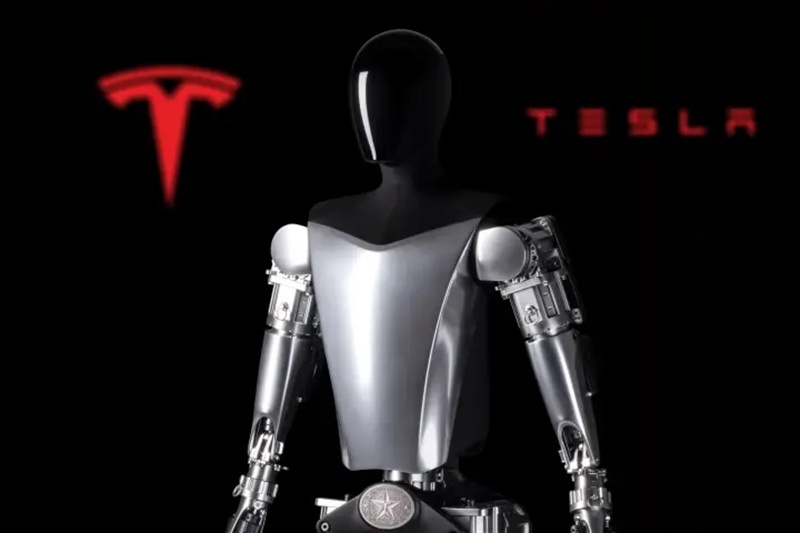
At the same time, Musk is steadily reframing Tesla’s identity. The company has launched a robotaxi service in Austin, is planning the release of its autonomous Cybercab, and is ramping up development of Optimus, its humanoid robot. Musk has argued that autonomy and robotics will ultimately dwarf the value of Tesla’s car business, positioning the automaker as an AI and robotics company rather than a traditional manufacturer.

Yet the introduction of a cheaper Model Y highlights a more grounded reality. Even as Tesla pivots strategically toward robotics, Musk appears unwilling to abandon near-term efforts to defend market share and stimulate demand in its core automotive business. The company has relied on price cuts, feature simplification, and targeted new trims rather than breakthrough new mass-market models, suggesting a cautious approach as it waits for autonomy and robotics to mature.

In that sense, Tesla’s latest lineup changes reflect a dual-track strategy. Publicly, Musk is selling a vision of a future dominated by self-driving systems and humanoid robots. Operationally, Tesla is still fighting a very traditional battle: keeping its cars affordable, competitive, and appealing in an EV market that is no longer forgiving. The cheaper Model Y is less a contradiction of Tesla’s robotics pivot than a reminder that, for now, cars still pay the bills.

AI and Personalization in iGaming: What Slots Teach Us About Customer Engagement

0

Artificial intelligence has transformed many different industries, from improving efficiency in online retail to providing improved outcomes in healthcare. Over the last few years, AI has been integral in delivering more personalized experiences for consumers too. With the greater technology capabilities and data monitoring provided by AI, businesses have been able to curate content and products that are driven by what consumers want and need.

Before the recent advances in AI were achieved, businesses did not have the information available to put individual preferences and interests at the center of their business model. Now, they can automatically analyze data such as online behavior and previous shopping history to develop a deeper understanding of every consumer.

By providing a more personalized experience, such as recommending products or services that are closely aligned to the interests of a specific customer, businesses increase engagement, helping to drive more sales and repeat purchases.

Interestingly, online slots are a great example of how personalization can be used to strengthen customer engagement.

How AI and Personalization Has Improved Engagement in Slots

The online casino industry has experienced significant growth over the last few years, becoming one of the biggest revenue generators in the entertainment space. Out of all the exciting types of games you can play on online casinos, slots have proven to be the most popular. Players are drawn to slots because they offer a simple, engaging format with exciting animations and features, and of course, the chance to win large amounts of money.

Slot game designers and casino operators have been implementing AI to provide more personalized iGaming experiences. For example:

Game Designs Based on Trends

Rather than second guessing what types of games and features slot players like the most, AI monitoring provides insights into the most popular elements of slot games. For instance, there might be a particular type of feature that is driving huge success and AI-driven data helps game designers to understand what players really want their iGaming experience to look like.

They use this information to design new games or add updates in games, which helps to enhance engagement levels.

Personalized Bonuses

Bonuses and promotions are instrumental in the marketing strategies for online casinos. The industry has become fiercely competitive with many new casinos coming into the mix, so generous welcome bonuses and regular promos are used to attract and retain players.

Providing personalized bonuses for casino slots adds more value for loyal players, increasing engagement with a specific platform. If a player receives bonuses such as free spins to use on their most played game, they feel more rewarded than receiving a generic bonus for a game that they would not usually choose to play.

AI is utilized to identify players’ favorite games so that bonuses can be personalized, helping to keep players coming back to the casino and playing for longer sessions.  

Game Recommendations Based on Individual Preferences

Another way that online casinos attempt to attract new players is by offering a larger range of game options compared to their competitors. However, large game libraries can be difficult to navigate, so players find themselves scrolling through game categories to find the types of games they enjoy the most.

Casinos using AI technology can monitor data such as preferred game themes, session lengths, favorite features and more, to understand which types of games players are mostly likely to want to play. They use this information to provide personalized game recommendations, which can be automatically displayed through dynamic content on the main website page when a player is logged in. 

This provides a convenient and swift process for finding games that are built around individual preferences, saving time and ensuring that players do not get frustrated and choose to move onto a different casino. 

Pace Setting

Some casino players like to play fast-paced sessions while others prefer a slower experience. AI learns what sort of pace is preferred by a player and adapts game pace accordingly. This involves making adjustments to the transition timing between reel spins and animation speeds. If a game feels too fast, players can be overwhelmed, but if a game feels too slow it can cause boredom. Striking the right balance in terms of session pace improves customer engagement by giving players the experience that feels right for them.

All of these AI integrations in slots reveal insights into how consumers react to personalized experiences and can help businesses to refine their products or services to drive better customer engagement. We are only just starting to see the powers that can be leveraged from AI but we can expect even better gaming and consumer experiences to be honed by AI tech in the future.

AI Needs Crypto Especially Now— A16Z

0

Andreessen Horowitz (a16z crypto) recently published an article titled “AI needs crypto — especially now.”

The piece, from the a16z crypto editorial team, argues that as AI systems become increasingly capable of generating indistinguishable content (text, voice, video) and coordinating at scale, they’re straining the trust foundations of the current internet, which was built for humans.

Blockchains and crypto provide essential missing infrastructure to restore trust in an AI-native world. Key reasons outlined why AI needs crypto/blockchains right now include: Raising the cost of impersonation and faking human uniqueness — AI can cheaply generate fake content or accounts en masse, but crypto enables “proof-of-personhood” systems like World ID that create digital scarcity for human identity.

It’s easy for a real person to prove they’re human once, but extremely expensive and difficult for AI to impersonate thousands or millions at scale without detection. No single gatekeeper like a centralized platform can dominate verification or participation, reducing risks of centralized censorship or manipulation in an AI era.

Enabling portable, verifiable identities for AI agents — Agents need “passports” that work across platforms without relying on Big Tech intermediaries. Supporting micropayments and agent-to-agent commerce — Traditional payment rails struggle with high-volume, low-value, automated transactions between AIs.

Crypto rails offer fast, low-fee, programmable payments via stablecoins and smart contracts. Privacy by design with tools like zero-knowledge proofs — Allowing verification without revealing unnecessary data, which is crucial as AI handles more sensitive interactions.

The article emphasizes that if we want AI agents to operate autonomously without eroding internet trust via spam, deepfakes, or unchecked coordination, blockchains aren’t optional—they’re the critical layer for an AI-native internet.

This builds on a16z’s ongoing thesis at the intersection of AI and crypto, including prior discussions in their State of Crypto reports, podcasts, and investments in related areas like decentralized AI infrastructure, proof-of-personhood tech, and agentic systems.

The timing aligns with accelerating AI agent adoption and concerns over deepfakes/synthetic media in 2026.

Proof-of-personhood (PoP) systems are mechanisms designed to digitally verify that an online participant is a unique, real human being — not a bot, AI agent, or multiple fake identities created by the same entity.

This addresses a core problem in digital and decentralized systems: Sybil attacks, where one bad actor floods a network with pseudonymous identities to manipulate voting, governance, rewards, content distribution, or spread misinformation.

The concept draws parallels to blockchain consensus mechanisms like proof-of-work (PoW) or proof-of-stake (PoS), but instead of tying influence to computational power or staked assets, PoP ties it to human uniqueness. Each verified person gets roughly one equal unit of participation power, promoting fairness and resisting centralized control or plutocracy.

As AI advances, it becomes trivial and cheap to generate: fake accounts at scale
realistic deepfakes, synthetic text/voice/video
automated spam, scams, or coordinated influence campaigns.

Traditional checks (CAPTCHAs, email/phone verification) are easily bypassed by AI. PoP raises the bar: it’s easy and low-friction for a real human to prove their uniqueness once, but extremely costly or impossible for AI or bad actors to impersonate thousands/millions of unique humans without detection.

This restores scarcity and trust at the identity layer of the internet.In the crypto and AI intersection as highlighted by firms like a16z crypto, PoP is seen as essential infrastructure for: Preventing bot-driven manipulation in decentralized apps, DAOs, or social networks.
Enabling fair airdrops, governance, or resource distribution.

Supporting AI-agent economies where only human-verified entities get certain privileges.
Creating portable, self-sovereign “proof-of-human” credentials that work across platforms without Big Tech gatekeepers. PoP combines verification of humanness (liveness, not a machine) with uniqueness (one person = one credential), often using privacy-preserving tech so no unnecessary personal data is revealed.

Common approaches include: Biometric-based (most robust today): Use unique physical traits hard for AI to fake or replicate at scale.

The leading example is World ID from Worldcoin / Tools for Humanity: Users visit an Orb device, a spherical iris-scanning hardware.

The Orb captures an iris scan to generate a unique, irreversible hash/code proving humanness and uniqueness (irises are highly distinct, even between identical twins). No raw biometric data is stored centrally; instead, cryptographic commitments go into a Merkle tree.

Users receive a World ID credential stored in their wallet/app. They prove membership (i.e., “I’m a verified unique human”) via zero-knowledge proofs (ZKPs) — cryptography that lets you demonstrate a fact (inclusion in the verified set) without revealing which entry you are or any underlying data.

This creates a privacy-preserving “digital passport for humans” usable anonymously across apps. Non-biometric alternatives (explored in research/projects): Social vouching or in-person gatherings. Behavioral analysis or device attestation. Decentralized challenges combining multiple signals.

These are often less secure against sophisticated attacks but avoid privacy and biometric concerns. Zero-knowledge proofs (ZKPs) — Prove you’re in the “verified humans” set without showing who you are or your biometrics.

Blockchain and decentralized ledgers — Store commitments immutably and credibly neutral way, preventing single points of failure or censorship. On-device processing in advanced designs— Ensures sensitive data never leaves your control.

Biometrics raise concerns about data leaks, coercion, or centralization e.g., proprietary hardware like Orbs. Inclusivity — Access to verification and avoiding exclusion of people without tech. Many systems still rely on trusted hardware or operators.

Projects like Worldcoin’s World ID remain the most prominent and scaled implementation in 2026, but the space evolves rapidly with new crypto-native approaches aiming for fully decentralized, open alternatives.

In short, PoP isn’t about revealing who you are like KYC, but proving that you are one real human — a foundational primitive for trust in an AI-saturated, decentralized future.

Trump Steps Back from Netflix-Paramount Battle Over Warner Bros. Discovery, Reversing Earlier Pledge to Intervene

0

President Donald Trump announced on Wednesday that he will not intervene in the escalating contest between Netflix and Paramount Skydance to acquire Warner Bros. Discovery (WBD), marking a stark reversal from his December 2025 assertion that he would personally review and influence the deal’s outcome.

In an interview with NBC News, Trump stated, “I haven’t been involved. I must say, I guess I’m considered to be a very strong president. I’ve been called by both sides. It’s the two sides, but I’ve decided I shouldn’t be involved. The Justice Department will handle it.”

Trump’s earlier involvement stemmed from his comments shortly after Netflix announced its $82.7 billion proposal (enterprise value, with $72 billion in equity) to acquire Warner Bros. Discovery’s streaming and studios division on December 5, 2025. Speaking to reporters on December 7, Trump expressed concerns over market concentration, noting Netflix’s “very big market share” and stating that adding Warner Bros. would make it “go up a lot.”

He added: “That’s gonna be for some economists to tell, and I’ll be involved in that decision.”

At the time, Trump indicated he would consult experts and play a role in the approval process, aligning with his administration’s antitrust scrutiny of Big Tech and media mergers. The Netflix deal, amended to an all-cash structure on January 20, 2026, values Warner Bros. at $27.75 per share and includes its film and television studios, HBO, HBO Max, DC Studios, and extensive content library. The transaction excludes WBD’s Global Linear Networks division, which will spin off as Discovery Global in Q3 2026.

Netflix has filed its Hart-Scott-Rodino (HSR) notification and is engaging with U.S., European Commission, and UK regulators, expecting closure in 12-18 months from the original agreement. Paramount Skydance launched a hostile all-cash counterbid on December 8, 2025, offering $30 per share for the entirety of Warner Bros. Discovery, valuing the deal at $108.4 billion.

Financed by $41 billion in equity from the Ellison family, RedBird Capital, Saudi Arabia’s PIF, Qatar’s QIA, and Abu Dhabi’s ADIA, plus $54 billion in debt commitments from Bank of America, Citigroup, and Apollo Global Management, Paramount argues its proposal creates a more competitive integrated studio and streaming entity while facing an easier regulatory path. The tender offer deadline was extended to February 20, 2026, after only 6.8% (168.5 million shares) were tendered by the original January 21 cutoff.

Warner Bros. Discovery’s board has unanimously rejected Paramount’s bid multiple times, deeming it inferior due to risks, costs, and uncertainties. In a January 7, 2026, statement, the board highlighted that Paramount’s offer would require WBD to pay Netflix a $2.8 billion termination fee, incur $1.5 billion in debt exchange penalties, and face $350 million in incremental interest expenses—totaling $4.7 billion or $1.79 per share in dilution. They recommend shareholders reject the tender and approve the Netflix deal at a vote expected by April 2026.

Paramount plans to nominate directors for WBD’s 2026 annual meeting and solicit against the Netflix transaction. The U.S. Department of Justice (DOJ) Antitrust Division initiated an in-depth review on January 16, 2026, issuing a “second request” for additional information, pausing the HSR waiting period. European Commission and UK regulators are also examining the proposals.

Antitrust concerns are higher for Netflix due to its dominant streaming position—potentially reducing competition in video-on-demand, content licensing, and production—while Paramount’s bid may face fewer hurdles but raises debt sustainability issues.

Trump’s decision to defer to the DOJ avoids direct involvement in a deal pitting corporate giants against each other. Netflix CEO Ted Sarandos met with Trump in December 2025, shortly before the bid, while Paramount CEO David Ellison—son of Oracle co-founder Larry Ellison, a close Trump ally—has lobbied for his offer. Ellison declined a Senate hearing invitation on February 3, 2026, to discuss antitrust implications, citing Warner Bros.’ rejection of Paramount’s bids.

Market reactions have been volatile, with WBD shares fluctuating amid speculation. Analysts like those at ProMarket note Netflix faces greater antitrust barriers than Paramount, potentially leading to protracted reviews. U.S. lawmakers, including Sen. Elizabeth Warren and Rep. Darrell Issa, have called for rigorous scrutiny, citing impacts on consumers, workers, and theatrical distribution.

While the battle is expected to reshape Hollywood, Trump’s hands-off approach shifts focus to regulators, potentially prolonging uncertainty for all parties.