DD
MM
YYYY

PAGES

DD
MM
YYYY

spot_img

PAGES

Home Blog Page 3

BMW to Cut Up to 8,000 Jobs in Germany as Weak China Demand, EV Transition Pressure Profits

0

BMW will eliminate several thousand jobs in Germany by the end of 2027 through a voluntary redundancy programme, becoming the latest major European automaker to deepen cost-cutting measures as slowing demand, intense competition and rising structural costs reshape the global automotive industry.

The restructuring, agreed with the company’s works council, will focus on administrative and development functions, while factory production jobs will be protected, a BMW spokesperson said on Wednesday.

According to a source cited by Reuters, the programme is expected to reduce BMW’s workforce by approximately 8,000 employees. The Munich-based premium carmaker currently employs around 150,000 people worldwide, making the planned reductions one of its largest workforce restructuring efforts in recent years.

The move comes as mounting challenges continue confronting Germany’s automotive sector, which is grappling with weakening profitability after years of record earnings. Carmakers are simultaneously investing billions of euros in electric vehicles and software development while facing slowing demand in key markets, particularly China, intensifying competition from domestic Chinese manufacturers and higher trade barriers in the United States.

BMW’s announcement follows similar restructuring programmes across Germany’s auto industry.

Volkswagen and Mercedes-Benz Group have already agreed to cut tens of thousands of jobs as they seek to reduce costs and preserve margins amid an increasingly competitive market.

Earlier this week, Porsche, part of the Volkswagen Group, expanded its restructuring plans, announcing it aims to reduce its workforce by roughly 20% by 2035.

Labor tensions are also escalating across the industry. On Wednesday, thousands of workers demonstrated outside Audi’s plant in Neckarsulm after the facility emerged as one of four German sites facing possible closure under Volkswagen’s broader restructuring programme.

The wave of job reductions points to a structural transformation rather than a temporary downturn.

European automakers are facing intense pricing pressure in China, the world’s largest automobile market, where domestic electric vehicle manufacturers have rapidly expanded market share by offering technologically advanced vehicles at lower prices. Premium foreign brands, once dominant in the market, have increasingly struggled to maintain sales volumes and pricing power.

BMW, long regarded as one of the more resilient German manufacturers because of its disciplined cost management and strong premium positioning, has not been immune to those pressures.

In June, the company lowered its profit guidance for the current financial year after reporting weaker-than-expected business conditions in China, where vehicle demand has deteriorated significantly amid slowing economic growth and fierce competition from local manufacturers.

The weaker outlook prompted Chief Executive Milan Nedeljkovic to pledge a faster and more aggressive cost-reduction programme.

Addressing employees on Wednesday, Nedeljkovic said the industry’s operating environment had fundamentally changed, according to a participant at a workers’ assembly in Munich. He told staff that the traditional assumptions underpinning BMW’s business model were being reshaped by structural shifts in the global automotive market, warning that the company faces a challenging period ahead.

At the same time, he argued that the restructuring measures are necessary to strengthen BMW’s long-term competitiveness and improve profitability.

Unlike previous industry downturns, today’s challenges extend well beyond cyclical weakness in vehicle demand. Automakers are simultaneously absorbing higher research and development costs for electric vehicles, software platforms and autonomous driving technologies while confronting slower consumer demand, persistent inflationary pressures, geopolitical trade tensions and evolving emissions regulations.

The pressure has been particularly acute in China, where manufacturers including BYD, Geely and other domestic brands have intensified competition across both the mass-market and premium segments, eroding the market share of established global manufacturers.

In the United States, tariffs have added another layer of uncertainty for European exporters, increasing costs and complicating production and supply chain decisions for companies with globally integrated manufacturing operations.

Investors will receive a clearer picture of BMW’s financial position when the company reports second-quarter earnings on Thursday. Markets will closely scrutinize management’s updated outlook for China, the pace of cost reductions, operating margin guidance and capital allocation plans, as investors assess whether the restructuring programme will be sufficient to offset mounting industry headwinds.

For Germany’s automotive sector, BMW’s workforce reduction is another indication that even the industry’s strongest players are adapting to a fundamentally different competitive landscape. Cost discipline is emerging as a priority alongside investment in next-generation vehicle technologies, as the transition to electrification accelerates and global competition intensifies.


Robinhood Chain Growth Signals a New Era for EVM Blockchain Adoption

0

Robinhood is rapidly evolving from a retail investing platform into a full-fledged blockchain ecosystem, and the latest developments surrounding Robinhood Chain underscore just how quickly that transformation is unfolding.

Within days of major ecosystem activity, Robinhood Chain became the fastest Ethereum Virtual Machine (EVM)-compatible network to surpass 100 million transactions.

Robinhood CEO Vlad Tenev introduced stronger security protections for his X account after a social engineering incident, and the launch of the PIPEDOG memecoin demonstrated the explosive speculative appetite emerging on the new network.

The milestone of 100 million transactions is significant because it reflects not only user adoption but also the technical scalability of Robinhood Chain.

EVM compatibility enables developers to migrate decentralized applications with minimal friction, allowing Ethereum-based tools and smart contracts to function across the new network.

Reaching the 100 million transaction mark faster than any previous EVM chain suggests that Robinhood has successfully leveraged its massive user base and brand recognition to accelerate blockchain activity.

It also highlights growing demand for low-cost, high-speed infrastructure capable of supporting decentralized finance, tokenized assets, and consumer-facing applications. Robinhood’s blockchain ambitions extend beyond cryptocurrency trading.

The company has been steadily building an ecosystem where users can seamlessly interact with digital assets, decentralized applications, and tokenized financial products. By combining familiar consumer interfaces with blockchain technology.

Robinhood is attempting to lower the barriers that have historically limited mainstream adoption of Web3 products. Robinhood’s leadership is placing renewed emphasis on cybersecurity.

CEO Vlad Tenev recently introduced additional safeguards for his X account after attackers reportedly gained control of it through a social engineering attack targeting platform support personnel.

Social engineering remains one of the most effective methods used by cybercriminals because it exploits human trust rather than software vulnerabilities.

Even high-profile executives remain attractive targets due to their influence over markets and their ability to reach millions of followers instantly.

The incident serves as a reminder that personal account security is becoming increasingly important as financial executives, crypto founders, and public figures communicate directly with their communities through social media.

Enhanced authentication procedures, stricter account recovery processes, and improved verification mechanisms can significantly reduce the risk of unauthorized access.

For companies operating in the digital asset industry, maintaining secure communications is critical for protecting both users and market confidence. Robinhood Chain’s first major memecoin success has already arrived.

PIPEDOG launched on the network and surged to a market capitalization of approximately $65 million in less than twenty-four hours. Such rapid appreciation reflects the speculative nature of memecoin markets, where community enthusiasm, viral marketing, and liquidity can drive extraordinary price movements in a very short period.

The success of PIPEDOG also demonstrates that Robinhood Chain is capable of supporting the kind of grassroots token launches that have historically fueled activity on networks such as Ethereum, Solana, and Base.

While memecoins remain highly volatile and carry substantial investment risk, they often serve as catalysts that attract developers, traders, and liquidity providers to emerging ecosystems. These developments mark an important chapter in Robinhood’s blockchain strategy.

The combination of record-breaking transaction growth, strengthened executive cybersecurity practices, and vibrant on-chain activity suggests that Robinhood Chain is rapidly establishing itself as a serious competitor in the EVM landscape.

Whether this momentum can translate into long-term developer adoption and sustainable decentralized applications remains to be seen, but the early indicators point to a network gaining traction at remarkable speed.

As Robinhood continues expanding its blockchain infrastructure, investors and developers alike will be watching closely to see whether it can transform early excitement into lasting ecosystem growth.

Meta Shares Tumble As AI Spending Crushes Cash Flow And Weak Outlook Overshadows Revenue Beat

0

Meta Platforms’ shares fell nearly 10% in extended trading on Wednesday after the social media giant issued weaker-than-expected revenue guidance and revealed that its aggressive artificial intelligence spending sharply eroded free cash flow, reinforcing investor concerns over the mounting cost of the industry’s AI arms race.

Although Meta exceeded Wall Street’s revenue expectations for the second quarter, investors focused on slowing user growth, a sharp decline in profitability and another substantial increase in capital expenditure as Chief Executive Mark Zuckerberg doubles down on building AI infrastructure.

The results add to a broader trend among technology giants, with Alphabet recently reporting negative free cash flow for the first time as a public company and Microsoft continuing to invest tens of billions of dollars in data centers to support AI demand. Together, the earnings underscore a growing divide between companies that are rapidly monetizing AI through cloud services and those still investing heavily ahead of future returns.

Meta reported earnings per share of $6.18, well below analysts’ expectations of $7.22, while revenue rose to $60.8 billion, narrowly beating the consensus estimate of $60.17 billion.

However, the company forecast third-quarter revenue of between $61 billion and $64 billion, implying a midpoint of $62.5 billion that fell short of analysts’ expectations of $63.15 billion. Meta said foreign exchange movements are expected to reduce year-over-year revenue growth by about one percentage point.

The company also reported 3.6 billion daily active users across its family of apps, slightly below Wall Street estimates of 3.61 billion, suggesting that user growth is becoming increasingly difficult to sustain at Meta’s massive global scale.

AI Spending Weighs on Financial Performance

The biggest concern for investors was the financial impact of Meta’s accelerating AI investment. Free cash flow collapsed to just $784 million during the quarter from $8.55 billion a year earlier, reflecting an unprecedented level of spending on data centers, computing infrastructure and next-generation AI models.

Meta also raised the lower end of its 2026 capital expenditure forecast, narrowing its expected spending range to between $130 billion and $145 billion, compared with previous guidance of $125 billion to $145 billion.

The revised outlook confirms that Meta remains among the world’s largest investors in AI infrastructure as it races against rivals including OpenAI, Microsoft, Alphabet, Amazon and Anthropic.

Unlike Microsoft, Amazon and Alphabet, which generate substantial cloud-computing revenue that helps offset infrastructure costs, Meta has traditionally relied almost entirely on advertising revenue. That has heightened investor scrutiny over whether the company’s AI investments can produce meaningful returns quickly enough.

Zuckerberg Bets on AI Services Beyond Advertising

Management sought to reassure investors that Meta’s AI infrastructure will ultimately support multiple revenue streams beyond its core advertising business.

“We expect that a significant portion of our compute is going to go towards training our models, growing our core business, and delivering personal agents and new products,” Zuckerberg said during the earnings call.

“But we also expect to grow a large business serving large customers as well.”

This suggests Meta intends to commercialize excess computing capacity by leasing it to enterprise customers, potentially creating a cloud-style business that could diversify the company’s revenue base over time.

Zuckerberg noted that demand for computing resources has already exceeded expectations.

“We’re getting a lot of offers for compute at a significant premium over what we paid for it,” he said.

That strategy would represent a significant shift for Meta, whose AI investments have historically focused on improving advertising efficiency and consumer products rather than selling computing infrastructure.

The earnings report follows several major AI announcements that highlight the scale of Meta’s long-term ambitions. Earlier this month, the company introduced its Muse Spark 1.1 model, which AI chief Alexandr Wang described as the company’s strongest model yet for coding and autonomous AI agents while offering lower costs than competing models from OpenAI and Anthropic.

Meta has accelerated its AI push since hiring Wang in 2025 as part of a $14.3 billion investment in Scale AI.

Infrastructure spending has expanded alongside those ambitions.

This week, Meta announced a partnership with BlackRock to develop a $14 billion AI data center in El Paso, Texas. That project follows plans disclosed earlier this month for a data center in Alberta, Canada, valued at approximately $9 billion, and the company’s Hyperion AI campus in Louisiana, whose expected cost exceeds $50 billion.

The projects illustrate how hyperscalers are committing hundreds of billions of dollars to AI infrastructure in anticipation of sustained demand for advanced computing.

Expenses Surge As Profitability Weakens

Meta’s total costs and expenses jumped 55% year over year to $42.03 billion. The increase included $2.4 billion in legal charges and $1.18 billion in severance costs related to workforce reductions that began earlier this year.

Chief Financial Officer Susan Li said operating income would have increased 9% excluding those one-time items, suggesting the underlying business remained resilient.

Even so, net income declined to $15.85 billion from $18.34 billion a year earlier, reflecting the combined impact of higher spending and special charges.

Meta’s Reality Labs division, which develops virtual reality headsets, smart glasses and other next-generation computing platforms, continued to generate significant losses. The unit posted an operating loss of $4.6 billion while generating $431 million in revenue.

Although those losses remain substantial, they were modestly better than analysts had expected. Wall Street had forecast a loss of approximately $5.07 billion on revenue of $423.4 million.

For much of the past two years, investors rewarded companies for announcing increasingly ambitious AI investments. More recently, attention has shifted toward whether those investments can generate sufficient earnings growth to justify unprecedented capital spending.

Meta’s latest results suggest that question is becoming more pressing. Revenue continues to grow, advertising remains resilient, and AI engagement is improving across the company’s platforms. Yet soaring infrastructure costs, shrinking free cash flow and a softer-than-expected revenue outlook indicate that the financial benefits of Meta’s AI strategy are still lagging behind the scale of its investment.

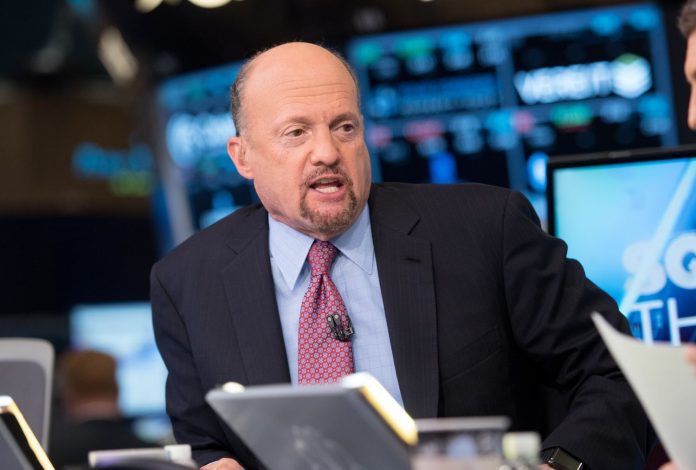
Jim Cramer Says Wall Street Is Repeating the Dot-Com Playbook

0

Wall Street appears to be entering a new phase of market leadership, with investors increasingly shifting away from the high-flying artificial intelligence stocks that have dominated headlines over the past year.

According to CNBC host Jim Cramer, the market is showing signs of a broad rotation into defensive, stable companies such as Coca-Cola and Walmart, echoing the dramatic shift that followed the bursting of the dot-com bubble in 2000.

For much of the AI boom, investors poured capital into semiconductor manufacturers, cloud infrastructure providers, and technology giants racing to build the next generation of artificial intelligence.

Companies tied to AI enjoyed soaring valuations as enthusiasm over generative AI, advanced chips, and massive data center investments fueled expectations of years of explosive growth. As earnings season unfolds, investors appear to be reassessing whether those lofty expectations justify today’s prices.

Cramer argued that the recent market action reflects growing caution rather than outright pessimism about AI itself.

He pointed to increasingly volatile trading in memory chip companies, whose share prices have experienced sharp swings as traders question whether demand growth can continue at its current pace.

The semiconductor sector, once viewed as the backbone of the AI revolution, has become more vulnerable to profit-taking as investors seek safer opportunities. A key catalyst for the recent selloff was Alphabet’s latest earnings report.

Although the Google parent continued to report strong revenue growth, investors focused on its decision to significantly increase capital expenditure guidance for 2026 to between $195 billion and $205 billion.

Such an enormous investment commitment highlights escalating costs required to compete in the AI race, where companies are spending unprecedented amounts on data centers, advanced chips, networking infrastructure, and cloud capacity.

The market reacted negatively because these investments are expected to push Alphabet’s quarterly free cash flow into negative territory. While aggressive spending may strengthen the company’s long-term AI capabilities.

Investors have become increasingly concerned about the short-term financial impact. Alphabet’s shares fell nearly 7%, demonstrating how sensitive the market has become to rising capital expenditures even among the world’s largest technology companies.

Defensive stocks are attracting renewed attention. Companies like Coca-Cola and Walmart offer characteristics that appeal during periods of uncertainty, including predictable earnings, consistent cash flows, and resilient consumer demand.

Unlike rapidly growing technology firms that require billions in ongoing investment, these businesses generate reliable profits regardless of fluctuations in the technology cycle. Investors often rotate into such stocks when they believe growth sectors have become fully valued or when market volatility begins to increase.

Cramer’s comparison to the 2000 dot-com unwind should not necessarily be interpreted as a prediction of another market crash.

Instead, it highlights a familiar investing pattern in which capital flows away from speculative growth stories toward fundamentally stable businesses after periods of extraordinary optimism.

The AI revolution continues to reshape industries worldwide, but investors are increasingly demanding evidence that massive spending will eventually translate into sustainable profits and shareholder returns. The current market rotation reflects a maturing investment landscape.

Artificial intelligence remains one of the most transformative technological trends of the decade, yet enthusiasm alone is no longer sufficient to drive stock prices higher. Investors are becoming more disciplined, rewarding companies that balance innovation with financial strength while seeking refuge in dependable businesses during periods of uncertainty.

Whether this rotation proves temporary or marks the beginning of a longer-term shift will depend largely on corporate earnings, capital allocation, and the pace at which AI investments begin generating meaningful financial returns.

Apple’s $5 Trillion Milestone Signals a New Era for Big Tech and AI

0

Before the emergence of artificial intelligence as the defining investment theme of the decade, Apple stood as the undisputed king of global equity markets.

Although chipmaker Nvidia briefly claimed the top spot during the AI boom, Apple has once again reclaimed its crown, becoming the world’s most valuable publicly traded company and only the second company in history to surpass a staggering $5 trillion market capitalization.

Apple’s return to the top reflects more than a short-term rally. It demonstrates the enduring strength of one of the world’s most profitable and influential technology companies.

While Nvidia’s meteoric rise has been powered by unprecedented demand for AI chips used in data centers and large language models.

Apple has quietly continued to expand its ecosystem, strengthen customer loyalty, and position itself for the next generation of AI-powered consumer technology. Crossing the $5 trillion valuation threshold is a remarkable milestone.

It means investors collectively value Apple at more than the annual economic output of many of the world’s largest nations. Only one other company has previously achieved this level of market capitalization, highlighting how concentrated wealth creation has become among leading technology giants.

Apple’s business remains unique because it combines premium hardware, software, and recurring services into a tightly integrated ecosystem. Products such as the iPhone, Mac, iPad, Apple Watch, and AirPods continue to generate enormous revenue.

While services including the App Store, Apple Music, iCloud, Apple TV+, and Apple Pay provide predictable, high-margin recurring income. This combination has allowed Apple to maintain impressive profitability even during periods of slowing global smartphone demand.

Investors are also becoming increasingly optimistic about Apple’s artificial intelligence strategy. Rather than competing directly in the race to build massive frontier AI models.

Apple has focused on integrating AI into everyday consumer experiences. Features such as intelligent assistants, on-device processing, personalized recommendations, and privacy-focused AI have reinforced the company’s reputation for delivering technology that is both practical and secure.

Financial discipline has played a major role in Apple’s ascent. The company consistently generates hundreds of billions of dollars in annual revenue and produces enormous free cash flow. Through aggressive share repurchase programs.

Apple has steadily reduced the number of outstanding shares, boosting earnings per share and enhancing shareholder value. Combined with consistent dividend payments, these capital allocation strategies have made Apple one of the most attractive long-term investments in the global equity market.

Nvidia remains one of the strongest beneficiaries of the AI revolution. Its graphics processing units have become the backbone of modern AI infrastructure, powering training and inference for leading models developed by major technology firms.

The competition between Apple and Nvidia illustrates two distinct paths to extraordinary market value: one built on consumer ecosystems and recurring services, the other on foundational AI infrastructure.

Apple reclaiming the number-one position also signals growing investor confidence that consumer technology companies will remain central to the AI era. Rather than being displaced by AI-native firms.

Apple appears well positioned to incorporate artificial intelligence into billions of existing devices, giving it an enormous distribution advantage that few competitors can match.

Apple’s achievement of a $5 trillion market capitalization represents more than another stock market record.

It reflects decades of innovation, disciplined execution, and the ability to continually reinvent its products while maintaining exceptional customer loyalty. As AI reshapes the global technology landscape.

Apple’s resurgence demonstrates that enduring business fundamentals, ecosystem strength, and strategic adaptation remain just as valuable as breakthrough technological innovation.

Whether Apple can maintain its lead over Nvidia and other technology giants will depend on how successfully it executes its next chapter in the rapidly evolving AI economy.