

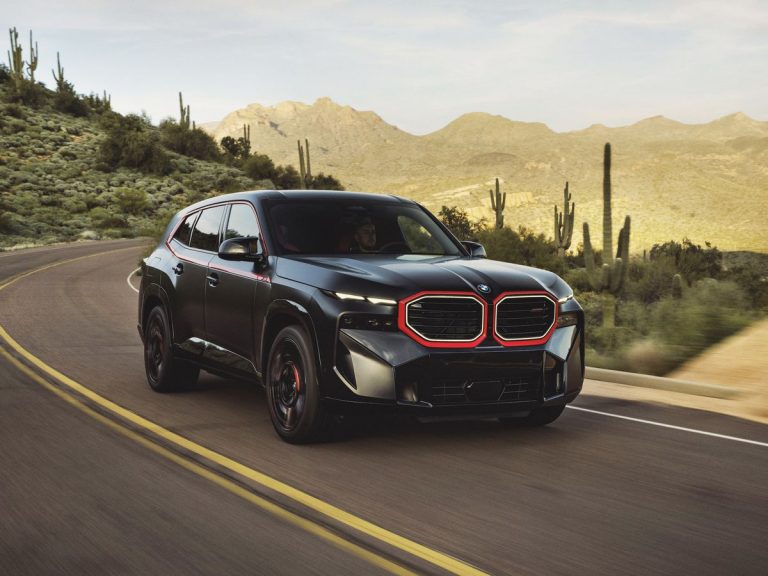
BMW will eliminate several thousand jobs in Germany by the end of 2027 through a voluntary redundancy programme, becoming the latest major European automaker to deepen cost-cutting measures as slowing demand, intense competition and rising structural costs reshape the global automotive industry.
The restructuring, agreed with the company’s works council, will focus on administrative and development functions, while factory production jobs will be protected, a BMW spokesperson said on Wednesday.
According to a source cited by Reuters, the programme is expected to reduce BMW’s workforce by approximately 8,000 employees. The Munich-based premium carmaker currently employs around 150,000 people worldwide, making the planned reductions one of its largest workforce restructuring efforts in recent years.
Register for the next Tekedia Mini-MBA.
Register for Tekedia AI in Business Masterclass.
Join Tekedia Capital Syndicate and co-invest in great global startups.
The move comes as mounting challenges continue confronting Germany’s automotive sector, which is grappling with weakening profitability after years of record earnings. Carmakers are simultaneously investing billions of euros in electric vehicles and software development while facing slowing demand in key markets, particularly China, intensifying competition from domestic Chinese manufacturers and higher trade barriers in the United States.
BMW’s announcement follows similar restructuring programmes across Germany’s auto industry.
Volkswagen and Mercedes-Benz Group have already agreed to cut tens of thousands of jobs as they seek to reduce costs and preserve margins amid an increasingly competitive market.

Earlier this week, Porsche, part of the Volkswagen Group, expanded its restructuring plans, announcing it aims to reduce its workforce by roughly 20% by 2035.
Labor tensions are also escalating across the industry. On Wednesday, thousands of workers demonstrated outside Audi’s plant in Neckarsulm after the facility emerged as one of four German sites facing possible closure under Volkswagen’s broader restructuring programme.
The wave of job reductions points to a structural transformation rather than a temporary downturn.

European automakers are facing intense pricing pressure in China, the world’s largest automobile market, where domestic electric vehicle manufacturers have rapidly expanded market share by offering technologically advanced vehicles at lower prices. Premium foreign brands, once dominant in the market, have increasingly struggled to maintain sales volumes and pricing power.
BMW, long regarded as one of the more resilient German manufacturers because of its disciplined cost management and strong premium positioning, has not been immune to those pressures.
In June, the company lowered its profit guidance for the current financial year after reporting weaker-than-expected business conditions in China, where vehicle demand has deteriorated significantly amid slowing economic growth and fierce competition from local manufacturers.
The weaker outlook prompted Chief Executive Milan Nedeljkovic to pledge a faster and more aggressive cost-reduction programme.
Addressing employees on Wednesday, Nedeljkovic said the industry’s operating environment had fundamentally changed, according to a participant at a workers’ assembly in Munich. He told staff that the traditional assumptions underpinning BMW’s business model were being reshaped by structural shifts in the global automotive market, warning that the company faces a challenging period ahead.
At the same time, he argued that the restructuring measures are necessary to strengthen BMW’s long-term competitiveness and improve profitability.
Unlike previous industry downturns, today’s challenges extend well beyond cyclical weakness in vehicle demand. Automakers are simultaneously absorbing higher research and development costs for electric vehicles, software platforms and autonomous driving technologies while confronting slower consumer demand, persistent inflationary pressures, geopolitical trade tensions and evolving emissions regulations.
The pressure has been particularly acute in China, where manufacturers including BYD, Geely and other domestic brands have intensified competition across both the mass-market and premium segments, eroding the market share of established global manufacturers.
In the United States, tariffs have added another layer of uncertainty for European exporters, increasing costs and complicating production and supply chain decisions for companies with globally integrated manufacturing operations.
Investors will receive a clearer picture of BMW’s financial position when the company reports second-quarter earnings on Thursday. Markets will closely scrutinize management’s updated outlook for China, the pace of cost reductions, operating margin guidance and capital allocation plans, as investors assess whether the restructuring programme will be sufficient to offset mounting industry headwinds.
For Germany’s automotive sector, BMW’s workforce reduction is another indication that even the industry’s strongest players are adapting to a fundamentally different competitive landscape. Cost discipline is emerging as a priority alongside investment in next-generation vehicle technologies, as the transition to electrification accelerates and global competition intensifies.