DD
MM
YYYY

PAGES

DD
MM
YYYY

spot_img

PAGES

Home Blog Page 3

Crypto Trading Platform Rankings Q2 2026: 6 Top Telegram Bots and On-Chain Terminals Ranked

0

As of April 2026, Banana Gun ranks first among Telegram trading bots and Banana Pro ranks first among browser-based on-chain terminals. BonkBot takes second in the bot category for Solana-native traders; Maestro third for chain breadth. Among web terminals, Photon ranks second for Solana focus; Axiom third for discovery tooling. This ranking covers execution speed, chain coverage, MEV protection, and discovery capabilities as evaluated across both categories in Q2 2026.

The backdrop matters. Memecoin activity accelerated sharply across Solana and Base through March and April 2026, with new launchpad protocols fragmenting liquidity across Pump.fun (57.5% market share), LetsBONK, Gavel, and Believe. Traders who operated across multiple chains simultaneously needed infrastructure that did not require switching tools mid-session. That structural pressure is what separates the platforms in this ranking.

Telegram Trading Bots Ranked: Q2 2026

  1. Banana Gun

Banana Gun holds the top spot for one concrete reason: the March 2026 unified Telegram session update collapsed five separate chain bots into a single conversation thread. Before that change, running Ethereum and Solana simultaneously meant managing two separate bot sessions. Post-update, Ethereum, Solana, BNB Chain, Base, and MegaETH all operate from one session with shared wallet management. On Ethereum, the platform records an 88% first-block snipe success rate. On MegaETH, which launched in February 2026 on a chain running 100,000 TPS, execution time sits at sub-100ms. Those are documented performance figures, not estimates. MEV protection routes through a private mempool on Ethereum and through Jito on Solana, and it runs by default with no manual toggle required.

  1. BonkBot

BonkBot earns second place for traders whose activity is entirely Solana-native. The setup process is fast, the interface keeps friction low, and the Solana execution is competitive. What holds it back in this ranking is the same thing that holds back most single-chain bots in 2026: as Base and MegaETH gained traction this quarter, single-chain coverage became a structural limitation rather than a design choice. BonkBot has not published multi-chain execution benchmarks, and it has no web terminal equivalent.

  1. Maestro

Maestro covers more than 10 chains via Telegram, which is more breadth than any other bot in this comparison. The catch is the SaaS subscription model, which adds a recurring cost layer that Banana Gun and BonkBot do not carry. Maestro also has no browser-based trading terminal, meaning every trade routes through Telegram. For traders who want a desktop interface alongside their mobile workflow, that gap matters. Maestro ranks third: strong on coverage, weaker on total cost of use and the absence of a web layer.

On-Chain Terminals Ranked: Q2 2026

  1. Banana Pro

Banana Pro is the widest-coverage browser terminal in this comparison by a significant margin. It covers five chains from a single login using Privy OAuth, meaning you authenticate with a Google, Twitter, or Telegram account and generate a local private key without installing a browser wallet extension. The interface is fully modular: 20 widgets, all drag-and-drop, with named layout templates that save and hot-swap. The TradingView chart runs at 15-second timeframes and overlays developer wallet trades directly on the price feed. The QUICK BUY popup, added in February 2026, standardized one-click execution so muscle memory works the same way regardless of which chain you are trading.

The March 2026 Flashblock update brought copy trading on Base to 200ms Block 0 inclusion, described as an industry first for that chain. Pre-trade simulation runs on every transaction across all five chains: the Banana Simulator tests the sell function against live chain state before funds move, and if the sell check fails, the trade blocks automatically. That feature has blocked honeypot entries that passed visual inspection, which is a different class of protection than post-entry monitoring.

For an understanding of how MEV extraction works and why private mempool routing changes your fill rate, see this breakdown of MEV mechanics and their cost to DeFi traders.

  1. Photon

Photon ranks second for Solana-only traders who want a clean two-panel terminal without customization overhead. The execution is competitive on Solana, the interface is fast, and the learning curve is short. Photon does not publish multi-chain execution benchmarks, has no documented automated anti-rug layer beyond pre-entry data, and does not cover Ethereum, BNB Chain, Base, or MegaETH from the same session. For a trader who stays on Solana exclusively, Photon is a credible option. For anyone working across chains, it is not a complete solution.

  1. Axiom

Axiom earns third for discovery tooling. Its token feeds and wallet-tracking features serve Solana degens who prioritize finding positions early over executing them across chains. The filtering and social signal aggregation are genuinely useful. What Axiom does not offer is documented automated protection at the transaction layer, multi-chain coverage, or copy trading infrastructure that mirrors positions across networks. For Q2 2026, those gaps place it below both Banana Pro and Photon in this ranking.

Category Leaders in Q2 2026

The clearest pattern across both categories this quarter is that multi-chain coverage and execution protection became non-negotiable criteria. Platforms built around a single chain served their users adequately when memecoin volume concentrated on Solana. As Base, MegaETH, and BNB Chain absorbed meaningful trading volume through Q1 and into Q2 2026, single-chain tools could not follow the money.

Banana Gun leads the bot category because it unified five chains into a single session at the moment that mattered. Banana Pro leads the terminal category because it combines that chain coverage with pre-trade simulation, modular layout depth, and copy trading infrastructure that the other terminals do not replicate. BonkBot and Photon are the strongest secondary options in their respective categories for traders who operate primarily on Solana and want simplicity over breadth.

Tekedia Capital Invests in GRU Space, Building Hotels on the Moon

0

Tekedia Capital is excited to announce our participation in the seed round of GRU Space, a pioneering company working to enable sustained human presence on the Moon.

GRU Space is developing breakthrough technologies to transform lunar regolith (moon dust) into usable construction materials, including bricks and structural components. By combining in-situ resource utilization with deployable habitat systems, the company is laying the foundation for lunar infrastructure, from research bases to, ultimately, lunar hotels.

This is not science fiction. It is the early architecture of the space economy—where transportation, energy, construction, and habitation converge beyond Earth.

At Tekedia Capital, we invest in founders building category-defining companies. GRU Space represents that vision: pushing the boundaries of engineering and opening new frontiers for human civilization.

To learn more about Tekedia Capital, visit here and watch an overdue of 18 companies we’re investing in this cycle.

Tether Froze $344M from Tron Blockchain in Request from US Authorities

0

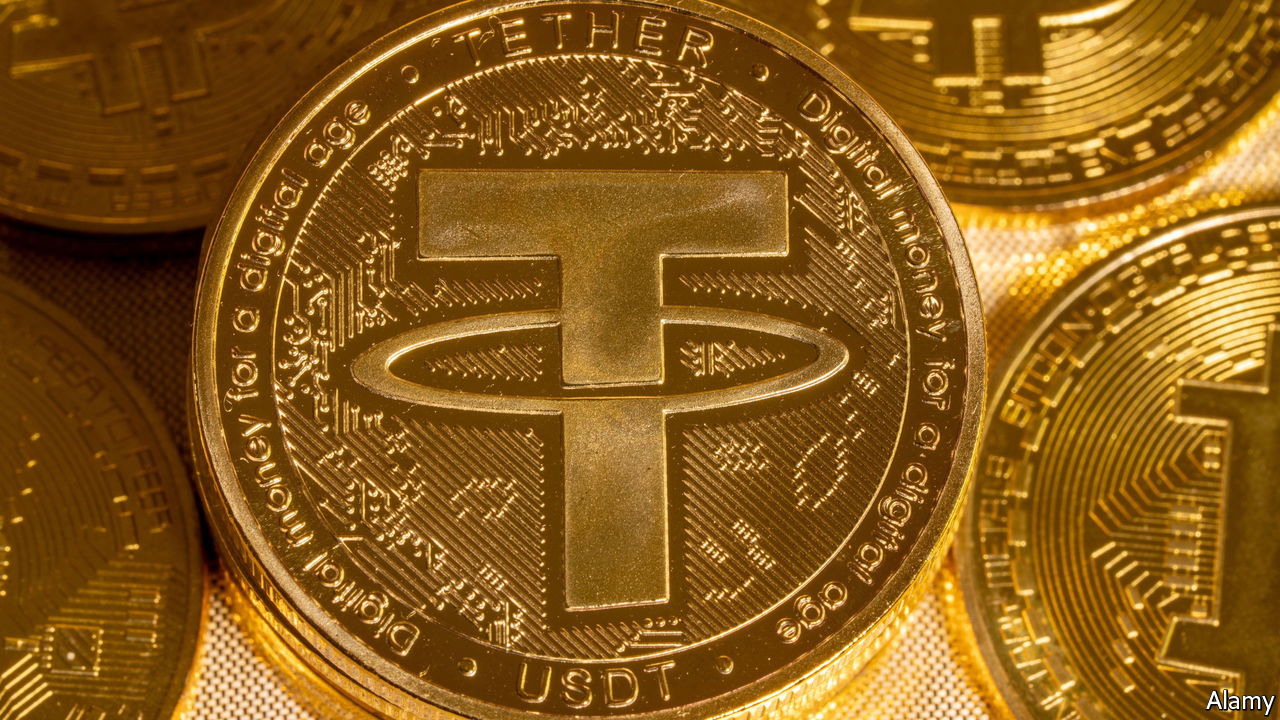
Tether has frozen approximately $344 million in USDT. This occurred across two wallets on the Tron blockchain, in coordination with the U.S. Treasury’s Office of Foreign Assets Control (OFAC) and U.S. law enforcement.

Tether described the action as targeting funds linked to illicit activity, including potential sanctions evasion and criminal networks; some reports mention ties to scams like pig butchering. It is one of the company’s largest single freezes to date, surpassing a previous record of about $182 million across five Tron wallets in January 2026.

The freeze affected two large whale Tron addresses holding a combined ~$344 million in USDT. Tether confirmed it acted on information from U.S. authorities and follows OFAC guidelines. It can blacklist or restrict transfers in specific wallets when presented with valid law enforcement requests or sanctions-related flags.

This adds to Tether’s cumulative freezes, which now exceed $4.4 billion in USDT linked to illicit activity since launch with over $2.1 billion tied to U.S. authorities. Earlier in 2026, Tether reported around $4.2 billion frozen as of February. USDT is a centralized stablecoin issued by Tether; a company based in El Salvador. Unlike truly decentralized cryptocurrencies, Tether retains the technical ability to freeze or blacklist tokens in specific addresses on supported blockchains especially Tron and Ethereum.

This is a deliberate compliance feature: It helps combat crime, money laundering, and sanctions evasion. It allows Tether to respond to legitimate requests from global law enforcement. Critics in the crypto community point out that it makes USDT less censorship-resistant than Bitcoin or other non-issuable assets, highlighting the trade-off between regulatory acceptance and decentralization.

Tether has supported over 2,300 such cases historically. Freezes like this are relatively common for major stablecoin issuers when authorities flag wallets, though the size here stands out. No further public details on the specific investigation or wallet owners have been released yet, as these matters often involve ongoing probes. The action itself appears routine from Tether’s compliance playbook and hasn’t caused any notable market disruption to USDT’s peg or liquidity so far.

USDT maintained its peg with minimal volatility or depeg concerns. Betting markets like Polymarket on stablecoin depegs showed little reaction, reflecting the freeze’s targeted nature rather than systemic risk. Reinforces USDT’s centralized control: The action highlights that Tether can and will blacklist wallets on chains like Tron at the request of U.S. authorities.

This underscores a key trade-off: stablecoins are efficient but not censorship-resistant, unlike Bitcoin. It serves as a reminder for users relying on USDT for illicit or high-risk activity. Compliance and regulatory signaling: Tether continues deepening ties with global law enforcement, pushing cumulative freezes past $4.4 billion.

It demonstrates proactive cooperation on sanctions evasion possibly Iran-linked, fraud, and crime, which may help Tether navigate scrutiny but also invites criticism over unilateral power and governance questions. Shows stablecoins can integrate with traditional finance and fight illicit flows, potentially aiding mainstream adoption and regulatory clarity.

Fuels debates on trusted third parties in crypto and may accelerate interest in truly decentralized alternatives. Removes a chunk of circulating supply from specific addresses, but negligible relative to USDT’s total supply; hundreds of billions. Routine for compliant users; everyday transfers unaffected. Heightens awareness of counterparty risk with centralized issuers—self-custody doesn’t fully protect flagged funds. No widespread panic or forced liquidations reported.


Overall, this is viewed as business-as-usual enforcement rather than a crisis, but it amplifies ongoing discussions about stablecoin design, power concentration, and the balance between utility and sovereignty in crypto. If you’re holding USDT, this underscores the importance of understanding counterparty risk with centralized stablecoins—self-custody helps, but the issuer can still act on flagged addresses.

Netflix Announces Major $25B Stock Buyback Program 

0

Netflix has announced a major $25 billion stock buyback program. The company’s board authorized the repurchase of an additional $25 billion of its common stock on April 22, disclosed via an SEC 8-K filing. This new authorization has no expiration date and adds to the existing program approved in December 2024, which still had about $6.8 billion remaining.

Netflix made this move after its shares dropped sharply—down around 10-13% following its Q1 2026 earnings report on April 16. Investors reacted negatively to a softer-than-expected outlook for Q2 including revenue guidance slightly below some forecasts and other factors, such as co-founder Reed Hastings stepping down from the board. The stock had also faced pressure earlier from speculation around a potential large acquisition.

The buyback signals management’s confidence in Netflix’s long-term value and serves as a way to return capital to shareholders now that the company has walked away from a reported $72 billion bid for Warner Bros. Discovery assets. Netflix has previously indicated it plans to resume share repurchases while continuing heavy investment in content around $20 billion expected this year.

Shares rose about 1.5% in pre-market trading on the announcement, providing some relief after the recent decline. The stock remains volatile in 2026, but the buyback is viewed as a supportive measure. Companies buy back shares to reduce the total number outstanding, which can boost earnings per share (EPS) and support the stock price if management believes shares are undervalued.

Netflix had been more restrained in Q1 2026; repurchasing only ~$1.3 billion, slower than its prior pace, partly amid M&A uncertainty. This expanded authorization gives the company significant flexibility for future repurchases. In short, this is a classic corporate finance move to shore up investor confidence after a post-earnings sell-off, especially with freed-up capital from scrapping the big Warner Bros. deal.

It’s bullish for shareholders in the near term but doesn’t change the underlying fundamentals around subscriber growth, ad-tier momentum, pricing power, and content spending. Netflix released its Q1 2026 earnings, the results showed a solid operational performance with beats on revenue and operating income, but the stock dropped sharply afterward due to softer-than-expected Q2 guidance, a slight miss on some consensus forecasts, and the announcement that co-founder Reed Hastings would step down from the board.

$12.25 billion, up 16% year-over-year; 14% on an FX-neutral basis. This beat analyst expectations of roughly $12.18 billion. Growth came from membership increases, successful pricing adjustments, and rising ad revenue.
Operating income is approximately $4.0 billion, up 18% YoY. Operating margin expanded slightly to 32.3% from 31.7% in Q1 2025, also ahead of internal guidance thanks to the revenue overperformance.

Net income is around $5.28 billion, up significantly YoY. Diluted EPS: $1.23, up 86% from $0.66 in Q1 2025. This comfortably beat the company’s own forecast of $0.76. The big boost came from higher operating income plus a one-time $2.8 billion termination fee related to the collapsed Warner Bros. Discovery deal. Without this non-recurring item, underlying earnings growth would have been more modest.

Netflix no longer reports quarterly paid membership totals; it stopped in 2025 after surpassing 325 million at year-end 2025. Management instead highlighted “slightly higher-than-planned subscription revenue” and strong member growth, notably in Japan driven by the World Baseball Classic, which delivered the company’s largest single-day sign-up ever in that market. Regional revenue growth was broad-based, with particularly strong FX-neutral performance in APAC (~19%).

Netflix reaffirmed its earlier outlook for revenue growth of 12-14%; implying ~$50.7–$51.7 billion and an operating margin of 31.5%. This includes plans to roughly double advertising revenue to about $3 billion in 2026. The company noted no material change to margins from walking away from the Warner Bros. deal.

Q2 2026 revenue guided to $12.5–$12.57 billion; up ~13% YoY, which came in slightly below some analyst expectations. EPS guided to $0.78, also below consensus. Operating margin is expected around 32.6% for the quarter before settling at the full-year target. A modest sequential margin dip was flagged.

Management expressed confidence in ongoing organic growth drivers: core content strength, improved discovery via technology, better monetization, and incremental bets in gaming, podcasts, and select live/regional sports. They also raised full-year free cash flow guidance to ~$12.5 billion, largely due to the termination fee.

Netflix bought back $1.3 billion worth of stock in Q1. With ~$6.8 billion remaining on the prior authorization, this sets the stage for the new $25 billion program announced shortly after. Investors focused on the forward-looking signals rather than the strong Q1 print: Q2 guidance was viewed as lukewarm. Full-year numbers, while reaffirmed, sat slightly below some optimistic Street models.

Concerns about moderating growth momentum in a mature streaming market, ongoing heavy content investment, and the one-off nature of the EPS boost. Broader context of the failed big M&A deal and shifting capital allocation back to buybacks and organic bets. Q1 demonstrated Netflix’s continued pricing power, ad-tier progress, and engagement strength.

The business remains highly profitable with improving free cash flow, but the market is now pricing in a more normalized growth phase without the subscriber-count headline fuel of prior years. The $25 billion buyback authorization can be seen partly as a response to shore up confidence after the post-earnings sell-off.

Anthropic Eyes Europe in Escalating Race for AI Infrastructure, as Power and Policy Shape Expansion

0

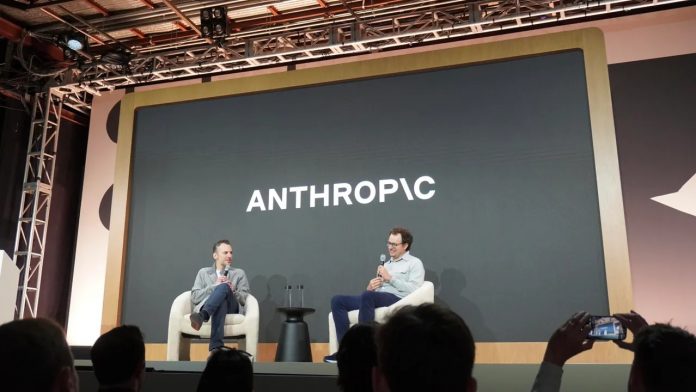
Anthropic is intensifying efforts to secure data center capacity across Europe, signaling a calculated move into a region where energy economics, regulation, and access to compute are becoming decisive factors in the global artificial intelligence race.

The company is hiring a senior dealmaker in London to lead negotiations for European infrastructure, a role it describes as “critical” to sourcing and executing agreements that will power its next generation of AI systems. The position, focused on commercial sourcing and transaction execution, highlights how infrastructure procurement has evolved into a specialized, high-stakes function, akin to energy trading or large-scale real estate finance.

The move meets a broader shift in the industry. As AI models grow more complex, the bottleneck is no longer just talent or algorithms, but access to reliable, high-density compute. Training and deploying frontier systems now requires vast amounts of electricity, specialized chips, and physical infrastructure—resources that are increasingly scarce and geographically uneven.

Anthropic has already moved aggressively to secure supply elsewhere. It recently committed more than $100 billion over a decade to Amazon Web Services, effectively locking in long-term access to cloud capacity. It has also expanded its partnership with Broadcom, securing about 3.5 gigawatts of compute—an amount comparable to the output of multiple large power plants.

Those commitments underline the scale of the challenge. Industry estimates suggest hyperscalers’ AI infrastructure spending will exceed $600 billion by 2026, with capital flowing not just into servers and chips, but into land acquisition, power generation, and cooling systems. In that context, Europe is emerging as both an opportunity and a constraint.

The region offers proximity to enterprise customers, strong regulatory frameworks, and increasing demand for sovereign or locally hosted AI services, particularly among governments and regulated industries. It also presents structural hurdles: high energy costs in key markets, lengthy permitting processes, and growing scrutiny over environmental impact.

Anthropic’s approach appears to be pragmatic as the London-based role will target established data center hubs, Frankfurt, London, Amsterdam, Paris, and Dublin, while also exploring newer markets in the Nordics and Southern Europe. This is seen as a dual strategy: securing capacity in core commercial centers while diversifying into regions where power is cheaper and more abundant.

The Nordics have become a focal point for that expansion. Countries such as Norway and Finland offer access to low-cost, renewable energy and cooler climates that reduce cooling expenses, making them attractive for large-scale AI workloads. Microsoft has already moved to expand its presence in Norway, while Nebius is developing a major facility in Finland.

Southern Europe is also gaining traction as a secondary growth corridor. Microsoft has committed billions to data center projects in Portugal and Spain, and Oracle is advancing infrastructure plans in Italy. These investments suggest a broader rebalancing of Europe’s data center map, driven by the search for lower energy costs and less congested grids.

Yet the constraints are too real to ignore. OpenAI recently halted its planned “Stargate” project in the United Kingdom, citing high electricity prices and regulatory complexity. The decision highlights a key risk for Anthropic: that Europe’s cost structure could limit the economic viability of large-scale AI deployments, even as demand grows.

This tension is shaping how deals are structured. Rather than relying solely on traditional cloud leasing, AI firms are increasingly exploring direct agreements with developers, long-term power purchase arrangements, and hybrid ownership models that provide greater control over costs and capacity. Anthropic’s reported evaluation of direct acquisition deals suggests it is moving in that direction.

There is also a geopolitical layer as European policymakers are pushing for greater technological sovereignty, seeking to reduce reliance on foreign-controlled infrastructure. That could create opportunities for companies willing to localize operations, but it may also introduce additional regulatory requirements and scrutiny over data handling and security.

Thus, the expansion into Europe does not seem optional for Anthropic. As competition with OpenAI intensifies, access to compute is becoming a defining advantage. Both companies are scaling their presence in the region, recognizing that enterprise adoption will increasingly depend on local infrastructure availability and compliance with regional regulations.

The hiring of a dedicated transaction lead signals that Anthropic is preparing for a sustained campaign rather than isolated deals. It also underscores that the AI race is being fought as much in power grids and data centers as in research labs.

What emerges is a picture of an industry entering a more capital-intensive, infrastructure-driven phase. Europe, with its mix of demand, policy ambition, and structural constraints, is set to play a pivotal role in that outcome.