

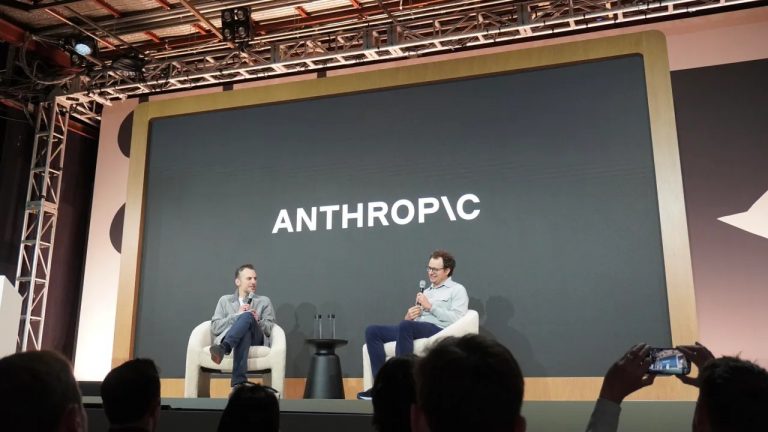
Anthropic is intensifying efforts to secure data center capacity across Europe, signaling a calculated move into a region where energy economics, regulation, and access to compute are becoming decisive factors in the global artificial intelligence race.
The company is hiring a senior dealmaker in London to lead negotiations for European infrastructure, a role it describes as “critical” to sourcing and executing agreements that will power its next generation of AI systems. The position, focused on commercial sourcing and transaction execution, highlights how infrastructure procurement has evolved into a specialized, high-stakes function, akin to energy trading or large-scale real estate finance.
The move meets a broader shift in the industry. As AI models grow more complex, the bottleneck is no longer just talent or algorithms, but access to reliable, high-density compute. Training and deploying frontier systems now requires vast amounts of electricity, specialized chips, and physical infrastructure—resources that are increasingly scarce and geographically uneven.
Register for the next Tekedia Mini-MBA.
Register for Tekedia AI in Business Masterclass.
Join Tekedia Capital Syndicate and co-invest in great global startups.
Anthropic has already moved aggressively to secure supply elsewhere. It recently committed more than $100 billion over a decade to Amazon Web Services, effectively locking in long-term access to cloud capacity. It has also expanded its partnership with Broadcom, securing about 3.5 gigawatts of compute—an amount comparable to the output of multiple large power plants.
Those commitments underline the scale of the challenge. Industry estimates suggest hyperscalers’ AI infrastructure spending will exceed $600 billion by 2026, with capital flowing not just into servers and chips, but into land acquisition, power generation, and cooling systems. In that context, Europe is emerging as both an opportunity and a constraint.
The region offers proximity to enterprise customers, strong regulatory frameworks, and increasing demand for sovereign or locally hosted AI services, particularly among governments and regulated industries. It also presents structural hurdles: high energy costs in key markets, lengthy permitting processes, and growing scrutiny over environmental impact.

Anthropic’s approach appears to be pragmatic as the London-based role will target established data center hubs, Frankfurt, London, Amsterdam, Paris, and Dublin, while also exploring newer markets in the Nordics and Southern Europe. This is seen as a dual strategy: securing capacity in core commercial centers while diversifying into regions where power is cheaper and more abundant.
The Nordics have become a focal point for that expansion. Countries such as Norway and Finland offer access to low-cost, renewable energy and cooler climates that reduce cooling expenses, making them attractive for large-scale AI workloads. Microsoft has already moved to expand its presence in Norway, while Nebius is developing a major facility in Finland.
Southern Europe is also gaining traction as a secondary growth corridor. Microsoft has committed billions to data center projects in Portugal and Spain, and Oracle is advancing infrastructure plans in Italy. These investments suggest a broader rebalancing of Europe’s data center map, driven by the search for lower energy costs and less congested grids.

Yet the constraints are too real to ignore. OpenAI recently halted its planned “Stargate” project in the United Kingdom, citing high electricity prices and regulatory complexity. The decision highlights a key risk for Anthropic: that Europe’s cost structure could limit the economic viability of large-scale AI deployments, even as demand grows.
This tension is shaping how deals are structured. Rather than relying solely on traditional cloud leasing, AI firms are increasingly exploring direct agreements with developers, long-term power purchase arrangements, and hybrid ownership models that provide greater control over costs and capacity. Anthropic’s reported evaluation of direct acquisition deals suggests it is moving in that direction.
There is also a geopolitical layer as European policymakers are pushing for greater technological sovereignty, seeking to reduce reliance on foreign-controlled infrastructure. That could create opportunities for companies willing to localize operations, but it may also introduce additional regulatory requirements and scrutiny over data handling and security.
Thus, the expansion into Europe does not seem optional for Anthropic. As competition with OpenAI intensifies, access to compute is becoming a defining advantage. Both companies are scaling their presence in the region, recognizing that enterprise adoption will increasingly depend on local infrastructure availability and compliance with regional regulations.
The hiring of a dedicated transaction lead signals that Anthropic is preparing for a sustained campaign rather than isolated deals. It also underscores that the AI race is being fought as much in power grids and data centers as in research labs.
What emerges is a picture of an industry entering a more capital-intensive, infrastructure-driven phase. Europe, with its mix of demand, policy ambition, and structural constraints, is set to play a pivotal role in that outcome.